
ANIMALIA / ARTHROPODA / INSECTA / ORTHOPTERA / LENTULIDAE / BETISCOIDES / MERIDIONALIS
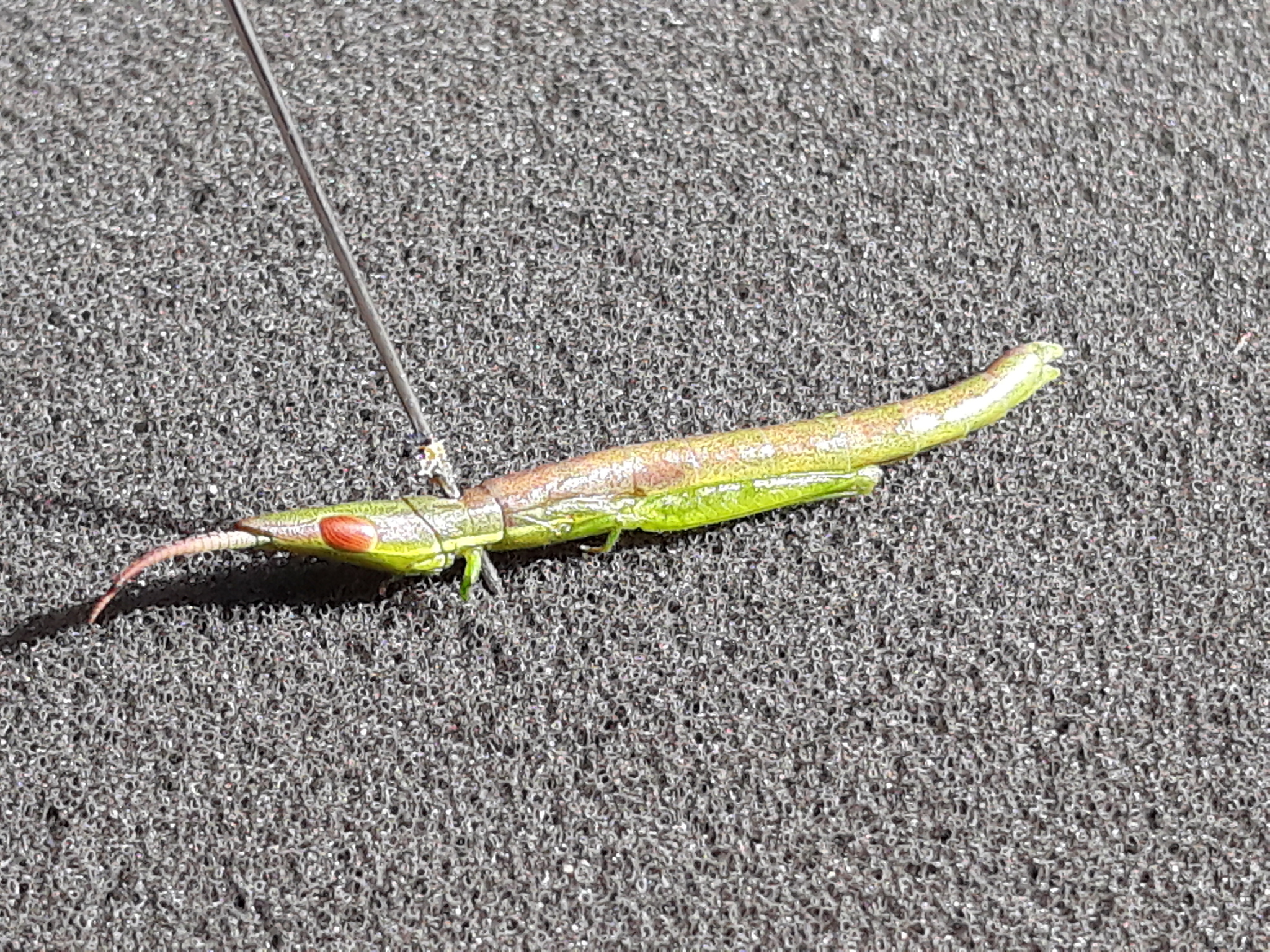
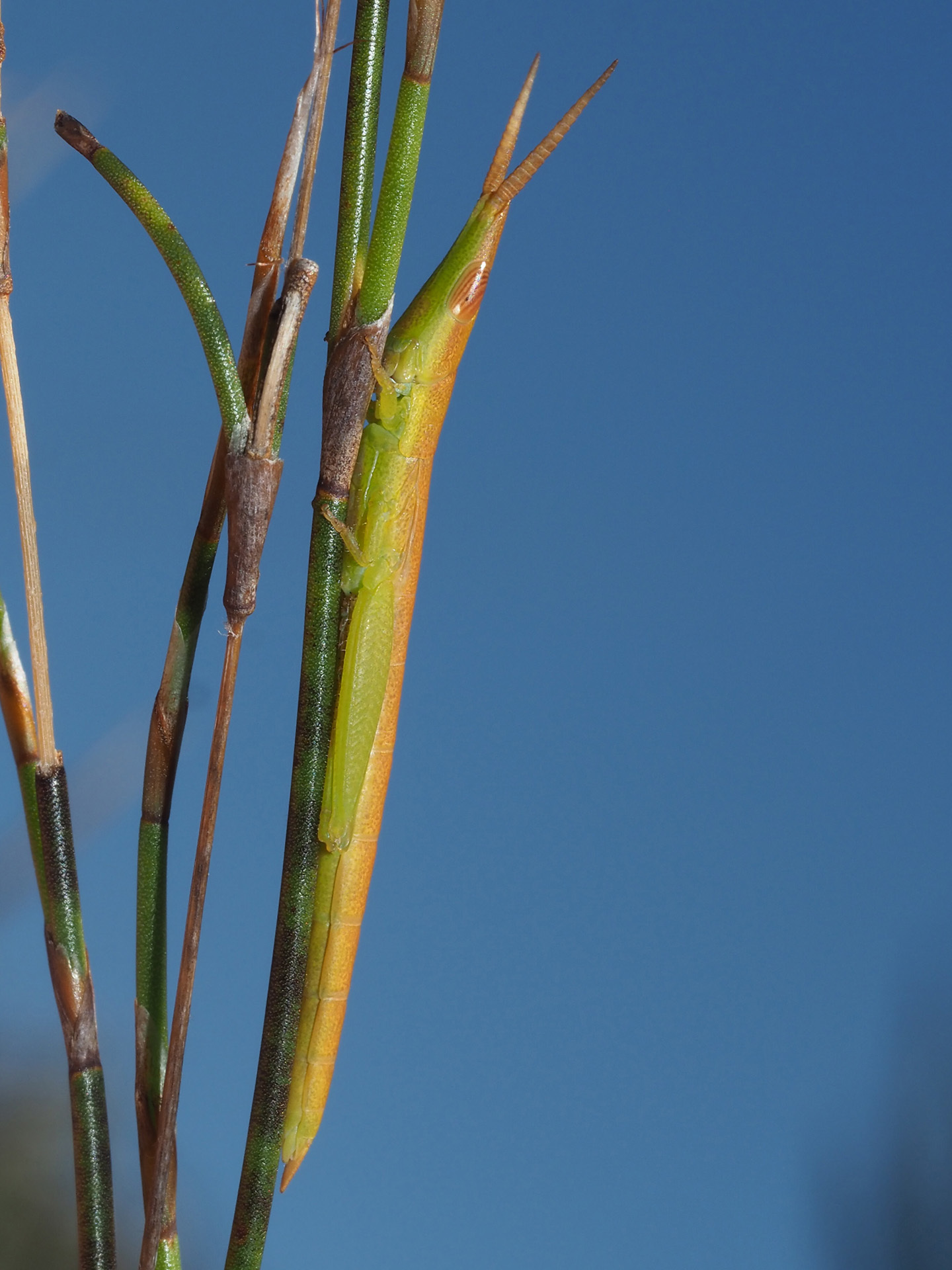
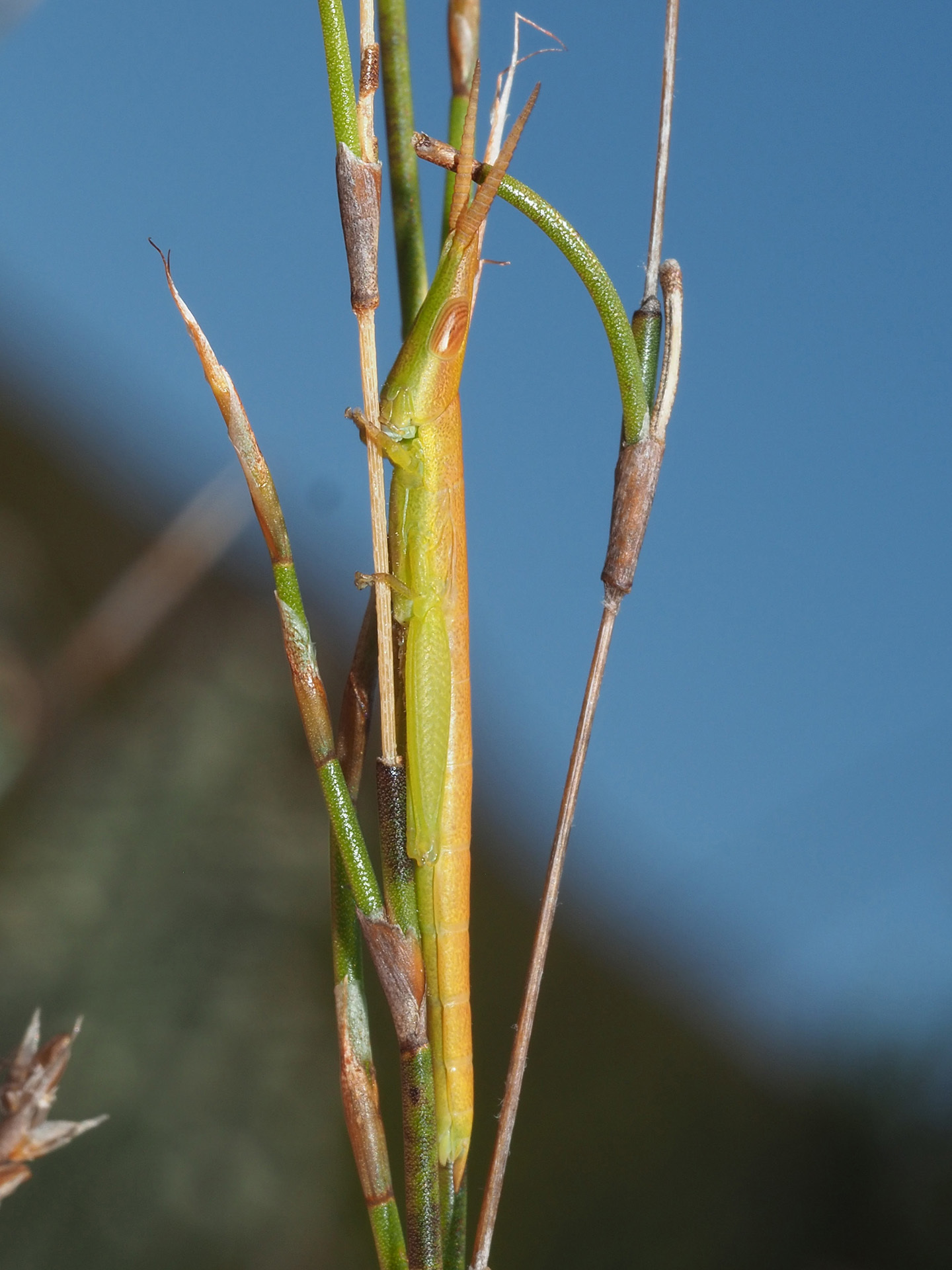
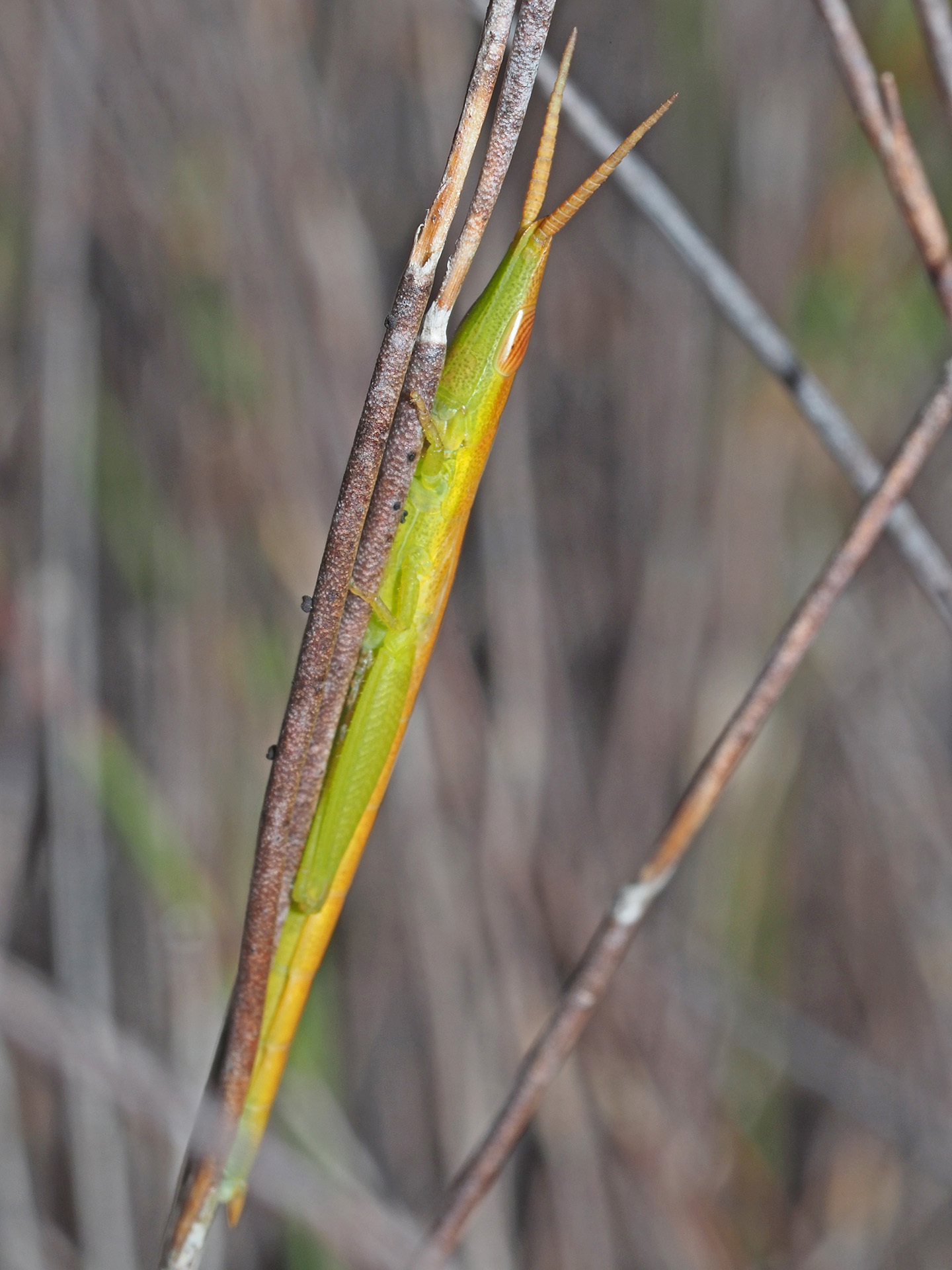
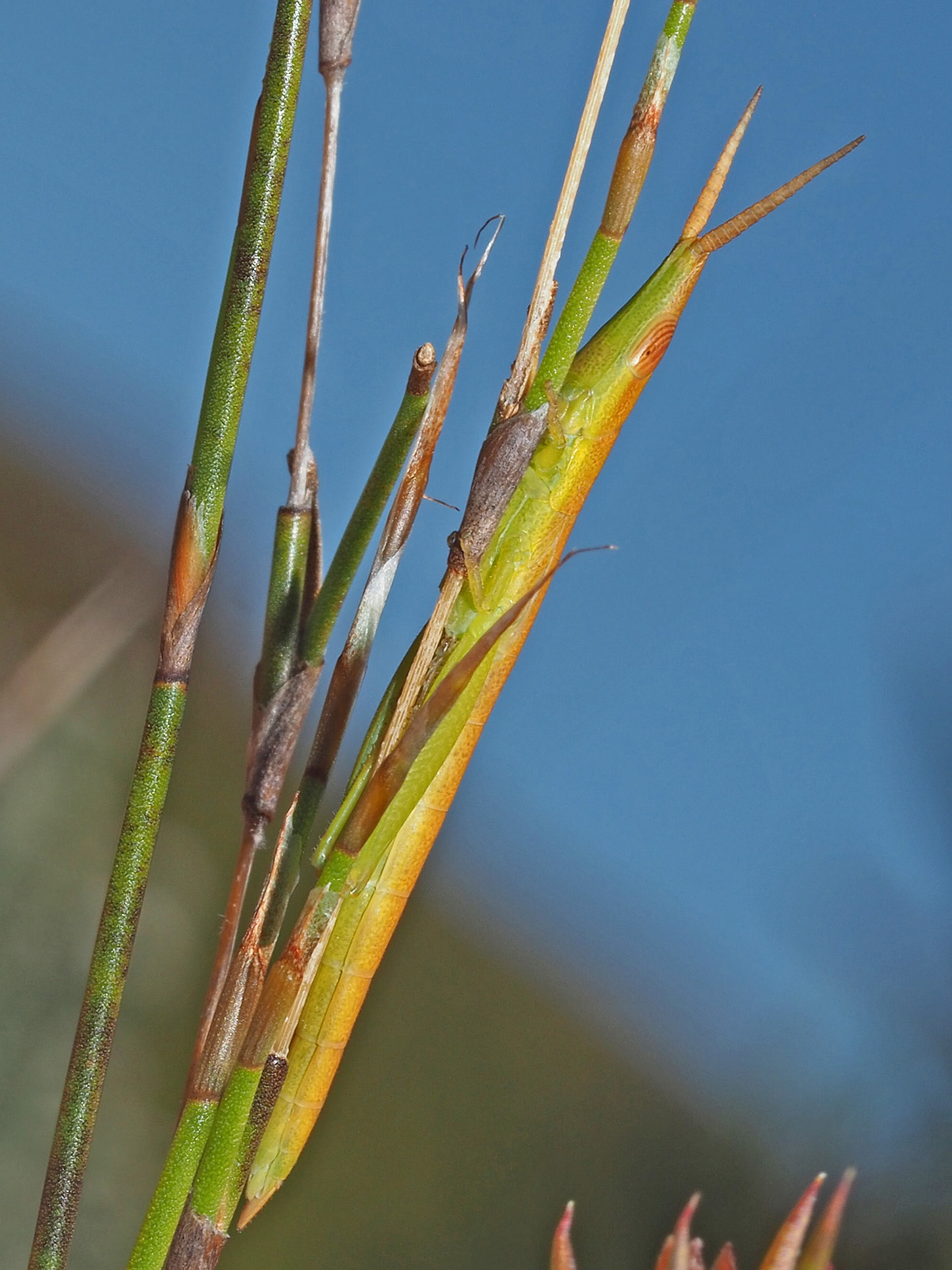
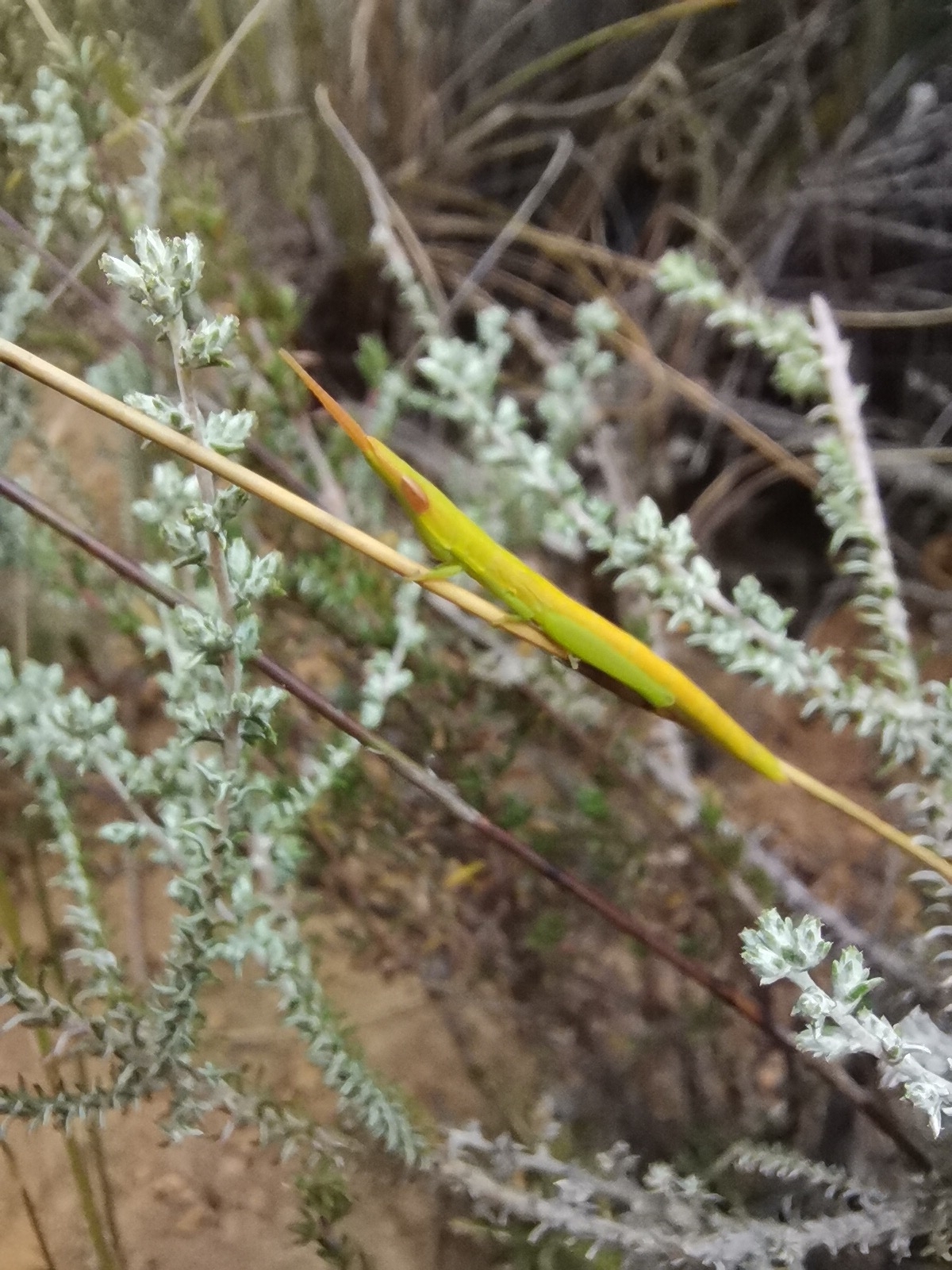
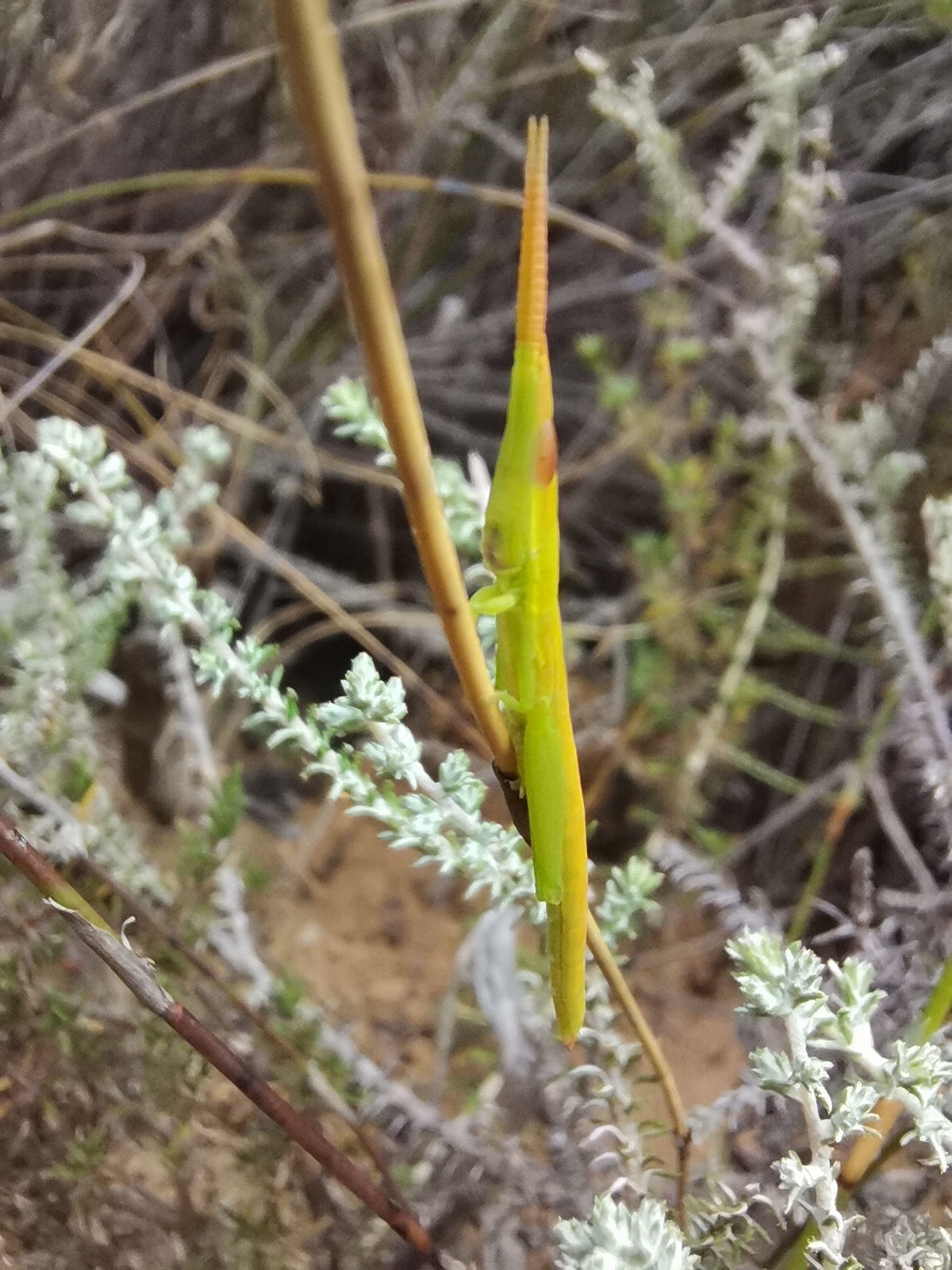
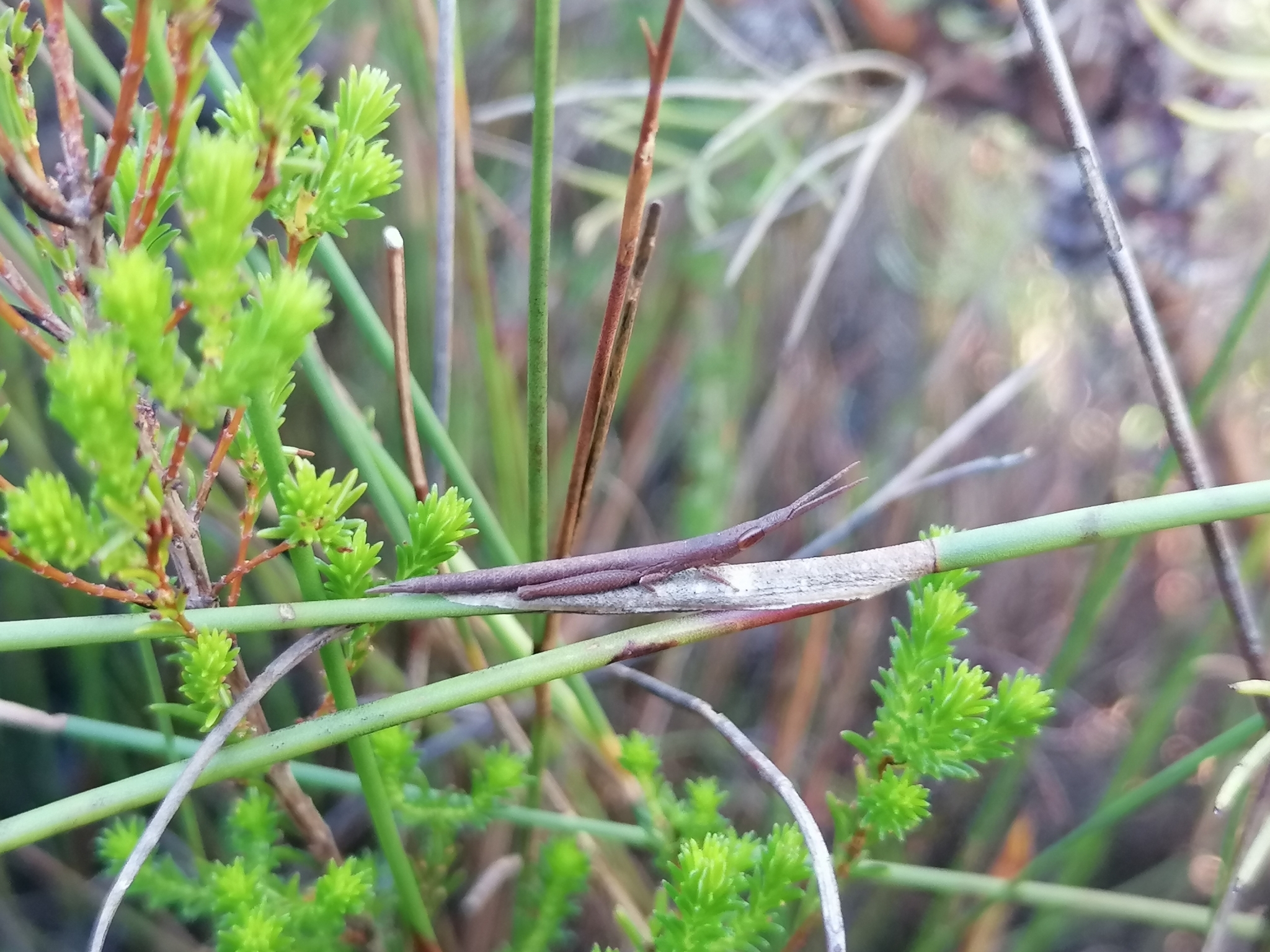
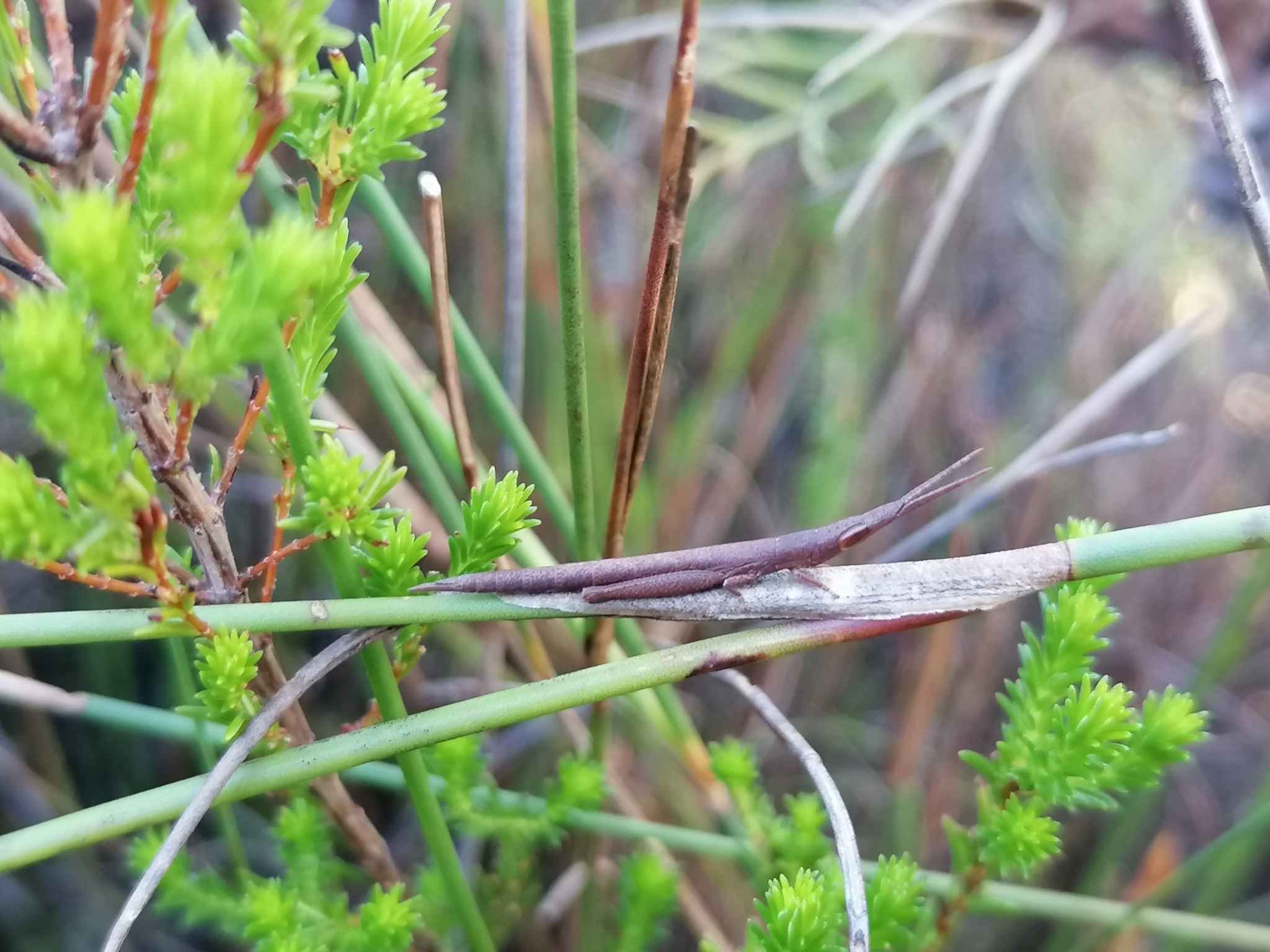
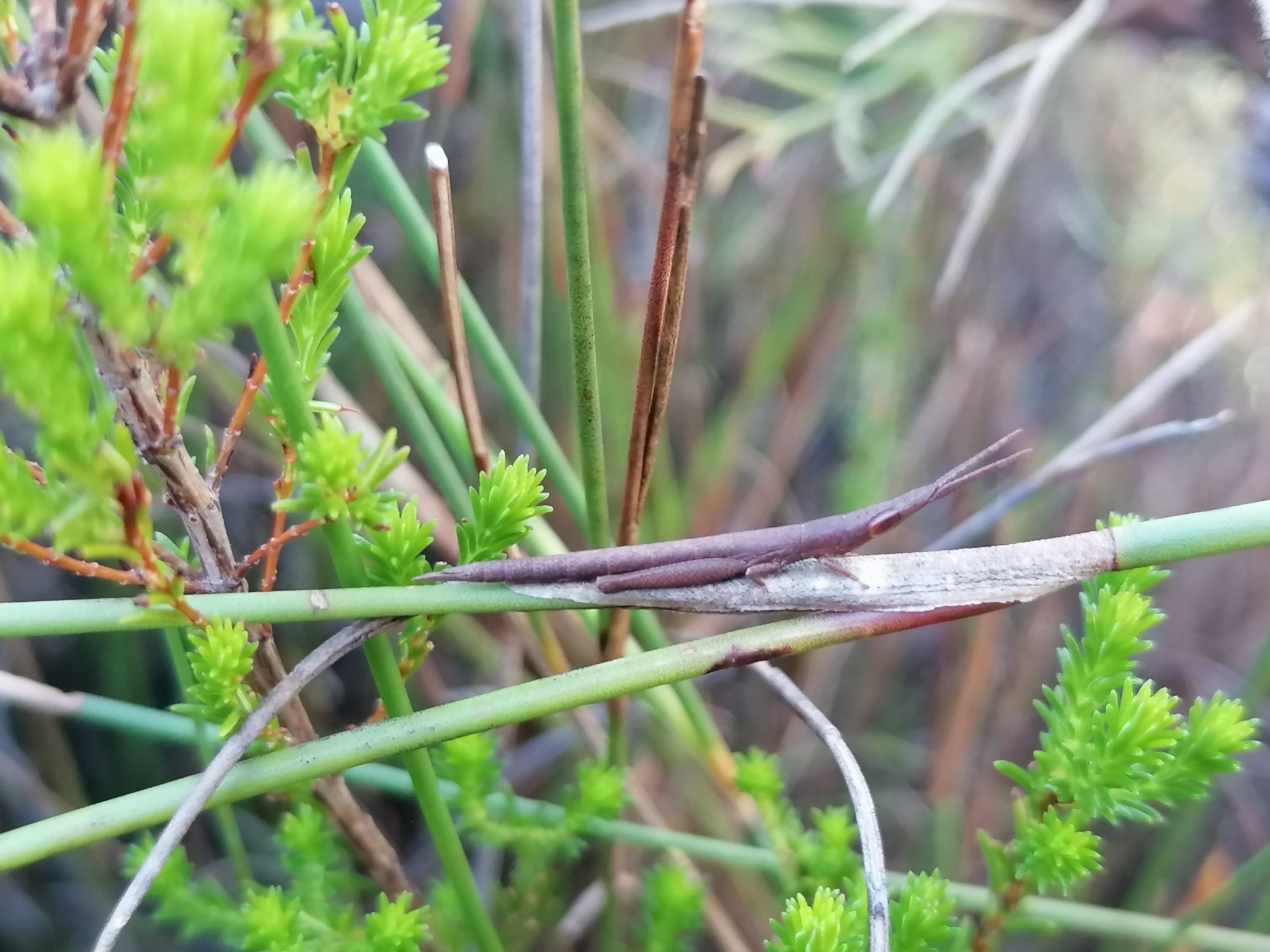
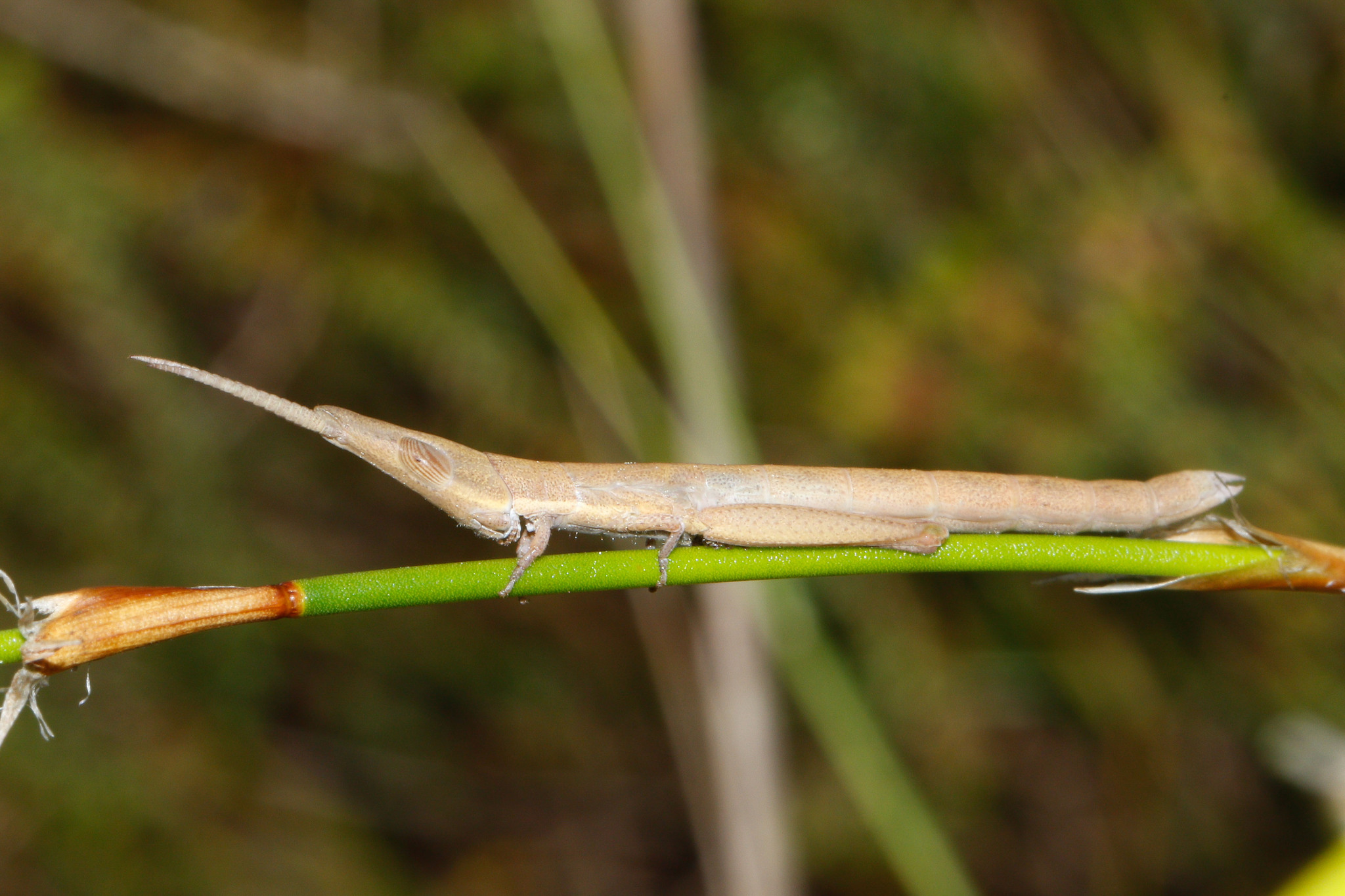
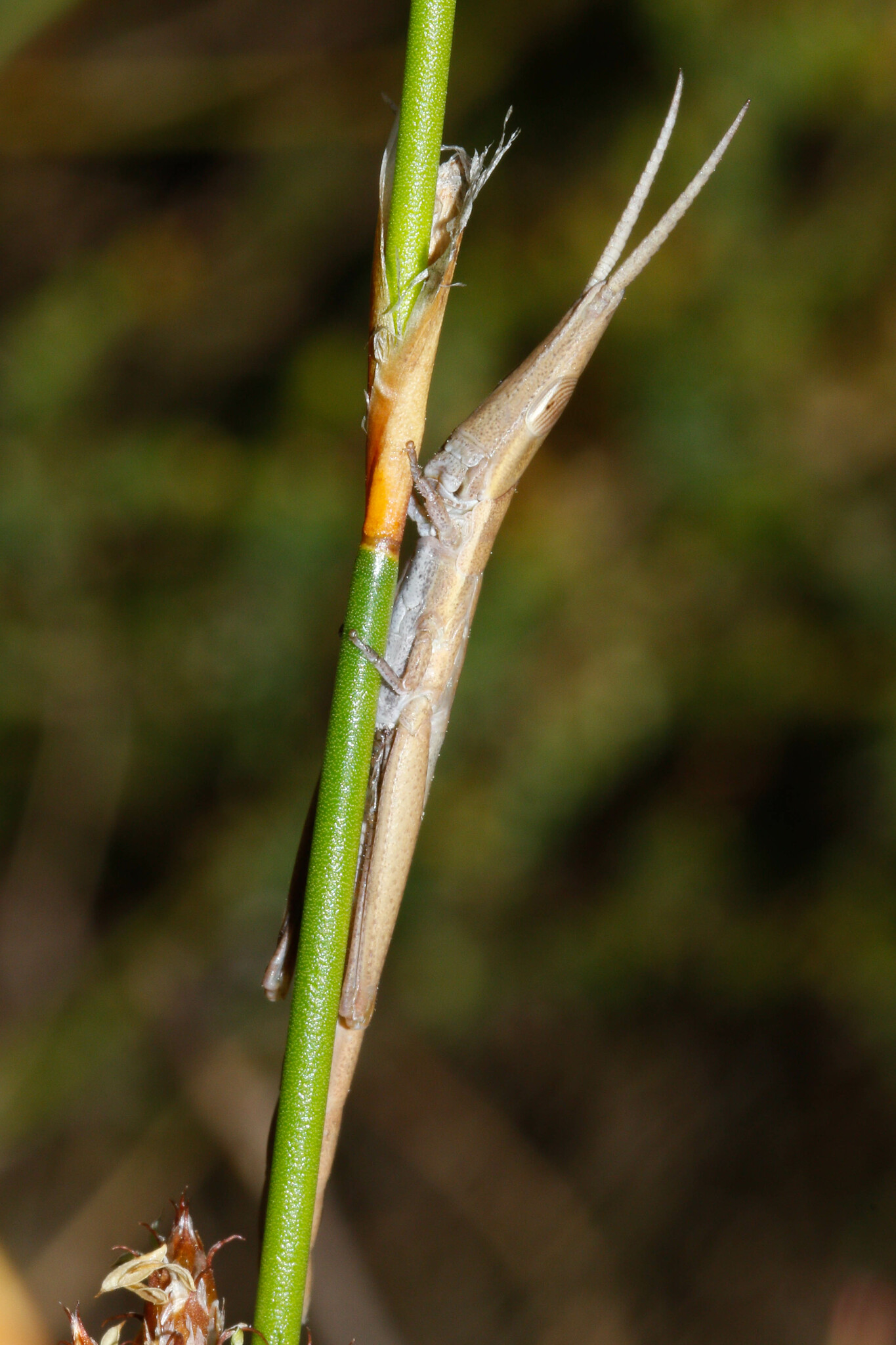
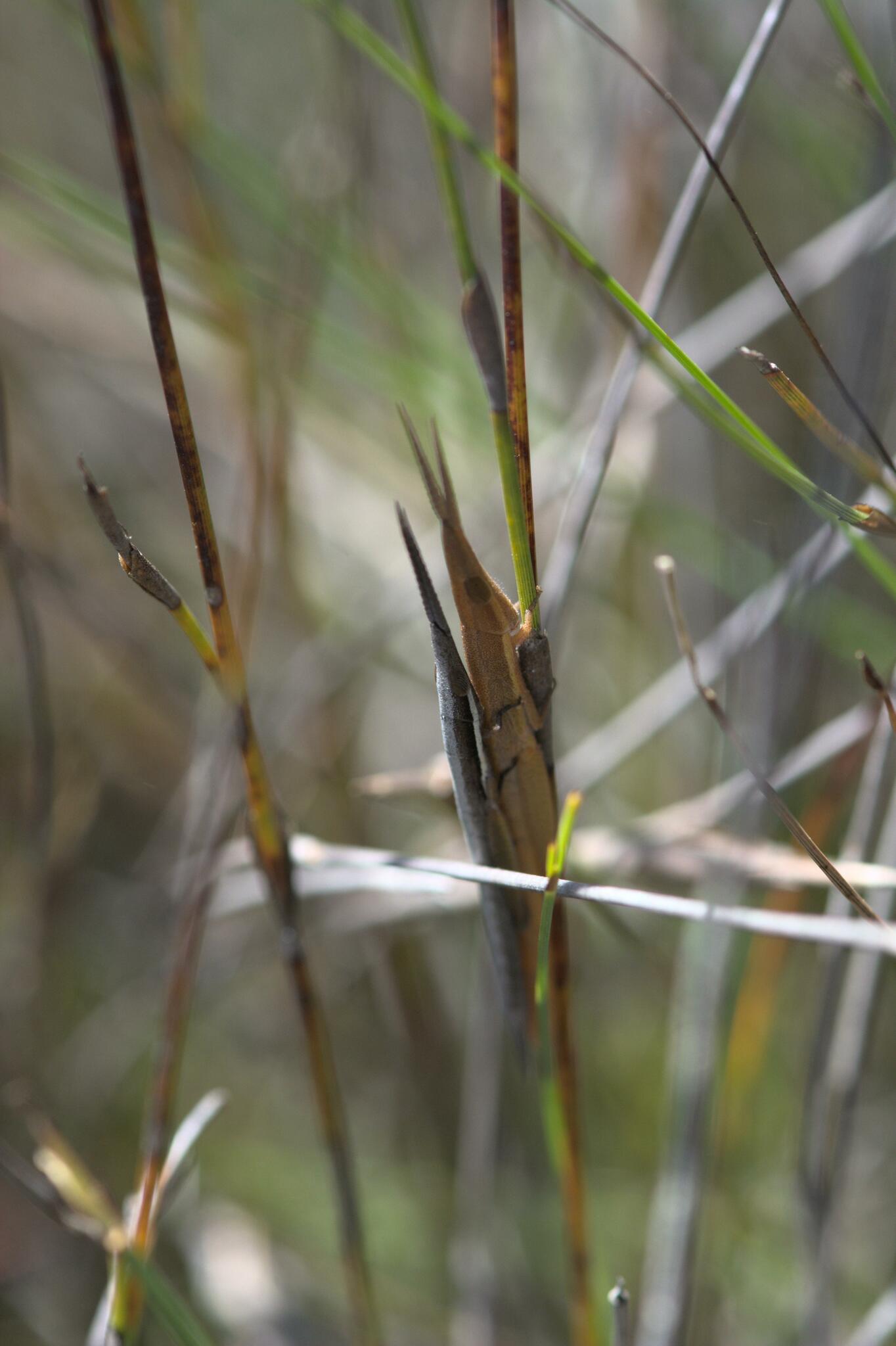
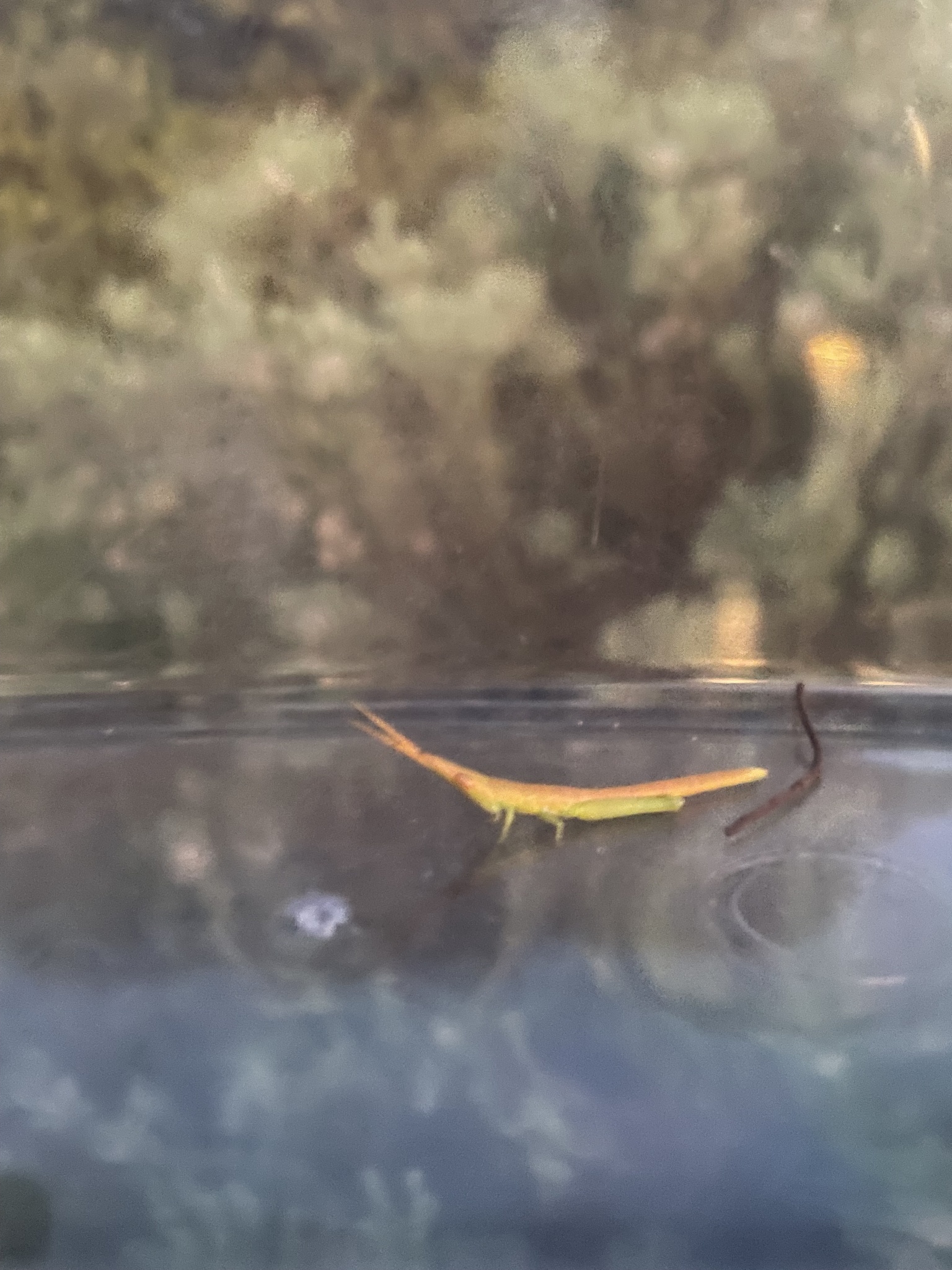
Betiscoides species show the typical morphological characters of the family Lentulidae, as they are wingless and have no tympana. The body shape is elongate, the hind legs are slender, the head is frontally elongated and the antennae flattened. Betiscoides meridionalis is the largest Betiscoides species (body length males: 37.5 mm, females: 42.5 mm. Betiscoides meridionalis has a strongly elongated morphology with the vertex strongly projecting in front of the eyes and the antennal scape being situated close to the apex (Matenaar et. al., 2014; Matenaar et. al., 2018).
Betiscoides meridionalis is the largest Betiscoides species (Matenaar et. al., 2014).
South Africa
This species is endemic to the Cape Floristic Region and strongly associated with restio plants (Restionaceae). The genus Betiscoides is most likely from the southwestern part of the Cape Floristic Region, B. meridionalis ranges from the southwestern to the eastern parts of the Cape Floristic Region (Matenaar et. al., 2018).
Grasshoppers usually move by walking or jumping, but most adults fly, often exposing brightly coloured hindwings. Their adaptations include the forewings (called tergima) which are thickened and with numerous veins; the hind wings also contain many veins but are membranous, fan-like, and folded when in repose. Most Orthoptera display hind legs enlarged and adapted for jumping. Members of genus Betiscoides are flightless grasshoppers (Gibb & Oseto, 2006; Matenaar et. al., 2018).
Herbivore - Graminivore (grass-eating)
Orthoptera have well-developed mandibles and their mouthparts are adapted for chewing. They are mainly herbivorous, favouring a range of grasses and often consuming more even than antelope and cattle (up to 130 kg of grass yearly per hectare). Betiscoides species are strongly specialised in Restionaceae, a plant family belonging to the order Poales, being typical for the Fynbos Biome (Gibb & Oseto, 2006; Picker et al., 2012; Matenaar et. al., 2014).
Females in Orthopterans have an egg-laying tube which is short and usually concealed, as are the male genitalia, and the abdomen in males always turns up at the end. Eggs are laid in groups in soil and mixed with a frothy substance that hardens to form the egg pod (Picker et al., 2012).
Fynbos
This map contains point-based occurrences at different locations
Occurrence in African countries and South African provinces. Residence status indicates if a taxon is indigenous, endemic, or alien in a specific region. This data is based on specimen records and literature.
FSA
SA
BOT
NAM
ESW
LES
WC
EC
NC
FS
GA
KZN
LP
MP
NW
Absent
Indigenous
Endemic
Naturalised
Invasive
Names and Sources
No known common names.
Classification
KINGDOM Animalia
PHYLUM Arthropoda
CLASS Insecta
ORDER Orthoptera
FAMILY Lentulidae
GENUS Betiscoides
SPECIES meridionalis
No results found for Betiscoides meridionalis Sjöstedt, 1923
Unknown
17 results for Betiscoides meridionalis Sjöstedt, 1923
This map contains point-based occurrences at different locations
2018
JOURNAL ARTICLE
Phylogeography of the endemic grasshopper genus Betiscoides (Lentulidae) in the South African Cape Floristic RegionMatenaar, Daniela, Hochkirch, Axel, Fingerle, Marcus, Heym, Eva, Wirtz, Sarah. 2018. Phylogeography of the endemic grasshopper genus Betiscoides (Lentulidae) in the South African Cape Floristic Region Vol. 118 pp.318–329.
2014
JOURNAL ARTICLE
Persisting in a windy habitat: population ecology and behavioral adaptations of two endemic grasshopper species in the Cape region (South Africa)Bazelet, Corinna, Matenaar, Daniela, Hochkirch, Axel, Bröder, Linda. 2014. Persisting in a windy habitat: population ecology and behavioral adaptations of two endemic grasshopper species in the Cape region (South Africa) Vol. 18 pp.447–456.
2012
BOOK
Field Guide to Insects of South AfricaPicker, M., Griffiths, C., Weaving, A.. 2012. Field Guide to Insects of South Africa. Cape Town, South Africa. Struik pp.444.
2006
BOOK
Arthropod collection and identification laboratory and field techniquesGibb, Timothy, Oseto, Christian. 2006. Arthropod collection and identification laboratory and field techniques. Academic Press.
1923
JOURNAL ARTICLE
Zoological results of the Swedish Expedition to Central Afrika 1921Sjöstedt, Y. 1923. Zoological results of the Swedish Expedition to Central Afrika 1921 Vol. 15 pp.39.
Status and criteria
EN
Assessor(s)
Axel Hochkirch
Contributors
Corinna Bazelet
Reviewer(s)
Luc Willemse


