ANIMALIA / ARTHROPODA / INSECTA / ORTHOPTERA / ACRIDIDAE / CANNULA / GRACILIS
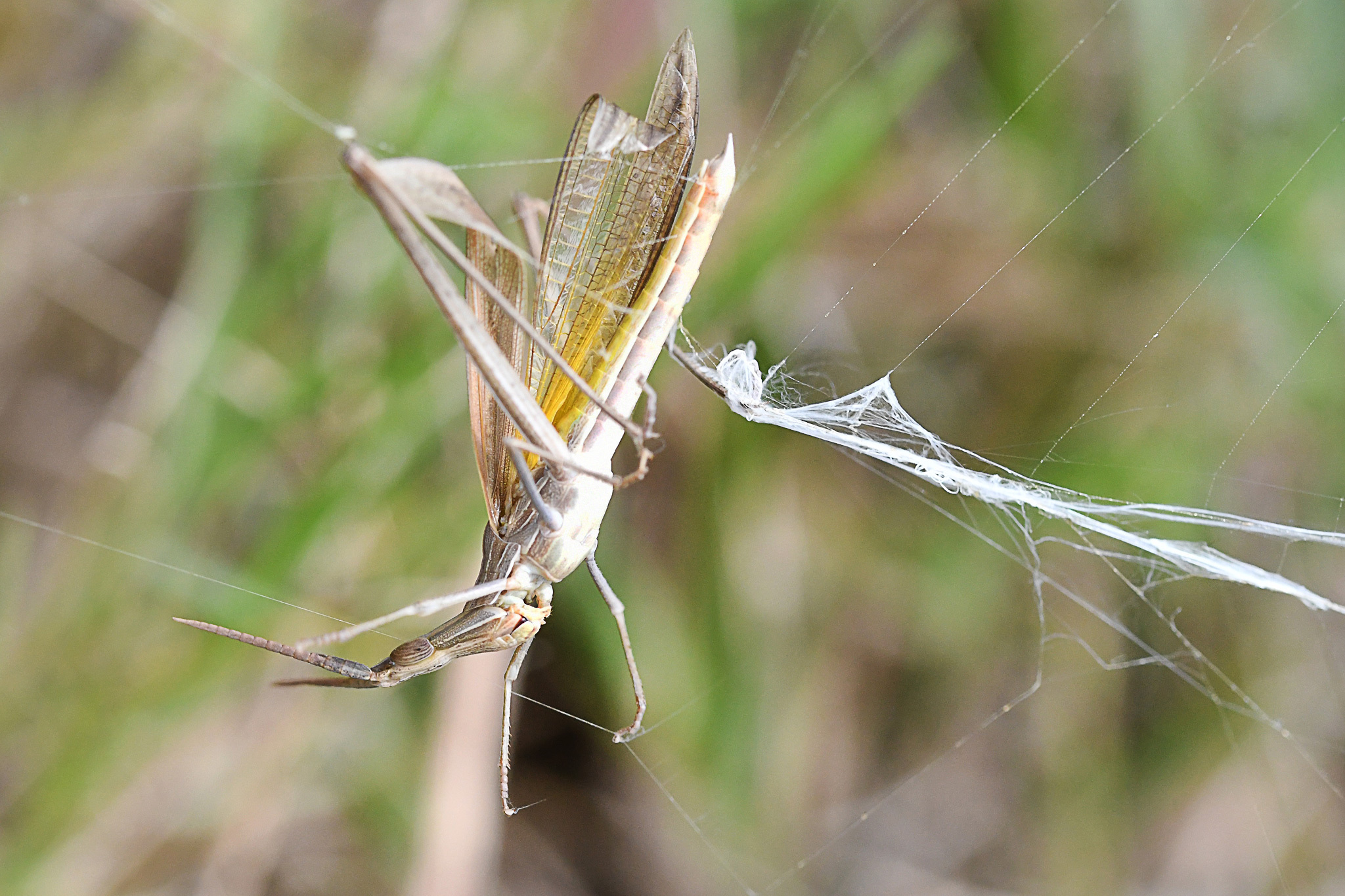
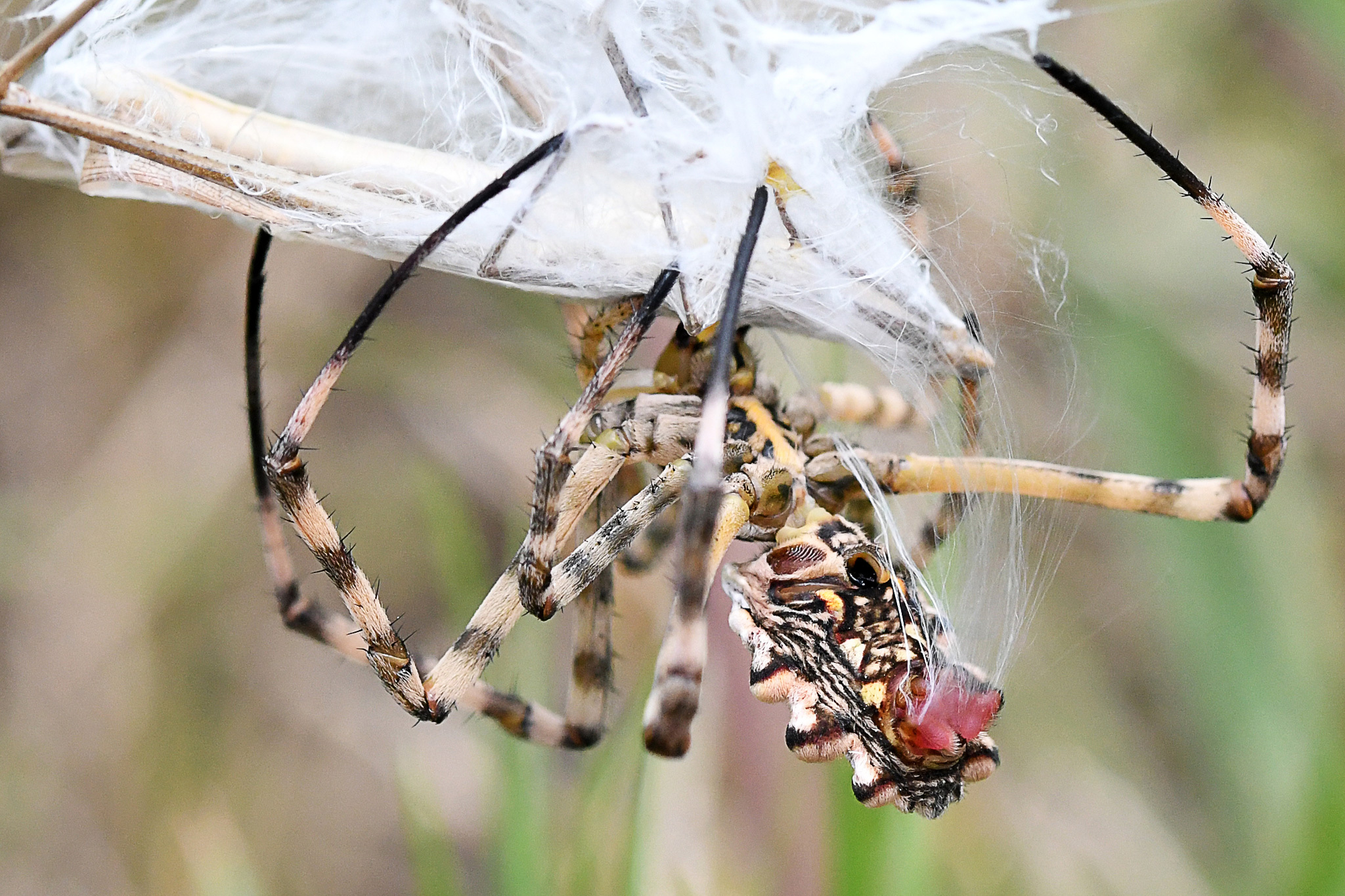
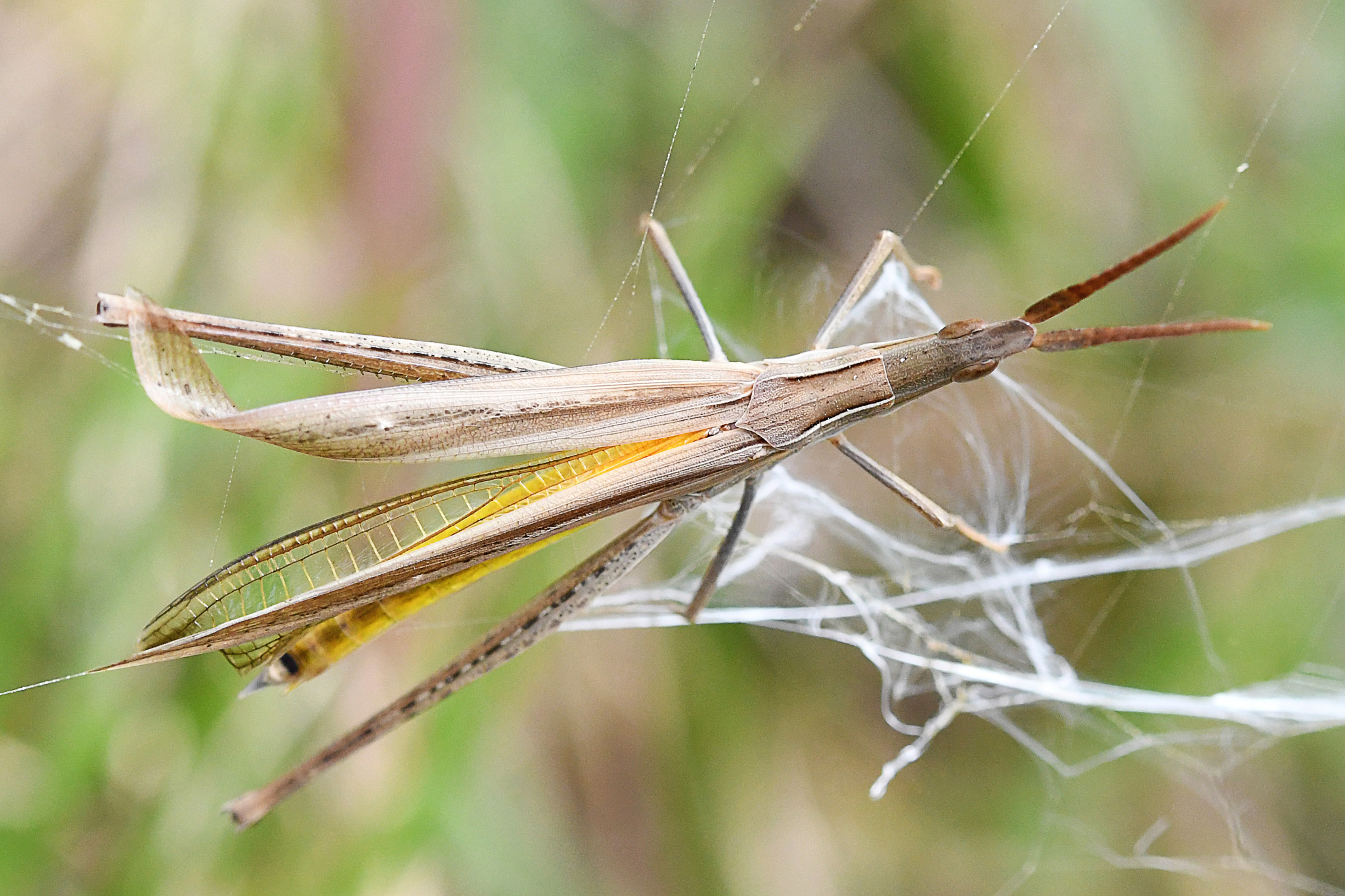
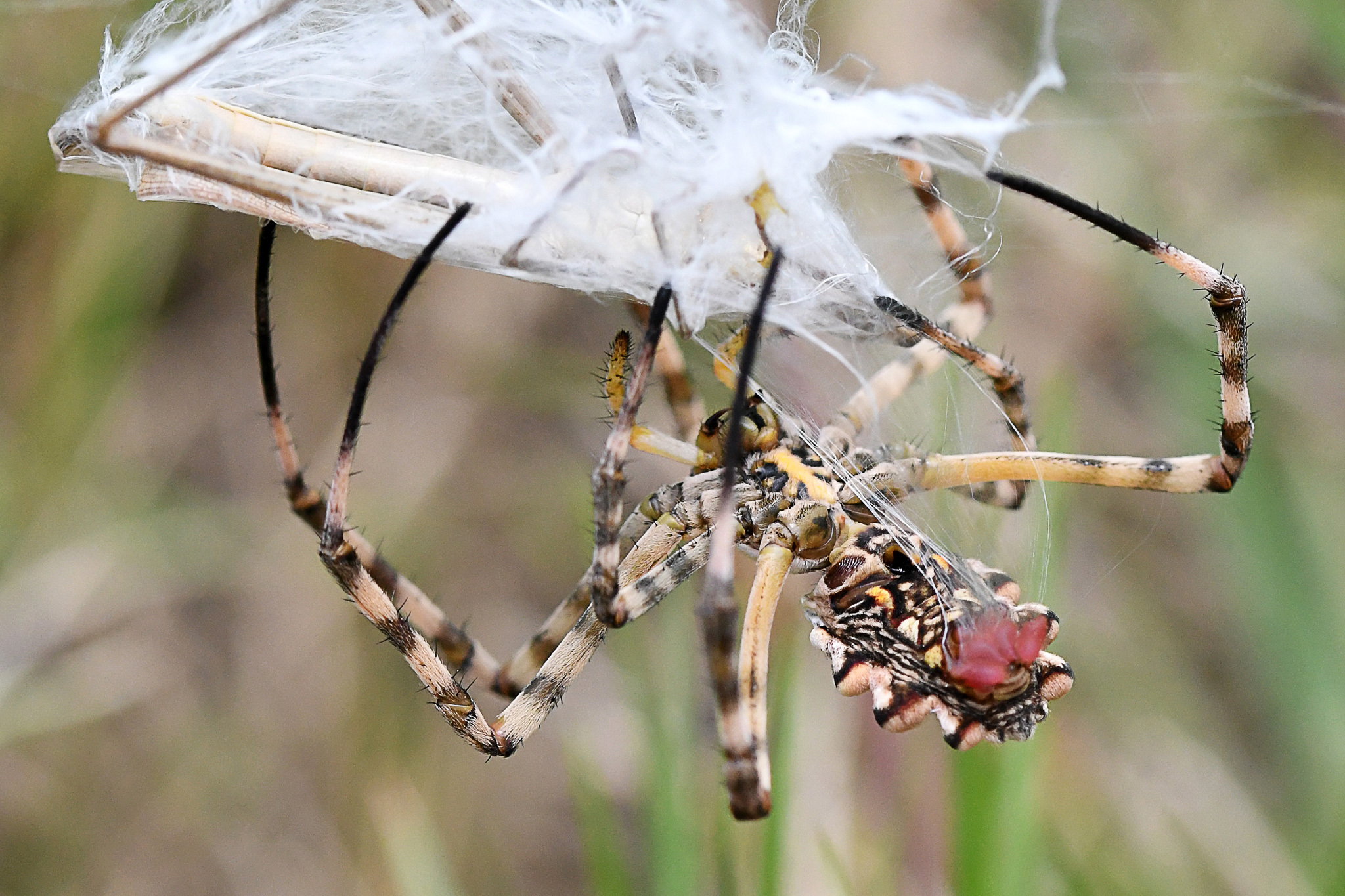
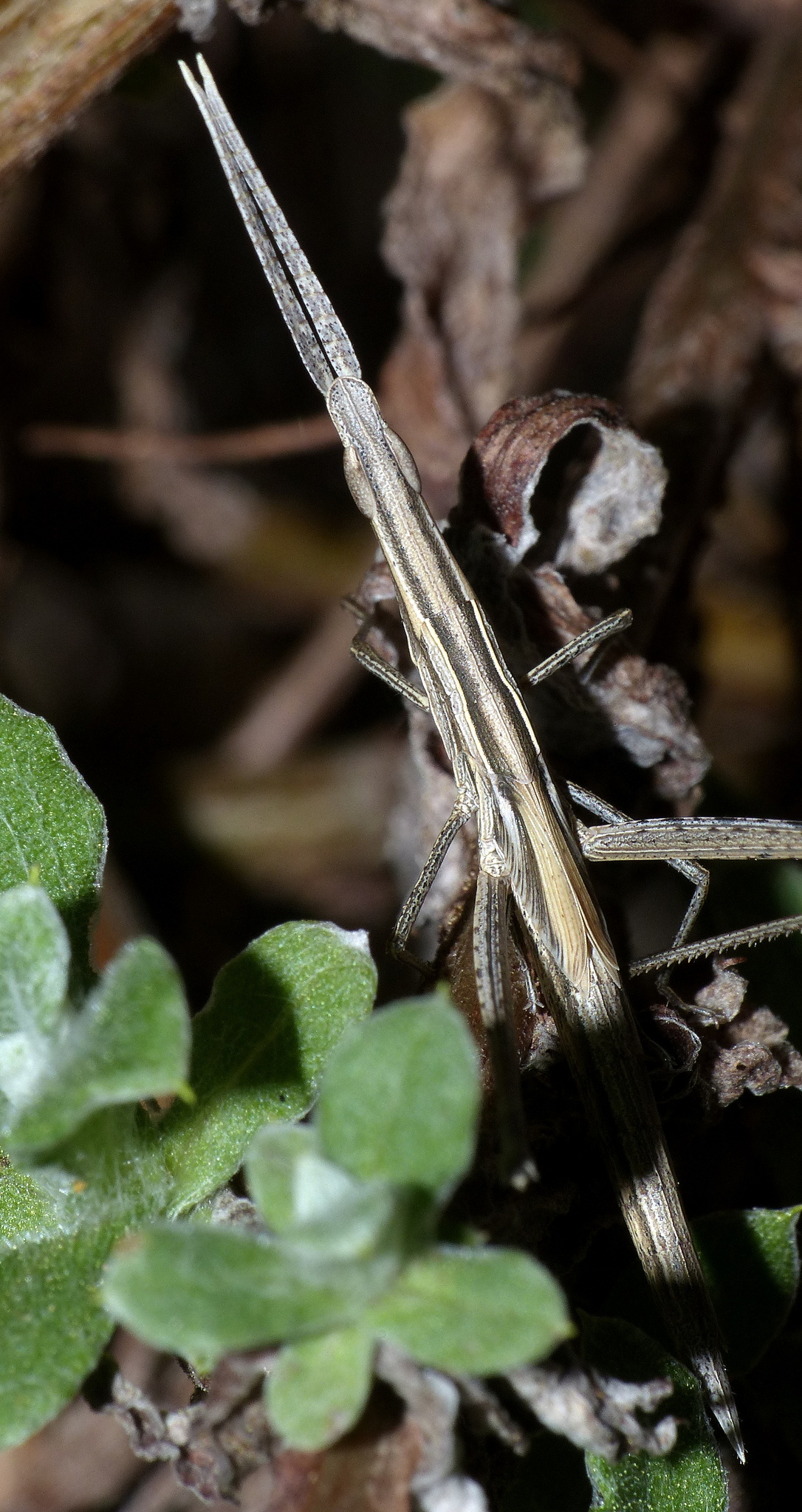
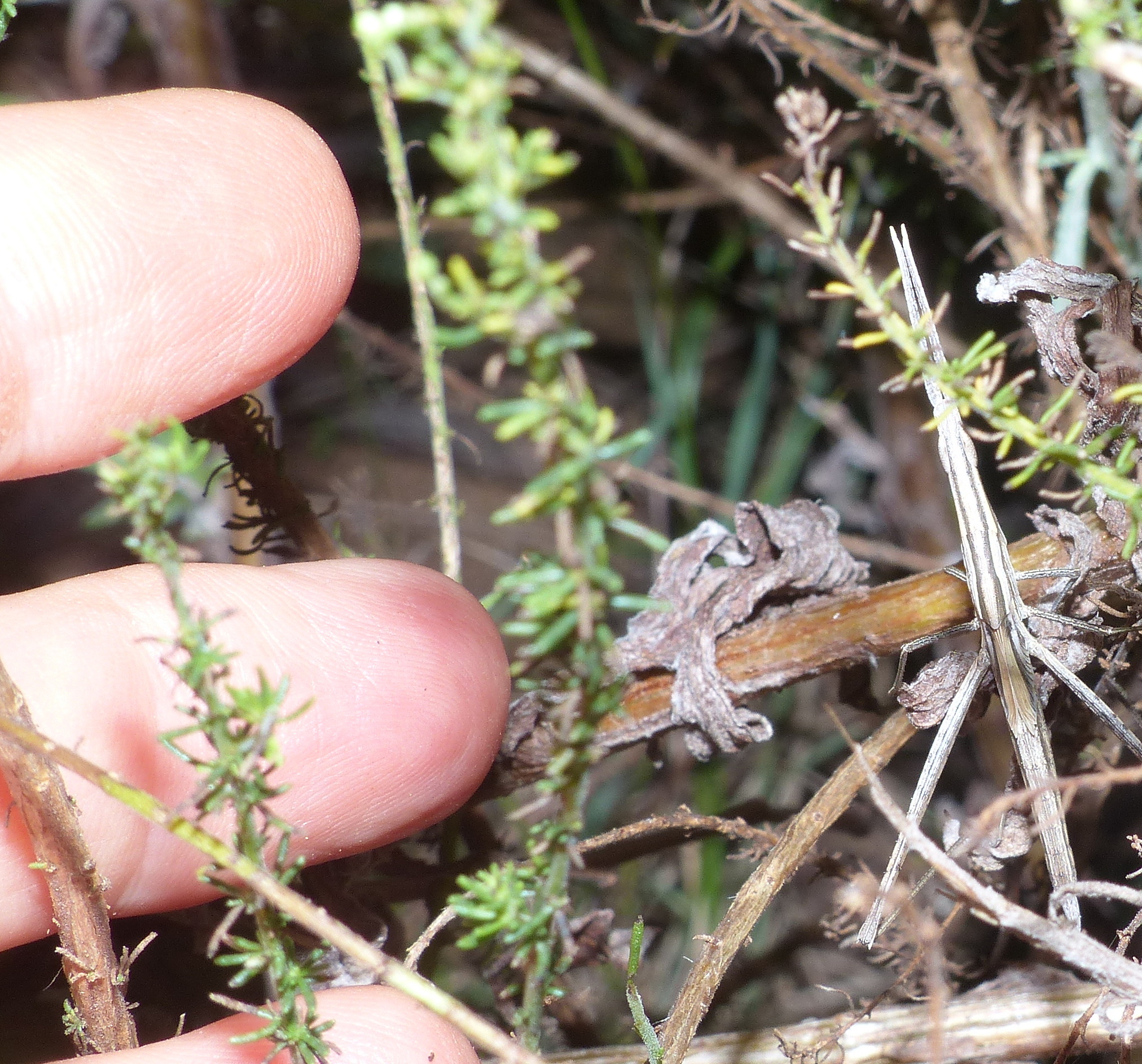
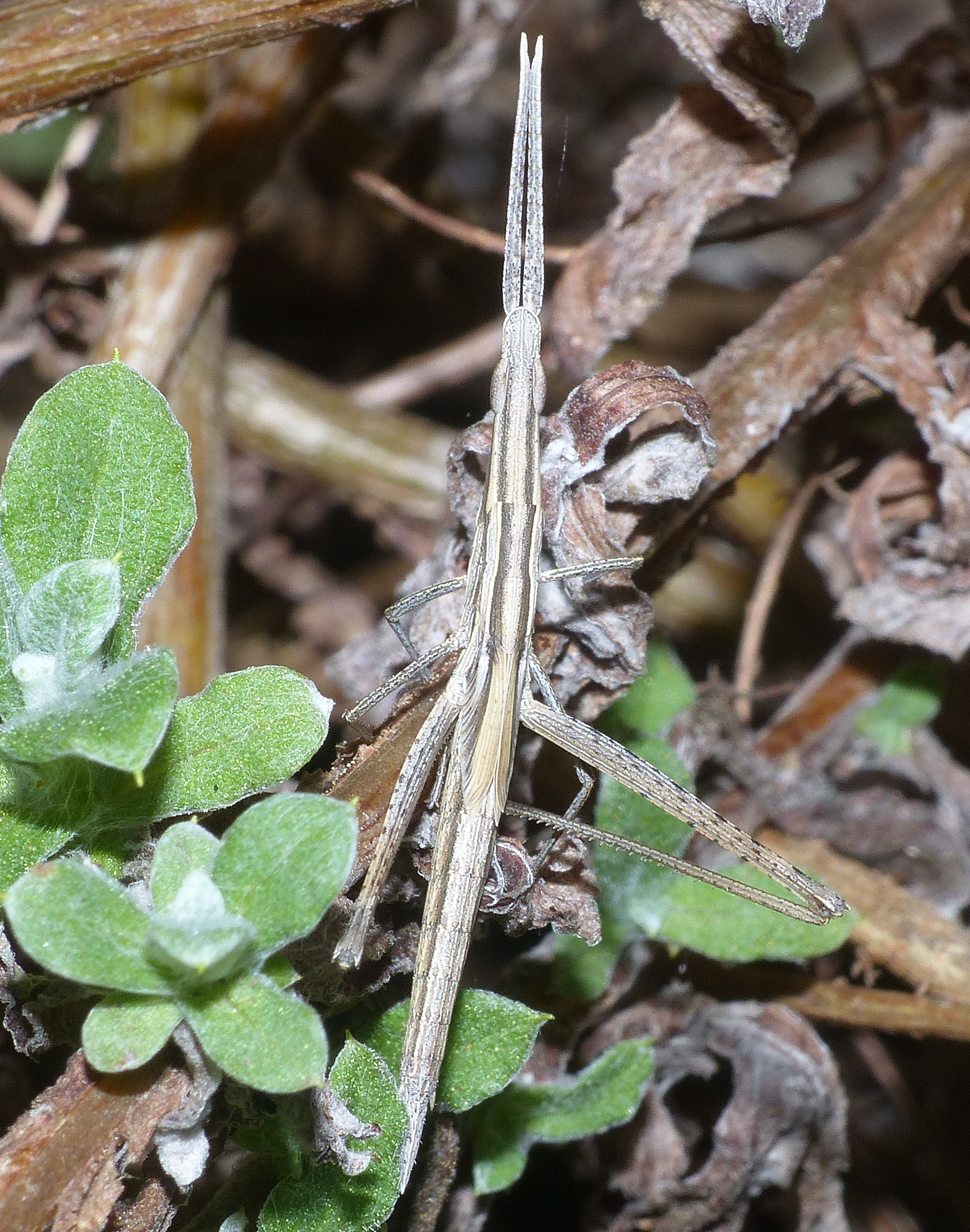
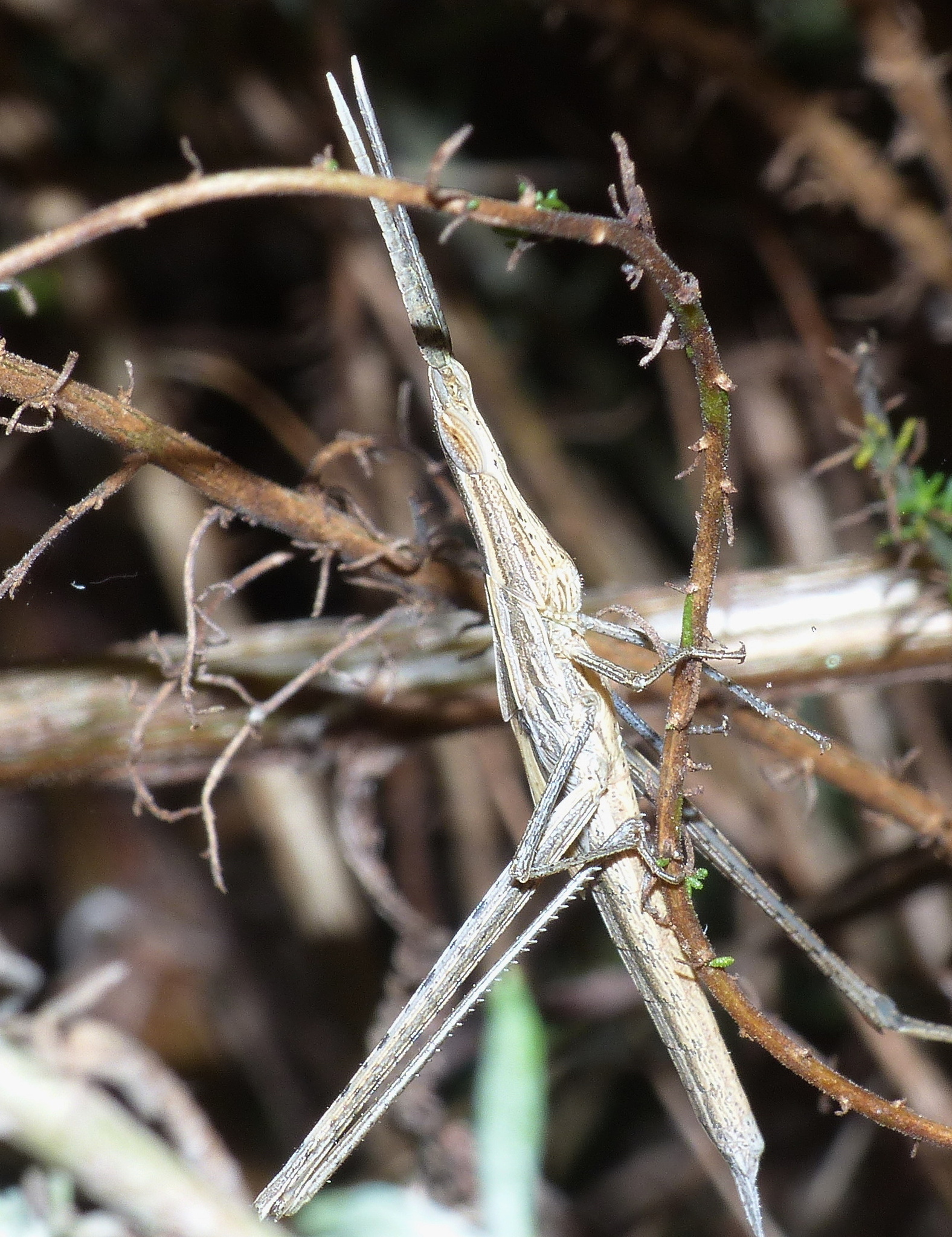
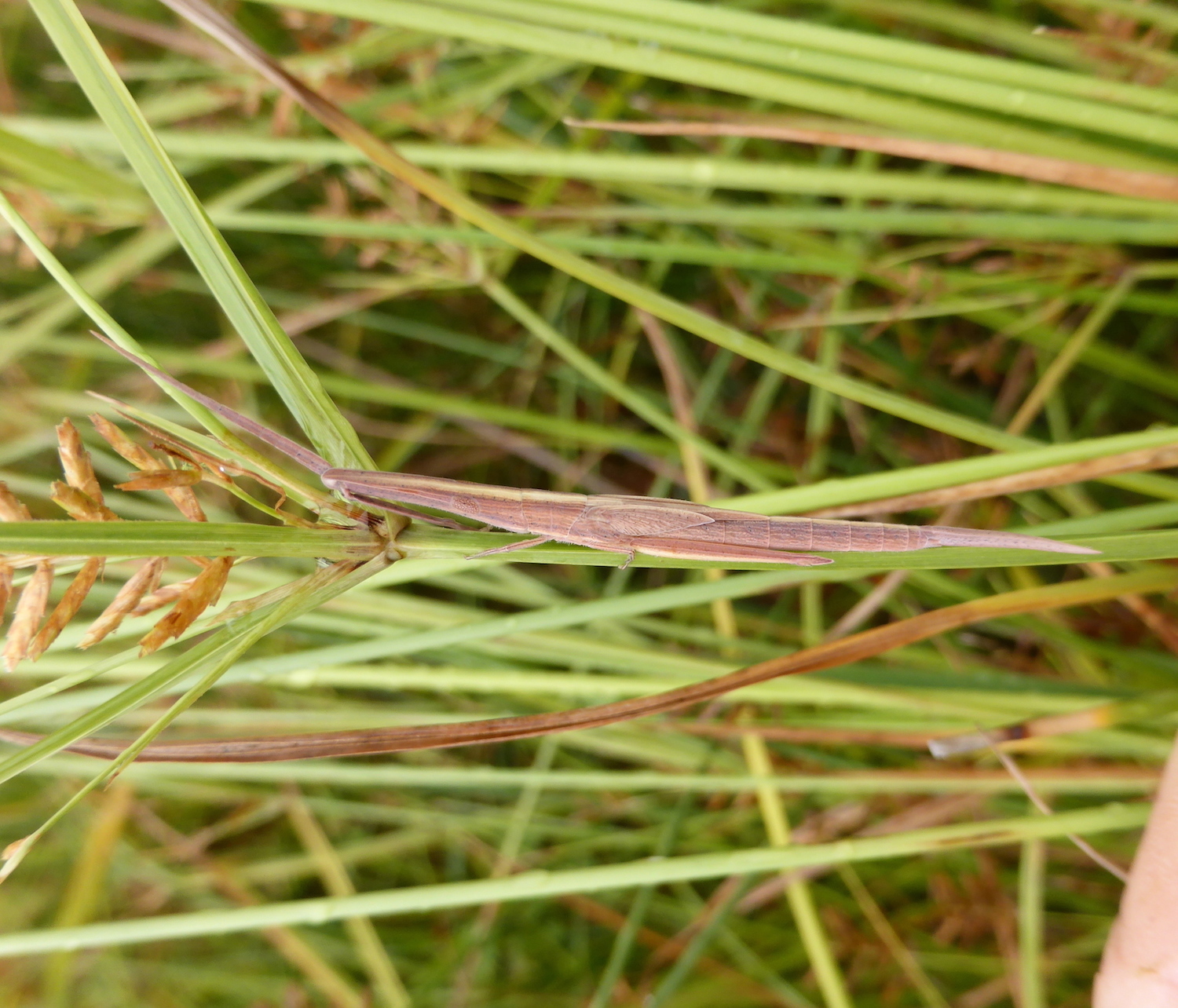
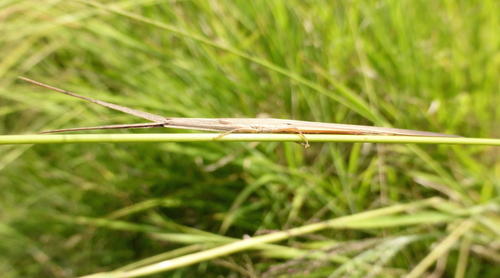
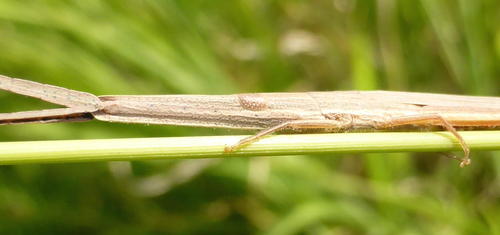
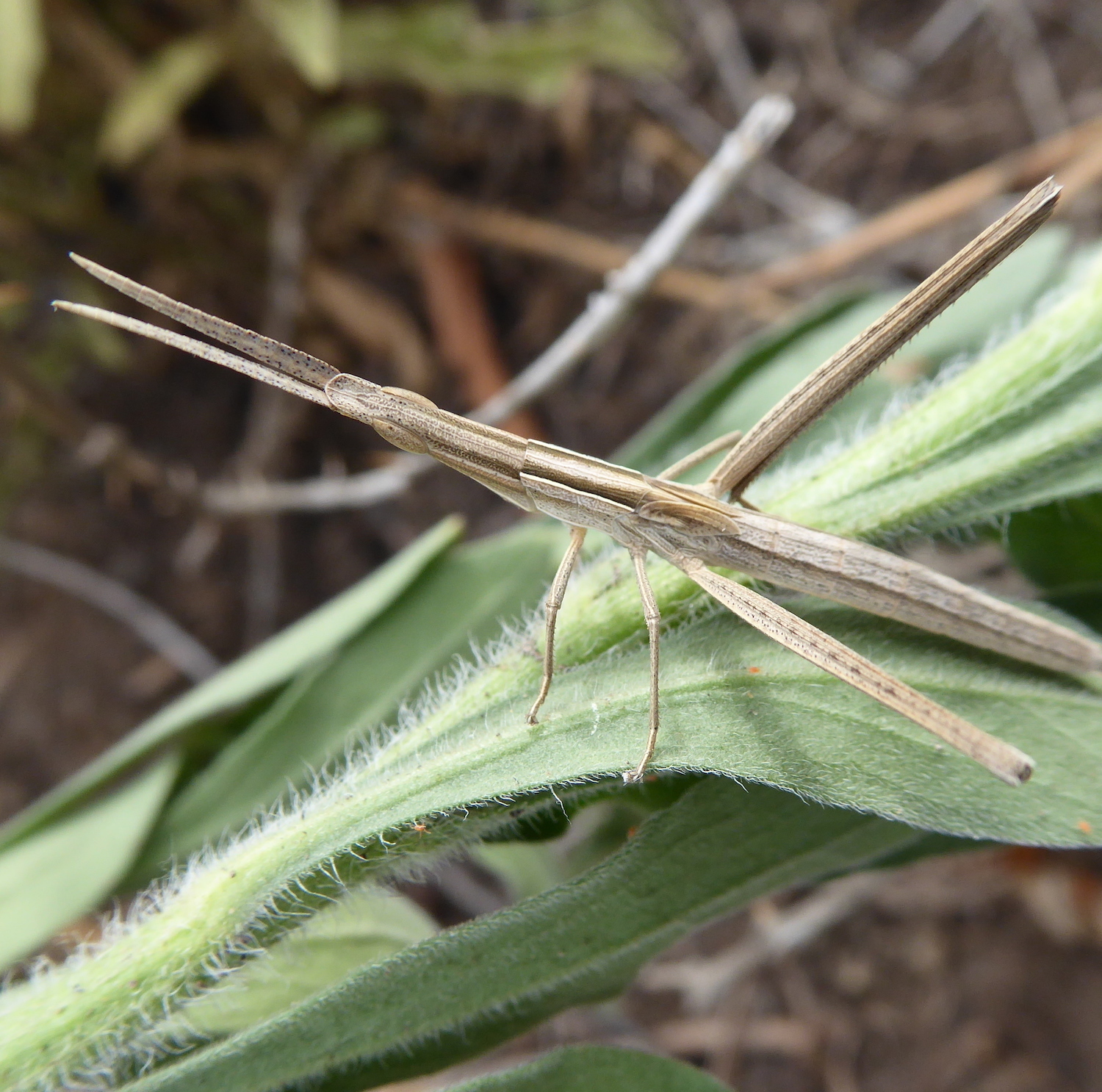
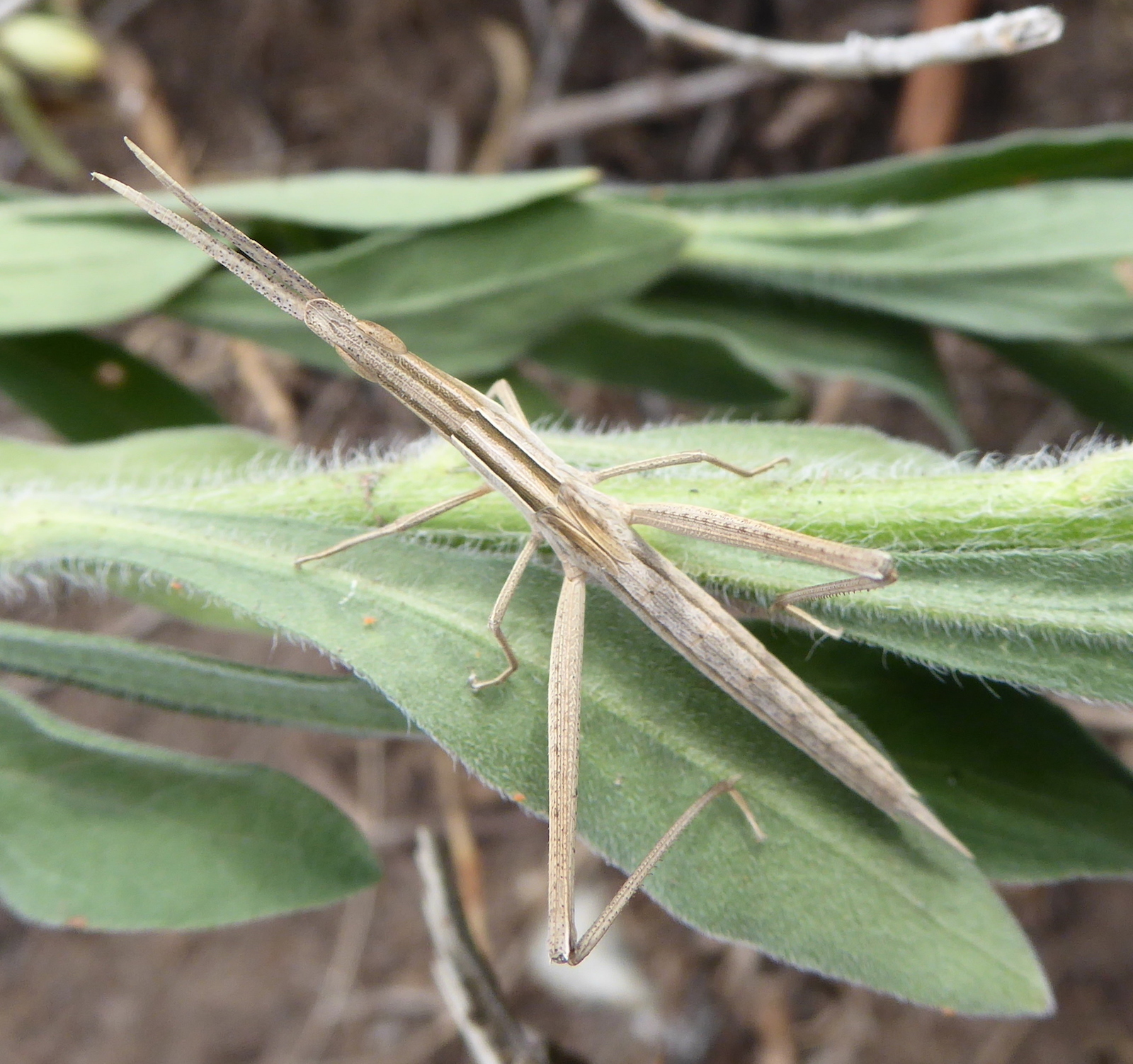
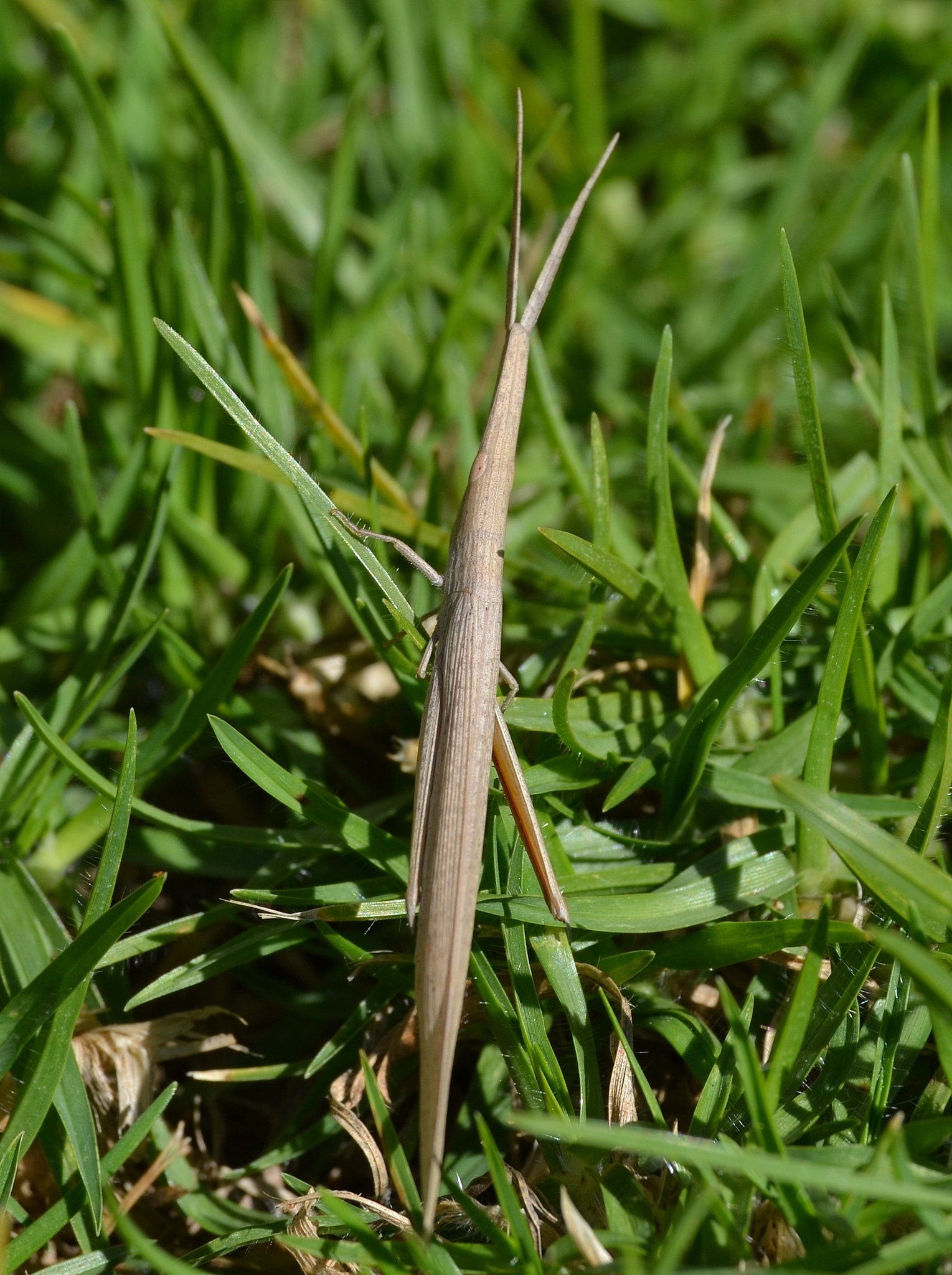
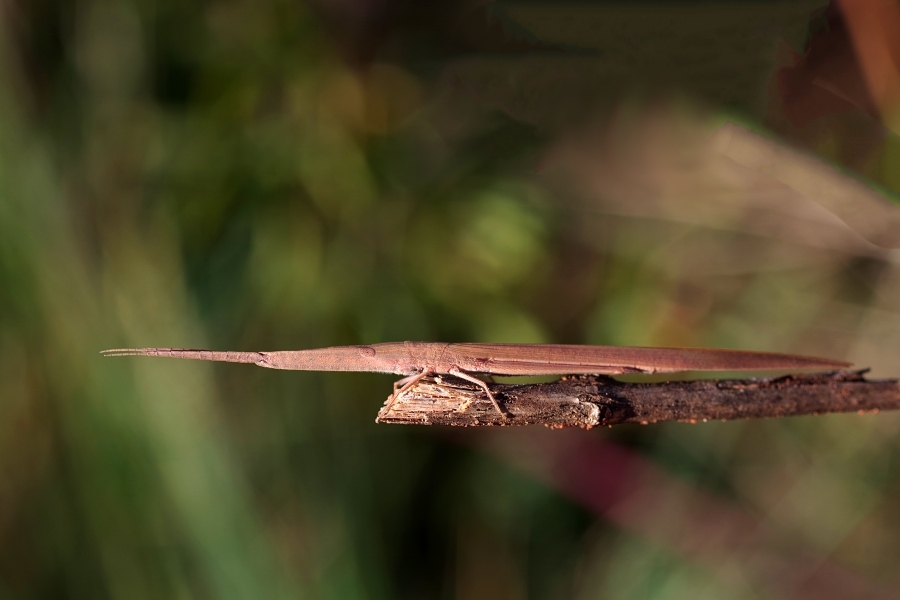
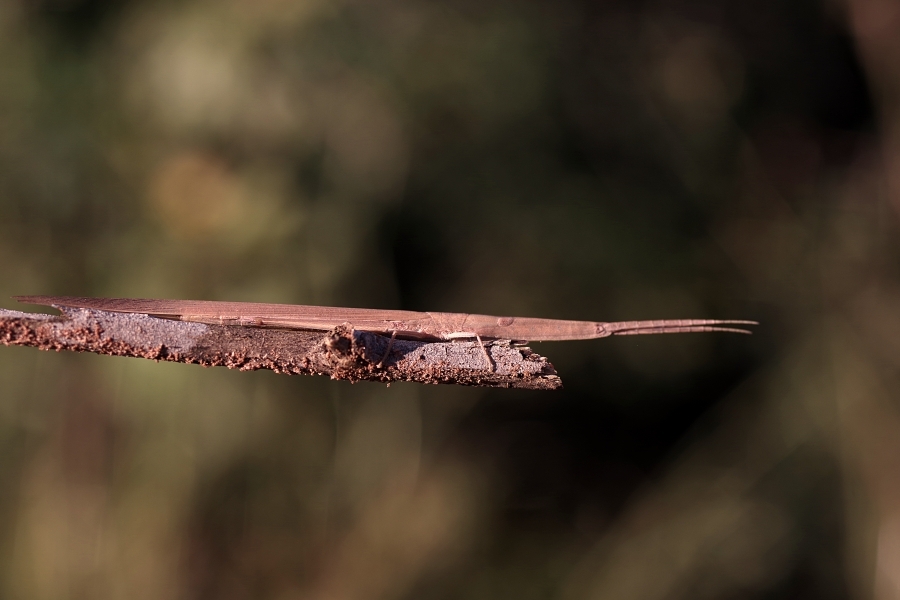
This information was extracted from Popov et al. (2019): "Size variable from medium to large, sexual dimorphism marked. Body very elongate, slender, straw-like. Antenna ensiform, strongly compressed, shorter than head and pronotum together. Head very elongate, narrow, conical. Fastigium of vertex more than twice length of basal part of head, with parabolic apex. Frontal ridge in upper half strongly, lamelliformly compressed, gradually widening in lower half. Pronotum short with well-developed medial carina and straight, parallel, lateral carinae with strong longitudinal ridges between them. Two sulci crossing dorsum; metazona shorter than prozona with roundly excurved posterior margin. Mesosternal interspace closed. Tegmina well developed with dense venation and reticulation; wings shorter, sometimes much shorter. Hind femur very narrow, not reaching end of abdomen; external upper lobe of hind knee strongly elongate; lower lobes moderately elongate, of equal length. Male supraanal and subgenital plates elongate, acutely angular; cerci short, conical. Epiphallus with narrow bridge, moderately large ancorae and very large lobiform lophi. Ovipositor unspecialized. Coloration variable, mostly in shades of stramineous and light brown, but also greyish, with fire-melanic forms common. Black spot on hind wing appears and intensifies with maturation".
Cannula gracilis is widespread in Africa south of the Sahara (Popov et al., 2019).
In South Africa, this species is found in KwaZulu-Natal (Naran & Bazelet, 2013).
Grasshoppers usually move by walking or jumping, but most adults fly, often exposing brightly coloured hindwings. Their adaptations for movement include the forewings (called tegmina) which are thickened and with numerous veins; the hind wings also contain many veins but are membranous, fanlike, and folded when in repose. Most Orthoptera display hind legs enlarged and adapted for jumping (Gibb et al., 2006).
Herbivore - Graminivore (grass-eating)
This species is a strict graminicole, feeding mainly on the grass stem that it clings tight onto (Popov et al., 2019).
Females in orthopterans have the egg-laying tube which is short and usually concealed, as are the male genitalia, and the abdomen in males always turns up at the end. Eggs are laid in groups in soil and mixed with a frothy substance that hardens to form the egg pod (Picker et al., 2012).
This map contains point-based occurrences at different locations
Occurrence in African countries and South African provinces. Residence status indicates if a taxon is indigenous, endemic, or alien in a specific region. This data is based on specimen records and literature.
FSA
SA
BOT
NAM
ESW
LES
WC
EC
NC
FS
GA
KZN
LP
MP
NW
Absent
Indigenous
Endemic
Naturalised
Invasive
Names and Sources
Cannula gracilis ((Burmeister, 1838))
Cannula albovittata
Author: (Sjöstedt, 1923)
Cannula fenestrata
Author: (Sjöstedt, 1923)
Cannula lamani
Author: (Sjöstedt, 1923)
Cannula linearis
Author: (Saussure, 1862)
Cannula magniplaga
Author: (Sjöstedt, 1931)
Cannula tesselata reducta
Author: (Sjöstedt, 1931)
Cannula sulcata
Author: (Sjöstedt, 1923)
Cannula tesselata
Author: (Sjöstedt, 1923)
| Common Name | Language |
|---|---|
| Grass-mimicking Grasshopper |
Classification
KINGDOM Animalia
PHYLUM Arthropoda
CLASS Insecta
ORDER Orthoptera
FAMILY Acrididae
GENUS Cannula
SPECIES gracilis
No results found for Cannula gracilis (Burmeister, 1838)
Unknown
8 results for Cannula gracilis (Burmeister, 1838)
This map contains point-based occurrences at different locations
1839
BOOK
Handbuch der Entomologie. 2(2), 2. Neuroptera. [Handbuch der Entomologie. Zweiter Band, Befondere Entomologie. Zweite Abtheilung. Kauterfe. Gymnognatha. (Zweite hälfte; vulgo Neuroptera)Burmeister, H. 1839. Handbuch der Entomologie. 2(2), 2. Neuroptera. [Handbuch der Entomologie. Zweiter Band, Befondere Entomologie. Zweite Abtheilung. Kauterfe. Gymnognatha. (Zweite hälfte; vulgo Neuroptera) Vol. 2. Berlin. Enslin.
2006
BOOK
Arthropod collection and identification laboratory and field techniquesGibb, Timothy, Oseto, Christian. 2006. Arthropod collection and identification laboratory and field techniques. Academic Press.
2013
WEB ARTICLE
Checklist of South African OrthopteraBazelet, CS, Naran, D. 2013. Checklist of South African Orthoptera Vol. . Pretoria. South African National Biodiversity Insitute.
1870
JOURNAL ARTICLE
"On a new species of roller (Coracias) from the Zambesi".TRIMEN, R.. 1870. "On a new species of roller (Coracias) from the Zambesi". Vol. 29(5). London. pp.238.
2019
JOURNAL ARTICLE
A review of the Acridinae s. str.(Orthoptera: Acridoidea: Acrididae) of eastern Africa with taxonomic changes and description of new taxaPopov, GB, Fishpool, LDC, Rowell, H. 2019. A review of the Acridinae s. str.(Orthoptera: Acridoidea: Acrididae) of eastern Africa with taxonomic changes and description of new taxa Vol. 28 pp.37-105.