PLANTAE / PHANEROGAMAE / ANTHOPHYTA / POALES / CYPERACEAE / CYPEROIDEAE / SCHOENEAE / SCHOENUS / CRINITUS

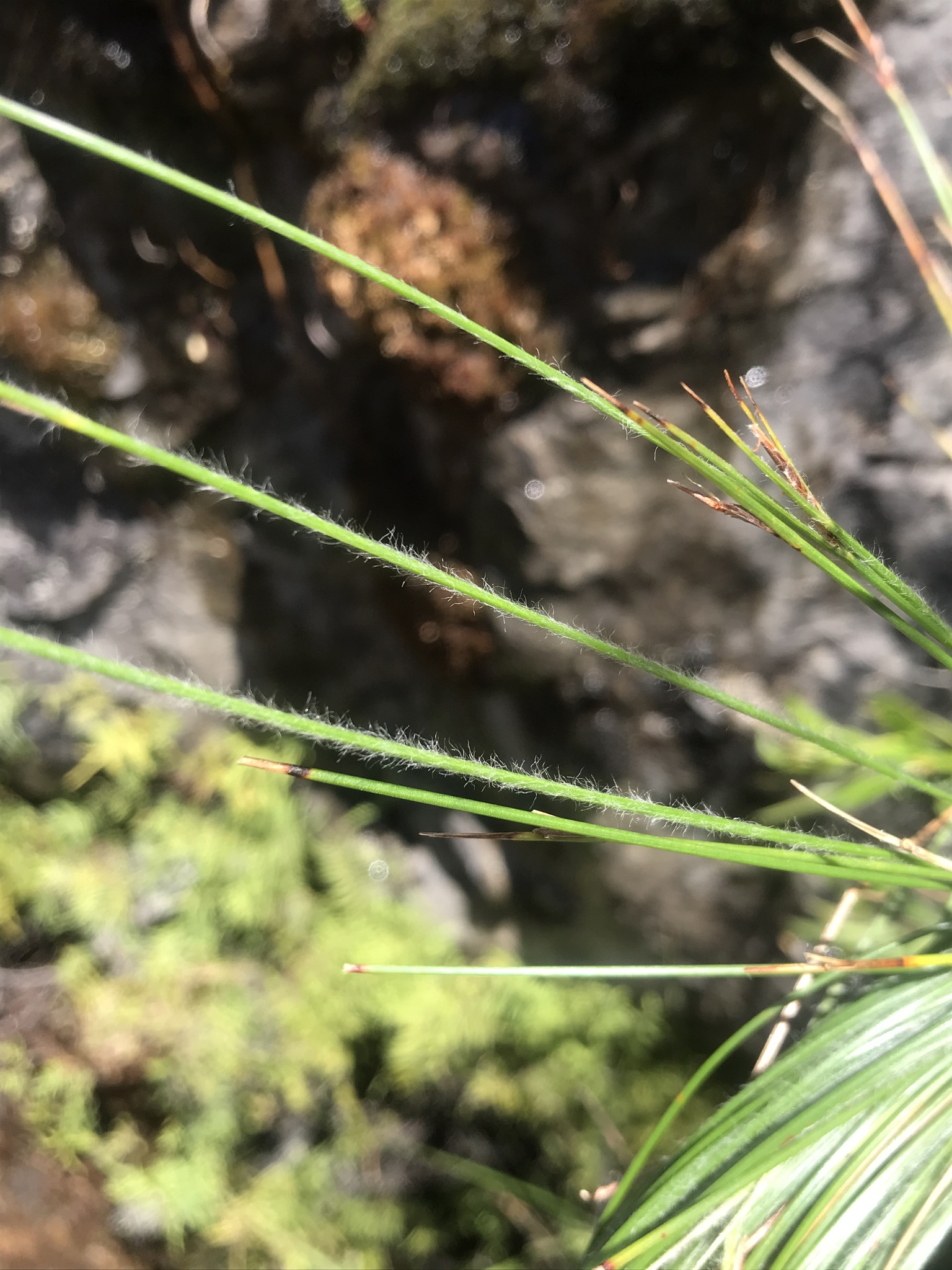
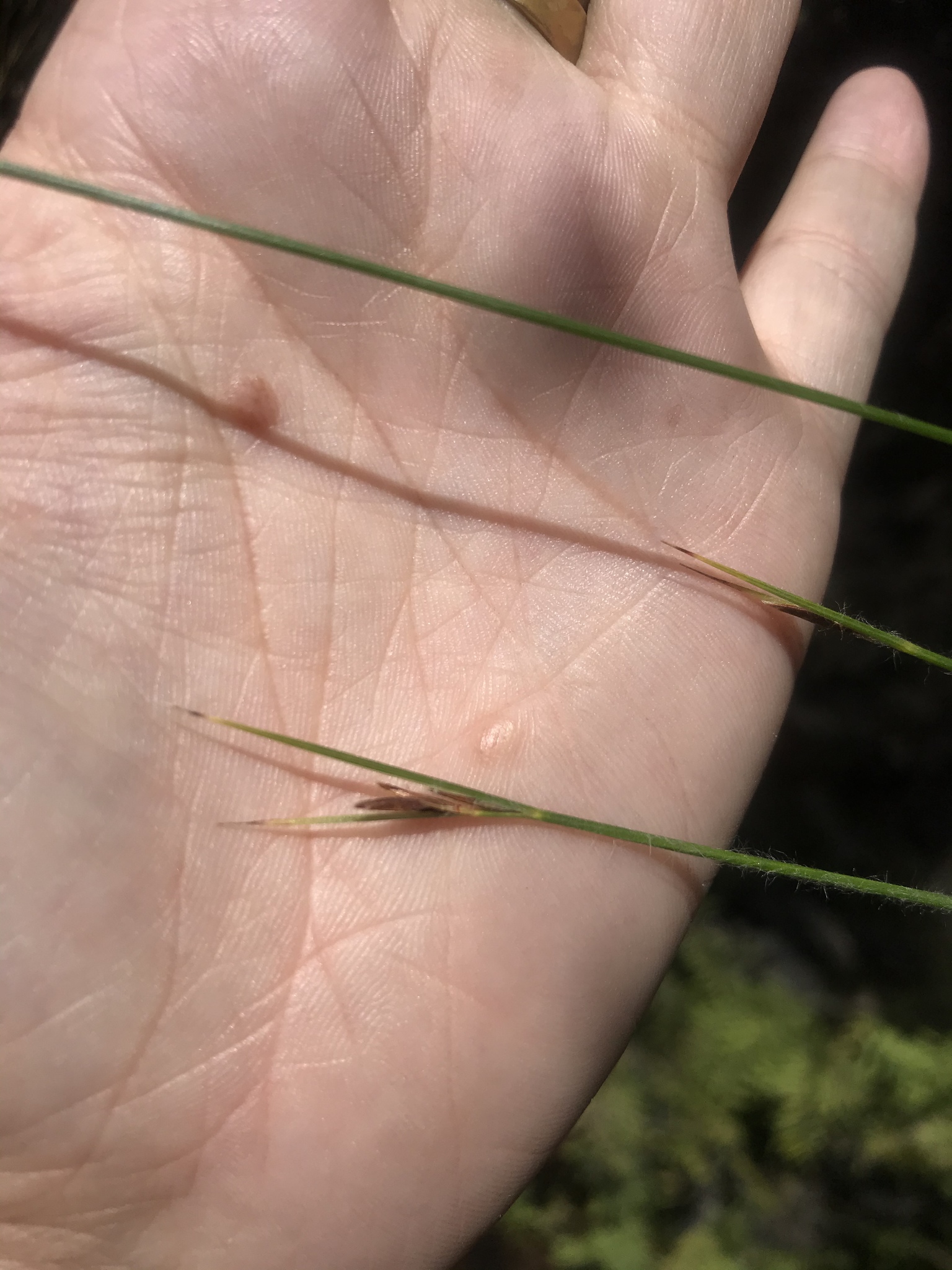
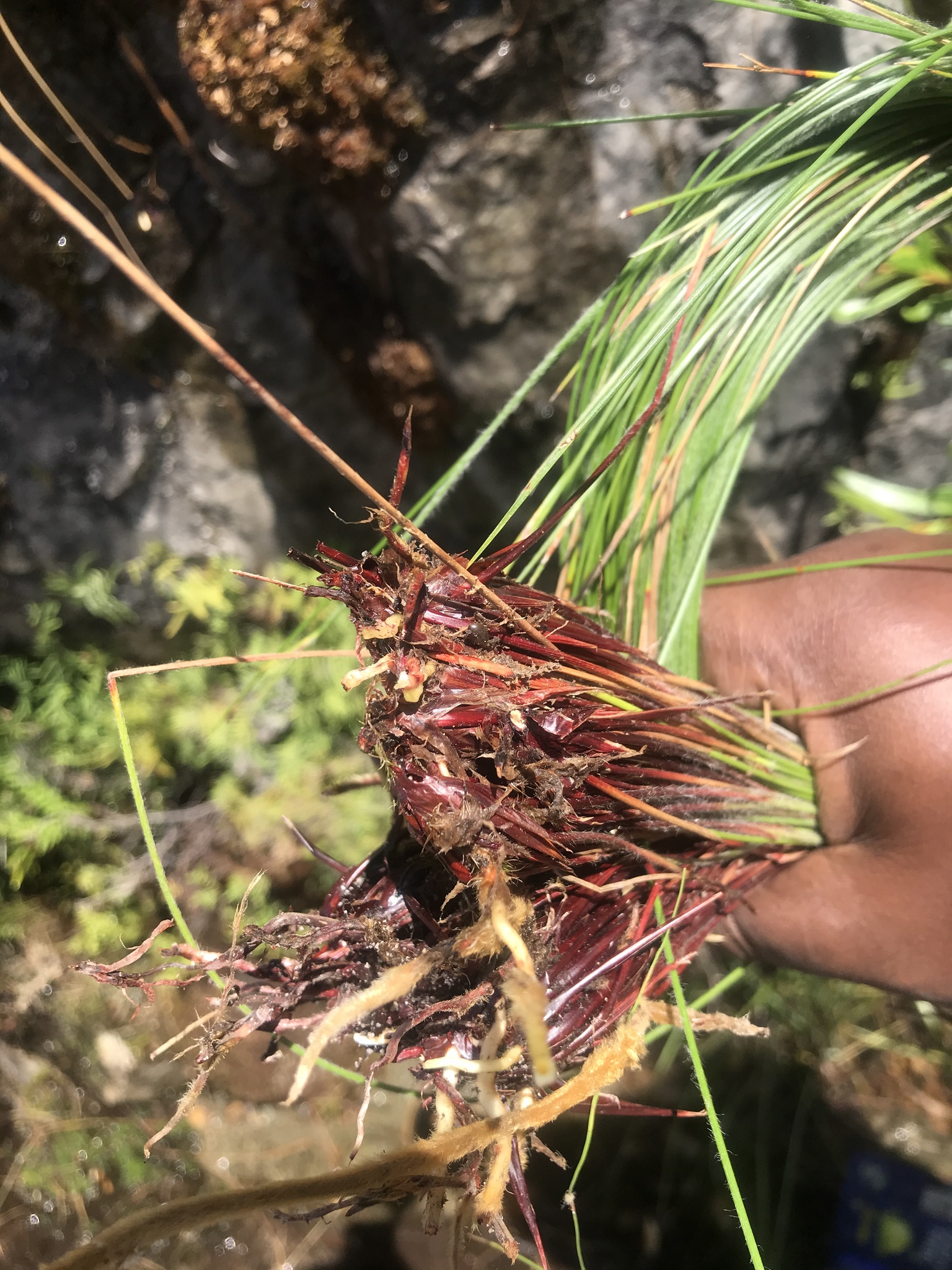
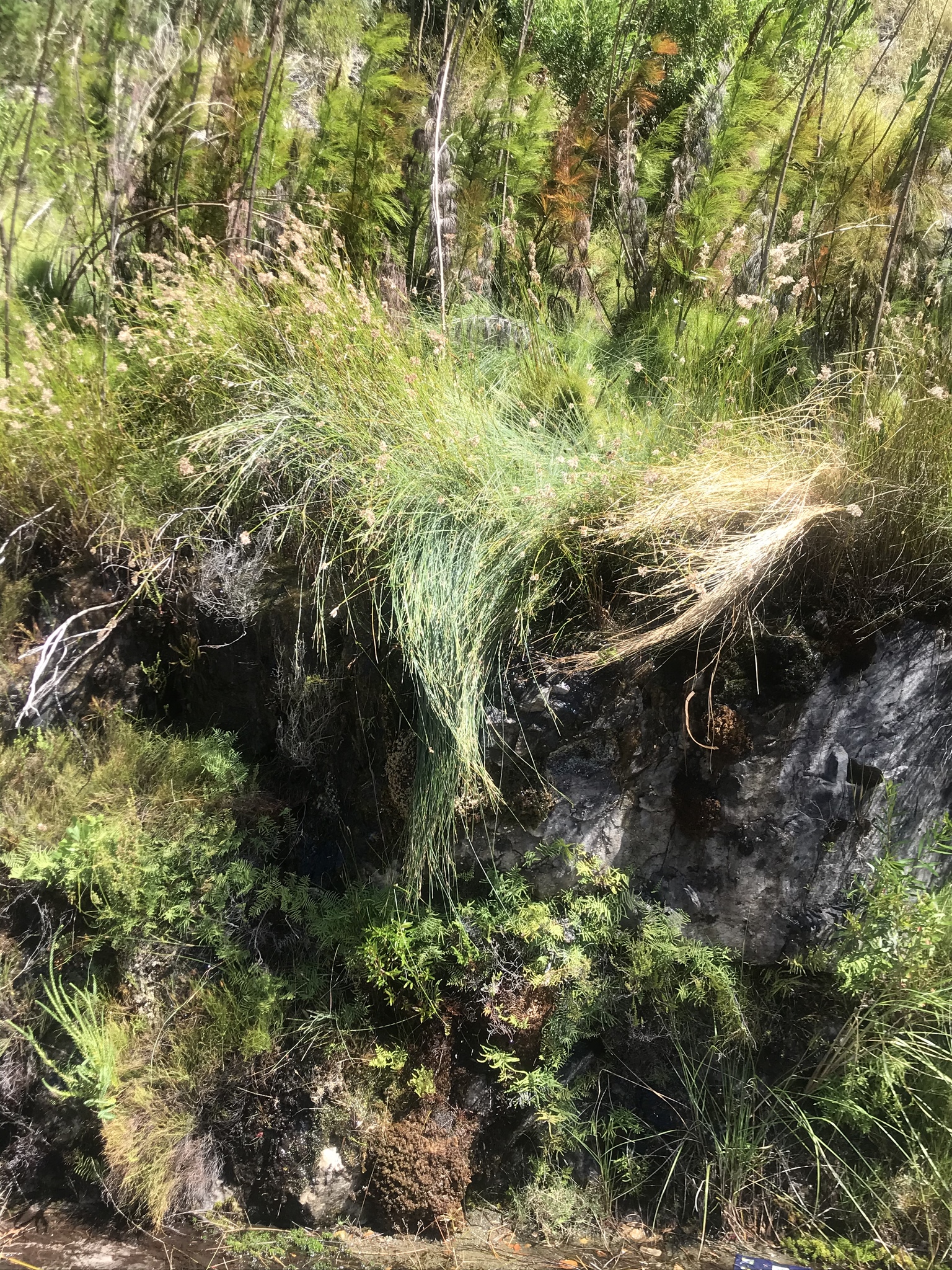
Caespitose, perennial graminoid, aphyllopodic, hairy. Culms hairy and ridged (evident on dried specimens), (730-)834-894(-965) x 0.6-0.8 mm. Leaves absent. Sheaths dark reddish-black, longitudinally striate, open, central vein terminating in a mucro up to several mm long, semi-firm to firm. Ligule absent. Inflorescence a depauperate, pseudolateral panicle, (32-)49-60(-69) x 2.0-6.0(-10.0) mm, proximal rachis length 11.0-37.3(-45.0) mm. Proximal primary inflorescence bracts (61-)72-84(-96) mm long, rigid, without lateral chartaceous extensions, involute, narrow at base, apex acute, exceeding length of inflorescence slightly. Spikes 2, (7-)18-29(-34) mm long, aggregated into small clusters along rachis, sometimes slightly overlapping. Spikelets lanceolate, hairy, 1-3 spikelets per spike, (6.3-)7.1-7.9(-8.3) x (0.9-)1.2-1.7(-2.1) mm, pedicellate, colour reddish-brown, texture firm and opaque, not concealed by primary inflorescence bracts, varying number of sterile glumes at spikelet base. Proximal spikelet prophyll sometimes present, 1.7 mm (one measured), mucros 1.7-1.8 mm long when present. Rachilla varying greatly in length, (1.1-)2.9-13.7(-20.6) mm long. Glumes 4-8 per spikelet, texture opaque and firm, hairy, without hyaline margins, proximal glume varying in length, (1.4-)2.5-3.3(-4.0) mm long, subproximal glume (1.7-)3.1-3.7(-4.6) mm long, upper glumes longer than basal ones, apex acute to obtuse. Glume mucros often absent, proximal mucro 0-0.1(-0.6) mm long, subproximal mucro 0-0.2(-2.1) mm long. Stamens 2-3 (usually 3) per floret, anthers 2.9 mm long (1 measured). Stigmas 3-branched, vestigial stigmas present. Perianth bristles absent (i.e. yet to be observed). Suprafloral axis sometimes thickening and strengthening, eventually curving. Nutlet (no fully mature nutlets observed), 2.9 x 1.5 mm (one measured), broad elliptic, trigonous, matt, yellowish in colour, sessile; nutlet beak absent from immature nutlets that were examined. From: Elliott, TL; Muasya, AM. 2020. A taxonomic revision of the Epischoenus group of Schoenus (Cyperaceae, tribe Schoeneae). S. African J. Bot. 135: 296-316. [https://doi.org/10.1016/j.sajb.2020.08.029] [Copyright held by the South African Association of Botanists (2020); http://www.sciencedirect.com/science/journal/0254629] [CC BY]
Schoenus crinitus is a rigid, hairy species having inflorescences with few, dispersed spikelets. Schoenus neovillosus and S. lucidus also have hairy spikelets and/or culms (especially when young); however, the spikes of those two species are appressed between the primary inflorescence bracts, whereas the primary inflorescence bracts of S. crinitus are relatively narrow and the inflorescences have more lateral branching. Furthermore, the culms of S. crinitus have deeper ridges compared to the almost round shallow-ridged culms of S. neovillosus and S. lucidus. Schoenus adnatus, S. gracillimus and S. schonlandii have a similar overall inflorescence form to S. crinitus, with narrow primary inflorescence bracts that are dispersed along the central rachis. The main differences in these four species is the general hairiness of S. crinitus compared to the other three species: hairs have yet to be observed in S. schonlandii, whereas only occasional hairs have been observed on the spikelets and/or culms of S. adnatus and S. gracillimus. In contrast to the relatively thin and ‘lax’ culms of S. adnatus and S. gracillimus, the culms of S. crinitus are usually more rigid. From: Elliott, TL; Muasya, AM. 2020. A taxonomic revision of the Epischoenus group of Schoenus (Cyperaceae, tribe Schoeneae). S. African J. Bot. 135: 296-316. [https://doi.org/10.1016/j.sajb.2020.08.029] [Copyright held by the South African Association of Botanists (2020); http://www.sciencedirect.com/science/journal/0254629] [CC BY]
The specimens with habitat information were collected from wet, mountainous sites. From: Elliott, TL; Muasya, AM. 2020. A taxonomic revision of the Epischoenus group of Schoenus (Cyperaceae, tribe Schoeneae). S. African J. Bot. 135: 296-316. [https://doi.org/10.1016/j.sajb.2020.08.029] [Copyright held by the South African Association of Botanists (2020); http://www.sciencedirect.com/science/journal/0254629] [CC BY]
Schoenus crinitus is only known from the area surrounding Bainskloof Pass in the Western Cape Province of South Africa. From: Elliott, TL; Muasya, AM. 2020. A taxonomic revision of the Epischoenus group of Schoenus (Cyperaceae, tribe Schoeneae). S. African J. Bot. 135: 296-316. [https://doi.org/10.1016/j.sajb.2020.08.029] [Copyright held by the South African Association of Botanists (2020); http://www.sciencedirect.com/science/journal/0254629] [CC BY]
June to February
This map contains point-based occurrences at different locations
Occurrence in the Flora of Southern Africa (FSA) countries and South African provinces. Residence status indicates if a taxon is indigenous, endemic, naturalised or invasive in a specific region. This data is based on specimen records and literature
FSA
SA
BOT
NAM
ESW
LES
WC
EC
NC
FS
GA
KZN
LP
MP
NW
Absent
Indigenous
Endemic
Naturalised
Invasive

Names and Sources
Published in: S. African J. Bot. 135: 309 (2020)
Type: South Africa, Western Cape Province, Limietberg Nature Reserve, slope of R301, NE of Bainskloof community, 18 Nov 2019, Elliott & Arens TE2016_446A (BOL, holo.; MT, iso.)
Classification
KINGDOM Plantae
SUBKINGDOM Phanerogamae
PHYLUM Anthophyta
ORDER Poales
FAMILY Cyperaceae
SUBFAMILY Cyperoideae
TRIBE Schoeneae
GENUS Schoenus
SPECIES crinitus
1 results for Schoenus crinitus T.L.Elliott & Muasya
This map contains point-based occurrences at different locations
2020
PERIODICAL/JOURNAL
A taxonomic revision of the Epischoenus group of Schoenus (Cyperaceae, tribe Schoeneae) Elliott, TL; Muasya, AMSouth African Journal of Botany 135: 296-316
No results found for Schoenus crinitus T.L.Elliott & Muasya
| Part(s) of plant used | Use(s) | Reference |
|---|
Coming soon...