PLANTAE / PHANEROGAMAE / ANTHOPHYTA / ASPARAGALES / ASPHODELACEAE / ALOOIDEAE / ALOE / MODESTA

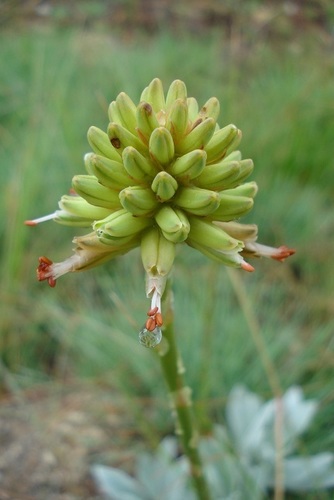
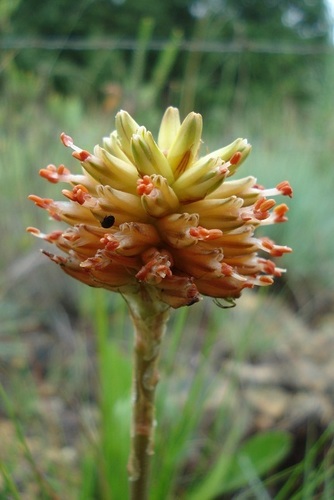
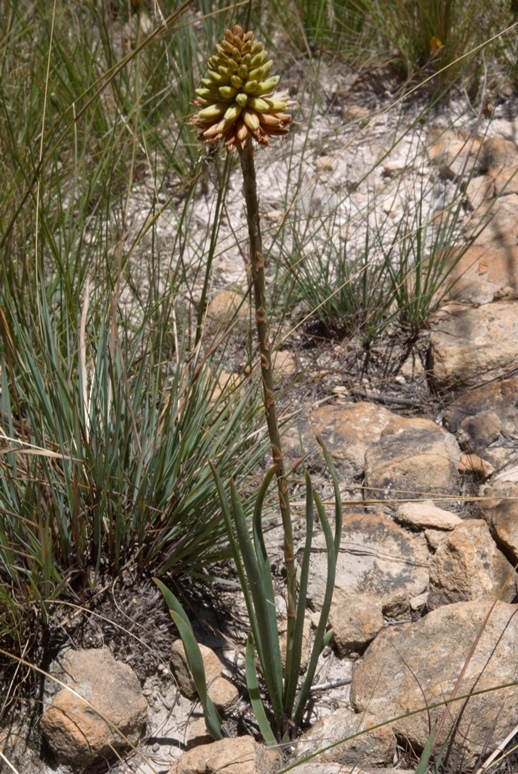
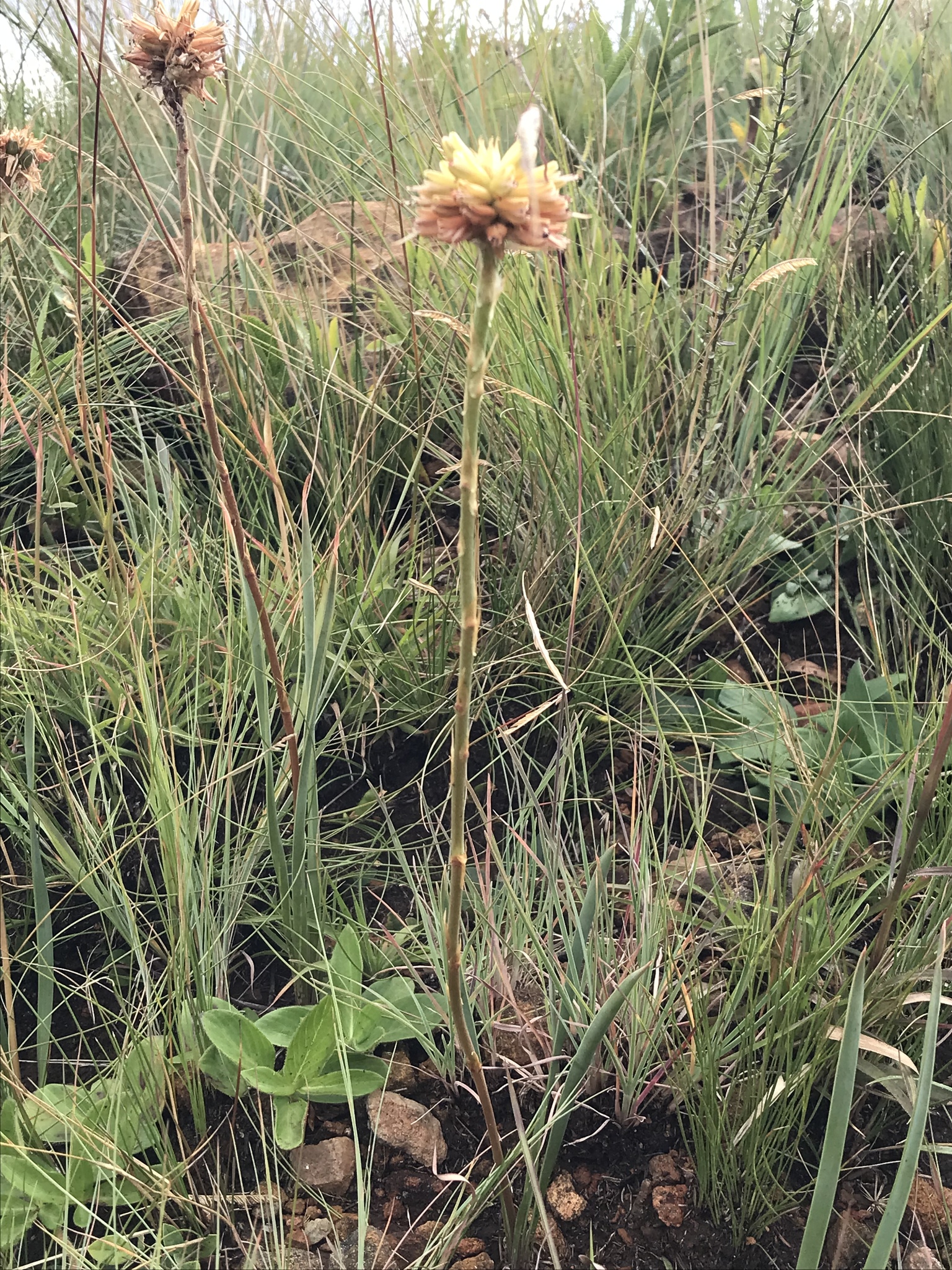
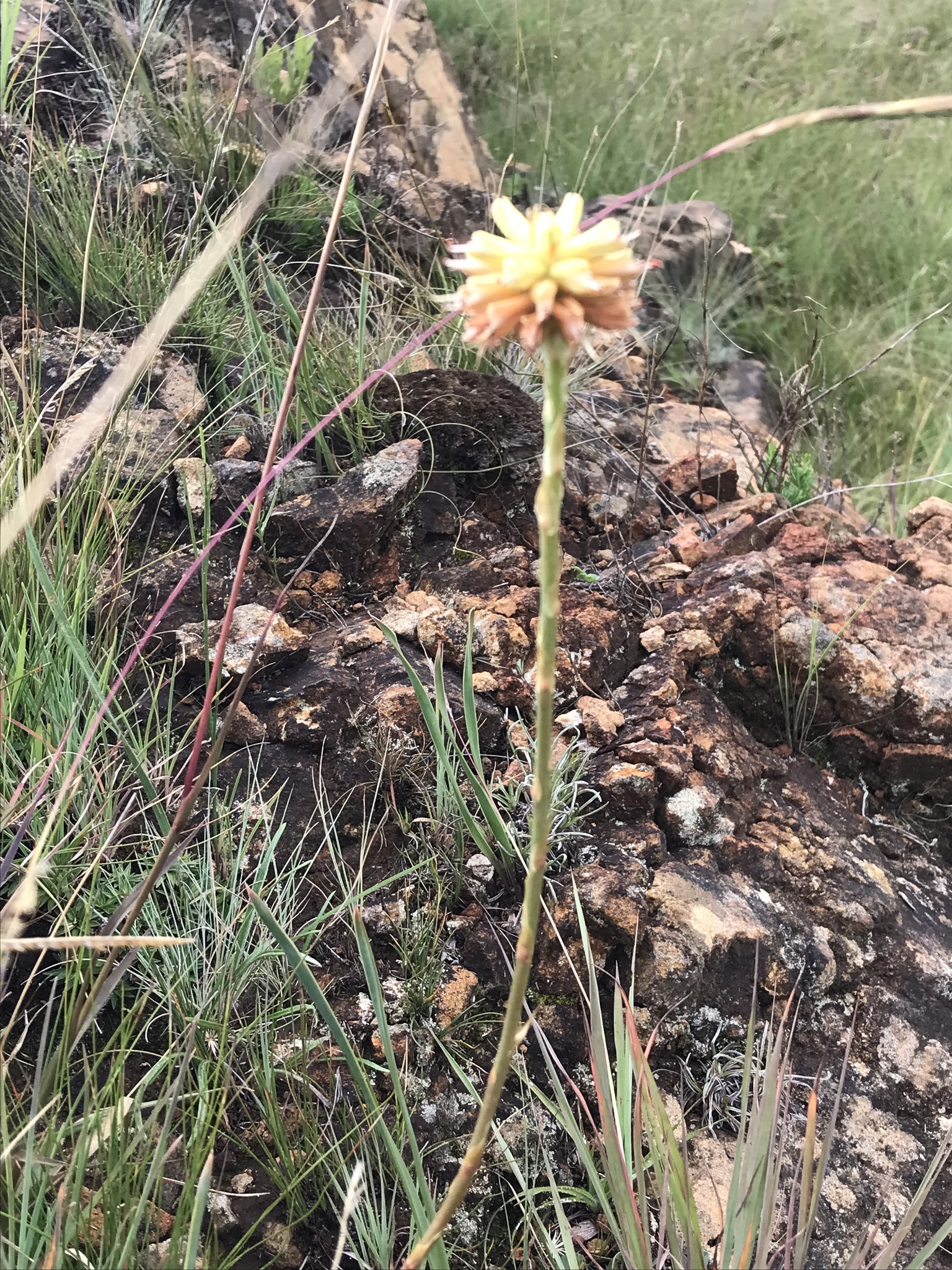
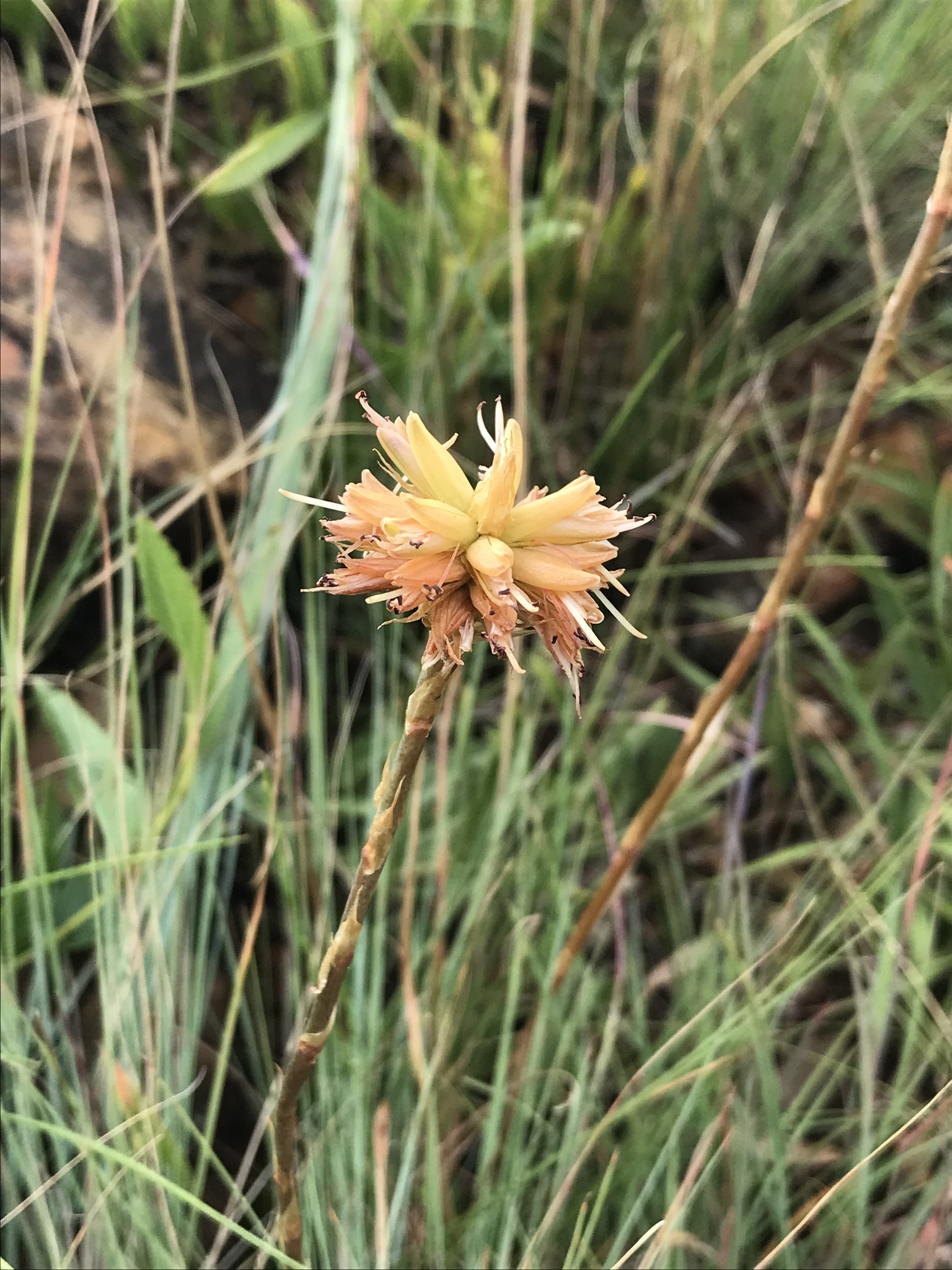
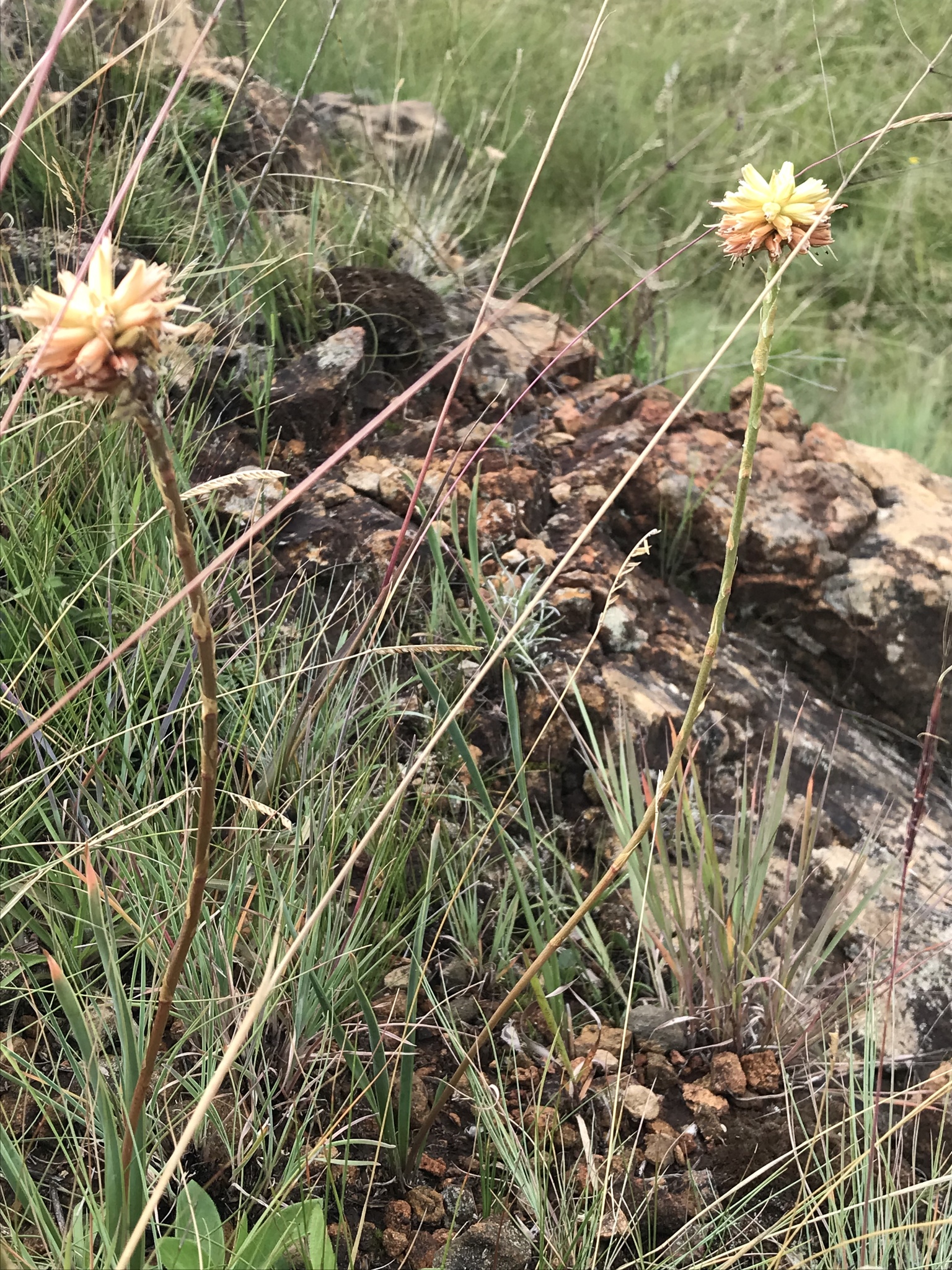
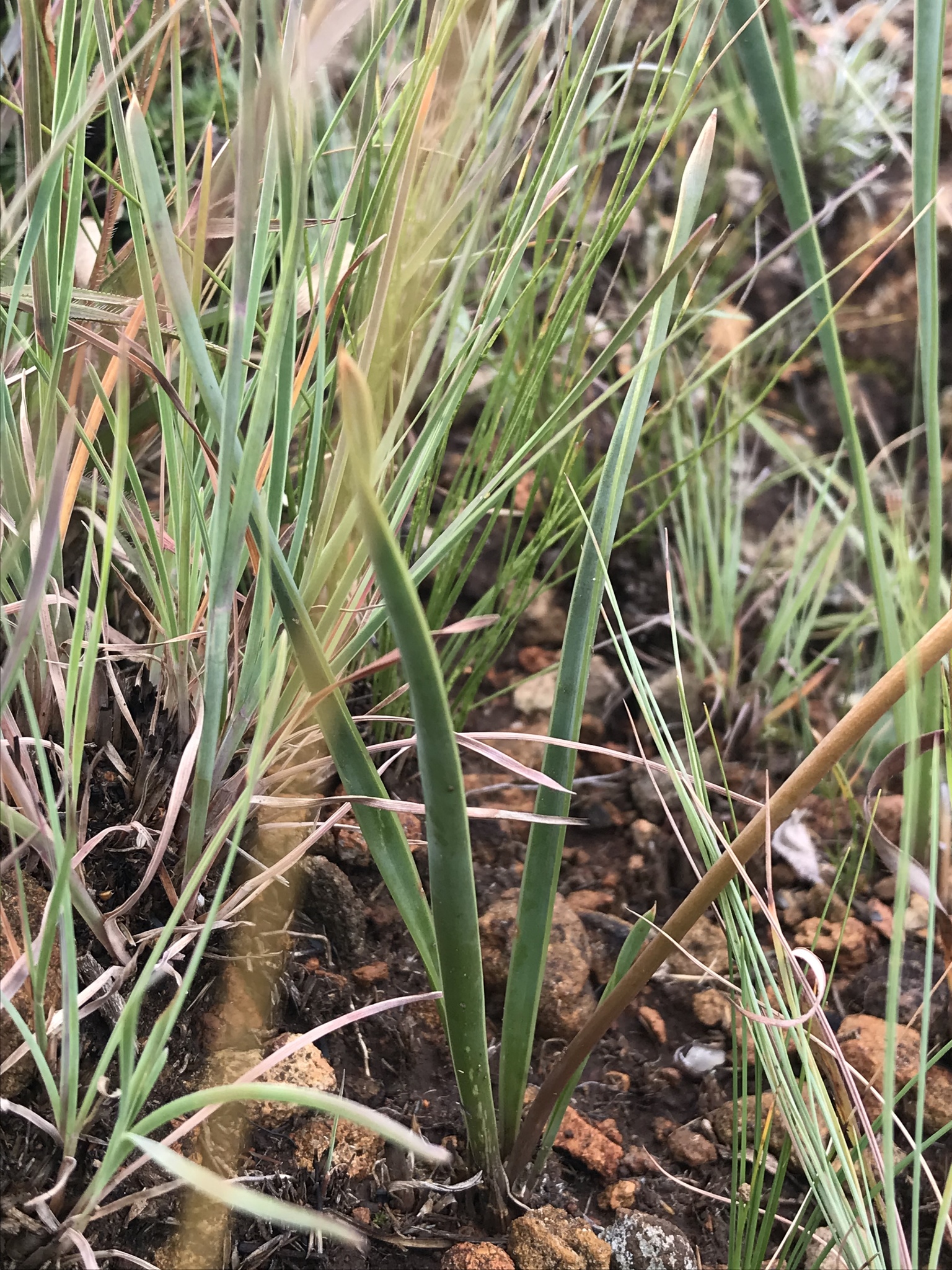
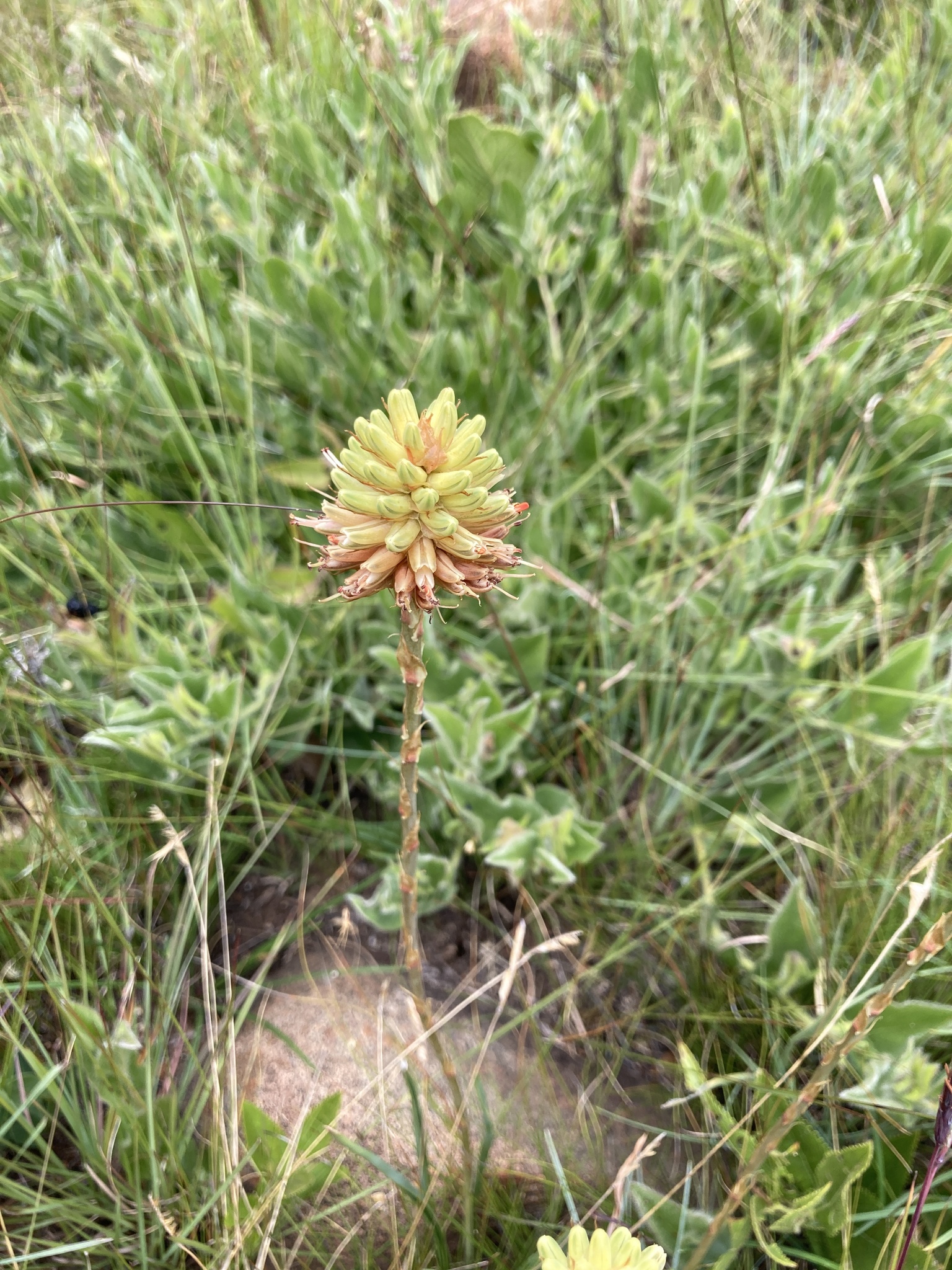
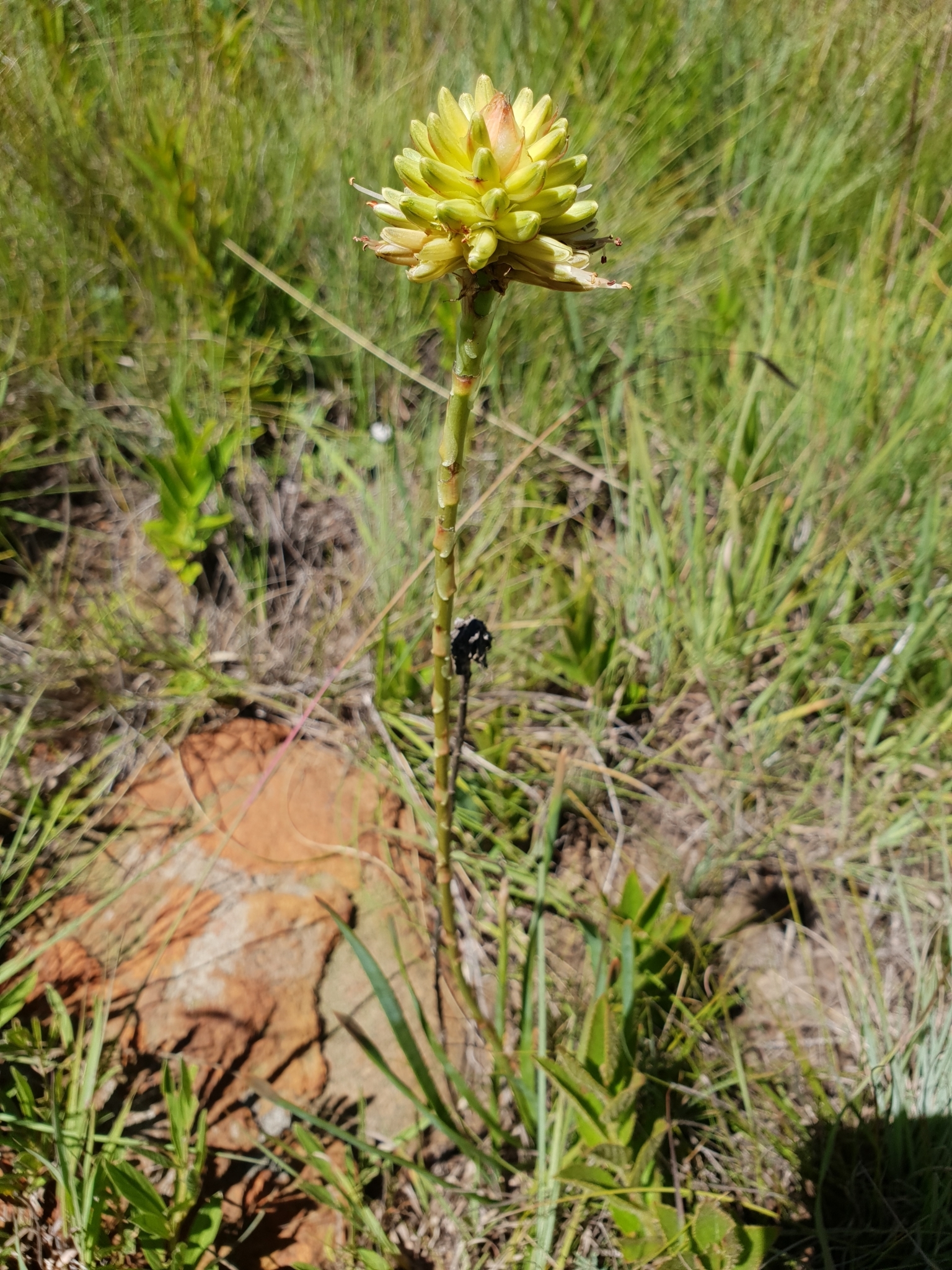
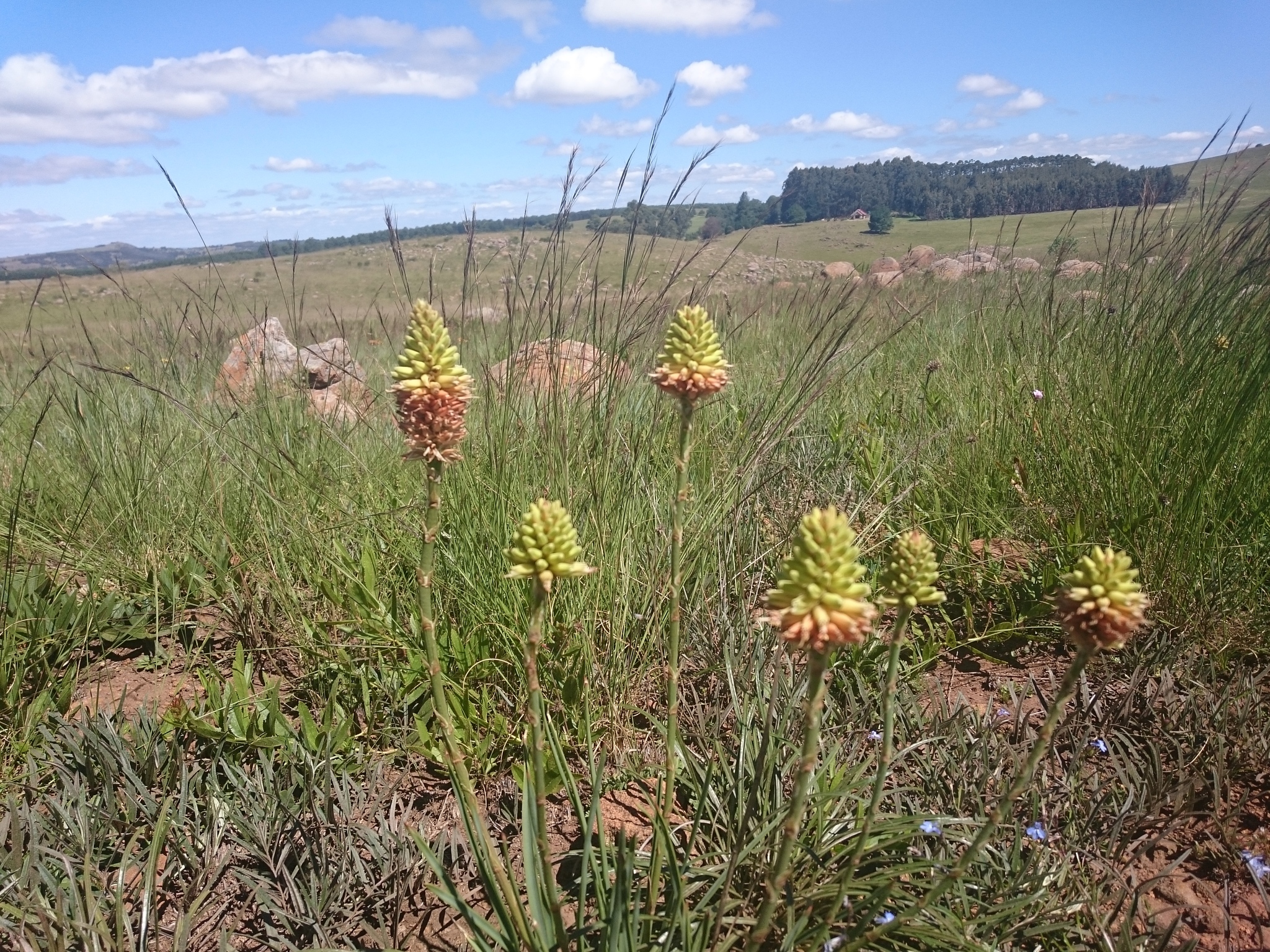
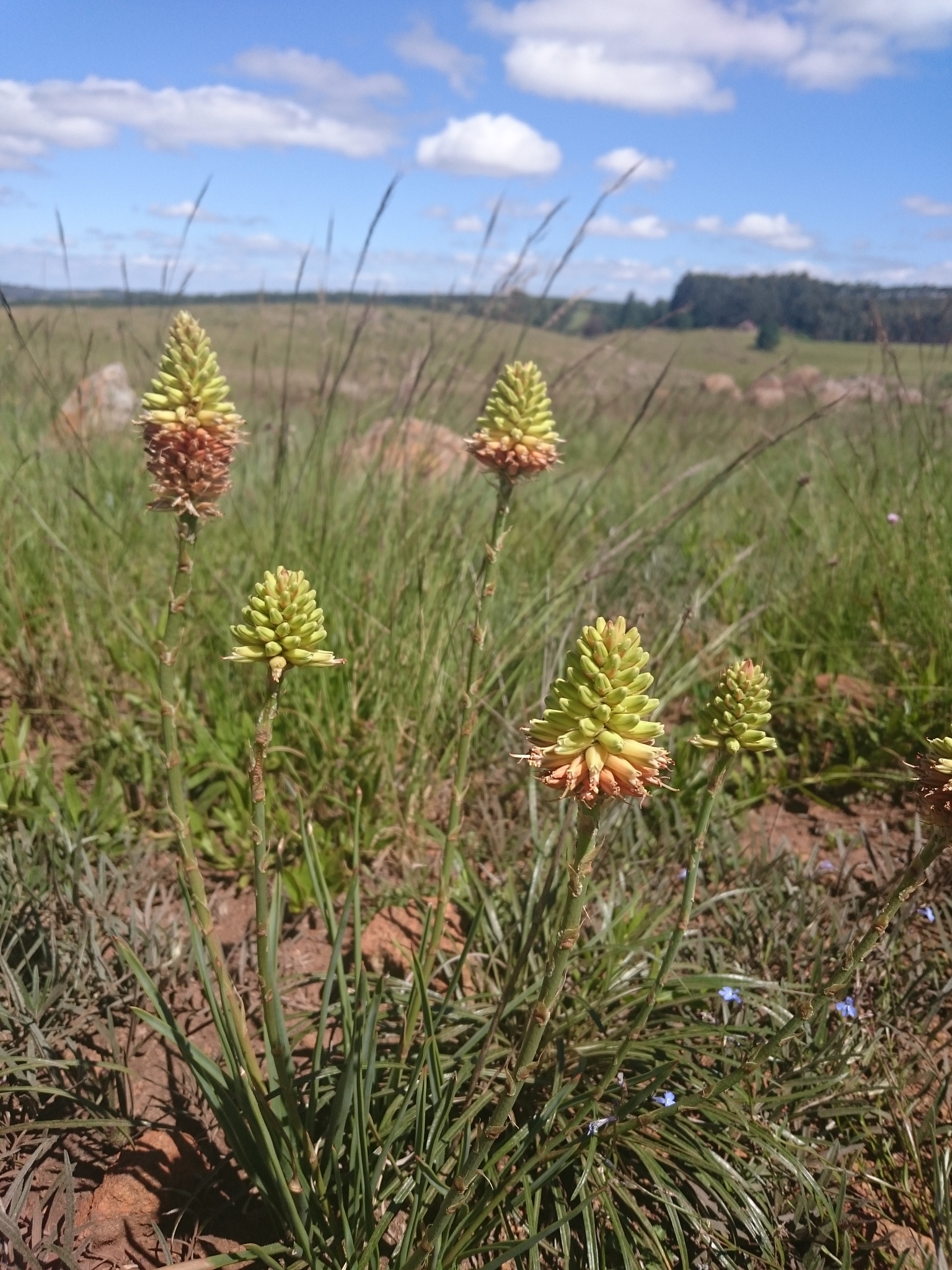
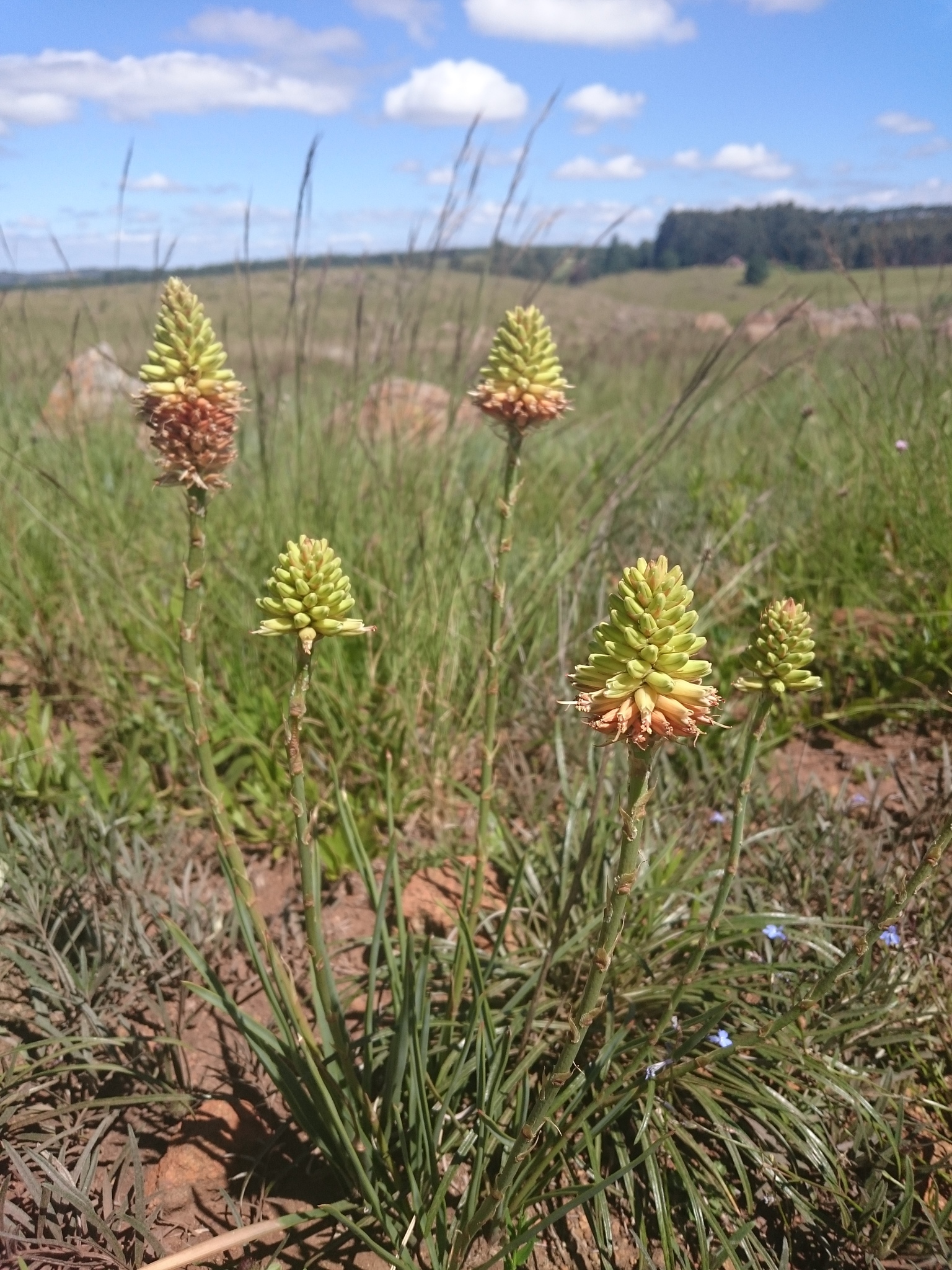
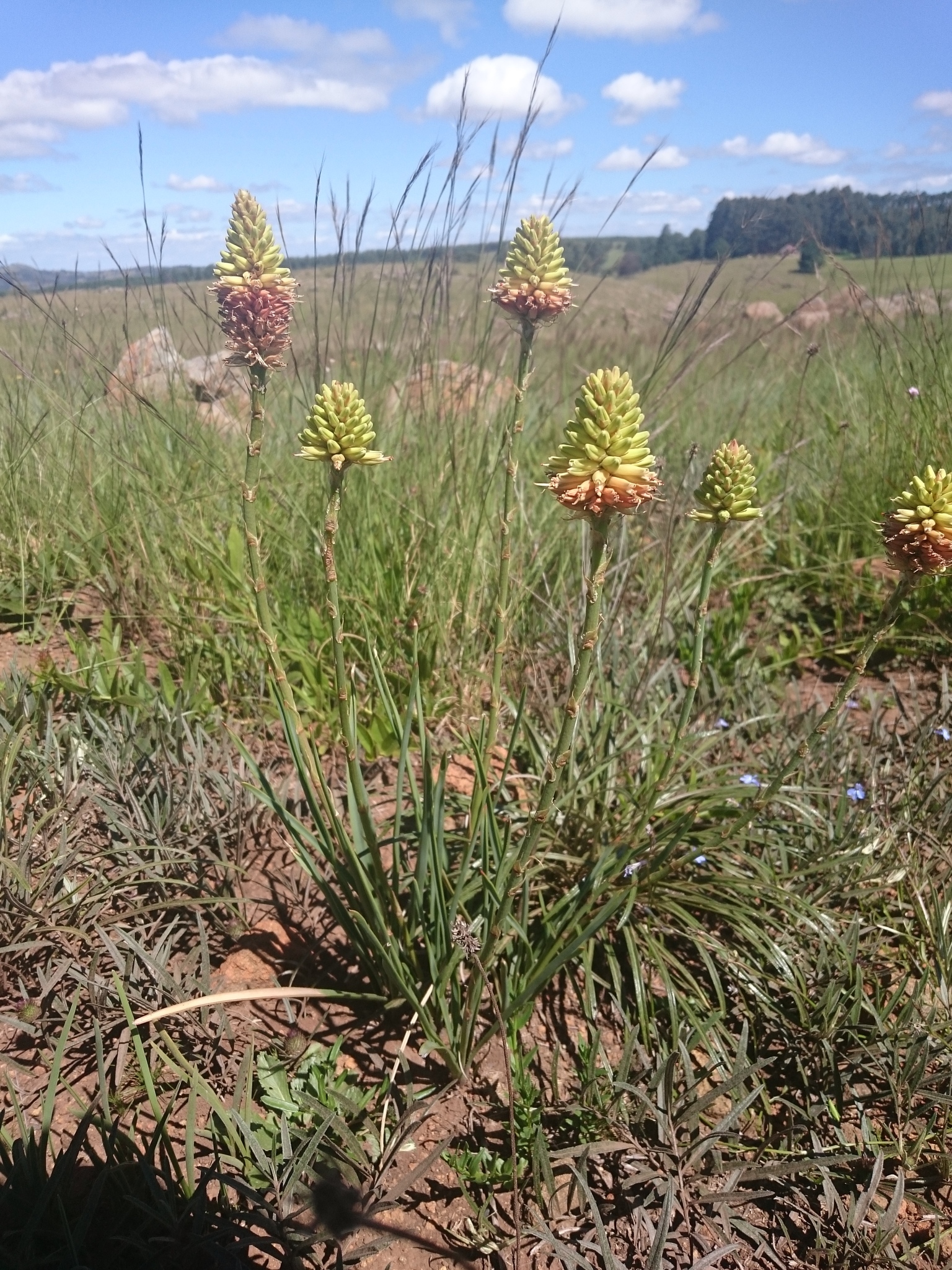
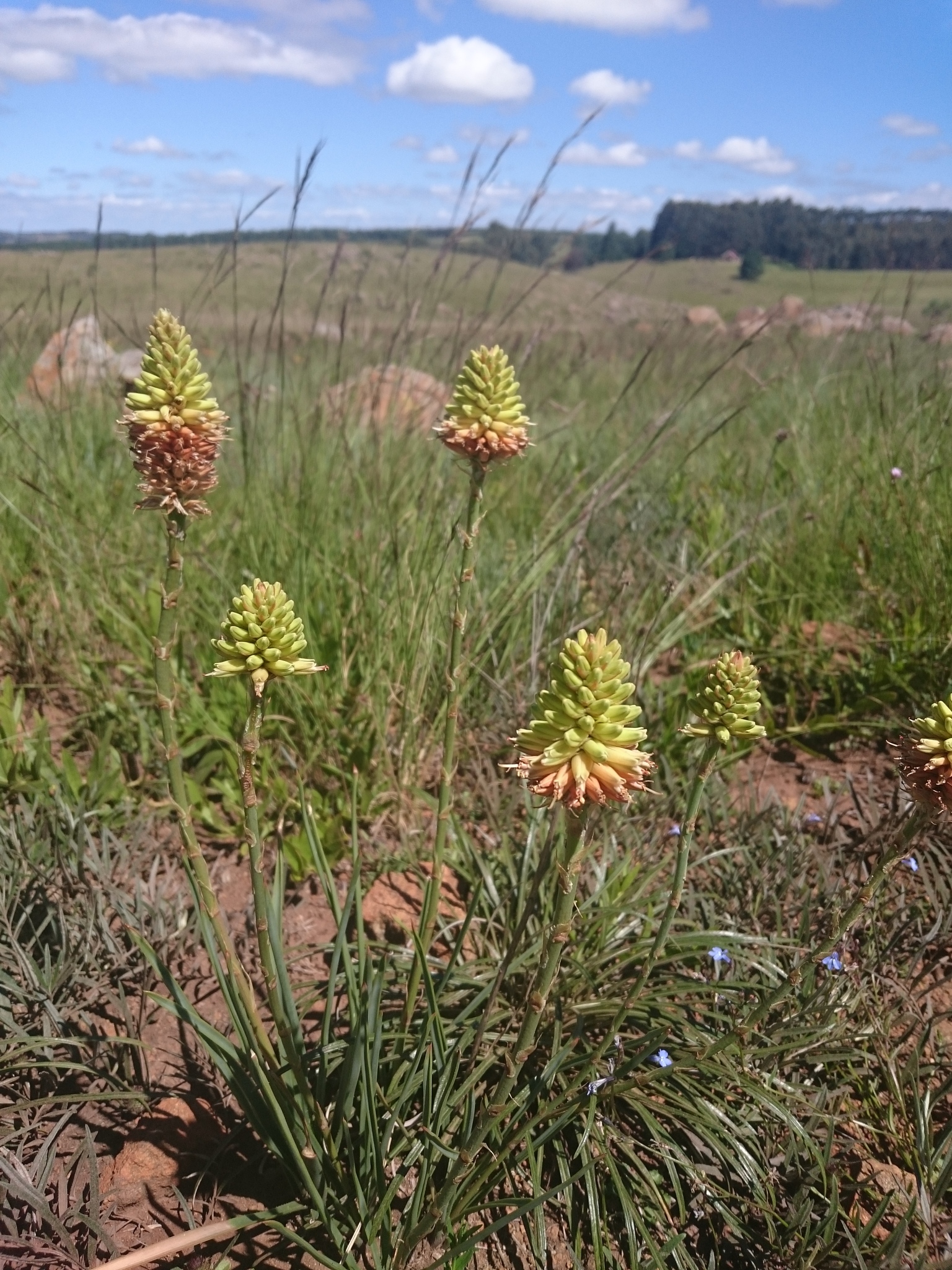
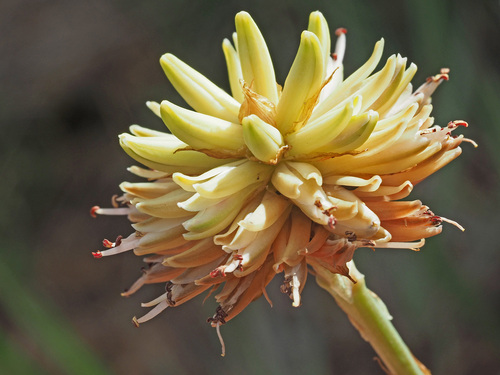
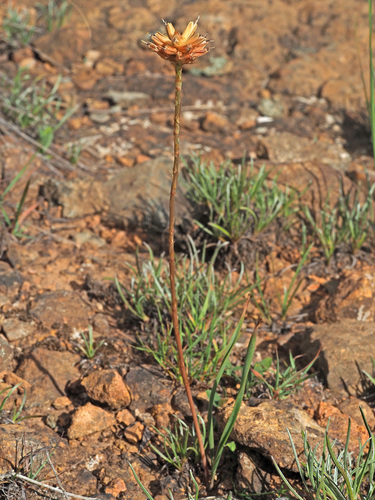
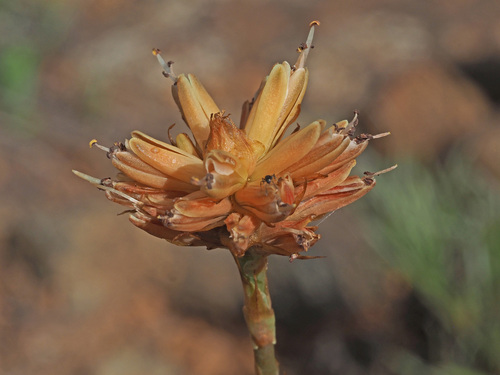
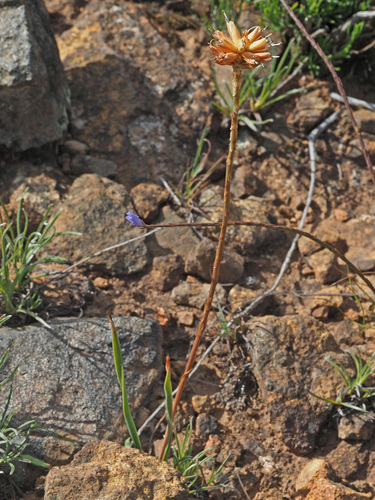
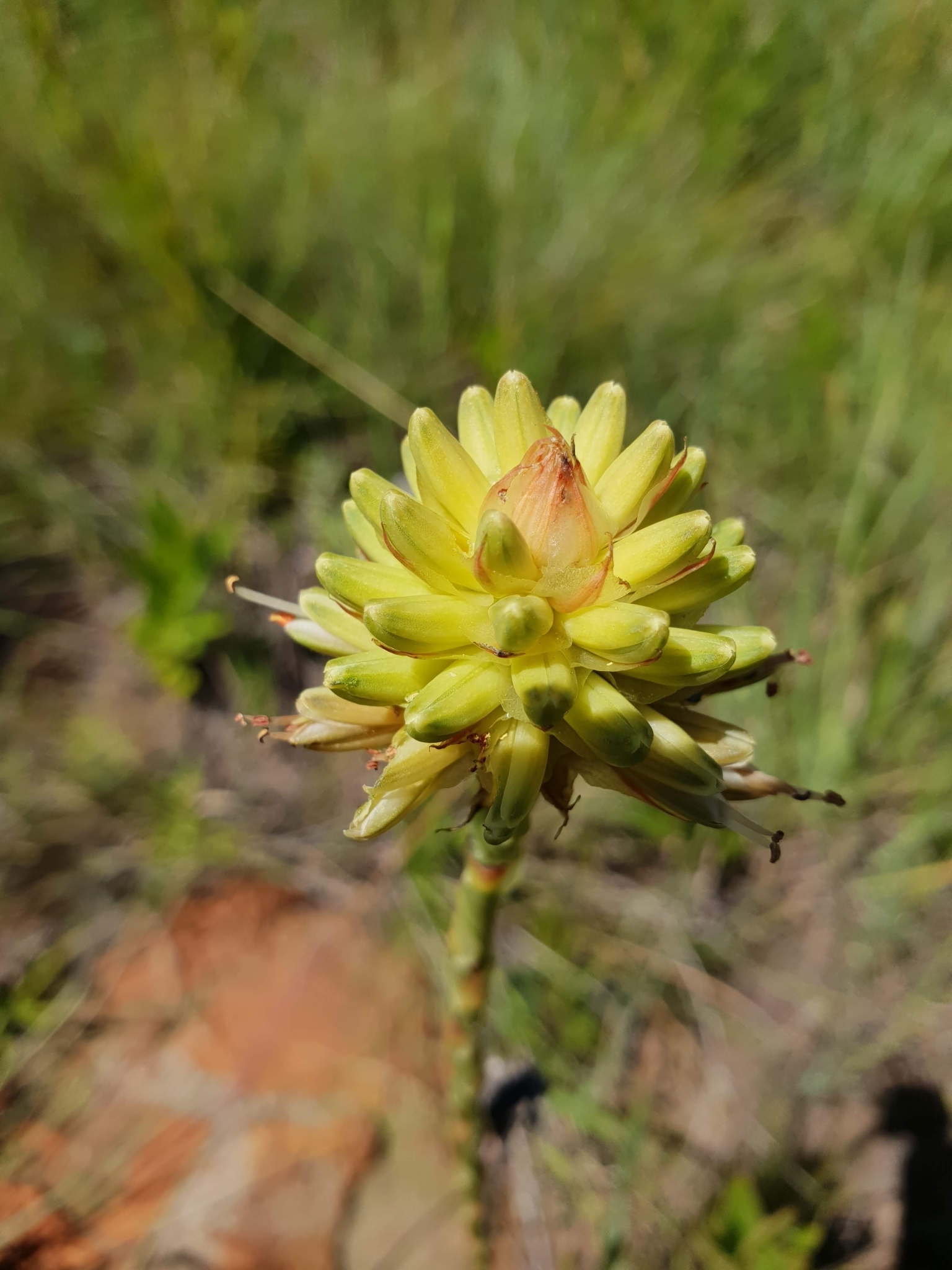
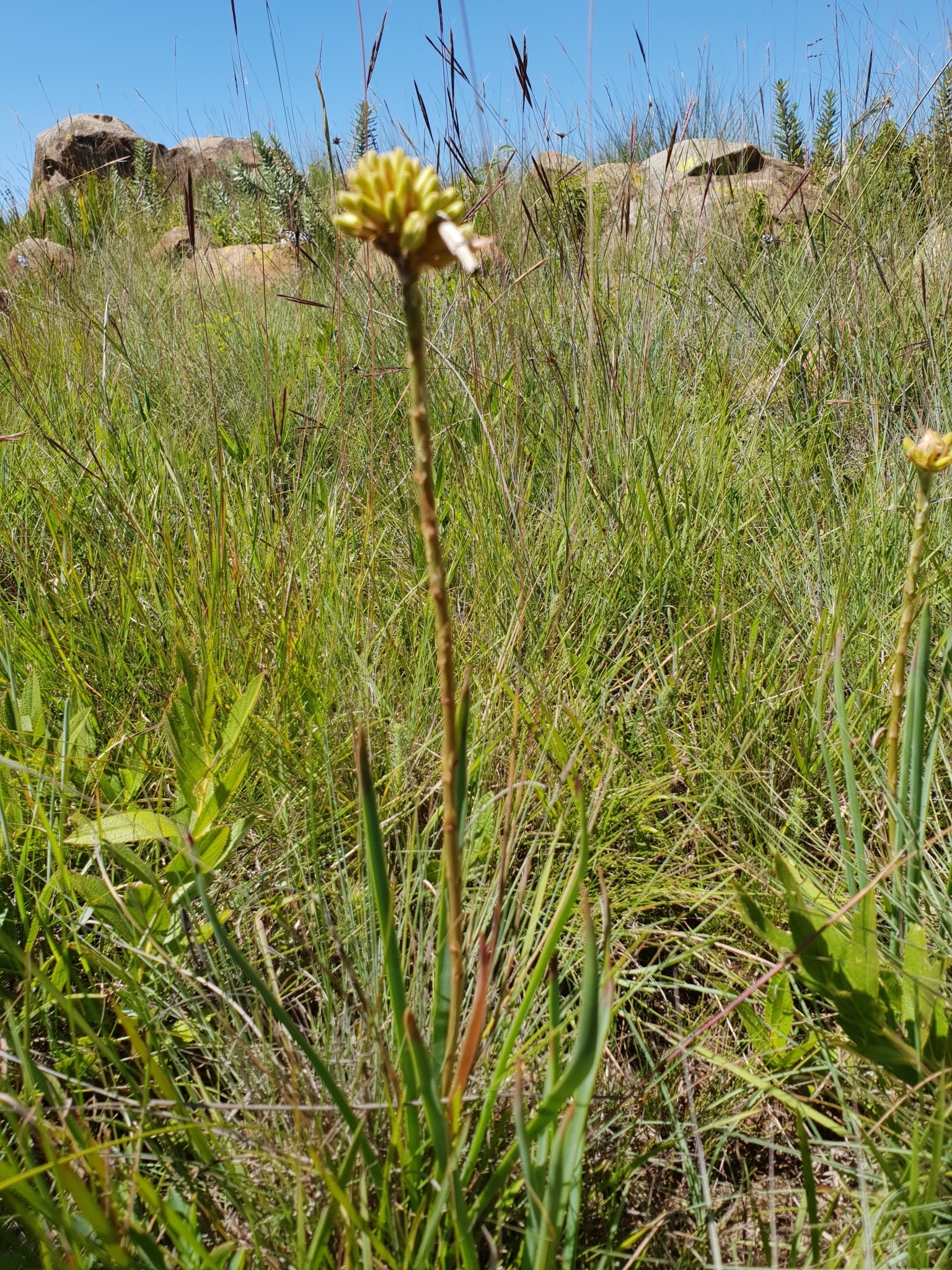
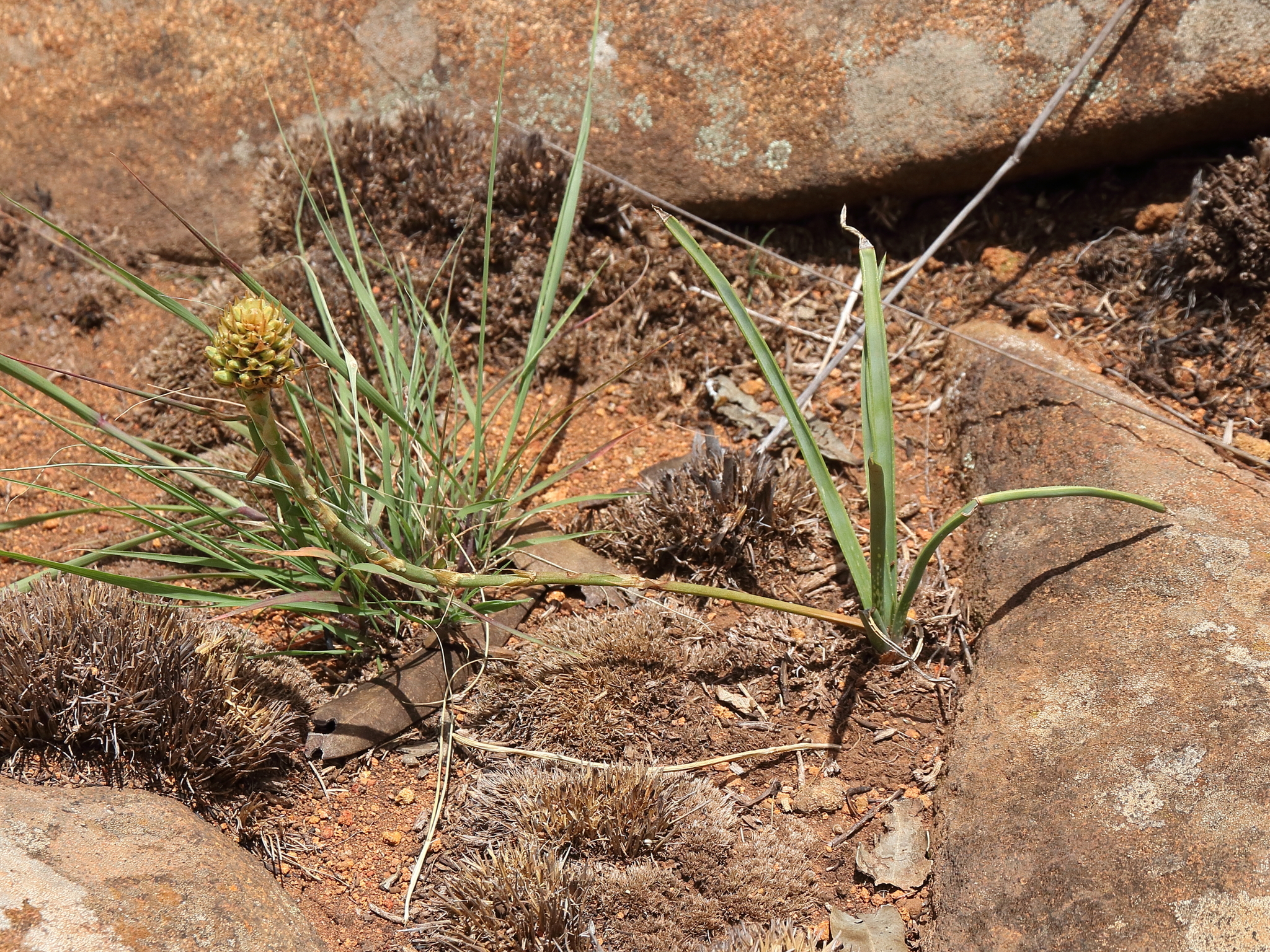
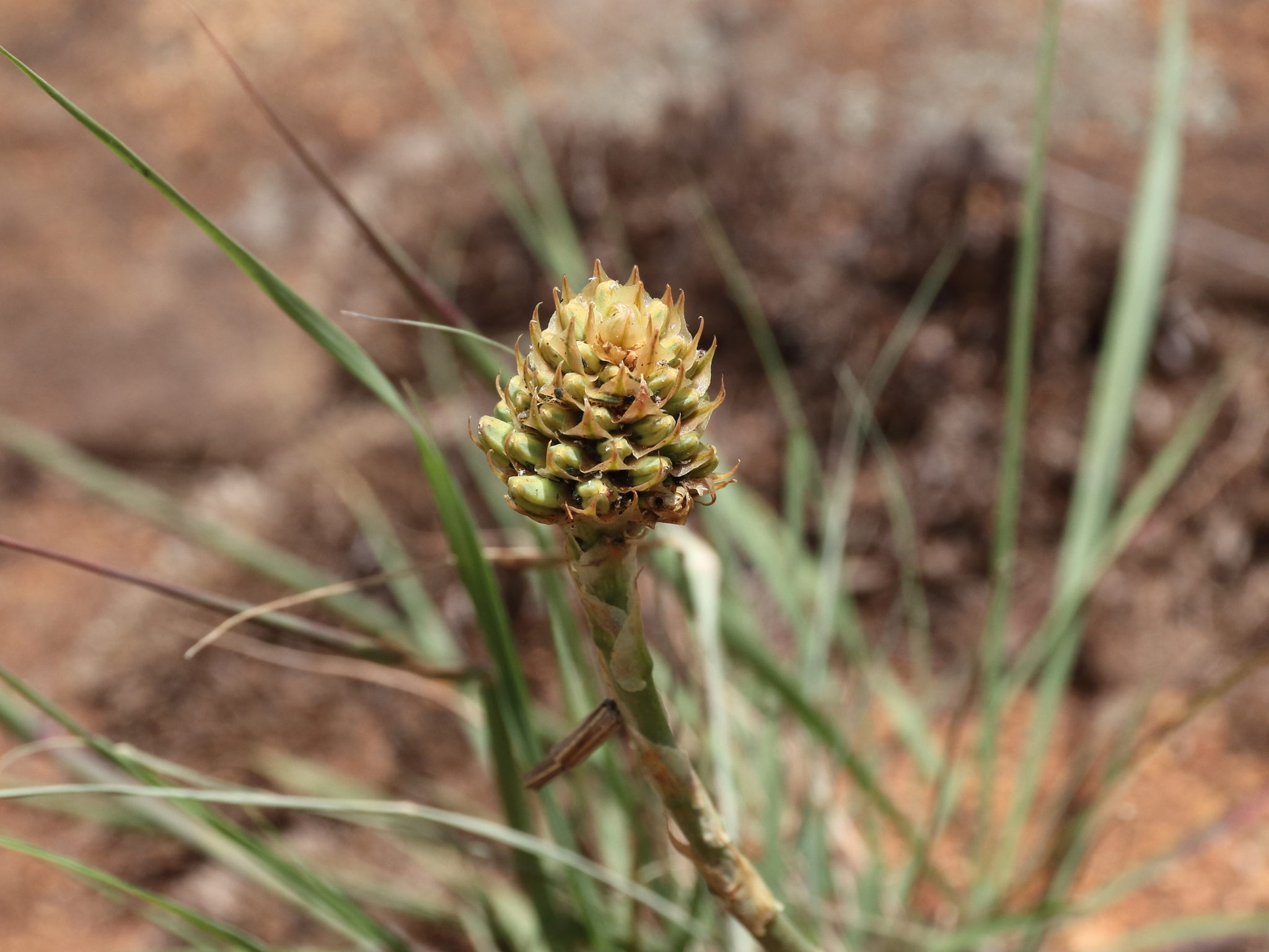
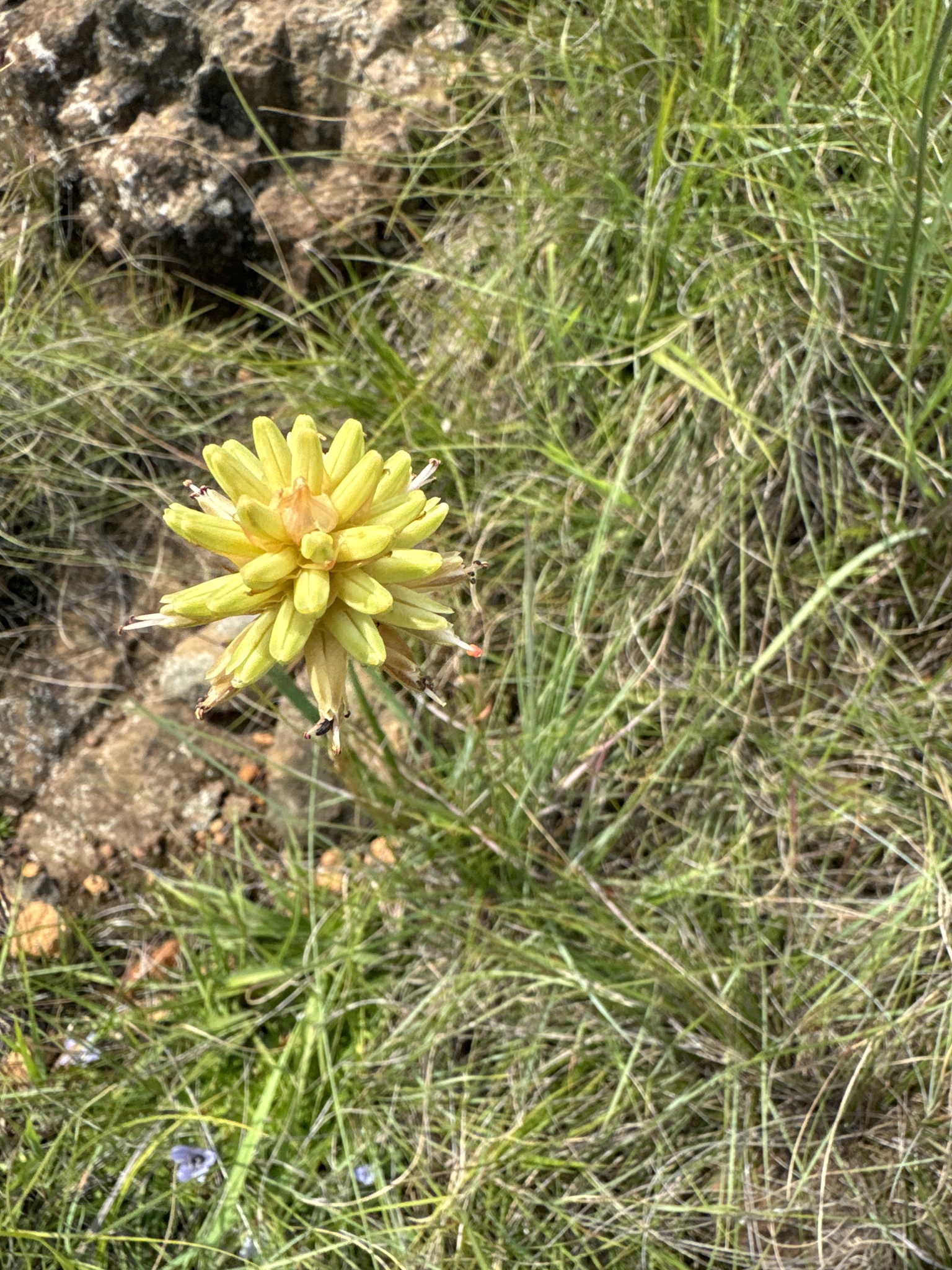
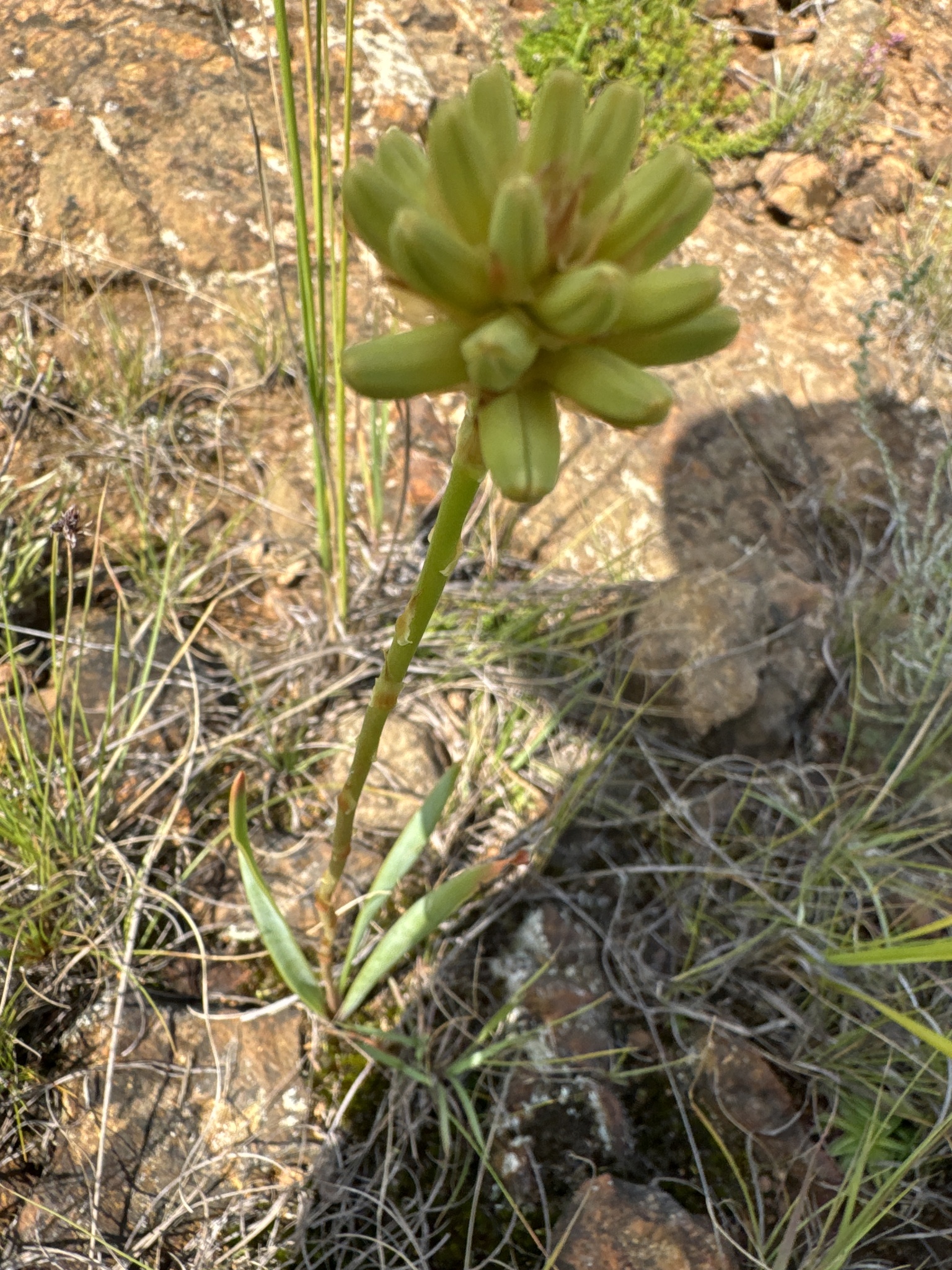
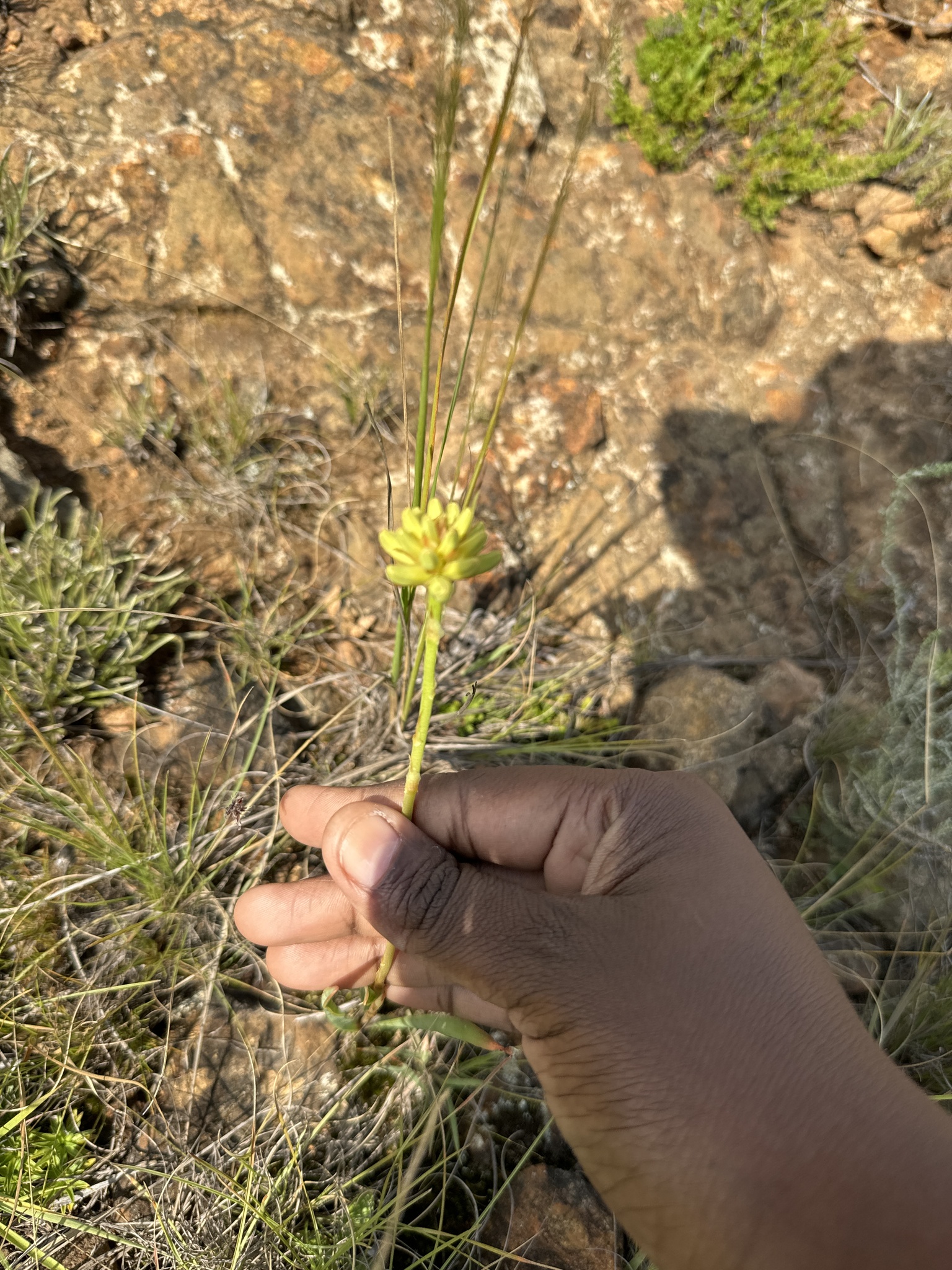
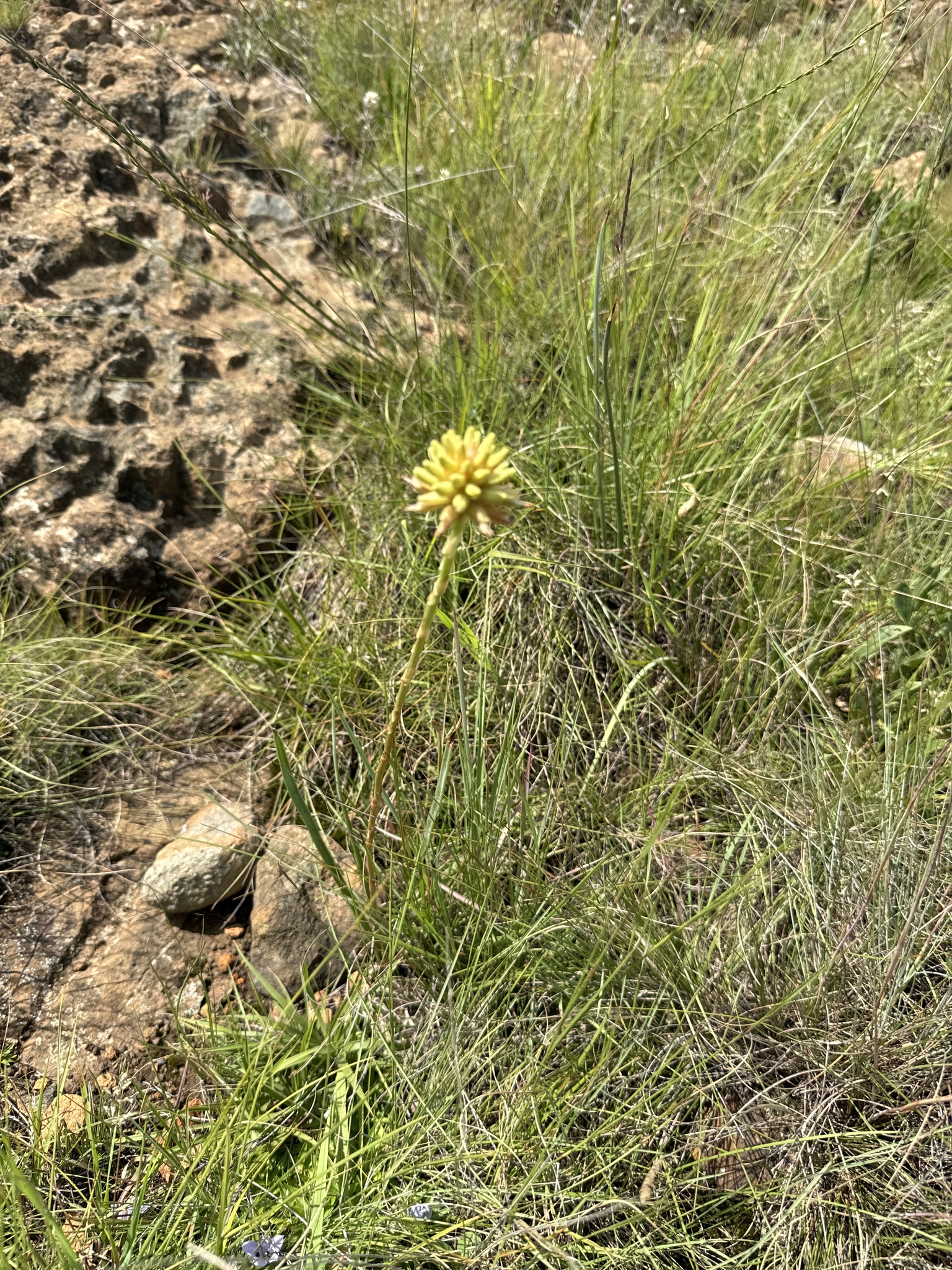
Plant acaulescent, succulent, small, solitary. Roots thick, fleshy, tapering, not fusiform. Stem none, with the leaves dilating and thickening below ground level and forming an ovoid bulb-like swelling about 25 mm long, 20 mm diameter. Leaves 4-8, rosulate, compactly ascending, 15-20 cm long, 8-9 mm broad at ground level, linear in lower half, gradually tapering to an acute apex; upper surface dull deep green, slightly canaliculate, without spots or markings; lower surface rounded, the colour of the upper surface copiously white-spotted near base only, the spots crowded, dull pale green, lenticular; margins with exceedingly narrow cartilaginous edge, straight, edentate. Inflorescence simple, 25-30 cm high. Peduncle 3-4 mm diam. low down, slightly thickening upwards, with several ovate-acuminate subscarious, sterile bracts, the lowest 15 mm long, 6-7 mm broad, 5-7-nerved, gradually smaller upwards. Raceme subcapitate, slightly conical, 35-40 mm long, 30-35 mm diam., very densely flowered, the buds suberect, open flowers subhorizontally spreading. Bracts lowest ovate-acuminate, 10 mm long, 6 mm broad, thin, subscarious, 3-5-nerved. Pedicels 1 mm long. Perianth yellowish-green, 13 mm long, cylindric-trigonous, basally obtuse, cylindric and 4 mm diam. across the ovary, thence trigonal with the mouth slightly upturned; outer segments free to the base, obscurely 3-nerved, apices subacute; inner segments spathulate, with broad thin white borders and with three crowded nerves forming a greenish keel throughout, the apices more obtuse than the outer. Filaments pale rose, filiform-flattened, the three inner narrower and lengthening before the three outer with their anthers in turn exserted 2-3 mm Stigma at length exserted 3-4 mm. Ovary green, 4 mm long, 2-5 mm diam., obtusely tapering into the style. Capsule not seen. From: Reynolds, GW. 1974. Aloes of South Africa, 3rd ed. A.A. Balkema, Cape Town. [All rights reserved]
Stemless grass aloe 200-300 mm tall, solitary; rootstock bulbous. Leaves 10-20 cm a rosette, lorate, 150-200 x 6-9 mm, bright green, slightly canaliculate, margins entire, cartilaginous. Inflorescence a capitate raceme; peduncle 250-300 mm long, with sterile bracts; flower-bearing bracts lanceolate-acuminate, 10-13 x 4-6 mm, 3-5-nerved; flowers upwardly spreading to horizontal, subsessile. Flowers yellowish green, scented, 10-15 mm long, cylindric to trigonous; pedicels ±1 mm long; mouth upturned, outer segments free. Anthers exserted up to 3 mm. Ovary green, ±4.0 x 2.5 mm; style exserted up to 5 mm. Fruit and seed not seen. From: Glen, HF; Hardy, DS. 2000. Aloe. In: G Germishuizen & E du Plessis (eds), Aloaceae (first part). Fl. S. Africa 5(1,1): 1-167. National Botanical Institute, Pretoria. [http://www.biodiversitylibrary.org/item/209564#page/3/mode/1up] [CC BY]
Acaulescent, succulent herb, up to 300 mm tall. Bulb present, roots fusiform or fleshy. Leaves not fibrous, margins entire. Bracts deltoid, longer than pedicels. Inflorescence a capitate raceme. Flowers yellowish green. From: Retief, E; Herman, PPJ. 1997. Plants of the northern provinces of South Africa: Keys and diagnostic characters. Strelitzia 6: 1-681. National Botanical Institute, Pretoria. [CC BY]
Nearest allied to A. minima Bak. It is distinguished from this and all species in the Leptaloe and Leptoaloe groups by the dense subcapitate racemes. A. haworthioides Bak., from Madagascar has a raceme not unlike that of A. modesta and, like it, is sweetly scented. This characteristic is shared by at least four other species of Aloe found on Madagascar but is unique to the African continent. In A. modesta the perfume attracts certain moths and other nocturnal insects. The perianth is about 13 mm in length and the outer segments are free to the base. From: Reynolds, GW. 1974. Aloes of South Africa, 3rd ed. A.A. Balkema, Cape Town. [All rights reserved]
Differences between this species and A. kniphofioides are dealt with under that species. With its bulbous rootstock and capitate raceme of sessile flowers, A. modesta is so distinctive that it is not likely to be confused with any species other than A. kniphofioides. From: Glen, HF; Hardy, DS. 2000. Aloe. In: G Germishuizen & E du Plessis (eds), Aloaceae (first part). Fl. S. Africa 5(1,1): 1-167. National Botanical Institute, Pretoria. [http://www.biodiversitylibrary.org/item/209564#page/3/mode/1up] [CC BY]
A. modesta occurs naturally in grassland where the rainfall is comparatively high and the winters often severe. From: Reynolds, GW. 1974. Aloes of South Africa, 3rd ed. A.A. Balkema, Cape Town. [All rights reserved]
A. modesta grows in grassland in an area characterised by cold winters and high rainfall. The soils in which it occurs are reasonably heavy and sometimes shaly. From: Glen, HF; Hardy, DS. 2000. Aloe. In: G Germishuizen & E du Plessis (eds), Aloaceae (first part). Fl. S. Africa 5(1,1): 1-167. National Botanical Institute, Pretoria. [http://www.biodiversitylibrary.org/item/209564#page/3/mode/1up] [CC BY]
Grassland. From: Retief, E; Herman, PPJ. 1997. Plants of the northern provinces of South Africa: Keys and diagnostic characters. Strelitzia 6: 1-681. National Botanical Institute, Pretoria. [CC BY]
Near Dullstroom, E. Transvaal. Near Wakkerstroom. From: Reynolds, GW. 1974. Aloes of South Africa, 3rd ed. A.A. Balkema, Cape Town. [All rights reserved]
Found in the Northern Province, Mpumalanga and KwaZulu-Natal. From: Glen, HF; Hardy, DS. 2000. Aloe. In: G Germishuizen & E du Plessis (eds), Aloaceae (first part). Fl. S. Africa 5(1,1): 1-167. National Botanical Institute, Pretoria. [http://www.biodiversitylibrary.org/item/209564#page/3/mode/1up] [CC BY]
January to February
1250 to 1675 m
This map contains point-based occurrences at different locations
 This is a sensitive species therefore data has been redacted, click here to login.
Occurrence in the Flora of Southern Africa (FSA) countries and South African provinces. Residence status indicates if a taxon is indigenous, endemic, naturalised or invasive in a specific region. This data is based on specimen records and literature
FSA
SA
BOT
NAM
ESW
LES
WC
EC
NC
FS
GA
KZN
LP
MP
NW
Absent
Indigenous
Endemic
Naturalised
Invasive

Names and Sources
Classification
KINGDOM Plantae
SUBKINGDOM Phanerogamae
PHYLUM Anthophyta
ORDER Asparagales
FAMILY Asphodelaceae
SUBFAMILY Alooideae
GENUS Aloe
SPECIES modesta
25 results for Aloe modesta Reynolds
Barcode: PRE0095981-0 Collector(s) & number: de Wet, JMJ, 7626 | 1956-1-15
Data Resource: BODATSA View record
Barcode: PRE0707676-0 Collector(s) & number: Van Wyk, E, evw470 | 2002-4-10
General notes: Moist alpine grassland. Erect herb. Leaves margins with tiny white teeth.
Data Resource: BODATSA View record
Barcode: PRE0659117-0 Collector(s) & number: Burgoyne, PM, 1125 | 1989-1-
Data Resource: BODATSA View record
Barcode: PRE0112525-0 Collector(s) & number: Devenish, NJ, 1323 | 1966-3-2
Data Resource: BODATSA View record
Barcode: NH0056736-0 Collector(s) & number: Devenish, NJ, 1323 | 1966-3-2
Data Resource: BODATSA View record
Barcode: PRE0773821-0 Collector(s) & number: Matthews, WS, 331 | 1989-2-28
Data Resource: BODATSA View record
Barcode: PRE0585713-0 Collector(s) & number: Condy, GS, 56 | 1994-4-1
General notes: Mountain escarpment in grassland. Heavily scented. Abundant but very localised. Added to FPA plate no.2121, vol. 55. Photo's taken. Bulb in cultivation.
Data Resource: BODATSA View record
Barcode: PRE0990232-0 Collector(s) & number: Van Jaarsveld, EJ, 24250 | 2012-2-12
Data Resource: BODATSA View record
Barcode: PRE1029627-0 Collector(s) & number: Masia, ND, 9444 | 2023-3-8
Data Resource: BODATSA View record
Barcode: PRE0710645-0 Collector(s) & number: Raal, P, 1505 | 1987-3-12
Data Resource: BODATSA View record
Barcode: NH0017275-0 Collector(s) & number: Thorncroft, G, 479 | 1892-4-8
General notes: Flower white. Found growing on rocks. No leaves.
Data Resource: BODATSA View record
Barcode: PRE0797940-0 Collector(s) & number: Swartz, PP, 114/94WR | 1994-2-5
General notes: Grasveld. Sand grond. Doleriet. Plek plek volop in grasveld, suidelike hellings amper bo-op berge. Blomme lieflike soet geur; stingelbasisse vorm 'n bol. Skaars in res van omgewing. Conf. N.L. Meyer
Data Resource: BODATSA View record
Barcode: PRE0783715-0 Collector(s) & number: van der Riet, B, PRE 58818 | --
General notes: Private collection. Flowering: January. Figured for Flowering Plants of Africa by G. Condy. No. 216. Det: Hardy & Glen
Data Resource: BODATSA View record
Barcode: PRE0744192-0 Collector(s) & number: Symons, HG, s.n. | 1990-1-31
Data Resource: BODATSA View record
This map contains point-based occurrences at different locations
This is a sensitive species therefore data has been redacted, click here to login.
2011
SERIES
The aloe names book Grace, OM; Klopper, RR; Figueiredo, E; Smith, GFStrelitzia 28: 1-232
South African National Biodiversity Institute, Pretoria
2000
FLORA
Aloe Glen, HF; Hardy, DSIn: G Germishuizen & E du Plessis (eds), Aloaceae (first part). Flora of Southern Africa 5(1),11-167
National Botanical Institute, Pretoria
1997
SERIES
Plants of the northern provinces of South Africa: Keys and diagnostic characters Retief, E; Herman, PPJStrelitzia 6: 1-681
National Botanical Institute, Pretoria
1974
1956
PERIODICAL/JOURNAL
A new Aloe from the Eastern Transvaal Reynolds, GWJournal of South African Botany 22:
No results found for Aloe modesta Reynolds
Status and criteria
VU
Assessor(s)
Plantae Coordinator
| Part(s) of plant used | Use(s) | Reference |
|---|
Coming soon...