
PLANTAE / PHANEROGAMAE / ANTHOPHYTA / ASPARAGALES / ASPHODELACEAE / ALOOIDEAE / HAWORTHIOPSIS / VENOSA

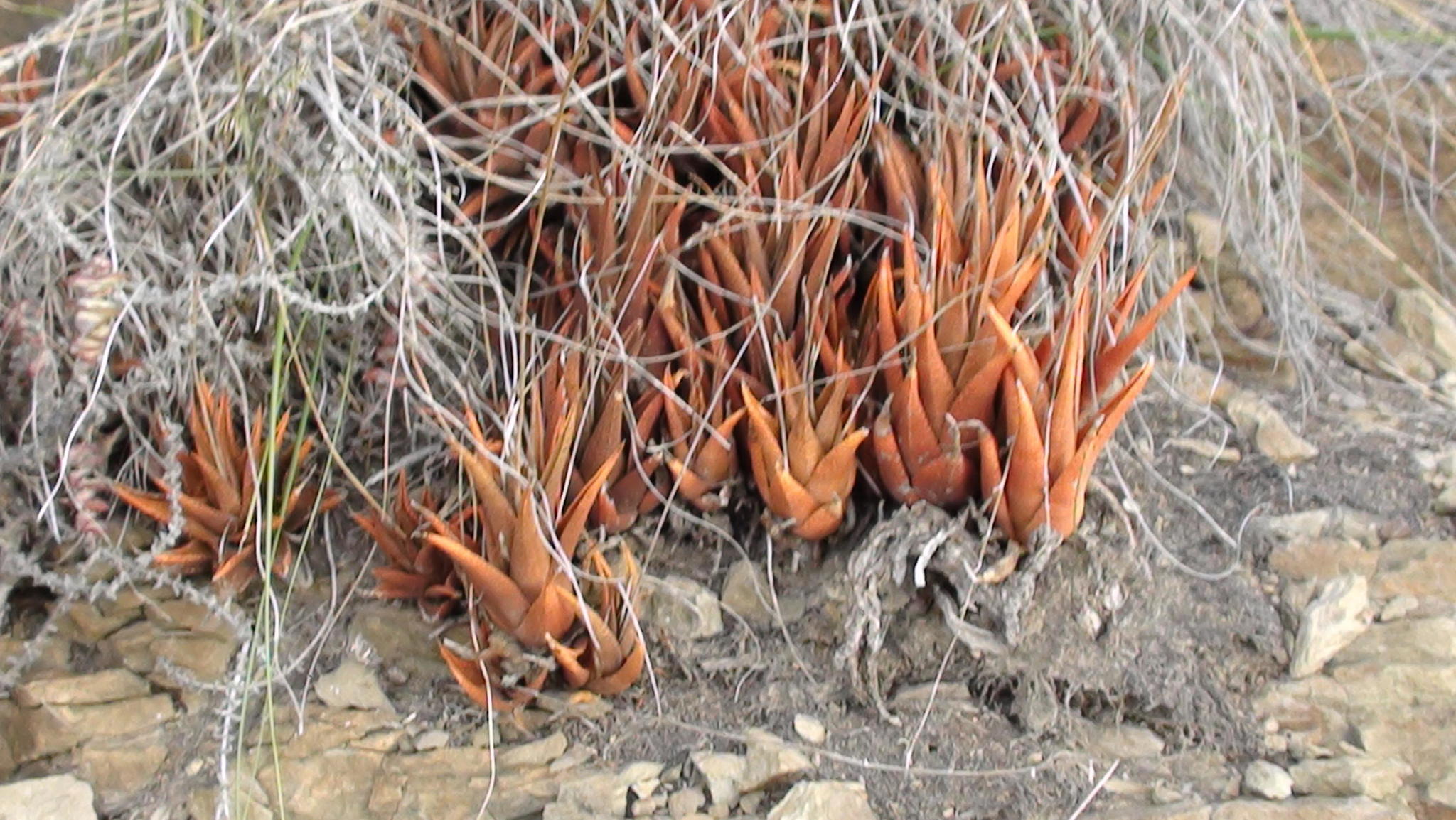
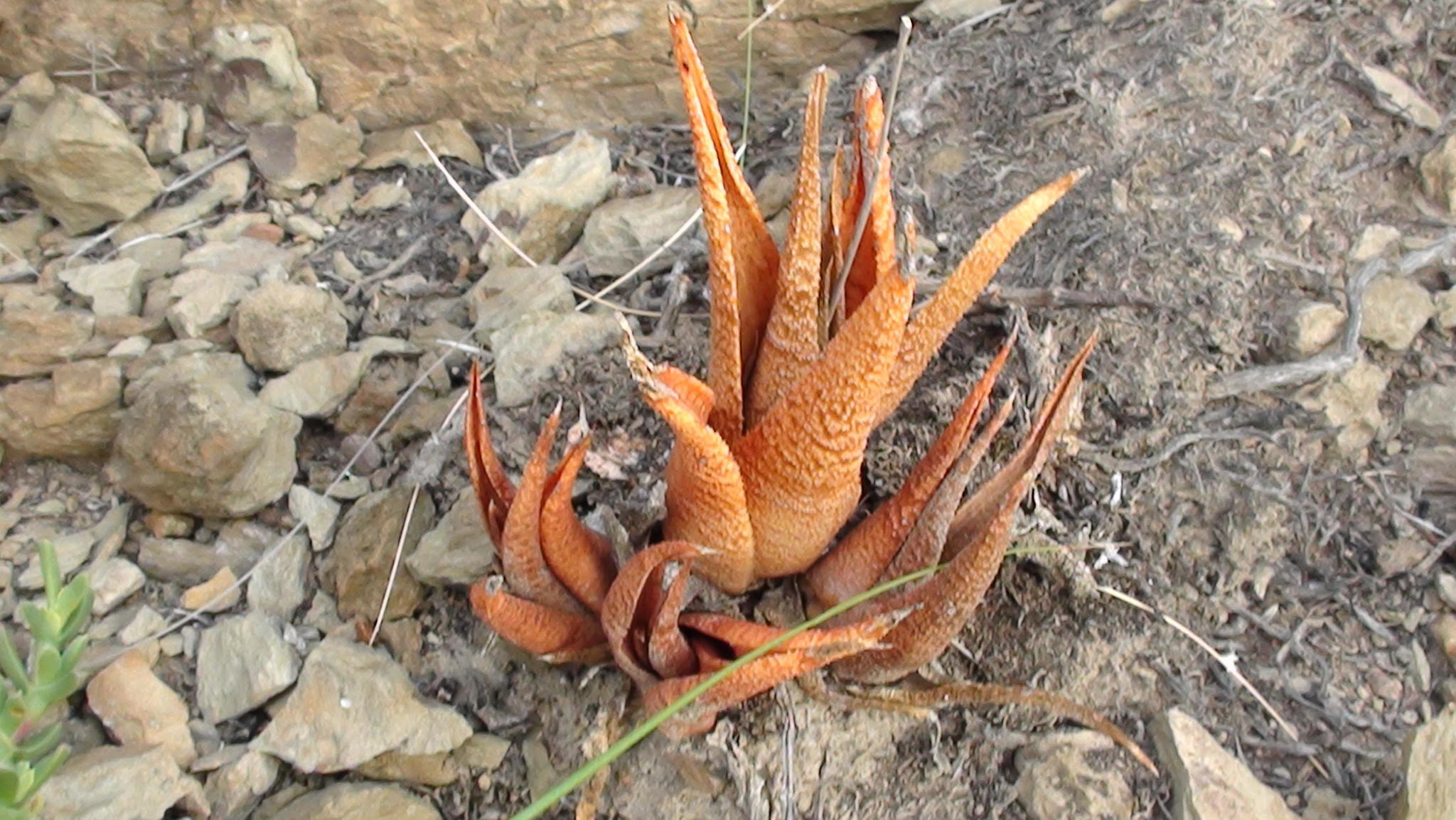
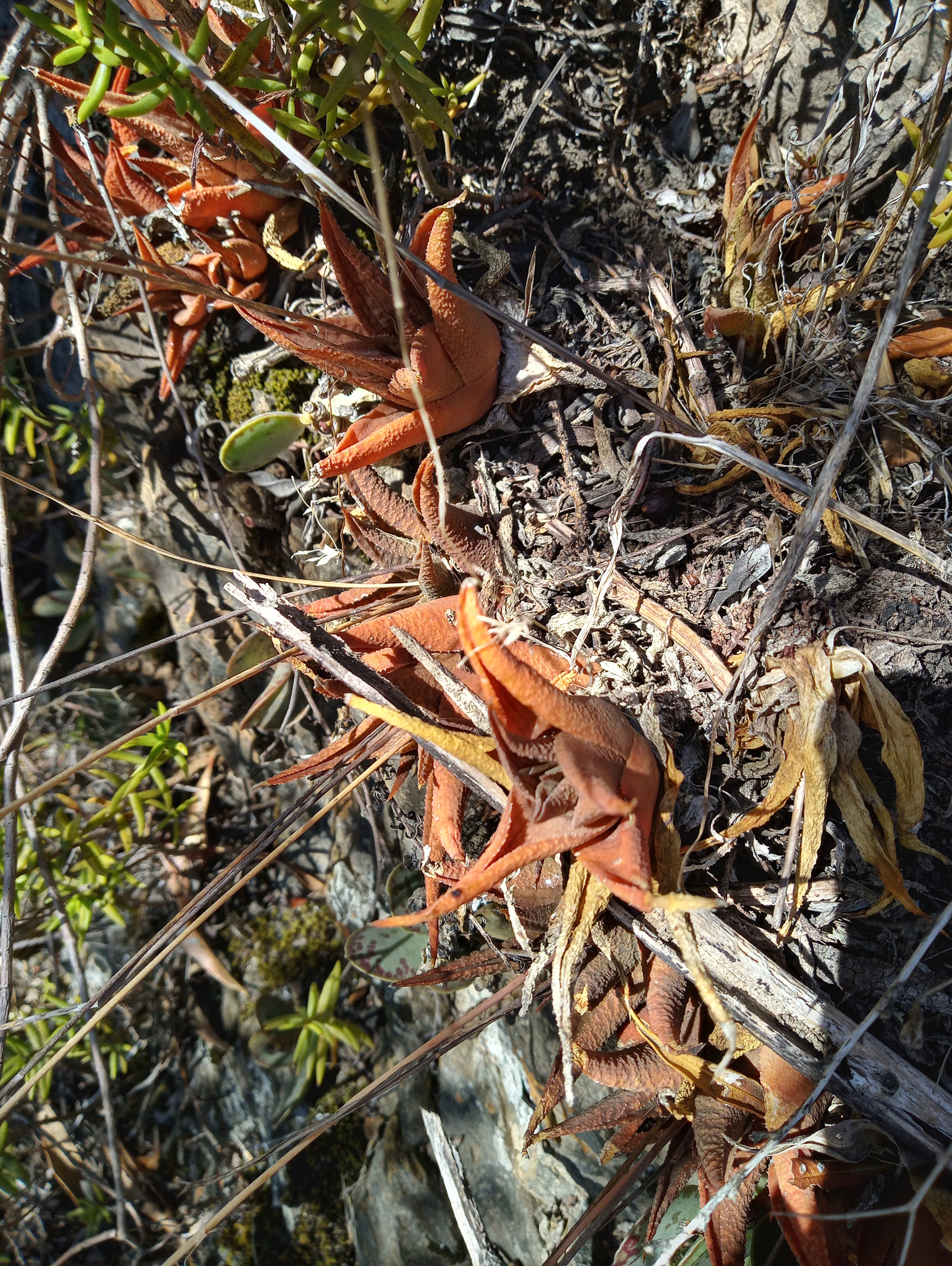
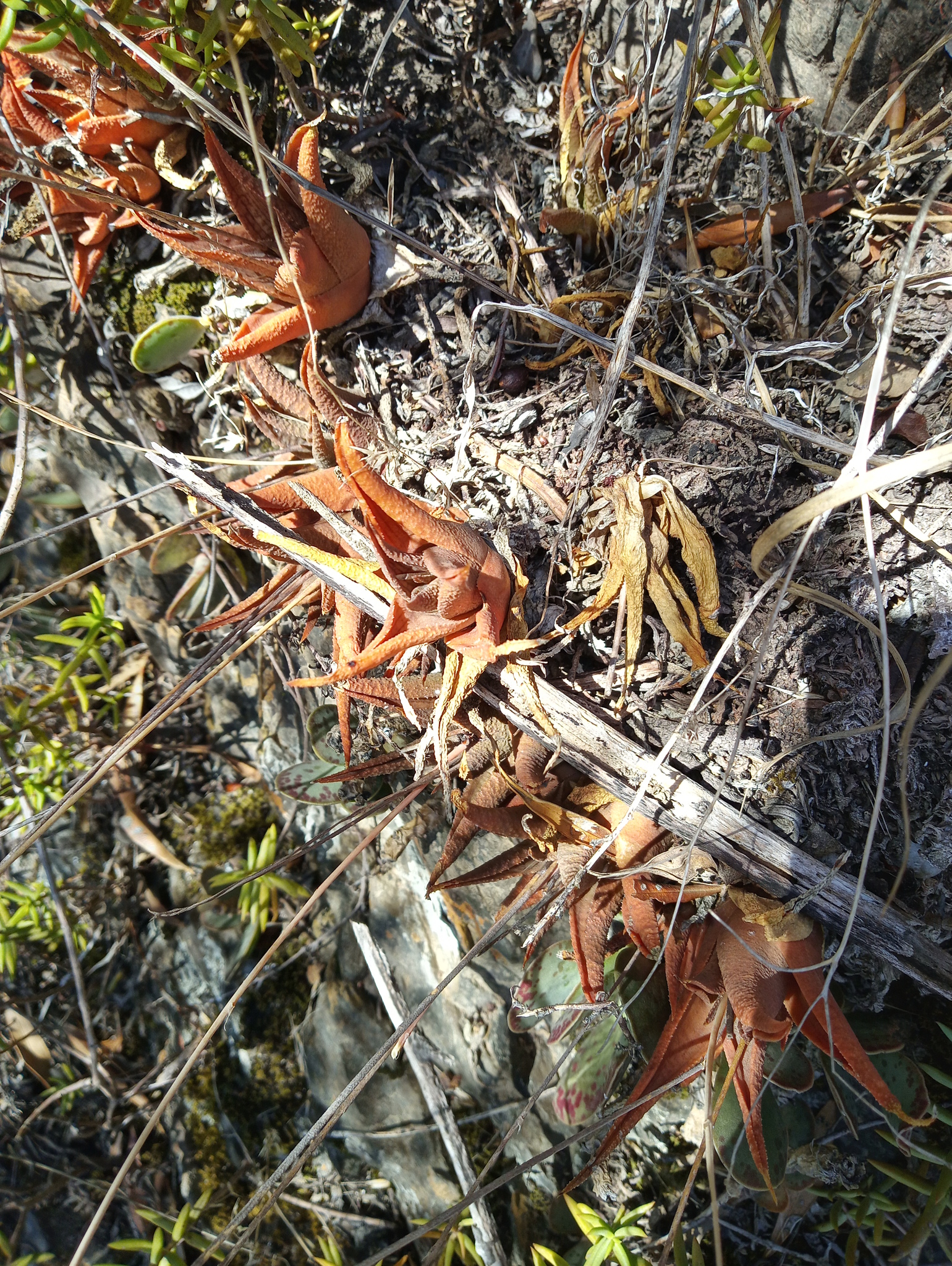
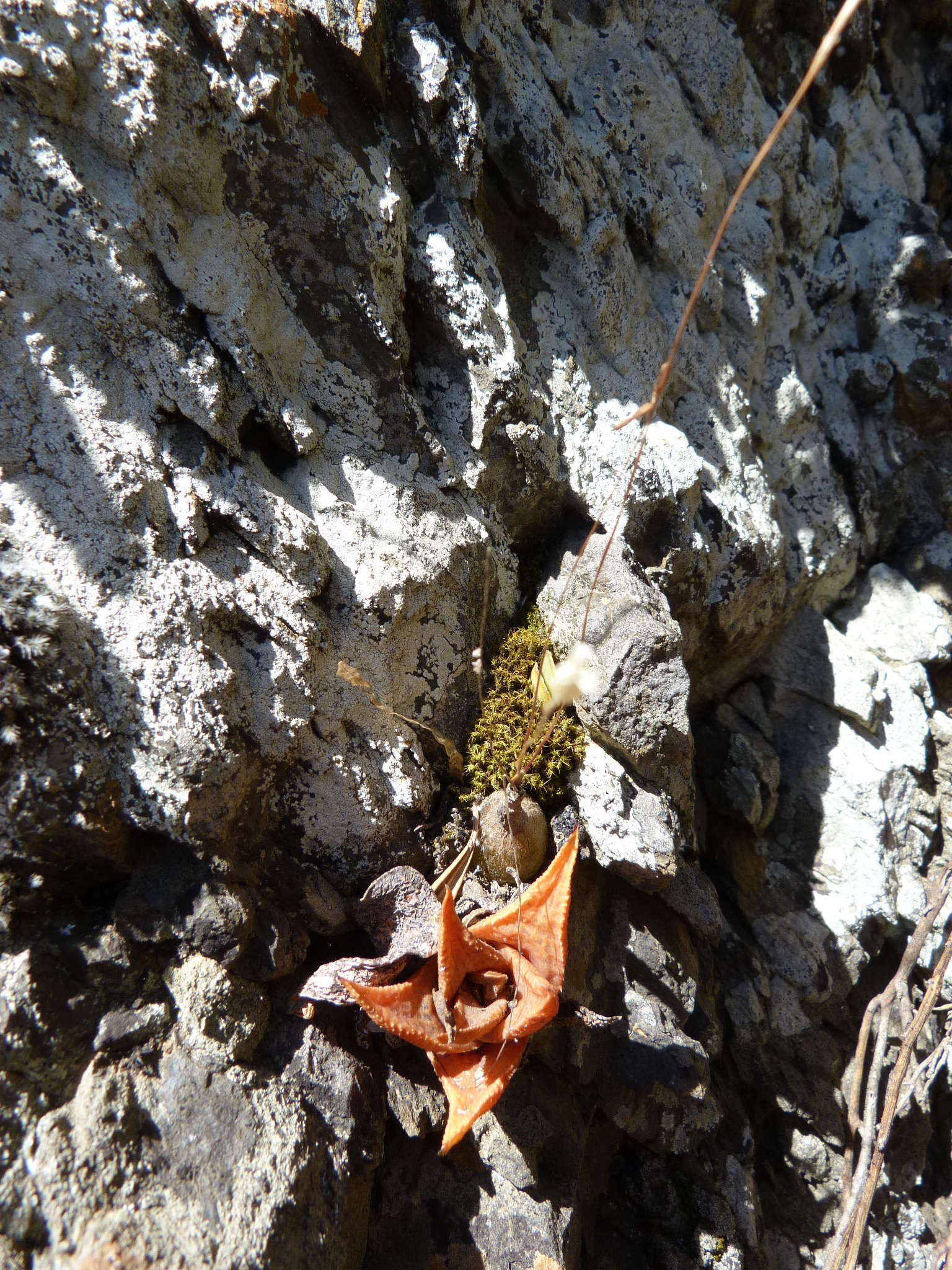
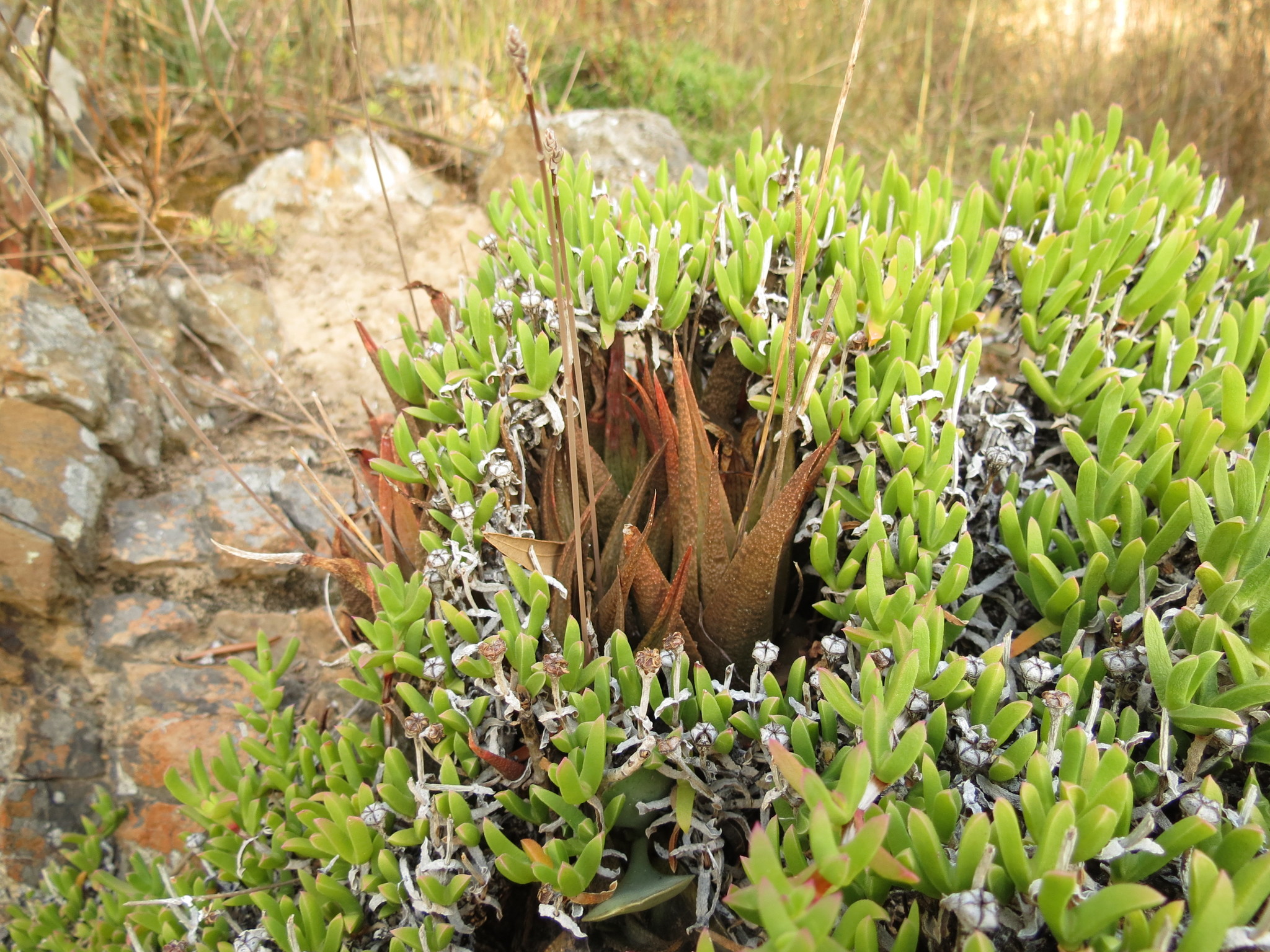
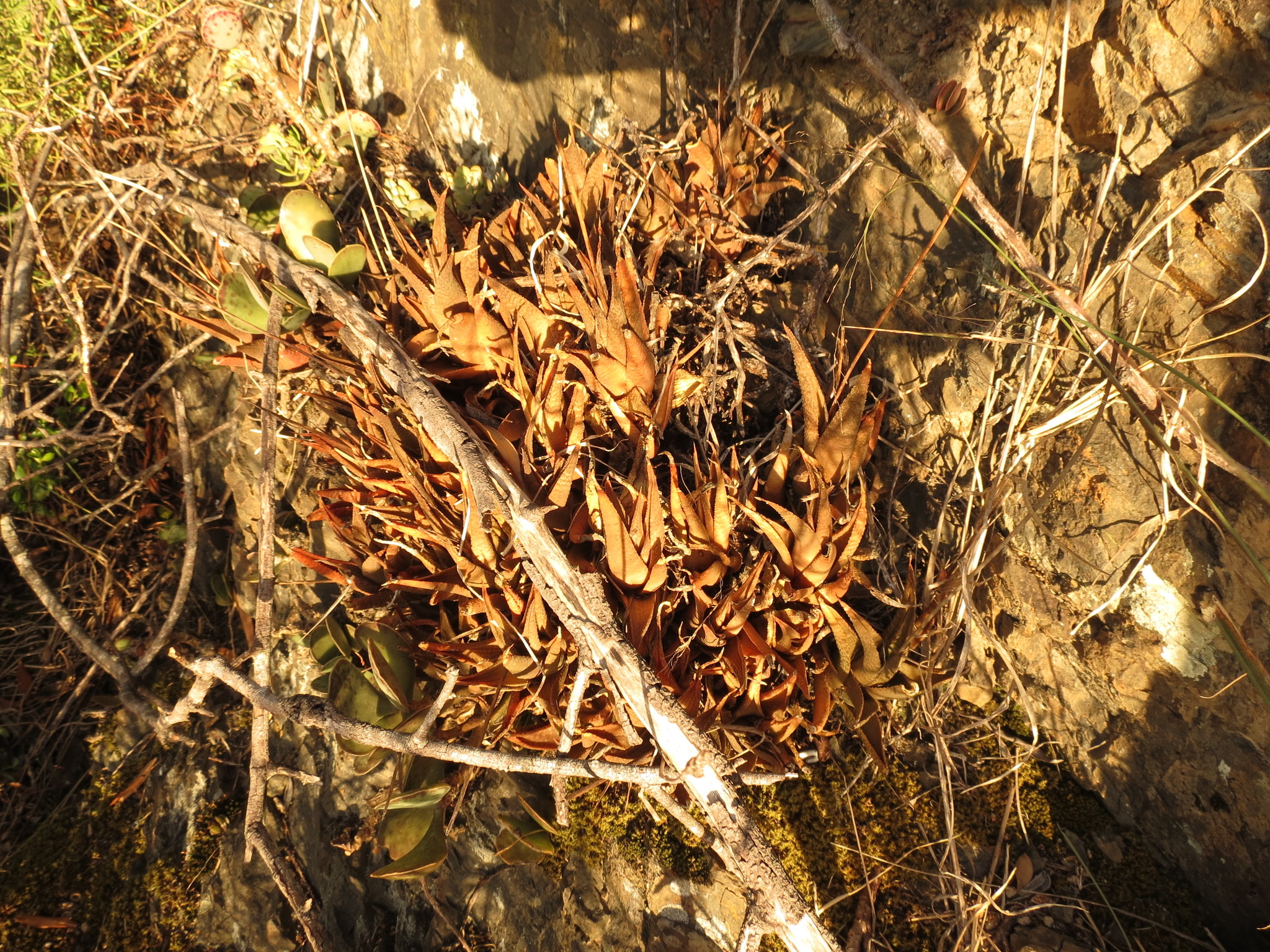
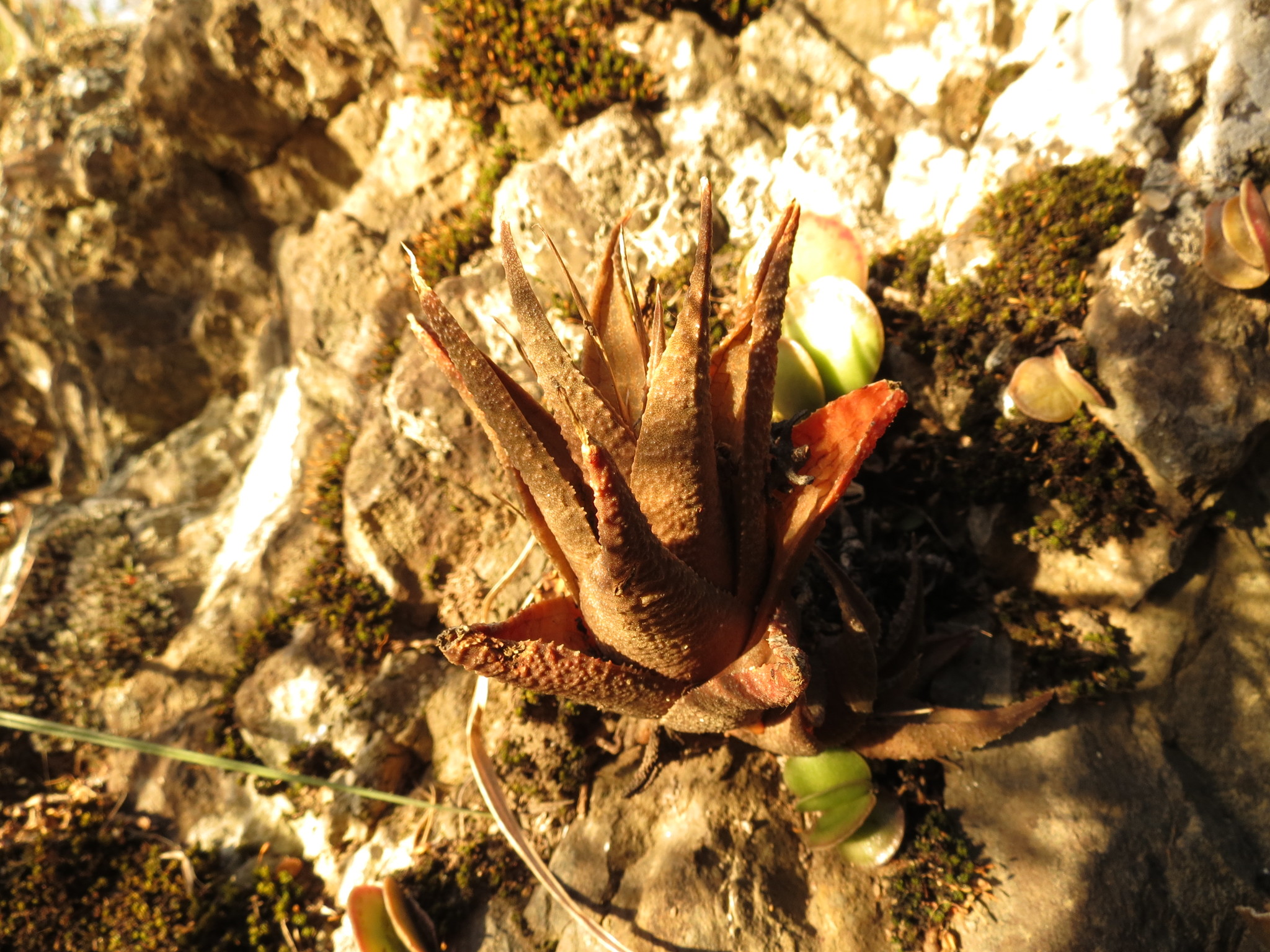
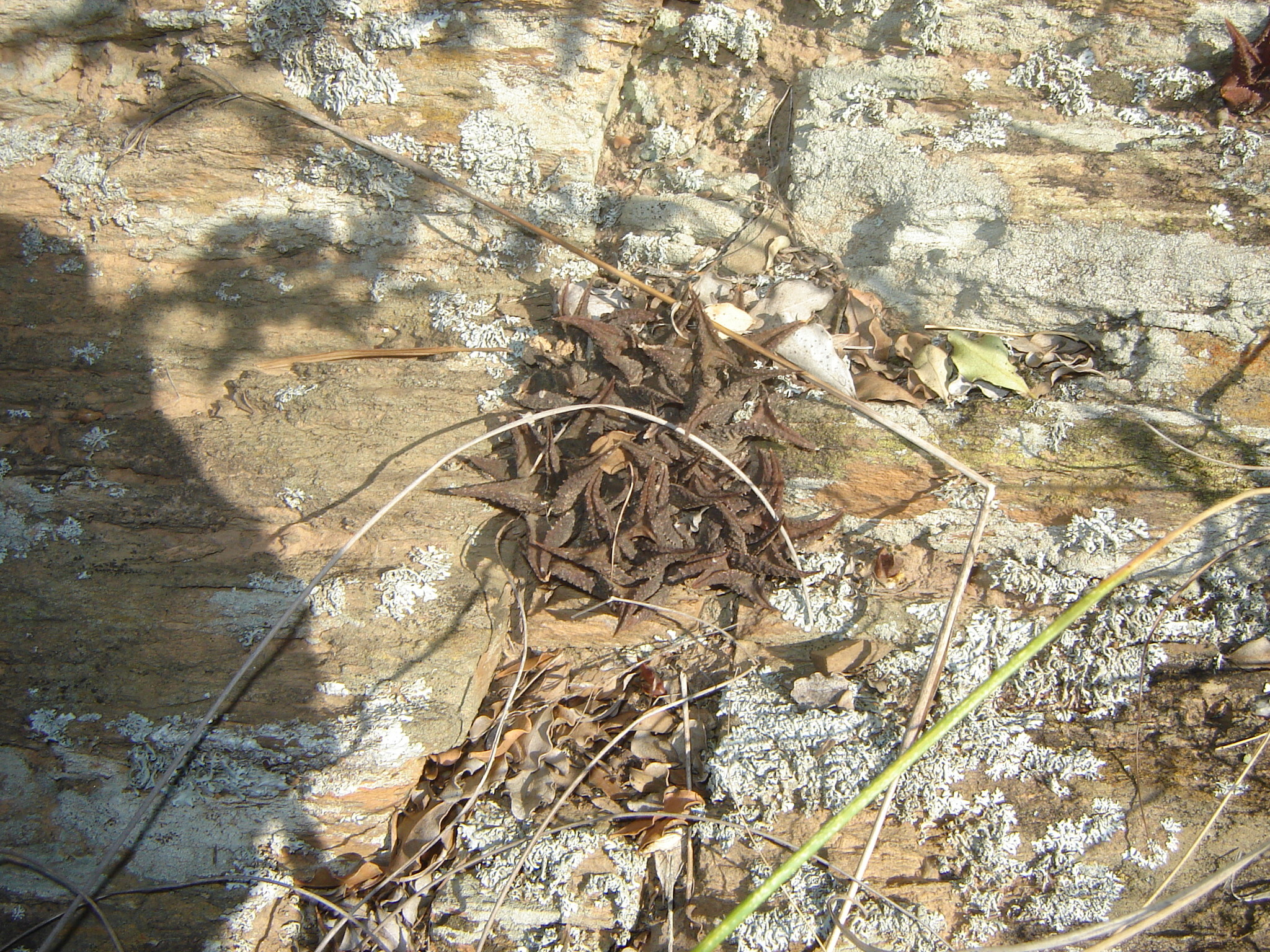
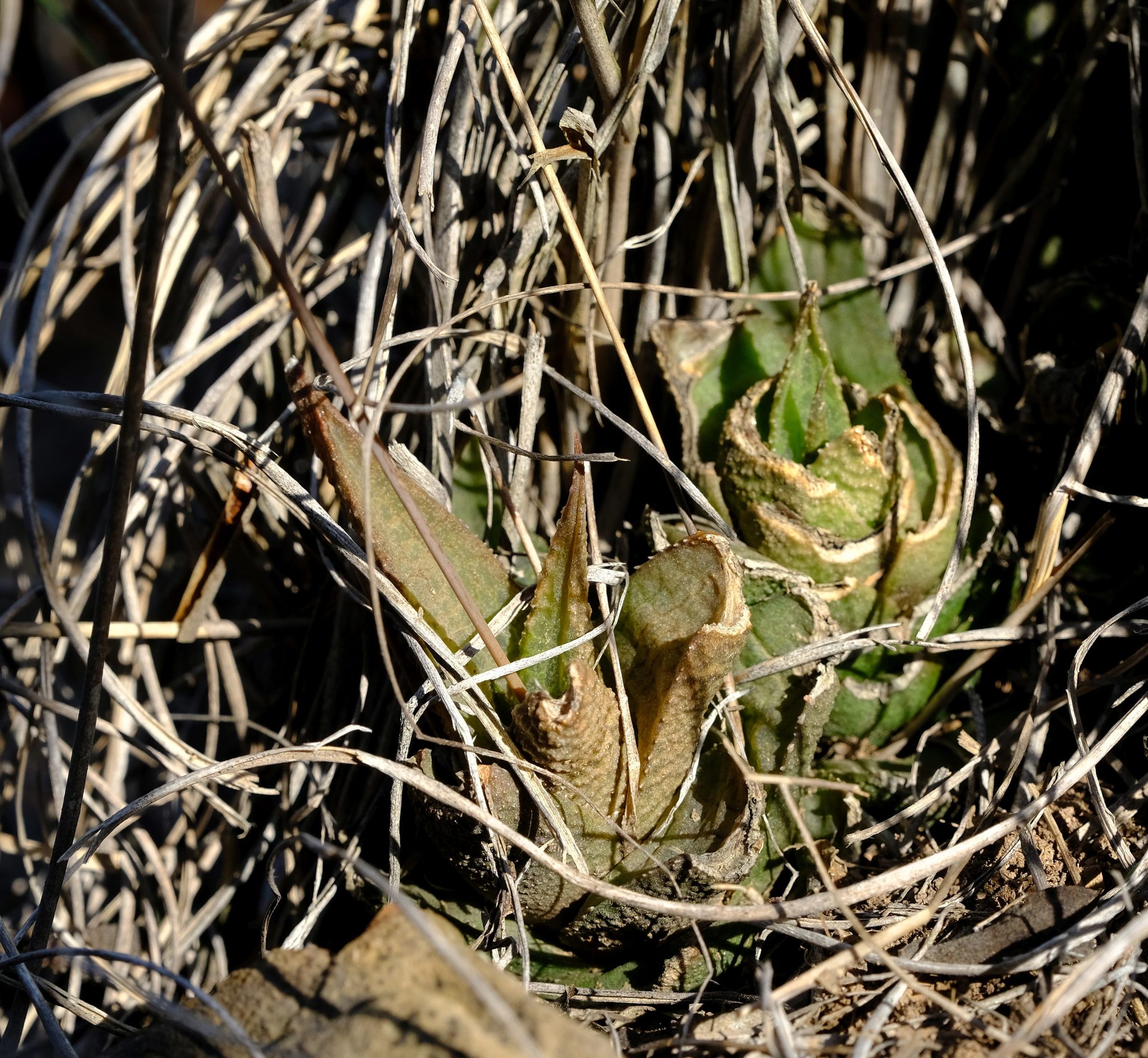
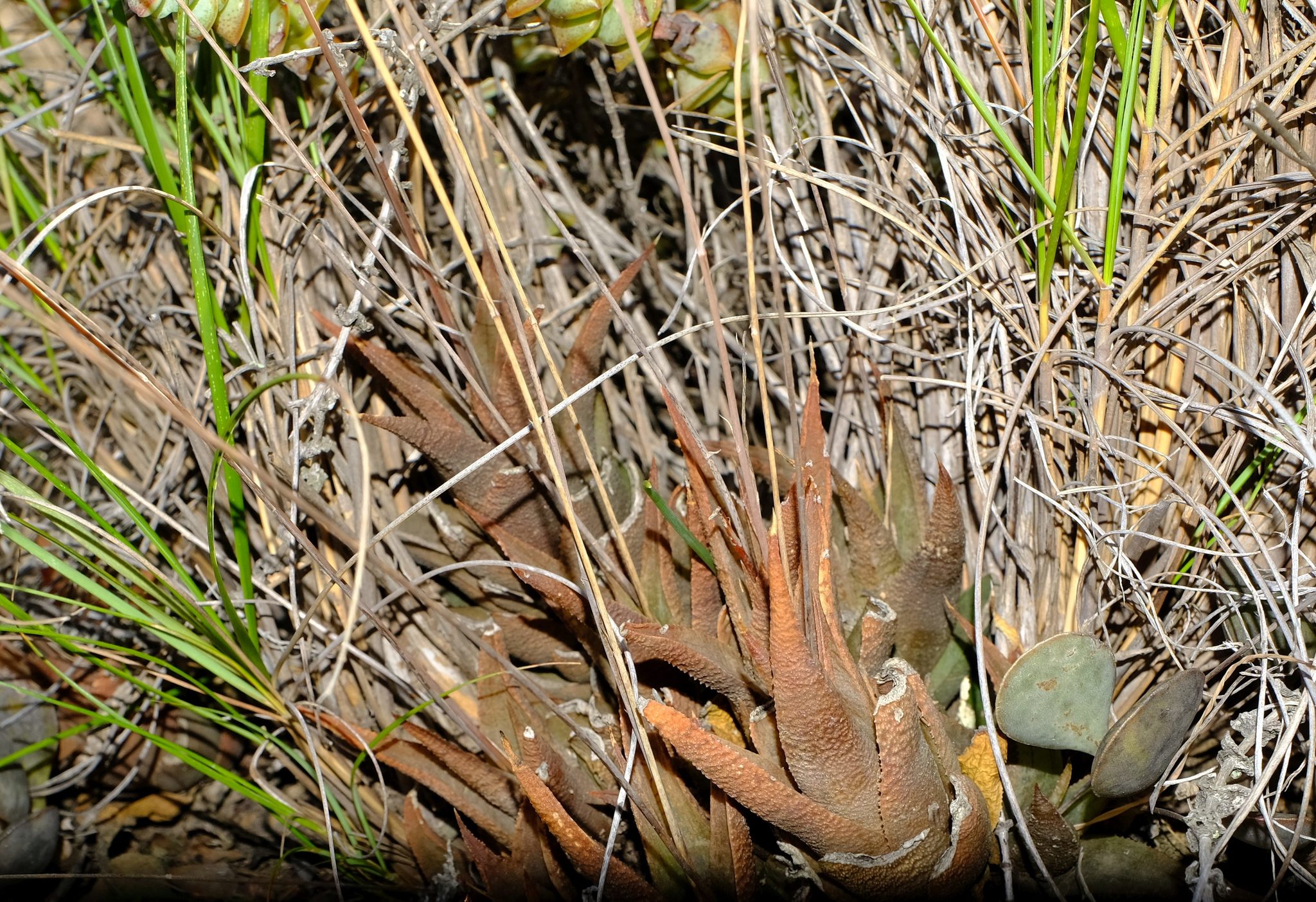
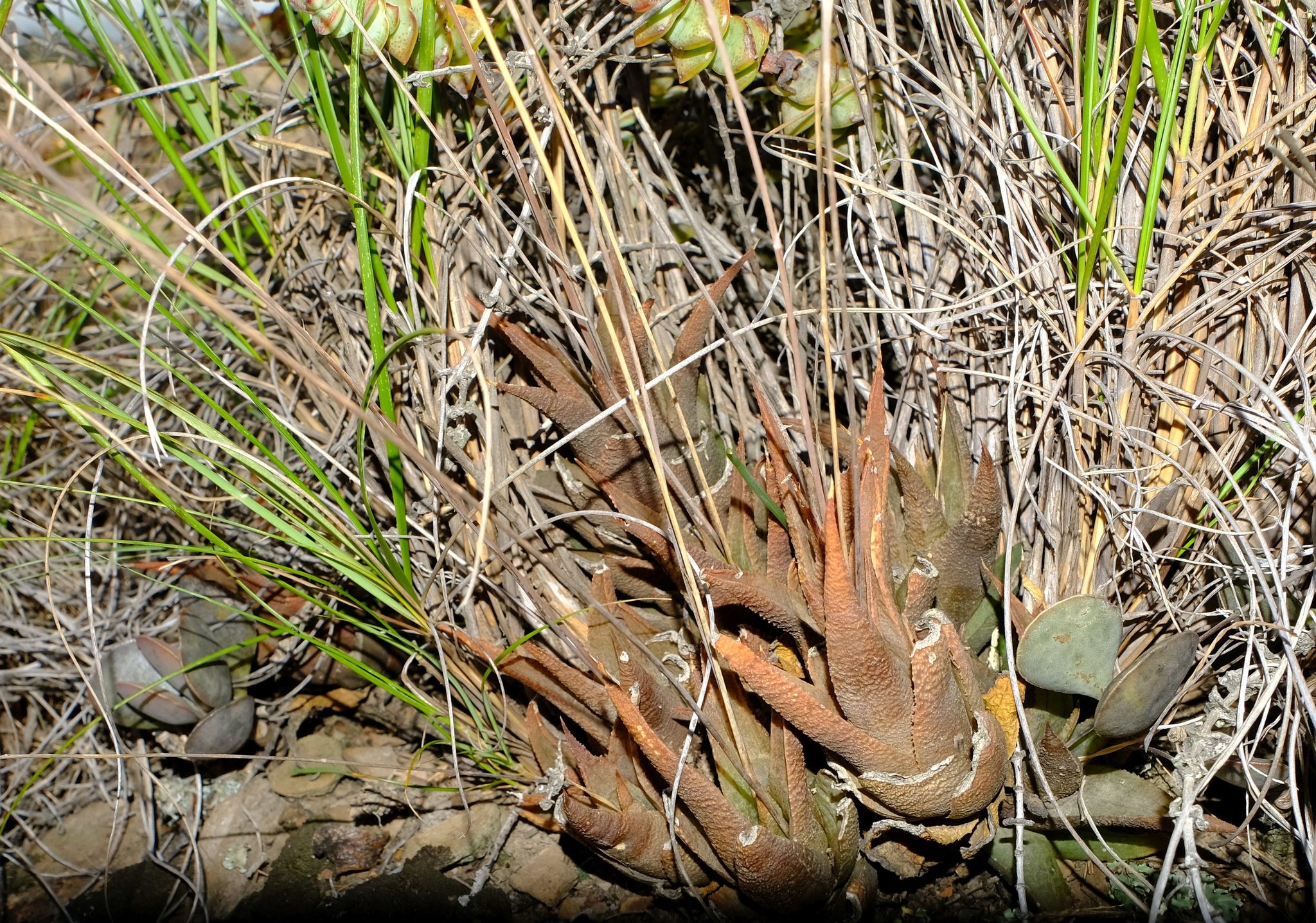
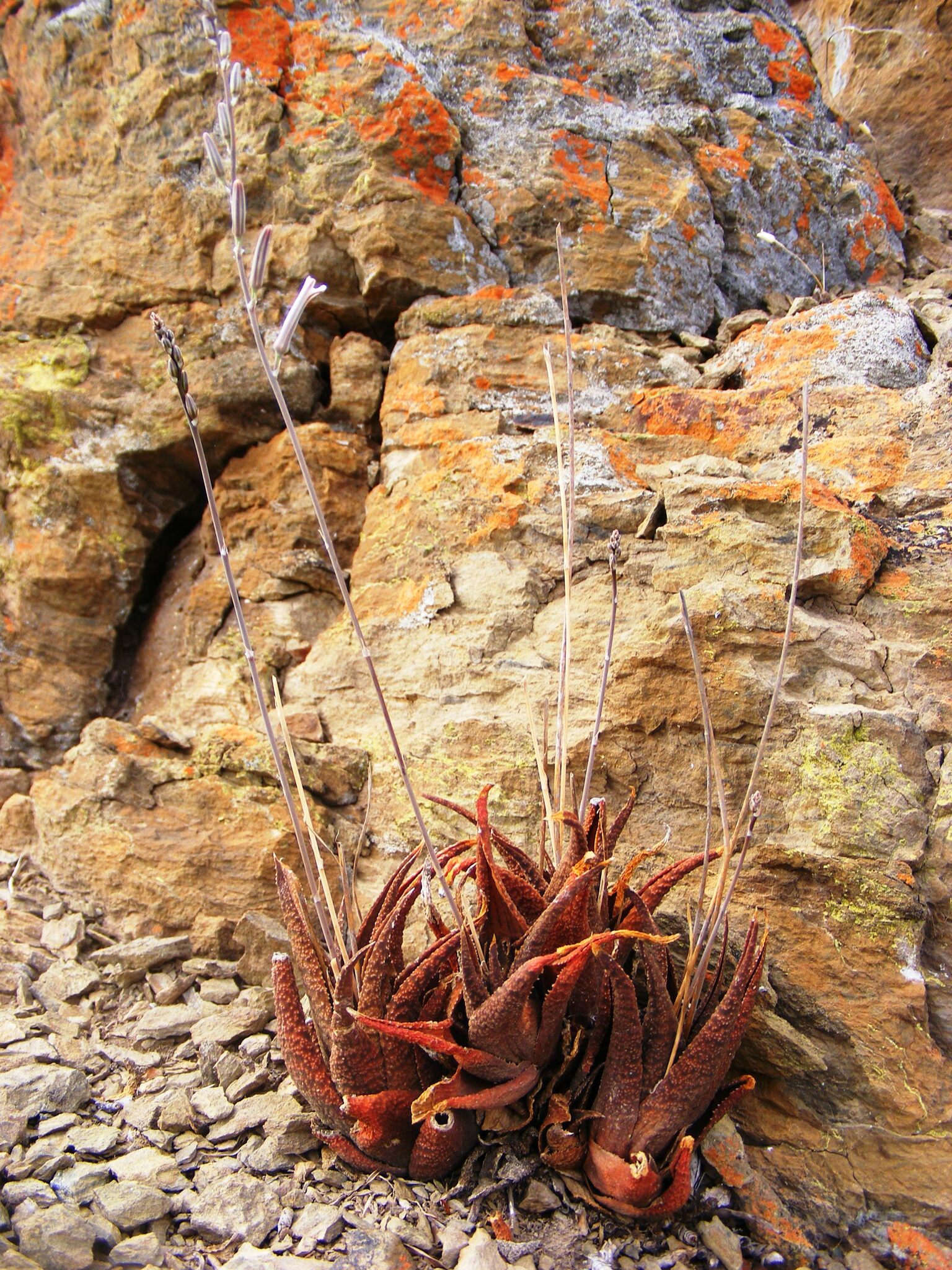
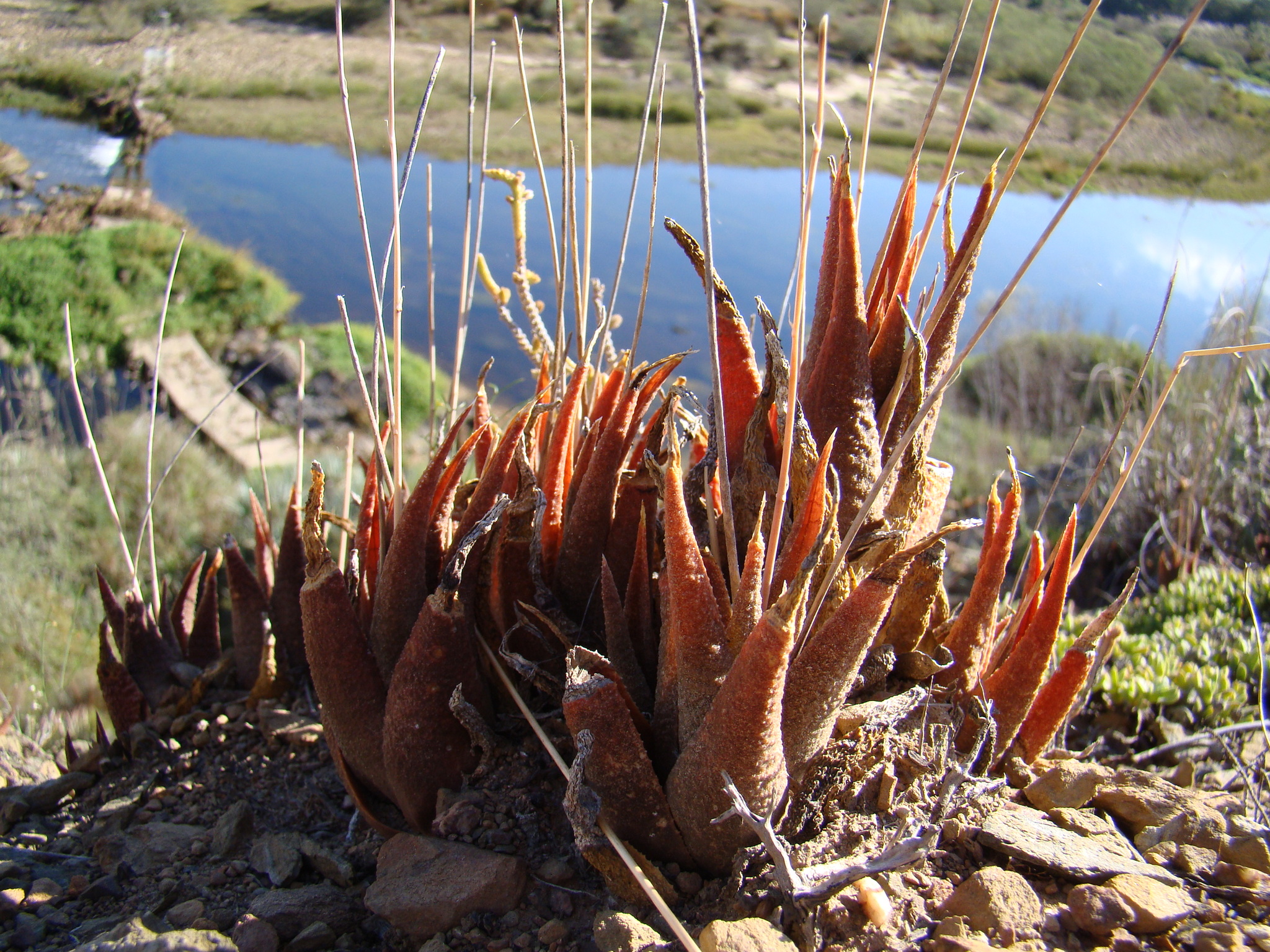
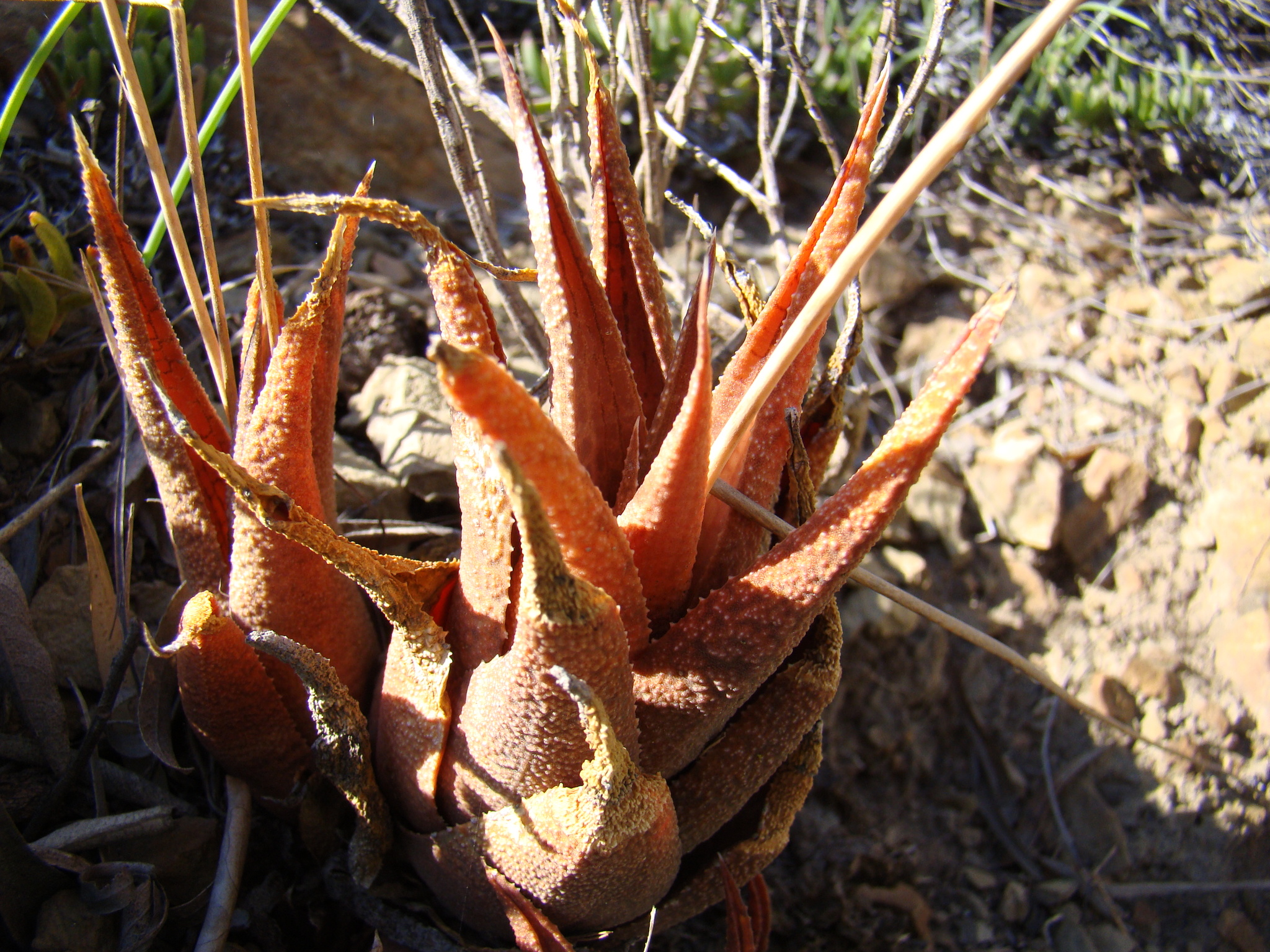
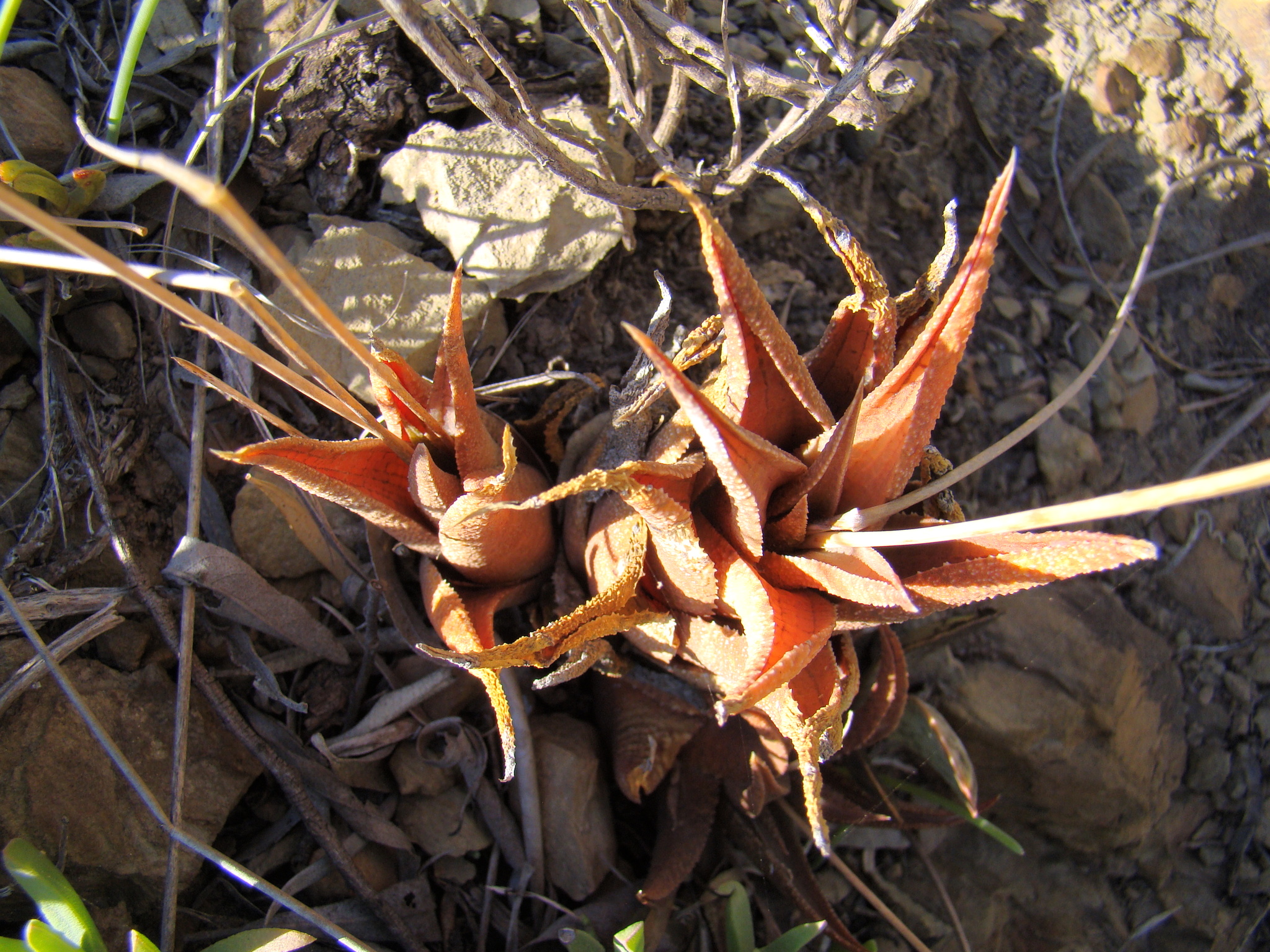
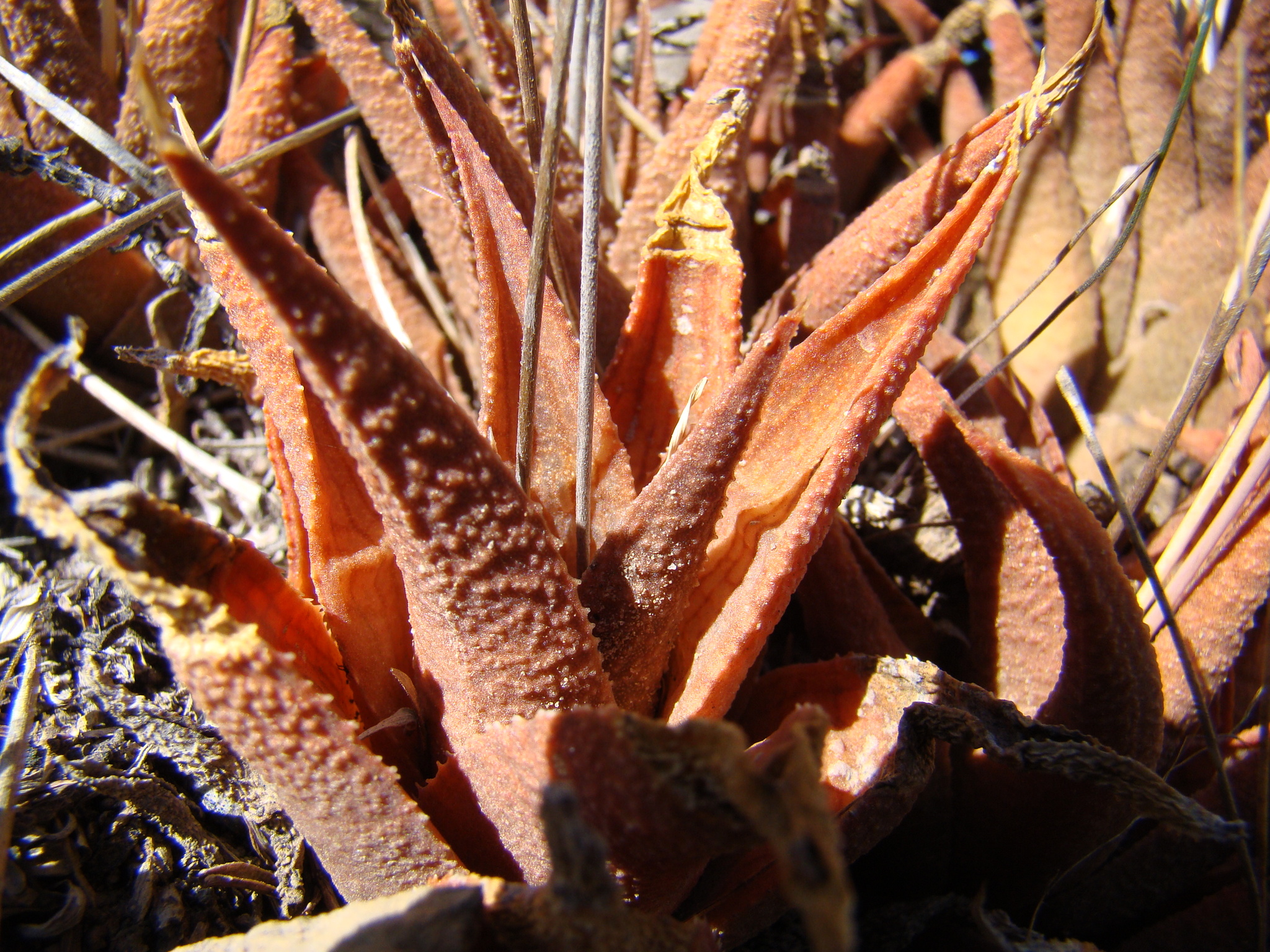
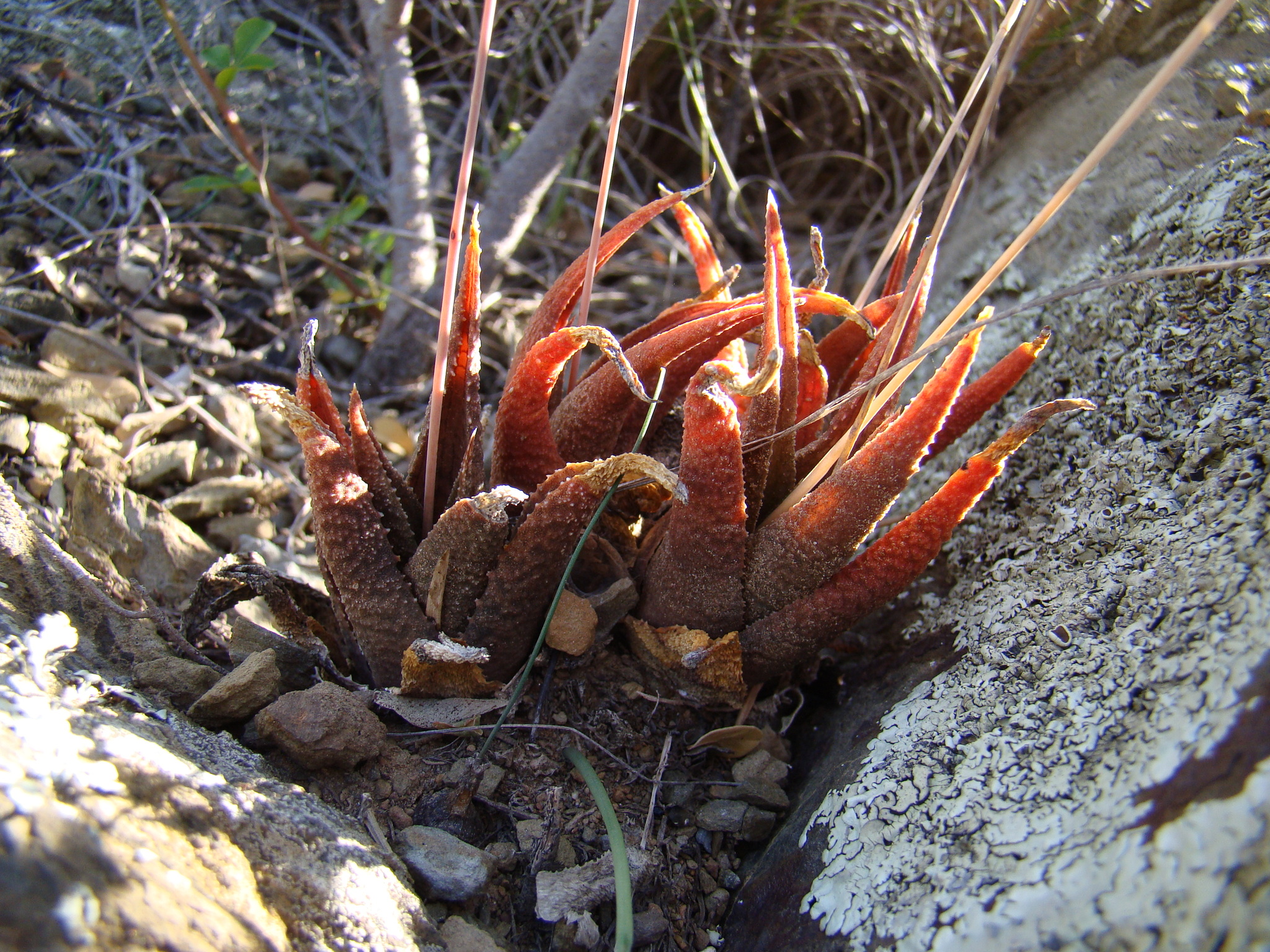
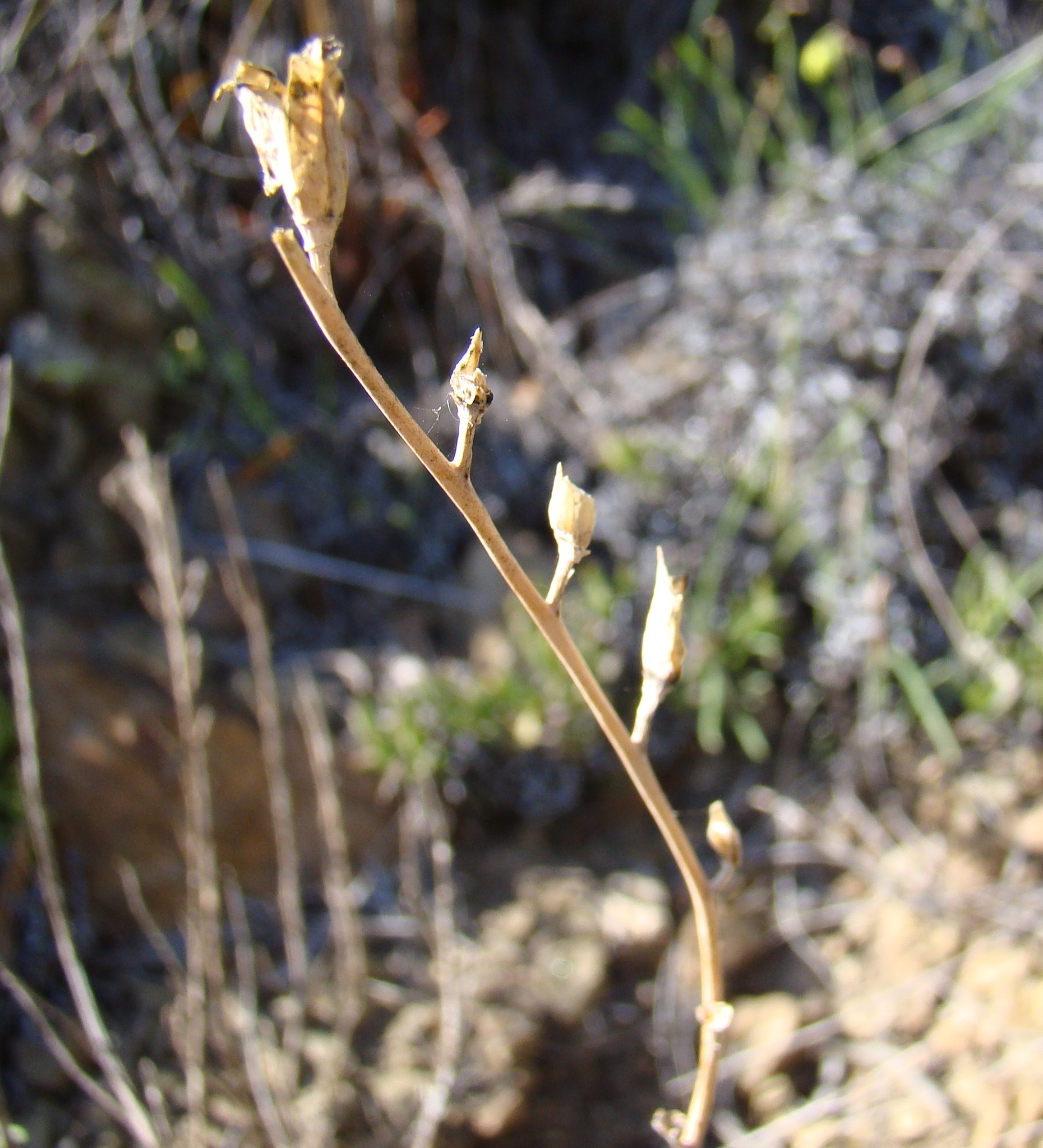
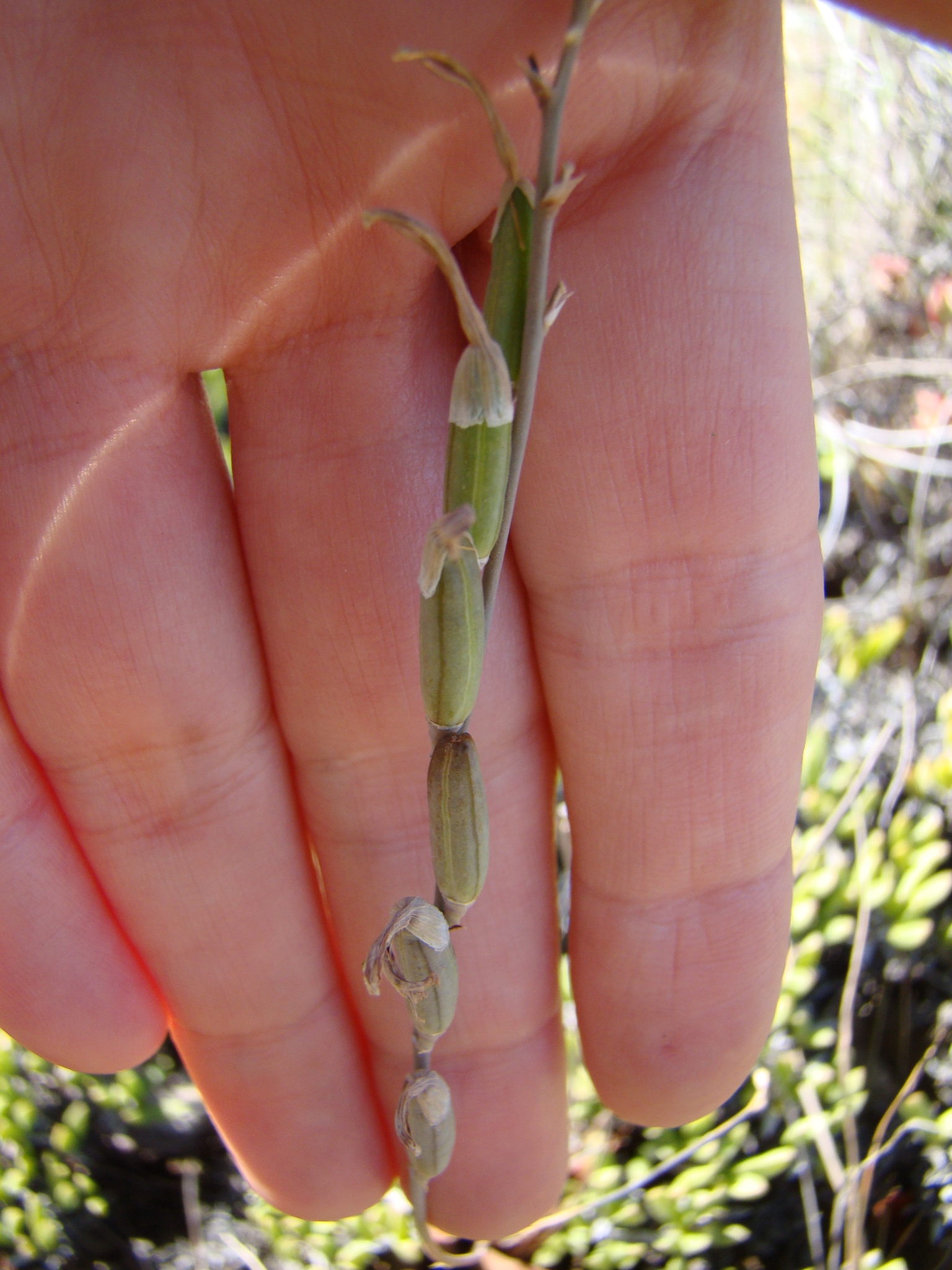
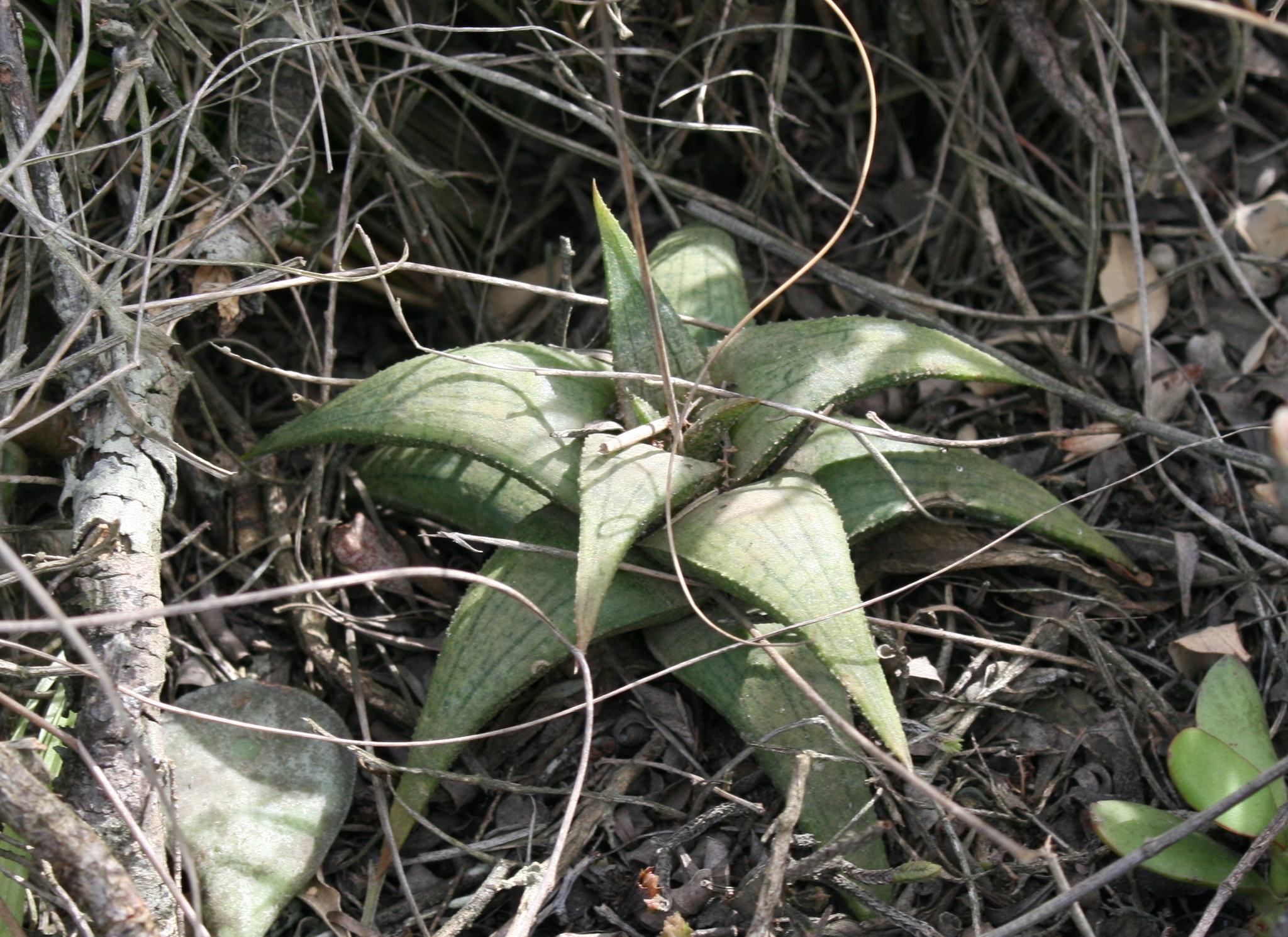
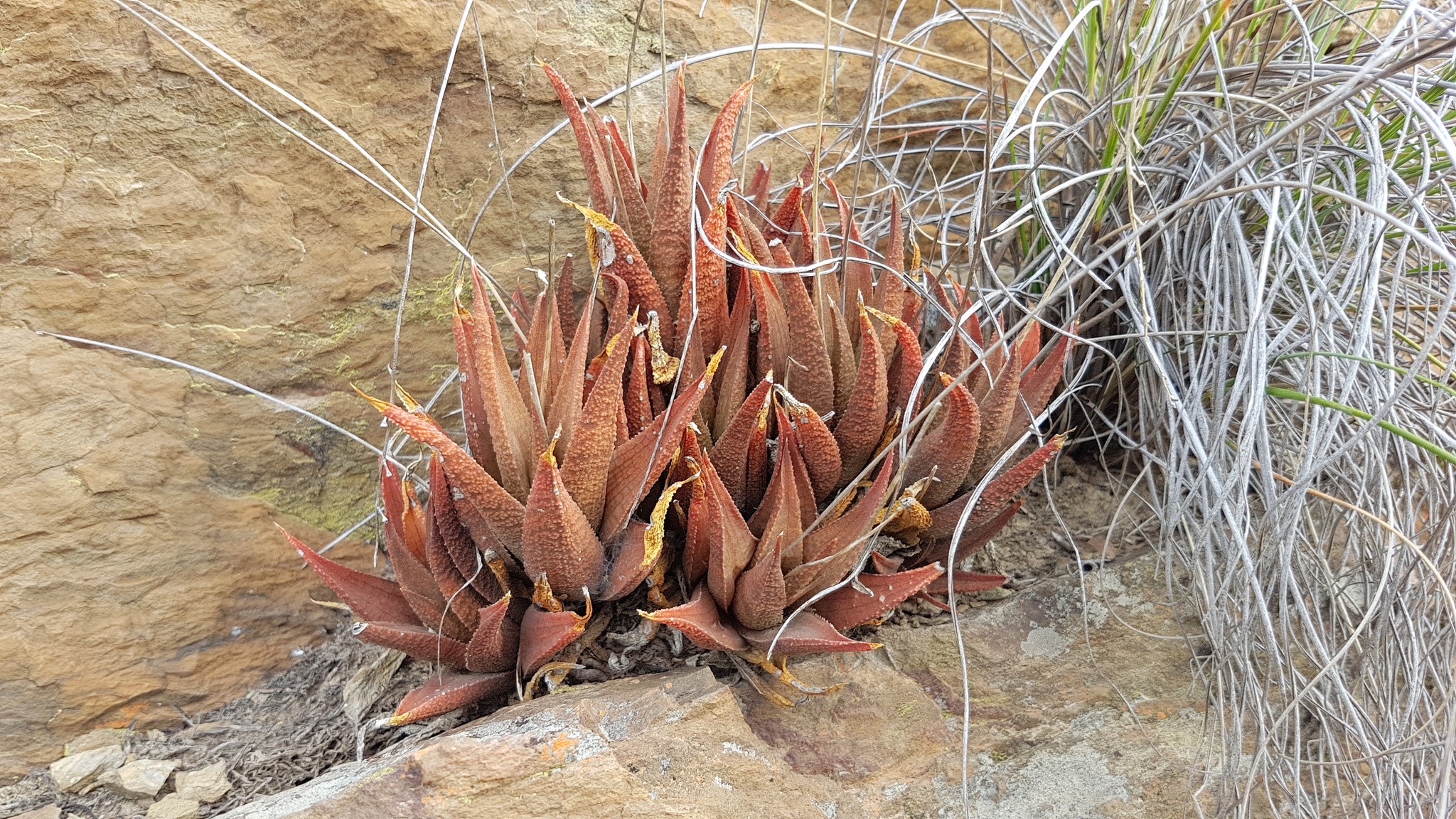
Plants acaulescent, with leaves in a basal rosette which is about 8-10 cm diam., proliferous from the leaf axils and forming clusters. Leaves about 20, the young erect, little recurved, rigid, falcate, the old ascending, spreading, little recurved, about 8 cm long, 17 mm broad, up to 6 mm thick, lanceolate-triangular, tapering, mucronate, brownish-green; upper surface concave at the base, flat towards the middle, channelled near the apex, leaf-tips replicate, with 5-6 longitudinal lines which are tessellately connected; lower surface strongly rounded, rough with small concolorous irregularly distributed tubercles, or in transverse bands; keel 1, positioned in the upper third, rough; margins acute, with irregularly spaced 0.75 mm long, reflexed pellucid teeth. Inflorescence about 65 cm tall; peduncle simple, terete, about 1.5 mm diam., 29 cm long, bracteate; sterile bracts membranous, ovate, acuminate, about 4 mm long, erect, keeled; raceme about 36 cm long, lax, with about 24 spirally arranged flowers and buds, 3 open simultaneously; floral bracts 3 mm long, membranous, deltoid, acute, keeled with fine brown veins, clasping the pedicels, (shorter than the pedicels); pedicels 6 mm long, 1.5 mm diam., green, erect; perianth white with broad brownish-green keels to the segments, 15 mm long, compressed at base, funnel-shaped, tube more or less 3 mm across, constricted to 2 mm above, straight; segments not free to the base; limb 2 lipped; posterior segments not spreading, little recurved, the inner segments curved inwards, white with brown veins; exterior part strongly recurved, spreading, white with brown veins, replicate; stamens 6 of two lengths, 9 and 10 mm long, inserted within the perianth tube; ovary 5 mm long, 2 mm diam., green; style 5 mm long, yellow-green, straight, capitate. From: Scott, CL. 1985. The genus Haworthia (Liliaceae): a taxonomic revision. Aloe Books, Johannesburg. [All rights reserved] As: Haworthia venosa (Lam.) Haw.
Slowly proliferous, acaulescent. Leaves 30-40 x 15-20 mm, ovate-deltoid, thick fleshy, firm, recurved with flattish, reticulate end-area, lower surfaces slightly scabrid, upper surfaces smooth. Flowering time Feb.-Apr. From: Klopper, RR; Smith, GF; Bayer, MB; Bredenkamp, CL. 2019. Asphodelaceae. In: CL Bredenkamp (ed.), A Flora of the Eastern Cape Province. Strelitzia 41(3): 1647-1680. South African National Biodiversity Institute, Pretoria. [CC BY]
Acaulescent or shortly caulescent succulent. Leaves hard, dark green to brownish, short and spreading, upper surface reticulate patterned, lower surface usually scabrid. Flowers in a slender raceme, white. From: Snijman, DA. 2013. Asphodelaceae: Haworthia. In: DA Snijman (ed.), Plants of the Greater Cape Floristic Region 2: The Extra Cape flora. Strelitzia 30: 54-54. South African National Biodiversity Institute, Pretoria. [CC BY] As: Haworthia venosa (Lam.) Haw.
Acaulescent or sometimes caulescent succulent. Leaves dark green, short and spreading, reticulate patterned. Flowers white. From: Bayer, B. 2012. Asphodelaceae: Haworthia Duval. In: J Manning & P Goldblatt (eds), Plants of the Greater Cape Floristic Region 1: The Core Cape flora. Strelitzia 29: 75-77. South African National Biodiversity Institute, Pretoria. [CC BY] As: Haworthia venosa (Lam.) Haw.
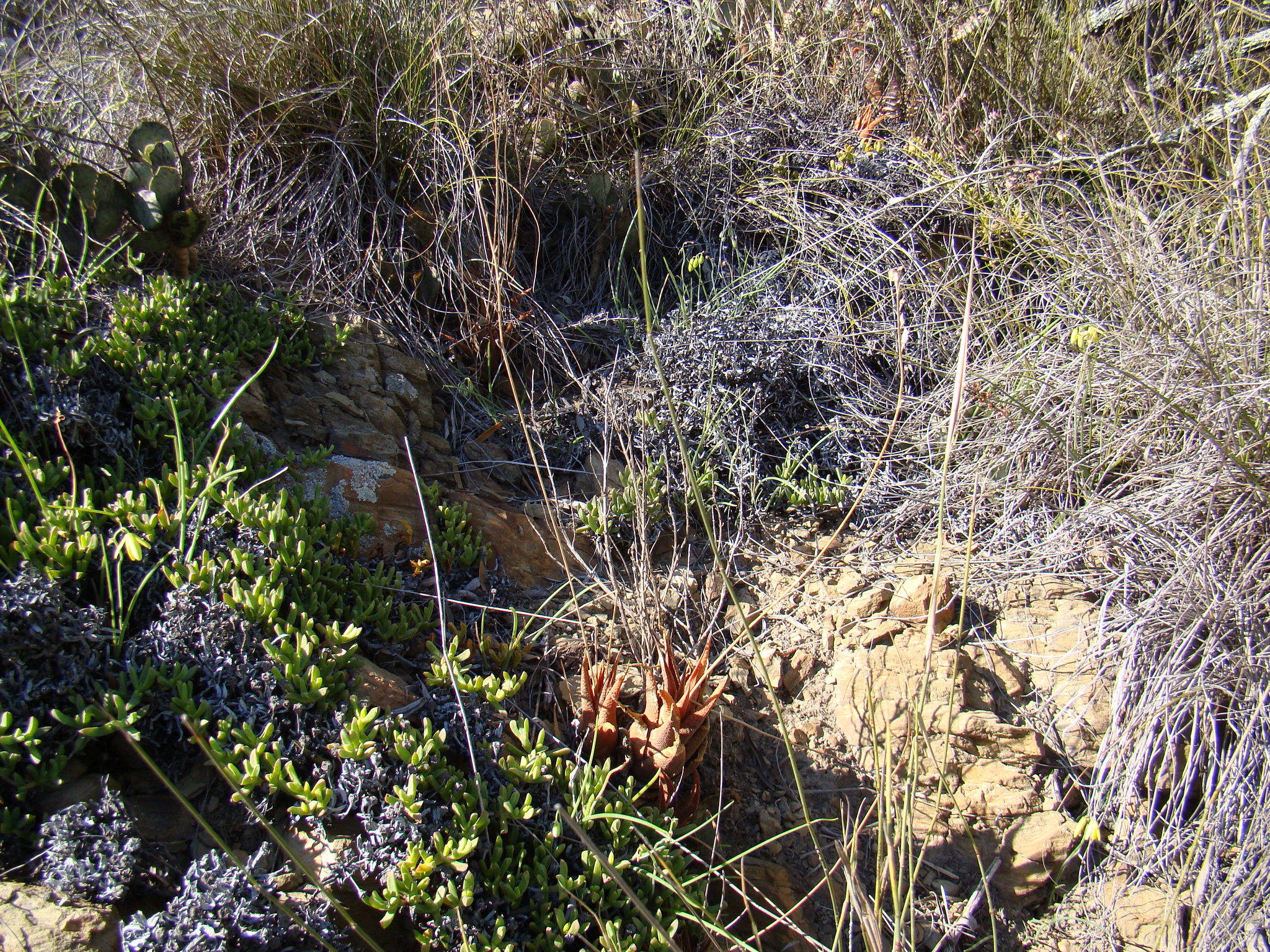
It occurs from near the coast to about 50 km inland, at altitudes up to 140 m. It is a constituent of Fynbos and grows in sandy soil in rock crevices which contain small deposits of very humus-rich soil derived from sandstone, mainly on east facing slopes. The annual rainfall, distributed throughout the year, is about 480 mm. H. venosa prefers a firm sandy soil with pH 6. From: Scott, CL. 1985. The genus Haworthia (Liliaceae): a taxonomic revision. Aloe Books, Johannesburg. [All rights reserved] As: Haworthia venosa (Lam.) Haw.
Rocky, low biomass sites, in rock cracks and crevices. Upper Karoo, Dry Highveld Grassland, Rainshadow Valley Karoo, Albany Thicket. From: Klopper, RR; Smith, GF; Bayer, MB; Bredenkamp, CL. 2019. Asphodelaceae. In: CL Bredenkamp (ed.), A Flora of the Eastern Cape Province. Strelitzia 41(3): 1647-1680. South African National Biodiversity Institute, Pretoria. [CC BY]
On rocky slopes. From: Snijman, DA. 2013. Asphodelaceae: Haworthia. In: DA Snijman (ed.), Plants of the Greater Cape Floristic Region 2: The Extra Cape flora. Strelitzia 30: 54-54. South African National Biodiversity Institute, Pretoria. [CC BY] As: Haworthia venosa (Lam.) Haw.
Rocky slopes among grass in renosterveld. From: Bayer, B. 2012. Asphodelaceae: Haworthia Duval. In: J Manning & P Goldblatt (eds), Plants of the Greater Cape Floristic Region 1: The Core Cape flora. Strelitzia 29: 75-77. South African National Biodiversity Institute, Pretoria. [CC BY] As: Haworthia venosa (Lam.) Haw.
H. venosa is a distinctive species which is confined to a small area in the southern Cape Province. It is known only from localities near Swellendam, and in the Bontebok Nature Reserve situated south of Swellendam. From: Scott, CL. 1985. The genus Haworthia (Liliaceae): a taxonomic revision. Aloe Books, Johannesburg. [All rights reserved] As: Haworthia venosa (Lam.) Haw.
Aurus, Richtersveld National Park, Springbok, Bokkeveld Mountains, Roggeveld Escarpment, Karoopoort to Breede River Valley and Upper Karoo. From: Snijman, DA. 2013. Asphodelaceae: Haworthia. In: DA Snijman (ed.), Plants of the Greater Cape Floristic Region 2: The Extra Cape flora. Strelitzia 30: 54-54. South African National Biodiversity Institute, Pretoria. [CC BY] As: Haworthia venosa (Lam.) Haw.
Namibia and Karoo to Breede River Valley. From: Bayer, B. 2012. Asphodelaceae: Haworthia Duval. In: J Manning & P Goldblatt (eds), Plants of the Greater Cape Floristic Region 1: The Core Cape flora. Strelitzia 29: 75-77. South African National Biodiversity Institute, Pretoria. [CC BY] As: Haworthia venosa (Lam.) Haw.
This map contains point-based occurrences at different locations
 This is a sensitive species therefore data has been redacted, click here to login.
Occurrence in the Flora of Southern Africa (FSA) countries and South African provinces. Residence status indicates if a taxon is indigenous, endemic, naturalised or invasive in a specific region. This data is based on specimen records and literature
FSA
SA
BOT
NAM
ESW
LES
WC
EC
NC
FS
GA
KZN
LP
MP
NW
Absent
Indigenous
Endemic
Naturalised
Invasive



Names and Sources
Published in: Alsterworthia Int. Special Issue 10: 5 (2013)
Type: (icon) in Commelijn (1703: t.29). Lectotype designated by Scott, The genus Haworthia. A taxonomic revision: 35 (1985). Type: South Africa, Western Cape: Swellendam, west of Breede River Bridge, 1970, M.B. Bayer 168 (NBG0110636, epi.) Epitype designated by Breuer & Metzing, Taxon 46: 13 (1997).
Aloe venosa Lam.
Published in: Encycl. [J. Lamarck & al.] 1(1): 89 (1783)
Haworthia venosa (Lam.) Haw.
Published in: Revis. Pl. Succ.: 44 (1812)
Aloe anomala Haw.
Published in: Trans. Linn. Soc. London 7: 25 (1804)
Aloe recurva Haw.
Published in: Trans. Linn. Soc. London 7: 10 (1804)
Aloe tricolor Haw.
Published in: Trans. Linn. Soc. London 7: 25 (1804)
Apicra anomala (Haw.) Willd.
Published in: Mag. Neuesten Entdeck. Gesammten Naturk. Ges. Naturf. Freunde Berlin 5: 273 (1811)
Haworthia recurva (Haw.) Haw.
Published in: Syn. Pl. Succ.: 94 (1812)
Haworthia distincta N.E.Br.
Published in: Gard. Chron. II: 130, f.30 (1876)
Haworthia venosa (Lam.) Haw. var. oertendahlii Hjelmq.
Published in: Bot. Not. 1943: 233 (1943)
Haworthia venosa (Lam.) Haw. subsp. recurva (Haw.) M.B.Bayer
Published in: Haworthia Handbook: 149 (1976)
| Common name | Language | Reference/barcode | Published as |
|---|---|---|---|
| kleinkanniedood | Afrikaans | Bayer, B. 2012. Asphodelaceae: Haworthia Duval.. In: J Manning & P Goldblatt (eds), Plants of the Greater Cape Floristic Region 1: The Core Cape flora. Strelitzia 29: 75-77. South African National Biodiversity Institute, Pretoria. |
Haworthia venosa (Lam.) Haw. |
| kleinkanniedood | Afrikaans | Klopper, RR; Smith, GF; Bayer, MB; Bredenkamp, CL. 2019. Asphodelaceae. In: CL Bredenkamp (ed.), A Flora of the Eastern Cape Province. Strelitzia 41(3): 1647-1680. South African National Biodiversity Institute, Pretoria. | |
| kleinkanniedood | Afrikaans | Snijman, DA. 2013. Asphodelaceae: Haworthia. In: DA Snijman (ed.), Plants of the Greater Cape Floristic Region 2: The Extra Cape flora. Strelitzia 30: 54-54. South African National Biodiversity Institute, Pretoria. |
Haworthia venosa (Lam.) Haw. |
Classification
KINGDOM Plantae
SUBKINGDOM Phanerogamae
PHYLUM Anthophyta
ORDER Asparagales
FAMILY Asphodelaceae
SUBFAMILY Alooideae
GENUS Haworthiopsis
SPECIES venosa
10 results for Haworthiopsis venosa (Lam.) G.D.Rowley
This map contains point-based occurrences at different locations
This is a sensitive species therefore data has been redacted, click here to login.
2019
SERIES CHAPTER
Asphodelaceae Klopper, RR; Smith, GF; Bayer, MB; Bredenkamp, CLIn: CL Bredenkamp (ed.), A Flora of the Eastern Cape Province. Strelitzia 41(3)1647-1680
South African National Biodiversity Institute, Pretoria
2017
2016
PERIODICAL/JOURNAL
A synoptic review and new infrageneric classification for the genus Haworthiopsis (Xanthorrhoeaceae: Asphodeloideae) Gildenhuys, SD; Klopper, RRPhytotaxa 265(1)1-26
2013
PERIODICAL/JOURNAL
Generic concepts in the Alooideae. Part 3 - The phylogenetic story [original with errors] Rowley, GDAlsterworthia International, Special Issue 10: 3-6
2013
PERIODICAL/JOURNAL
Generic concepts in the Alooideae. Part 3 (revised) - The phylogenetic story Rowley, GDAlsterworthia International, Special Issue 10: 3-6
2013
SERIES CHAPTER
Asphodelaceae: Haworthia Snijman, DAIn: DA Snijman (ed.), Plants of the Greater Cape Floristic Region 2: The Extra Cape flora. Strelitzia 30: 54-54
South African National Biodiversity Institute, Pretoria
2012
SERIES CHAPTER
Asphodelaceae: Haworthia Duval. Bayer, BIn: J Manning & P Goldblatt (eds), Plants of the Greater Cape Floristic Region 1: The Core Cape flora. Strelitzia 29: 75-77
South African National Biodiversity Institute, Pretoria
2000
FLORA
Aloe Glen, HF; Hardy, DSIn: G Germishuizen & E du Plessis (eds), Aloaceae (first part). Flora of Southern Africa 5(1),11-167
National Botanical Institute, Pretoria
1985
1982
No results found for Haworthiopsis venosa (Lam.) G.D.Rowley
| Part(s) of plant used | Use(s) | Reference |
|---|
Coming soon...


