
PLANTAE / PHANEROGAMAE / ANTHOPHYTA / ASTERALES / LOBELIACEAE / LOBELIEAE / GRAMMATOTHECA / BERGIANA

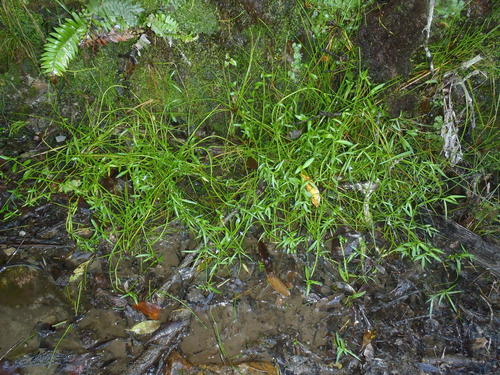
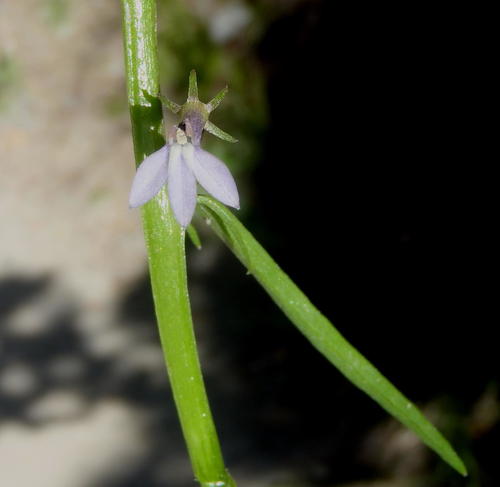
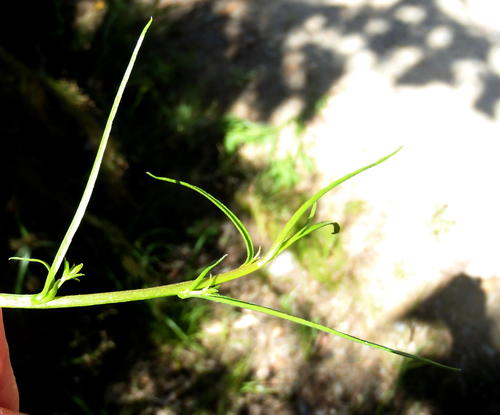
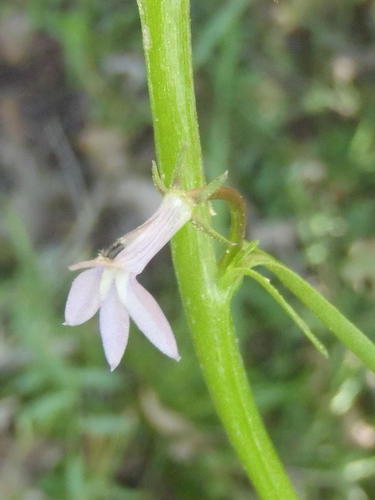
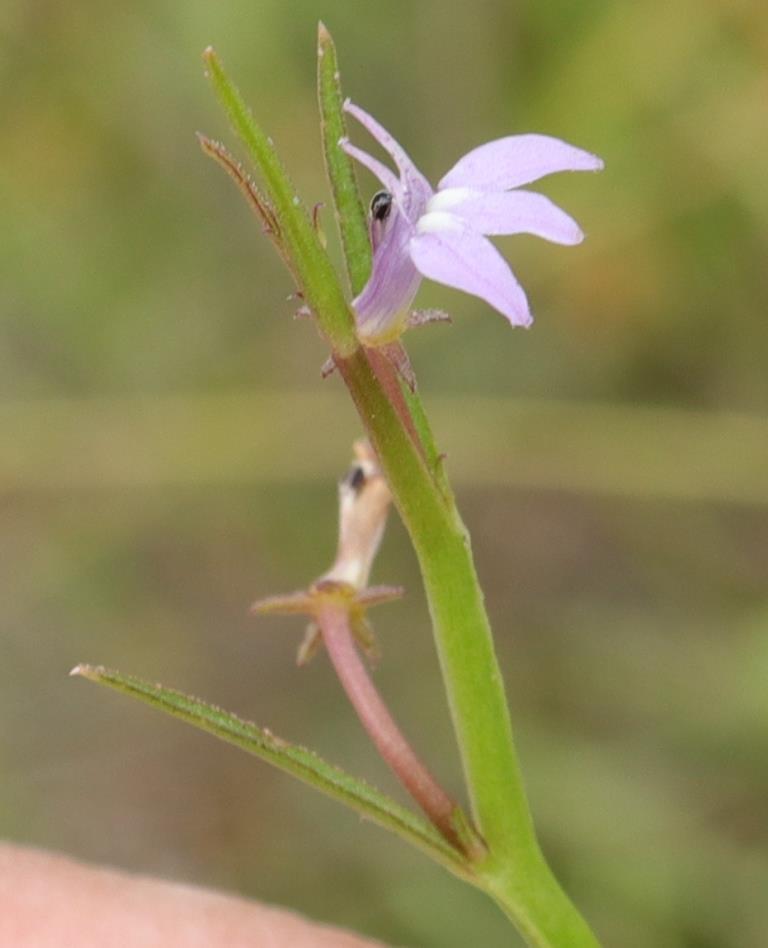
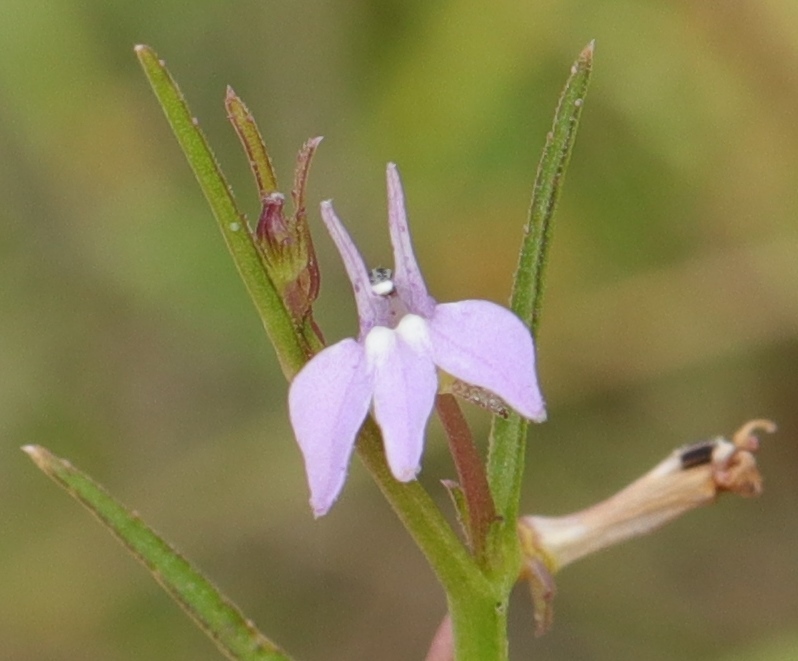
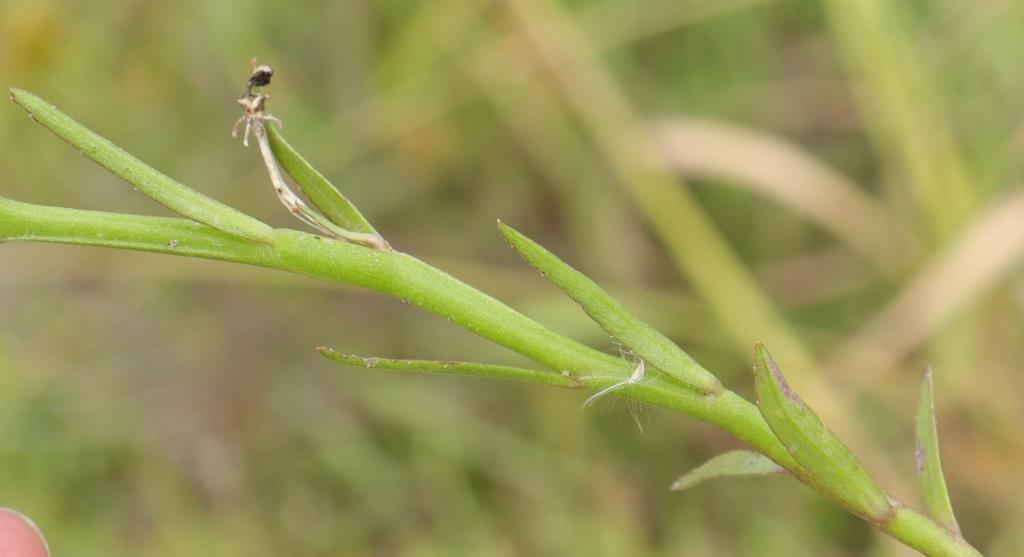
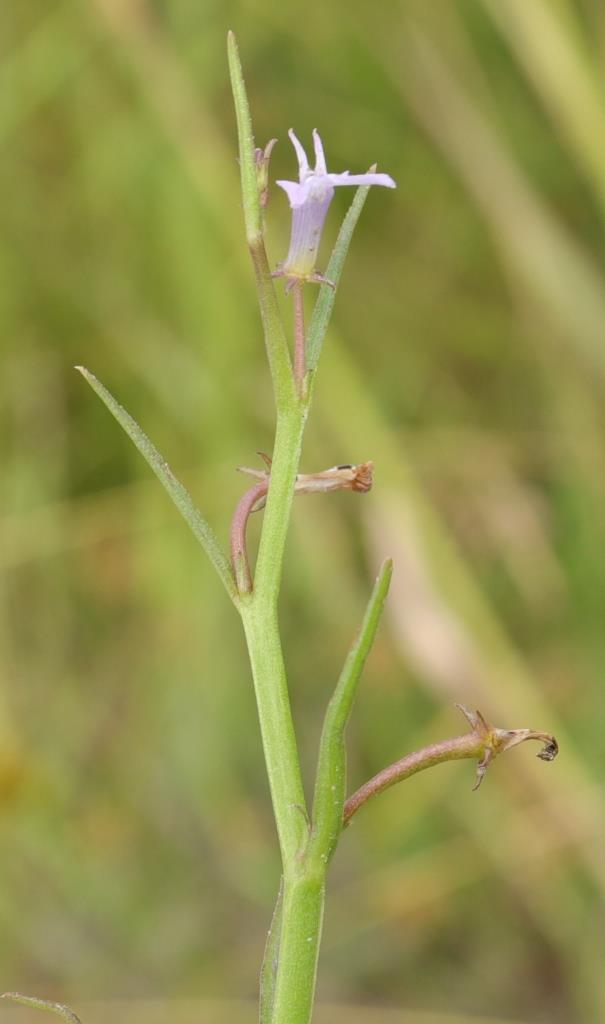
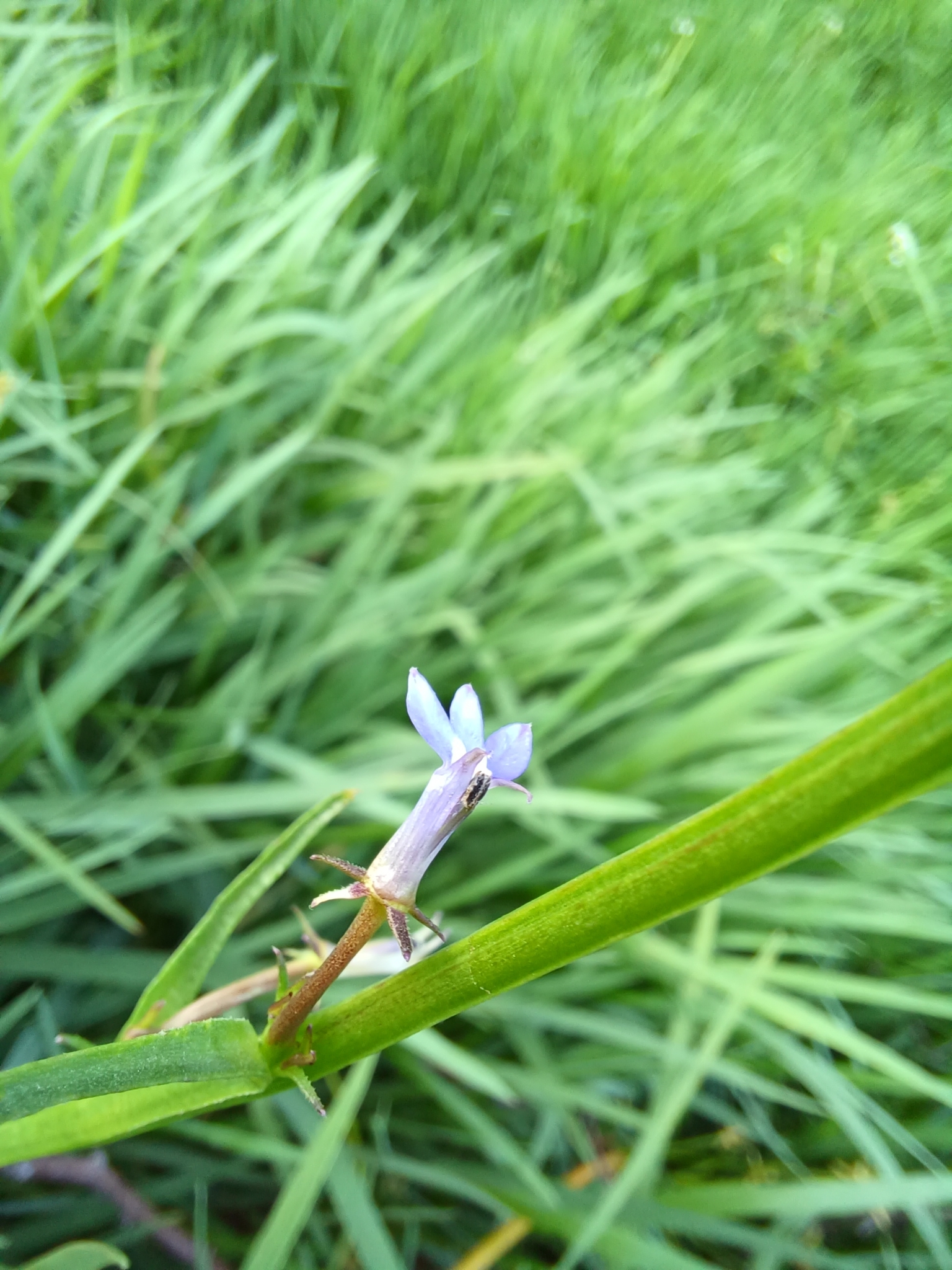
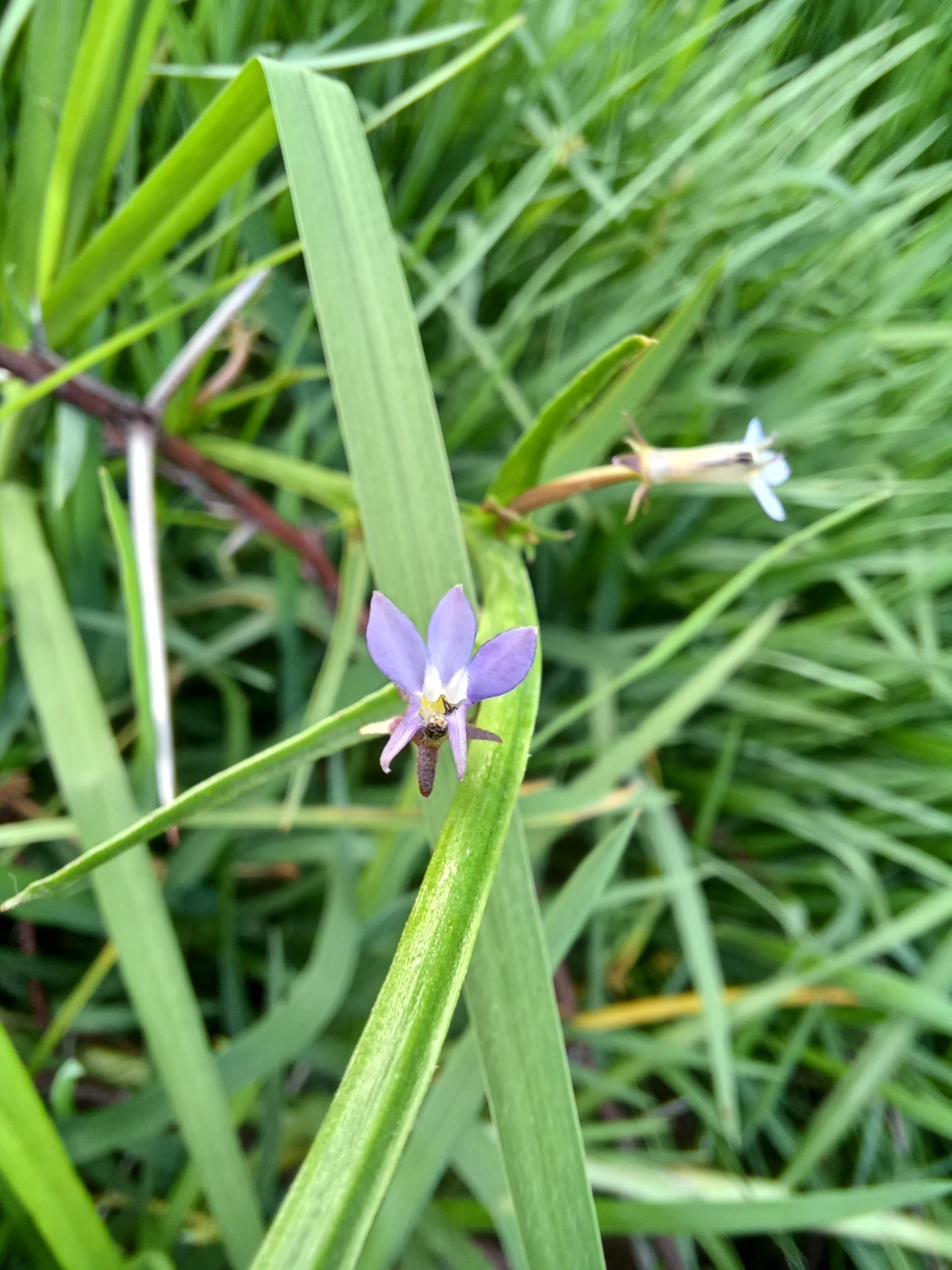
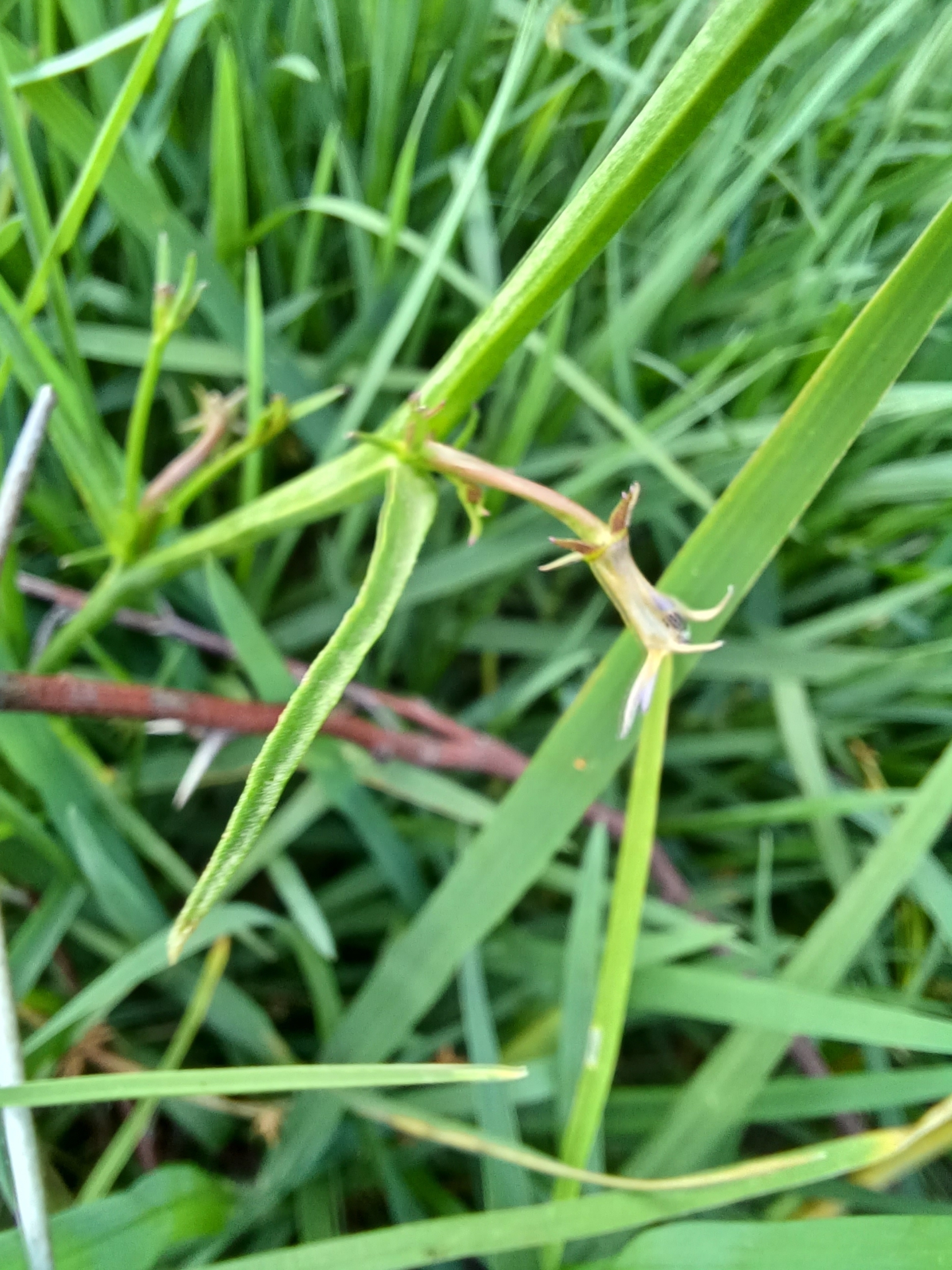
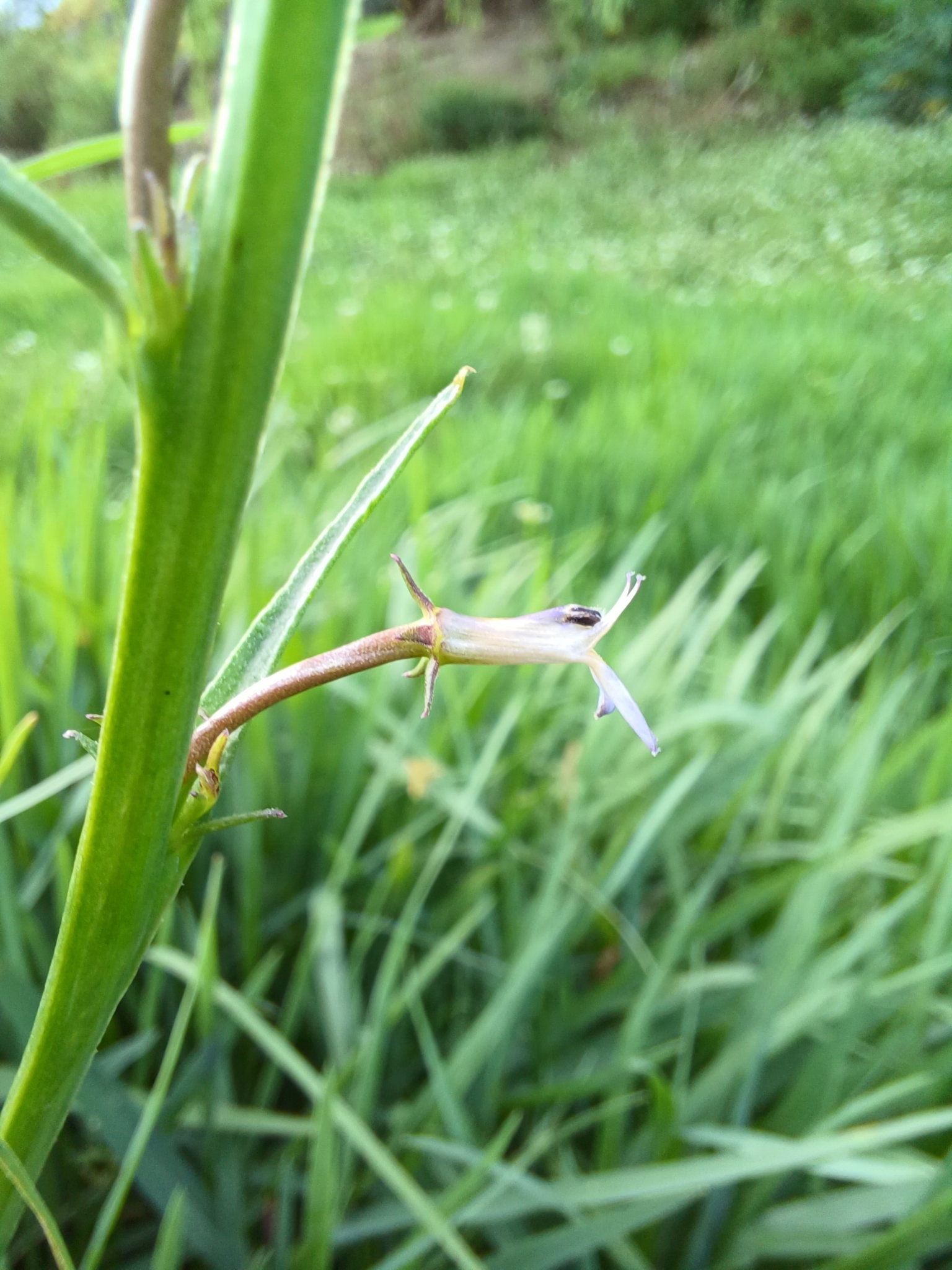
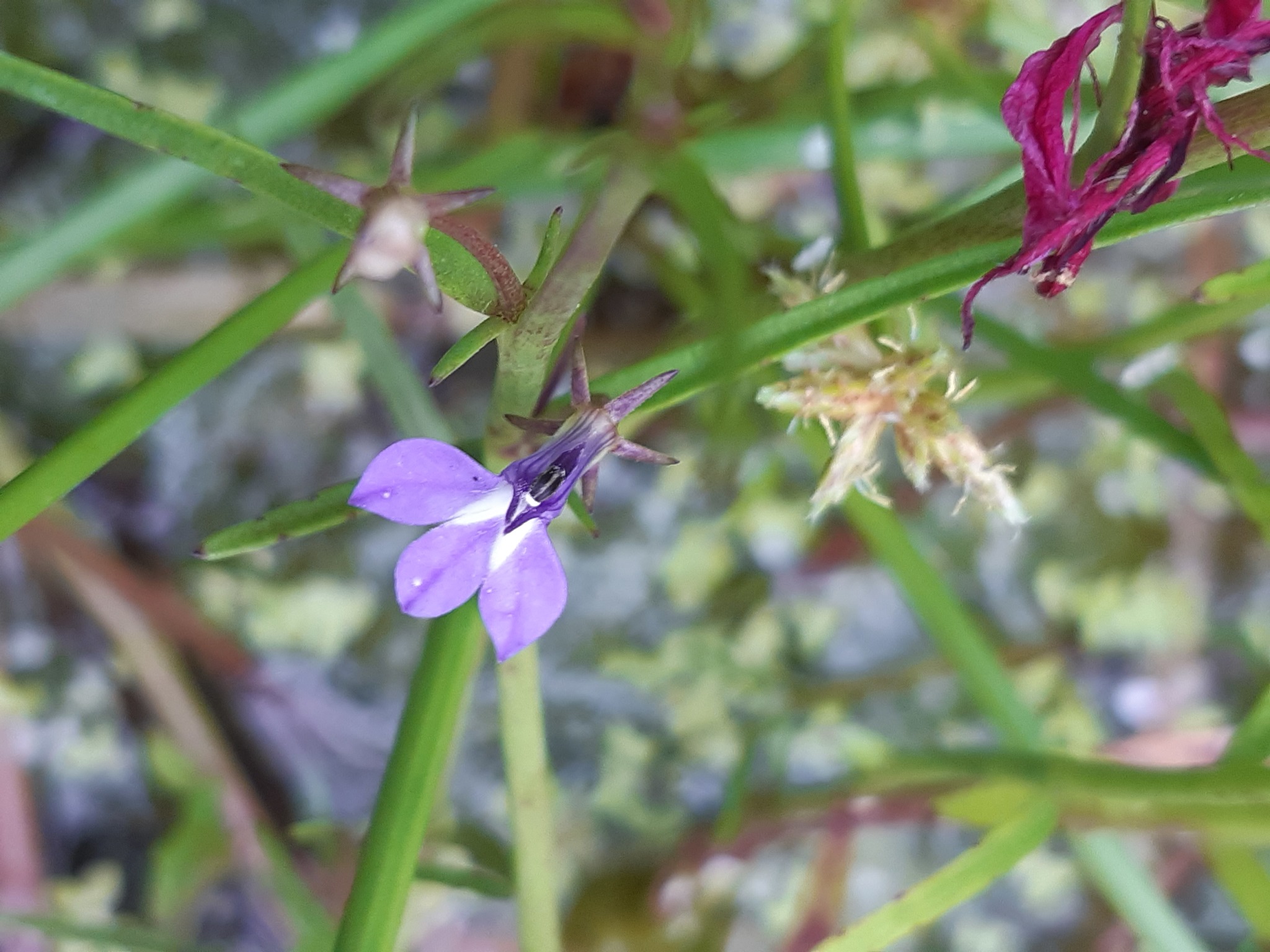
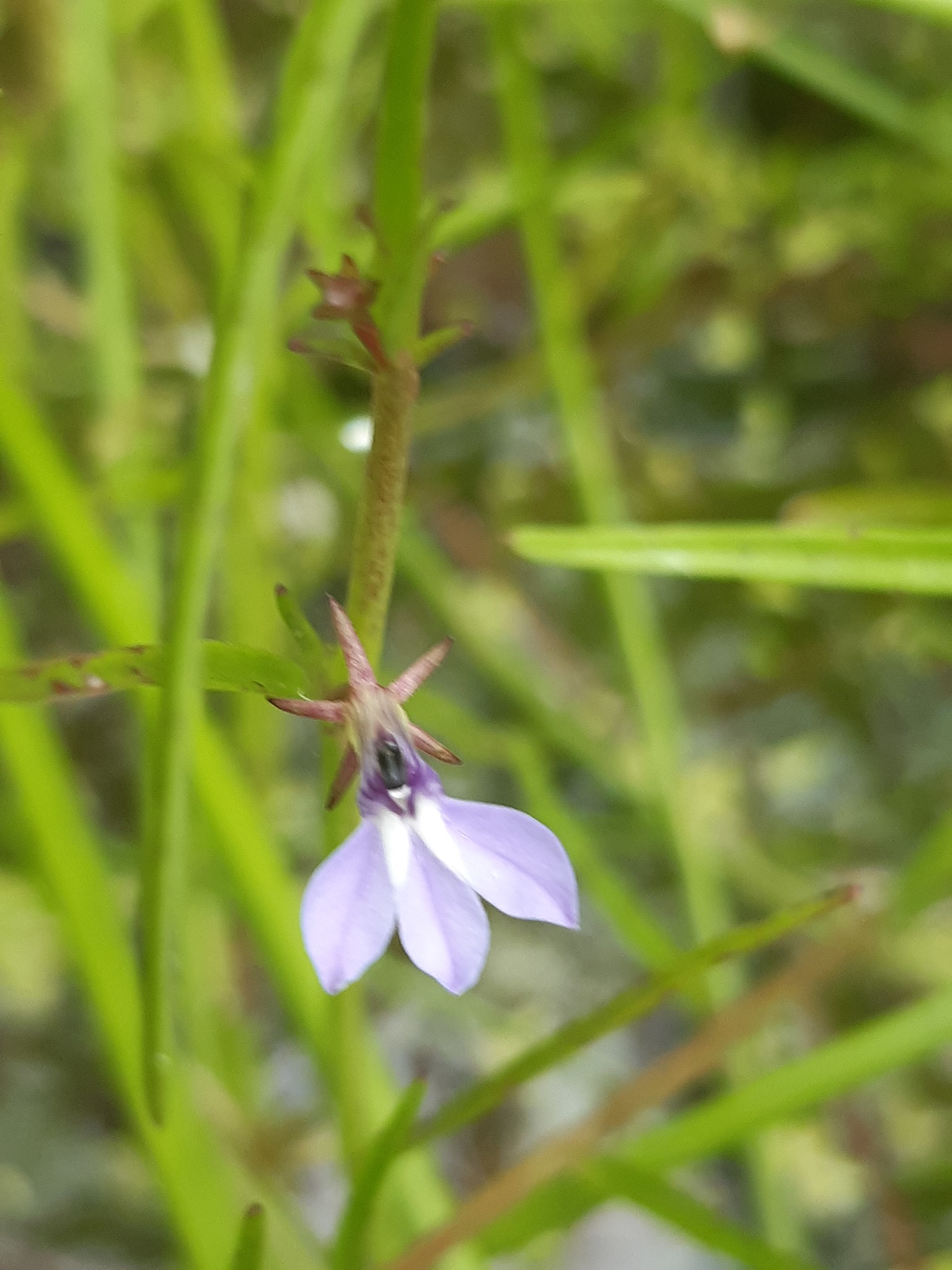
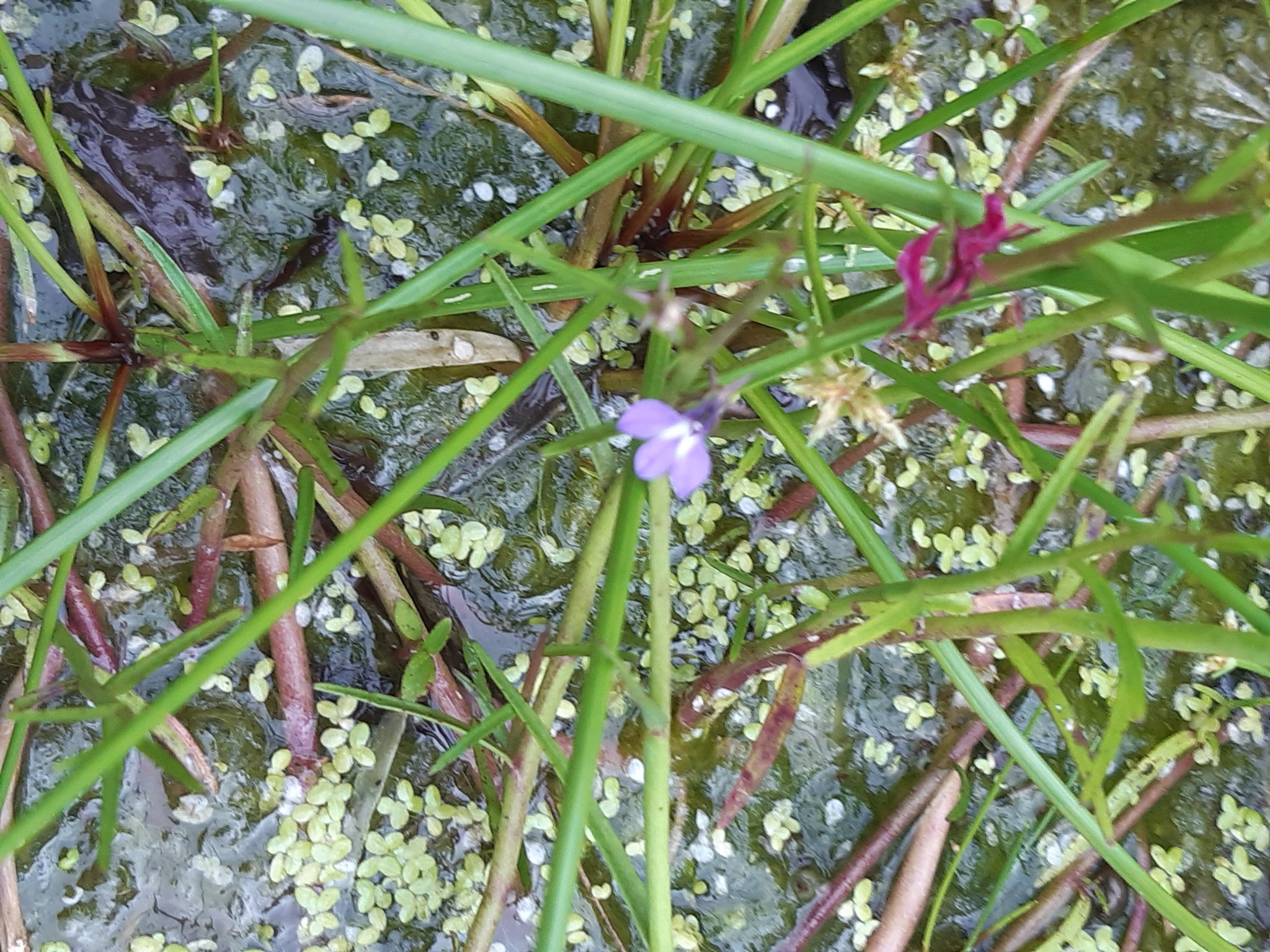
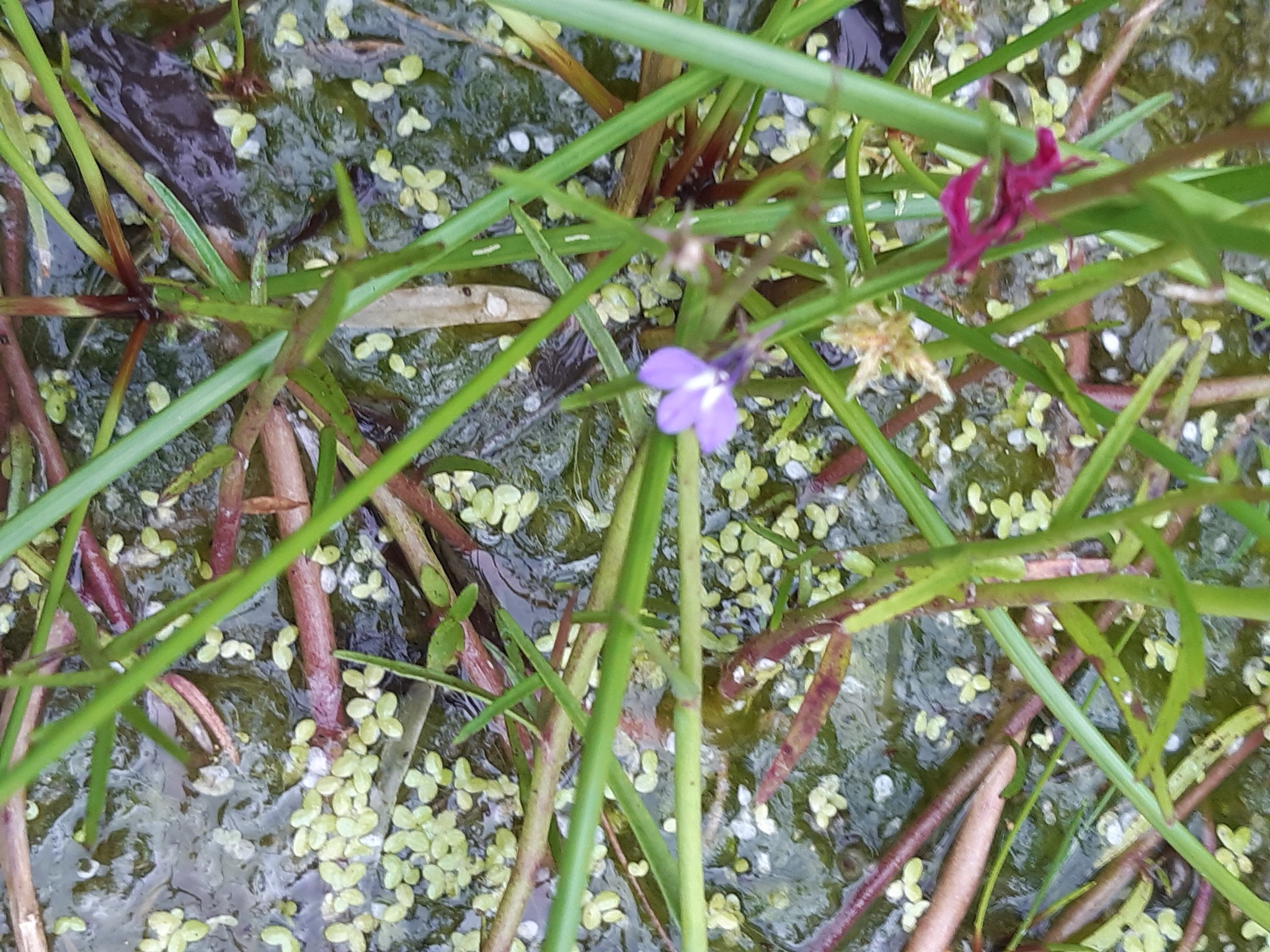
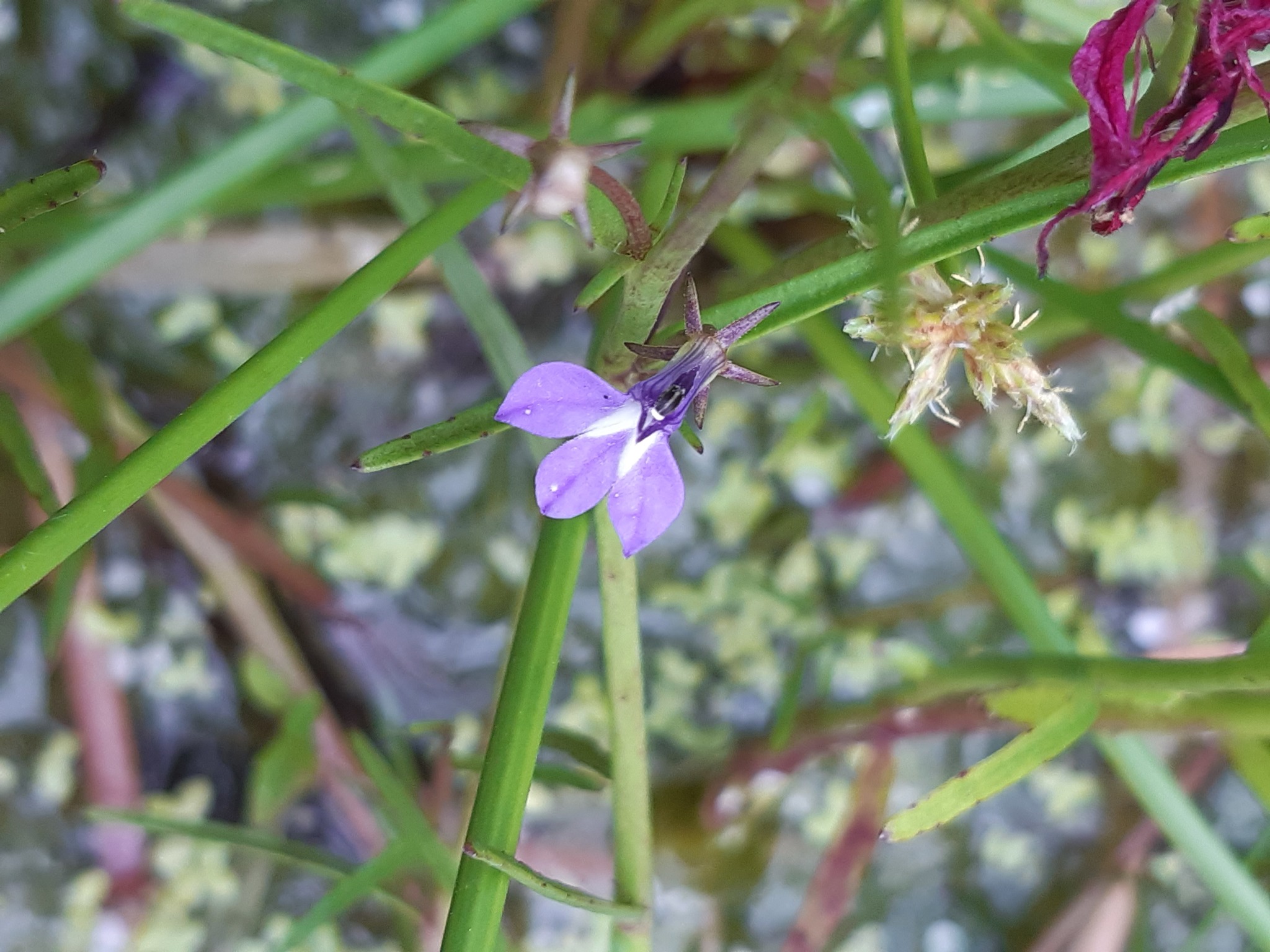
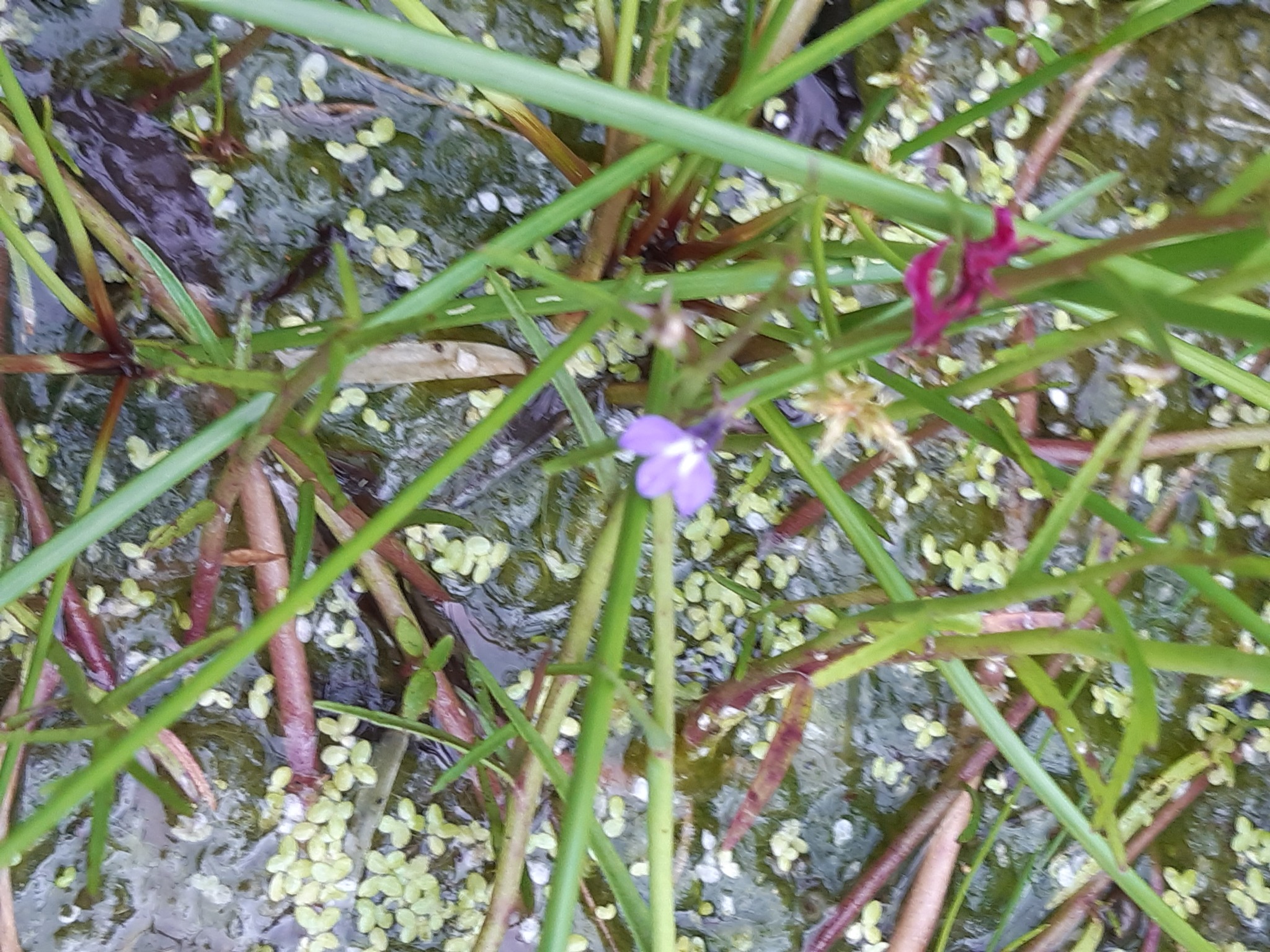
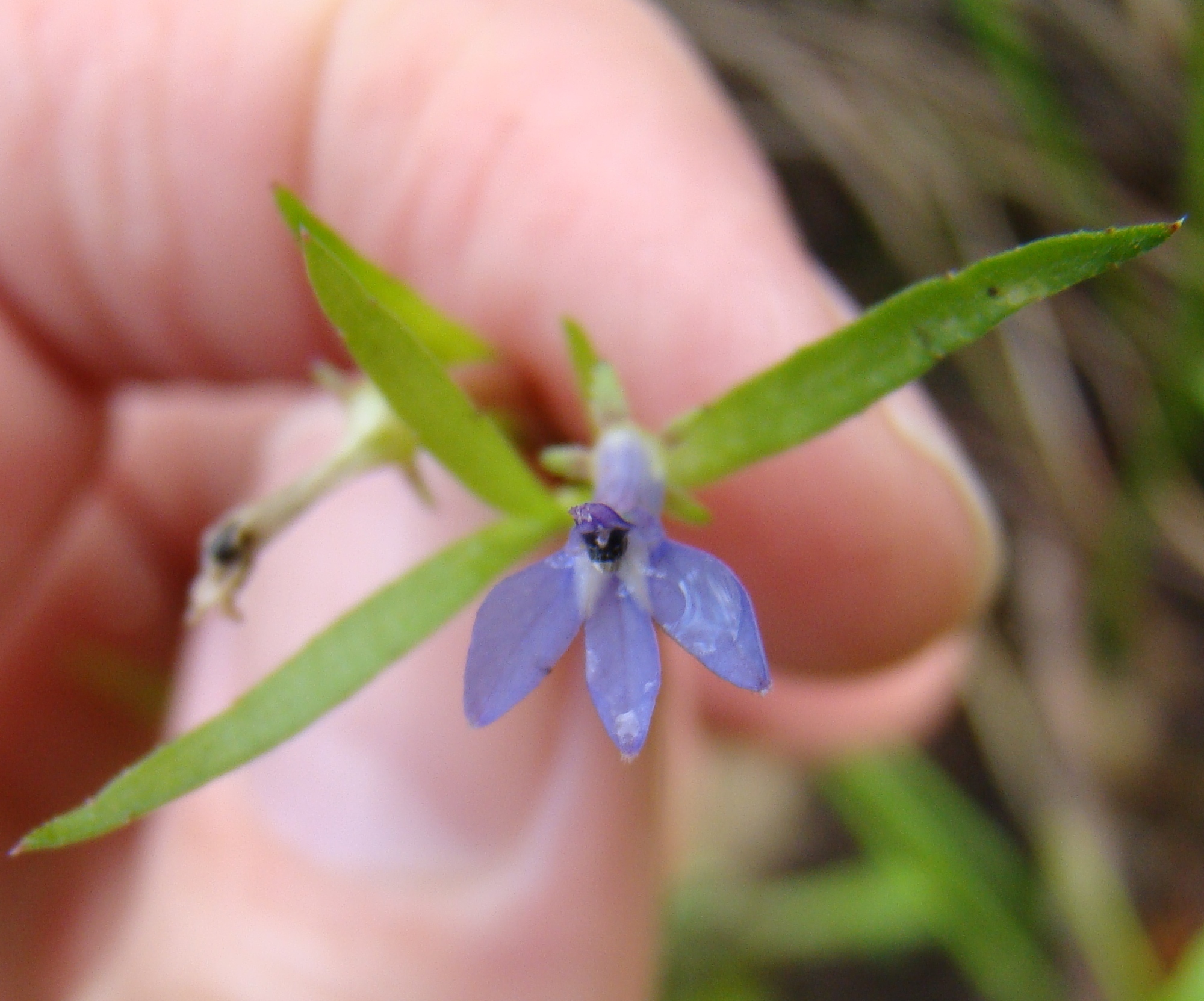
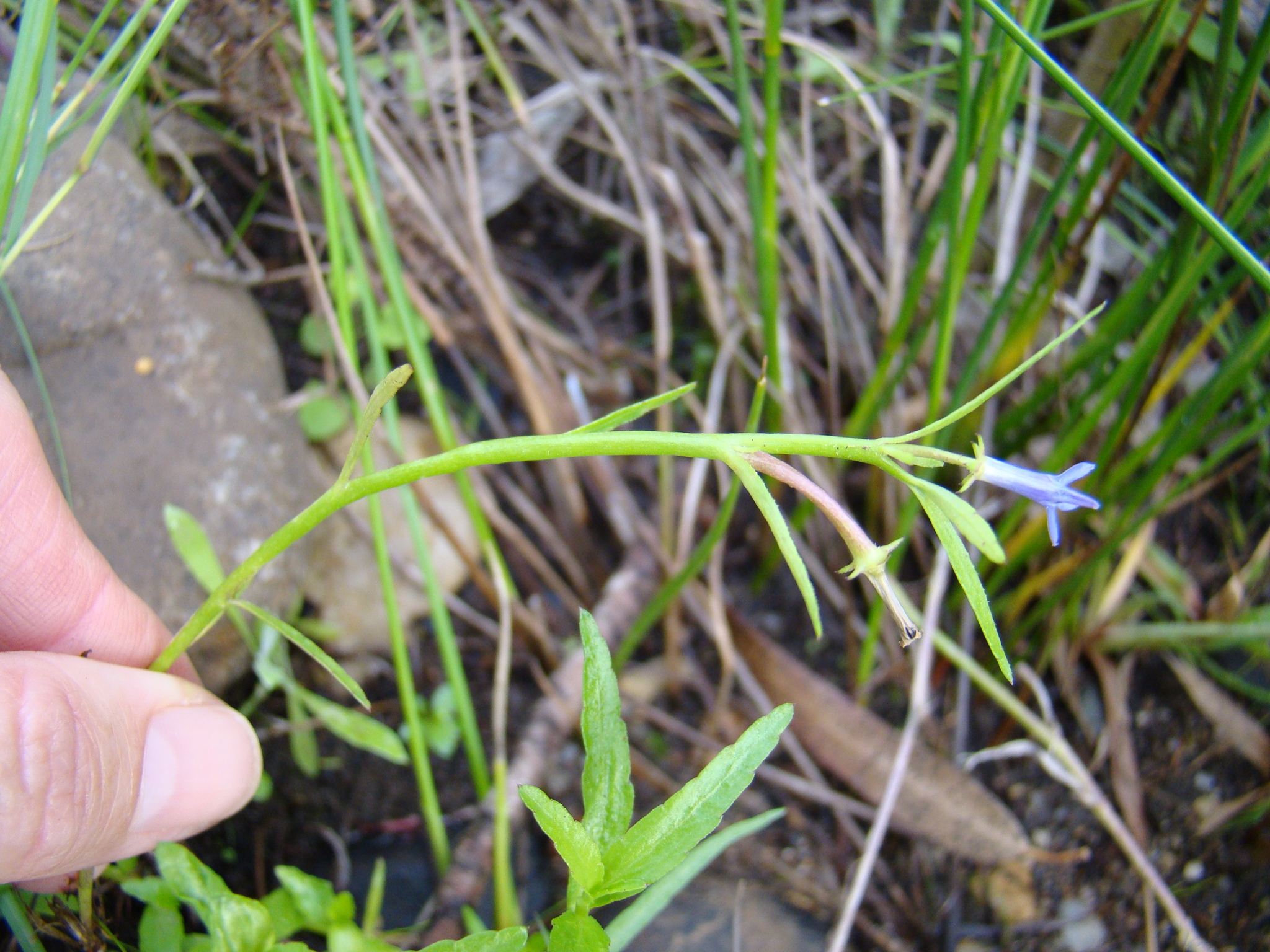
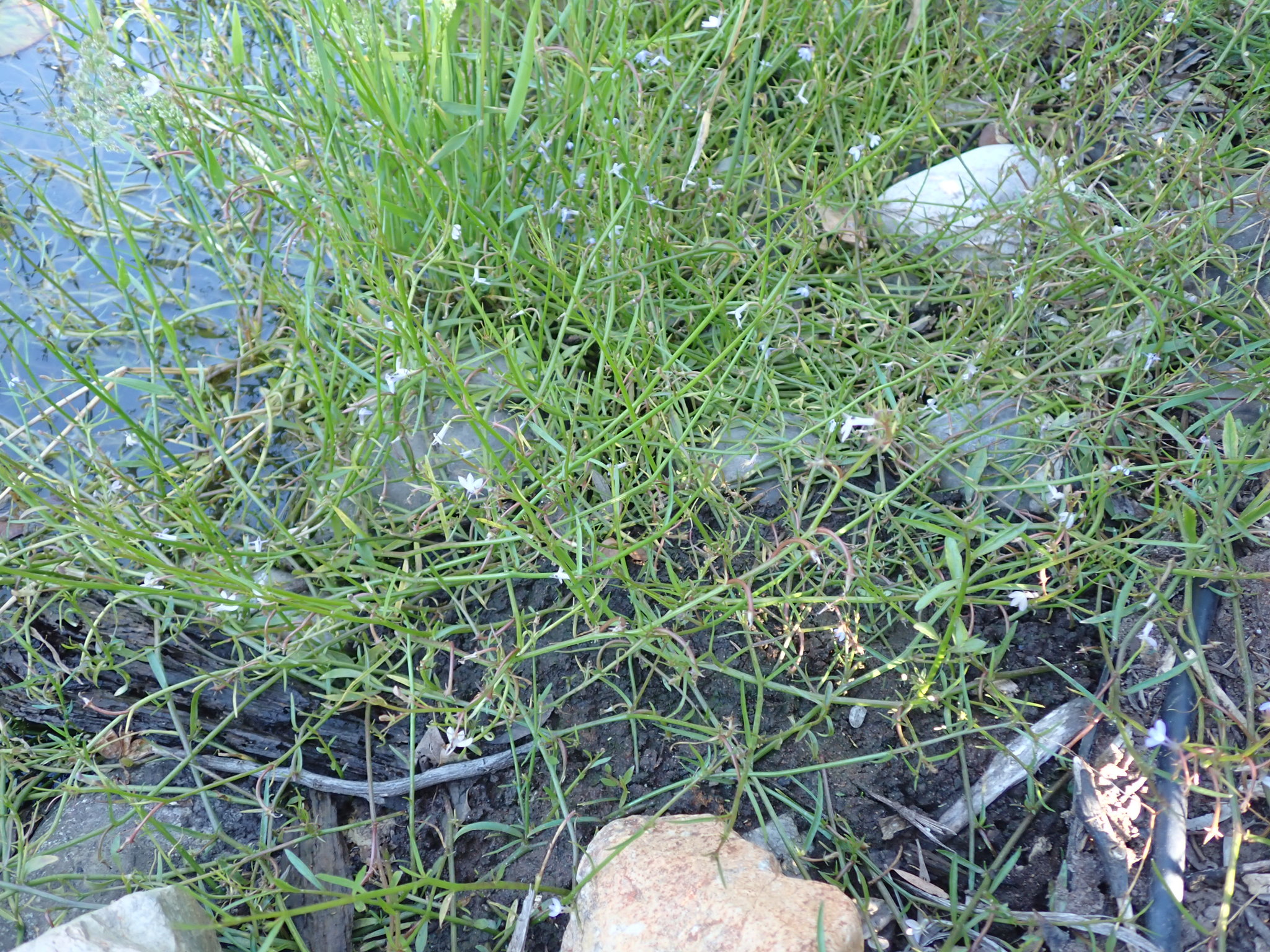
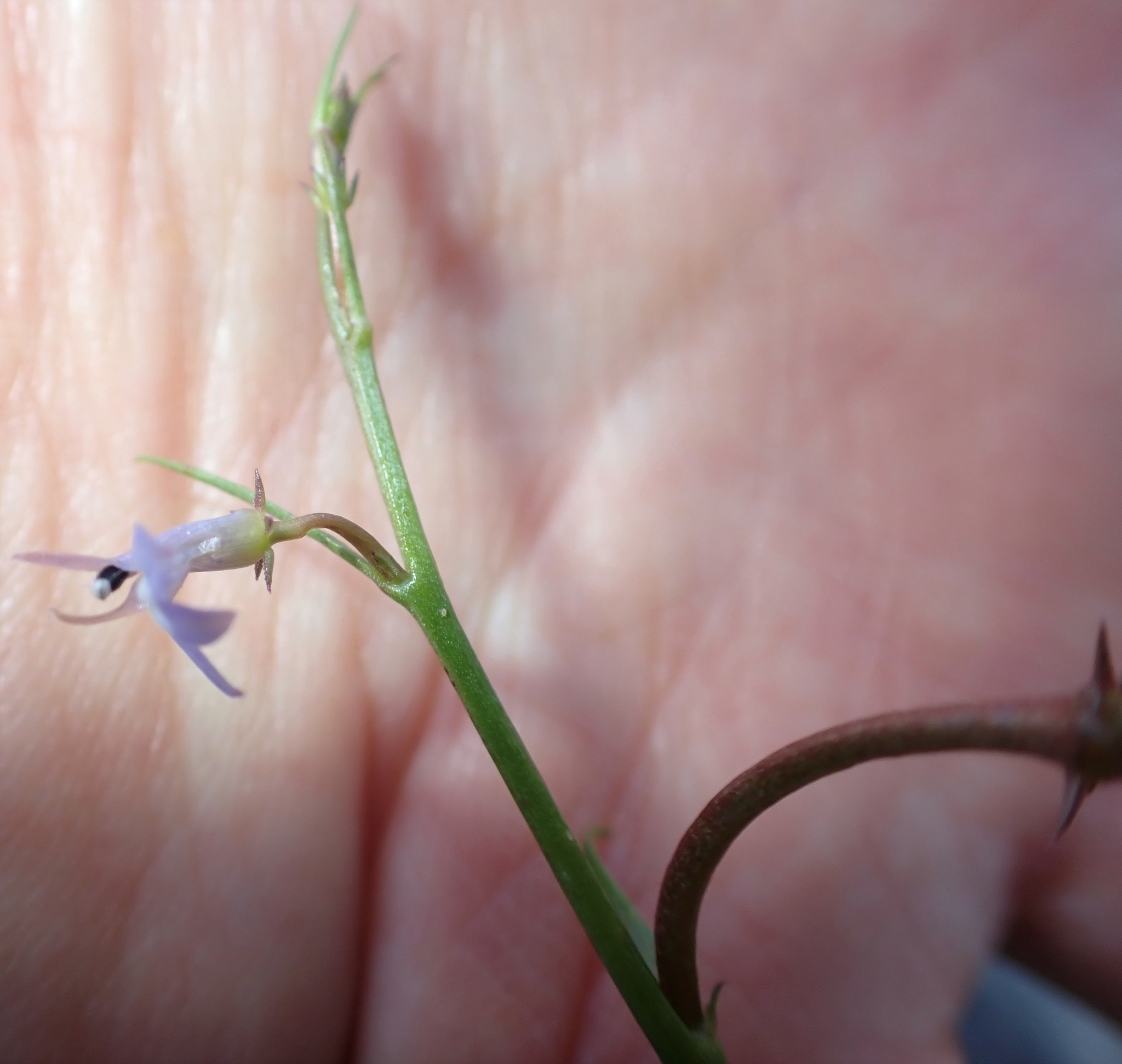
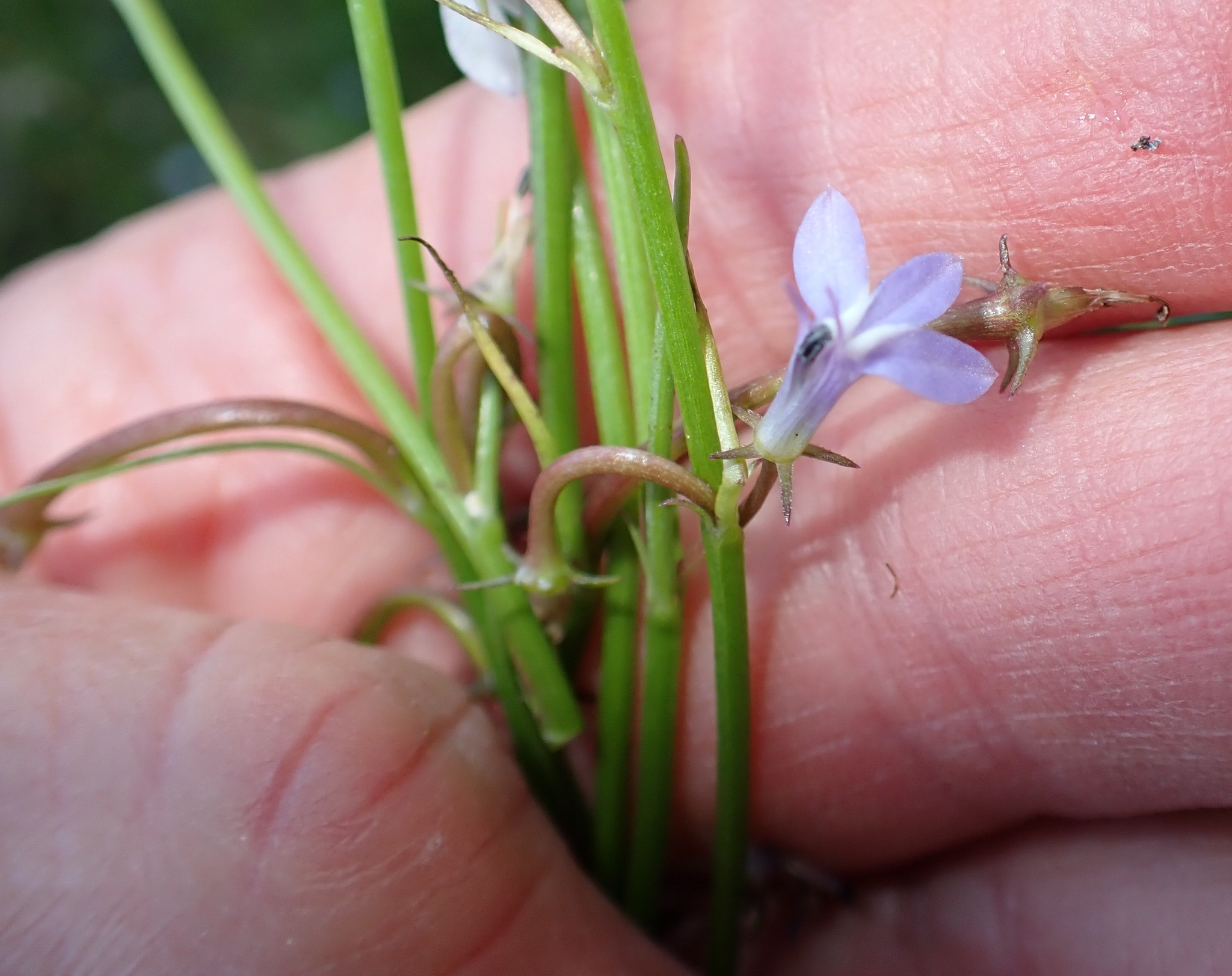
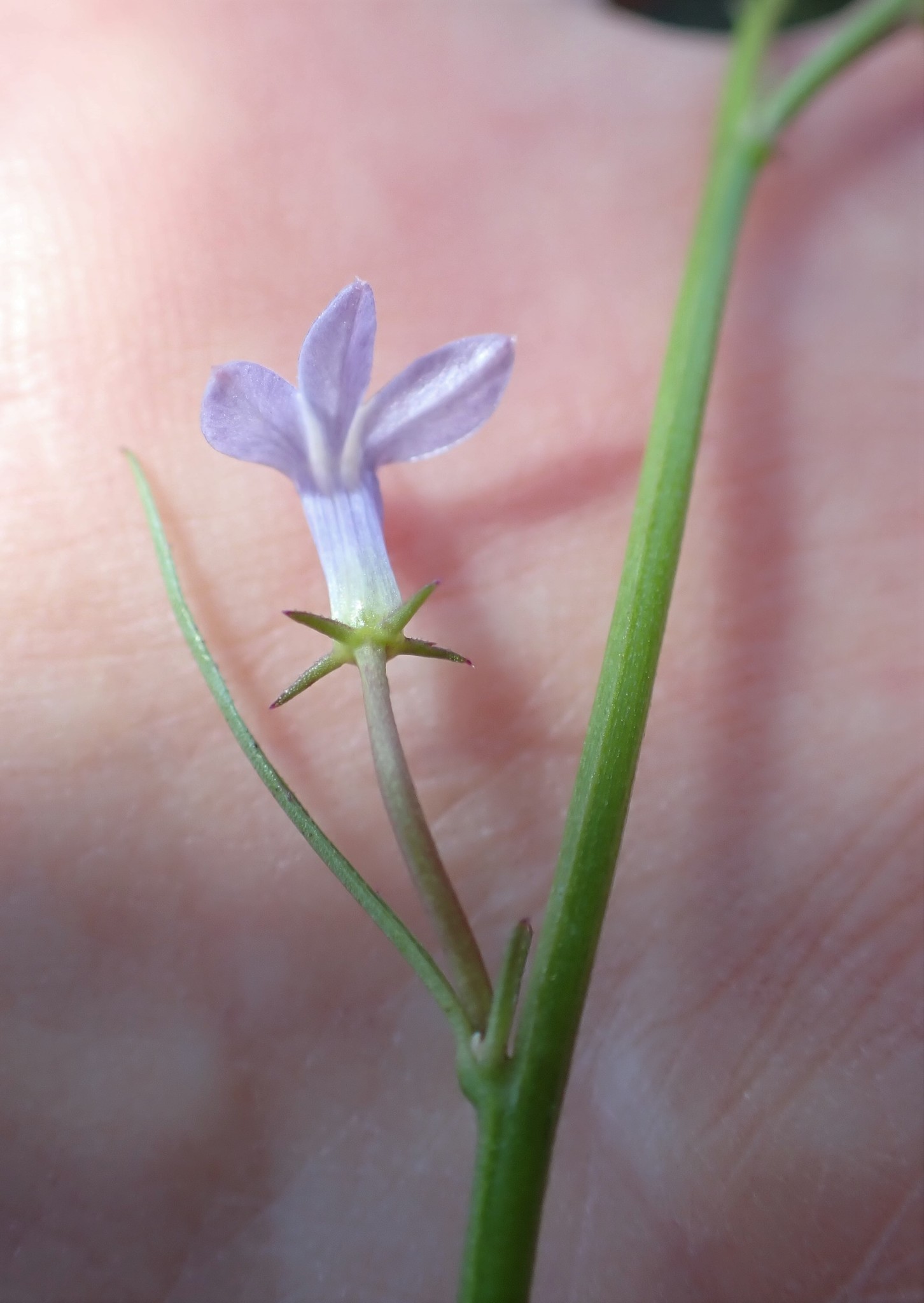
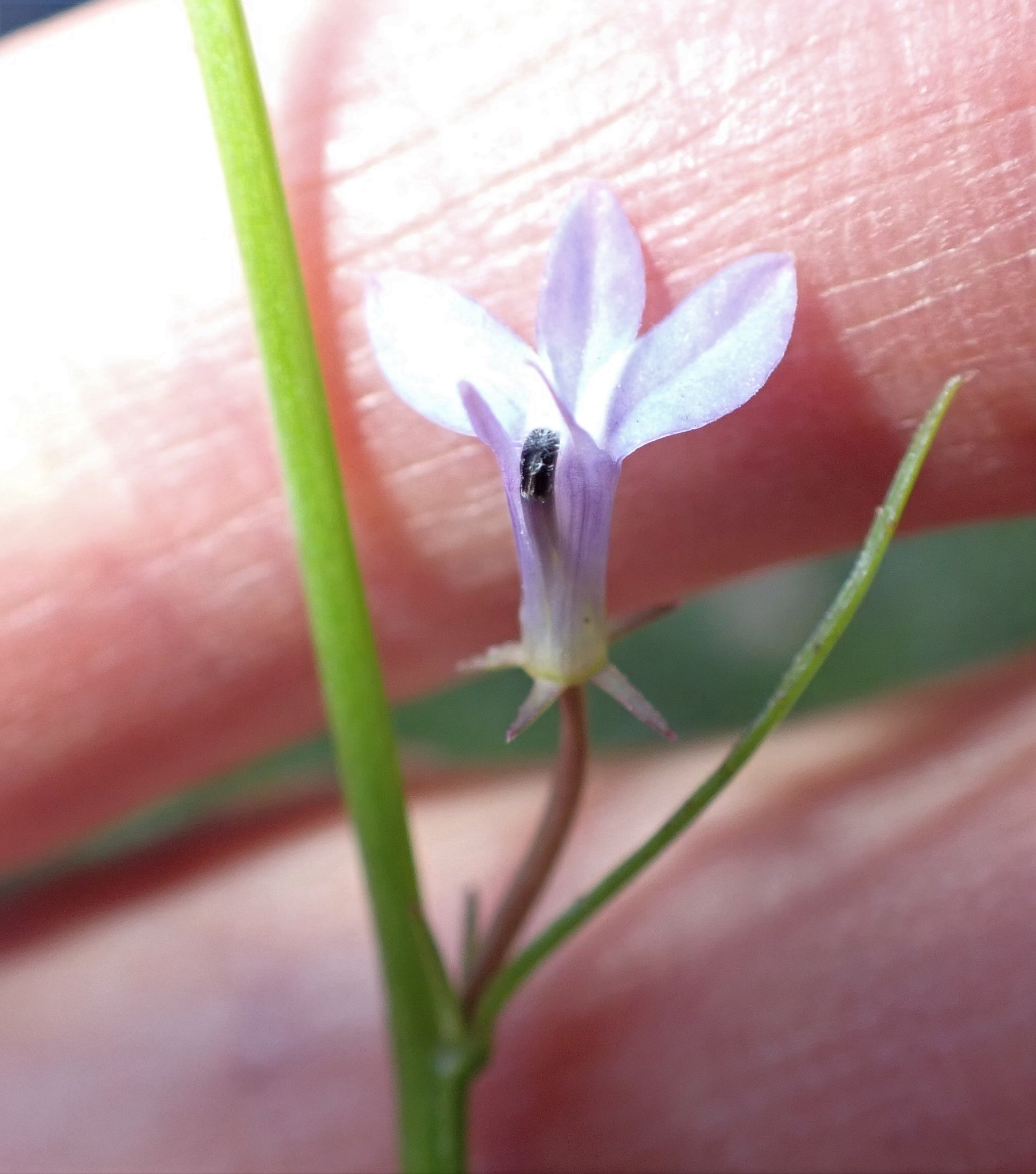
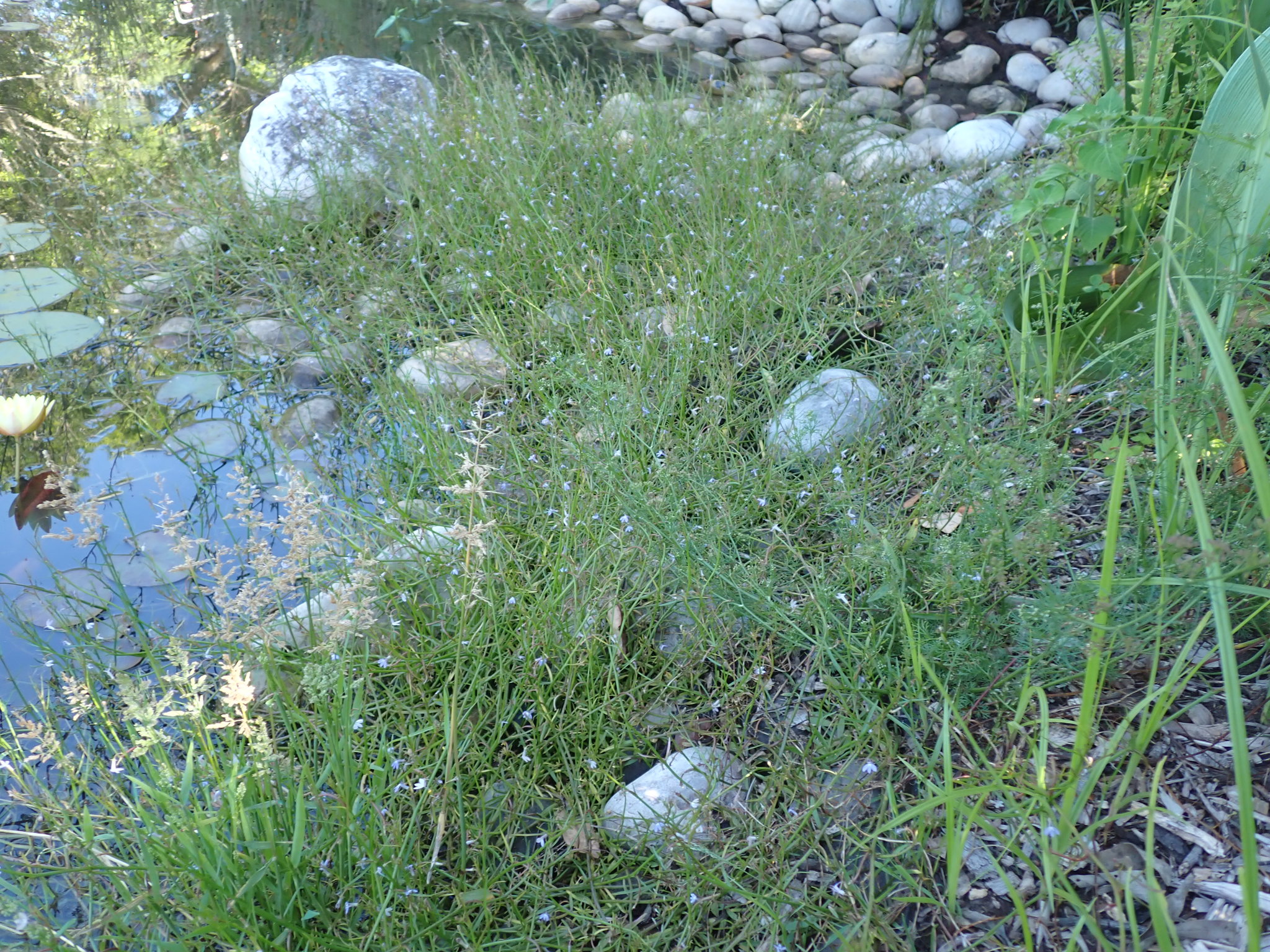
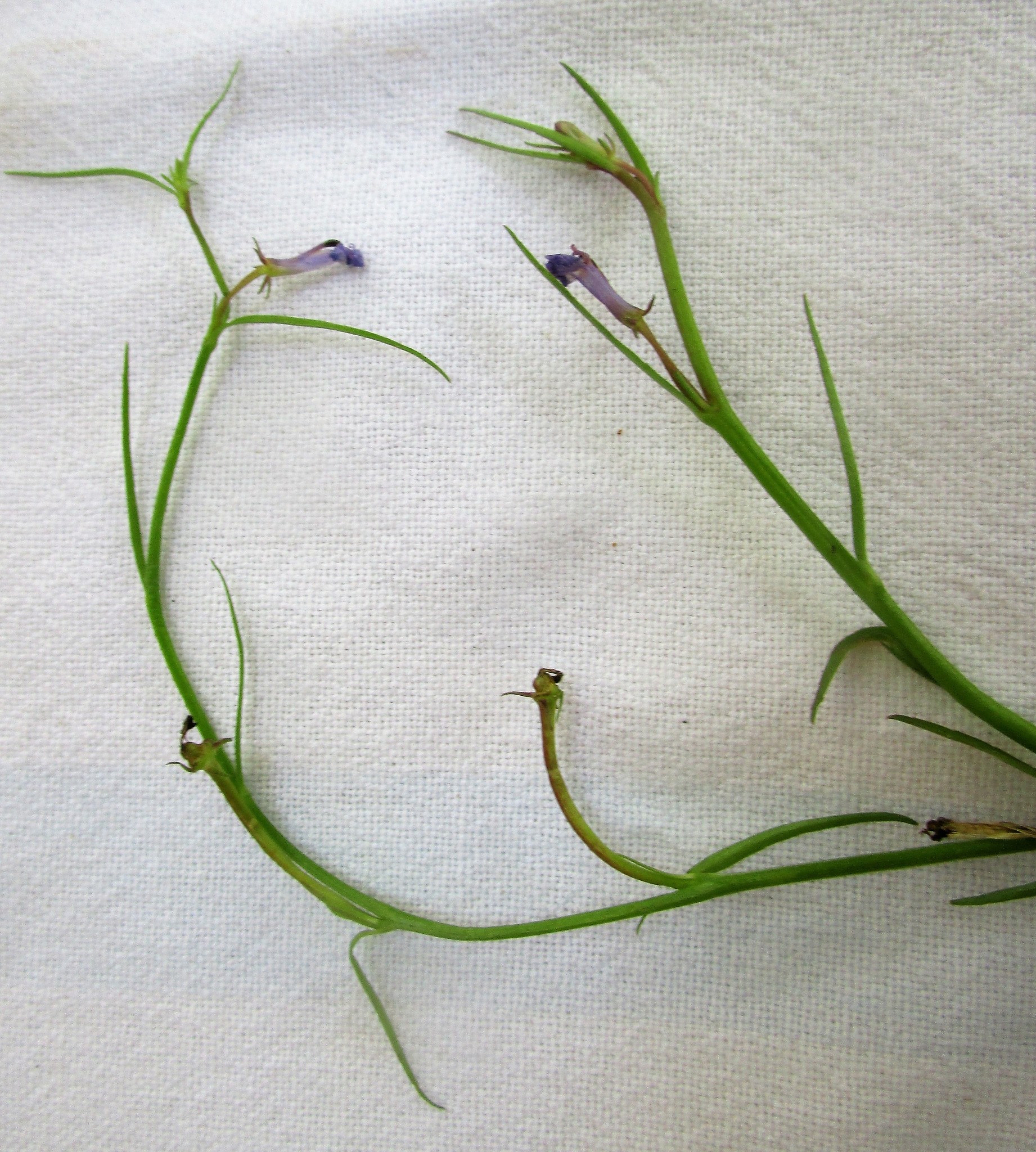
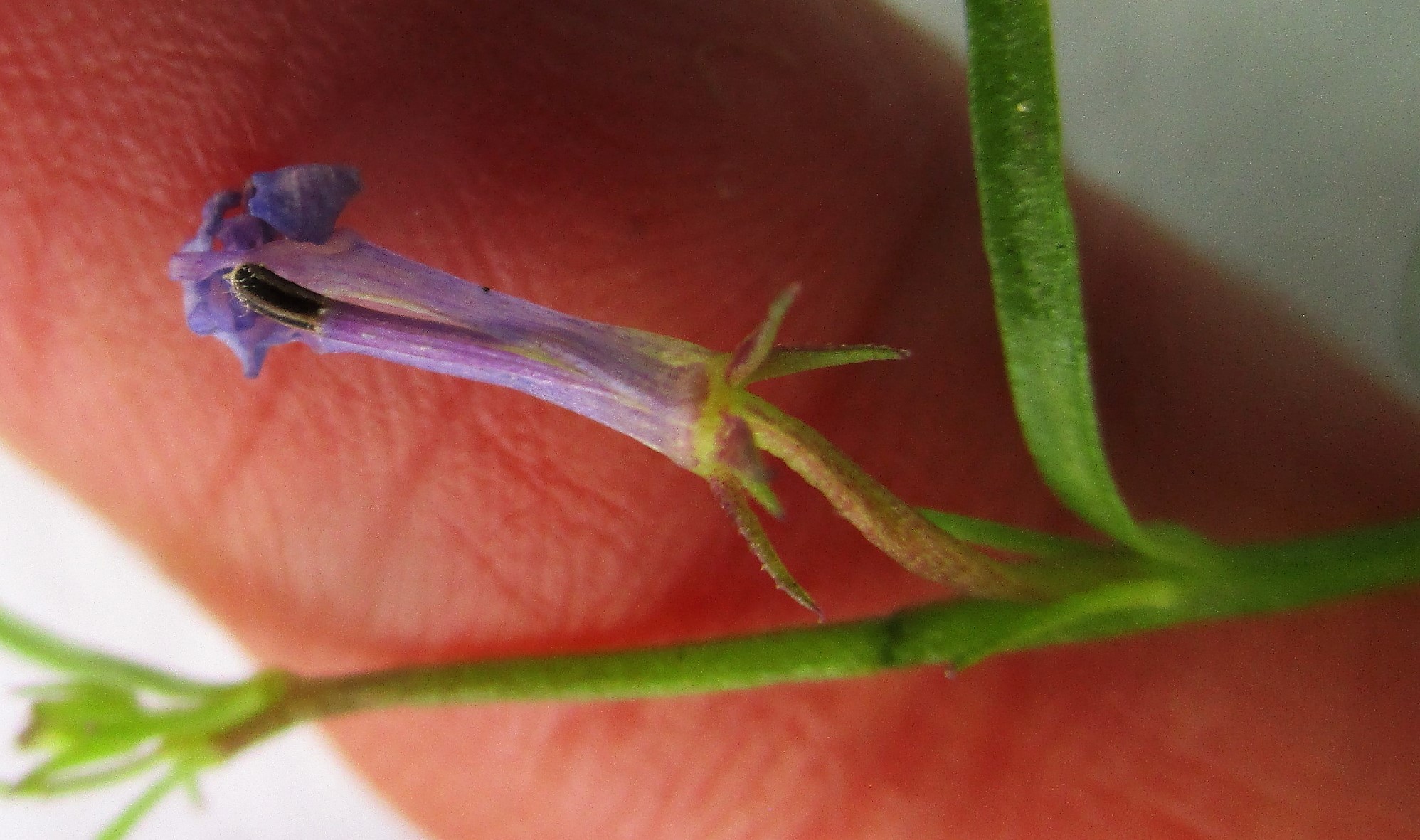
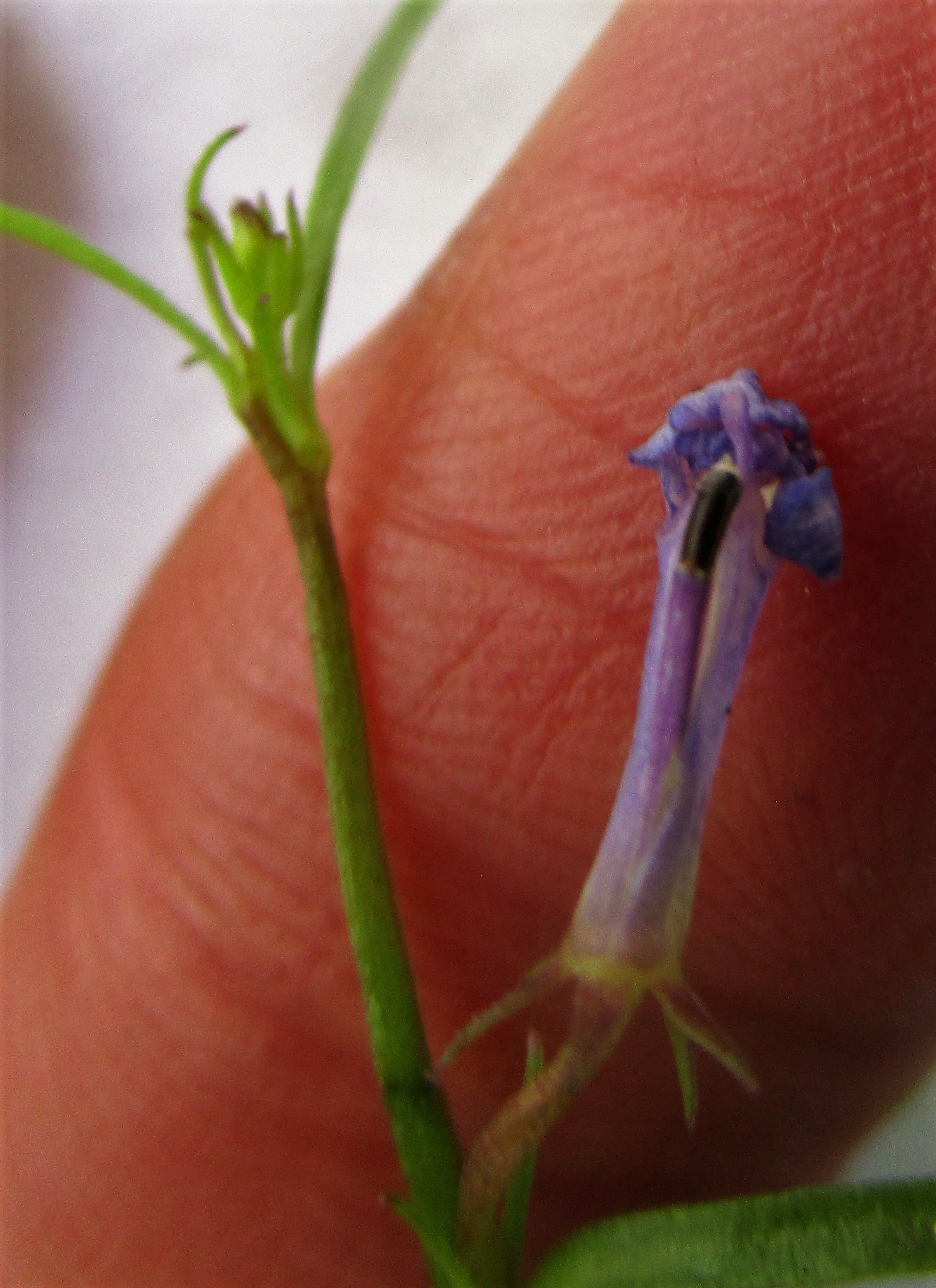
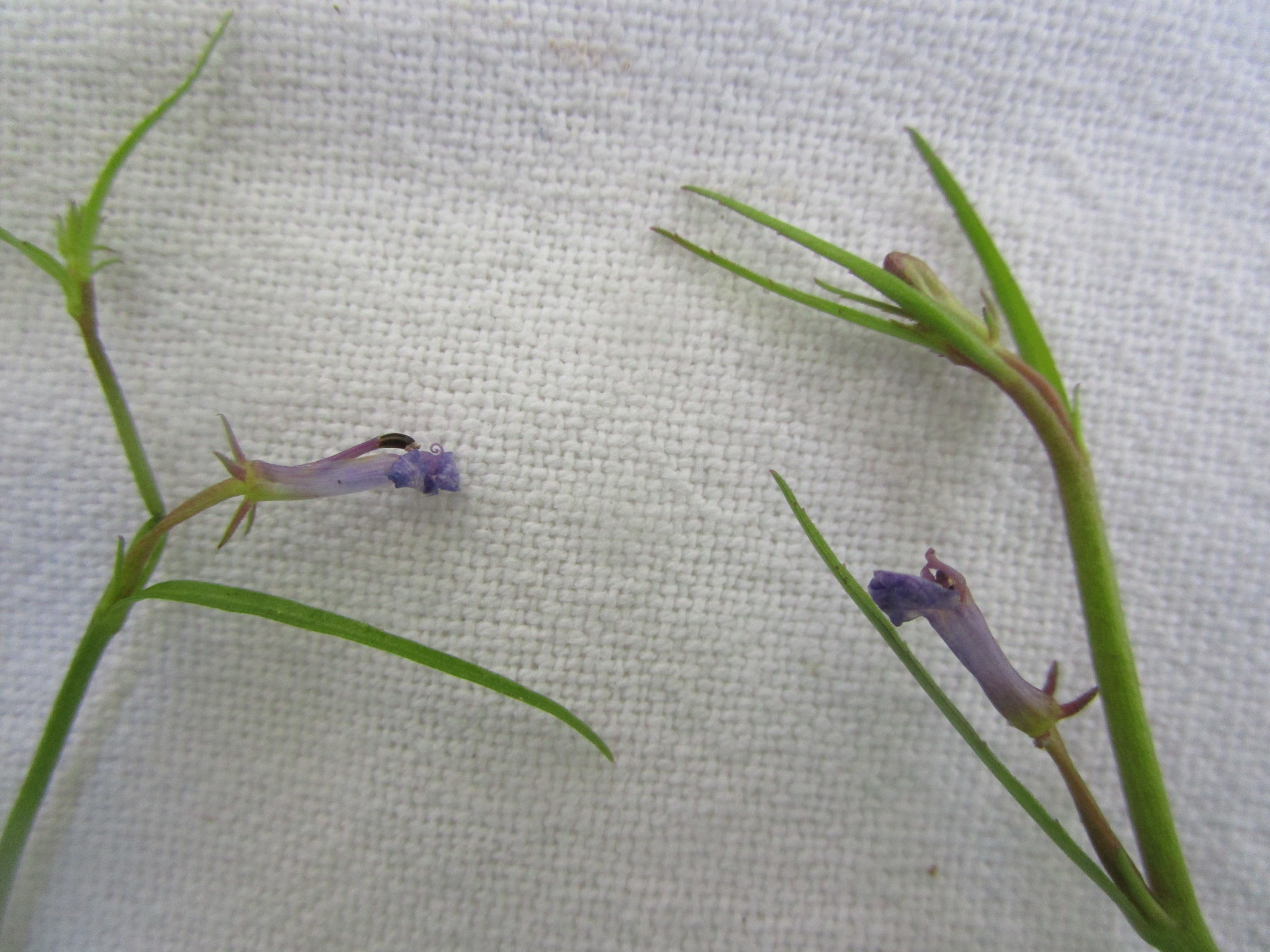
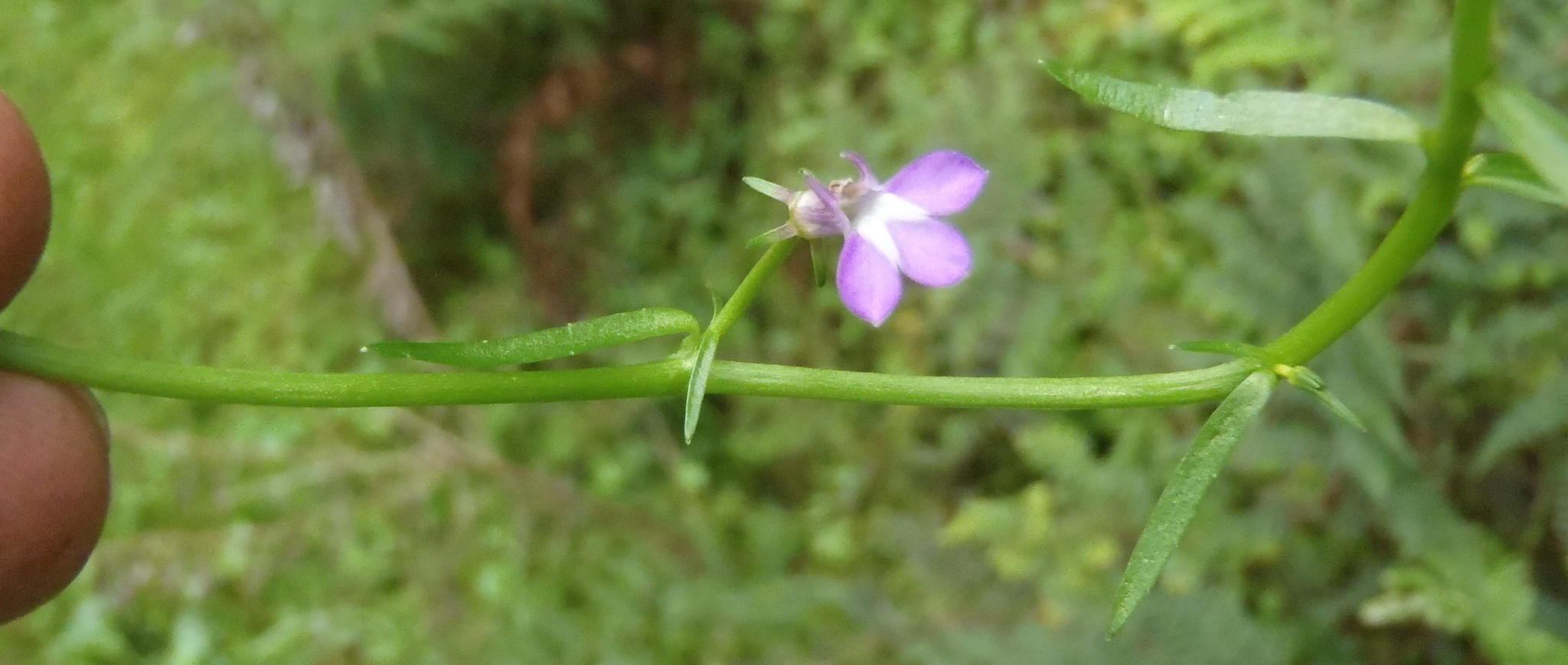
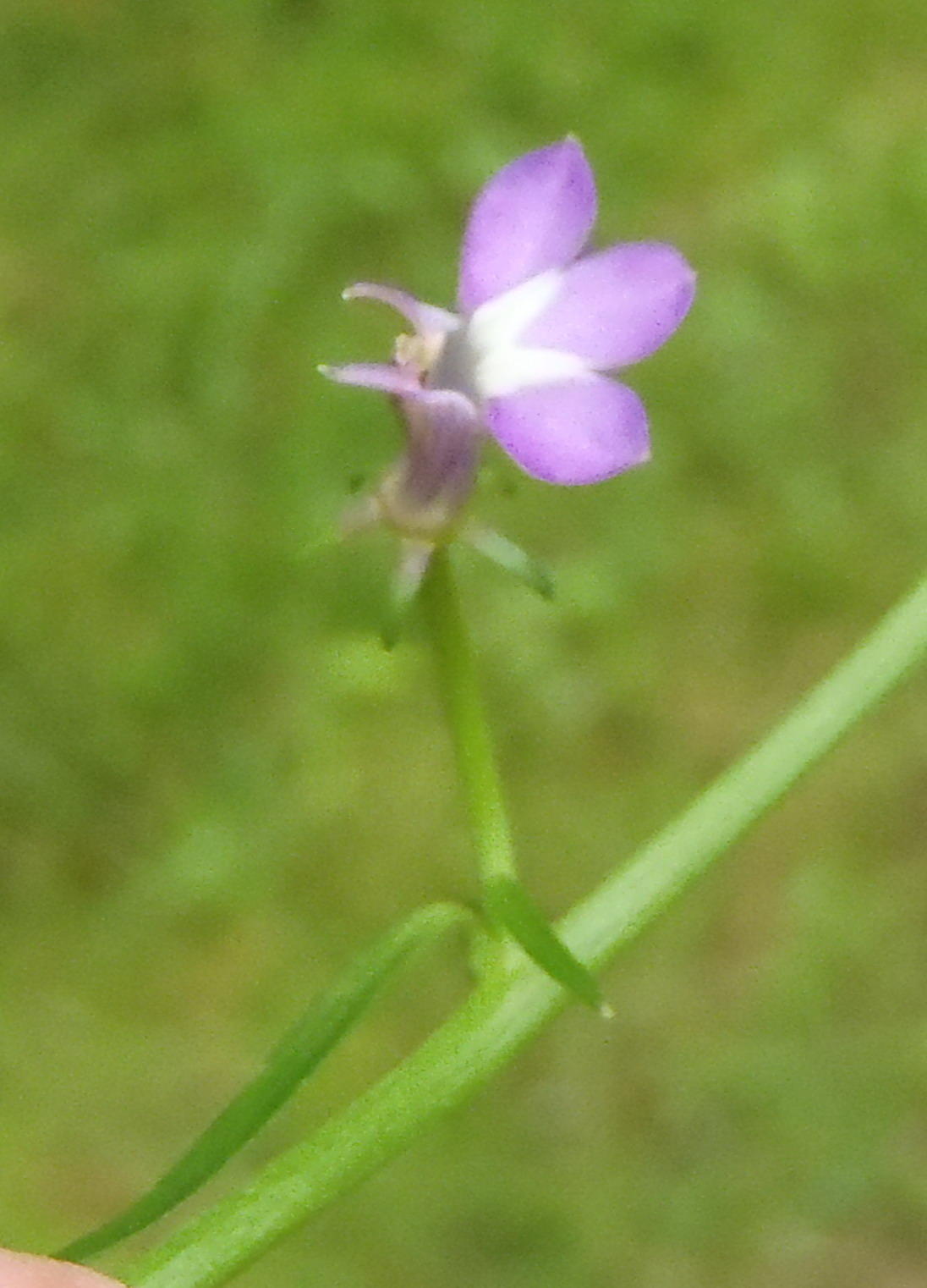
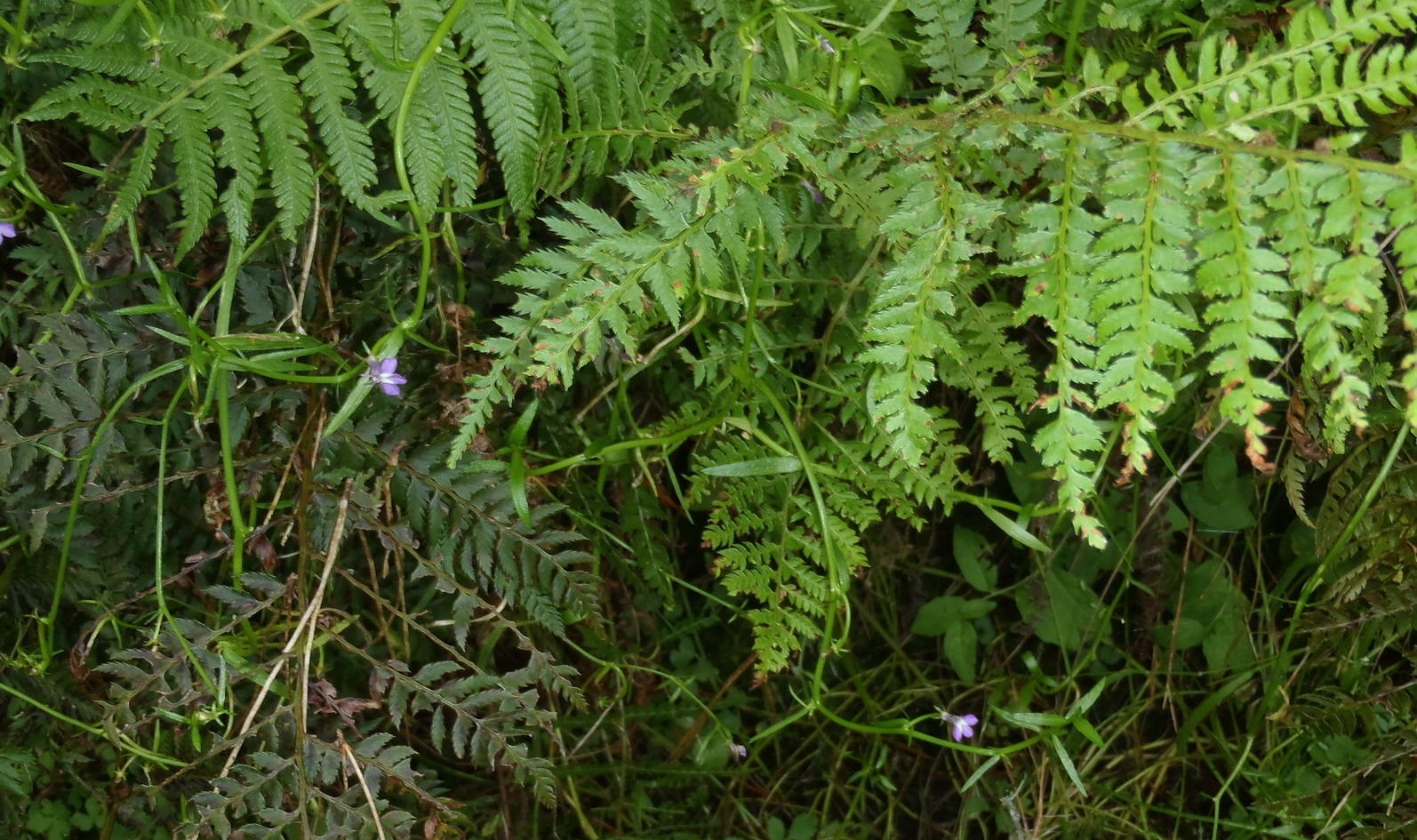
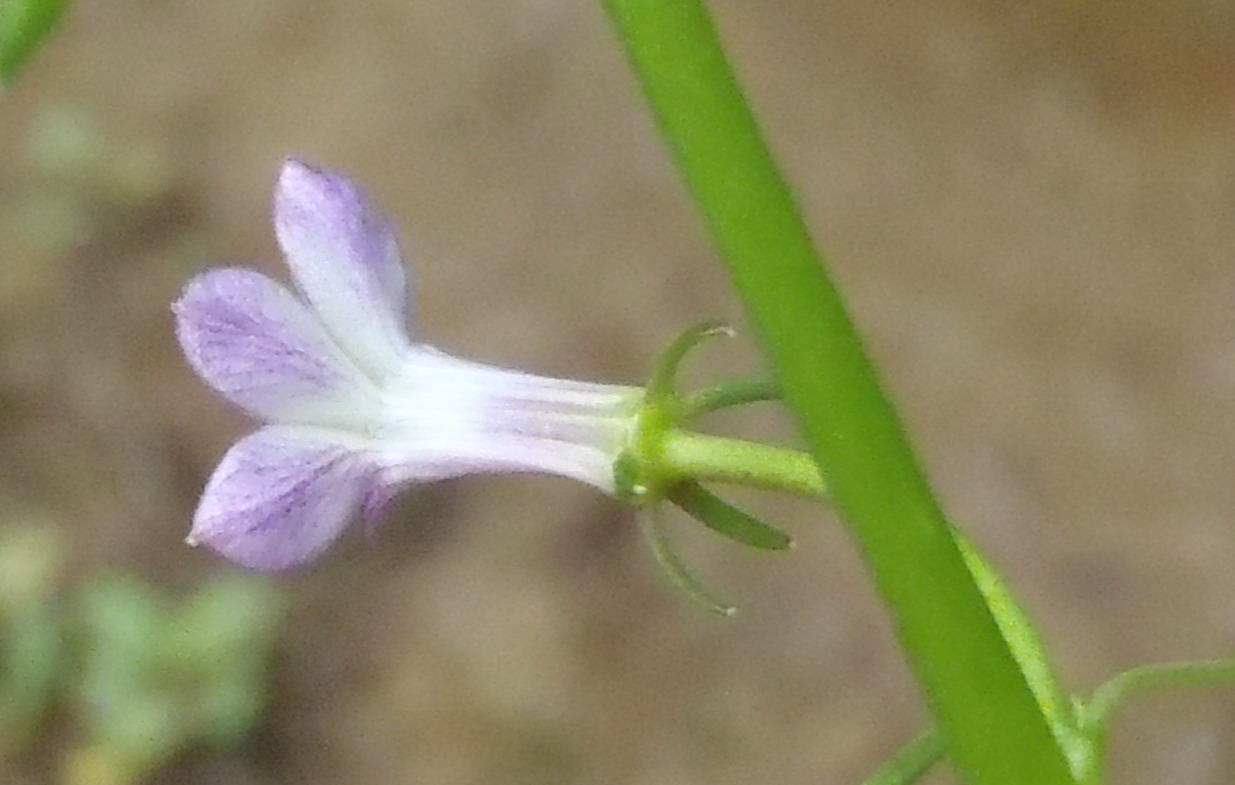
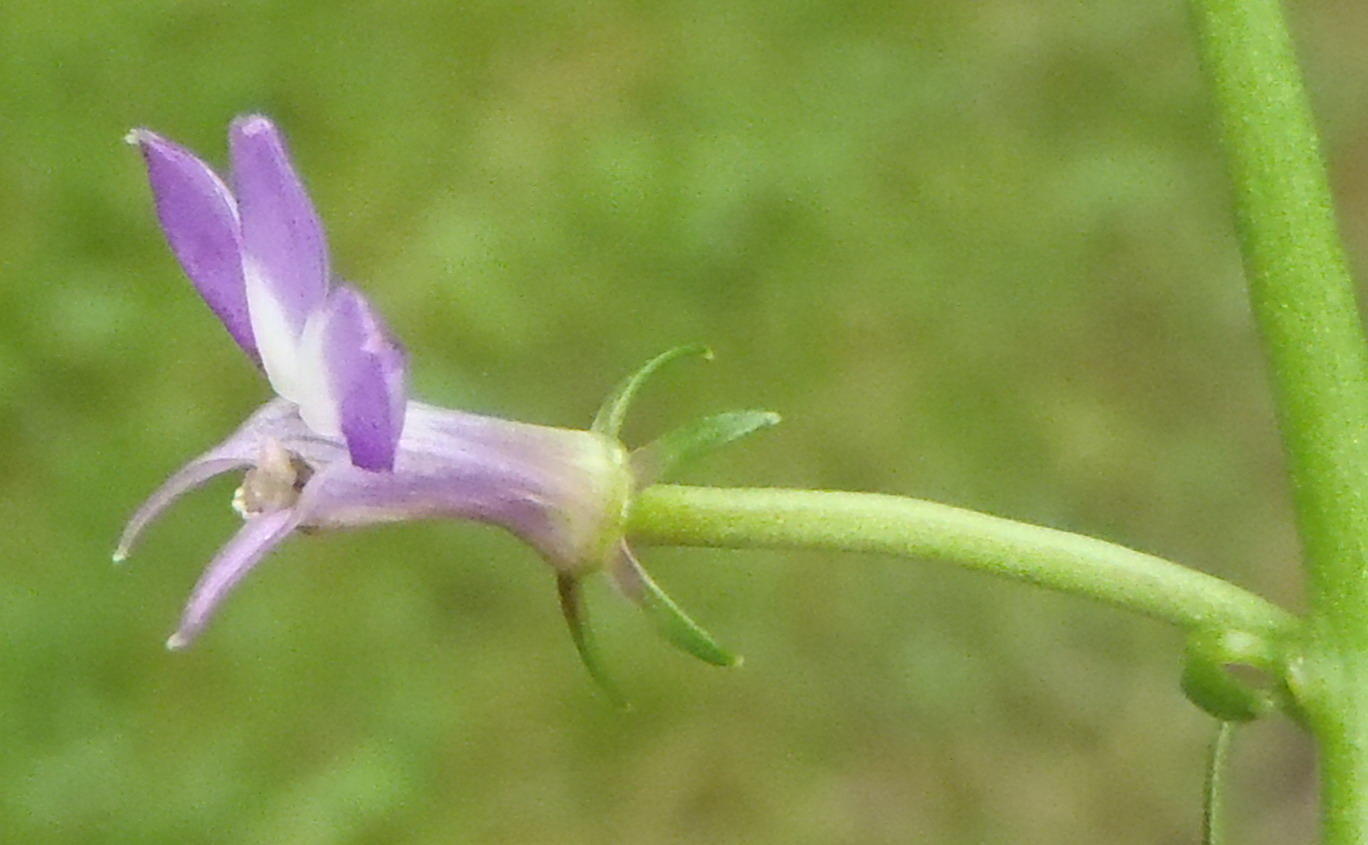
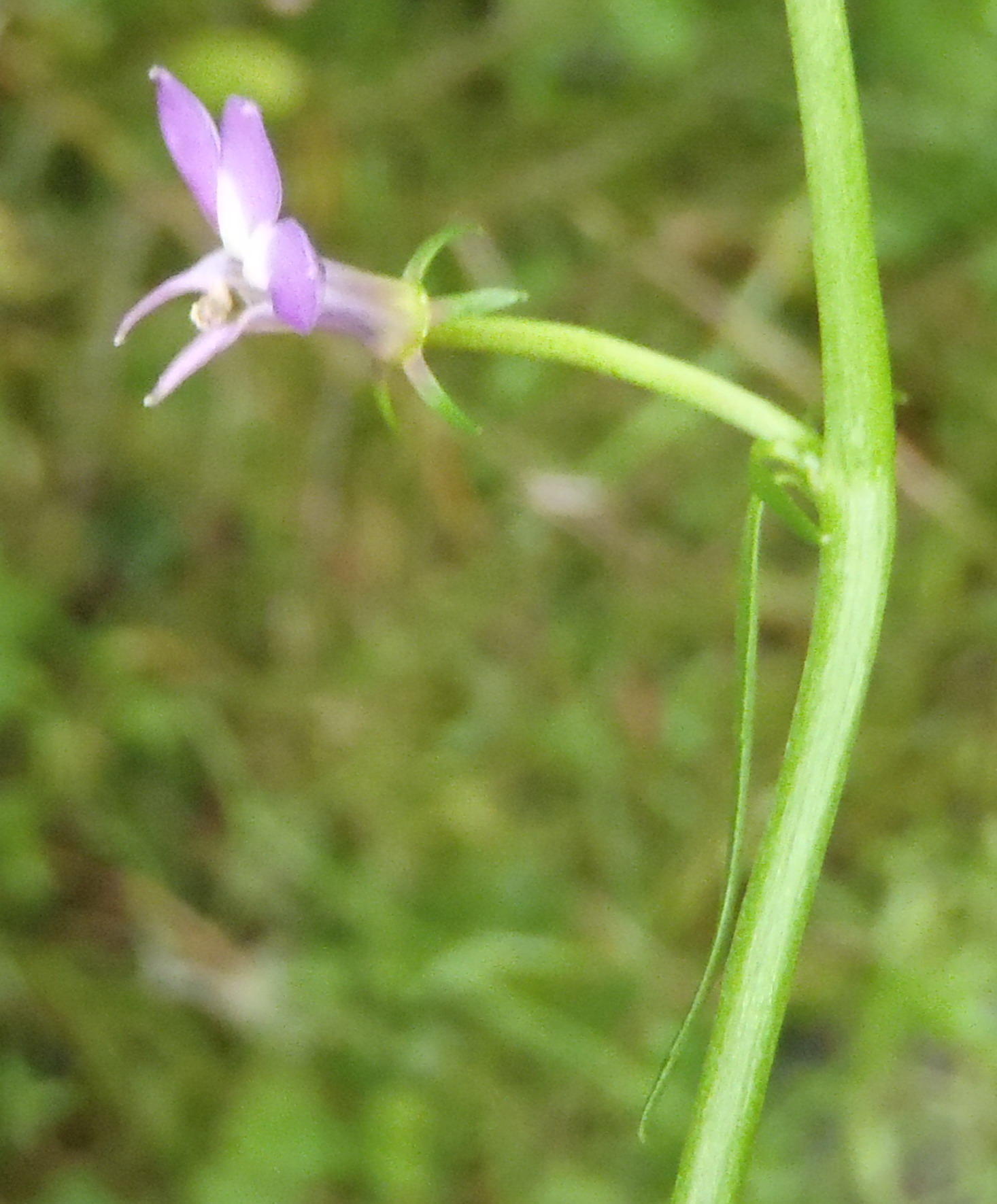
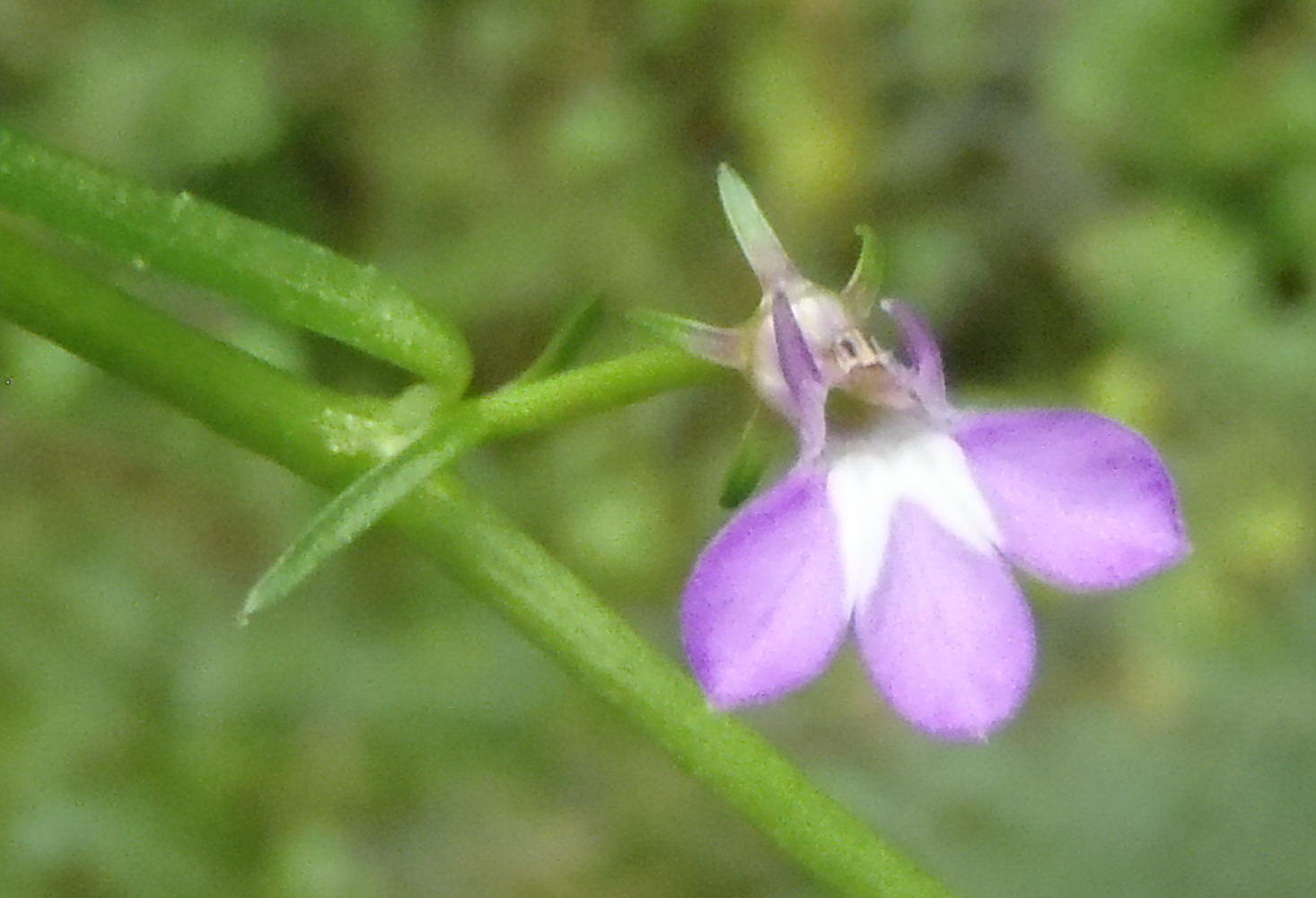
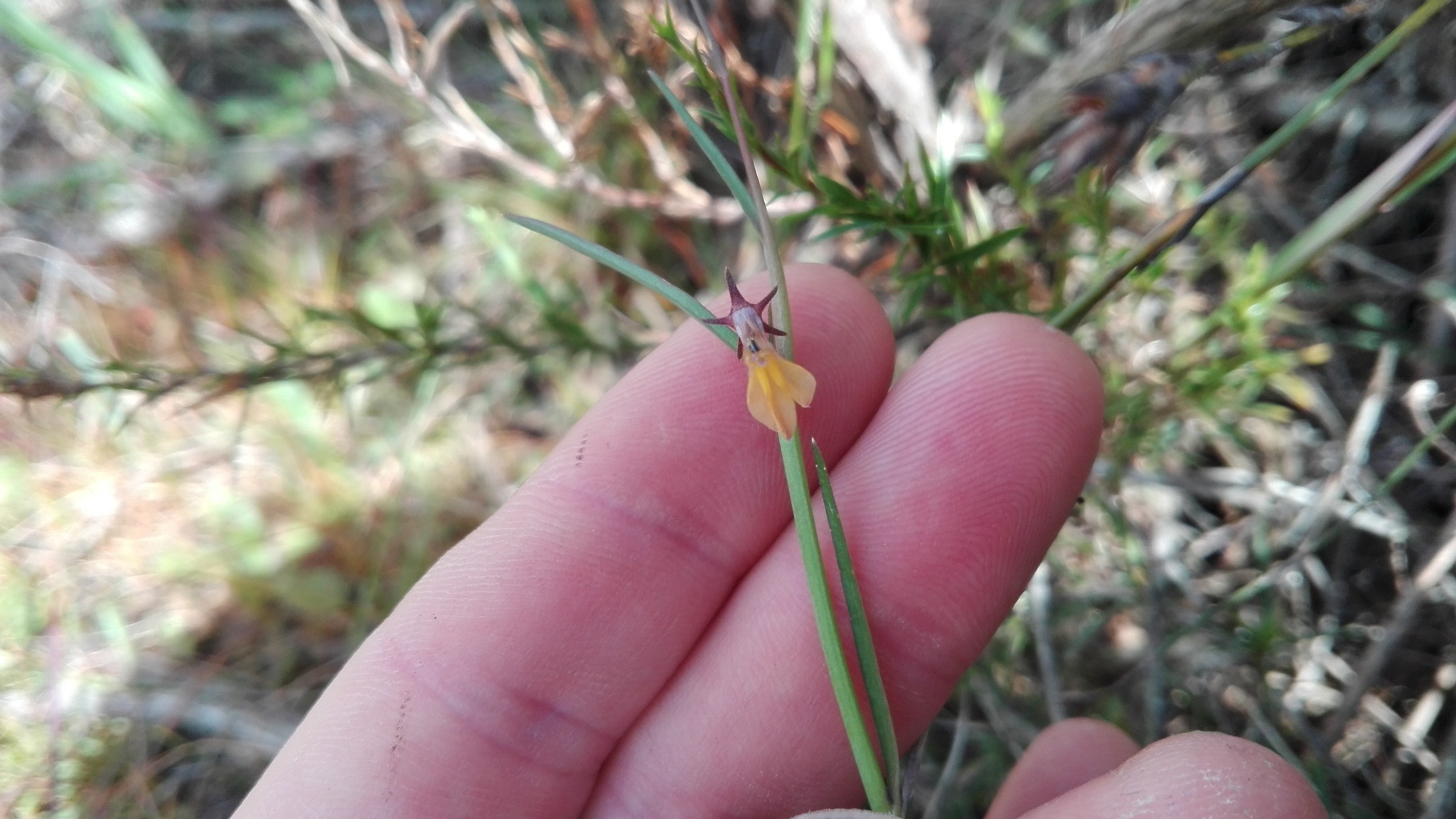
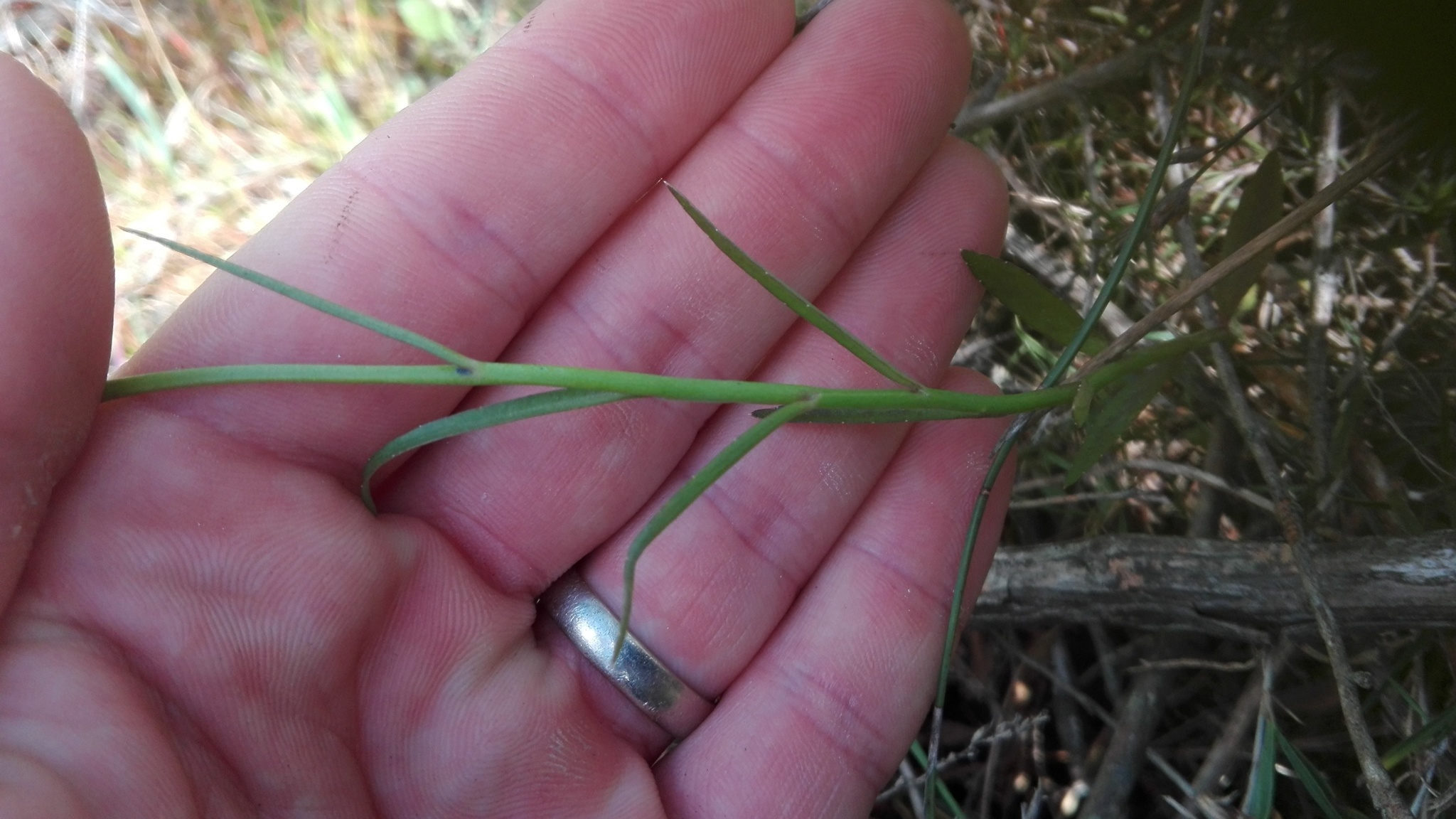
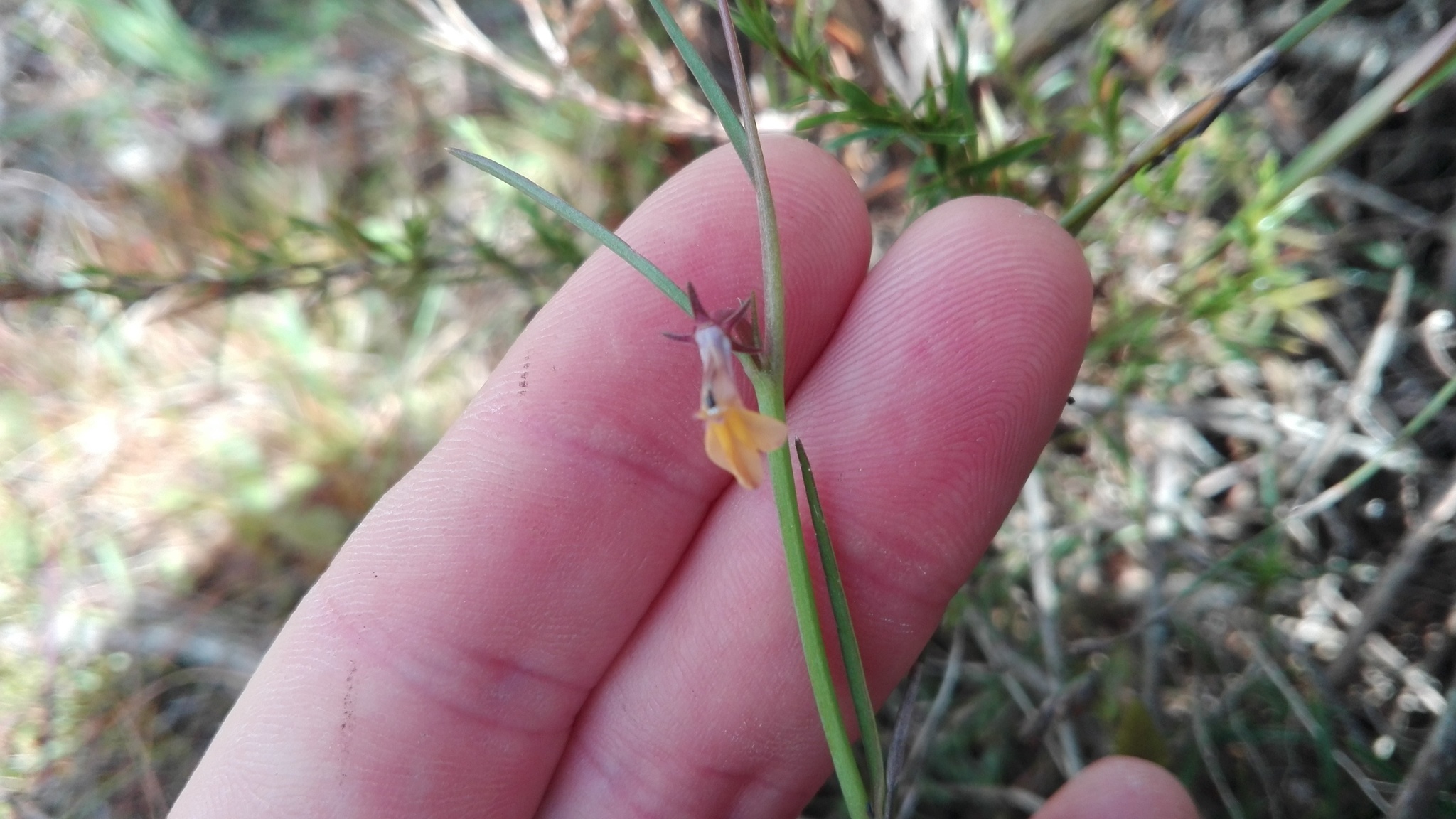
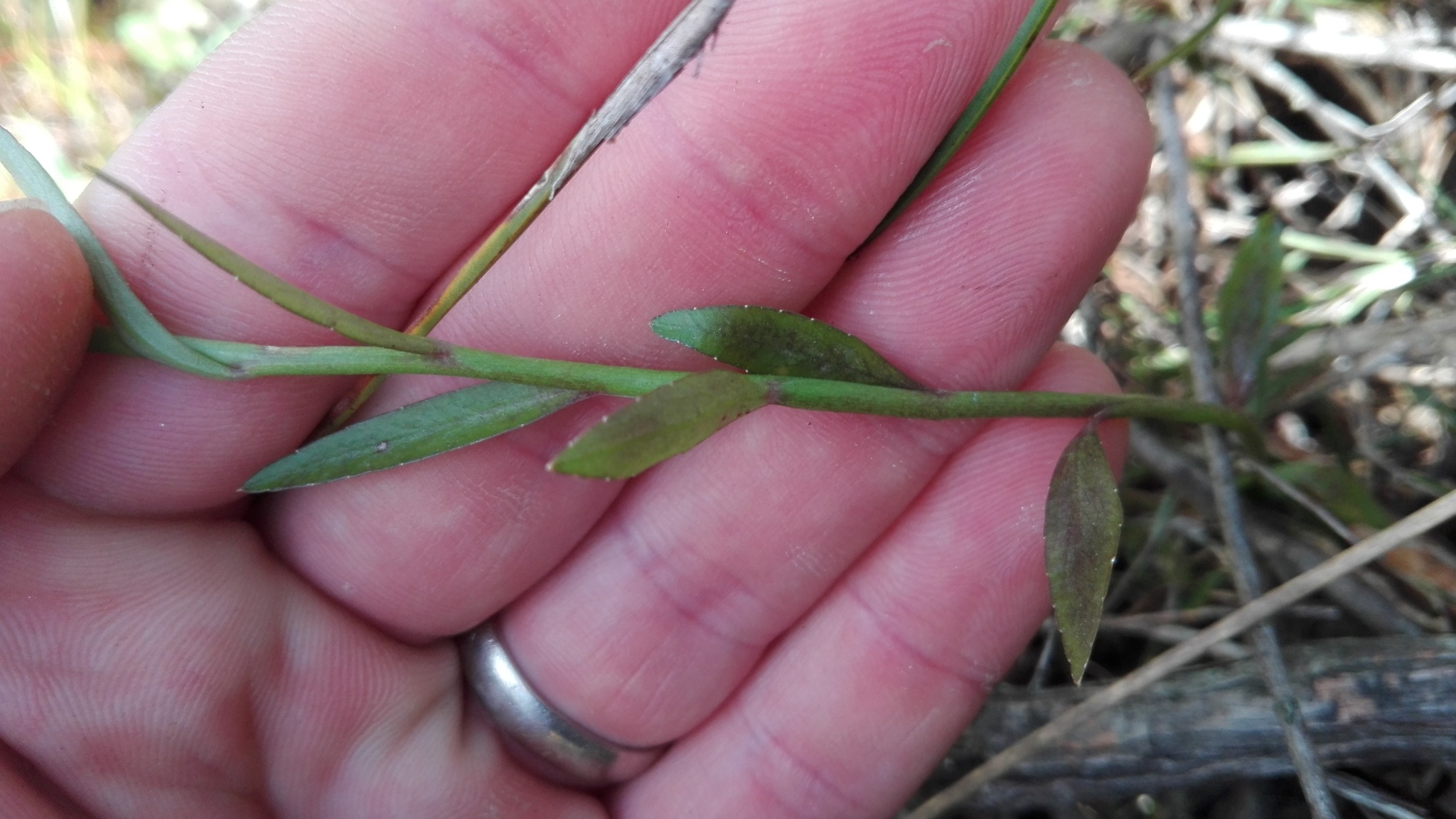
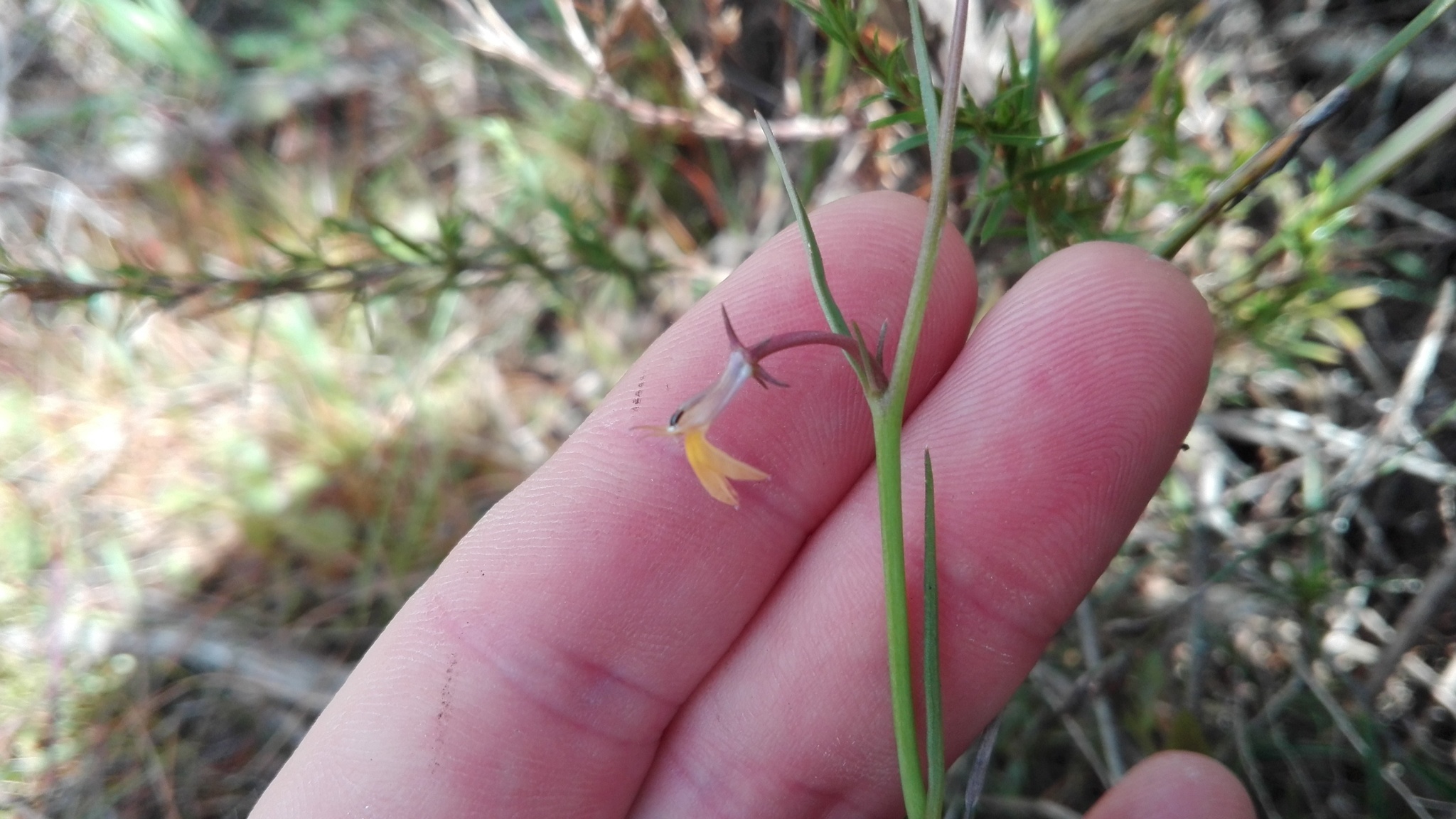
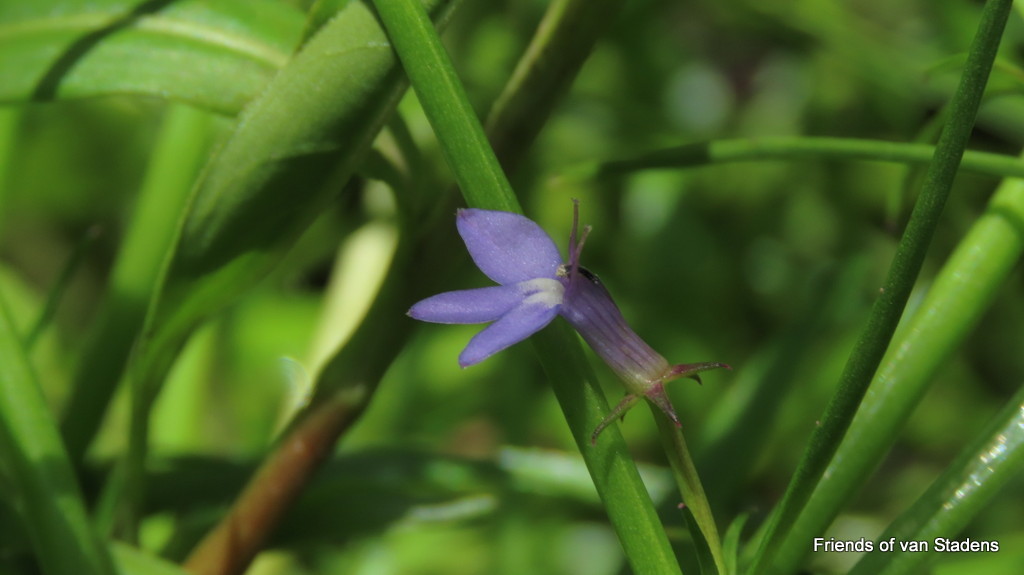
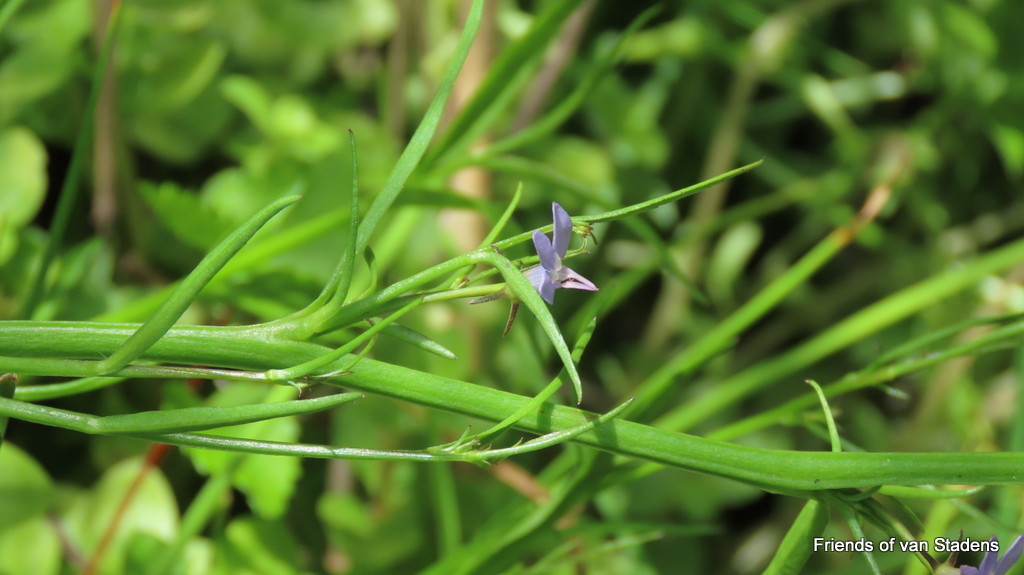
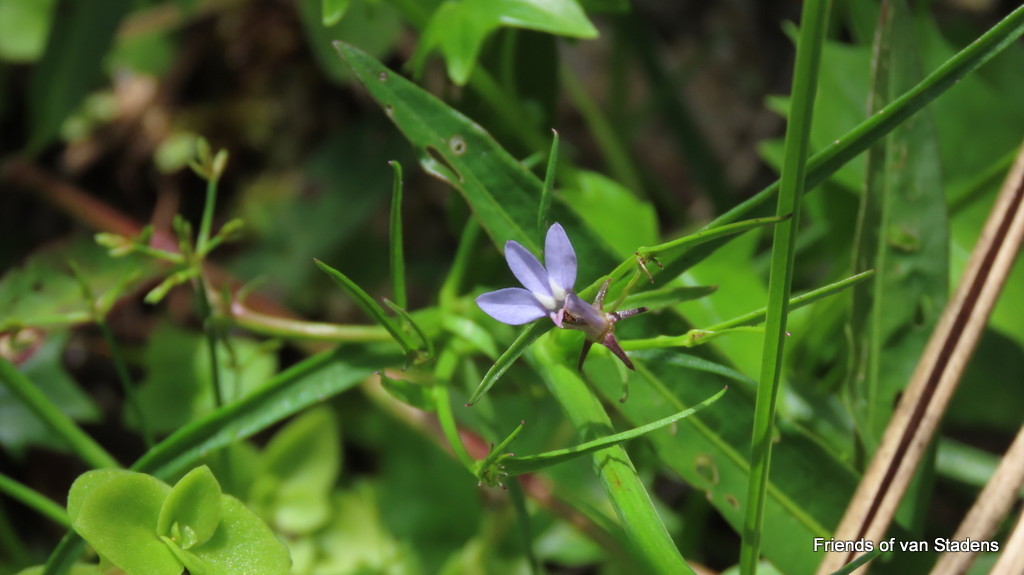
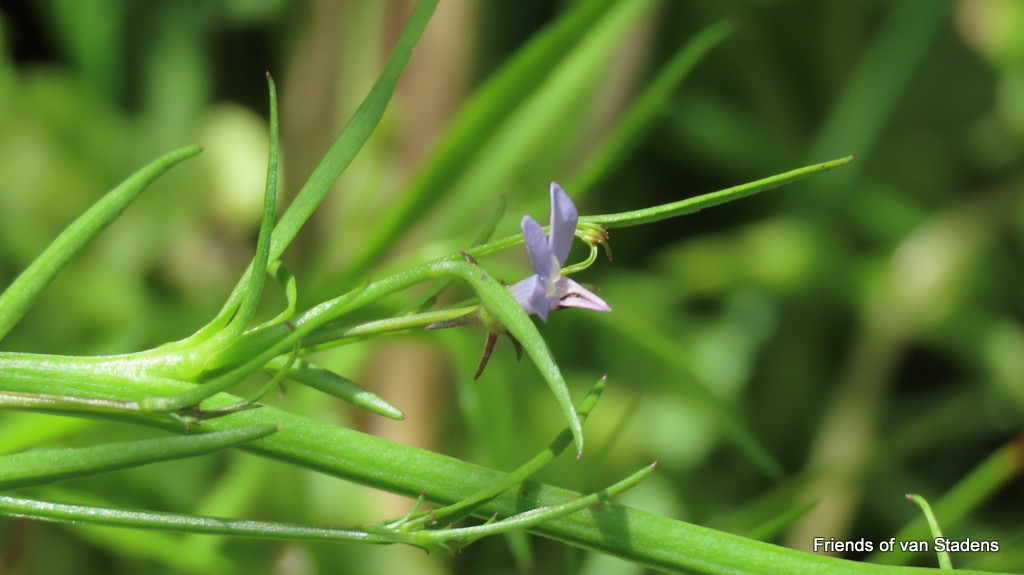
Creeping perennial, stems to 60 cm. Leaves linear-oblanceolate, sparsely toothed. Flowers sessile or pedicellate in upper axils, pink or blue. Fruits glabrous. From: Phillipson, PB. 2012. Lobeliaceae. In: J Manning & P Goldblatt (eds), Plants of the Greater Cape Floristic Region 1: The Core Cape flora. Strelitzia 29: 606-613. South African National Biodiversity Institute, Pretoria. [CC BY]
Caulis ad 3 mm crassus, foliosus; folia graminiformia, 3-5 cm lg. Calycis tubus 10-15 mm longus; corolla 12 lg. From: Wimmer, FE. 1953. Campanulaceae-Lobelioideae II. In: A Engler, L Diels, H Stubbe & K Noack (eds). Pflanzenr. (Engler) (Heft 107): 1-813. Akademie Verlag, Berlin. [All rights reserved] As: Grammatotheca bergiana (Cham.) C.Presl var. foliosa E.Wimm.
Inter frutices scandens. Calycis tubus sub anthesi vix pedunculatus, 12 mm longus, folio subbrevior, sepala subulata, scabra, 4 mm longa, primo patentissima, demum reflexa. Corolla 12 mm longa. Capsula recta vel subcurvata, distincte pedunculata, pedunculus 10-15 mm longus, sensim in fructum anguste obconicum 15-20 mm longum ampliatus. From: Wimmer, FE. 1953. Campanulaceae-Lobelioideae II. In: A Engler, L Diels, H Stubbe & K Noack (eds). Pflanzenr. (Engler) (Heft 107): 1-813. Akademie Verlag, Berlin. [All rights reserved] As: Grammatotheca bergiana (Cham.) C.Presl var. pedunculata (E.Wimm.) E.Wimm.
Sepala basi connata, reflexa. Capsula subcurvata, obconico-linearis, 5-7 mm tantum longa, folio brevior aut longior. From: Wimmer, FE. 1953. Campanulaceae-Lobelioideae II. In: A Engler, L Diels, H Stubbe & K Noack (eds). Pflanzenr. (Engler) (Heft 107): 1-813. Akademie Verlag, Berlin. [All rights reserved] As: Grammatotheca bergiana (Cham.) C.Presl var. ekloniana (C.Presl) E.Wimm.
Folia caulina multa, graminiformia; sepala ciliolata. From: Wimmer, FE. 1953. Campanulaceae-Lobelioideae II. In: A Engler, L Diels, H Stubbe & K Noack (eds). Pflanzenr. (Engler) (Heft 107): 1-813. Akademie Verlag, Berlin. [All rights reserved] As: Grammatotheca bergiana (Cham.) C.Presl var. foliosa E.Wimm.
Calycis lobi reflexi, basi connati. From: Wimmer, FE. 1953. Campanulaceae-Lobelioideae II. In: A Engler, L Diels, H Stubbe & K Noack (eds). Pflanzenr. (Engler) (Heft 107): 1-813. Akademie Verlag, Berlin. [All rights reserved] As: Grammatotheca bergiana (Cham.) C.Presl var. ekloniana (C.Presl) E.Wimm.
Capsula distincte pedunculata. From: Wimmer, FE. 1953. Campanulaceae-Lobelioideae II. In: A Engler, L Diels, H Stubbe & K Noack (eds). Pflanzenr. (Engler) (Heft 107): 1-813. Akademie Verlag, Berlin. [All rights reserved] As: Grammatotheca bergiana (Cham.) C.Presl var. pedunculata (E.Wimm.) E.Wimm.
Marshy flats. From: Phillipson, PB. 2012. Lobeliaceae. In: J Manning & P Goldblatt (eds), Plants of the Greater Cape Floristic Region 1: The Core Cape flora. Strelitzia 29: 606-613. South African National Biodiversity Institute, Pretoria. [CC BY]
Bain's Kloof to KwaZulu-Natal. From: Phillipson, PB. 2012. Lobeliaceae. In: J Manning & P Goldblatt (eds), Plants of the Greater Cape Floristic Region 1: The Core Cape flora. Strelitzia 29: 606-613. South African National Biodiversity Institute, Pretoria. [CC BY]
November
This map contains point-based occurrences at different locations
Occurrence in the Flora of Southern Africa (FSA) countries and South African provinces. Residence status indicates if a taxon is indigenous, endemic, naturalised or invasive in a specific region. This data is based on specimen records and literature
FSA
SA
BOT
NAM
ESW
LES
WC
EC
NC
FS
GA
KZN
LP
MP
NW
Absent
Indigenous
Endemic
Naturalised
Invasive
Names and Sources
Published in: Prodr. Monogr. Lobel.: 44 (1836)
Lobelia bergiana Cham.
Published in: Linnaea 8: 217 (1833)
Clintonia bergiana (Cham.) G.Don
Published in: Gen. Hist. 3: 718 (1834)
Grammatotheca erinoides (L.) Sond. var. thunbergiana Sond.
Published in: Fl. Cap. [Harvey & Sonder] 3: 532 (1865)
Dortmanna bergiana (Cham.) Kuntze
Published in: Revis. Gen. Pl. 2: 972 (1891)
Grammatotheca dregeana C.Presl
Published in: Prodr. Monogr. Lobel.: 44 (1836)
Grammatotheca eckloniana C.Presl
Published in: Prodr. Monogr. Lobel.: 44 (1836)
Grammatotheca meyeriana C.Presl
Published in: Prodr. Monogr. Lobel.: 44 (1836)
Grammatotheca mundtiana C.Presl
Published in: Prodr. Monogr. Lobel.: 44 (1836)
Lobelia amplexicaulis de Vriese
Published in: Pl. Preiss. [J.G.C.Lehmann] 1(3): 397 (1845)
Lobelia macrocarpa de Vriese
Published in: Pl. Preiss. [J.G.C.Lehmann] 1(3): 396 (1845)
Lobelia macrocarpa de Vriese var. genistoides de Vriese
Published in: Pl. Preiss. [J.G.C.Lehmann] 1(3): 397 (1845)
Lobelia stenotheca F.Muell.
Published in: Fragm. (Mueller) 2(11): 20 (1860)
Grammatotheca erinoides (L.) Sond. var. dregeana (C.Presl) Sond.
Published in: Fl. Cap. [Harvey & Sonder] 3: 532 (1865)
Grammatotheca erinoides (L.) Sond. var. eckloniana (C.Presl) E.Wimm.
Published in: Ann. Naturhist. Mus. Wien 56: 370 (1948)
Grammatotheca erinoides (L.) Sond. var. pedunculata E.Wimm.
Published in: Ann. Naturhist. Mus. Wien 56: 370 (1948)
Grammatotheca bergiana (Cham.) C.Presl var. ekloniana (C.Presl) E.Wimm.
Published in: Pflanzenr. [Engler] 4, 276b: 697 (1953)
Grammatotheca bergiana (Cham.) C.Presl var. foliosa E.Wimm.
Published in: Pflanzenr. [Engler] 4, 276b: 697 (1953)
Grammatotheca bergiana (Cham.) C.Presl var. pedunculata (E.Wimm.) E.Wimm.
Published in: Pflanzenr. [Engler] 4, 276b: 697 (1953)
Classification
KINGDOM Plantae
SUBKINGDOM Phanerogamae
PHYLUM Anthophyta
ORDER Asterales
FAMILY Lobeliaceae
SUBFAMILY Lobelieae
GENUS Grammatotheca
SPECIES bergiana
25 results for Grammatotheca bergiana (Cham.) C.Presl
Barcode: NBG0196320-0 Collector(s) & number: Euston-Brown, DIW, 05 | 2000-1-21
South Africa, Eastern Cape, Kouga Mountain, near Kouga dam. 570 m above sea level.
General notes: Afna surface plateau grassland.
Data Resource: BODATSA View record
Barcode: NH0069856-0 Collector(s) & number: Coleman, TA, 138 | 1965-4-18
South Africa, KwaZulu-Natal, Umbumbulu.
General notes: Flowers scrambling amongst tall vlei grass.
Data Resource: BODATSA View record
Barcode: NH0088025-0 Collector(s) & number: Jordaan, M, 1028 | 1986-12-12
South Africa, Eastern Cape, Umtentu River, north banks. ± 5Km inland, outside reserve.
Data Resource: BODATSA View record
Barcode: NH0085353-0 Collector(s) & number: Abbott, ATD, 2998 | 1986-2-16
South Africa, KwaZulu-Natal, Umtamvuna Nature Reserve, post outpost.
Data Resource: BODATSA View record
Barcode: NBG1569673-0 Collector(s) & number: Knox, EB, 4690 | 2001-8-16
South Africa, Western Cape, W. Cape Province, Waterval Mountains, lower Tulbagh Waterfall.
General notes: DNA voucher.
Data Resource: BODATSA View record
Barcode: NBG1520203-0 Collector(s) & number: Logie, CG, CR15551 | 2011-11-16
South Africa, Eastern Cape, Honeyville. North of Humansdorp on the west side of the Humansdorp/Andrieskraal road. Entered at the first gate on the west side, walked southwards parallel to road to quarry.
General notes: FOTH 710.
Data Resource: BODATSA View record
Barcode: NH0121384-0 Collector(s) & number: Arkell, J, 211 | 1994-3-1
South Africa, Eastern Cape, Mzamba, Casino, next to Airport Terminal building.
Data Resource: BODATSA View record
Barcode: NH0080051-0 Collector(s) & number: Abbott, A, 1969 | 1984-5-10
South Africa, Eastern Cape, Transkei. Mkambati.
Data Resource: BODATSA View record
Barcode: NH0100011-0 Collector(s) & number: Van Wyk, AE, 7984 | 1986-12-14
South Africa, Eastern Cape, Mkambati Nature Reserve.
Data Resource: BODATSA View record
Barcode: NBG0209004-0 Collector(s) & number: Helme, NA, 4678 | 2007-6-2
South Africa, Western Cape, Skurweberg Pass, NW corner of dam, 3 km W of top of Gydo Pass. 33°14' S; 19°18' E.
General notes: Fynbos biome. Wetland. Moist/damp, sandy soil. Sandstone. Full sun. W aspect. Gentle slope. No biotic effect seen. Herb. Annual. Pale blue, 2 narrow petals above, 3 broader ones below with white base. Flowers present. Plant height to 0.3 m. Uncommon in seasonally damp sands, N of road. Area burnt 2 years before.
Data Resource: BODATSA View record
Barcode: NH0075434-0 Collector(s) & number: Abbott, ATD, 662 | 1982-12-28
South Africa, KwaZulu-Natal, Umtamvuna Nature Reserve, Bulolo.
Data Resource: BODATSA View record
Barcode: NH0079476-0 Collector(s) & number: Schrire, BD, 1724 | 1984-5-10
South Africa, Eastern Cape, Mkambati Nature Reserve, Transkei.
Data Resource: BODATSA View record
Barcode: NH0076636-0 Collector(s) & number: Abbott, ATD, 902 | 1983-3-3
South Africa, KwaZulu-Natal, Umtamvuna Nature Reserve, Swamp.
Data Resource: BODATSA View record
Barcode: PRE0860745-0 Collector(s) & number: Bunney, K, 2 | 2002-1-25
South Africa, Eastern Cape, Pondoland. Mtentu Gorge, 0.8 km from the powerline. Wetland area. Releve 13-46.
Data Resource: BODATSA View record
Barcode: PRE0625034-0 Collector(s) & number: Hugo, L, 2530 | 1981-3-12
South Africa, Western Cape, CERES; SKITTERYKLOOF; CAMPING SITE - NORTH EAST OF CERES
Data Resource: BODATSA View record
This map contains point-based occurrences at different locations
2012
SERIES CHAPTER
Lobeliaceae Phillipson, PBIn: J Manning & P Goldblatt (eds), Plants of the Greater Cape Floristic Region 1: The Core Cape flora. Strelitzia 29: 606-613
South African National Biodiversity Institute, Pretoria
2007
BOOK
World checklist and bibliography of Campanulaceae Lammers, TGRoyal Botanic Gadens, Kew, Surrey
1953
FLORA
Campanulaceae-Lobelioideae II. Wimmer, FEIn: A Engler, L Diels, H Stubbe & K Noack (eds). Das Pflanzenreich (Engler)(Heft 107)1-813
Akademie Verlag, Berlin
No results found for Grammatotheca bergiana (Cham.) C.Presl
Status and criteria
NE
Assessment date
2016-01-14
Assessor(s)
Plantae Coordinator
Range
<span class="fontstyle0">Across the southern hemisphere, Southern Right Whales have a circumpolar distribution, present within the South Atlantic, South Pacific and Indian Oceans. Similar to other mysticete species, Southern Right Whales exhibit seasonal migrations southwards in summer to sub-Antarctic waters where they feed predominately on copepods (Tormosov <em>et al.</em> 1998), and northwards in winter (as far as about 20°S) for calving and nursing.<span class="fontstyle0"><br/><span class="fontstyle0"><br/>In summer, Southern Right Whales are commonly located between 40°S and 50°S (Ohsumi and Kasamatsu 1986), however they have been reported as far south as 65°S (Bannister <em>et al.</em> 1999, IWC 2007), and around South Georgia in the southern Atlantic Ocean (Rowntree <em>et al.</em> 2001). These sightings from the Antarctic to the sub-Antarctic (or grounds associated with sub-Antarctic or subtropical convergence zone), do not necessarily signify a range expansion but rather, new information derived from satellite tagging.<span class="fontstyle0"><br/><span class="fontstyle0"><br/>During winter months the species moves northwards towards coastlines of continents and islands, mainly for calving. Nursery grounds have been identified close to the shore off the southern regions of Australia and New Zealand, especially the Auckland and Campbell Islands, as well as off the east coast of South America and around southern Africa (Richards 2009). To a lesser extent, they have also been documented off the coasts of Chile, Peru, Tristan da Cunha, and the east coast of Madagascar (IWC 2001, Rosenbaum <em>et al.</em> 2001).<span class="fontstyle0"><br/><span class="fontstyle0"><br/>Within the assessment region, this species had a historical distribution up to southern Angola. Historically there were three winter concentrations, namely Walvis Bay in present day Namibia, the Cape of Good Hope in the west, and up to Delagoa Bay on the east coast of South Africa (Richards 2009). Present summer distribution in southern African waters encompasses 35°S to 60°S. In winter, females with calves are concentrated on the southern African coastal calving ground from 18°30’E to 23°50’E (Best 2000). There is a recognized core area for breeding populations between Saint Sebastian Bay and Pearly Beach near Hermanus, (Elwen and Best 2004a, 2004b, 2004c). Further core areas occur throughout the Benguela (at low frequencies during autumn and winter) (Barendse and Best 2014). The main behaviours recorded for whales along the west coast, up to St Helena Bay, is for socialising during spring and feeding during summer (Barendse and Best 2014). However, it is still not known where the majority of males and females without calves overwinter.<span class="fontstyle0"><br/><span class="fontstyle0"><br/>Population increases of the residual population are leading to repopulation of historical habitat, for example into Namibia and Mozambique. Photo-identification and genetic data are needed to determine whether the whales sighted off Mozambique are part of the South African population or the remains of the historic Indian Ocean population (IWC 2013). Also, shore-based observation along the South African west coast suggests that there are animals moving from a northern area southwards, but research coverage north of St Helena Bay is nearly nonexistent (Barendse and Best 2014). <span class="fontstyle0"><span class="fontstyle0"><span class="fontstyle0"><span class="fontstyle0"><span class="fontstyle0"><span class="fontstyle0"><span class="fontstyle0"><span class="fontstyle0"><span class="fontstyle0"><span class="fontstyle0"><br/><span class="fontstyle0"><span class="fontstyle0"><span class="fontstyle0"><span class="fontstyle0"><span class="fontstyle0"><span class="fontstyle0"><span class="fontstyle0"><span class="fontstyle0"><span class="fontstyle0"><span class="fontstyle0"><br/>Additionally Southern Right Whales have been seen sporadically at sub-Antarctic Marion Island, a South African territory (Postma <em>et al.</em> 2011), which is part of the Prince Edward Islands Marine Protected Area (MPA), and movement has been recorded between South Africa and Marion Island (Best and Peters 2011).</span></span></span></span></span></span></span></span></span></span></span></span></span></span>
Major system
Major habitats
Population trend
JOURNAL ARTICLE
Clausnitzer, V. and Dijkstra, K.–D.B. in prep. The dragonflies of Eastern Africa. An identification key
JOURNAL ARTICLE
Longfield, C. 1959. The Odonata of North Angola. Part II. Publicações Culturais Companhia de Diamantes de Angola. 45:13–42
| Part(s) of plant used | Use(s) | Reference |
|---|
Coming soon...


