PLANTAE / PHANEROGAMAE / ANTHOPHYTA / CARYOPHYLLALES / AIZOACEAE / RUSCHIOIDEAE / RUSCHIEAE / TRICHODIADEMA / PYGMAEUM

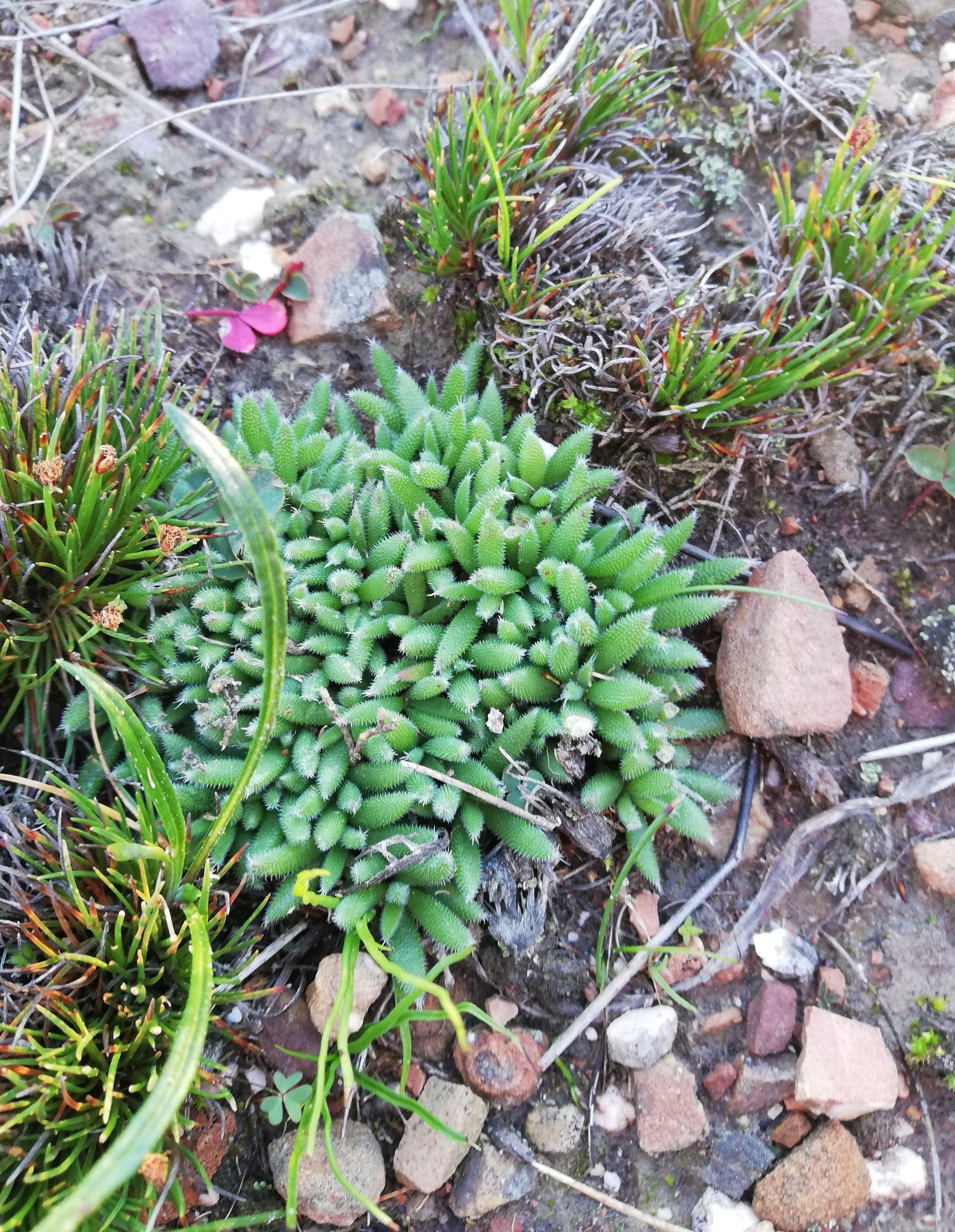
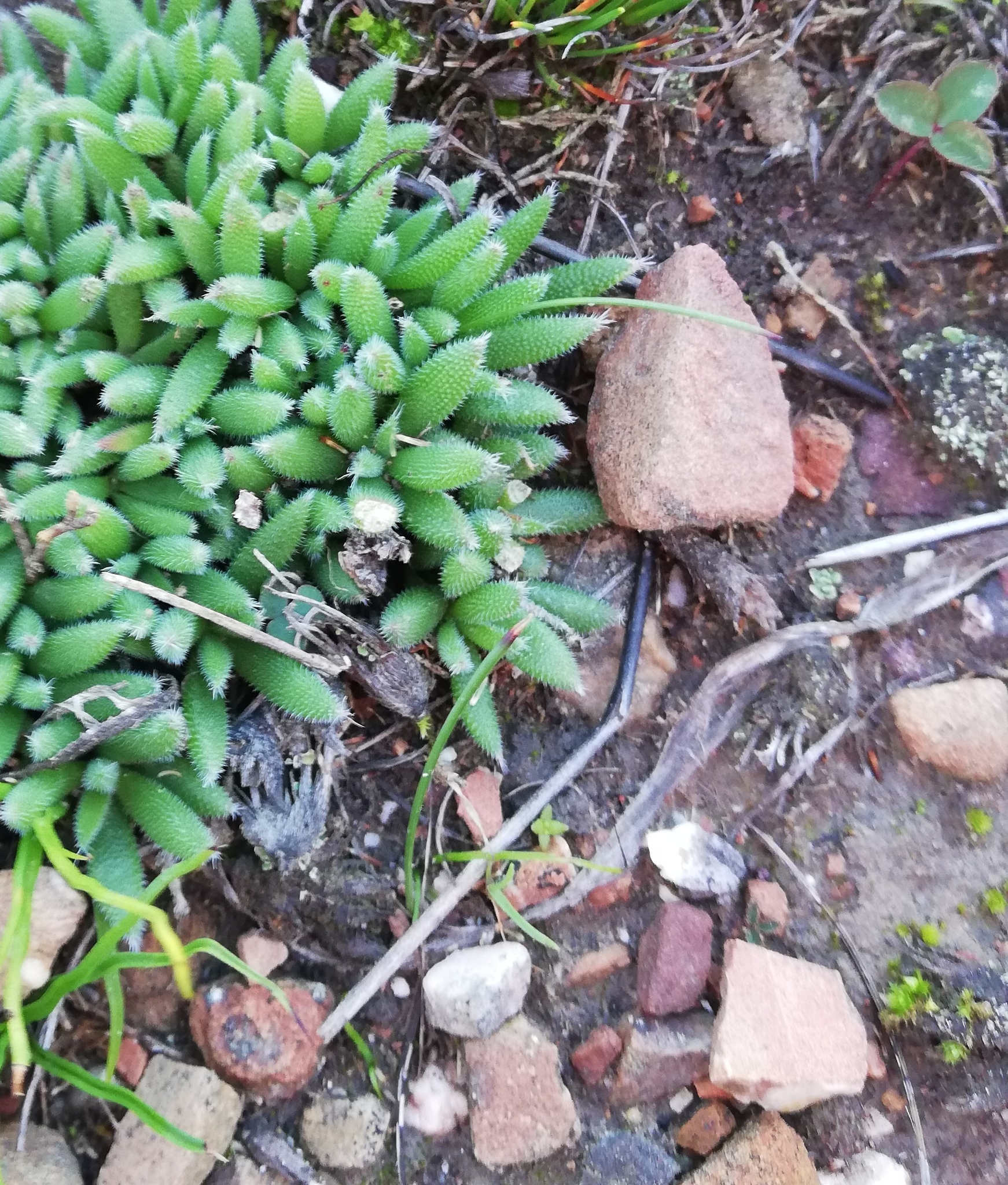
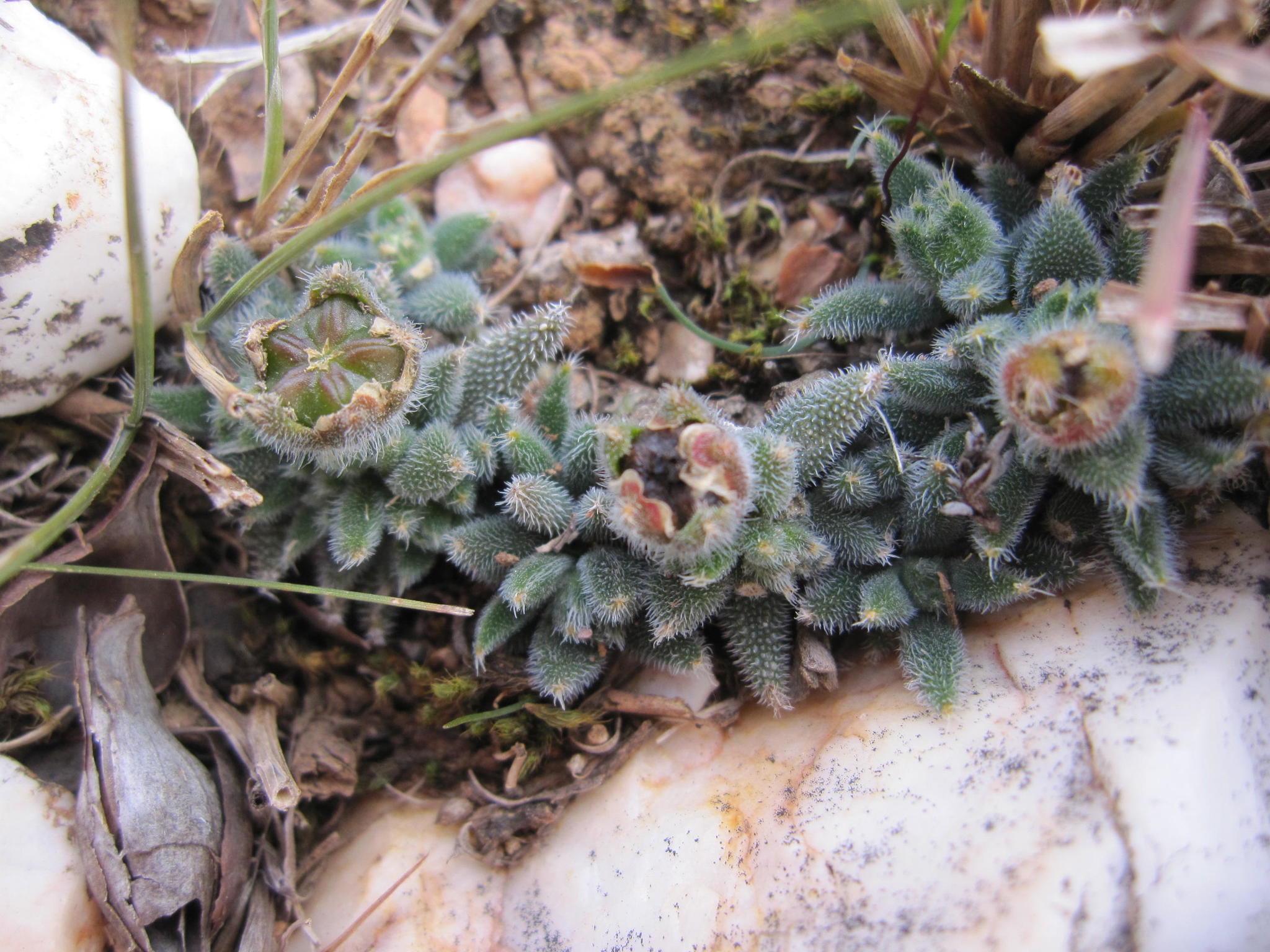
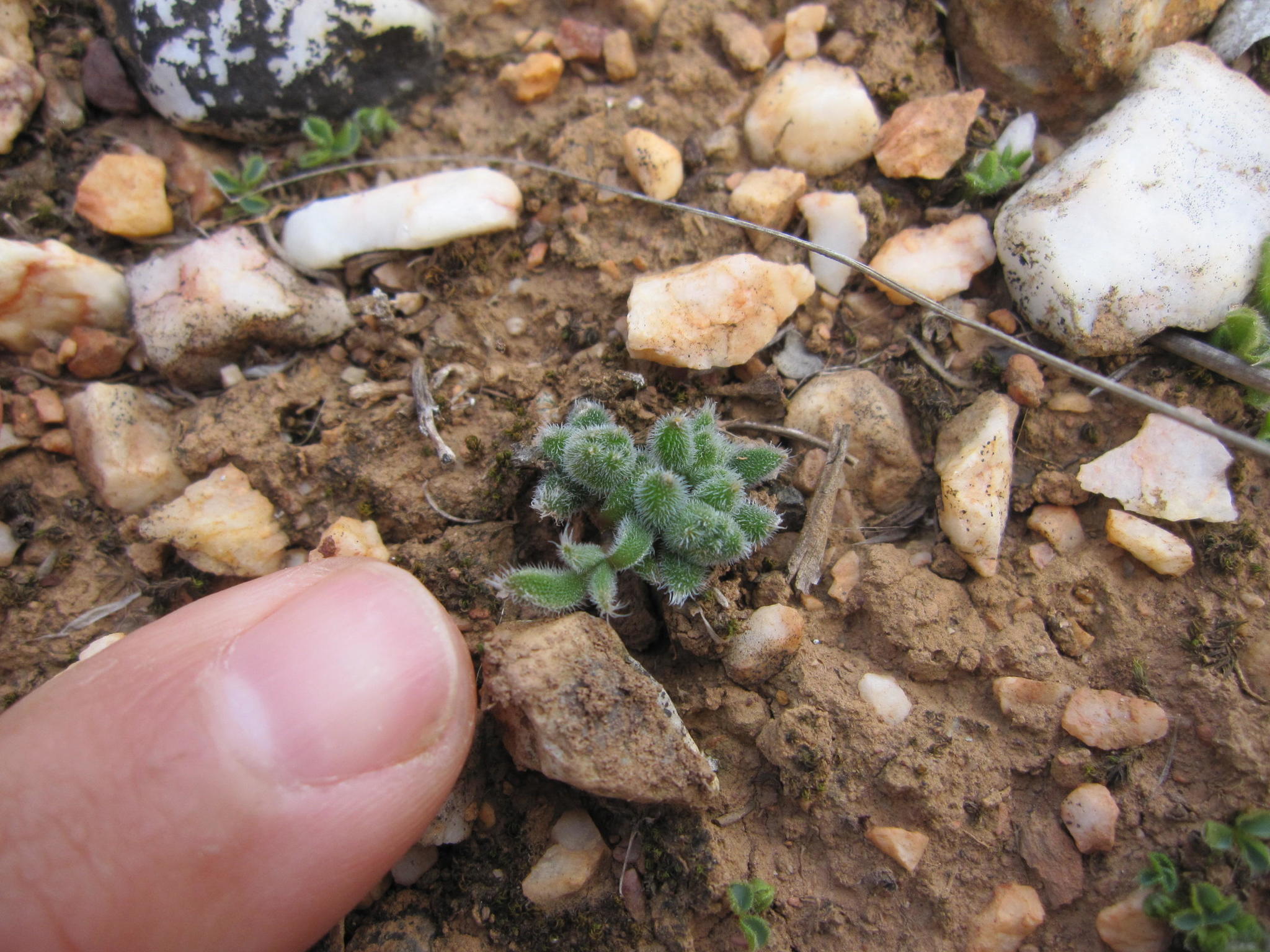
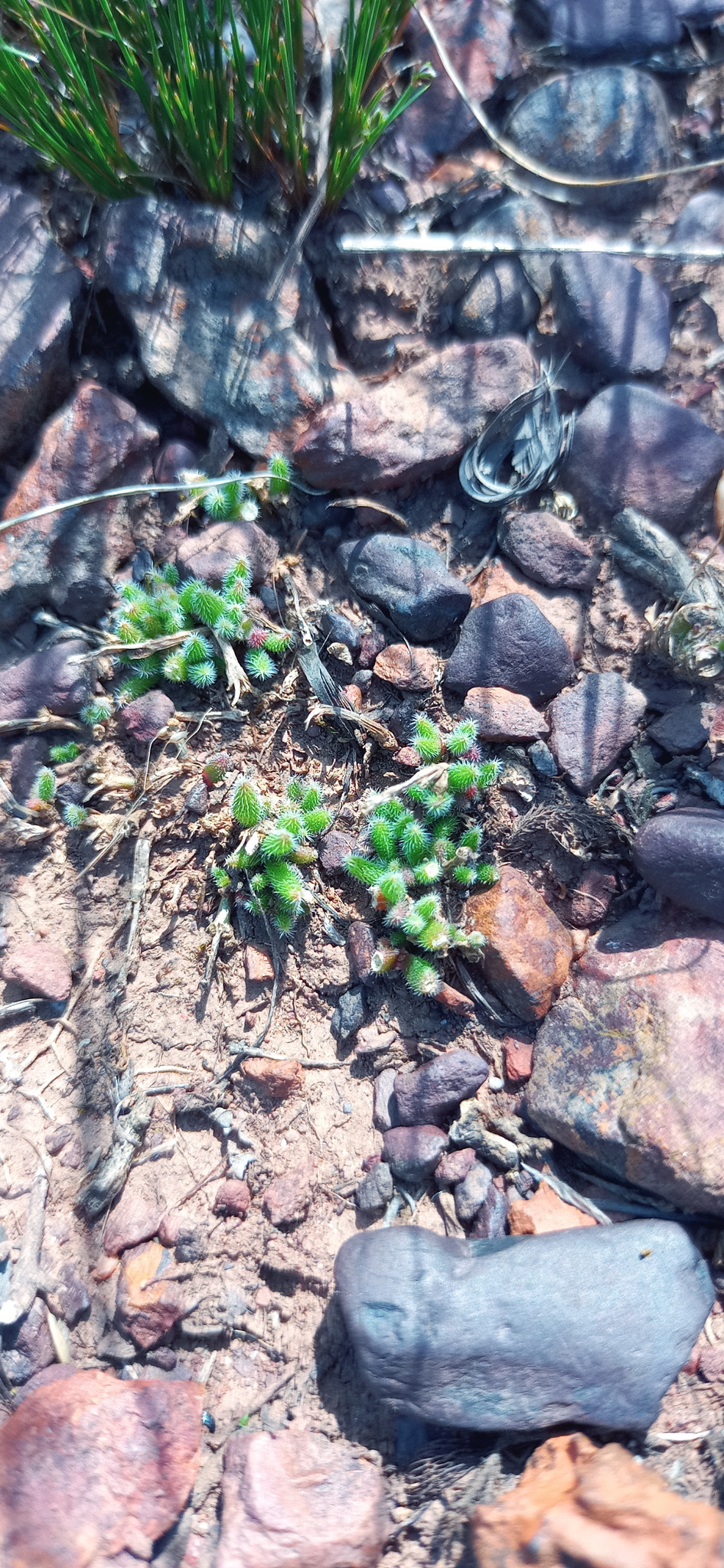
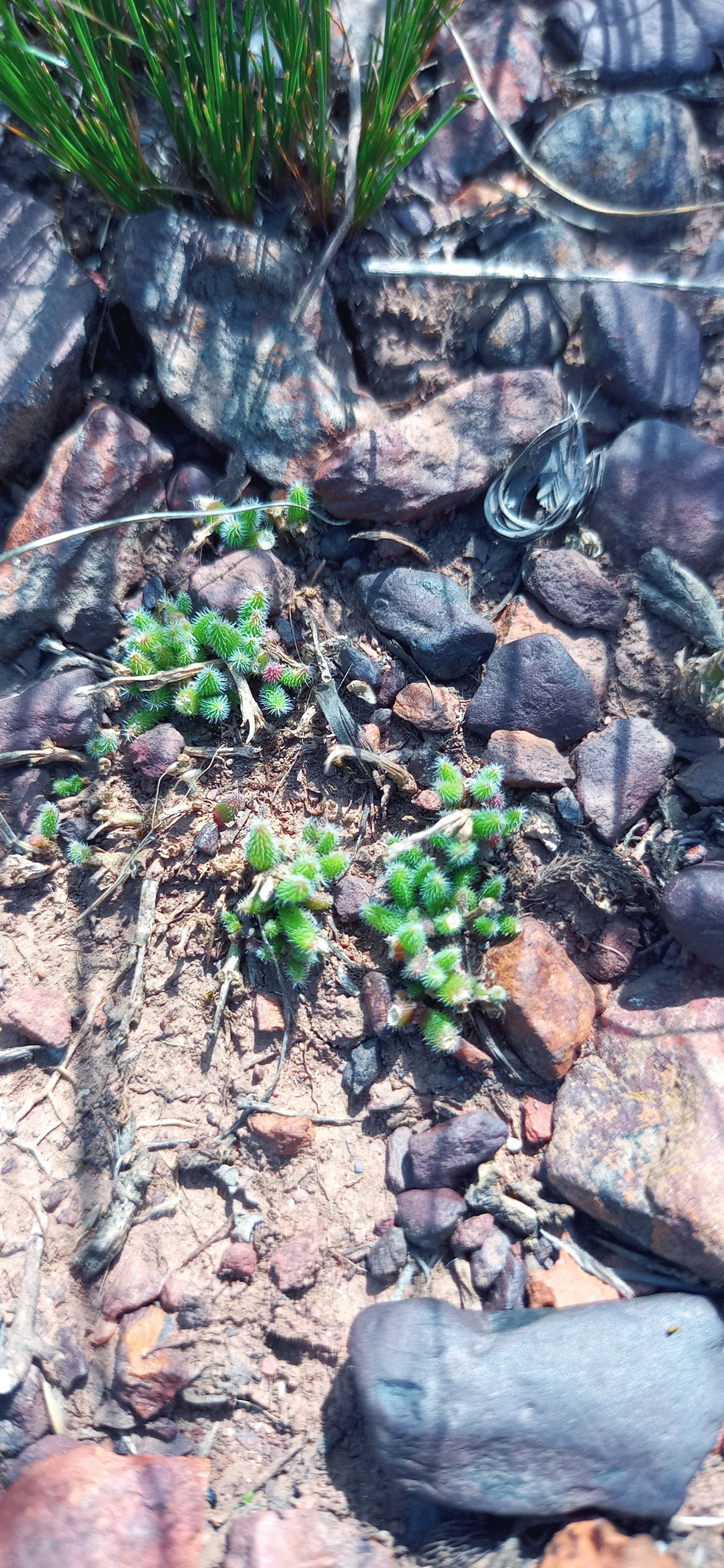
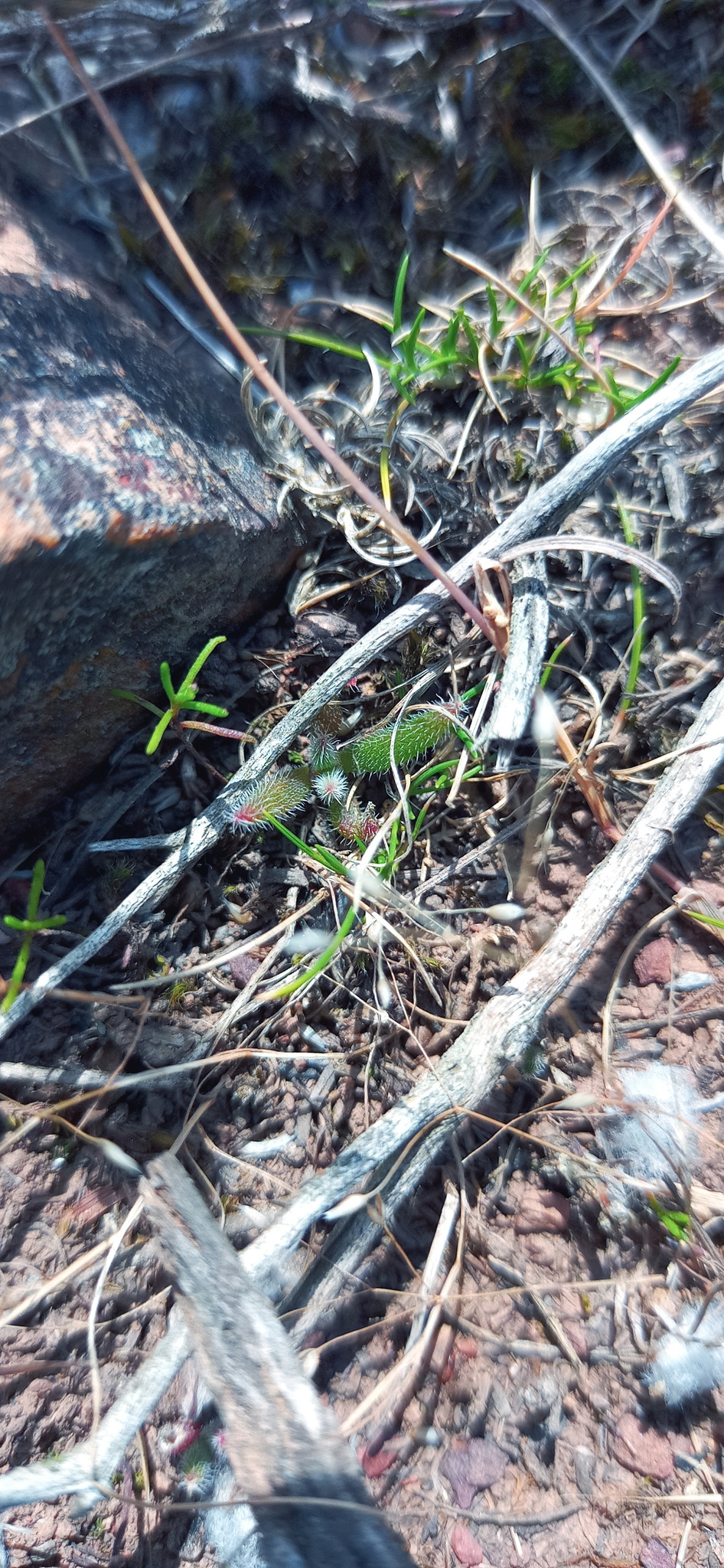
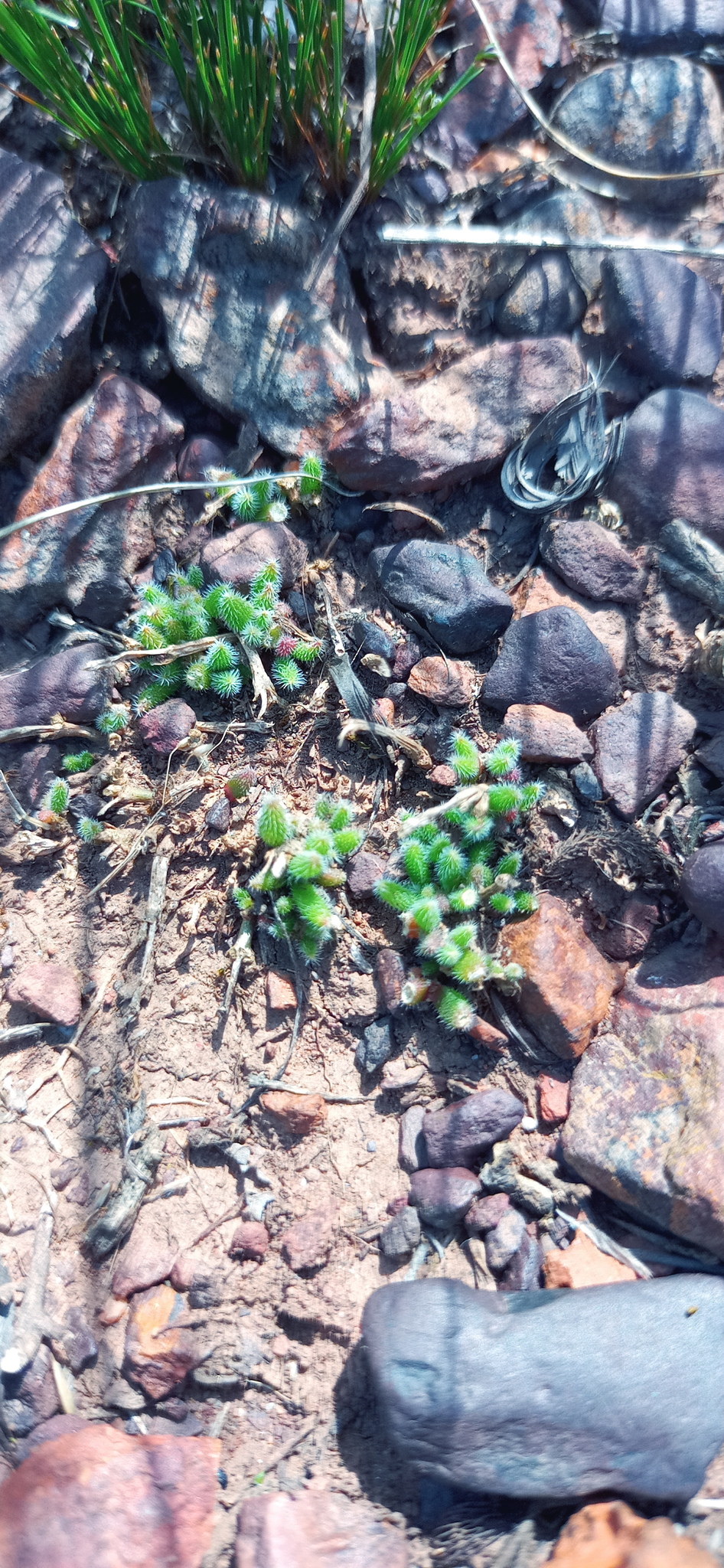
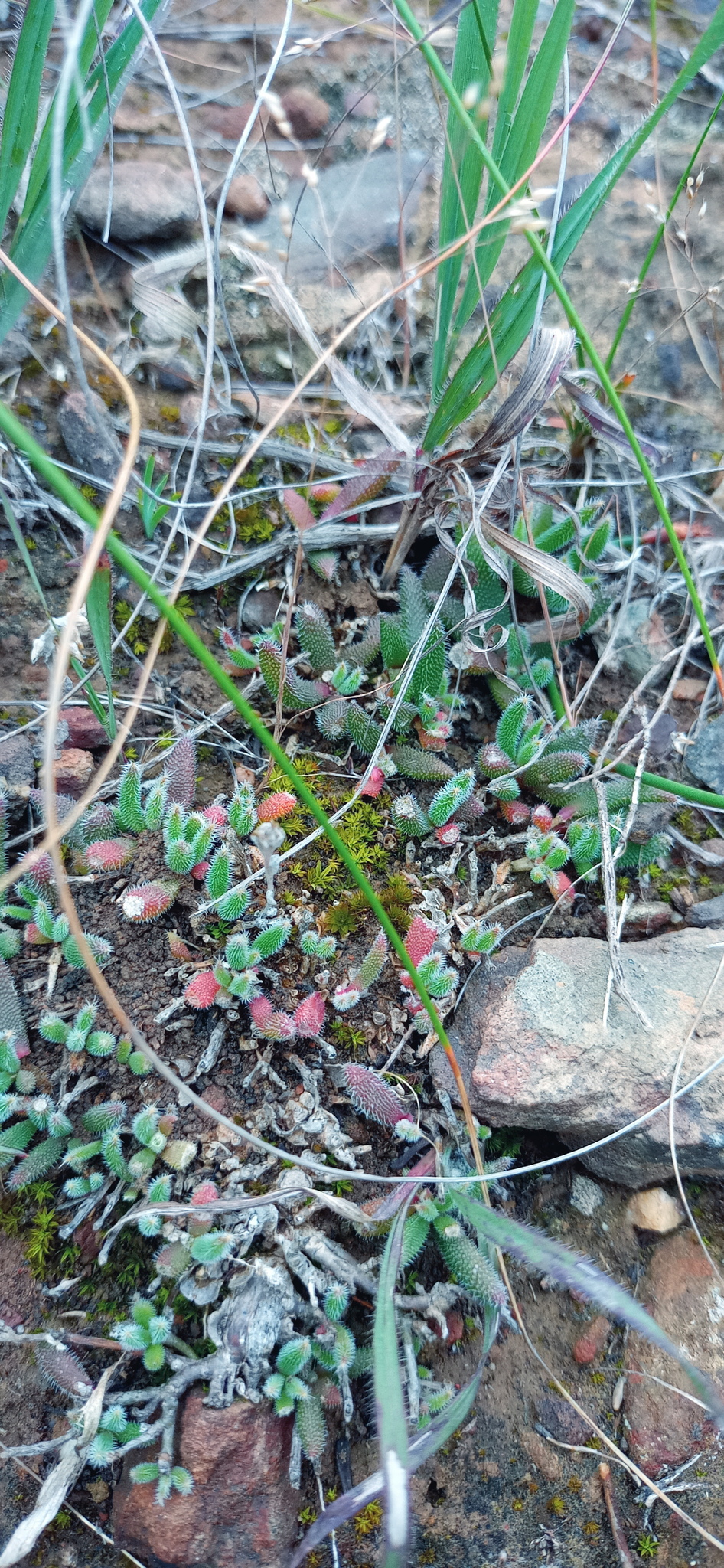
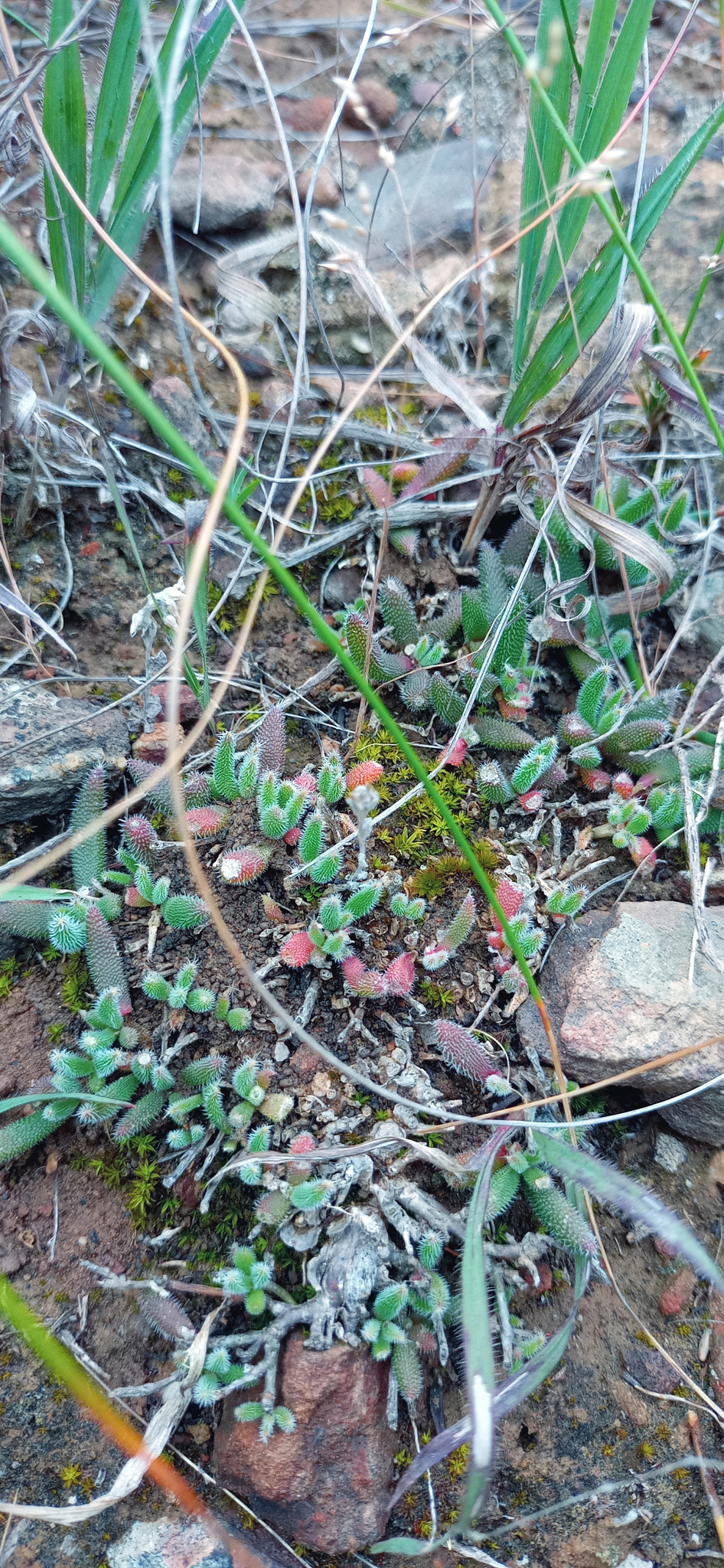
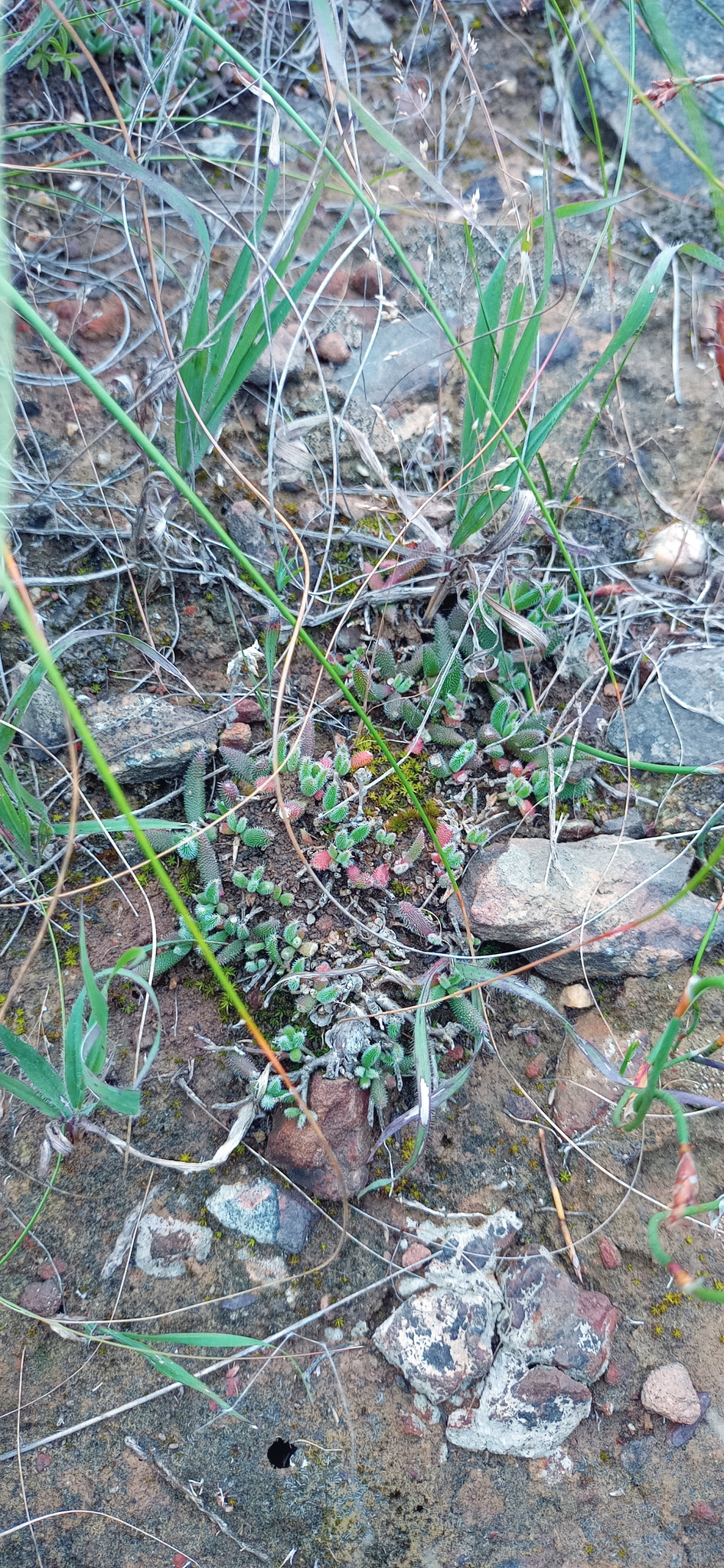
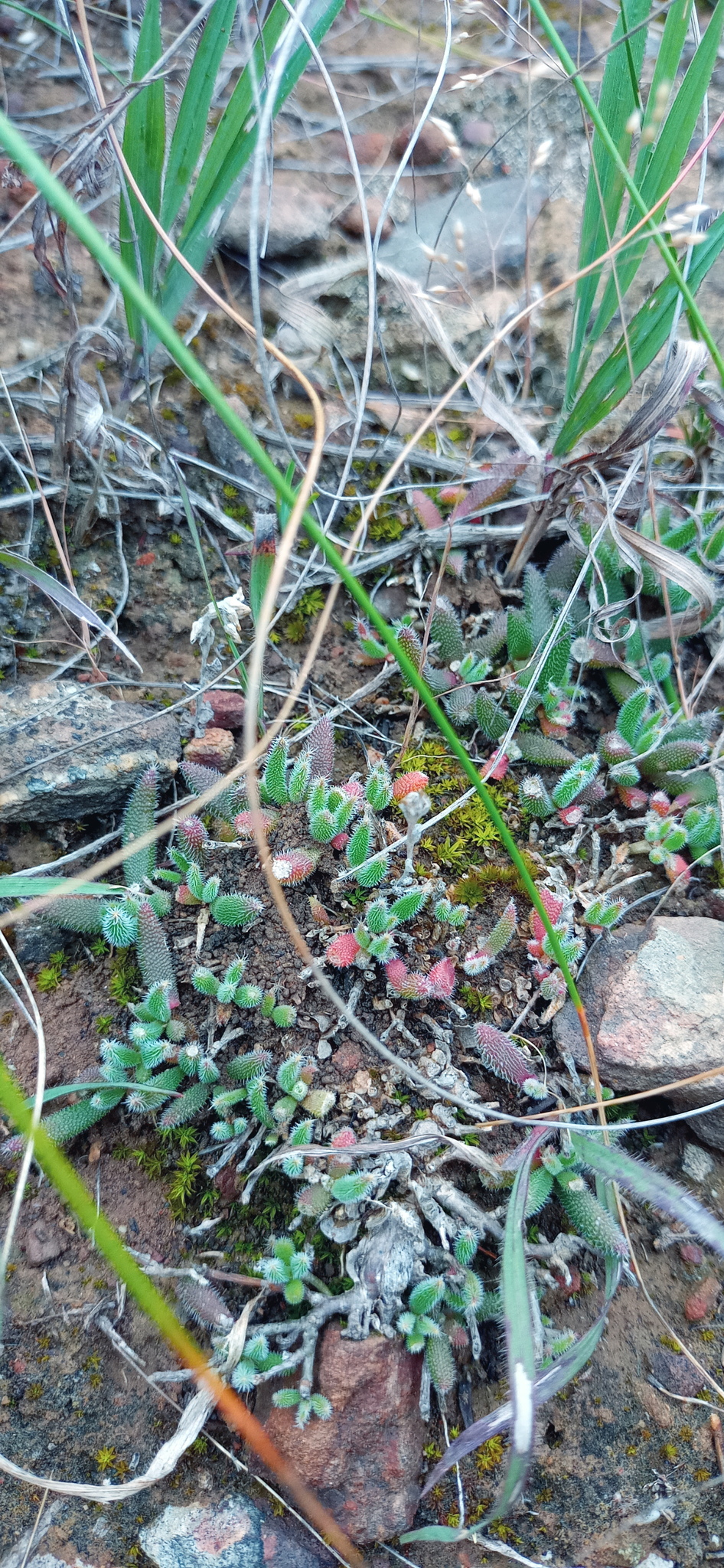
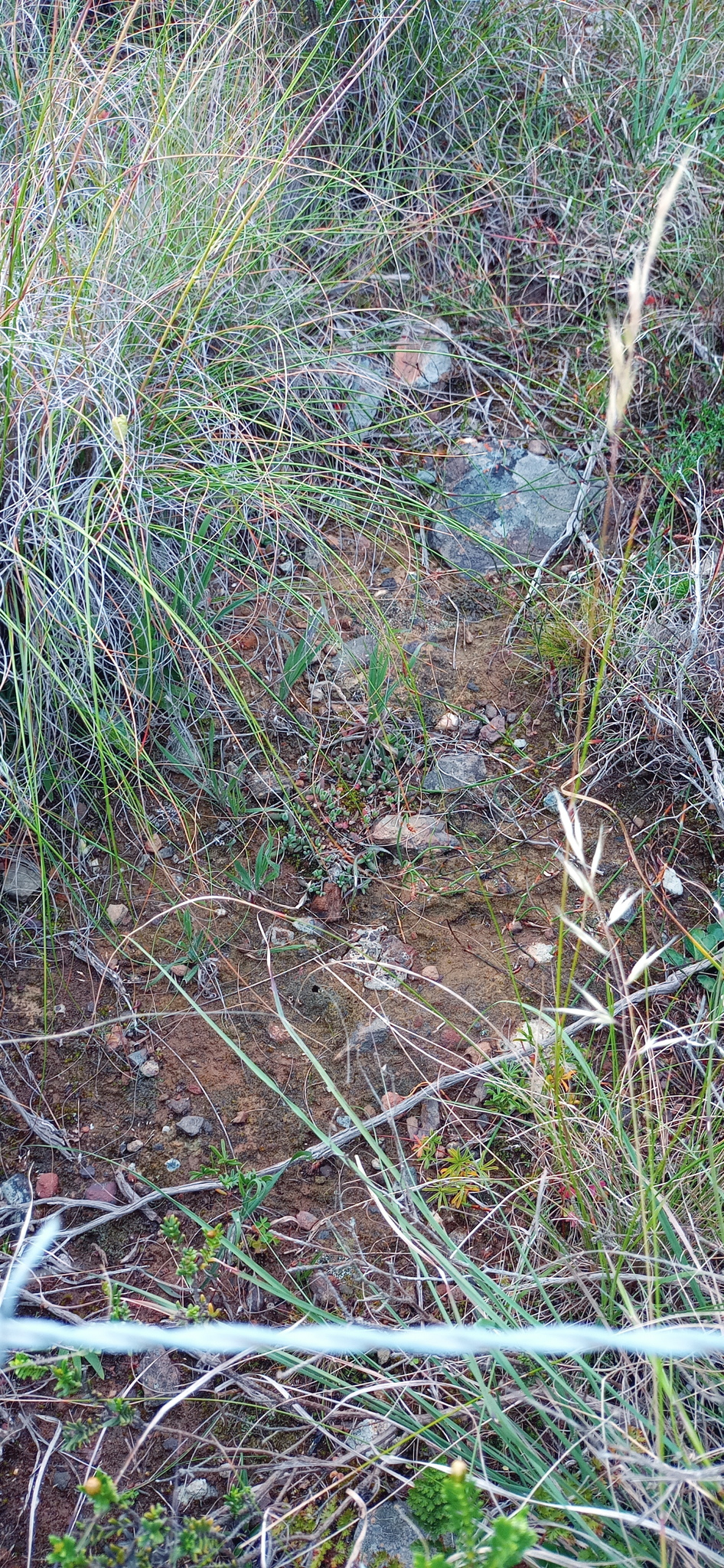
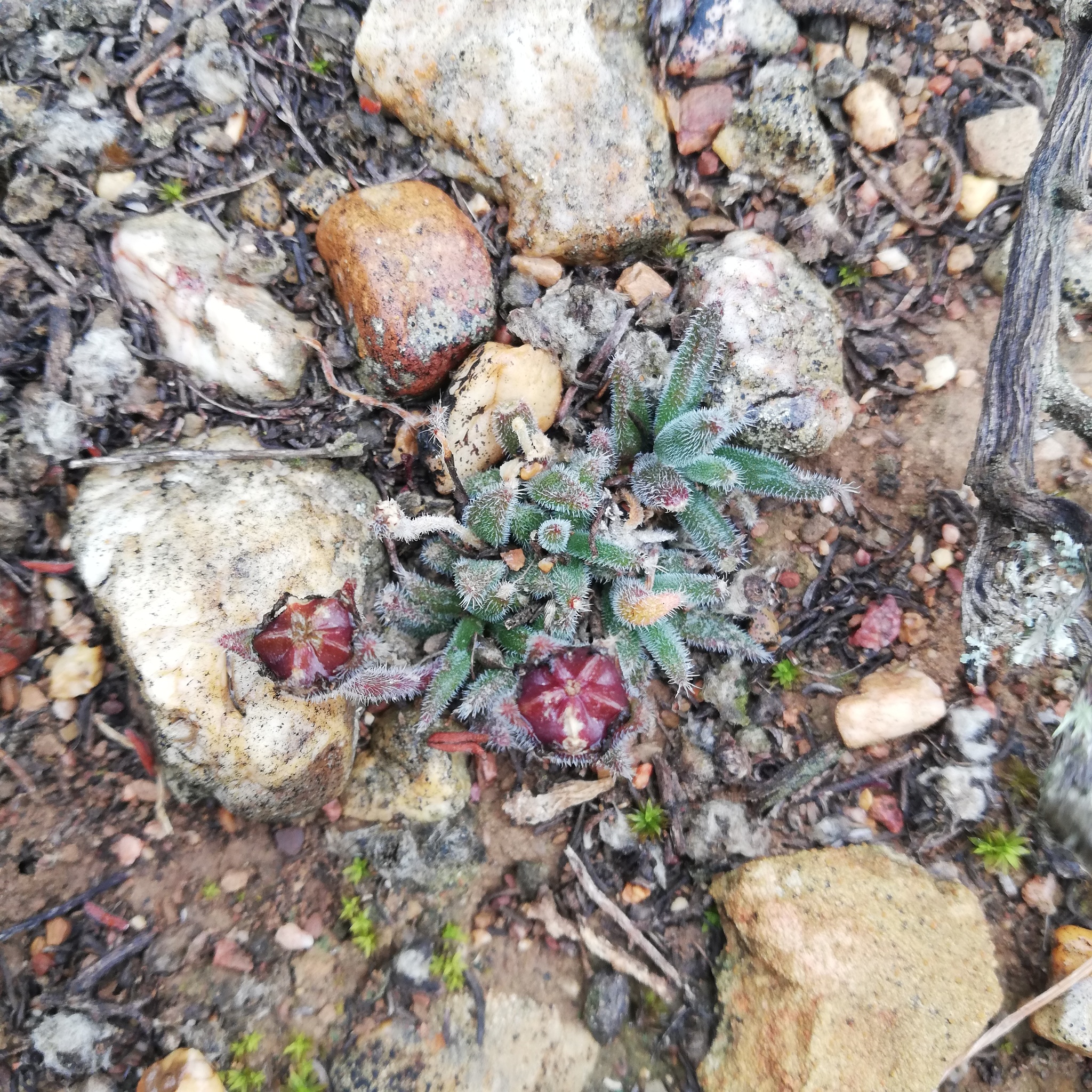
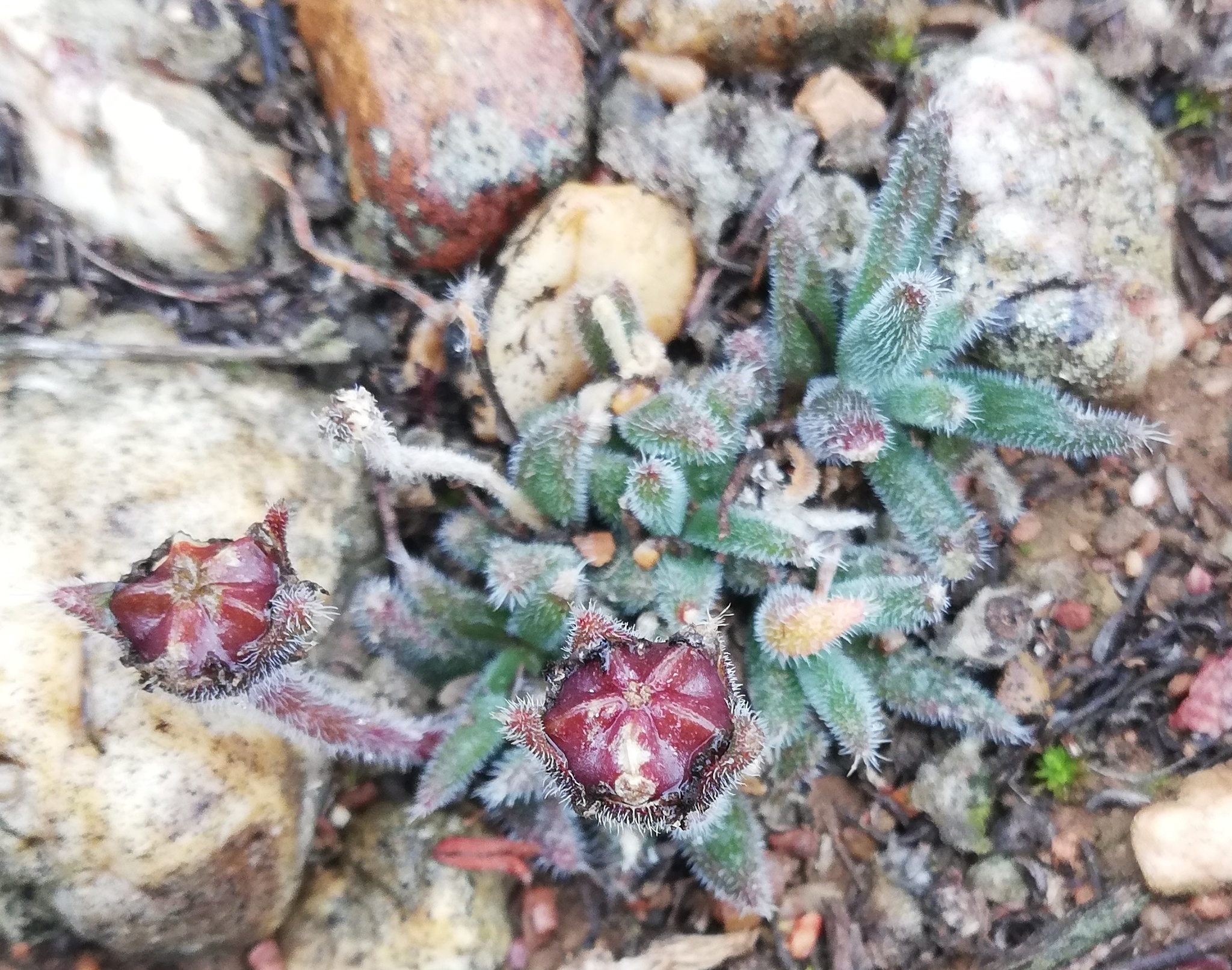
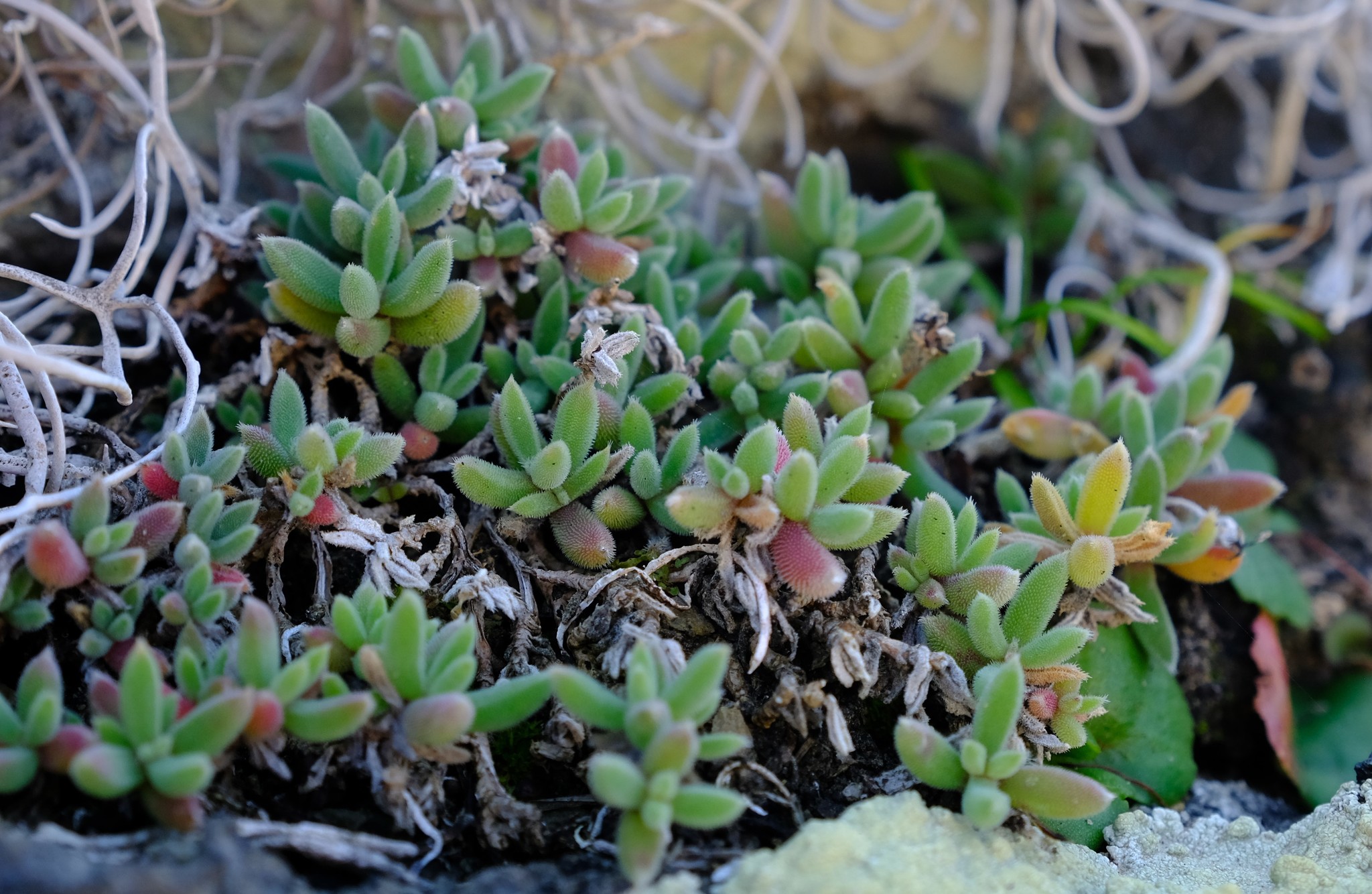
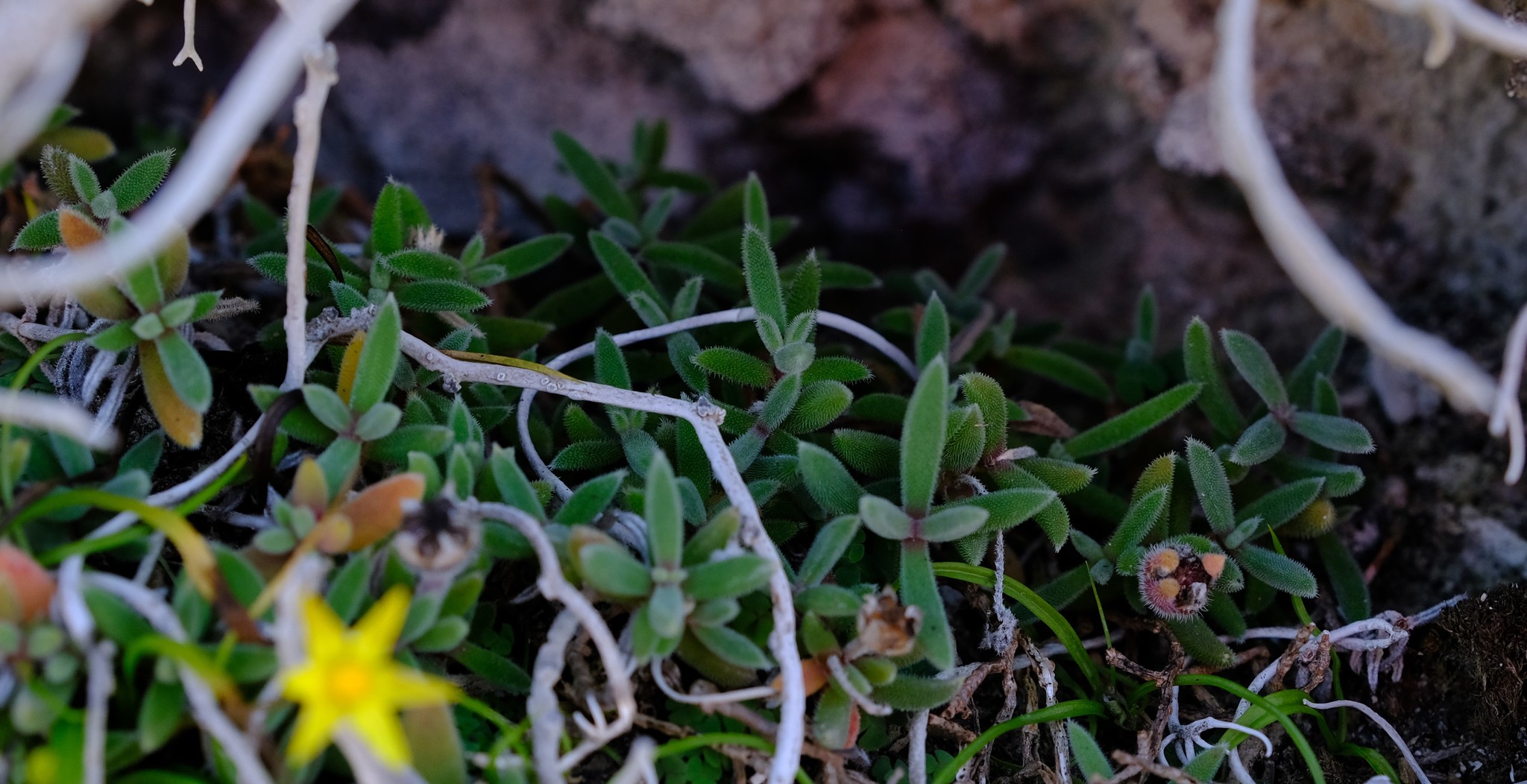
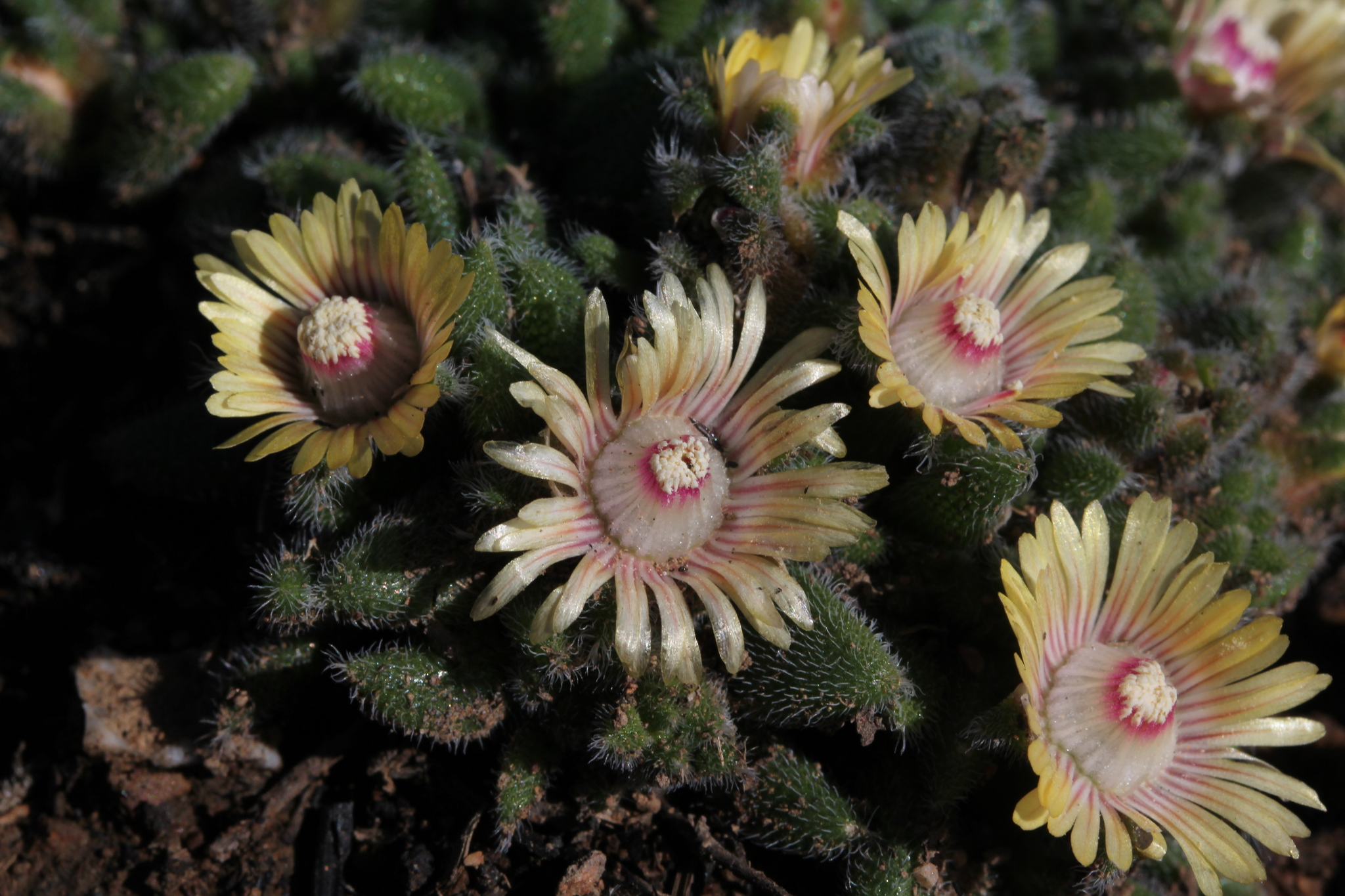
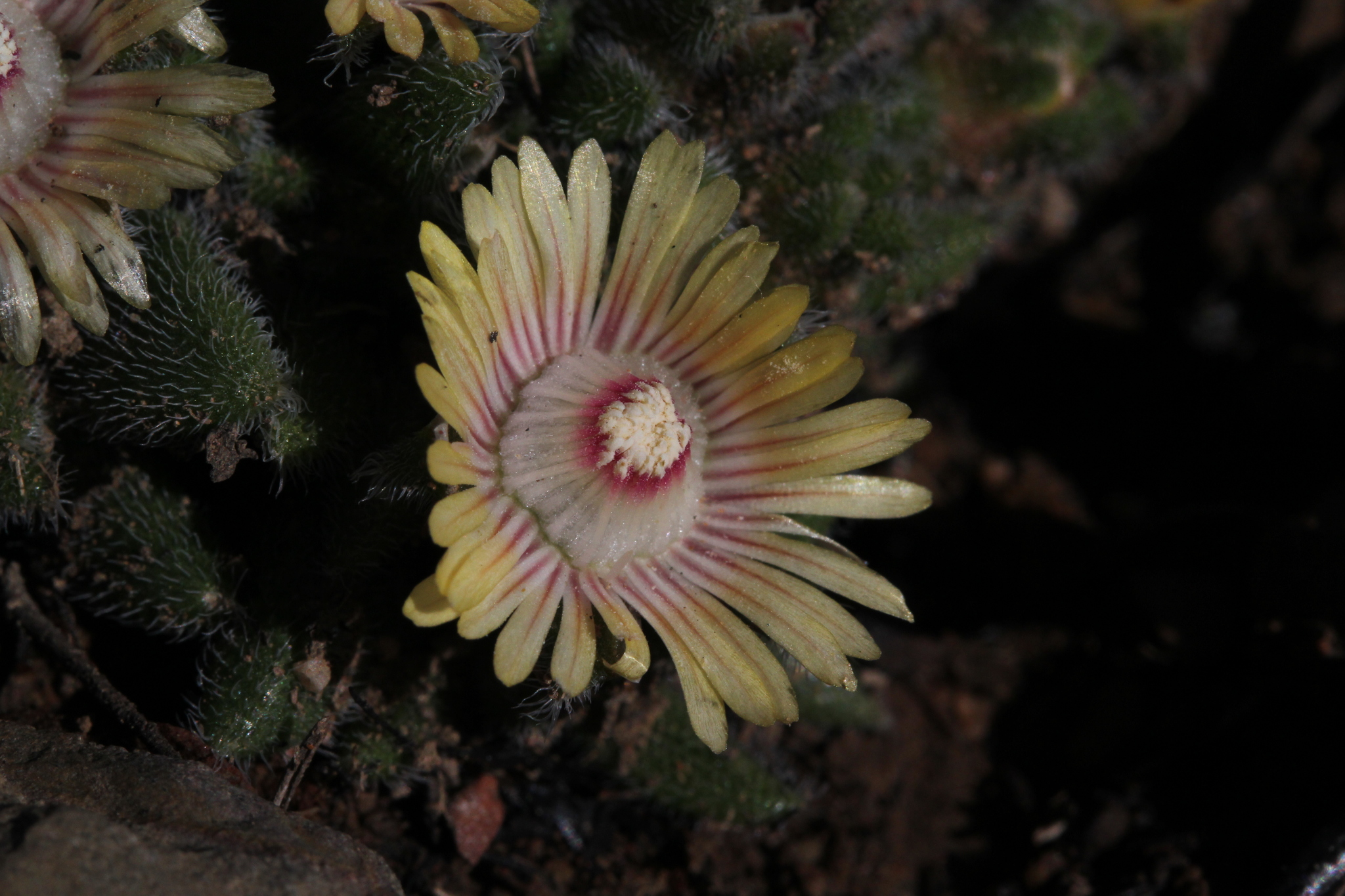
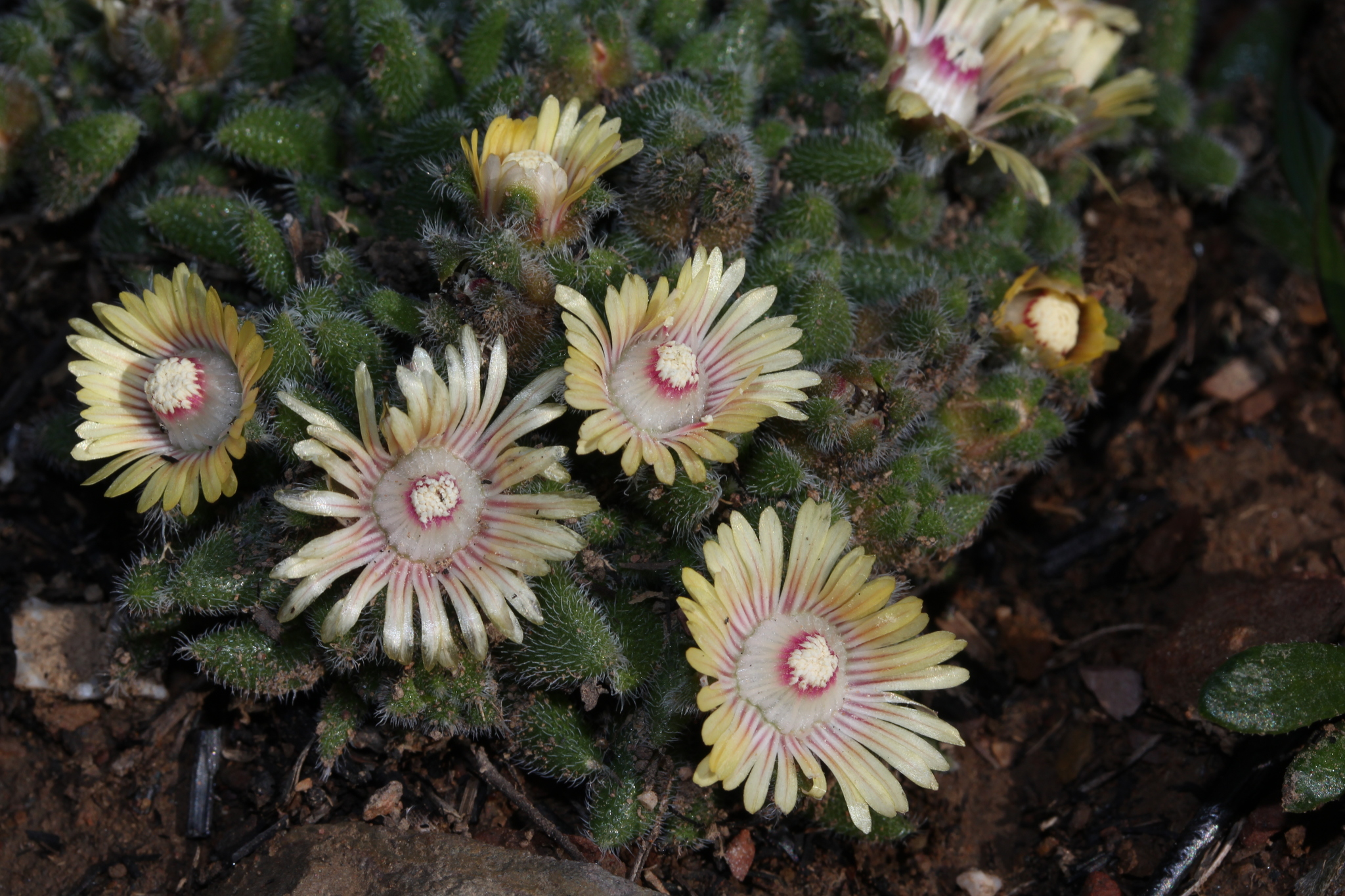
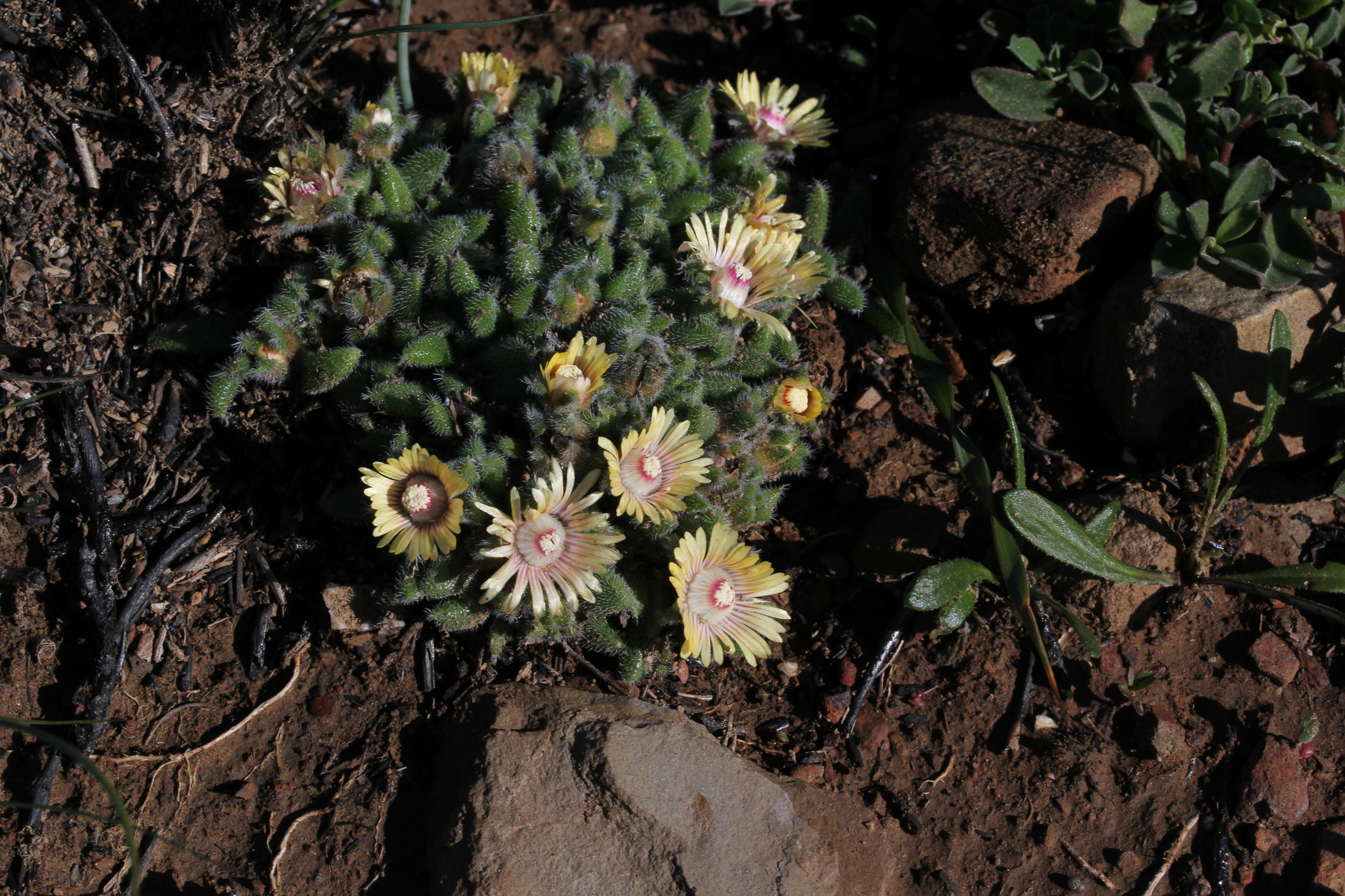
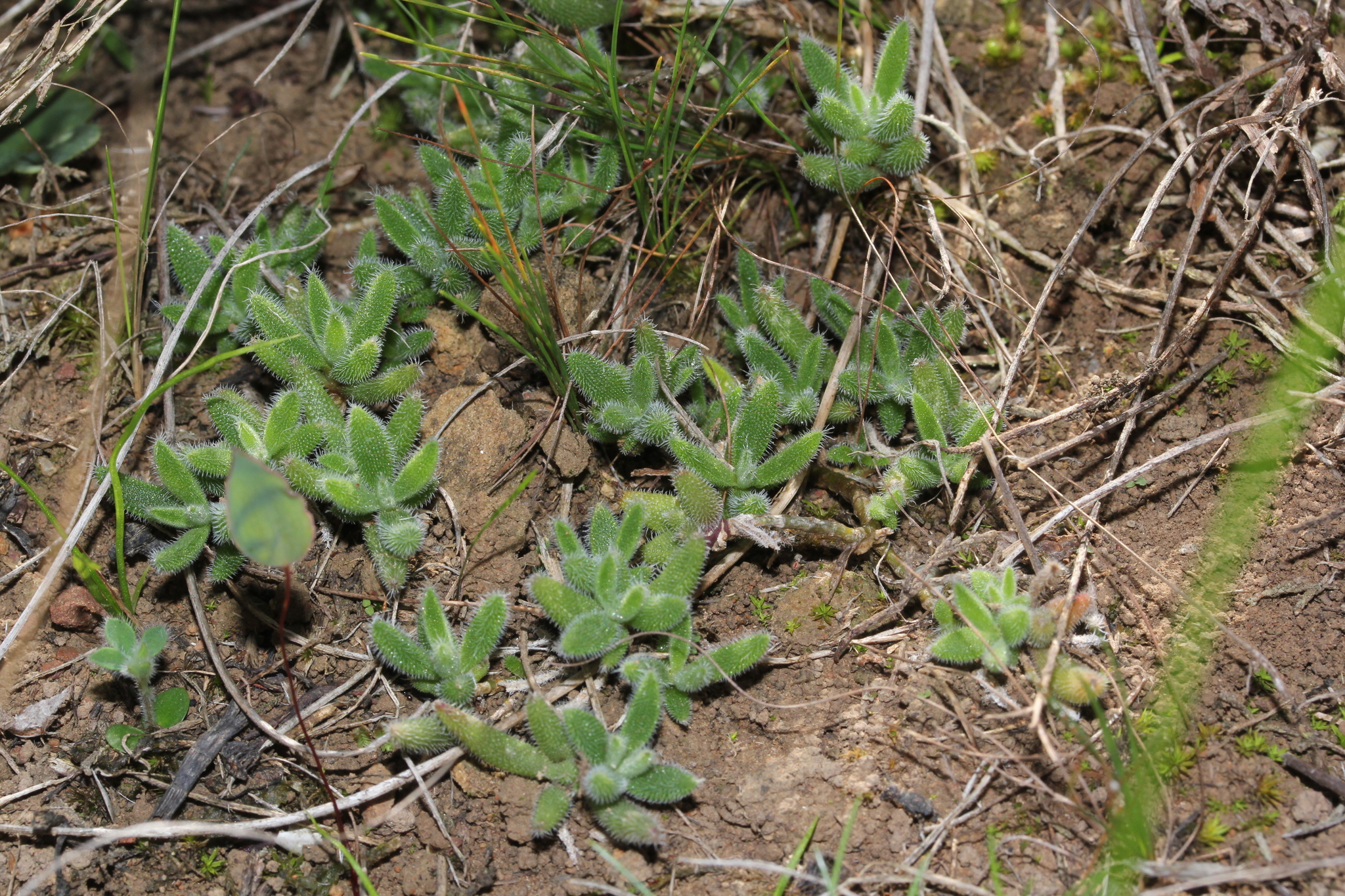
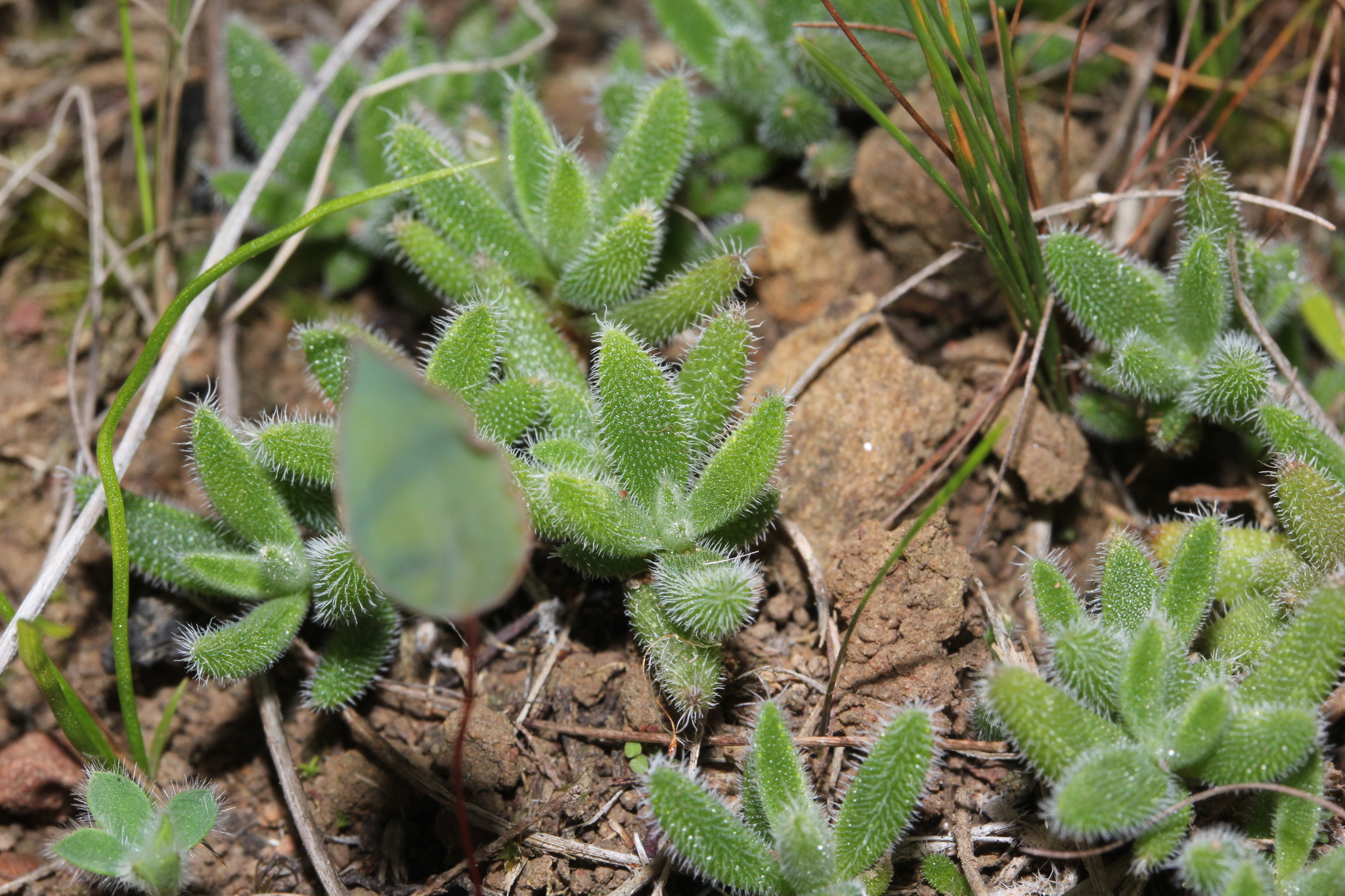
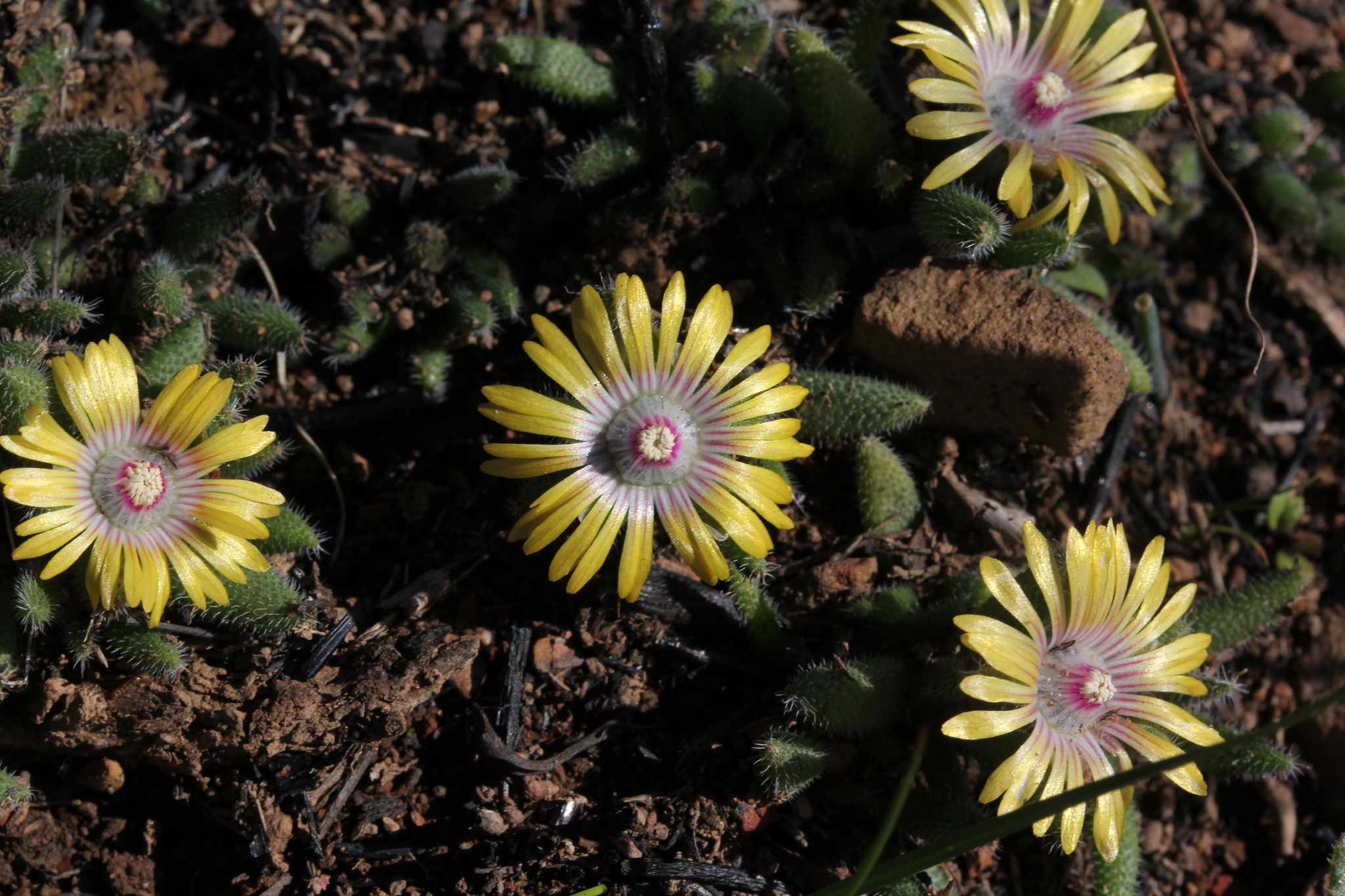
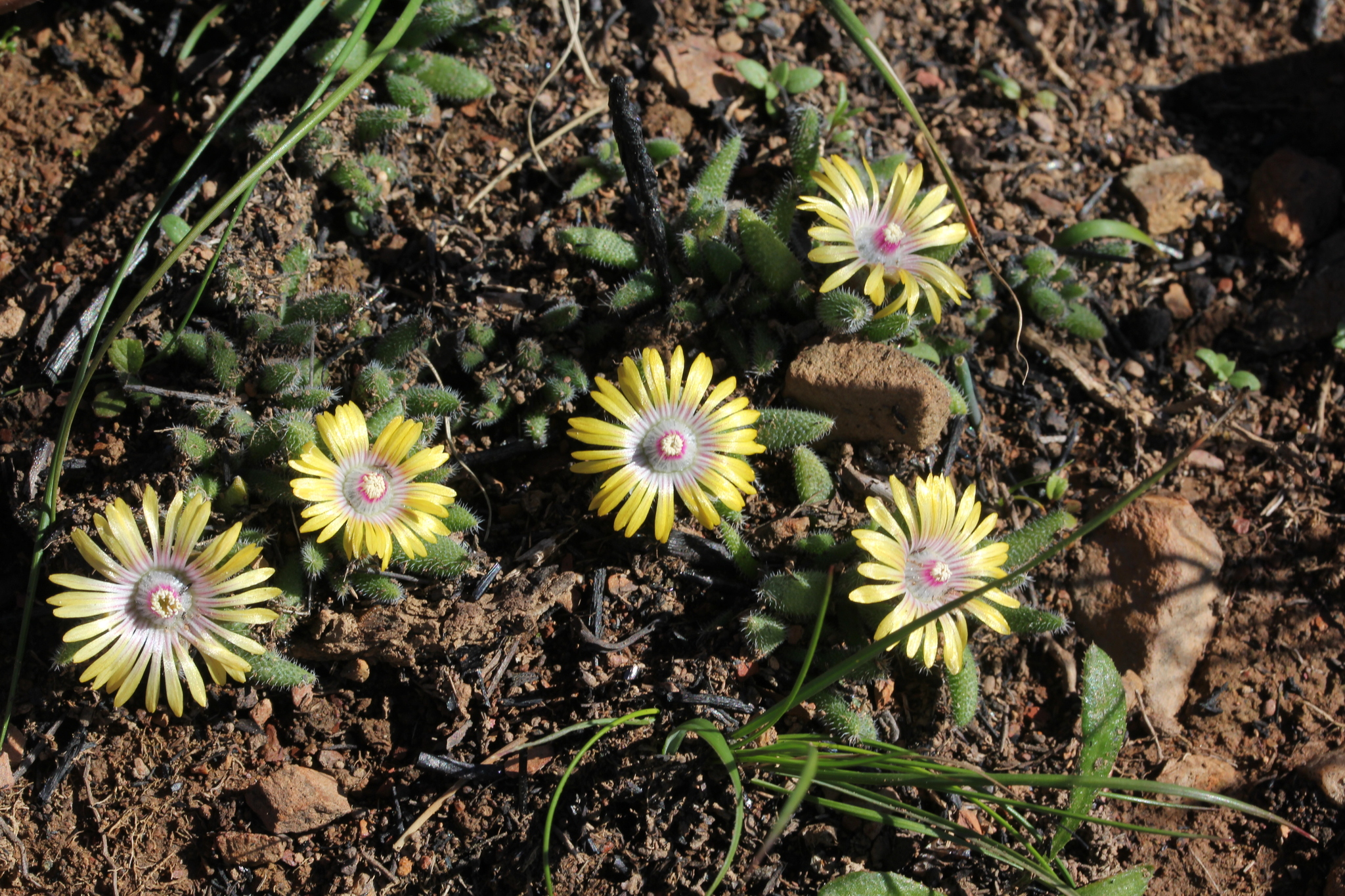
Leaves with apical hairs but no diadem of coloured, sclerotinized bristles. Compact shrublet to 3 cm, with fibrous roots. Leaves imbricate, with apical papillae, to 6 x 3 mm. Flowers subsessile, pink, to 20 mm diam., without filamentous staminodes. Fruits unknown. From: Klak, C. 2012. Aizoaceae: Trichodiadema Schwantes. In: J Manning & P Goldblatt (eds), Plants of the Greater Cape Floristic Region 1: The Core Cape flora. Strelitzia 29: 307-309. South African National Biodiversity Institute, Pretoria. [CC BY]
Uncertain. From: Klak, C. 2012. Aizoaceae: Trichodiadema Schwantes. In: J Manning & P Goldblatt (eds), Plants of the Greater Cape Floristic Region 1: The Core Cape flora. Strelitzia 29: 307-309. South African National Biodiversity Institute, Pretoria. [CC BY]
Swellendam. From: Klak, C. 2012. Aizoaceae: Trichodiadema Schwantes. In: J Manning & P Goldblatt (eds), Plants of the Greater Cape Floristic Region 1: The Core Cape flora. Strelitzia 29: 307-309. South African National Biodiversity Institute, Pretoria. [CC BY]
July
20 to 250 m
This map contains point-based occurrences at different locations
Occurrence in the Flora of Southern Africa (FSA) countries and South African provinces. Residence status indicates if a taxon is indigenous, endemic, naturalised or invasive in a specific region. This data is based on specimen records and literature
FSA
SA
BOT
NAM
ESW
LES
WC
EC
NC
FS
GA
KZN
LP
MP
NW
Absent
Indigenous
Endemic
Naturalised
Invasive

Names and Sources
Published in: J. S. African Bot. 32: 335 (1966)
Classification
KINGDOM Plantae
SUBKINGDOM Phanerogamae
PHYLUM Anthophyta
ORDER Caryophyllales
FAMILY Aizoaceae
SUBFAMILY Ruschioideae
TRIBE Ruschieae
GENUS Trichodiadema
SPECIES pygmaeum
17 results for Trichodiadema pygmaeum L.Bolus
Barcode: PRE0397525-0 Collector(s) & number: Muller, DB, 258 | 1968-3-30
South Africa, Free State, BLOEMFONTEIN; WINTERVALLEY; BOT GARDENS OF THE ORANGE FREE STATE
Data Resource: BODATSA View record
Barcode: PRE0398336-0 Collector(s) & number: Acocks, JPH, 2209 | 1937-3-13
South Africa, Northern Cape, PRIESKA DIV.; KRANSFONTEIN
Data Resource: BODATSA View record
Barcode: PRE0605595-0 Collector(s) & number: Burgers, CJ, 2375 | 1980-5-26
South Africa, Western Cape, INFANTA; TOP OF HILL OVERLOOKING SEA AT ST. SEBASTIAN POINT.(AT BEACON 133)
Data Resource: BODATSA View record
Barcode: PRE0397511-0 Collector(s) & number: Brynard, AM, 256 | 1953-6-25
South Africa, Western Cape, BREDASDORP DIST.; BONTEBOK NAT PARK
Data Resource: BODATSA View record
Barcode: PRE0588893-0 Collector(s) & number: Chesselet, P, 200 | 1994-12-27
South Africa, Western Cape, De Hoop. Between Tierkloof and Ouplaas.
Data Resource: BODATSA View record
Barcode: PRE0646887-0 Collector(s) & number: Burgers, CJ, 2375 | 1980-5-26
South Africa, Western Cape, INFANTA; TOP OF HILL OVERLOOKING SEA AT ST. SEBASTIAN POINT (AT BEACON 133)
Data Resource: BODATSA View record
Barcode: PRE0398327-0 Collector(s) & number: Burtt Davy, J, PRE 12679 | 1912-2-28
South Africa, Western Cape, BETWEEN KLAARSTROOM AND TRAKA RIVER ABOUT 27 MI W OF WILLOWMORE
Data Resource: BODATSA View record
Barcode: PRE0398337-0 Collector(s) & number: Bryant, EG, 185 | 1921-2-20
South Africa, Northern Cape, PRIESKA; PRIESKA COMMONAGE
Data Resource: BODATSA View record
This map contains point-based occurrences at different locations
2012
SERIES CHAPTER
Aizoaceae: Trichodiadema Schwantes Klak, CIn: J Manning & P Goldblatt (eds), Plants of the Greater Cape Floristic Region 1: The Core Cape flora. Strelitzia 29: 307-309
South African National Biodiversity Institute, Pretoria
2001
BOOK
Illustrated handbook of succulent plants: Aizoaceae F-Z Hartmann, HEKONo results found for Trichodiadema pygmaeum L.Bolus
Status and criteria
EN
Assessment date
2016-05-30
Assessor(s)
Plantae Coordinator
Range
This species is endemic to the central Karoo region of South Africa. It is associated with the dense, discontinuous vegetation fringing the seasonal rivers. It is the only indigenous burrowing rabbit in Africa, and is dependent on soft and deep alluvial soils along the river courses for constructing stable breeding stops. Approximately 40-60% of habitat was lost or fragmented during the 1930s to 1970s due to agricultural expansion on the seasonal river flood plains across its distribution range (Robinson 1981b, Duthie <em>et al</em>. 1989, Duthie and Robinson 1990). Historically, this species was known to occur in five localities towards the northwestern portion of its range, along the Vis and Renoster Rivers, as well as their tributaries near Calvinia (Duthie 1989). The lack of sightings data during the last 30 years, suggests that <em>Bunolagus monticularis</em> is now locally extinct in these regions (Collins and Toit 2016). This is likely to be a direct consequence of the extensive agricultural expansion along riverine floodplains (Duthie <em>et al</em>. 1989).<br/><br/>A large number of surveys from 1999-2013 throughout the distribution range has improved our estimates of location and sizes of the various subpopulations, and identified a new southern population in 2004, which now consists of three known subpopulations. The southern population is distributed within three catchments: the Breede, Gouritz and Olifant River systems.<br/><br/>Subpopulations are defined as being made up groups of confirmed sightings along first-, second- or third-order rivers that are within a maximum of 10 km of each other. If the groups of sightings are more than 10 km from each other they are not taken as being from the same subpopulation. Due to limited information about dispersal ability of this species and the fact that known densities where home range studies were carried out showed approximately one Riverine Rabbit for every 400 m of river length, 10 km between confirmed sightings was estimated as a reasonable distance to separate subpopulations. A minimum of six sightings was taken to represent a subpopulation (potentially representing up to three breeding pairs). Where less than six sightings occurred in isolation from survey data, these were assumed to be part of the nearest subpopulation based on connectivity along the rivers.<br/><br/>The approximate ranges of both the northern and southern populations was calculated using Kernel Density home range estimation (buffered by 5 km) and combined to give a total extent of occurrence (EOO), estimated as 54,227 km². To calculate area of occupancy (AOO), all rivers inside the EOO were buffered by 1 km on either side. Similarly, all sightings points were buffered by a 1 km radius and were used to clip the river buffer providing a total estimate of AOO. A buffer of 1 km was chosen as most of the larger patches of riverine vegetation do not occur more than 1 km from rivers, and by buffering all rivers by 1 km, all known sightings were located within these buffered areas. AOO was thus calculated as 2,943 km². <em></em>
Major system
Major habitats
Population trend
JOURNAL ARTICLE
Samways, M.J. 2002. A strategy for national red listing invertebrates based on experiences with Odonata in South Africa. African Entomology. 10:43-52
JOURNAL ARTICLE
Samways, M.J. 2007. Honing Red List assessments of lesser known taxa in biodiversity hotspots. Biodiversity and Conservation. 16:2575-2586
JOURNAL ARTICLE
Samways, M.J. 2004. Critical species of Odonata in southern Africa. International Journal of Odonatology. 7:255-262
ELECTRONIC SOURCE
IUCN 2010. IUCN Red List of Threatened Species (ver. 2010.3)
JOURNAL ARTICLE
Samways, M.J. 2006. National Red List of South African Odonata. Odonatologica. 35:341-368
JOURNAL ARTICLE
Samways, M.J. 1999. Diversity and conservation status of South African dragonflies (Odonata). Odonatologica. 28:13-62
BOOK
Tarboton, W. and Tarboton, M. 2005. A fieldguide to the damselflies of South Africa. Privately published by the authors
JOURNAL ARTICLE
Samways, M.J. 2002. A strategy for national red listing invertebrates based on experiences with Odonata in South Africa. African Entomology. 10:43-52
| Part(s) of plant used | Use(s) | Reference |
|---|
Coming soon...