
PLANTAE / PHANEROGAMAE / ANTHOPHYTA / LAMIALES / LAMIACEAE / LAMIOIDEAE / STACHYDEAE / STACHYS / THUNBERGII

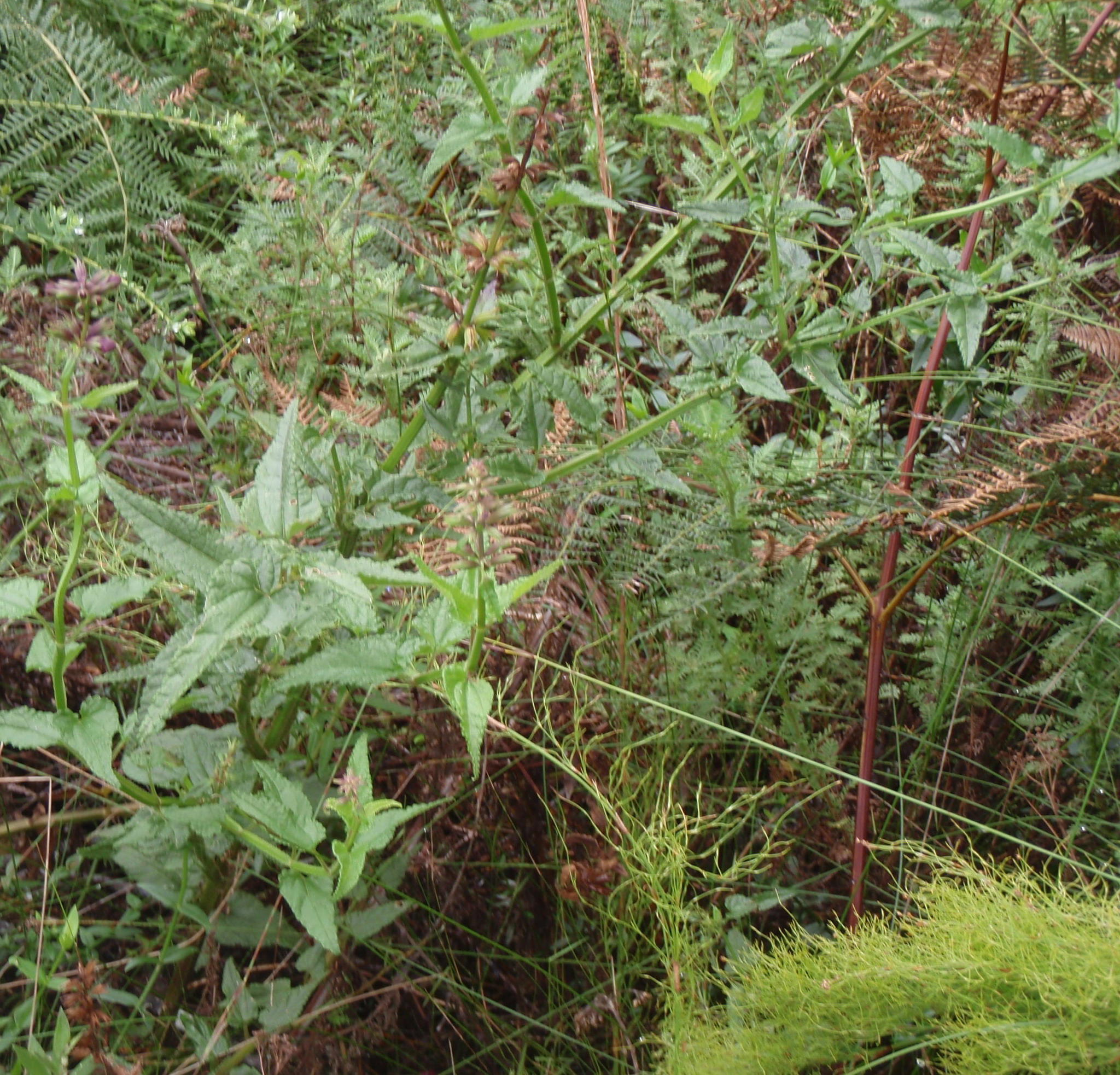
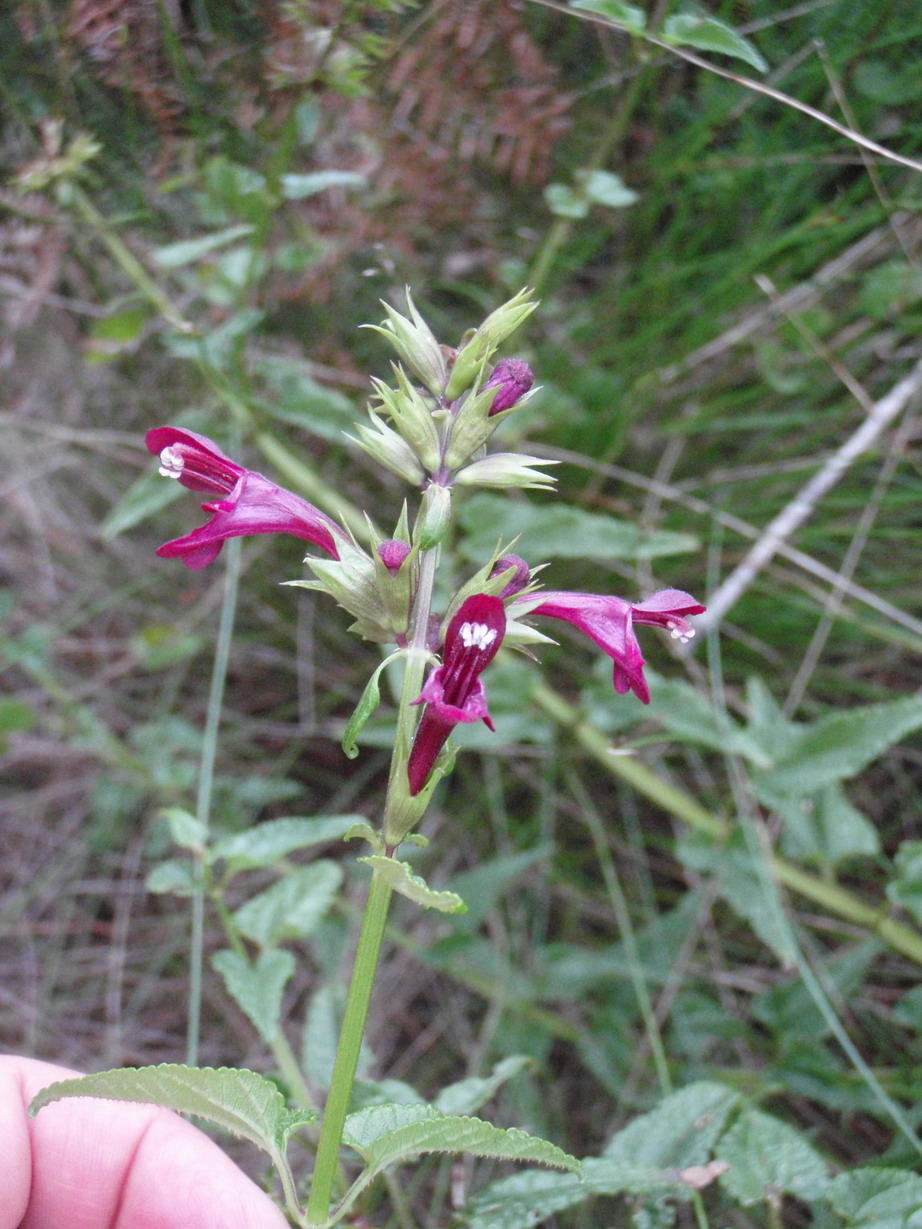
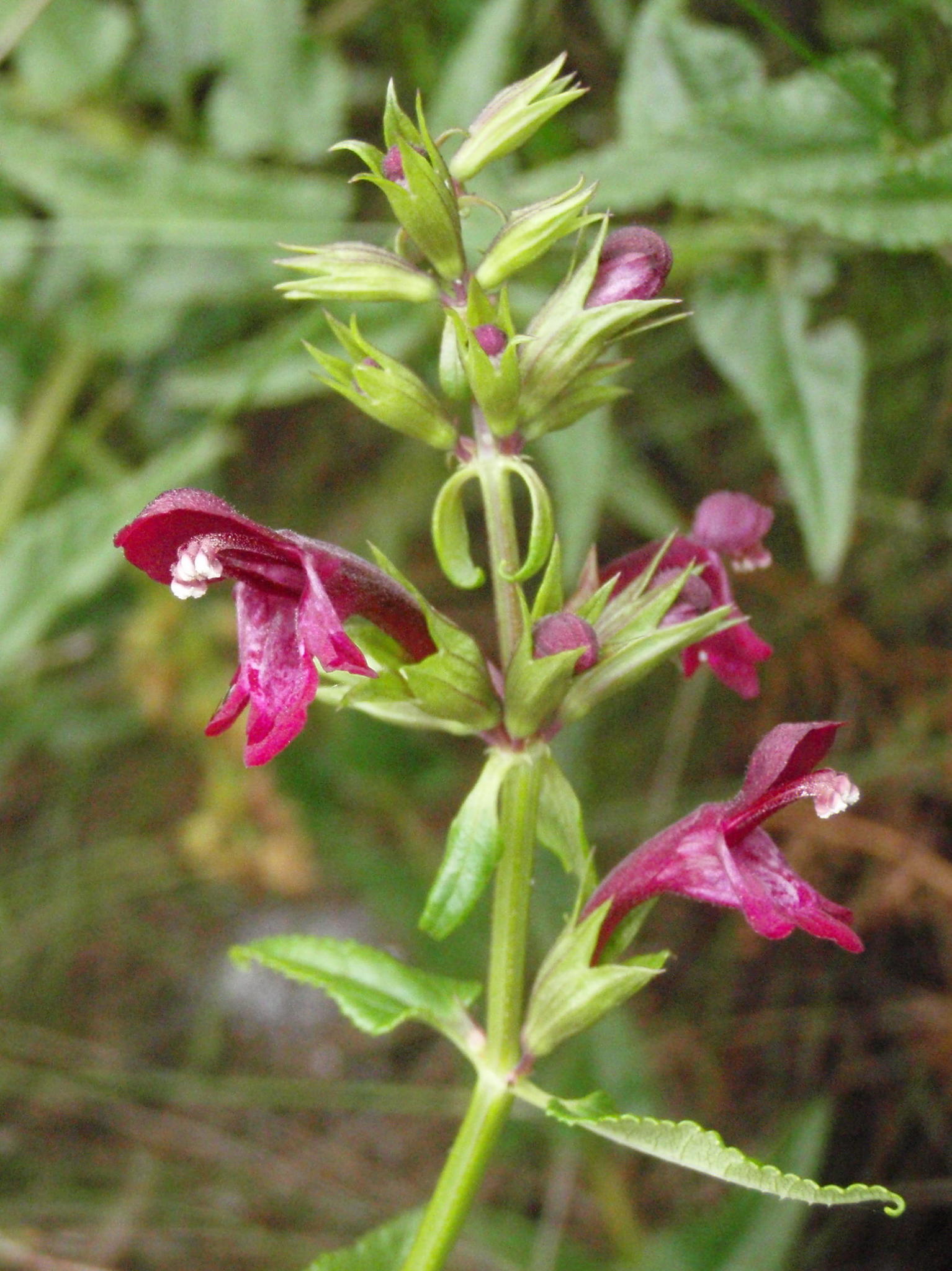
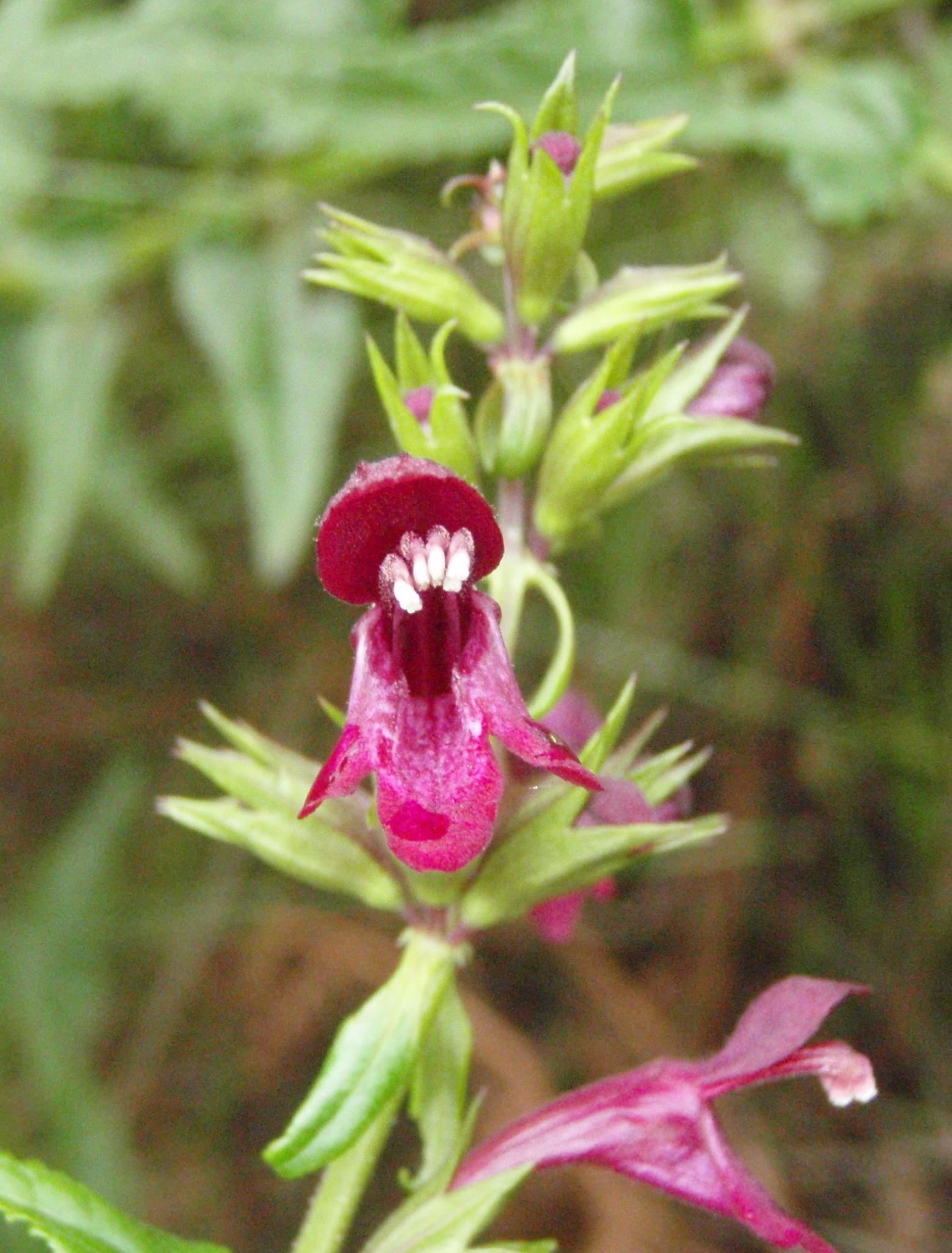
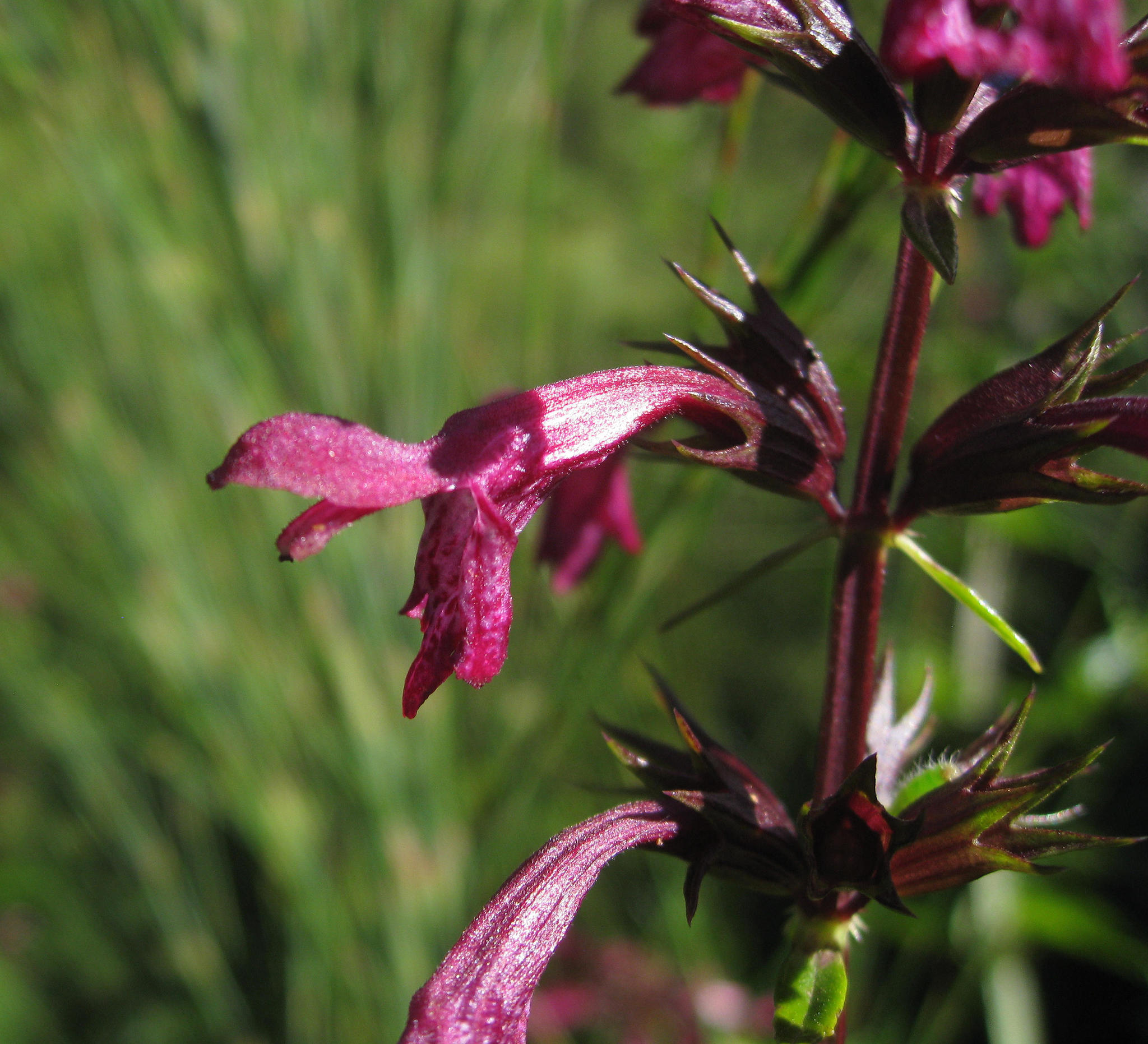
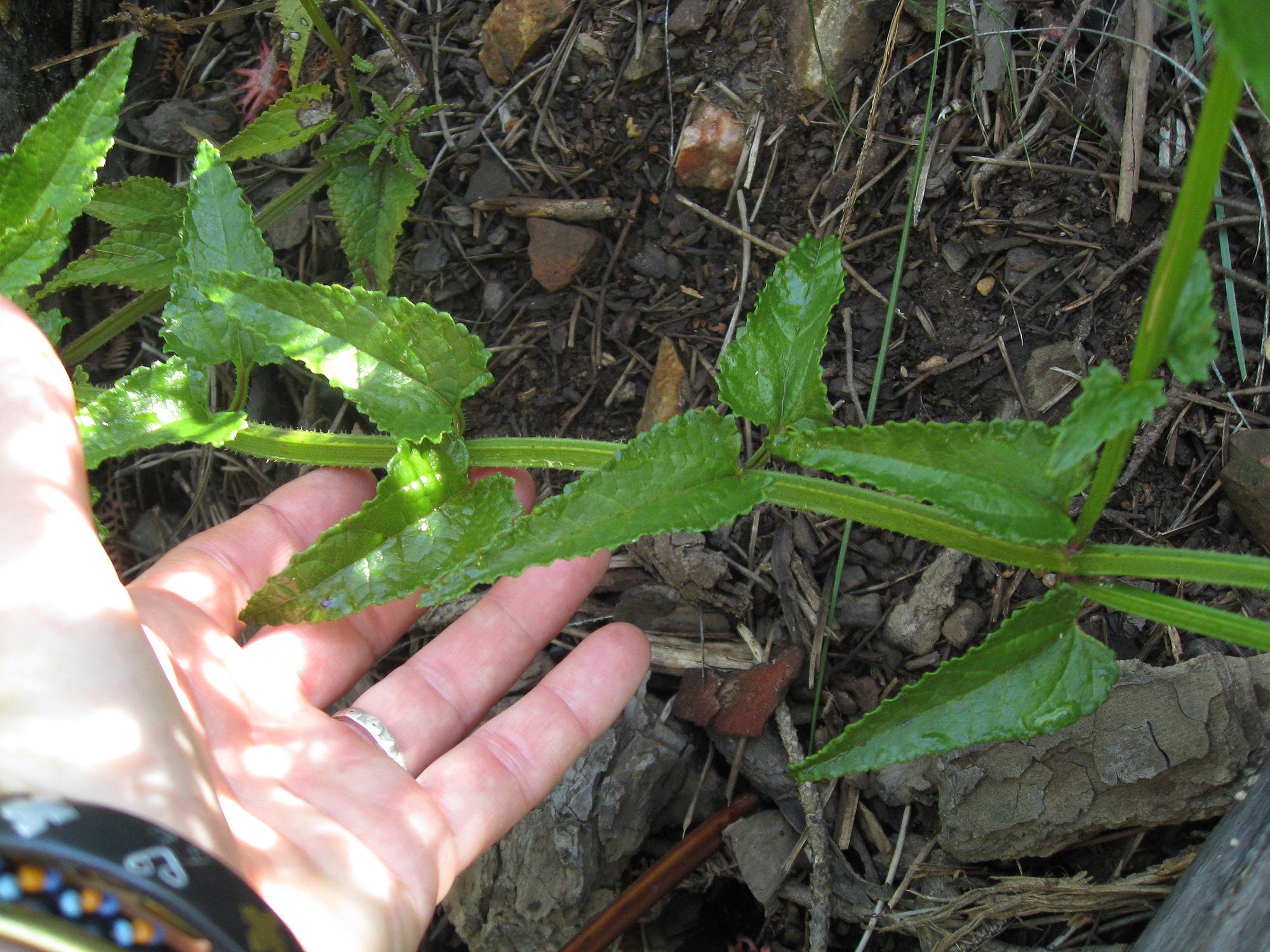
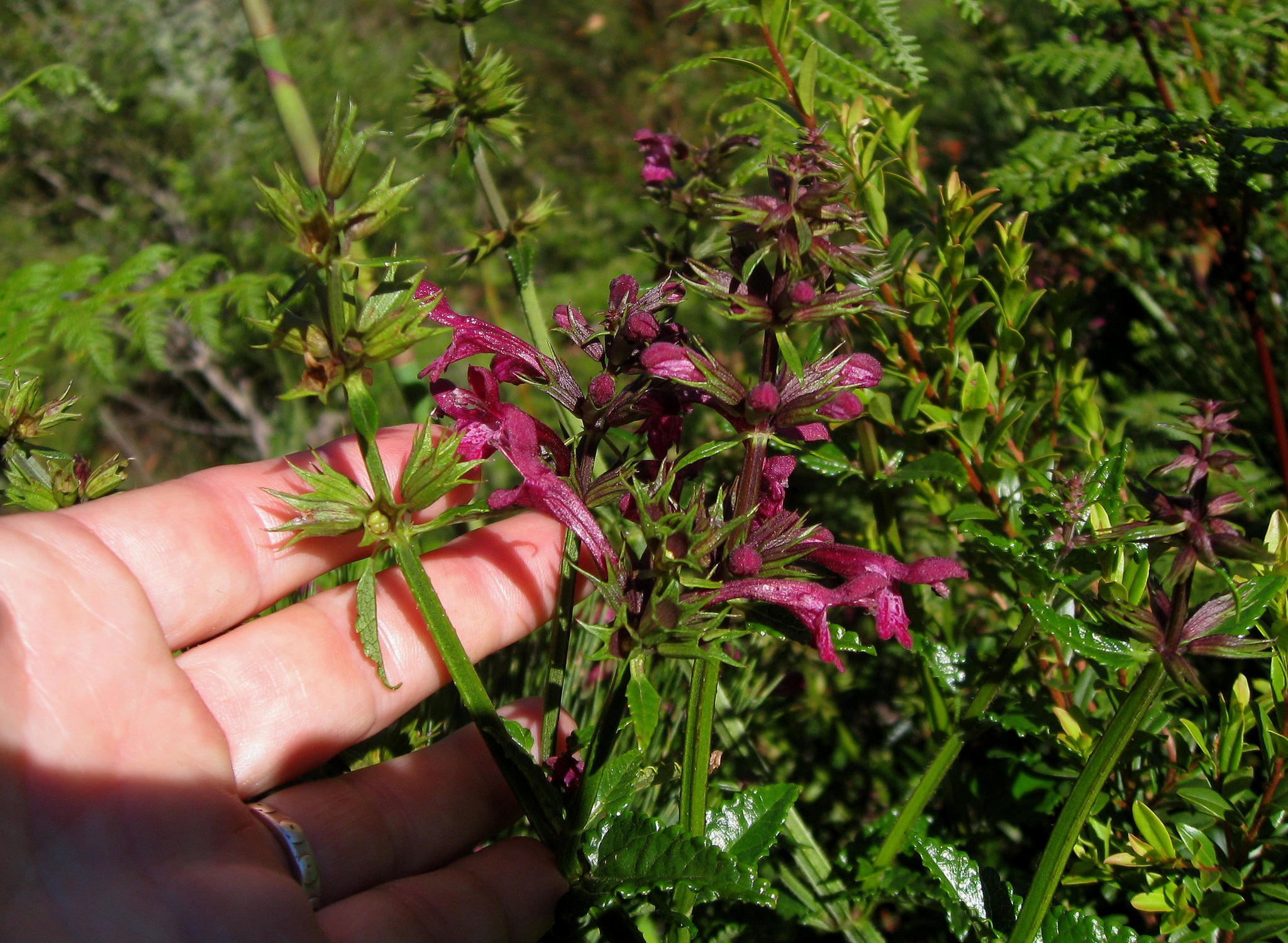
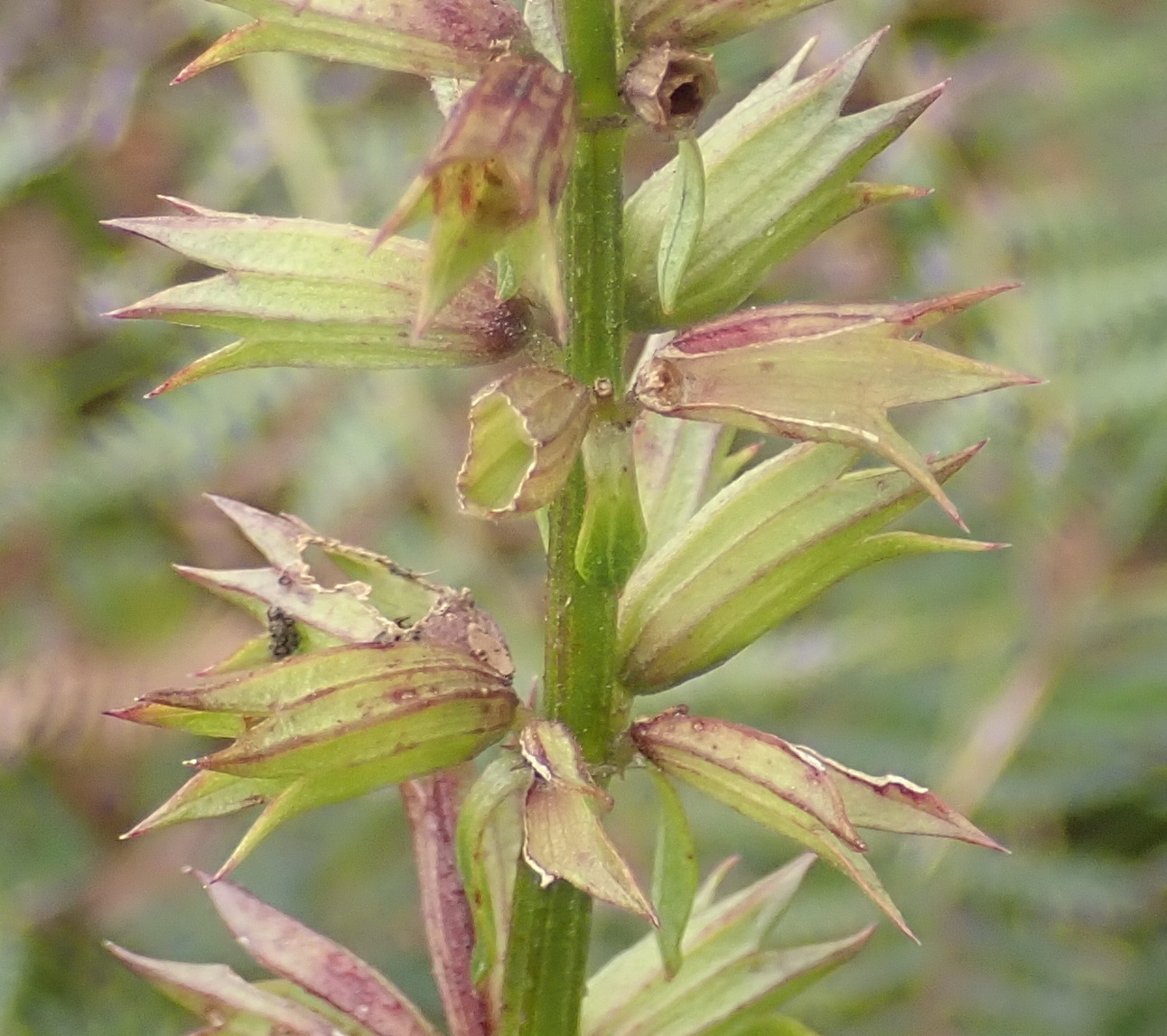
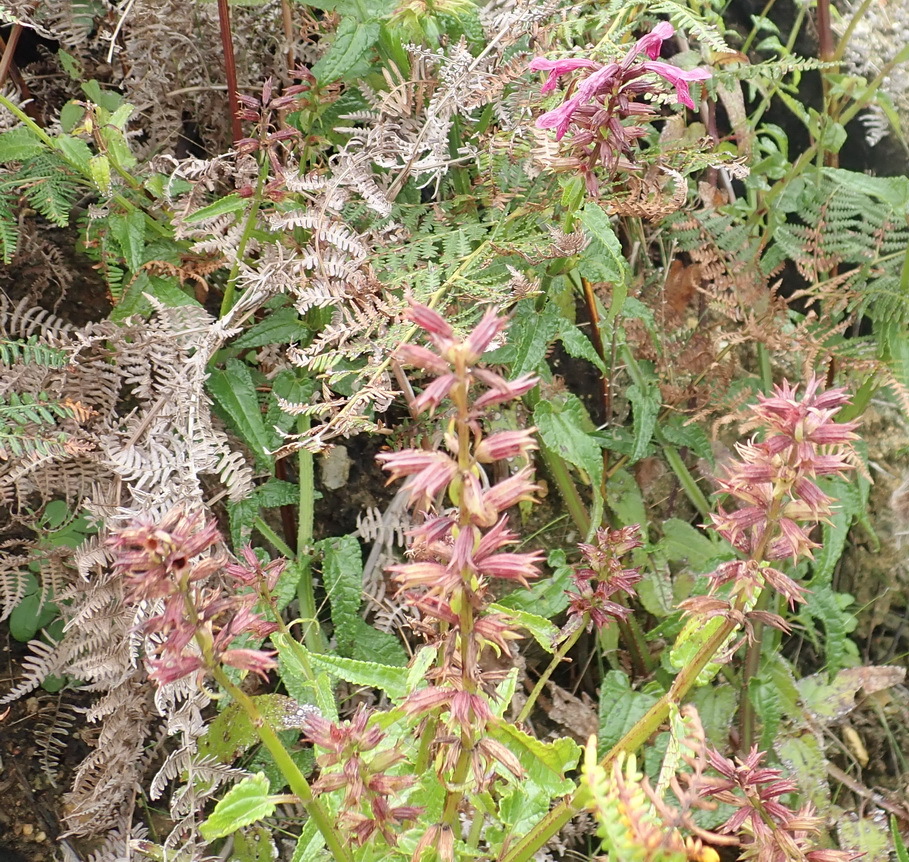
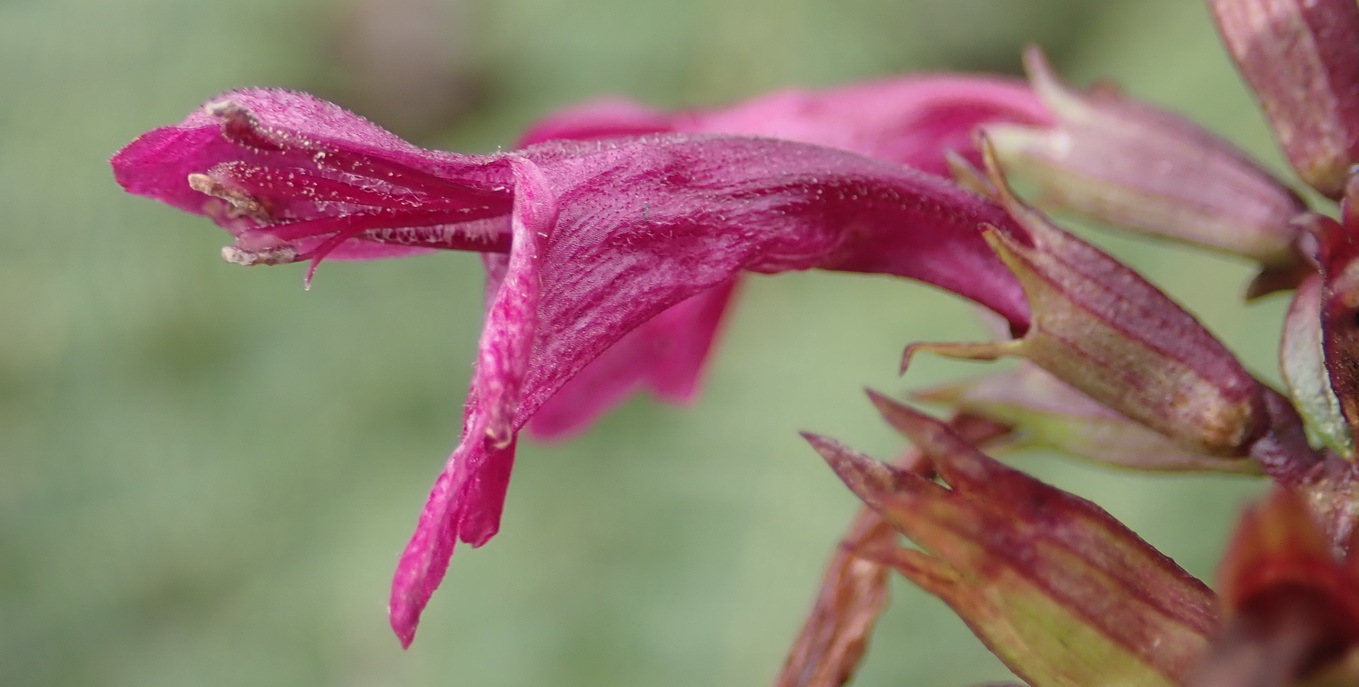
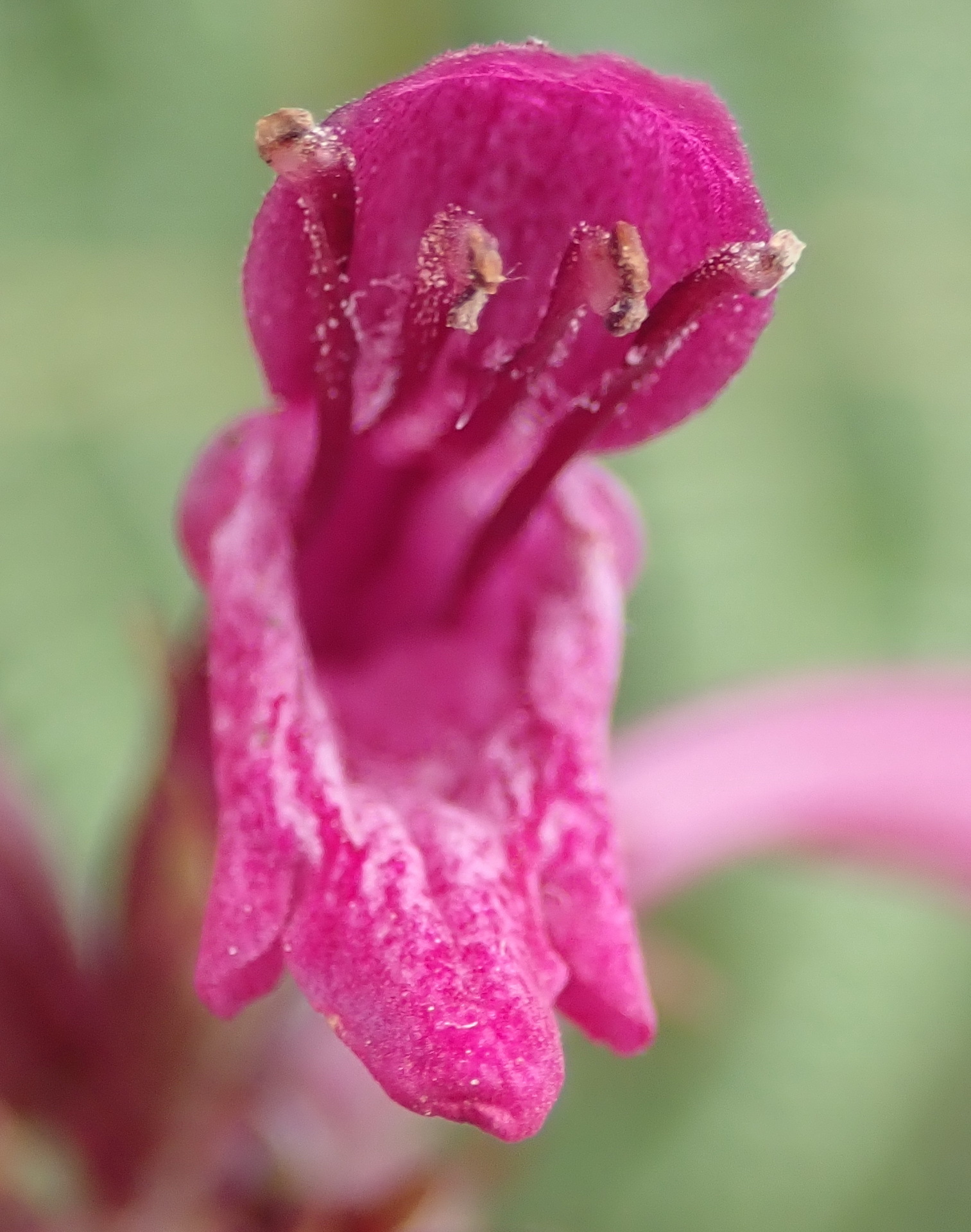
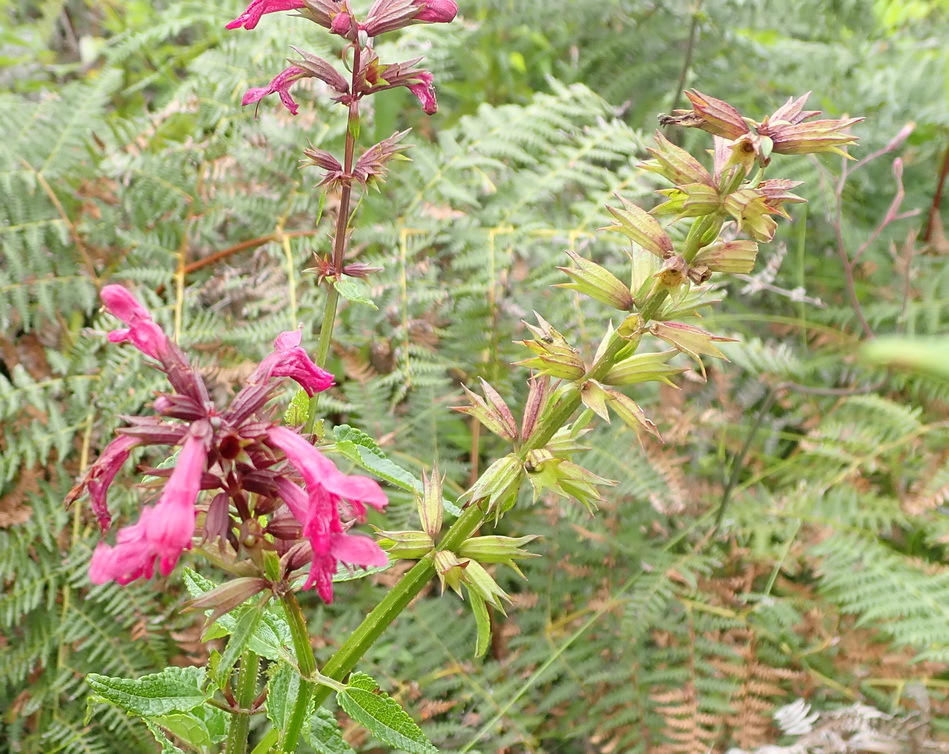
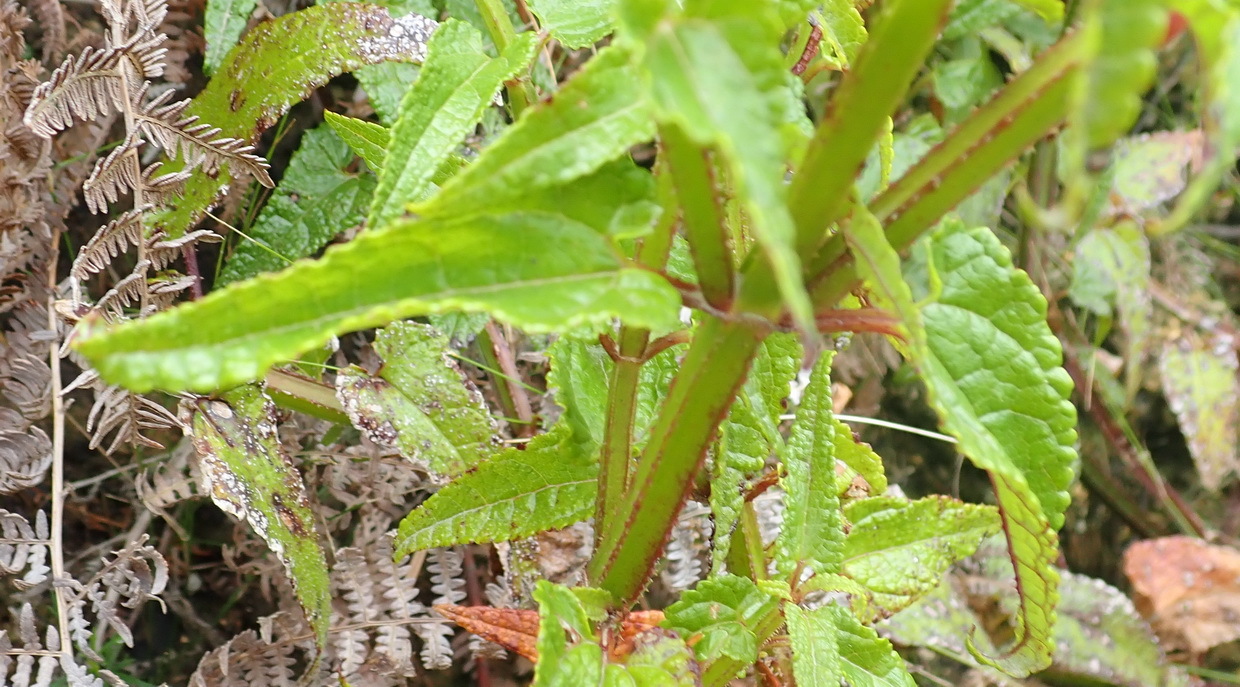
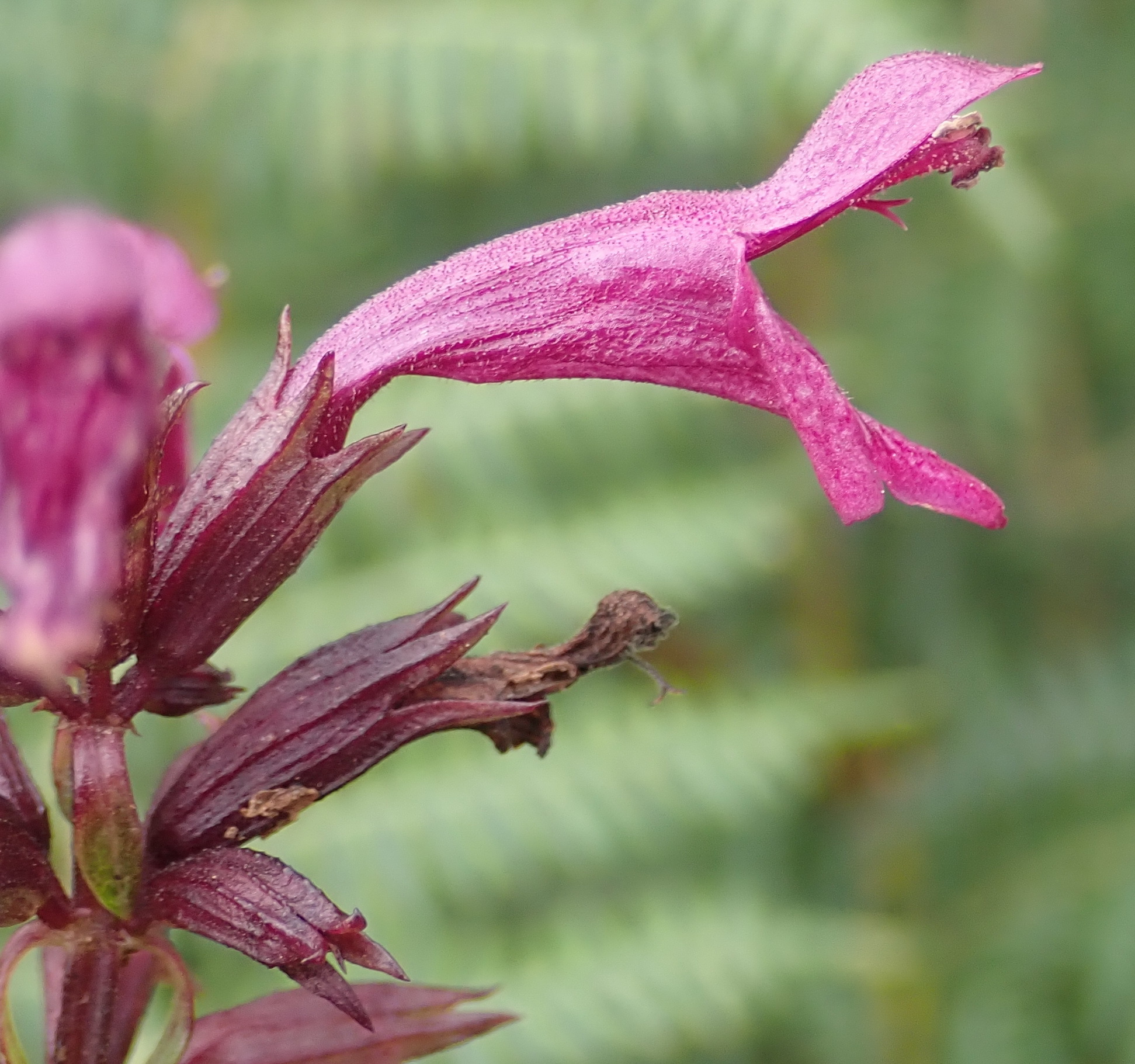
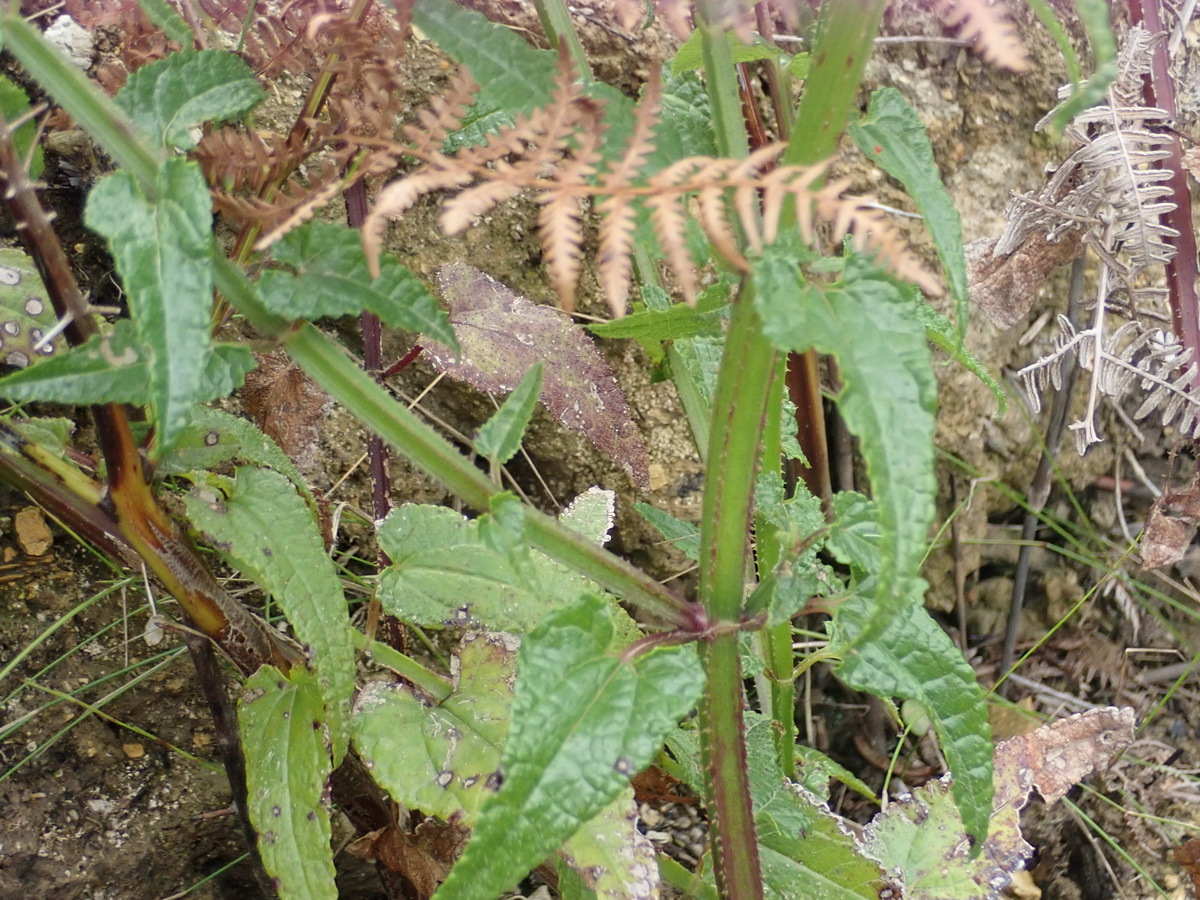
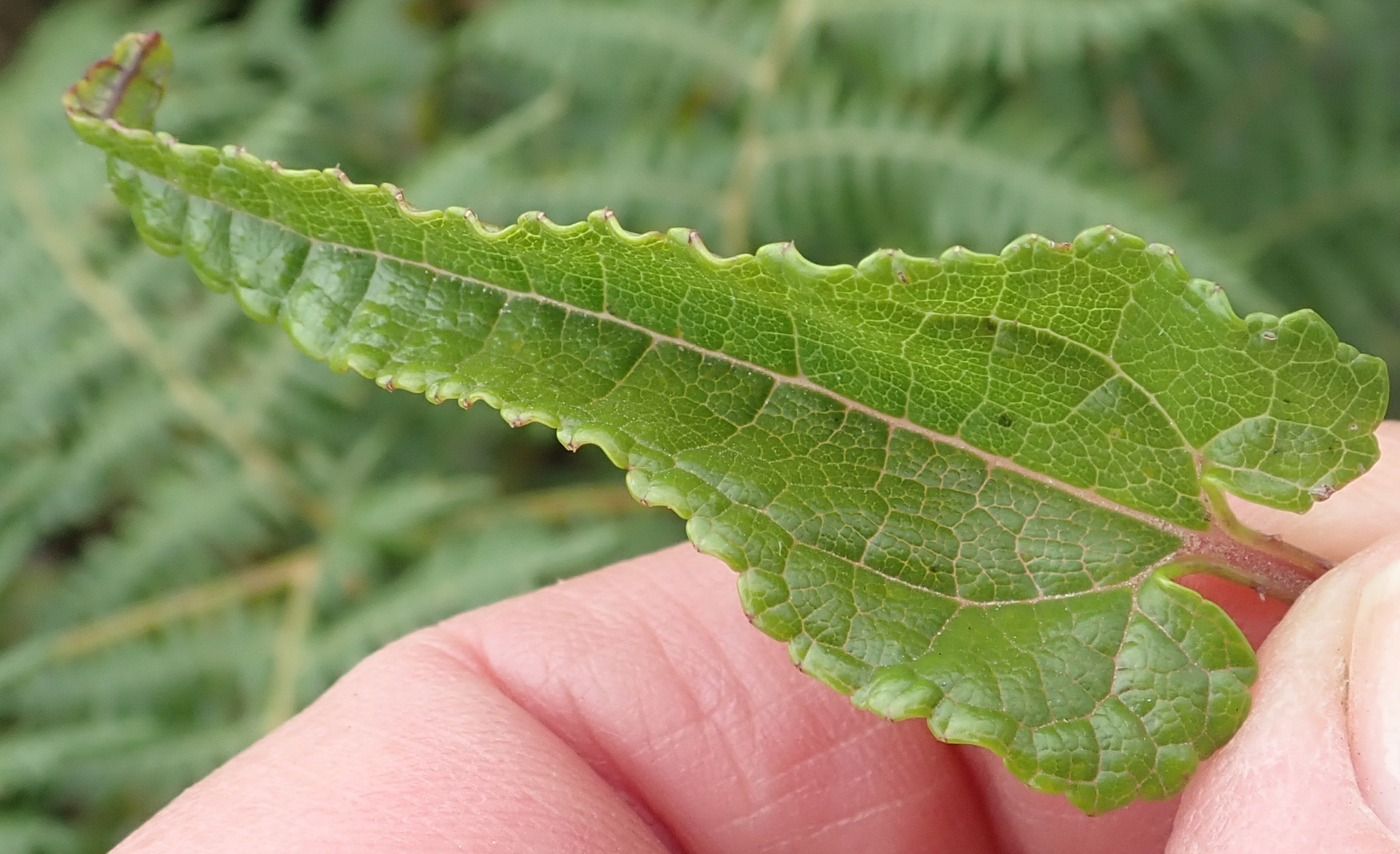
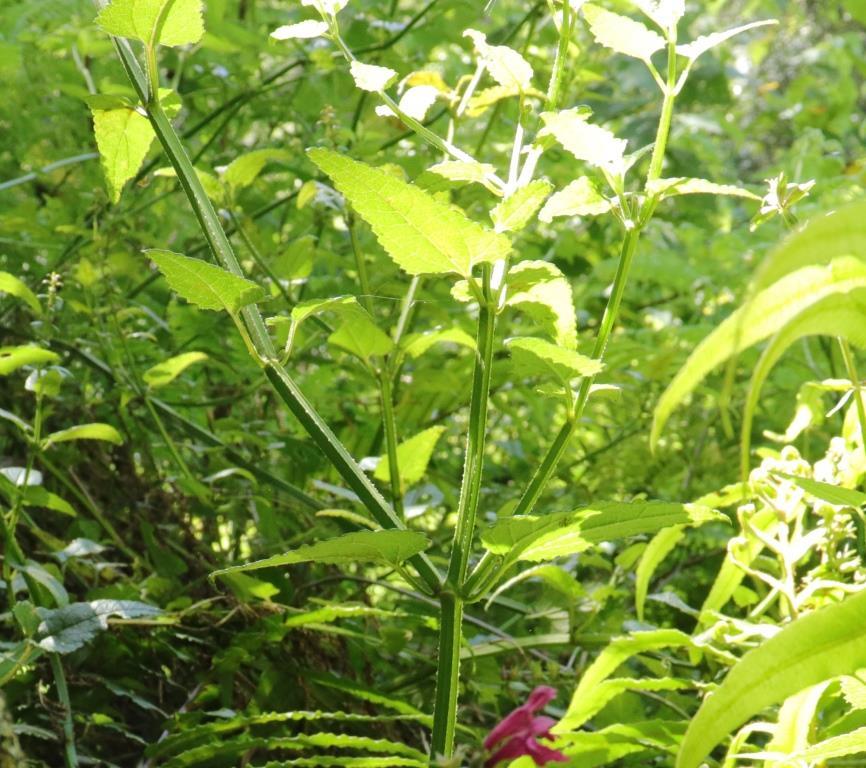
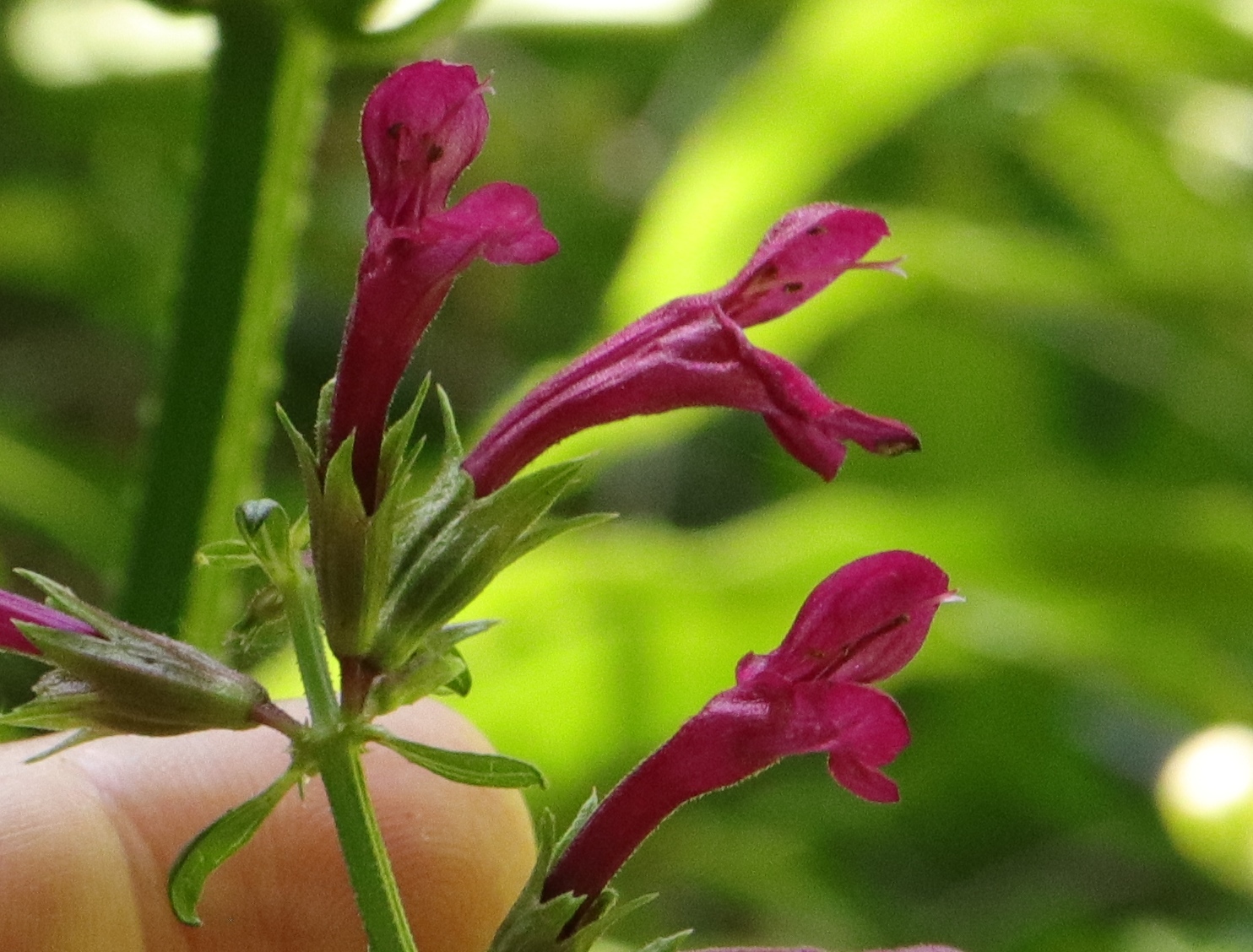
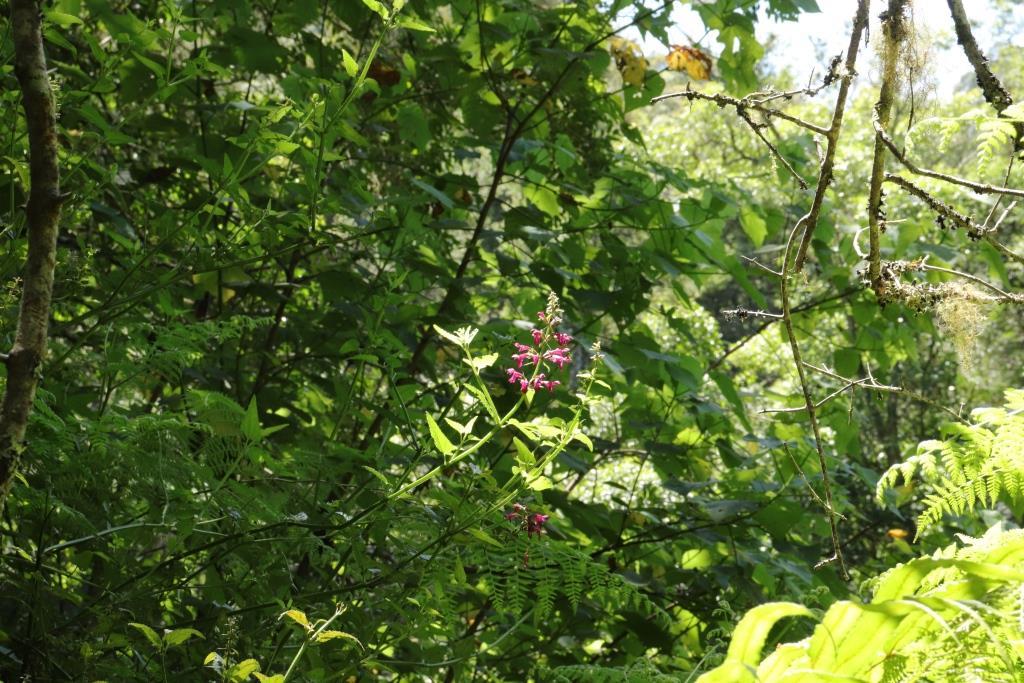
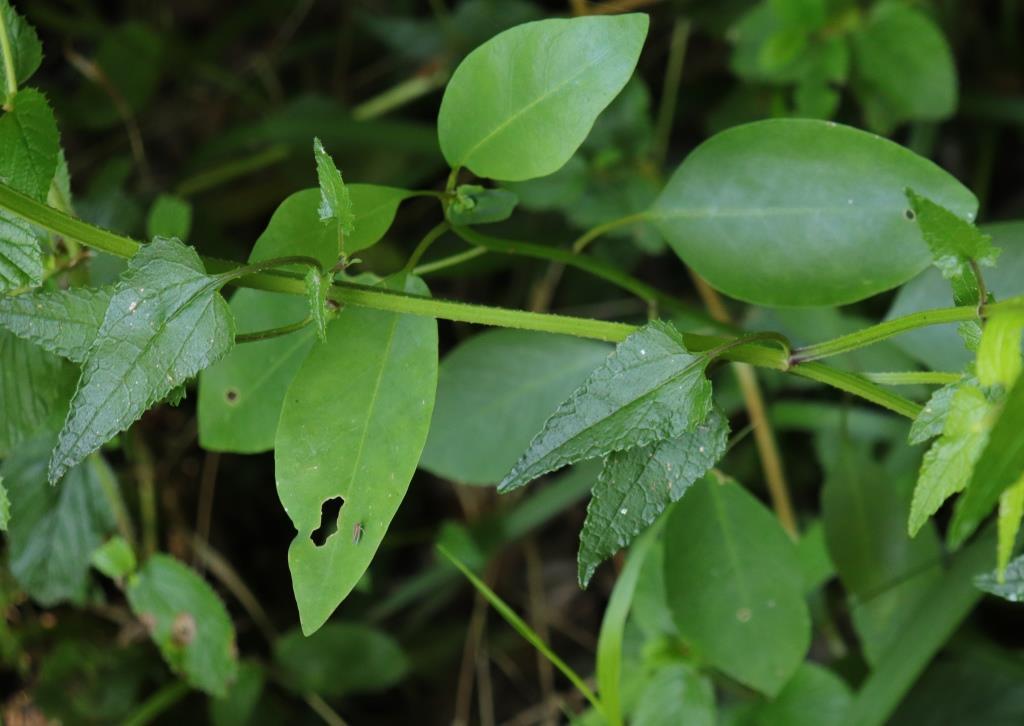
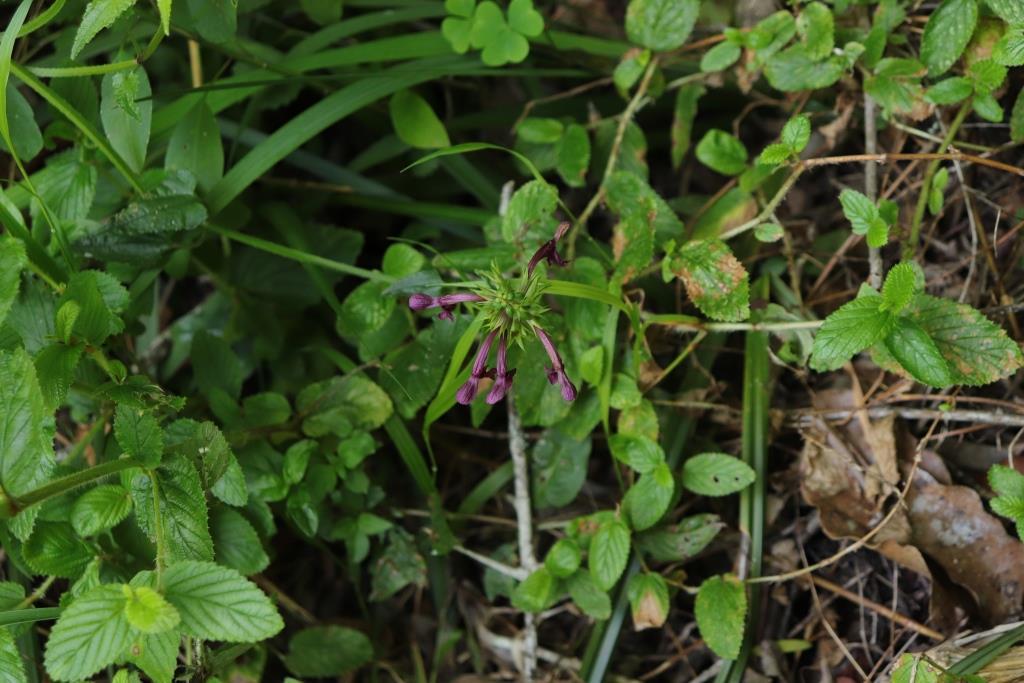
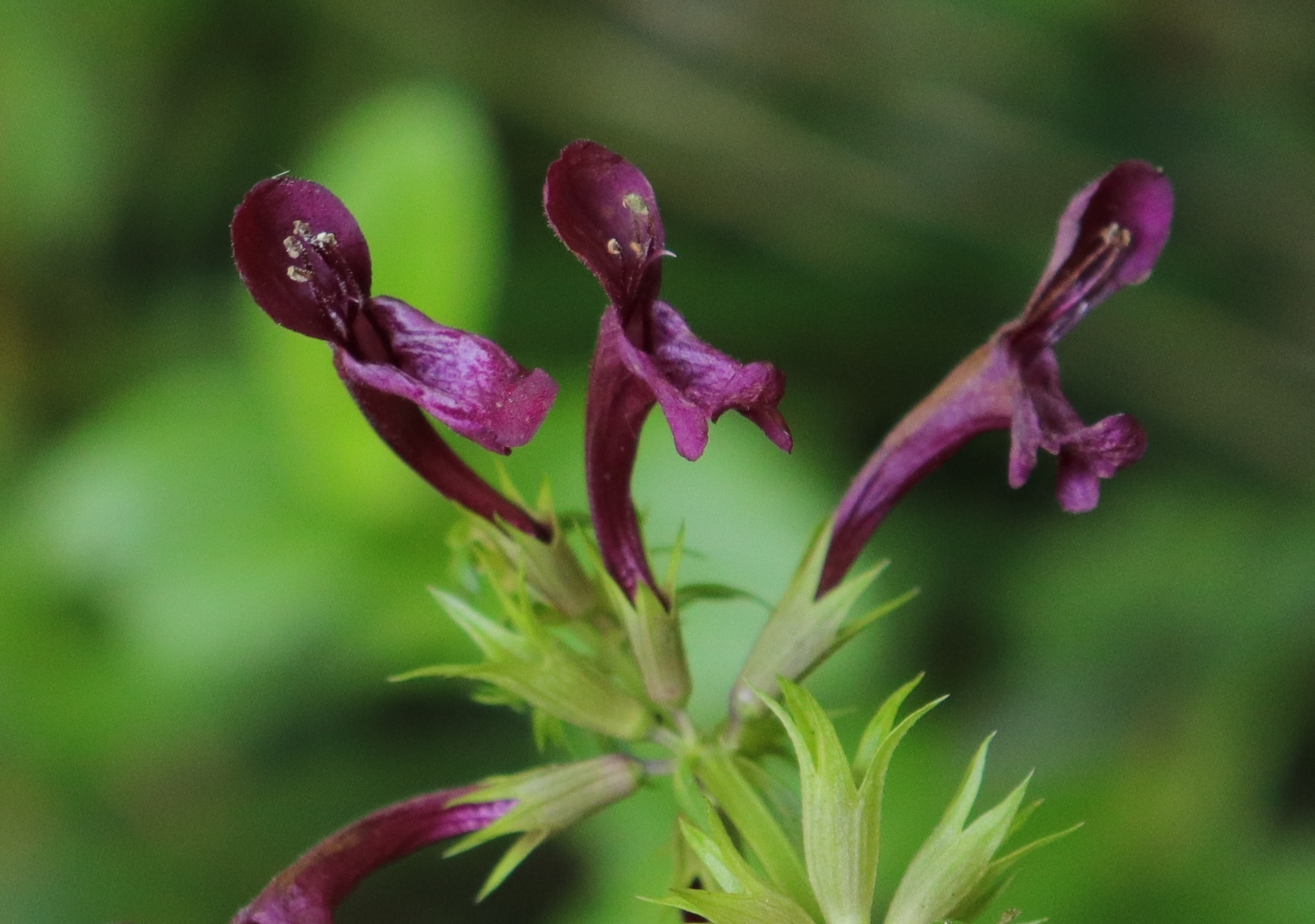
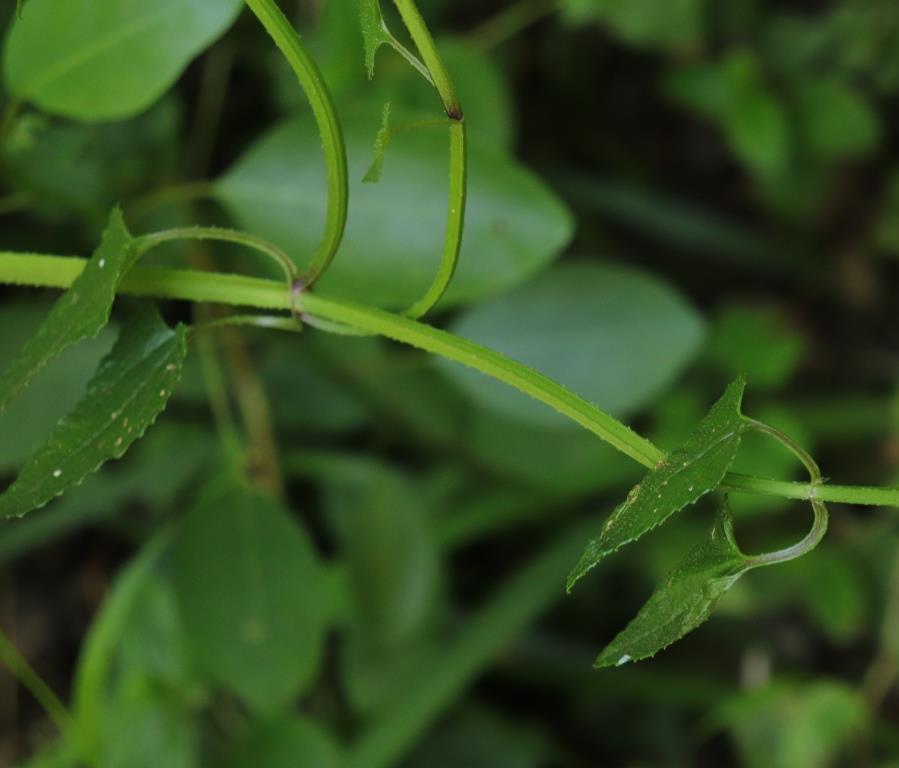
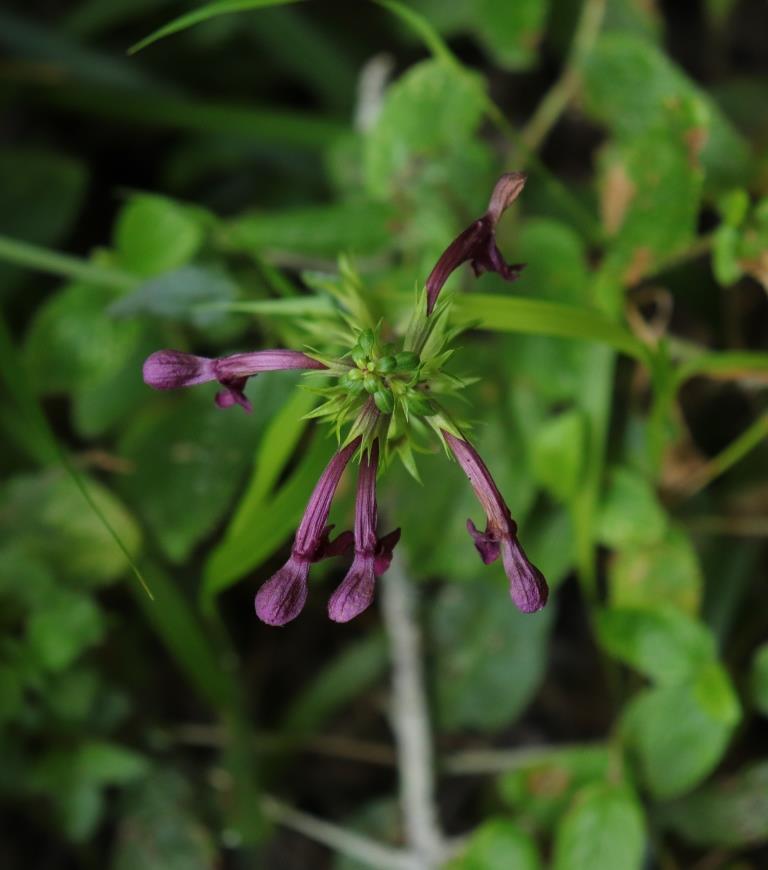
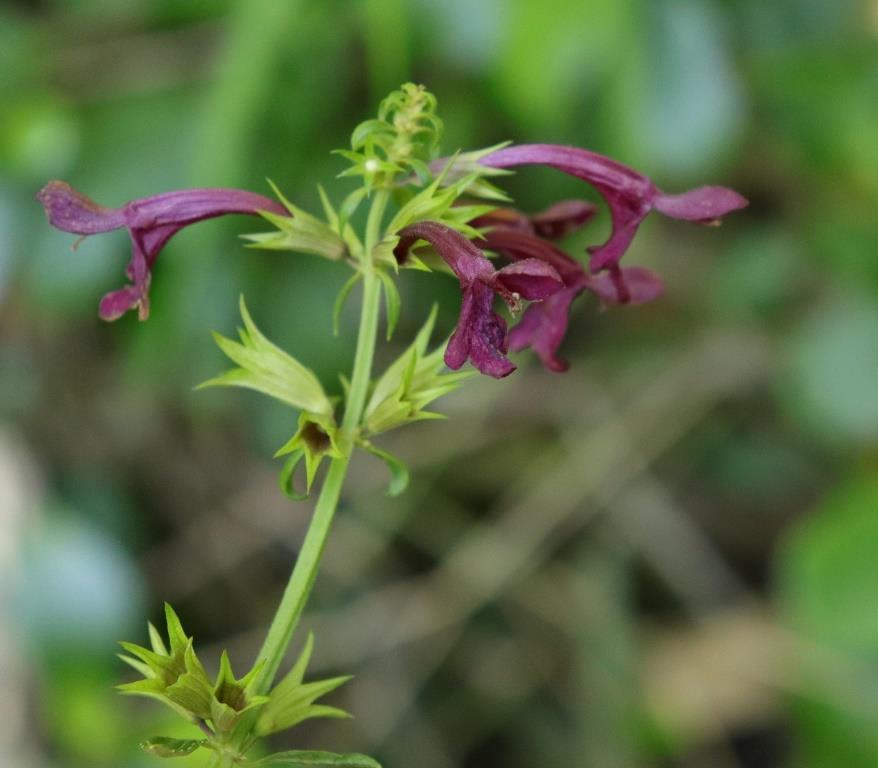
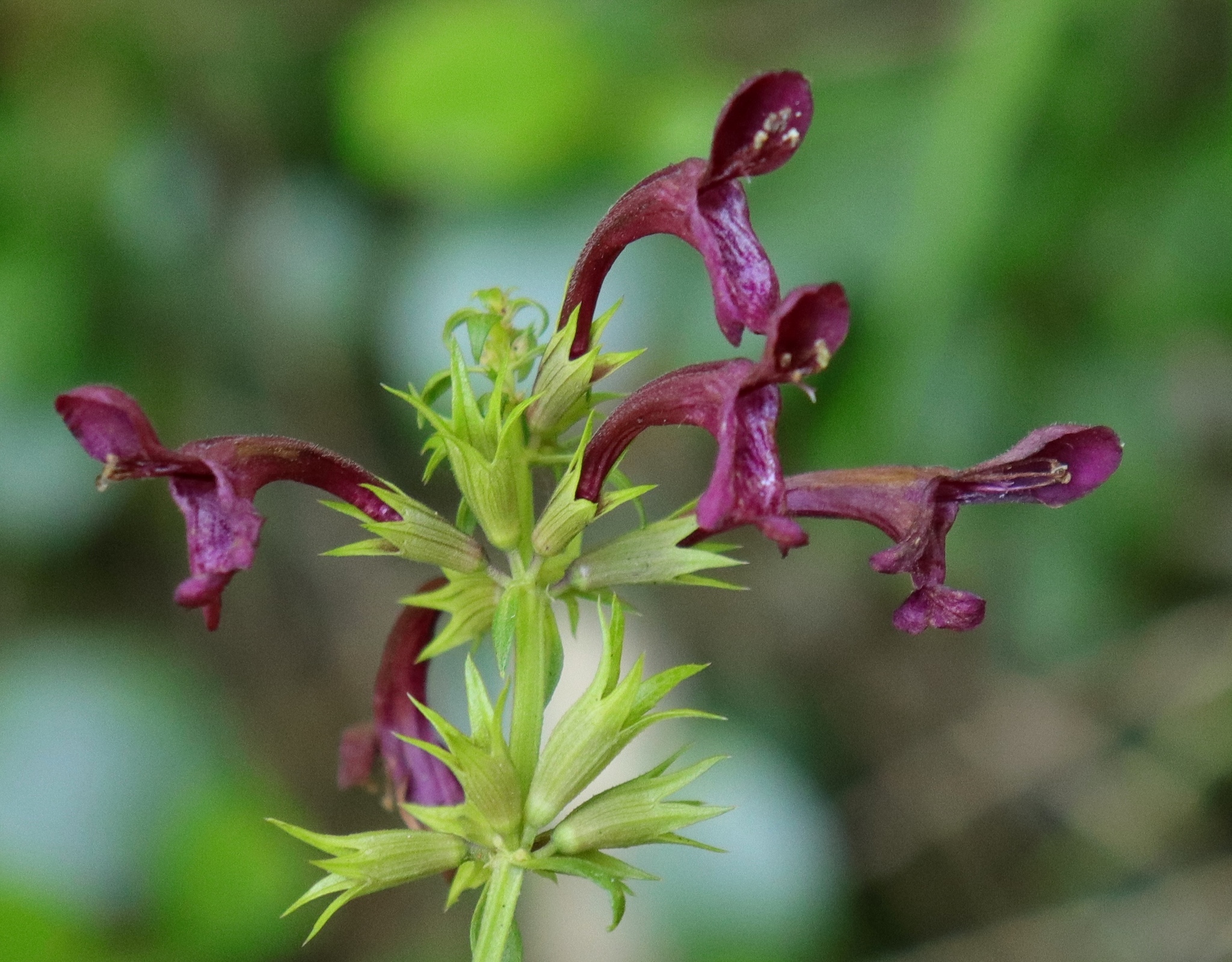
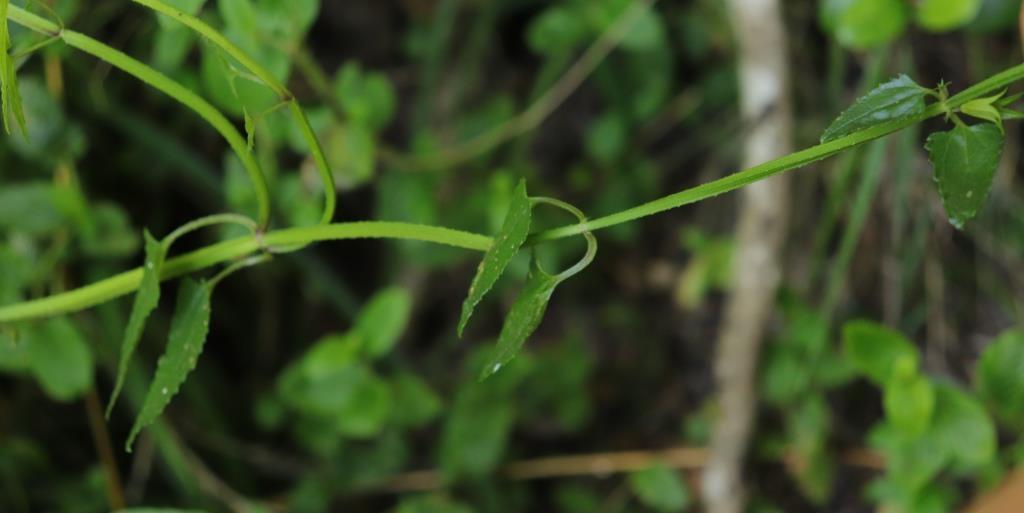
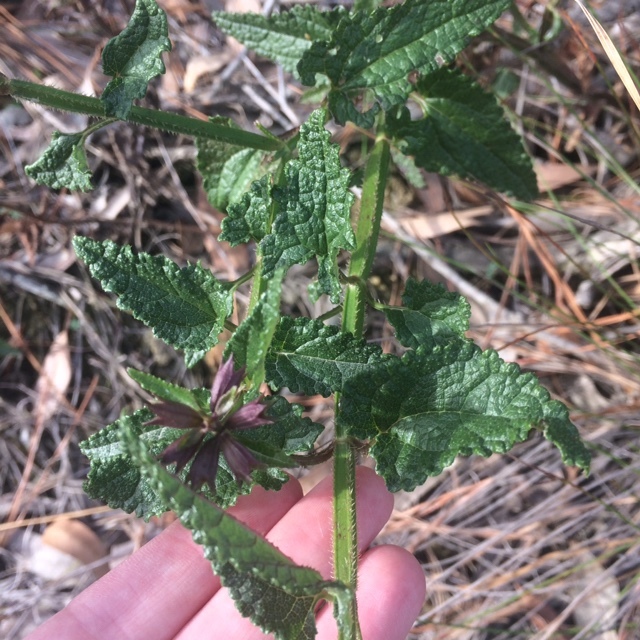
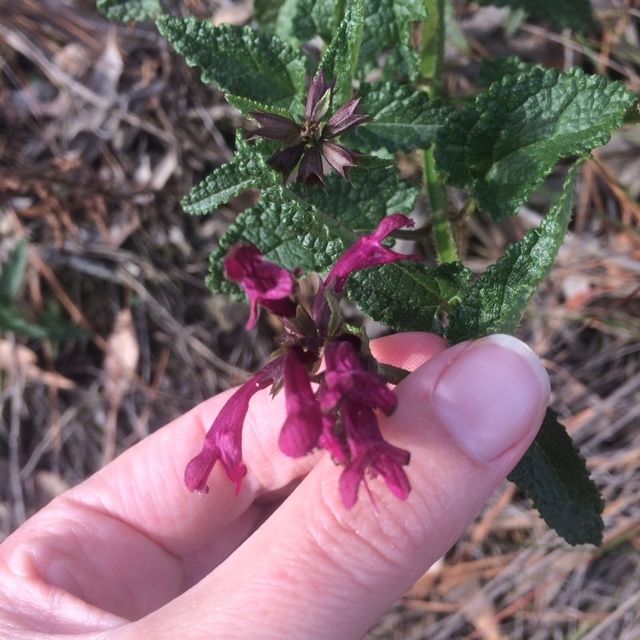
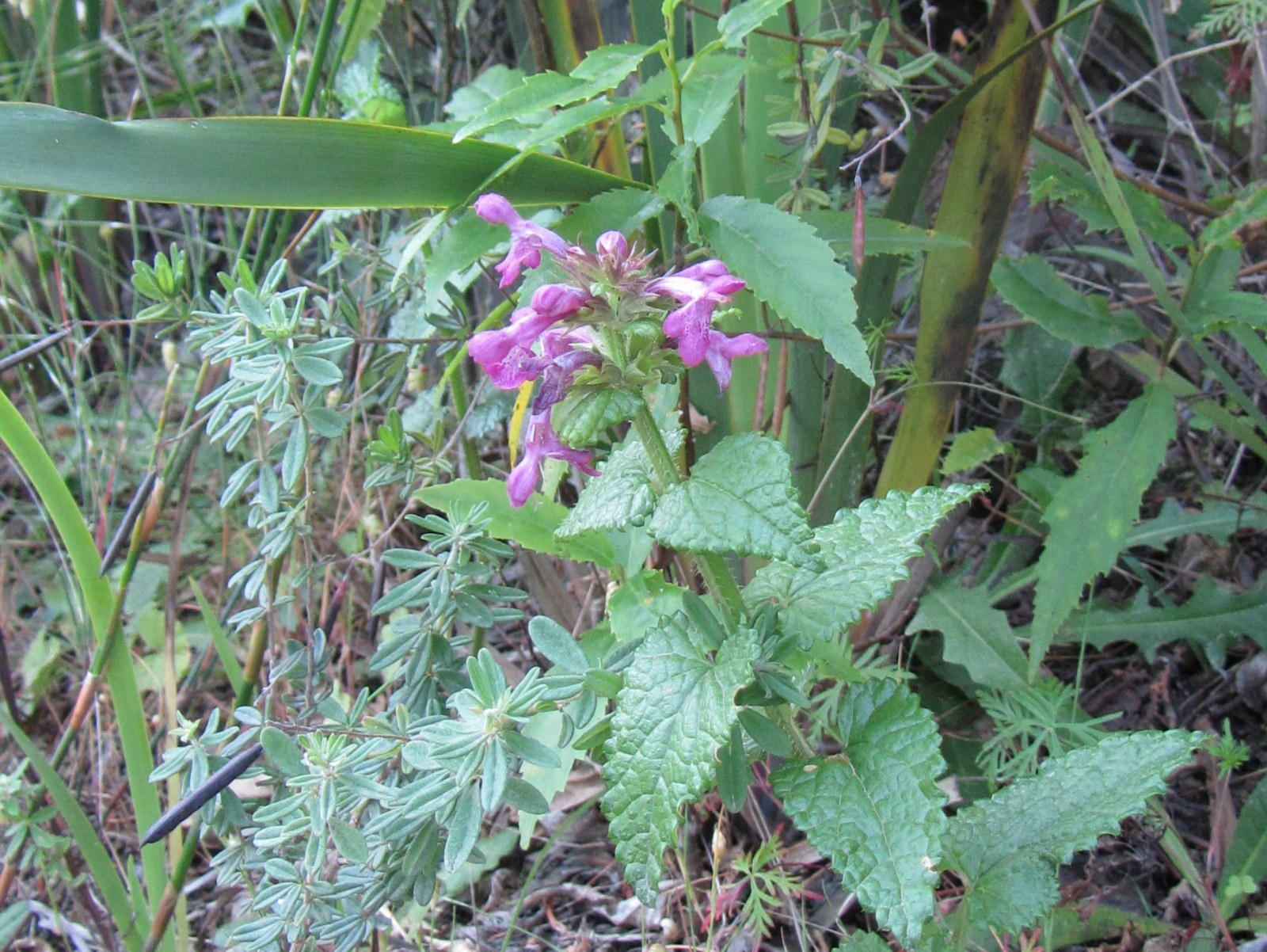
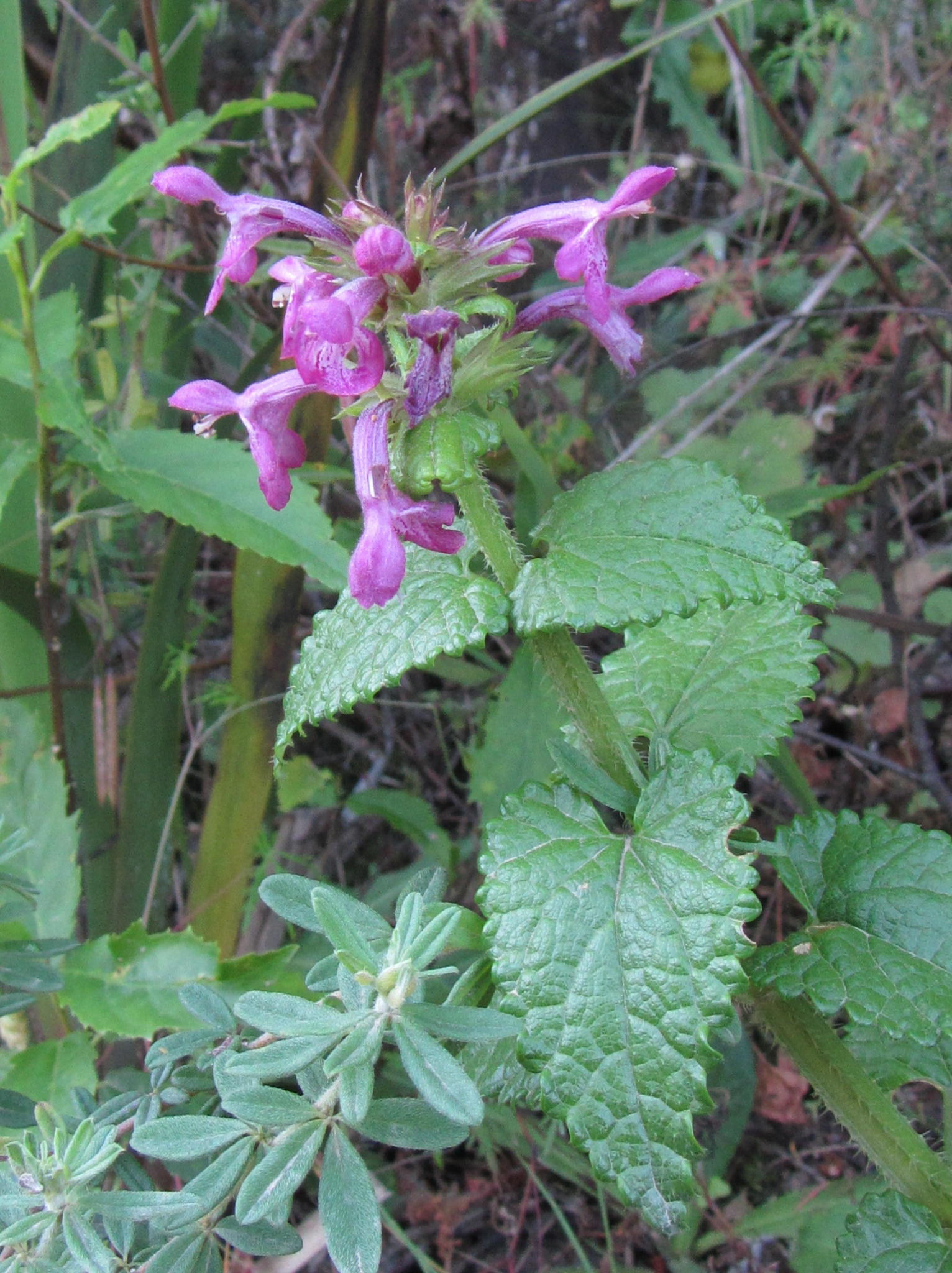
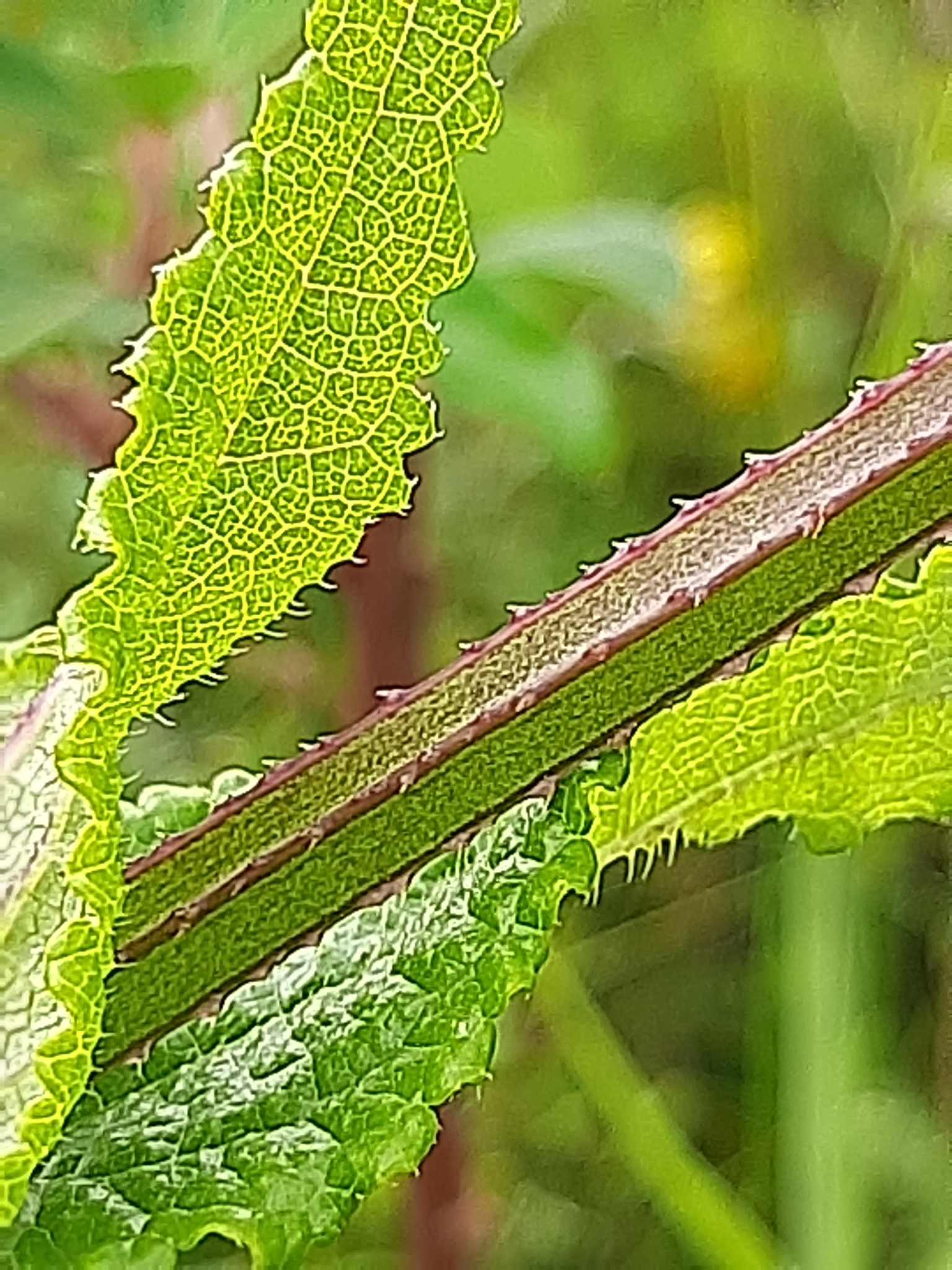
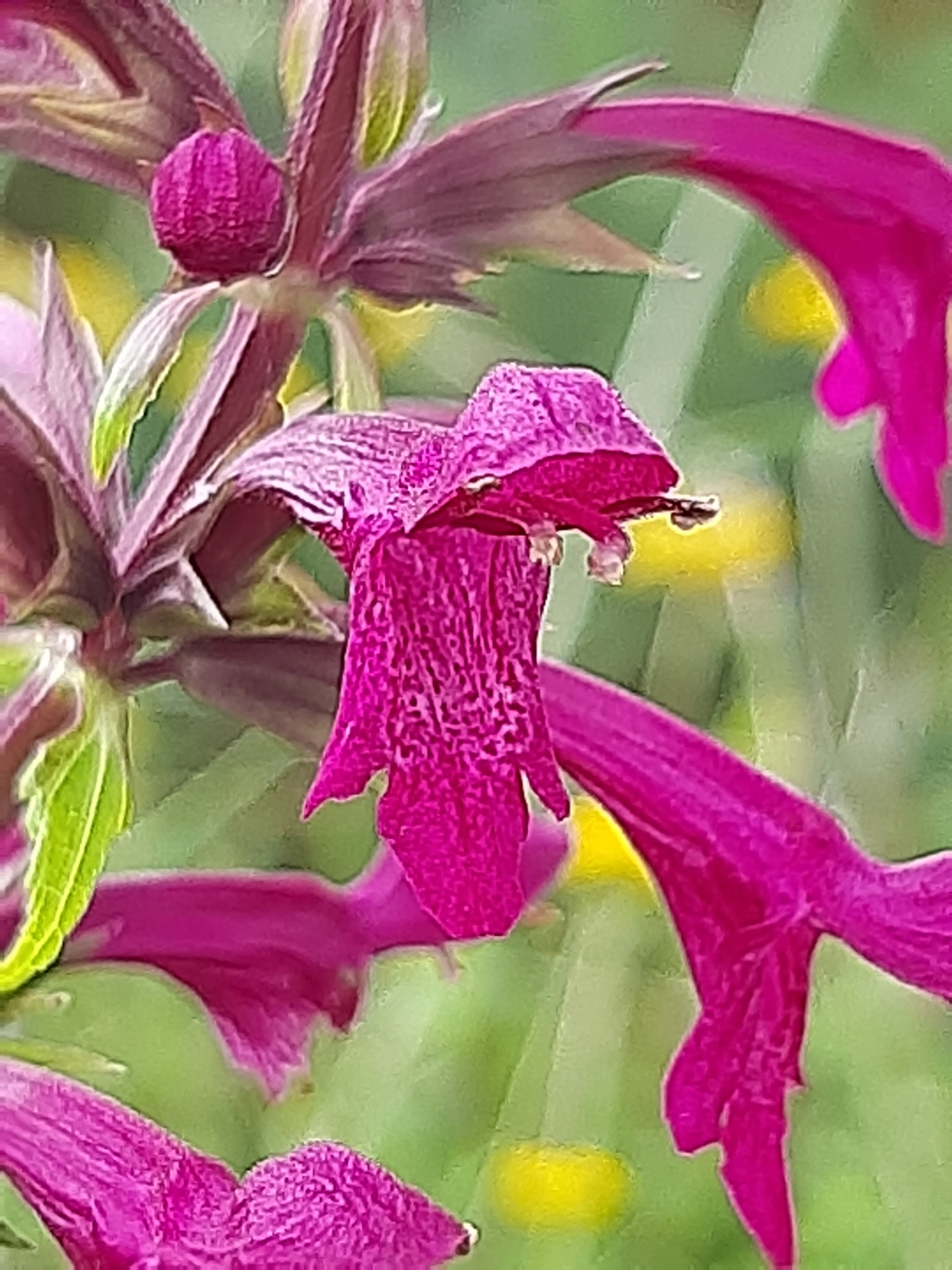
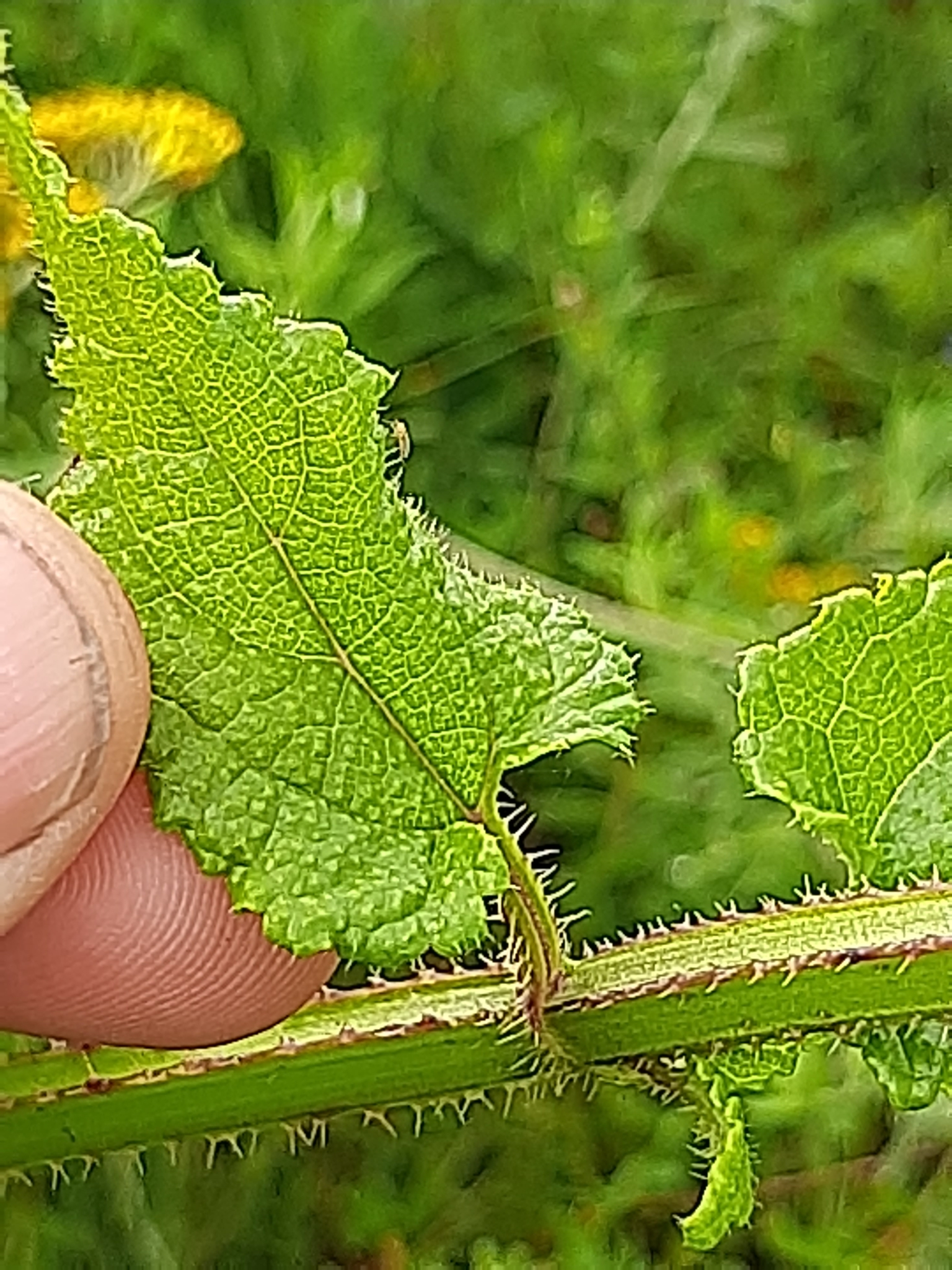
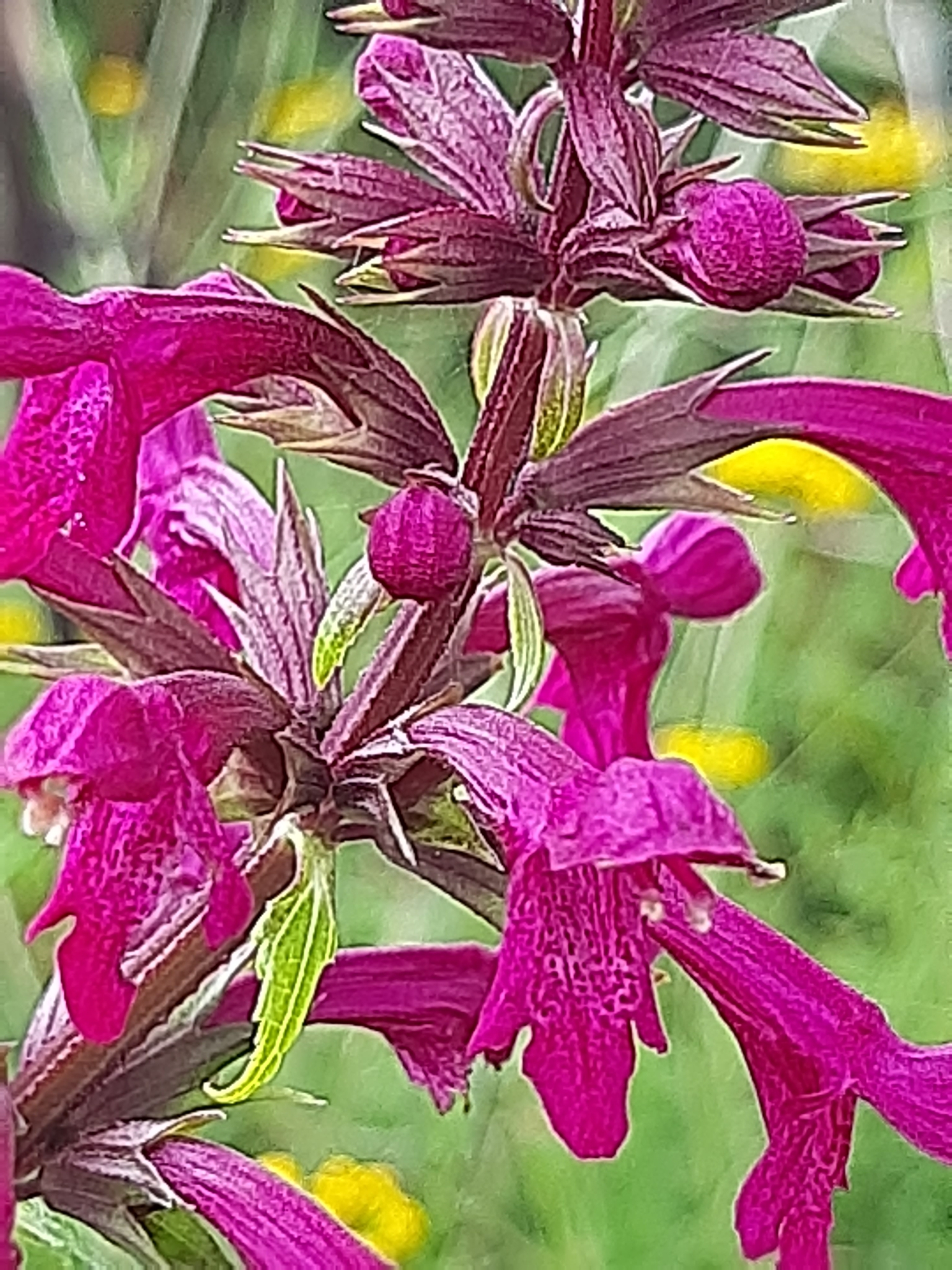
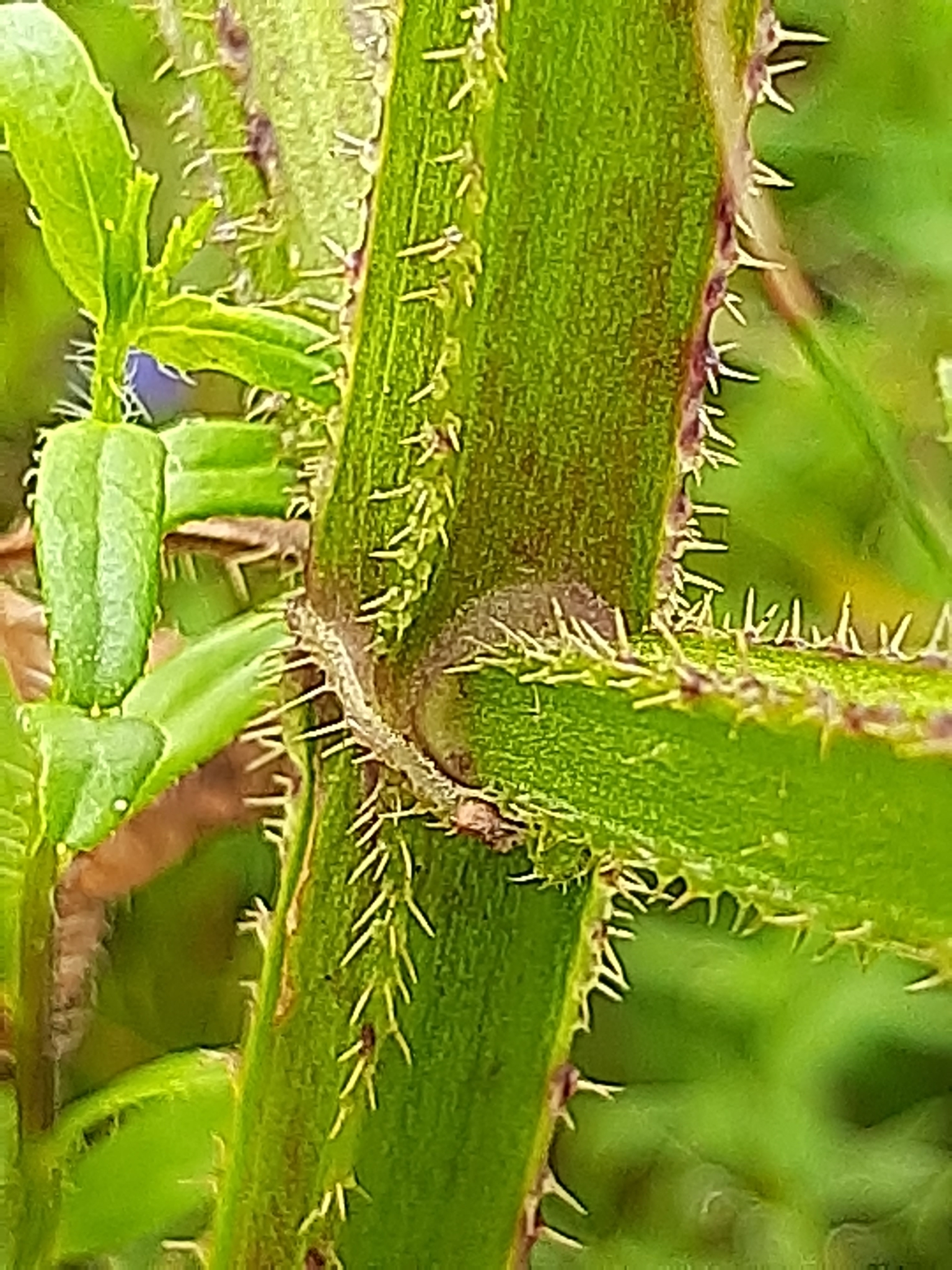
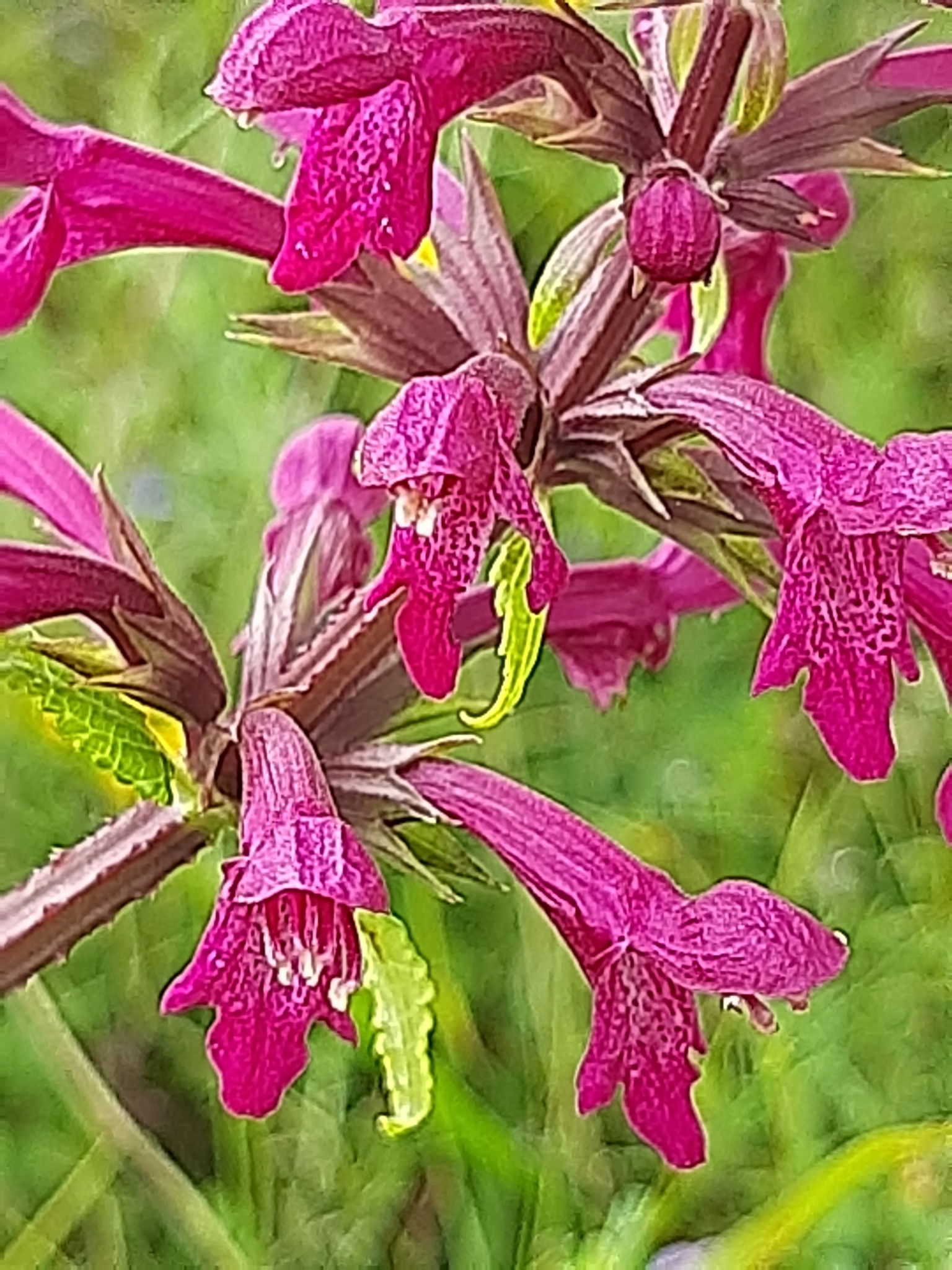
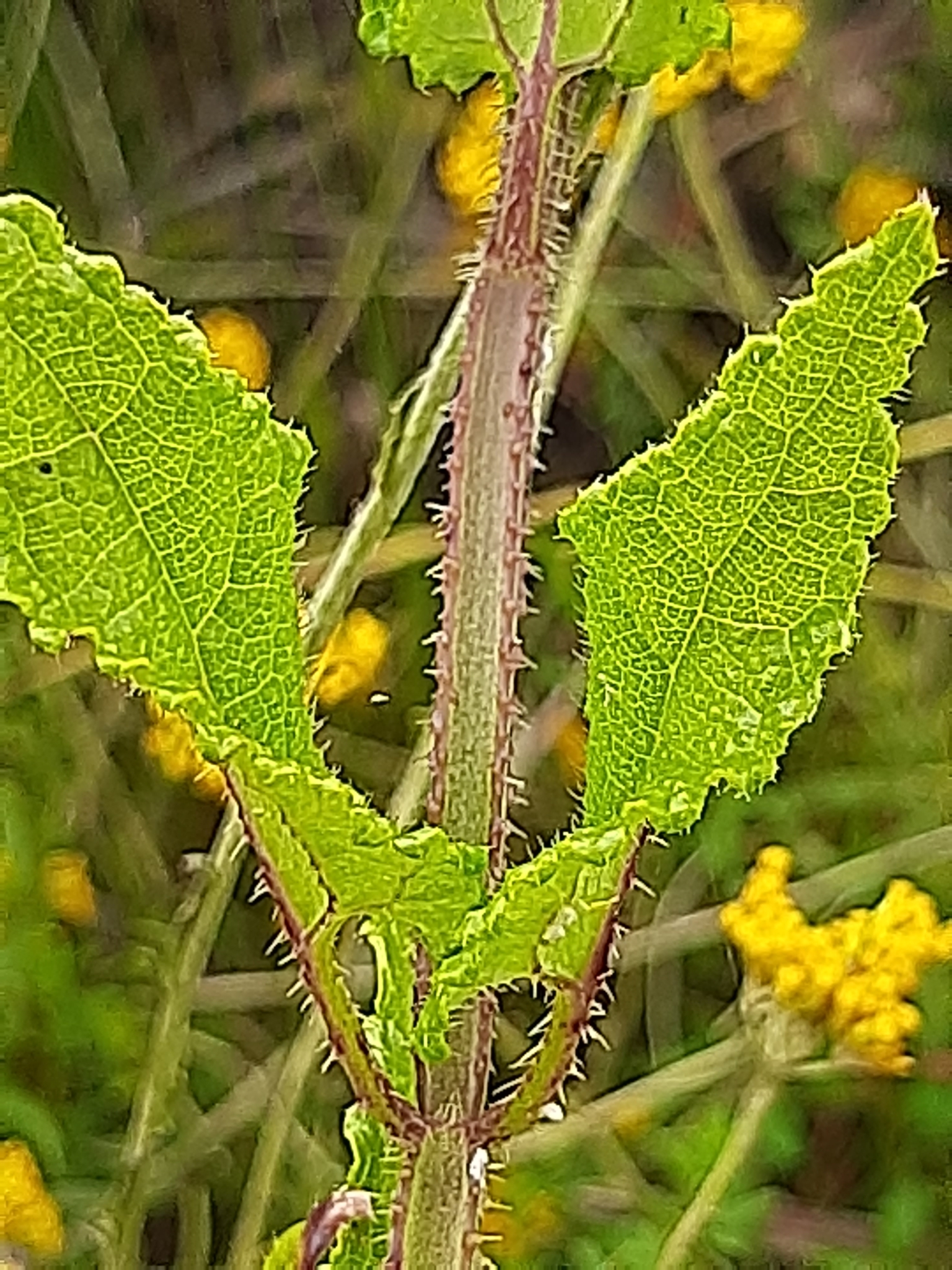
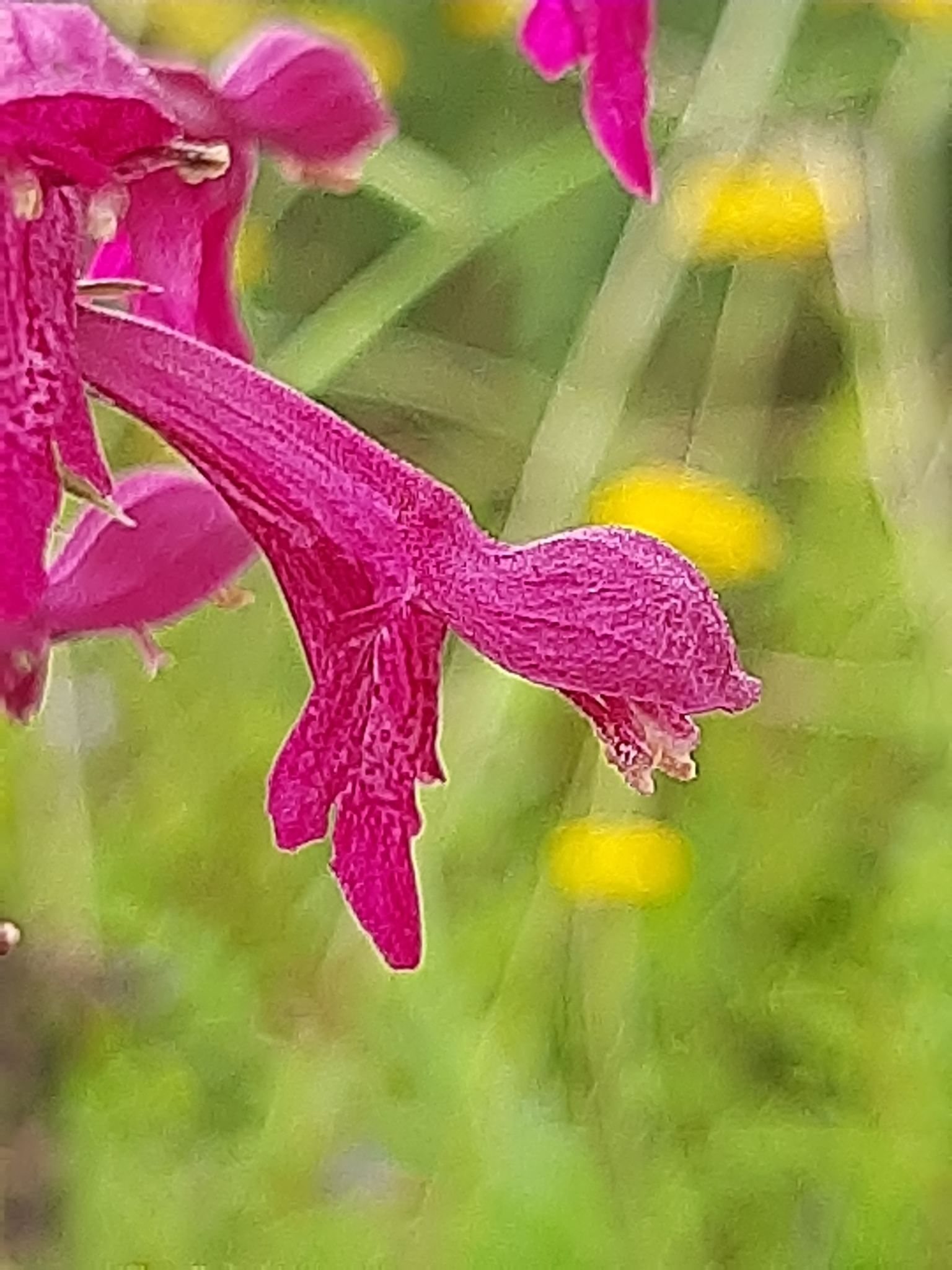
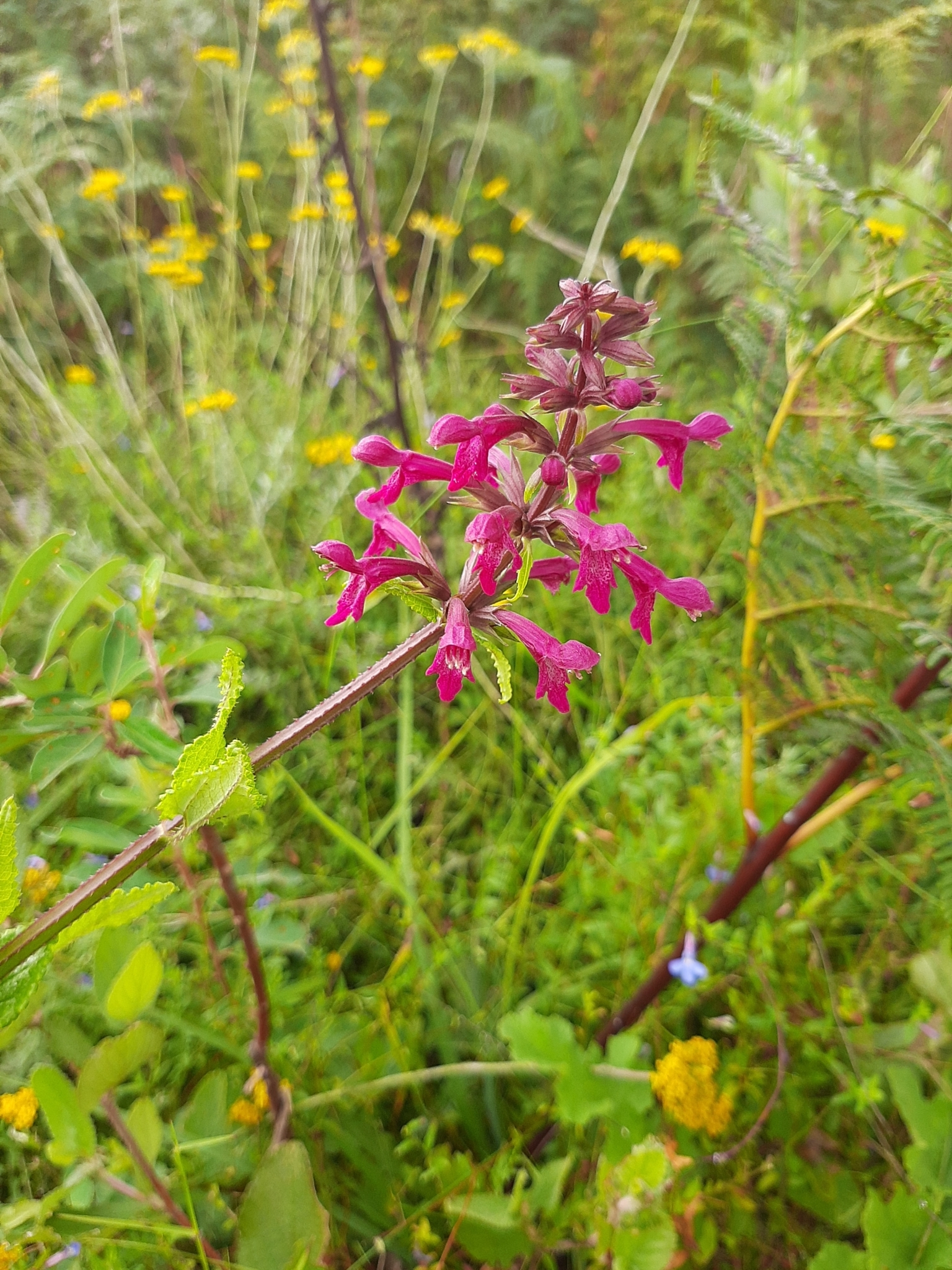
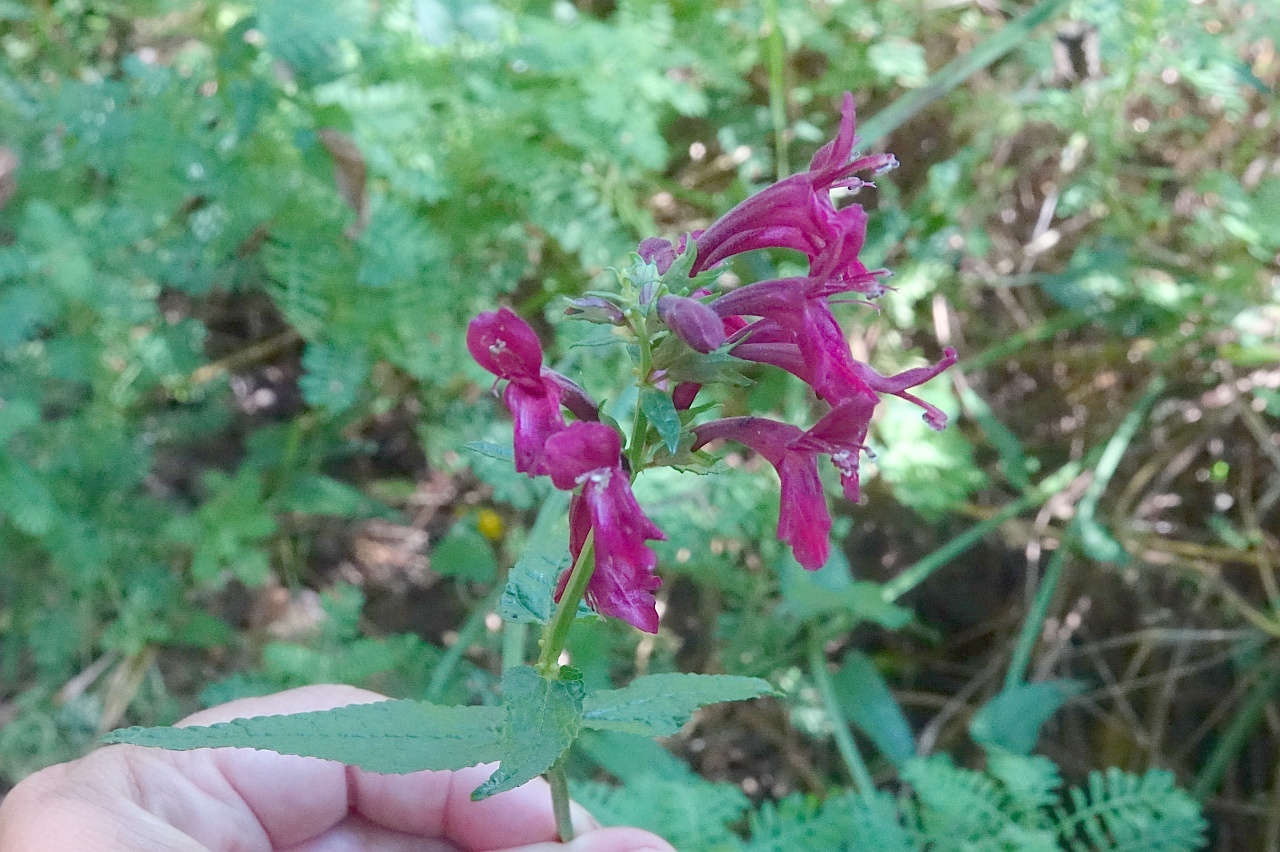
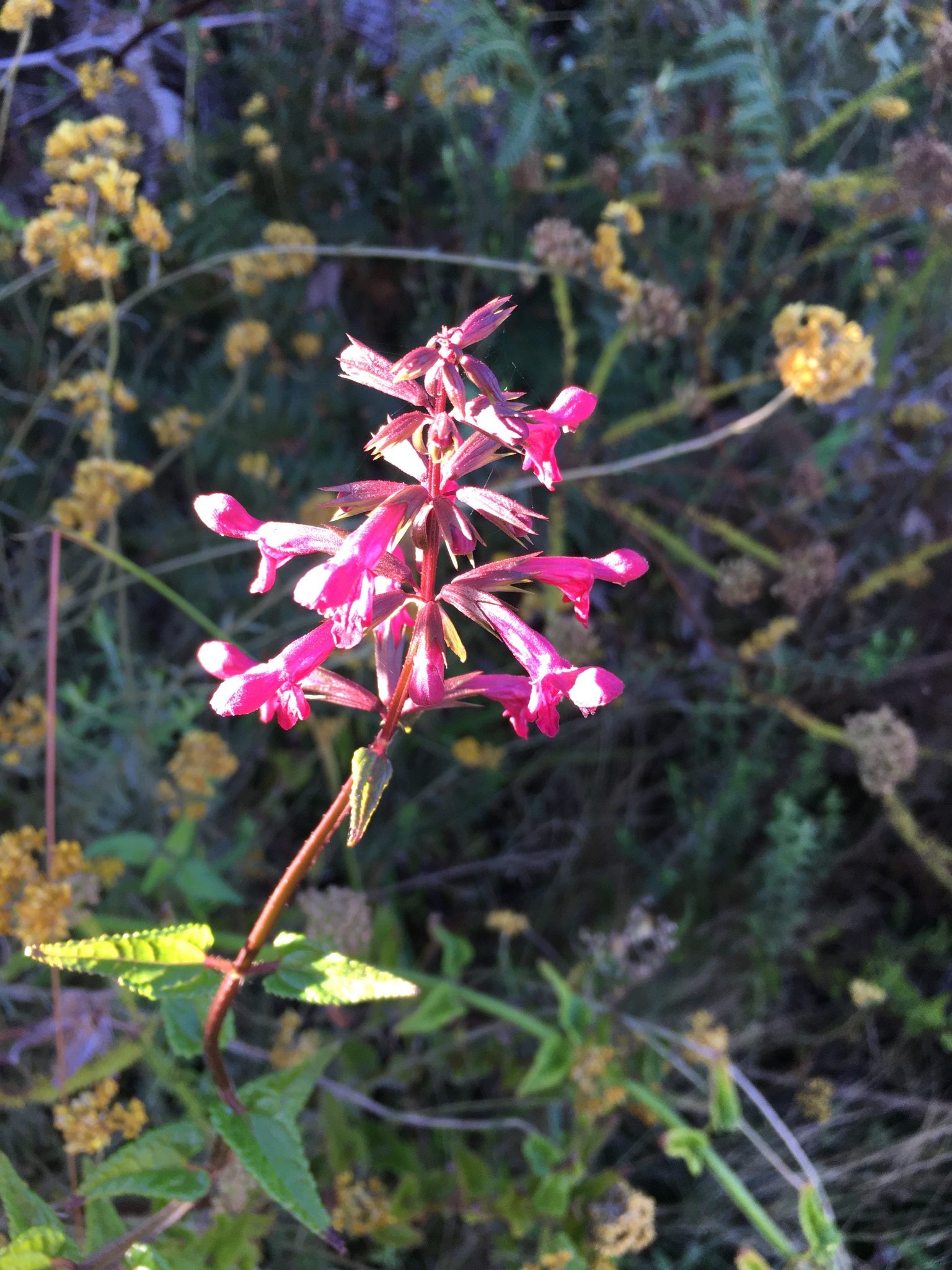
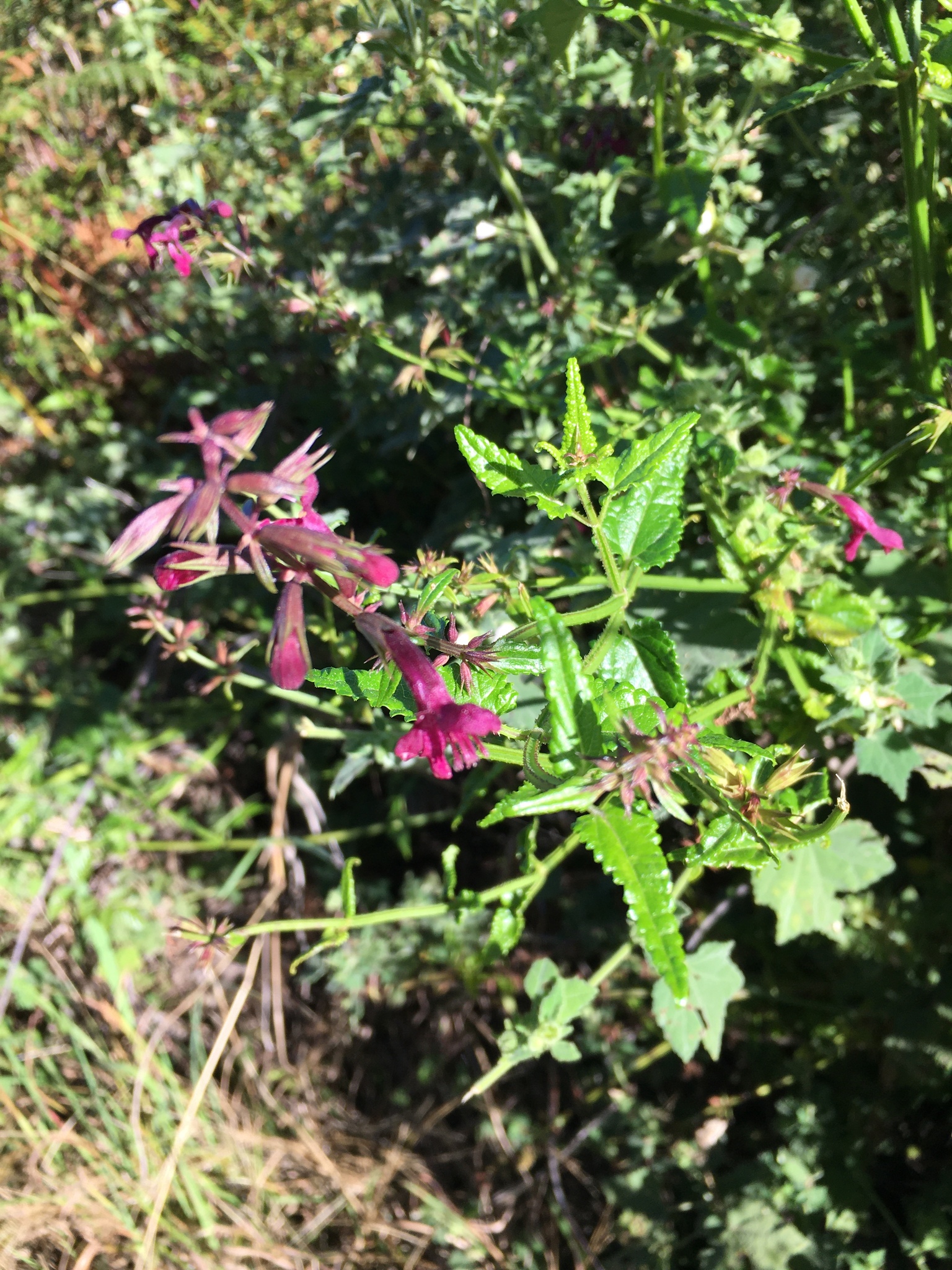
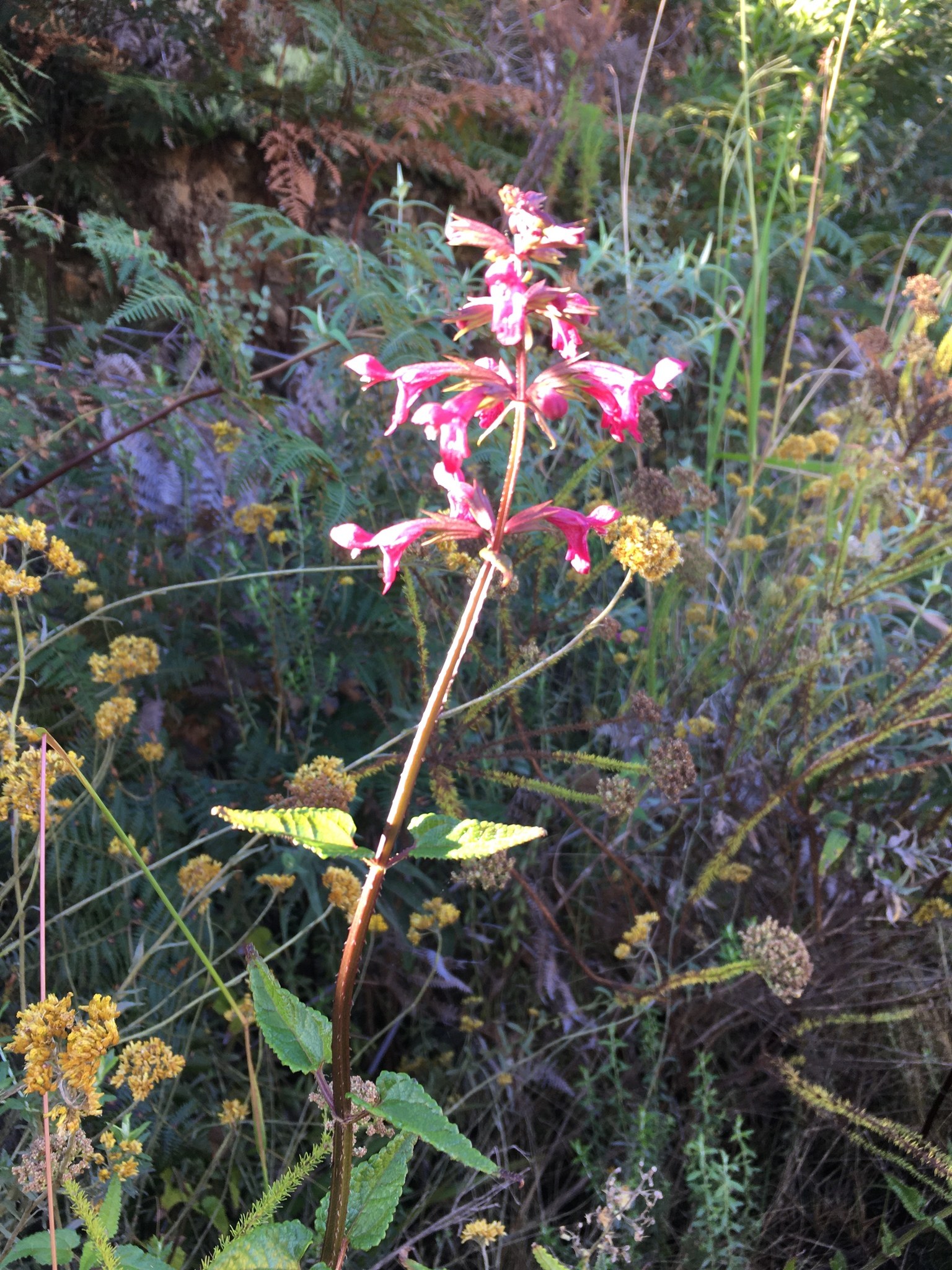
Perennial herb with stout, 4-angled, erect or ascending softly woody stems up to 2 m long, sparingly branched, armed with strong retrorse prickles along the angles and at the nodes, otherwise glabrous. Leaves petiolate; blade rather thick in texture drying dark brown and somewhat rugose, ovate-deltoid to lanceolate-deltoid, 30-60 x 15-30 mm, sparingly hispid to glabrous, apex acute, base cordate, margin regularly and finely crenate; petiole 10-20 mm long. Inflorescence lax to fairly dense, 60-150 mm long; verticils 4-6-flowered. Calyx puberulous to hispidulous, 12-14 mm long at flowering; teeth lanceolate-acuminate, 5 mm long, usually spine-tipped. Corolla red, magenta or purple, minutely pubescent; tube 16-20 mm long, arcuate; upper lip 4-5 mm long; lower lip 6-7 mm long. From: Codd, LEW. 1985. Lamiaceae: 13. Stachys. In: OA Leistner (ed.). Fl. S. Africa 28(4): 51-78. Botanical Research Institute, Department of Agriculture and Water Supply, Pretoria. [http://www.biodiversitylibrary.org/item/209555#page/9/mode/1up] [CC BY]
Perennial herb, up to 2 m high; stems stout, 4-angled, erect or ascending, softly woody, sparingly branched, armed with strong retrorse prickles along angles and at nodes, otherwise glabrous. Leaves petiolate, thick textured and somewhat rugose, ovate-deltoid to lanceolate-deltoid, apex acute, base cordate, margins regularly and finely crenate; sparingly hispid to glabrous. Inflorescence lax to fairly dense; verticillasters 4-6-flowered. Flowers red, magenta or purple. Calyx puberulous to hispidulous; teeth lanceolate-acuminate, usually spine-tipped. Corolla minutely pubescent; tube 16-20 mm long, arcuate; upper lip 4-5 mm long; lower lip 6-7 mm long. From: Bredenkamp, CL; Ngoepe, N. 2019. Lamiaceae. In: CL Bredenkamp (ed.), A Flora of the Eastern Cape Province. Strelitzia 41(2): 1125-1164. South African National Biodiversity Institute, Pretoria. [CC BY]
Prickly, sprawling perennial to 2 m. Leaves petiolate, ovate, finely toothed. Flowers in sparse verticils, calyx roughly hairy, corolla tubular and twice as long as calyx, red to purple. From: Manning, JC; Goldblatt, P. 2012. Lamiaceae. In: J Manning & P Goldblatt (eds), Plants of the Greater Cape Floristic Region 1: The Core Cape flora. Strelitzia 29: 601-604. South African National Biodiversity Institute, Pretoria. [CC BY]
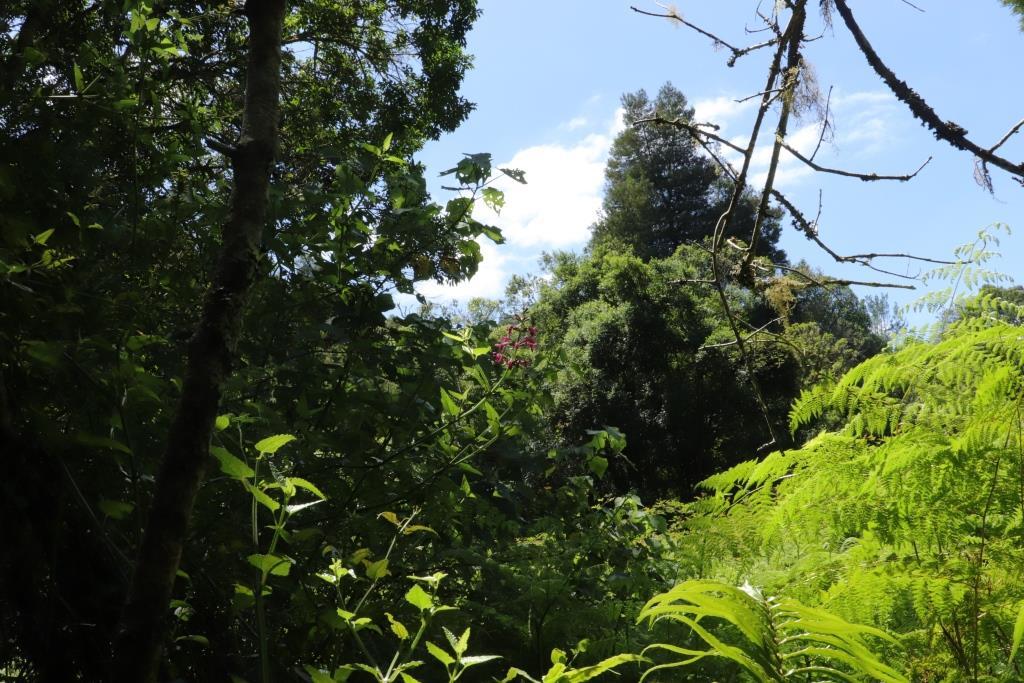
In forest margins. From: Codd, LEW. 1985. Lamiaceae: 13. Stachys. In: OA Leistner (ed.). Fl. S. Africa 28(4): 51-78. Botanical Research Institute, Department of Agriculture and Water Supply, Pretoria. [http://www.biodiversitylibrary.org/item/209555#page/9/mode/1up] [CC BY]
Forest margins, closed woodland, alt. 120-950 m; Eastern Fynbos-Renosterveld, Indigenous Forests. From: Bredenkamp, CL; Ngoepe, N. 2019. Lamiaceae. In: CL Bredenkamp (ed.), A Flora of the Eastern Cape Province. Strelitzia 41(2): 1125-1164. South African National Biodiversity Institute, Pretoria. [CC BY]
Bush and forest margins. From: Manning, JC; Goldblatt, P. 2012. Lamiaceae. In: J Manning & P Goldblatt (eds), Plants of the Greater Cape Floristic Region 1: The Core Cape flora. Strelitzia 29: 601-604. South African National Biodiversity Institute, Pretoria. [CC BY]
Common on south-eastern slopes of Devils Peak and adjoining mountains of the Cape Peninsula. In the George-Knysna-Humansdorp area. From: Codd, LEW. 1985. Lamiaceae: 13. Stachys. In: OA Leistner (ed.). Fl. S. Africa 28(4): 51-78. Botanical Research Institute, Department of Agriculture and Water Supply, Pretoria. [http://www.biodiversitylibrary.org/item/209555#page/9/mode/1up] [CC BY]
Cape Peninsula and George to Humansdorp. From: Manning, JC; Goldblatt, P. 2012. Lamiaceae. In: J Manning & P Goldblatt (eds), Plants of the Greater Cape Floristic Region 1: The Core Cape flora. Strelitzia 29: 601-604. South African National Biodiversity Institute, Pretoria. [CC BY]
September
120 to 950 m
This map contains point-based occurrences at different locations
Occurrence in the Flora of Southern Africa (FSA) countries and South African provinces. Residence status indicates if a taxon is indigenous, endemic, naturalised or invasive in a specific region. This data is based on specimen records and literature
FSA
SA
BOT
NAM
ESW
LES
WC
EC
NC
FS
GA
KZN
LP
MP
NW
Absent
Indigenous
Endemic
Naturalised
Invasive
Names and Sources
Stachys hispida (Thunb.) Briq.
Classification
KINGDOM Plantae
SUBKINGDOM Phanerogamae
PHYLUM Anthophyta
ORDER Lamiales
FAMILY Lamiaceae
SUBFAMILY Lamioideae
TRIBE Stachydeae
GENUS Stachys
SPECIES thunbergii
49 results for Stachys thunbergii Benth.
Year
Barcode: PRE0236612-0 Collector(s) & number: Boucher, C, 853 | 1969-11-5
South Africa, Western Cape, PEARLY BEACH; 4 MI. FROM PEARLY BEACH
Data Resource: BODATSA View record
Barcode: PRE0238553-0 Collector(s) & number: Alexander-Prior, RC, PRE 45485 | 1903-4-
South Africa, Western Cape, DEVILS MOUNTAIN
Data Resource: BODATSA View record
Barcode: PRE0238555-0 Collector(s) & number: Thode, A2566 | 1930-4-
South Africa, Western Cape, HUMANSDORP DIV.
Data Resource: BODATSA View record
Barcode: PRE0238551-0 Collector(s) & number: Esterhuysen, EE, 2793 | 1939-12-
South Africa, Western Cape, CALEDON DIST.; LANDDROST KOP RAVINE; ABOVE LOWCENSFORD
Data Resource: BODATSA View record
Barcode: PRE0238542-0 Collector(s) & number: Hutchinson, J, 1283 | 1928-11-6
South Africa, Western Cape, TOUWS RIVER; 12 MI. E. OF GEORGE
Data Resource: BODATSA View record
Barcode: PRE0238549-0 Collector(s) & number: Bayliss, 4125 | 1968-1-23
South Africa, Cape Province, PRINCE ALFREDS PASS
Data Resource: BODATSA View record
Barcode: PRE0238558-0 Collector(s) & number: Middlemost, AJM, 1800 | 1952-11-5
South Africa, Western Cape, KNYSNA DIV.; BLAAUWKRANTZ FOREST
Data Resource: BODATSA View record
Barcode: PRE0238546-0 Collector(s) & number: Compton, RH, 13015 | 1942-2-7
South Africa, Western Cape, CAPE PENINSULA; KIRSTENBOSCH; WINDOW BUTTRESS
Data Resource: BODATSA View record
Barcode: PRE0238548-0 Collector(s) & number: Rogers, FA, 27021 | 1921-11-
South Africa, Western Cape, KNYSNA
Data Resource: BODATSA View record
Barcode: PRE0238559-0 Collector(s) & number: Fourcade, HG, 1928 | 1921-12-
South Africa, Eastern Cape, WITTE ELS BOSCH; MT. SLOPES ABOVE WITTE ELS BOSCH
Data Resource: BODATSA View record
Barcode: PRE0238544-0 Collector(s) & number: Acocks, JPH, 14063 | 1948-3-5
South Africa, Eastern Cape, HUMANSDORP DIV.; STORMS RIVER PASS
Data Resource: BODATSA View record
Barcode: PRE0238547-0 Collector(s) & number: Horn, DHS, SKF2362 | 1960-9-
South Africa, Western Cape, KNYSNA DIV.; DEEPWALLS FOR.
Data Resource: BODATSA View record
Barcode: PRE0238554-0 Collector(s) & number: Galpin, EE, 9361 | 1929-4-3
South Africa, Eastern Cape, HUMANSDORP DIV.; TSITSIKAMA; COLDSTREAM
Data Resource: BODATSA View record
Barcode: PRE0238545-0 Collector(s) & number: Bolus, H, 367 | 1882-12-
South Africa, Western Cape, CAPE TOWN; DEVILS MOUNTAIN; NR. TOWN
Data Resource: BODATSA View record
Barcode: PRE0238543-0 Collector(s) & number: Esterhuysen, EE, 10046 | 1944-2-23
South Africa, Western Cape, CAPE PENINSULA; DEVILS PEAK
Data Resource: BODATSA View record
Barcode: PRE0238556-0 Collector(s) & number: Thode, J, A980 | 1926-3-
South Africa, Eastern Cape, HUMANSDORP DIV.; CLARKSON
Data Resource: BODATSA View record
Barcode: PRE0238539-0 Collector(s) & number: Marloth, HWR, 2461 | 1898-11-
South Africa, Western Cape, KNYSNA FOR
Data Resource: BODATSA View record
Barcode: PRE0238538-0 Collector(s) & number: Marloth, HWR, 59 | 1884-4-
South Africa, Western Cape, DEVILS PEAK
Data Resource: BODATSA View record
Barcode: PRE0238552-0 Collector(s) & number: Theron, GC, 1012 | 1950-12-20
South Africa, Western Cape, KNYSNA DIV.
Data Resource: BODATSA View record
Barcode: PRE0238540-0 Collector(s) & number: Bolus, 367 | --
South Africa, Western Cape, DEVILS MOUNTAIN
Data Resource: BODATSA View record
Barcode: PRE0238557-0 Collector(s) & number: Dix, WE, 175 | 1935-1-
South Africa, Eastern Cape, HUMANSDORP DIV.; LOERIE
Data Resource: BODATSA View record
Barcode: PRE0468260-0 Collector(s) & number: Lavranos, JJ, 12697 | 1976-3-28
South Africa, Cape Province, PRINCE ALFREDS PASS; JUST S. OF TOP
Data Resource: BODATSA View record
Barcode: PRE0544434-0 Collector(s) & number: Gillett, JB, 3404 | 1929-1-27
South Africa, Western Cape, CAPE TOWN; TABLE MT.; E. SIDE OF MT. BETW. SKELETON & WINDOW GORGES
Data Resource: BODATSA View record
Barcode: PRE0484292-0 Collector(s) & number: Bower, D, 662 | 1975-11-11
South Africa, Eastern Cape, TSITSIKAMA FOR. AND; DE PLAATBOS
Data Resource: BODATSA View record
Barcode: PRE0484433-0 Collector(s) & number: Bower, D, 546 | 1975-10-13
South Africa, Eastern Cape, TSITSIKAMA FOR. AND; DE PLAATBOS
Data Resource: BODATSA View record
Barcode: PRE0552130-0 Collector(s) & number: Tyson, W, 57591 | 1888-9-
South Africa, Western Cape, KNYSNA; BLAAUWKRANTZ FOR.
Data Resource: BODATSA View record
Barcode: PRE0592827-0 Collector(s) & number: Baard, JA, 391 | 1999-5-
South Africa, Western Cape, Goudveld Staatsbos. Goudveld.
Data Resource: BODATSA View record
Barcode: PRE0641450-0 Collector(s) & number: Botha, DJ, 3126 | 1983-4-14
South Africa, Western Cape, KNYSNA; DIEPWALLE BOSRESERVE; OLIFANTSWANDELPAD VANAF BOSBOU SE KANTOOR TOT BY PIEKNIEKPLEK. LANGS VOETPAD
Data Resource: BODATSA View record
Barcode: PRE0705324-0 Collector(s) & number: Esterhuysen, EE, 35734 | 1981-12-25
South Africa, Western Cape, CAPE PENINSULA; KIRSTENBOSCH
Data Resource: BODATSA View record
Barcode: PRE0518313-0 Collector(s) & number: Tyson, W, 795 | 1888-9-
South Africa, Western Cape, KNYSNA; BLAAUWKRANTZ FOR.
Data Resource: BODATSA View record
Barcode: PRE0786502-0 Collector(s) & number: Kruger, FJ, 1606 | 1972-11-27
South Africa, Western Cape, Jonkershoek State Forest; Langrivier.
General notes: On upper contour path in dense undergrowth. Herb 1m tall. Light purple flowers. Locally abundant. Det: F.J. Kruger
Data Resource: BODATSA View record
Barcode: PRE0786530-0 Collector(s) & number: Morze, J, 2065 | 1966-2-25
South Africa, Western Cape, George; Hoogekraal Forest.
General notes: Moist forest edge after burn. Herb. Purple flowers. Common in scrub with bramble, Helichrysum etc. ex Saasveld Det: F. von Breitenbach
Data Resource: BODATSA View record
Barcode: PRE0786531-0 Collector(s) & number: Phillips, JFV, SAAS 1197 | 1926-12-17
South Africa, Western Cape, Knysna; Deepwalls Forest.
General notes: A rambling forest weed causing damage to seedlings when it is dense. ex Saasveld Det: F. von Breitenbach
Data Resource: BODATSA View record
Barcode: PRE0786498-0 Collector(s) & number: Haynes, RA, 1039 | 1975-5-30
South Africa, Western Cape, Jonkershoek State Forest; Langrivier.
General notes: In moist seepage area on forest fringe; six months after fire. Germinative herb .5m tall. Mauve flowers. Occasional. Det: R.A. Haynes
Data Resource: BODATSA View record
Barcode: PRE0796437-0 Collector(s) & number: Kerfoot, O, K 5572 | 1966-1-
South Africa, Western Cape, Stellenbosch District: Jonkershoek; Langrivier.
Data Resource: BODATSA View record
Barcode: PRE0806708-0 Collector(s) & number: Morze, J, 2065 | 1966-2-25
South Africa, Western Cape, George District: Hoogekraal Forest.
Data Resource: BODATSA View record
Barcode: PRE0827827-0 Collector(s) & number: Horn, DHS, SKF 2362 | 1960-9-
South Africa, Western Cape, Knysna District: Deepwalls Forest.
Data Resource: BODATSA View record
Barcode: NH0025886-0 Collector(s) & number: Thode, J, A2566 | 1930-8-
South Africa, KwaZulu-Natal, Humansdrop District.
Data Resource: BODATSA View record
Barcode: PRE1020036-0 Collector(s) & number: Baard, JA, 2248 | 2021-5-
South Africa, Western Cape, Southern Cape. Knysna, Goudveld State Forest
General notes: Weed, or Stachy ciliata?
Data Resource: BODATSA View record
This map contains point-based occurrences at different locations
2019
SERIES CHAPTER
Lamiaceae Bredenkamp, CL; Ngoepe, NIn: CL Bredenkamp (ed.), A Flora of the Eastern Cape Province. Strelitzia 41(2)1125-1164
South African National Biodiversity Institute, Pretoria
2012
SERIES CHAPTER
Lamiaceae Manning, JC; Goldblatt, PIn: J Manning & P Goldblatt (eds), Plants of the Greater Cape Floristic Region 1: The Core Cape flora. Strelitzia 29: 601-604
South African National Biodiversity Institute, Pretoria
1985
FLORA CHAPTER
Lamiaceae: 1. Ajuga Codd, LEWIn: OA Leistner (ed.). Flora of Southern Africa 28(4)7-8
Botanical Research Institute, Department of Agriculture and Water Supply, Pretoria
1985
FLORA CHAPTER
Lamiaceae: 13. Stachys Codd, LEWIn: OA Leistner (ed.). Flora of Southern Africa 28(4)51-78
Botanical Research Institute, Department of Agriculture and Water Supply, Pretoria
No results found for Stachys thunbergii Benth.
Status and criteria
LC
Assessment date
2016-12-04
Assessor(s)
Plantae Coordinator
Range
The Aardwolf has a disjunct distribution in Africa, occurring in two discrete areas (1,500 km apart), one in East and northeastern Africa and one in southern Africa (Skinner & Chimimba 2005). The southern African distribution includes South Africa, Swaziland, Namibia, Botswana, Zimbabwe and a narrow strip in the western region of Mozambique. Aardwolf distribution is largely determined by the distribution of <em>Trinervitermes </em>termites, which constitute their principle food (Anderson 2013).<br/><br/>Within the assessment region, Aardwolves occur throughout the nine provinces in areas with suitable habitats. This species favours drier areas, most notably in the Northern Cape game ranch and farming lands. Within the North West Province, Power (2014) estimated that its range has expanded by 8% since 1983, and that Aardwolves were common at Bloemhof Dam Nature Reserve. There are no records from Lesotho (Lynch 1994).<br/><br/>Richmond-Coggan (2014) interviewed 190 landowners across South Africa and asked whether they had seen Aardwolf on their properties. Aardwolves were found on at least one property in all nine of South Africa’s provinces. Forty-five percent of respondents indicated that this species was present on their land. Eastern Cape (50%), Free State (71%), Gauteng (50%), and Northern Cape (50%) respondents indicated the highest proportion of properties with Aardwolf presence. Lowest Aardwolf presence was indicated in KwaZulu-Natal (25%).
Major system
Major habitats
Population trend
ELECTRONIC SOURCE
IUCN 2016. The IUCN Red List of Threatened Species. Version 2016-3
JOURNAL ARTICLE
Dijkstra, K.-D.B. and Clausnitzer, V. 2014. The Dragonflies and Damselflies of Eastern Africa: Handbook for all Odonata from Sudan to Zimbabwe.. Studies in Afrotropical Zoology. 298:1-264
ELECTRONIC SOURCE
IUCN 2016. The IUCN Red List of Threatened Species. Version 2016-3
JOURNAL ARTICLE
Dijkstra, K.-D.B. and Clausnitzer, V. 2014. The Dragonflies and Damselflies of Eastern Africa: Handbook for all Odonata from Sudan to Zimbabwe.. Studies in Afrotropical Zoology. 298:1-264
| Part(s) of plant used | Use(s) | Reference |
|---|---|---|
| Plant | Emollient A household remedy used as an emollient fomentation. | Watt, JM; Breyer-Brandwijk, MG. 1962. The medicinal and poisonous plants of southern and eastern Africa: Being an account of their medicinal and other uses, chemical composition, pharmachological effects and toxicology in man and animal, 2nd ed. Livingstone, Edinburgh. [All rights reserved] |
Coming soon...


