PLANTAE / PHANEROGAMAE / ANTHOPHYTA / MYRTALES / COMBRETACEAE / COMBRETOIDEAE / COMBRETEAE / COMBRETUM / EUGENEANUM

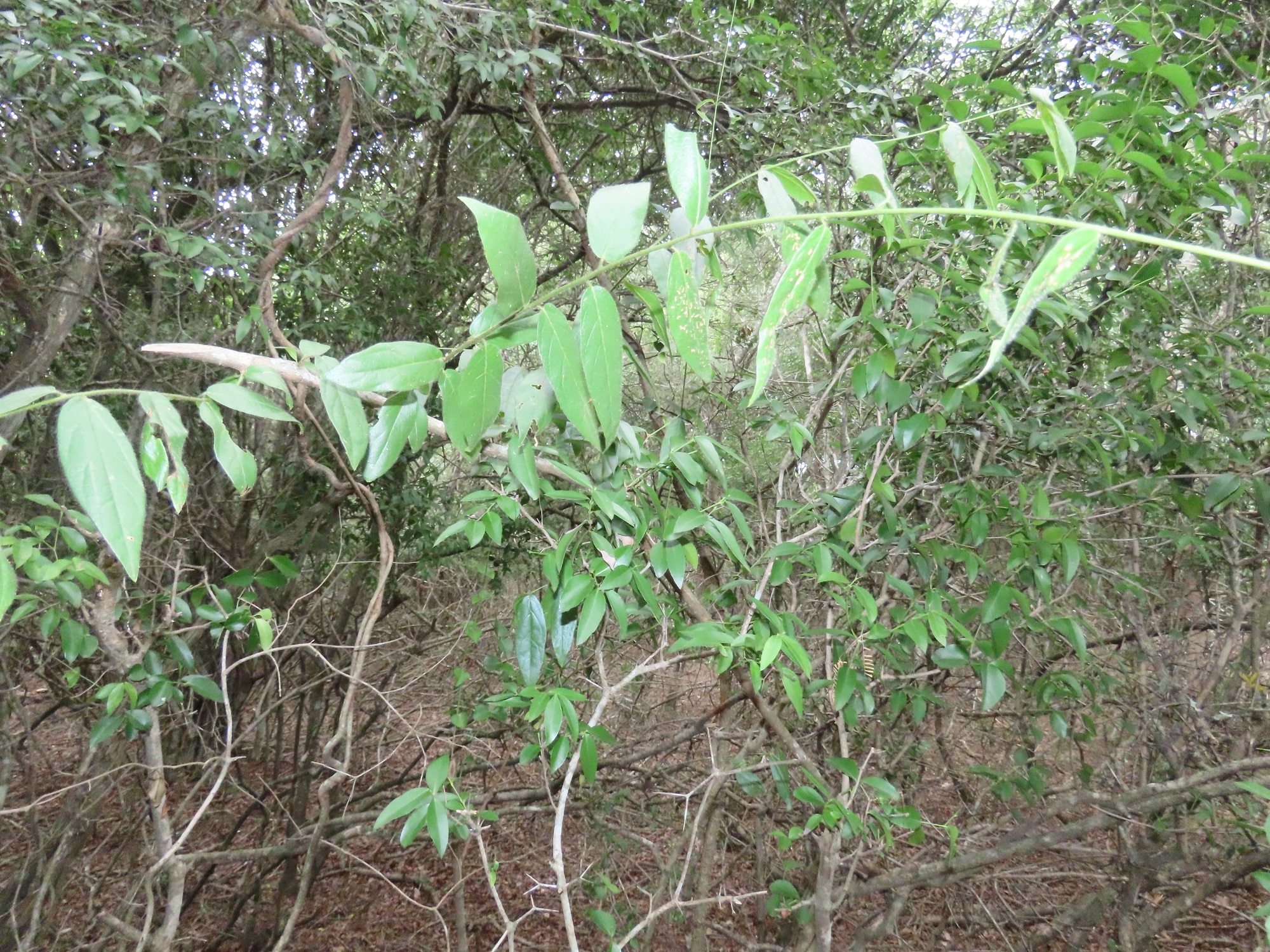
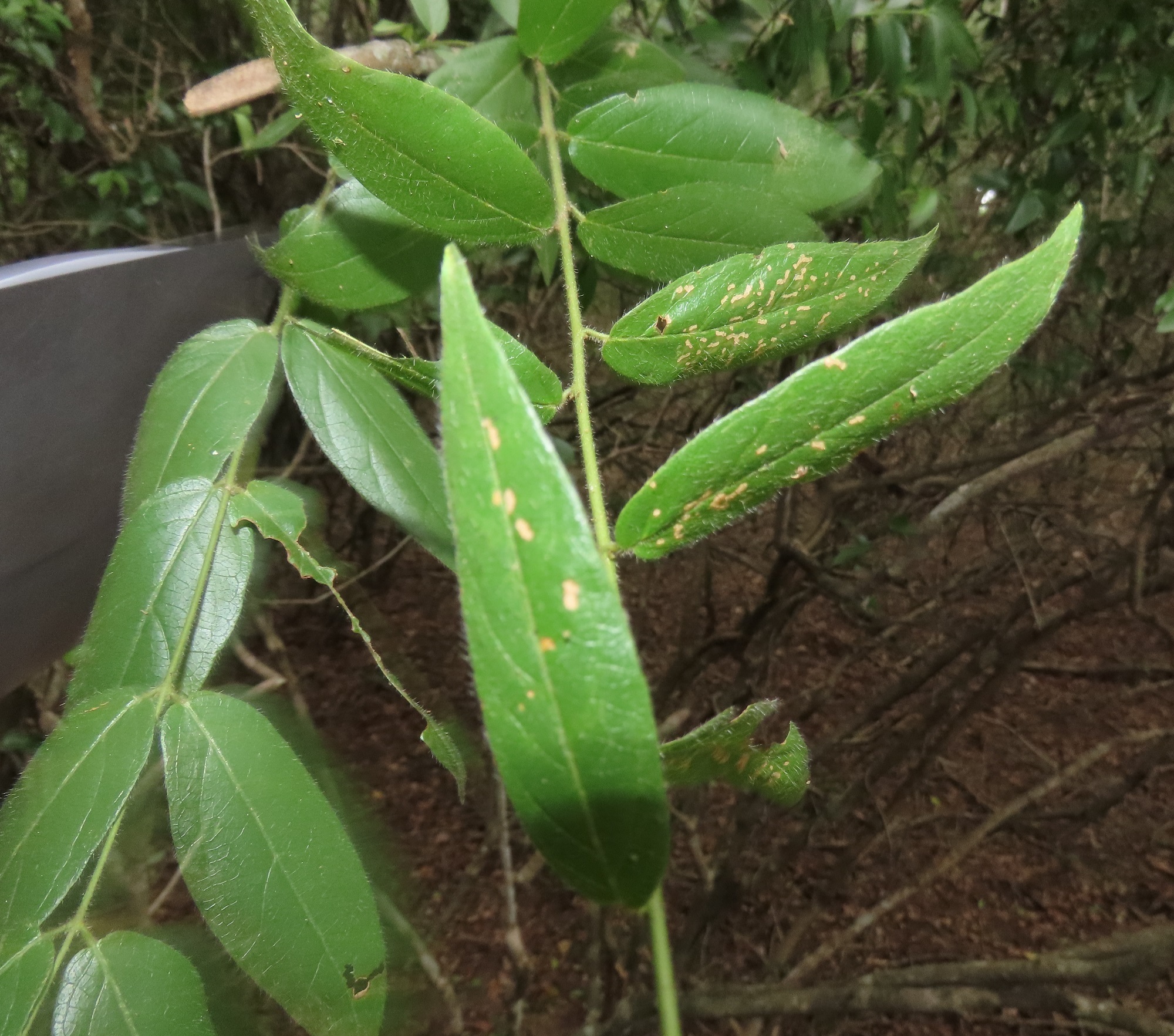
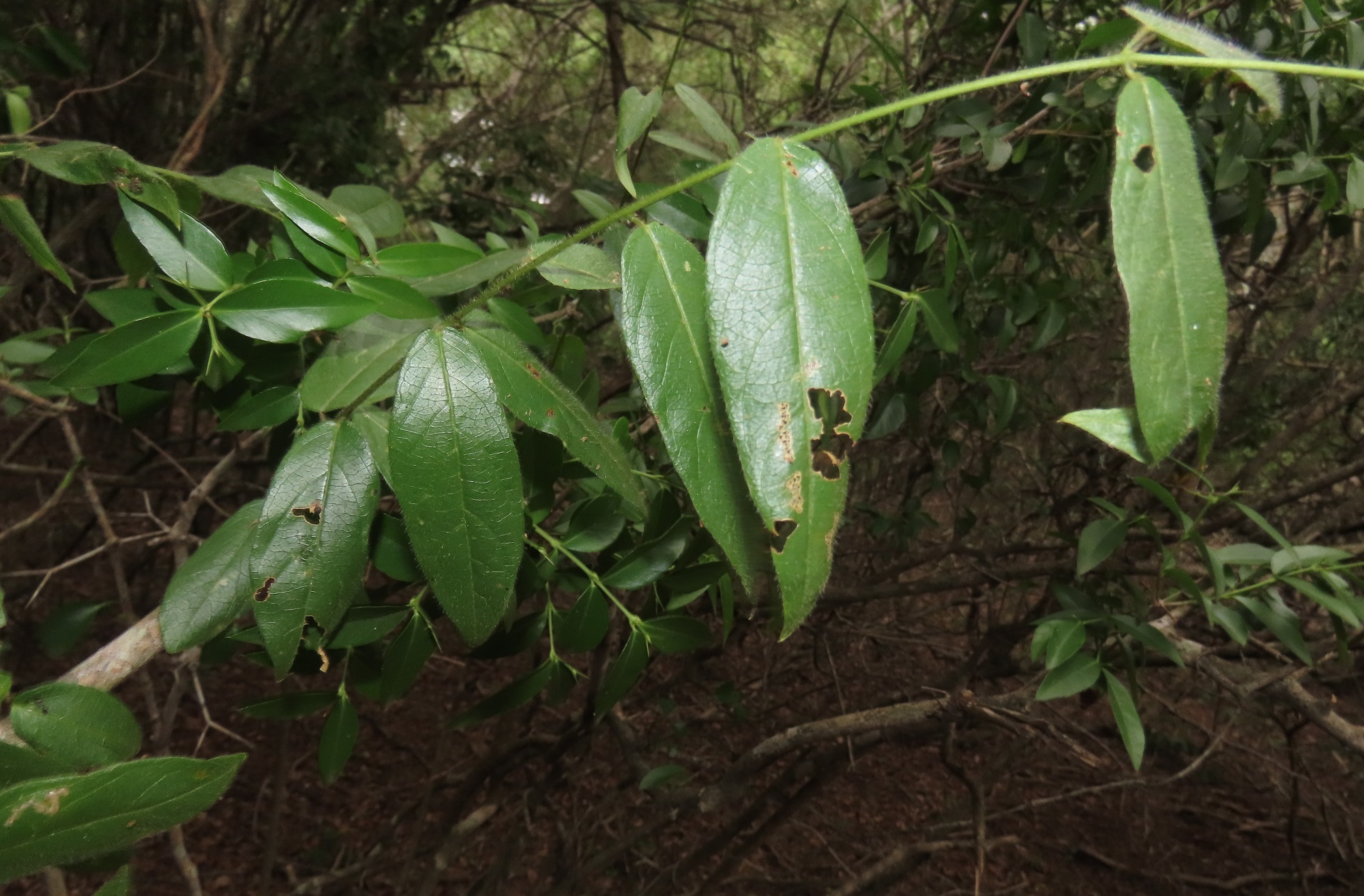
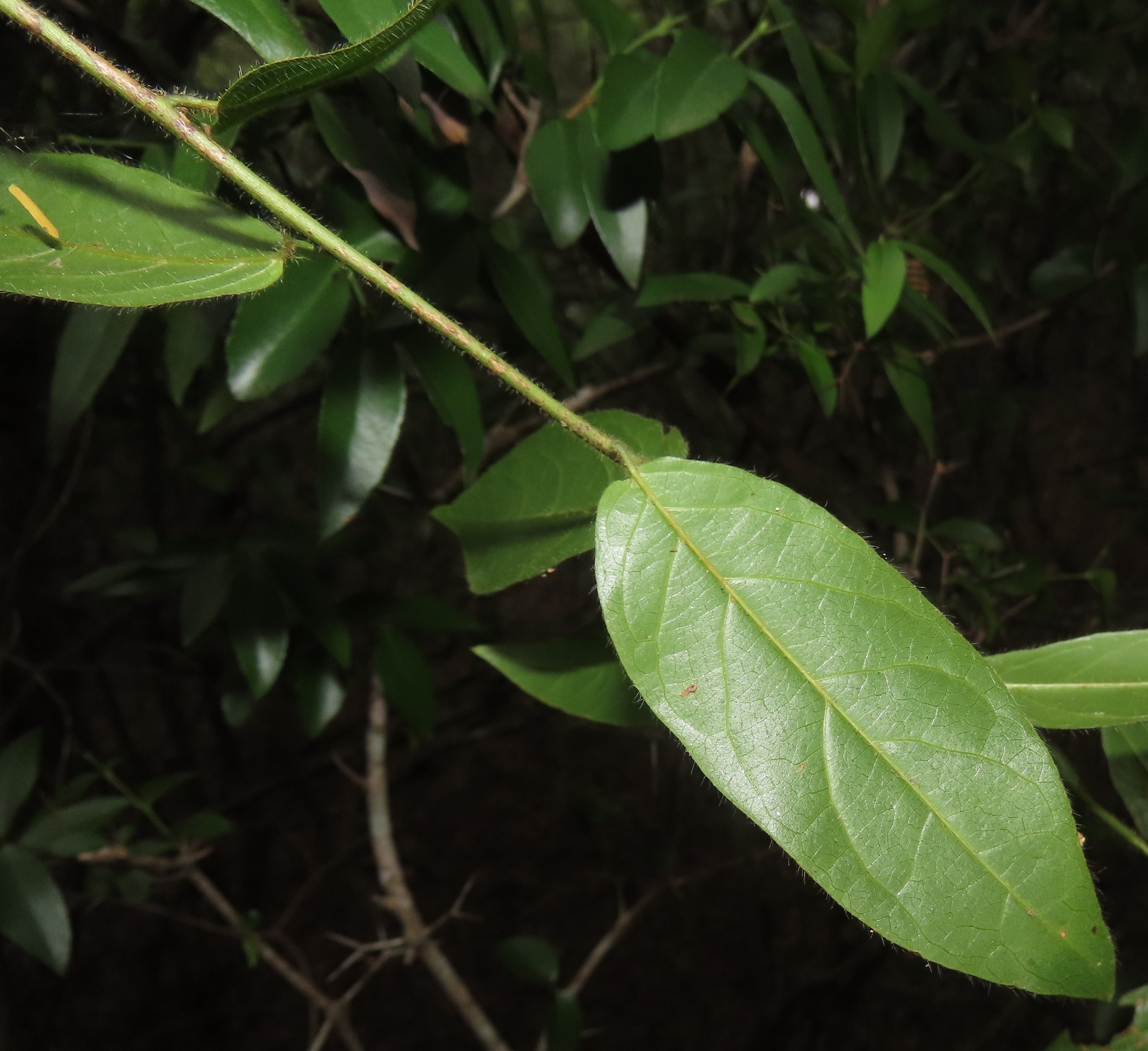
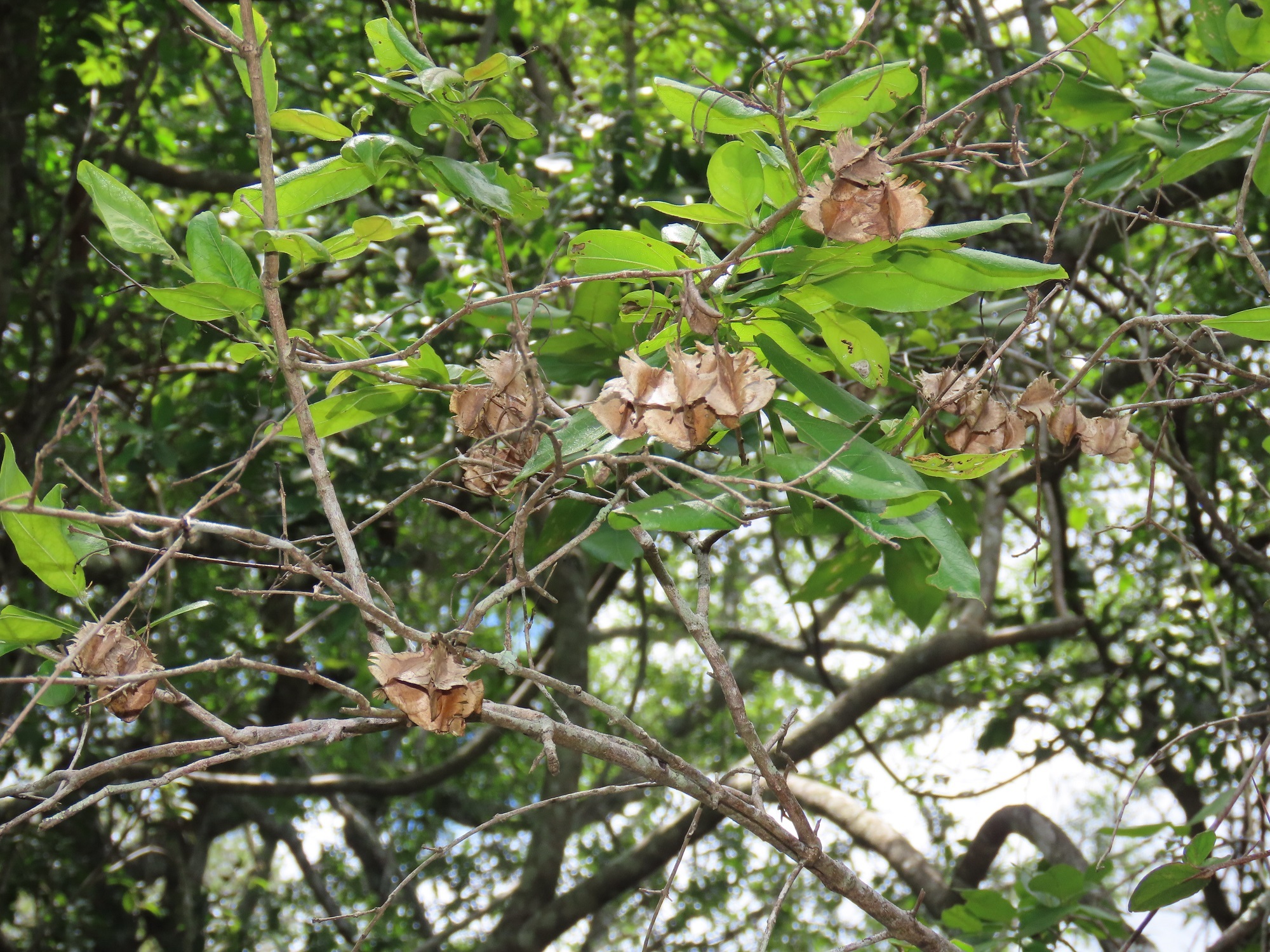
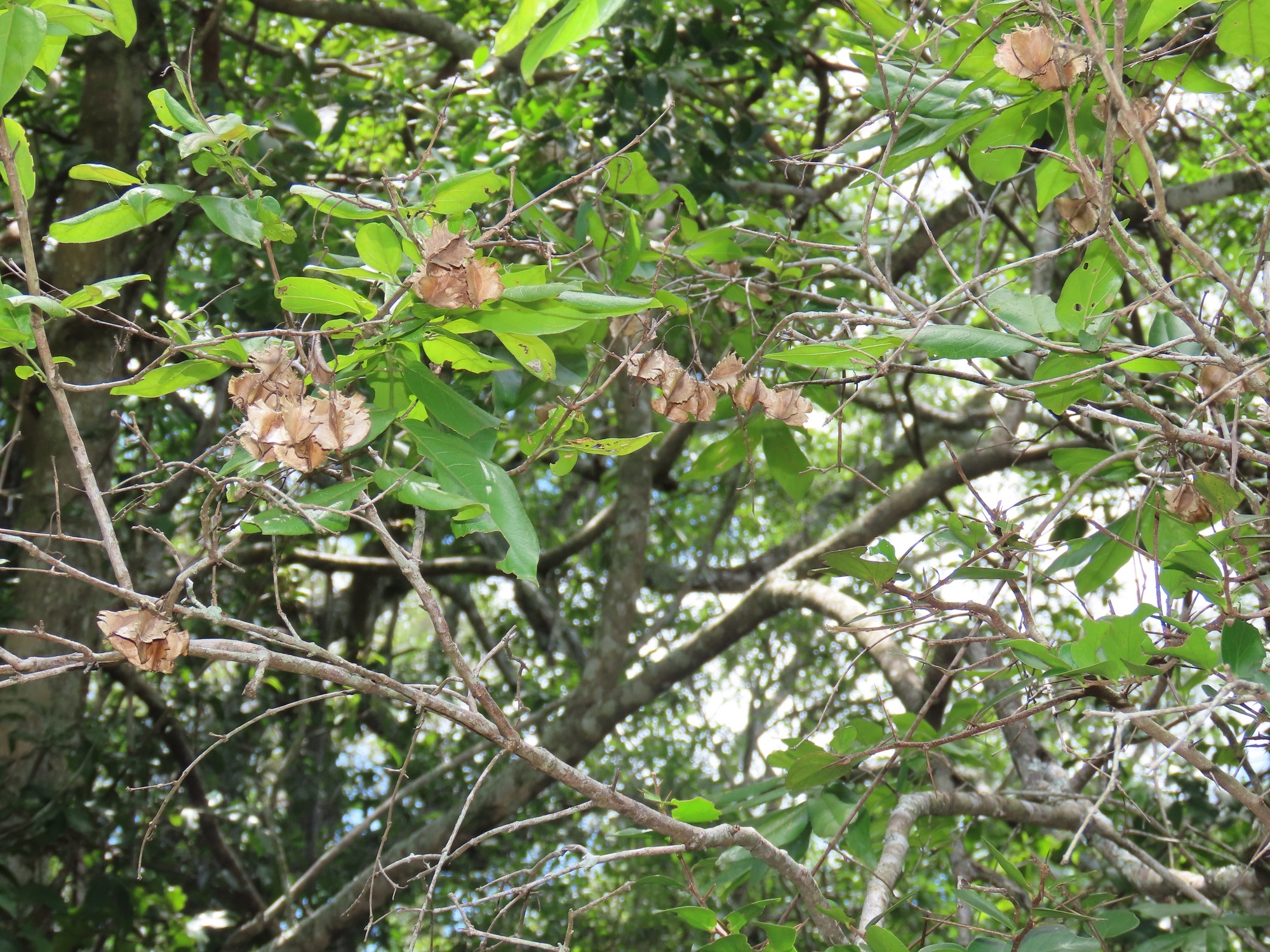
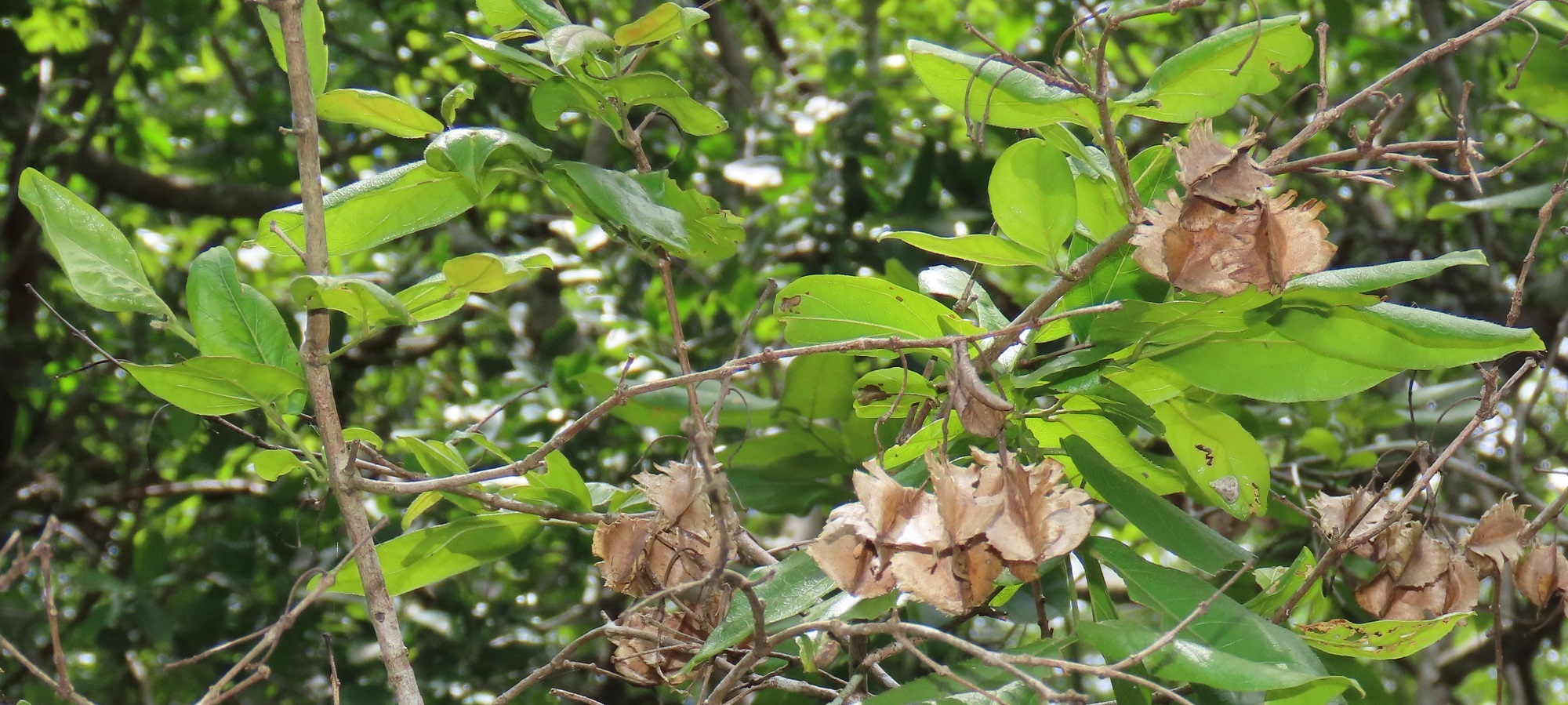
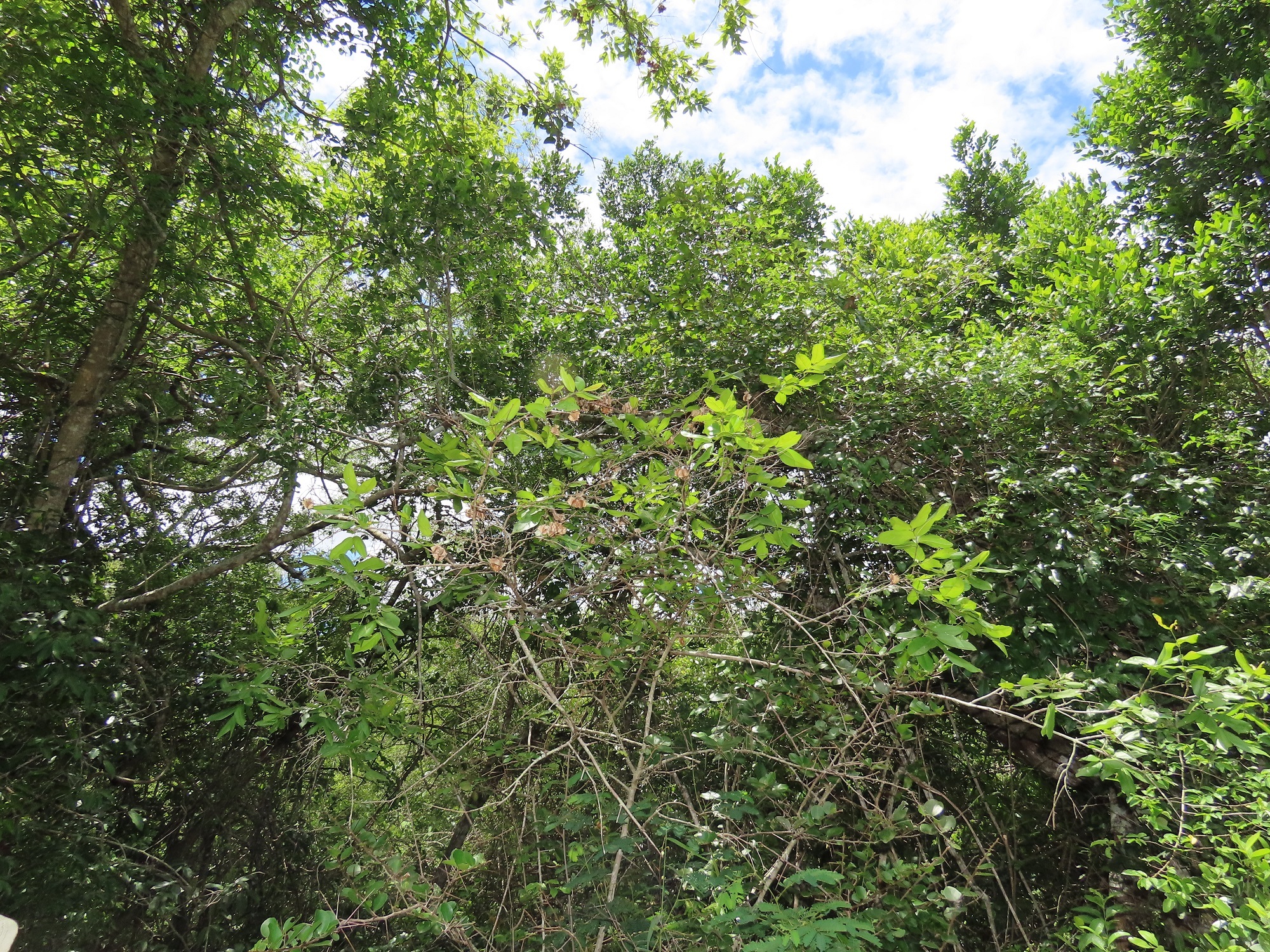
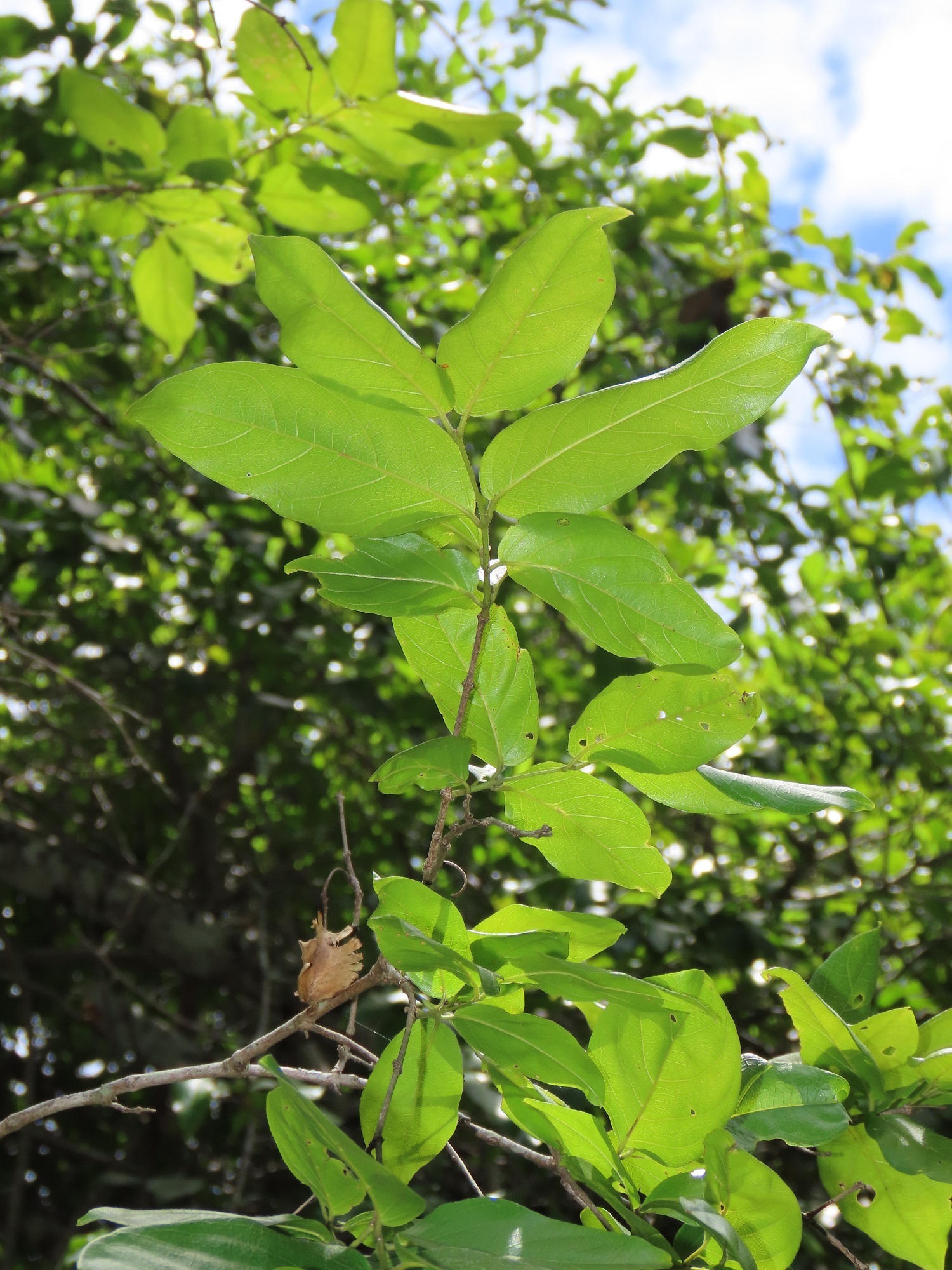
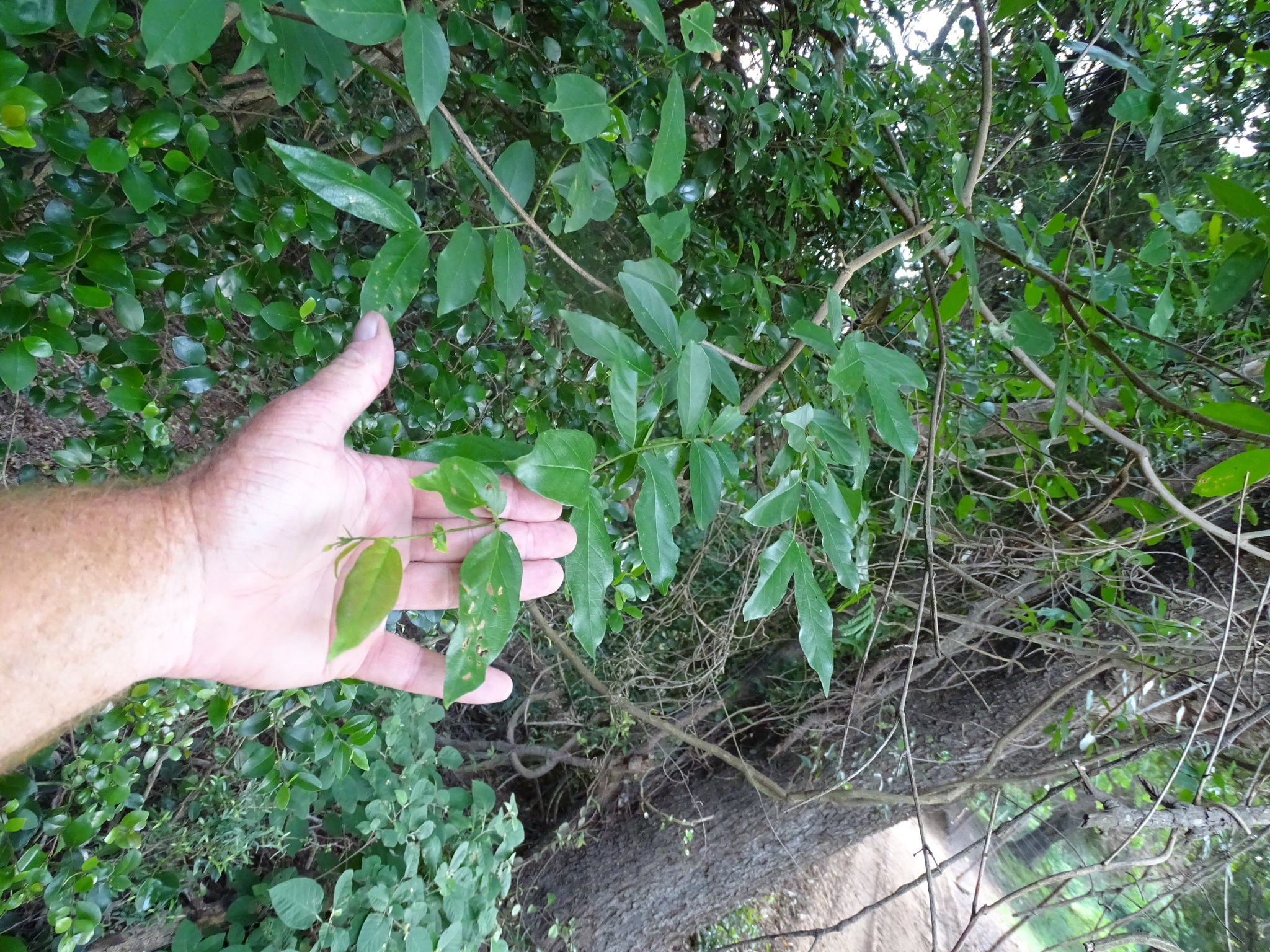
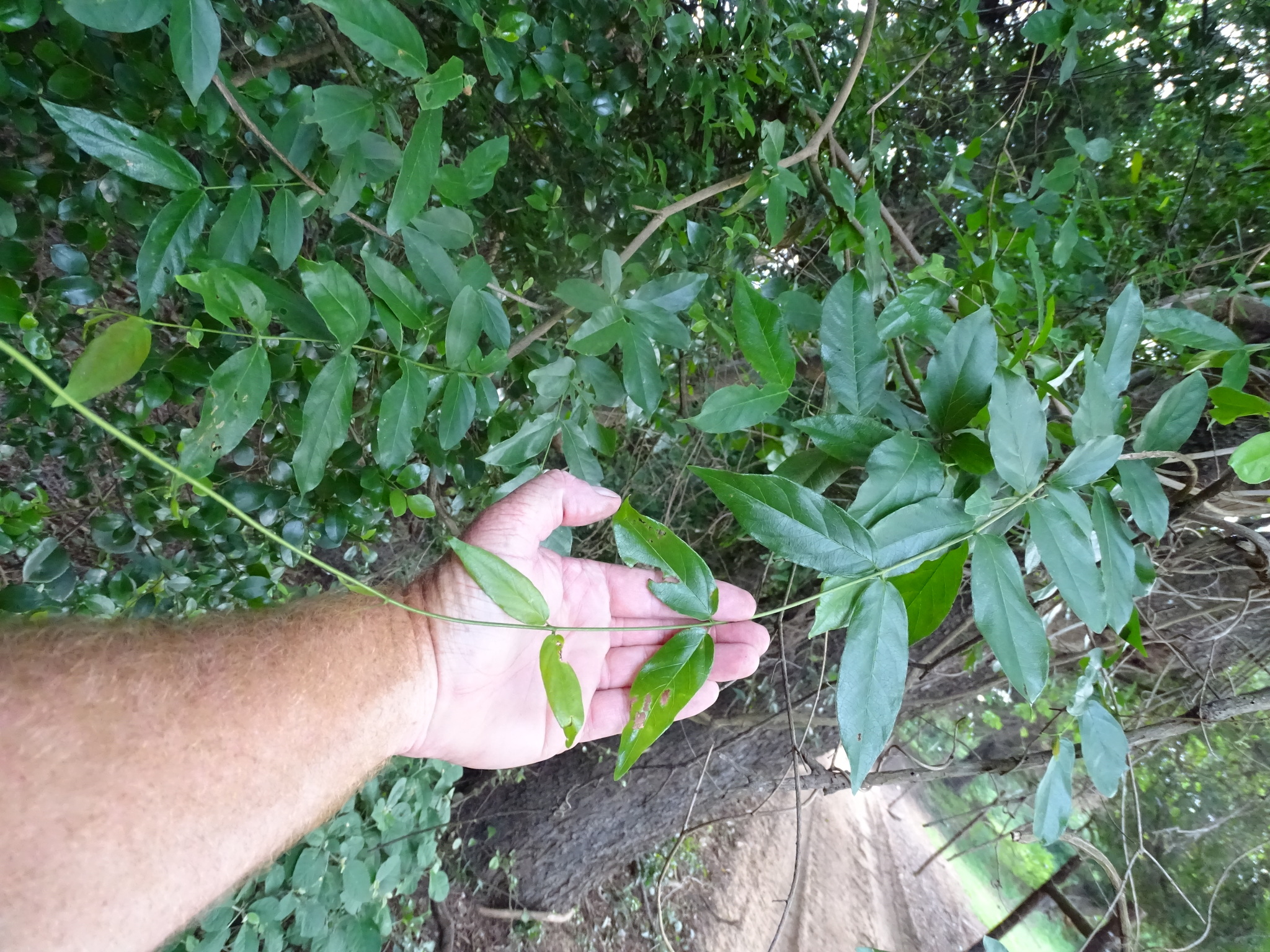
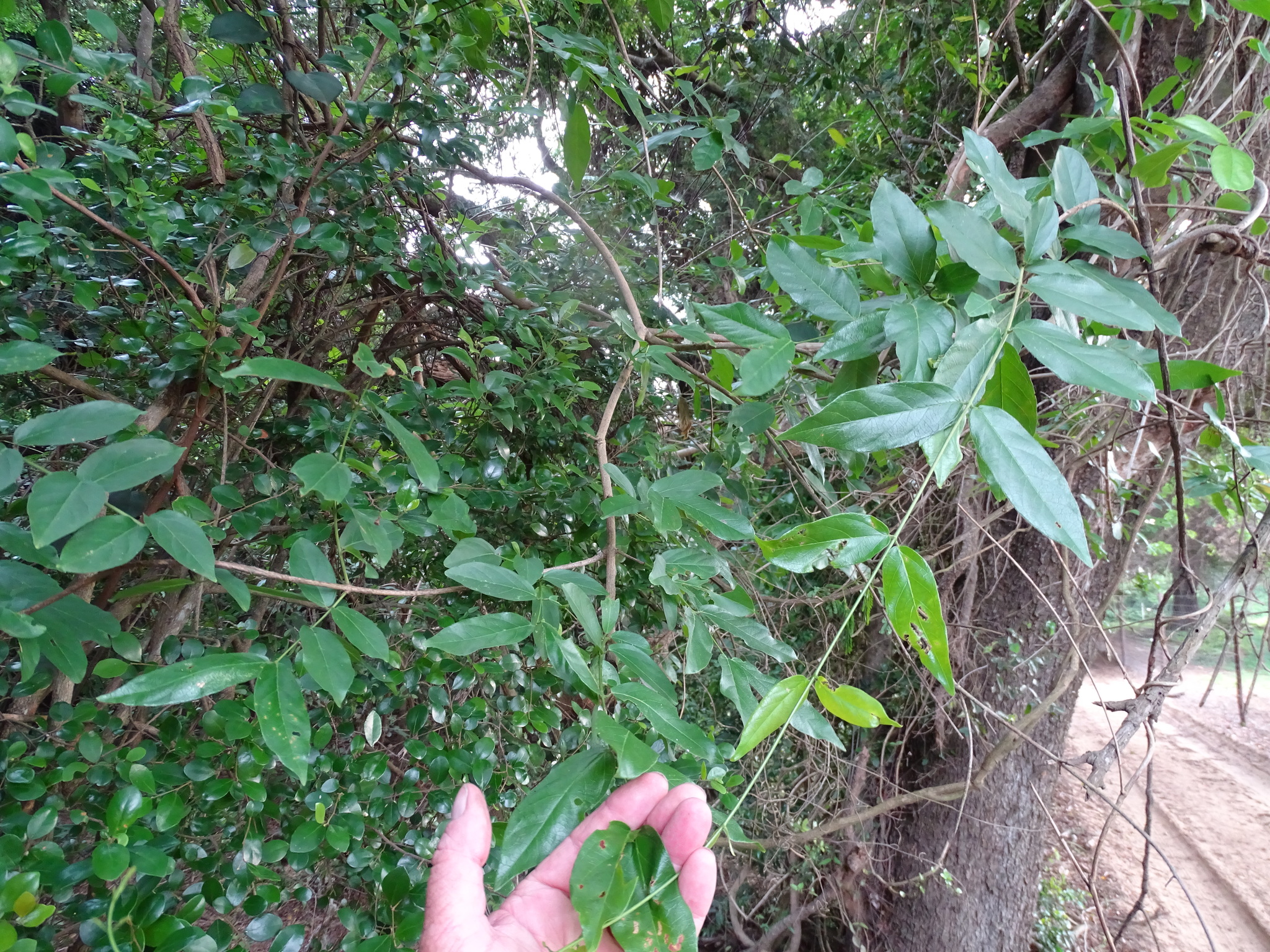
Deciduous, multi-stemmed, scrambling shrub, or often a woody climber reaching the canopy when growing in forest, up to 7(-12) m tall, main stem(s) to 135 mm diameter; branchlets terete, glabrous; ultimate shoots slender and twining, usually sparsely hairy when very young (at least the first internode). Bark ± grey and smooth on young plants becoming rougher and flaking in small pieces, bark on branchlets pale grey with black spots. Leaves opposite, rarely 3-whorled (Moll 5632 in NH), nearly always glabrous when mature, new growth on the same plant may be glabrous or pilose with white combretaceous hairs (unicellular, non-glandular hairs with a basal compartment), hairs mostly lost within 4 weeks, inconspicuous hair-tuft domatia present in some vein axils on the abaxial surface and a few combretaceous hairs may be present on the midrib below; coppice growth hairy; new leaves reddish bronze becoming pale bronze-green, thin, shiny, membranous and somewhat viscid, lamina in young growth narrowly elliptic to oblong, 20-30(-40) x 10-16 mm, apex rounded to refuse, rarely attenuate or apiculate, base rounded; older growth with leaves mid green above, slightly paler with a yellowish wash and somewhat shiny below, becoming orange-red in autumn and winter before falling, coriaceous, lamina elliptic, ovate, obovate or lanceolate, (22-)30-80(-90) x 7-30(-40) mm, apex tapering into a short to long obtuse point or acuminate, rarely apiculate, base cuneate, rounded to sometimes slightly lobed, margin entire and flat, slightly undulate in mature leaves, lamina often revolute especially in new leaves and again in the dry, winter season; midrib sunken above, prominently raised below, secondary and tertiary reticulation prominently raised on adaxial surface, reticulation less obvious below than above, 4-7 pairs of principal lateral veins, looping before reaching the margin; petiole 2-4 mm long, glabrous or with few hairs, scaly. Axillary bud prominent, ±1 mm long, black. Scales best seen under magnification on very young leaves, scattered, not overlapping, about (50-)60-90(-110) pm in diameter, with round to slightly undulate margins, often concealed by glutinous secretions, comprised of essentially 8 radial cells but most of these subdivided by at least one (occasionally more) tangential wall, and the resulting outer cell often with at least one additional radial wall, resulting in 8-16 marginal cells, the latter squarish or tangentially elongated, the resulting inner cell(s) sometimes with one additional radial wall, resulting in usually 8-10 inner cells. Inflorescences short, axillary, subcapitate spikes, ±8-15(-16)-flowered, glutinous; rachis ±10(-20) mm long; peduncle 15-21 mm long, glabrous, scaly; bracts filiform, caducous, ±0.5 mm long. Flowers 4-merous, creamy-white to greenish white with an orange-red centre (disc), strongly sweetly scented (Ward2644 in PRE). Lower hypanthium ±1.5-2.0 x 1 mm, scaly. Upper hypanthium cupuliform, ±1.5 mm long, scaly. Sepals ± widely deltoid, ±0.5 mm long, usually tinged reddish purple. Petals narrowly spathulate, ±1.5-2.5 x 1.5 mm, glabrous or with a few scattered hairs on the margin at apex. Stamens 8, ±1-seriate, inserted shortly above the margin of the disc; filaments ±6 mm long; anthers ±1 mm long. Disc free for ±0.5 mm; glabrous with a pilose margin. Style ±5 mm long. Fruit a 4-winged samara, sub-circular in outline, 18-20(-22) x (20-)22-24 mm, lime-green becoming golden or yellowish brown and sometimes pink-to red-tinged towards the margins of the wings, glutinous especially towards the seed pod, glabrous, except for a few scales, or sometimes with a few scattered hairs, ultimate ends of wings papery; stipe up to 6 mm long; apical peg usually present, ±0.5 mm long. From: Boon, RGC; Jordaan, M; Van Wyk, AE. 2020. A new species of Combretum sect. Ciliatipetala (Combretaceae) from South Africa. Phytotaxa 434(1): 1-12. [ttps://doi.org/10.11646/phytotaxa.434.1.1]
Closely related to Combretum apiculatum, but easily distinguished from this species by being a scrambling shrub to woody climber (vs. usually a single-stemmed tree up to 8 m tall with a rounded canopy), leaf apex acute to obtuse, sometimes acuminate, very rarely apiculate (vs. leaf apex always apiculate), inflorescence a few-flowered subcapitate spike of up to 15(-16) flowers, flowers compactly arranged (vs. an elongated many-flowered spike with about 25 flowers), upper hypanthium cupuliform (vs. campanulate), fruit 18-20 x 22-24 mm (vs. 20-30 x 15-25 mm), and scales of 8 radially arranged cells with most of these cells usually subdivided by at least one tangential wall, the resulting outer and inner cell(s) often with at least one additional radial wall (vs. usually simple 8-celled). Also related to C. edwardsii and C. stylesii; all three being scramblers or climbers, but the range of C. eugeneanum does not overlap and habitat differs. Older growth of the new species is almost totally glabrous, whereas C. edwardsii and C. stylesii have leaves, petioles and branchlets with dense hairs. Additionally, in C. edwardsii the red-brown scales are visible with the naked eye and the inflorescence is an elongated spike, whereas in C. eugeneanum the scales are invisible without magnification and the inflorescence is subcapitate. From: Boon, RGC; Jordaan, M; Van Wyk, AE. 2020. A new species of Combretum sect. Ciliatipetala (Combretaceae) from South Africa. Phytotaxa 434(1): 1-12. [ttps://doi.org/10.11646/phytotaxa.434.1.1]
Grows in sandy soil, in Sand Forest (FOz 8), Tembe Sandy Bushveld (SVl 18) and possibly marginally in Western Maputaland Sandy Bushveld (SVl 19). From: Boon, RGC; Jordaan, M; Van Wyk, AE. 2020. A new species of Combretum sect. Ciliatipetala (Combretaceae) from South Africa. Phytotaxa 434(1): 1-12. [ttps://doi.org/10.11646/phytotaxa.434.1.1]
Combretum eugeneanum is endemic to the Maputaland Centre of Endemism, an area rich in restricted-range plants and animals. The Maputaland Centre is at the southern end of the tropics in Africa and at the northern end of the Maputaland-Pondoland-Albany Hotspot, one of 36 global biodiversity hotspots. The species is recorded to occur from False Bay Park (part of the iSimangaliso Wetland Park) northwards to the KwaZulu-Natal border with Mozambique. The range includes Phinda Private Game Reserve, Mkhuze Game Reserve, Tembe Elephant Park and Ndumo Game Reserve and the corridor between the latter two conservation areas. The species almost certainly occurs in the far south of the Mozambican part of the Maputaland Centre, but it is yet to be recorded there. From: Boon, RGC; Jordaan, M; Van Wyk, AE. 2020. A new species of Combretum sect. Ciliatipetala (Combretaceae) from South Africa. Phytotaxa 434(1): 1-12. [ttps://doi.org/10.11646/phytotaxa.434.1.1]
October to November
0 to 100 m
This map contains point-based occurrences at different locations
Occurrence in the Flora of Southern Africa (FSA) countries and South African provinces. Residence status indicates if a taxon is indigenous, endemic, naturalised or invasive in a specific region. This data is based on specimen records and literature
FSA
SA
BOT
NAM
ESW
LES
WC
EC
NC
FS
GA
KZN
LP
MP
NW
Absent
Indigenous
Endemic
Naturalised
Invasive

Names and Sources
Published in: Phytotaxa 434(1): 5 (2020)
Type: South Africa. KwaZulu-Natal: Ndumu [Ndumo], 21 November 1967, Strey & Moll 3758 (NH, holo.; K, PRE, iso.)
| Common name | Language | Reference/barcode | Published as |
|---|---|---|---|
| Maputaland climbing bushwillow | English | Boon, RGC; Jordaan, M; Van Wyk, AE. 2020. A new species of Combretum sect. Ciliatipetala (Combretaceae) from South Africa, Phytotaxa 434(1): 1-12. [ttps://doi.org/10.11646/phytotaxa.434.1.1]. | |
| maputalandrankboswilg | Afrikaans | Boon, RGC; Jordaan, M; Van Wyk, AE. 2020. A new species of Combretum sect. Ciliatipetala (Combretaceae) from South Africa, Phytotaxa 434(1): 1-12. [ttps://doi.org/10.11646/phytotaxa.434.1.1]. |
Classification
KINGDOM Plantae
SUBKINGDOM Phanerogamae
PHYLUM Anthophyta
ORDER Myrtales
FAMILY Combretaceae
SUBFAMILY Combretoideae
TRIBE Combreteae
GENUS Combretum
SPECIES eugeneanum
3 results for Combretum eugeneanum R.G.C.Boon, Jordaan & A.E.van Wyk
This map contains point-based occurrences at different locations
2020
PERIODICAL/JOURNAL
A new species of Combretum sect. Ciliatipetala (Combretaceae) from South Africa Boon, RGC; Jordaan, M; Van Wyk, AEPhytotaxa 434(1)1-12
No results found for Combretum eugeneanum R.G.C.Boon, Jordaan & A.E.van Wyk
| Part(s) of plant used | Use(s) | Reference |
|---|
Coming soon...