PLANTAE / PHANEROGAMAE / ANTHOPHYTA / ASPARAGALES / IRIDACEAE / CROCOIDEAE / IXIEAE / SYRINGODEA / FLANAGANII

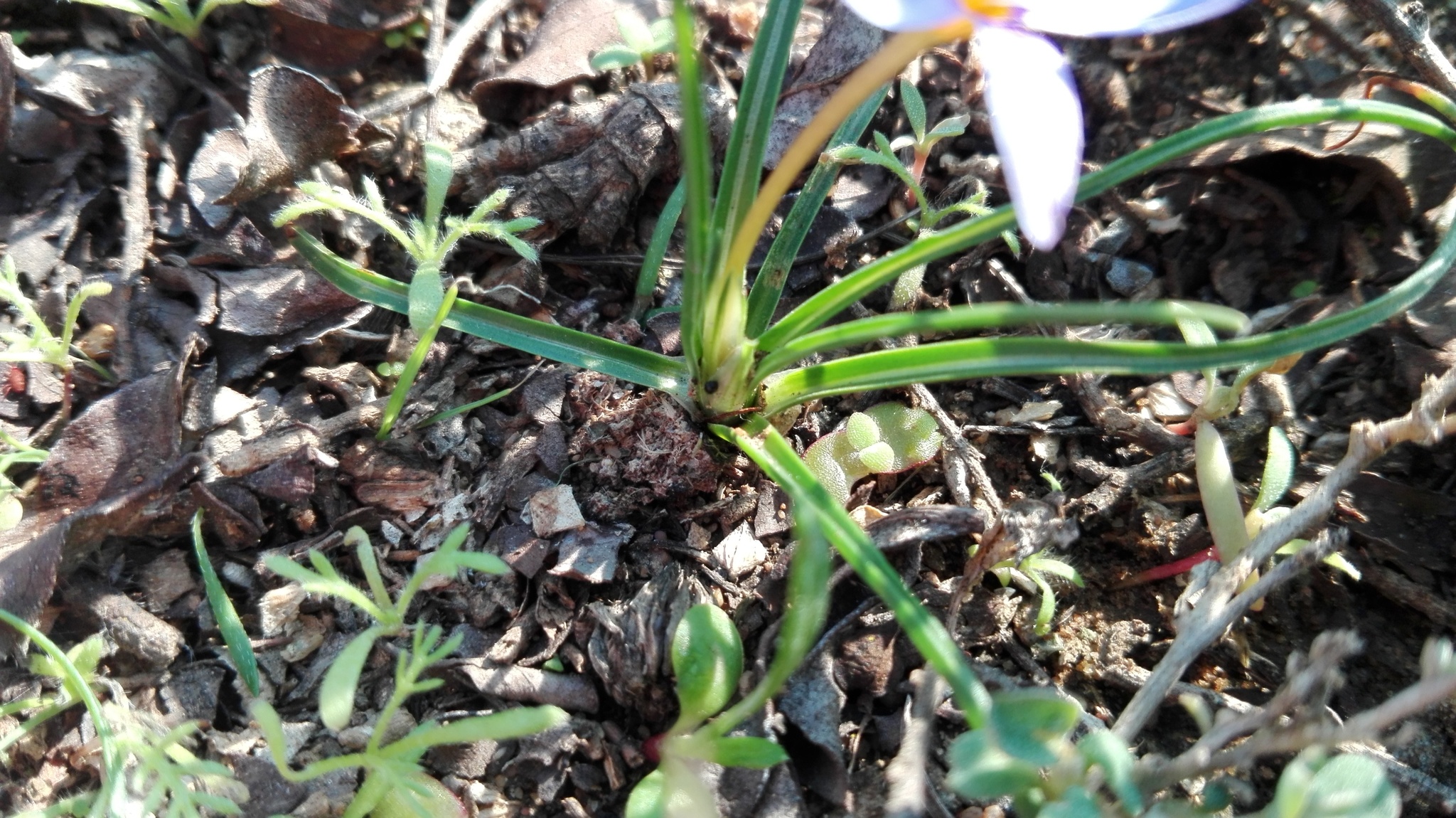
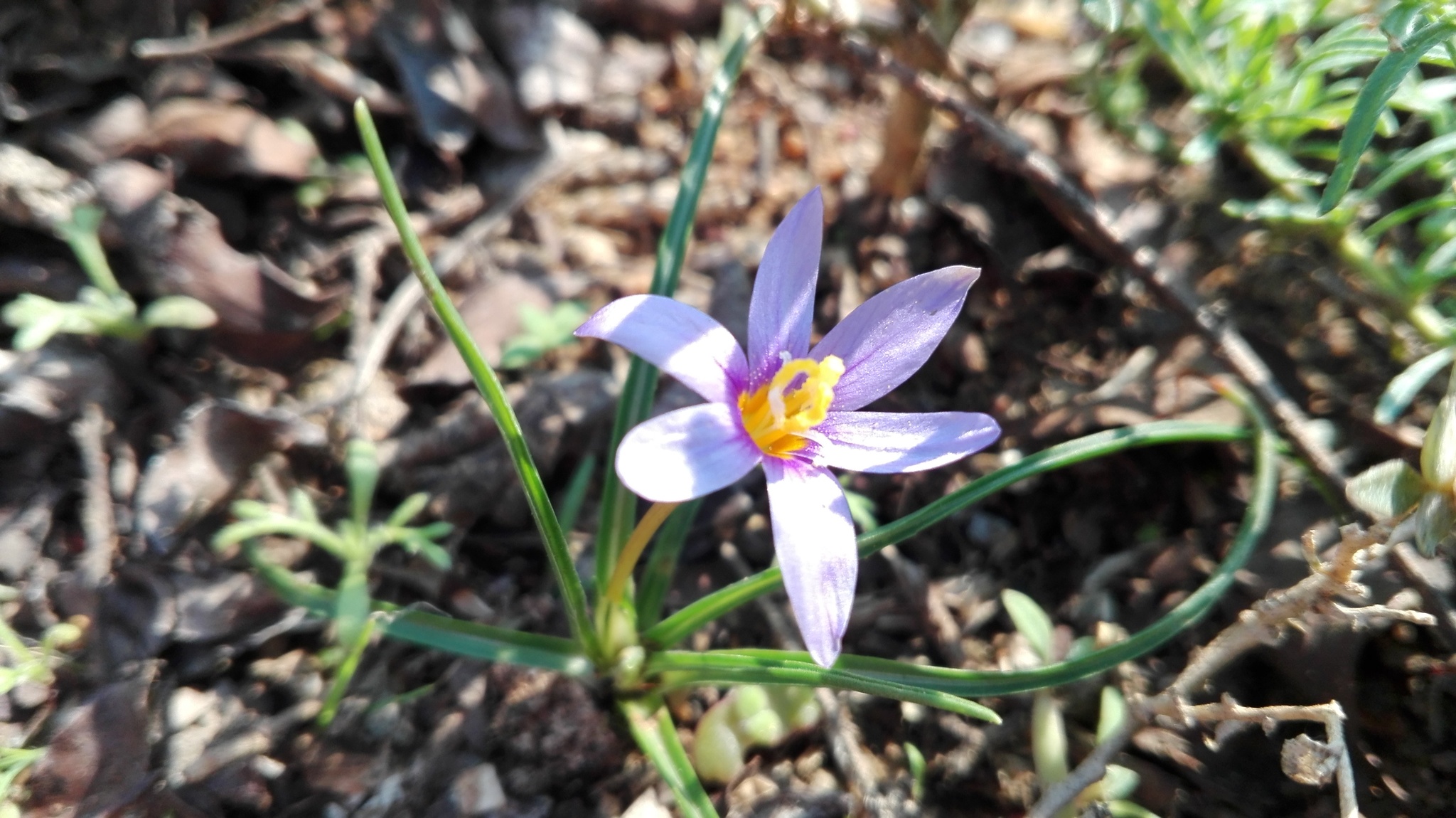
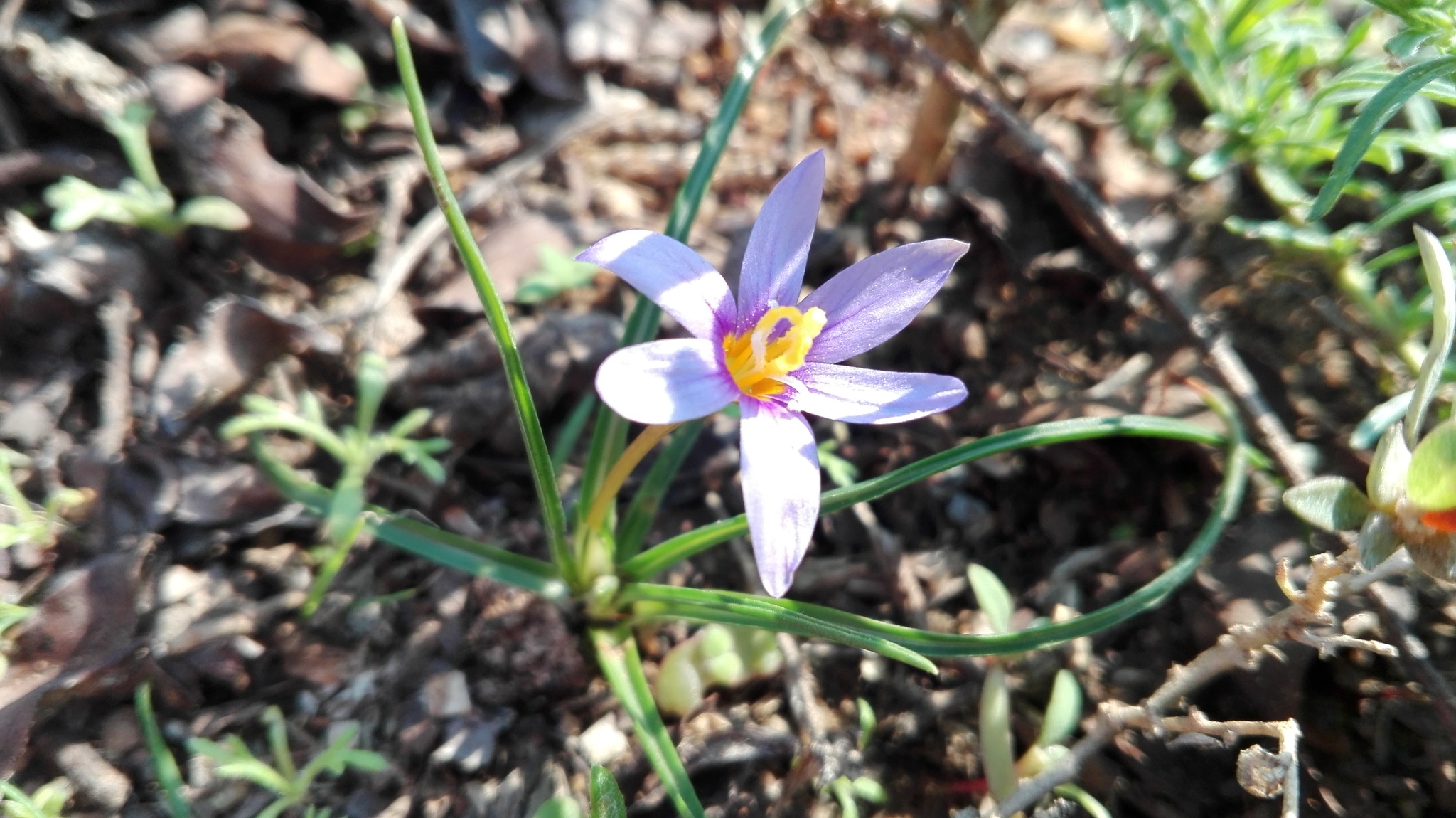
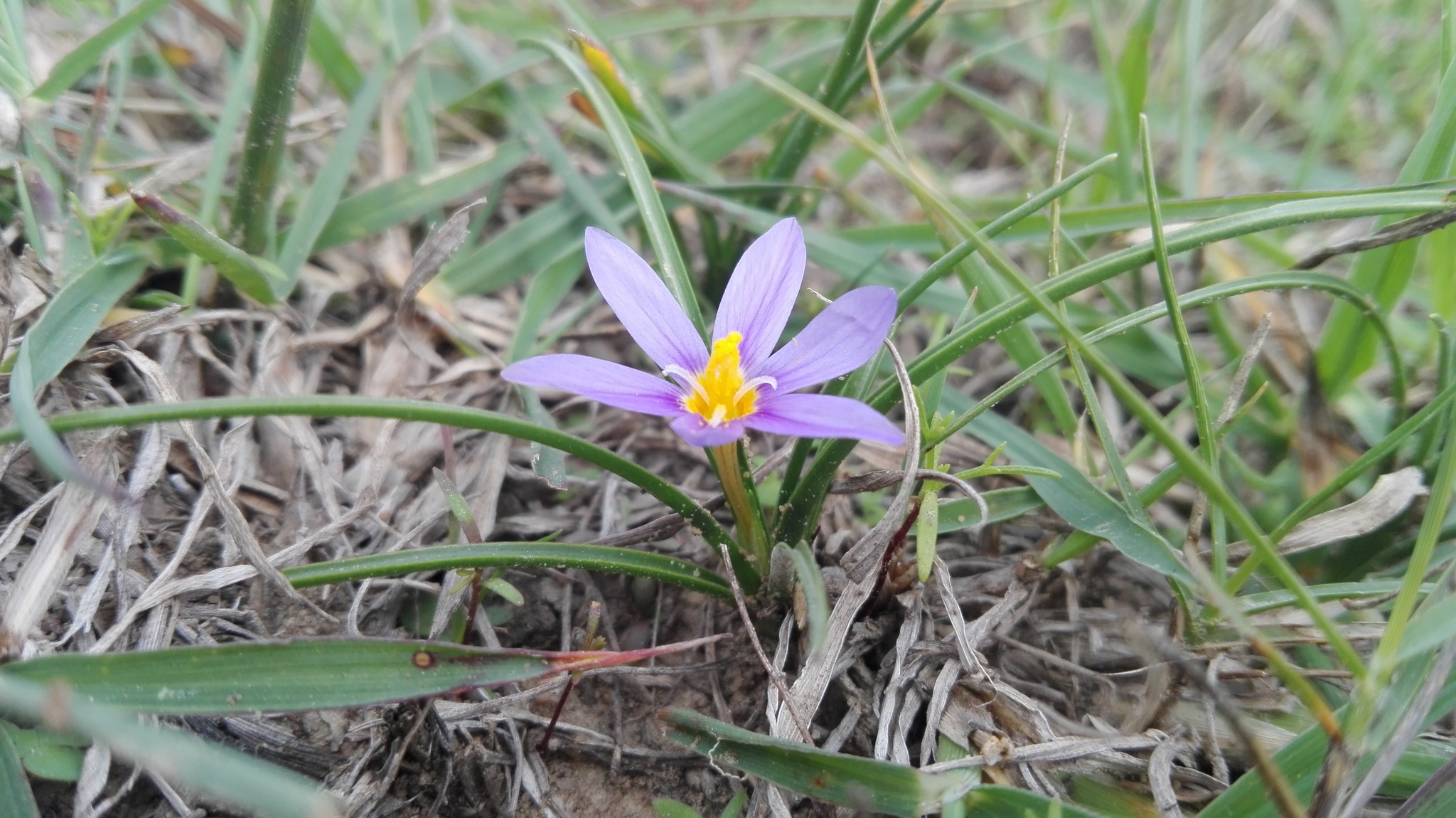
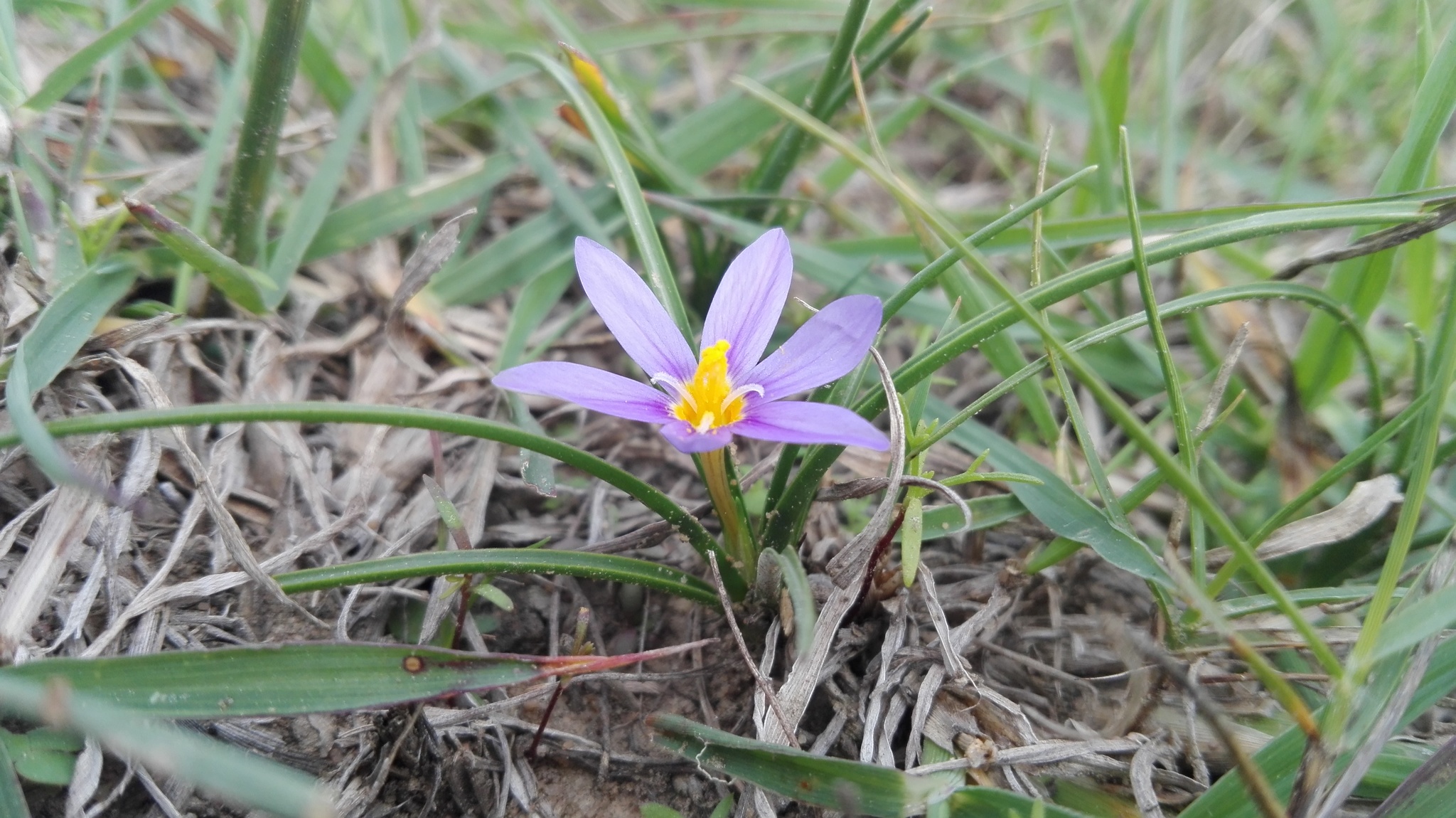
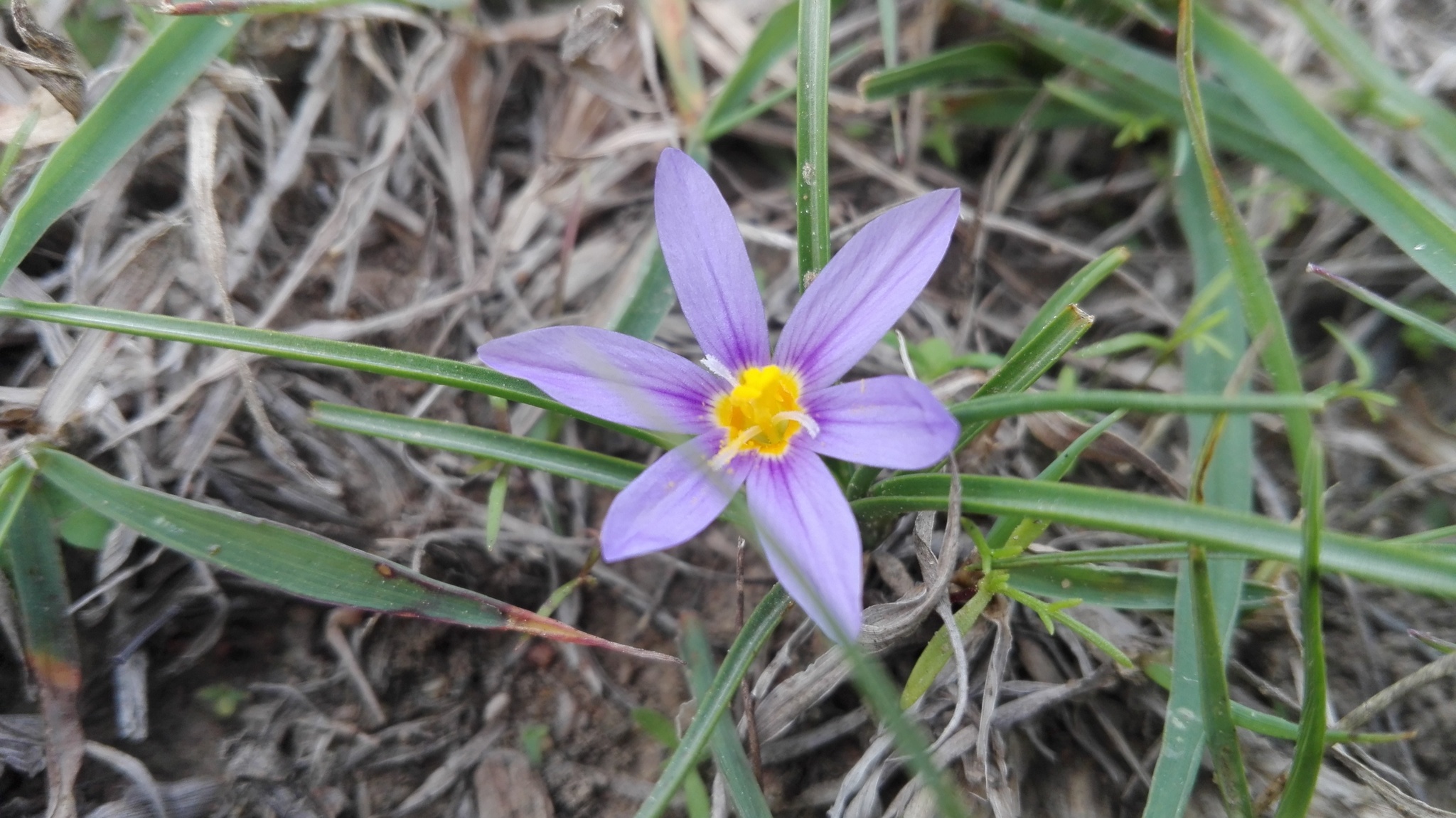
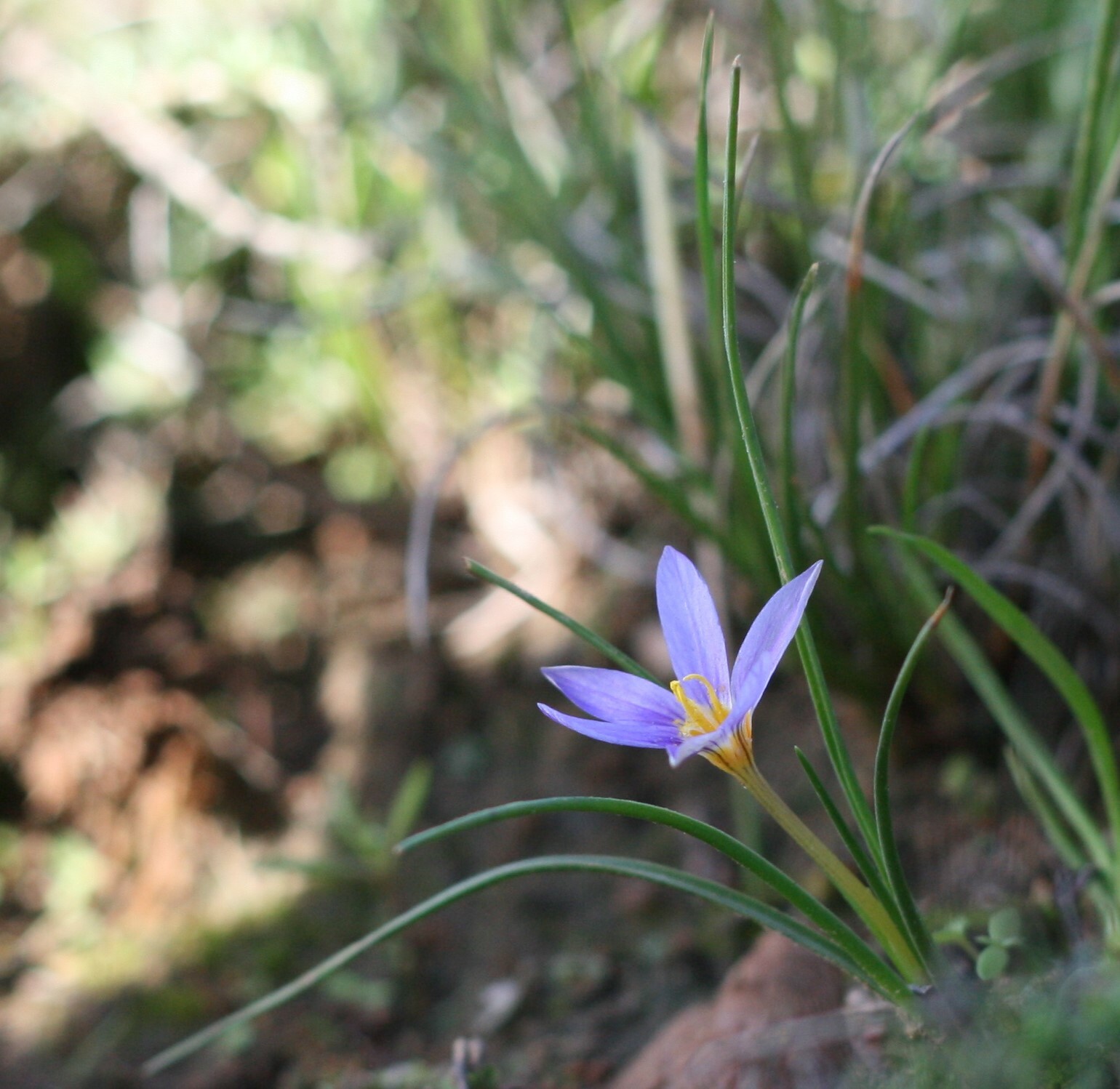
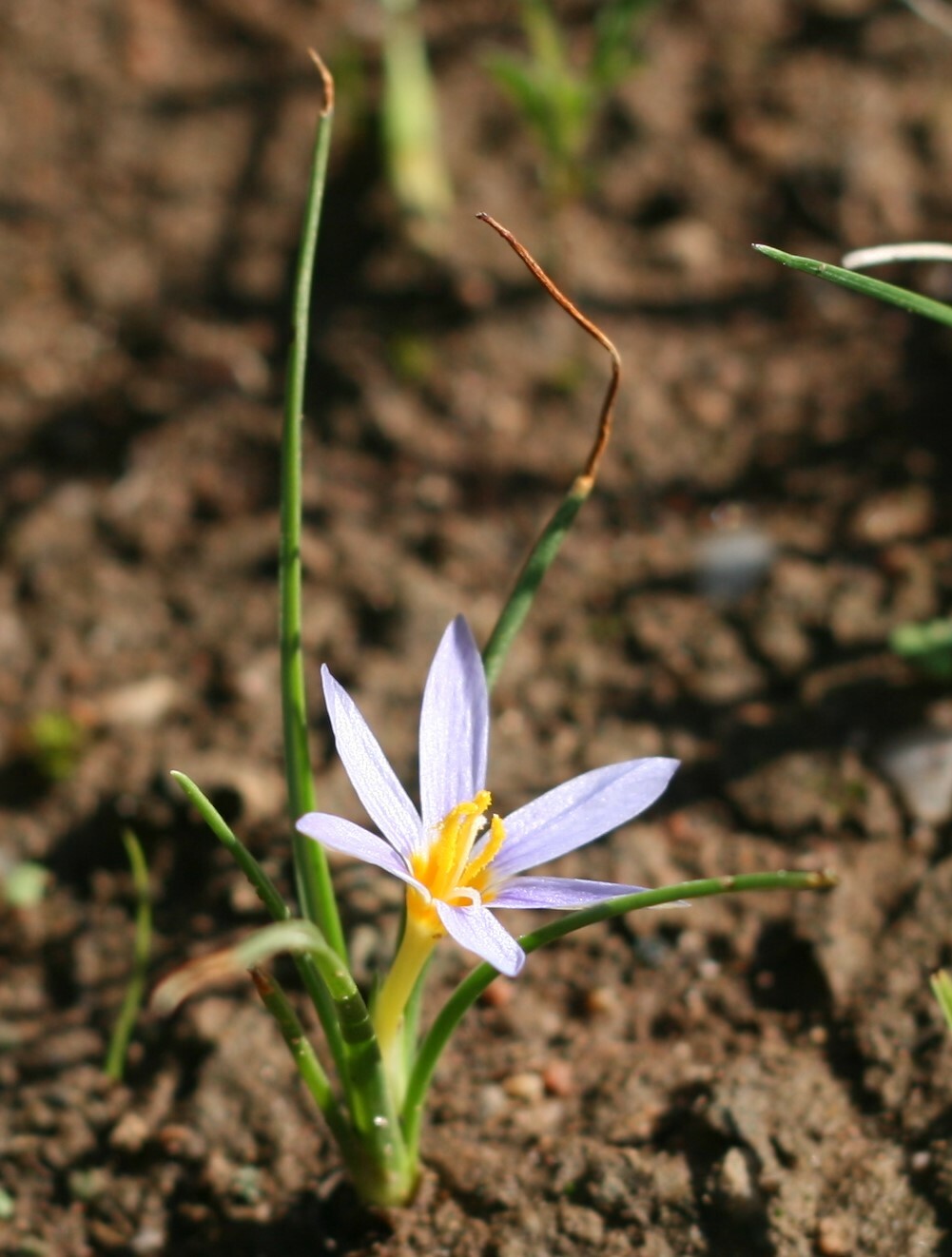
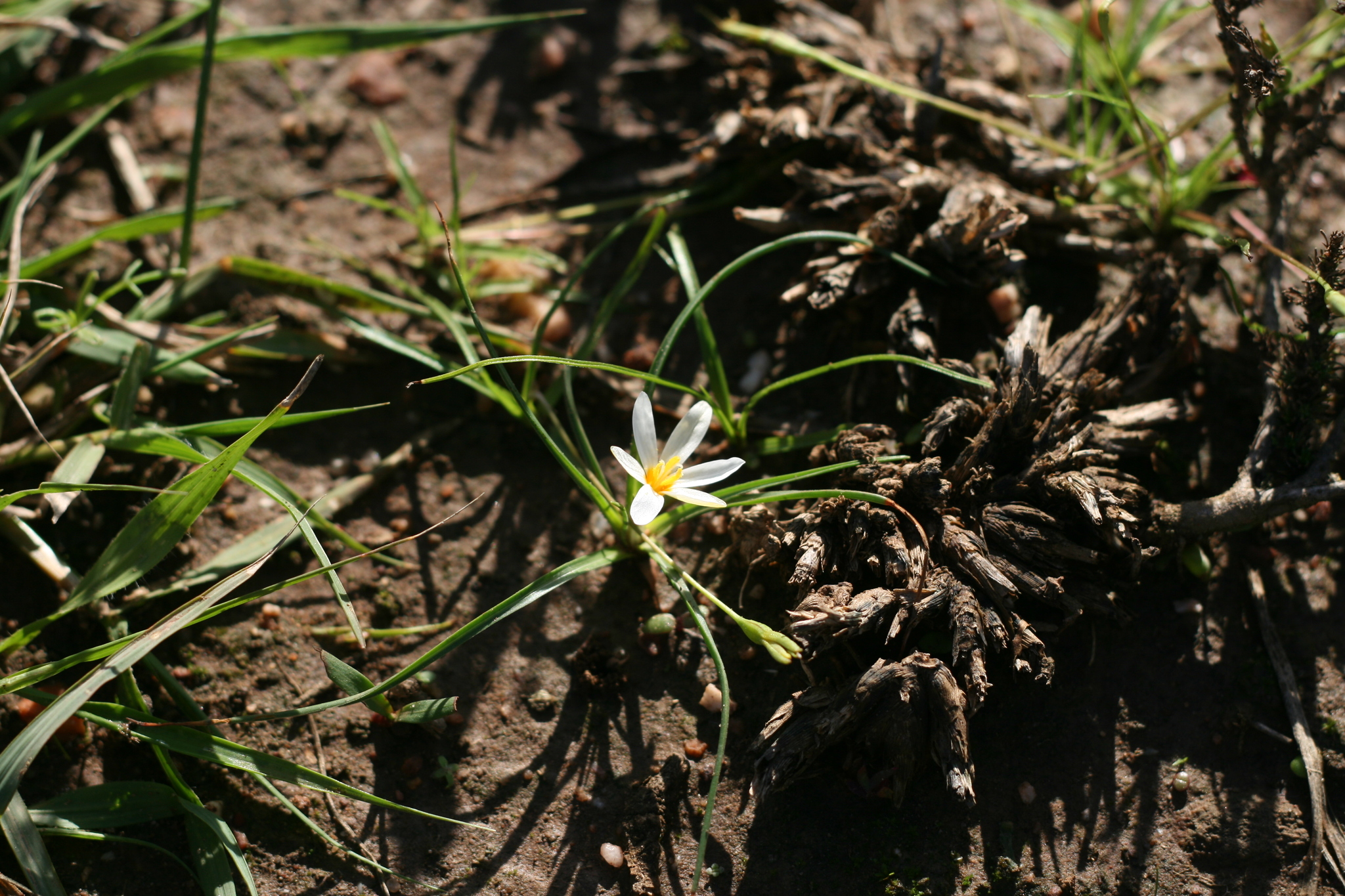
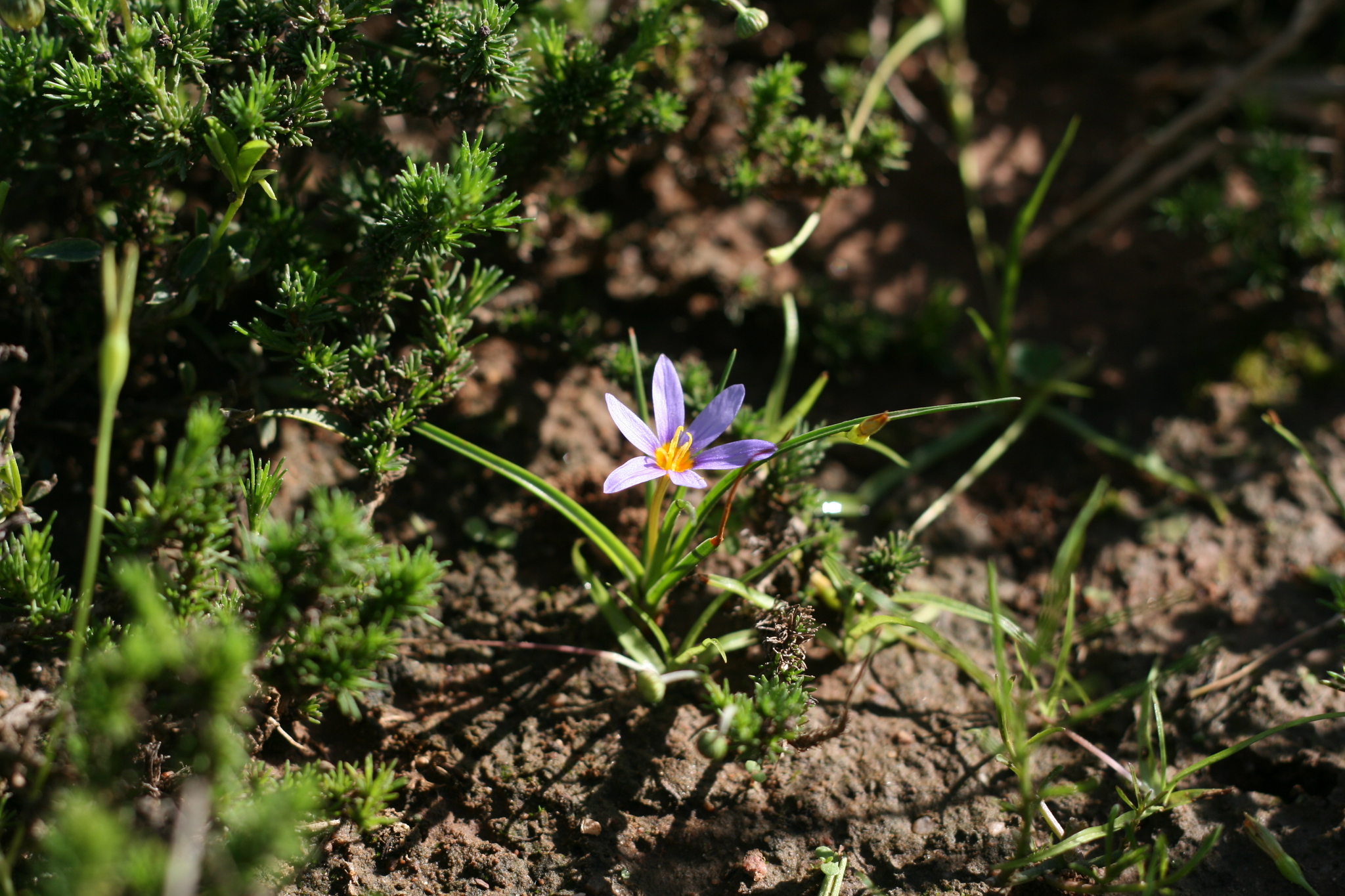
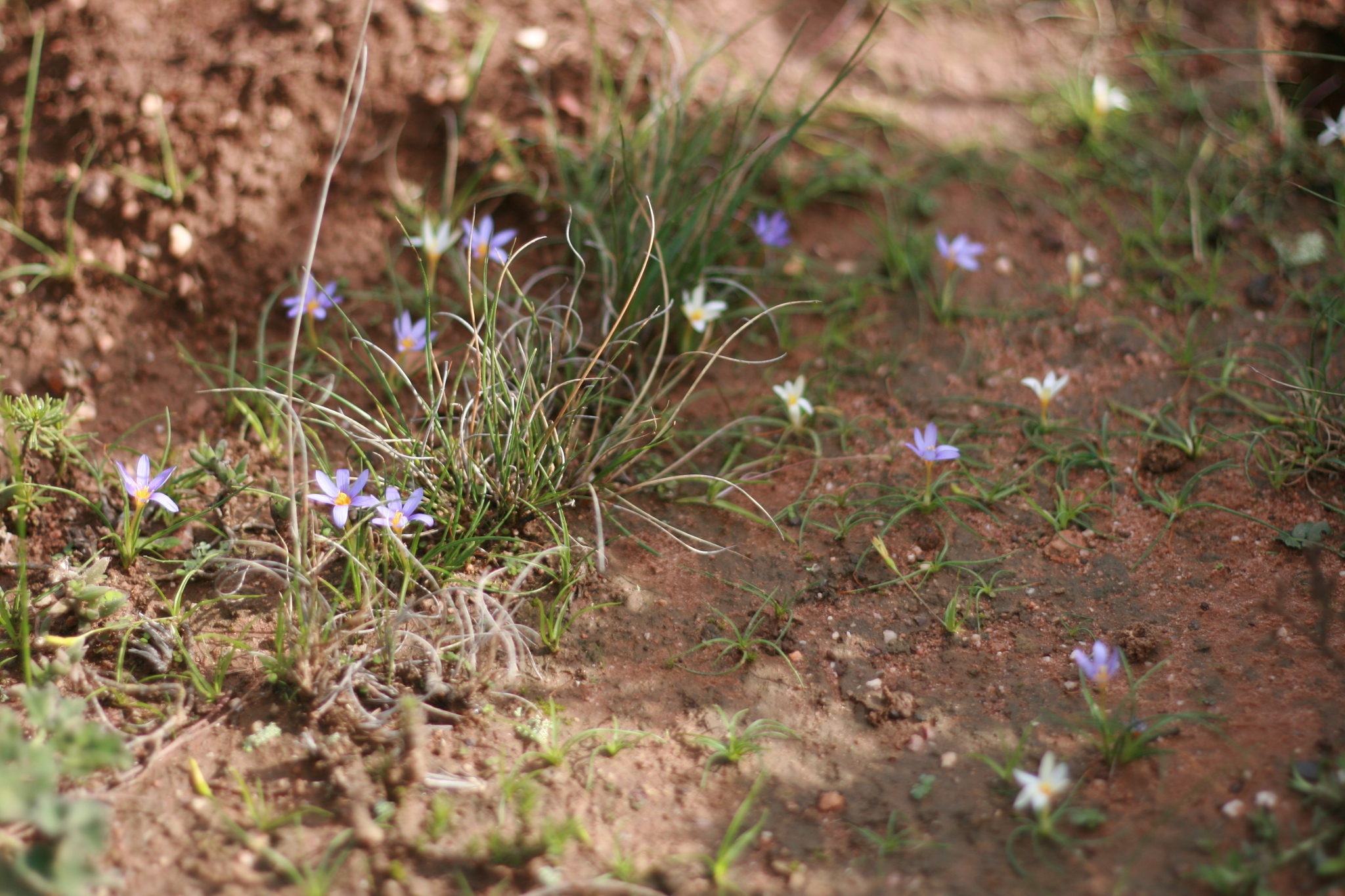
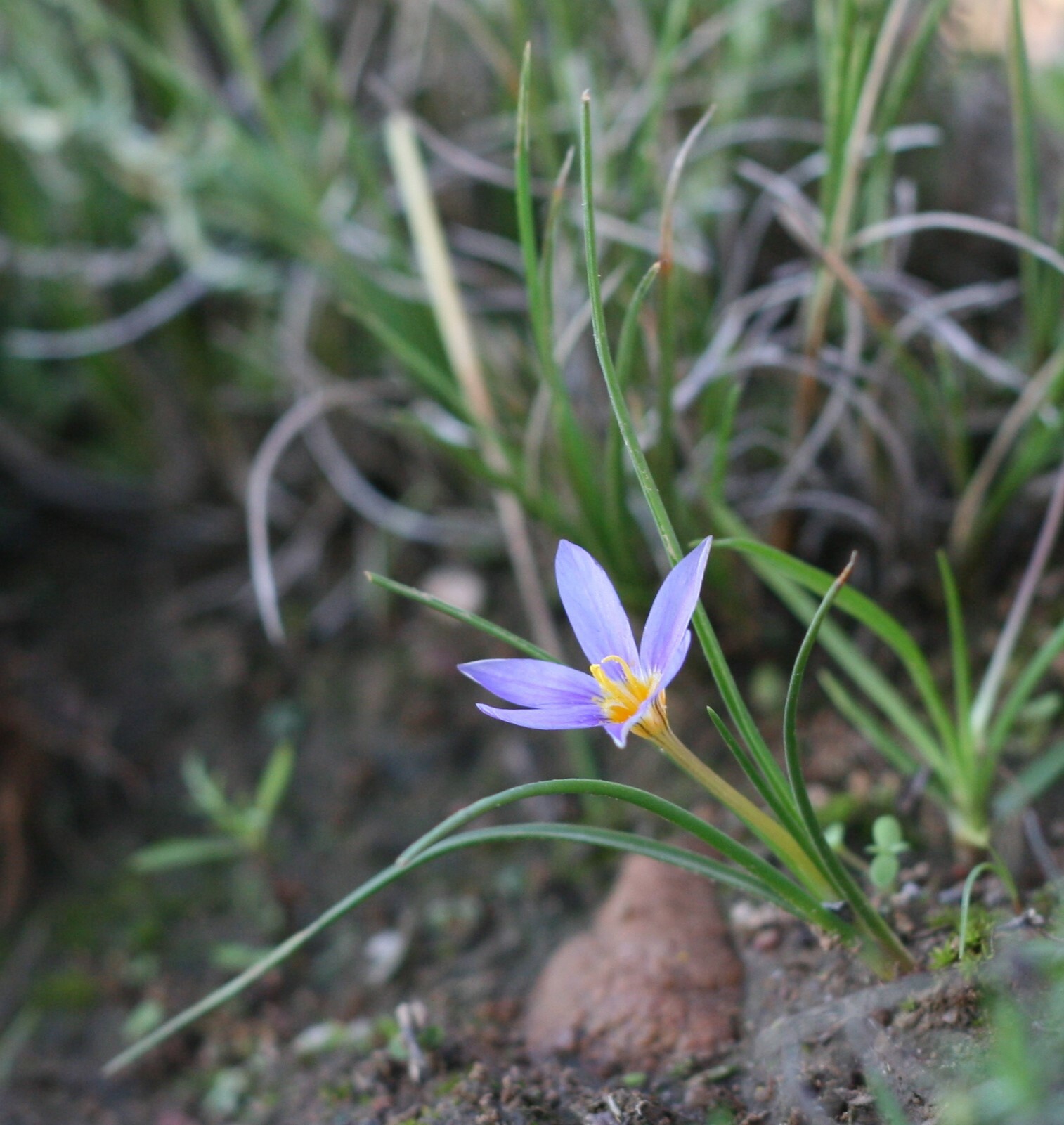
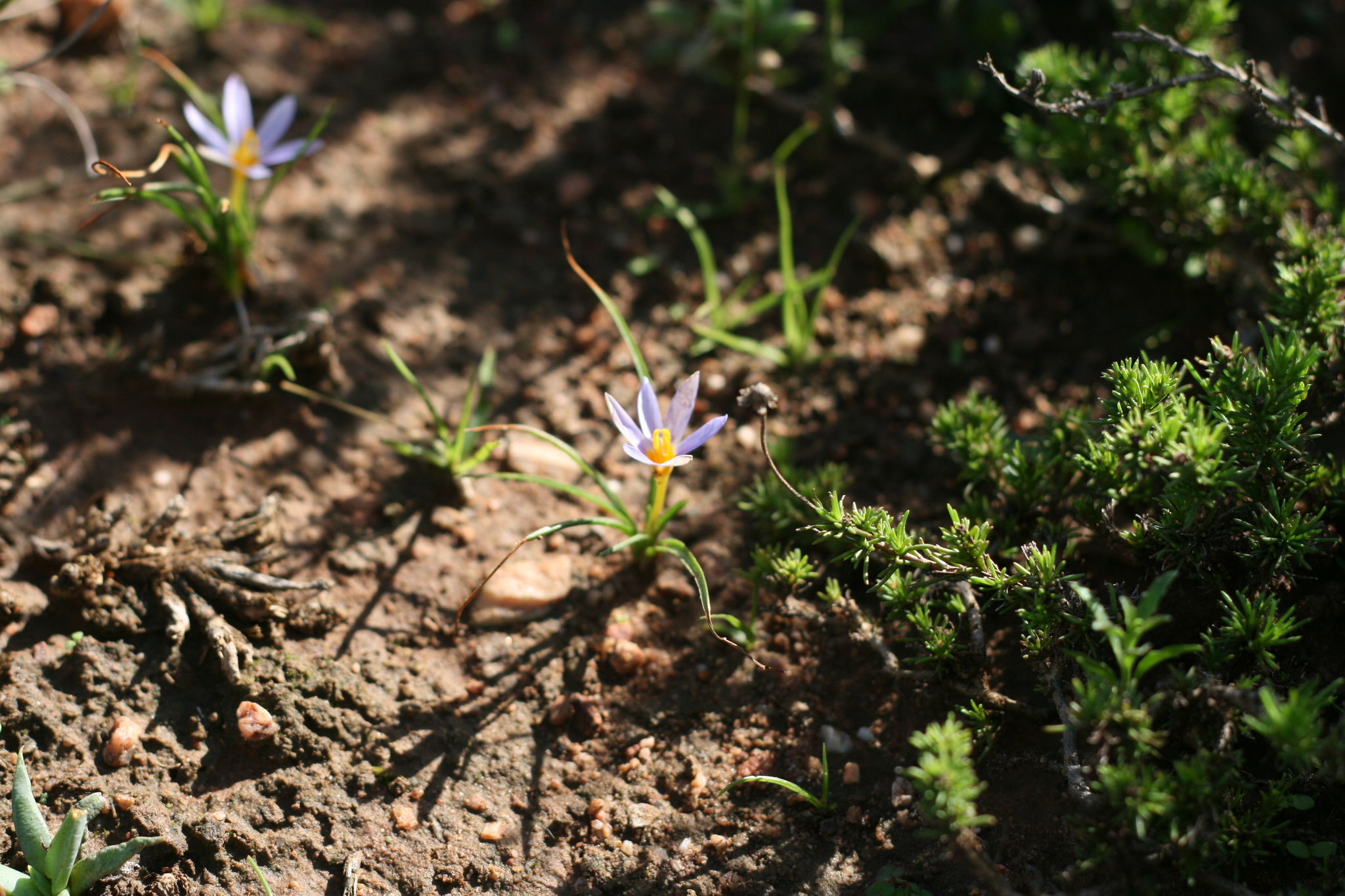
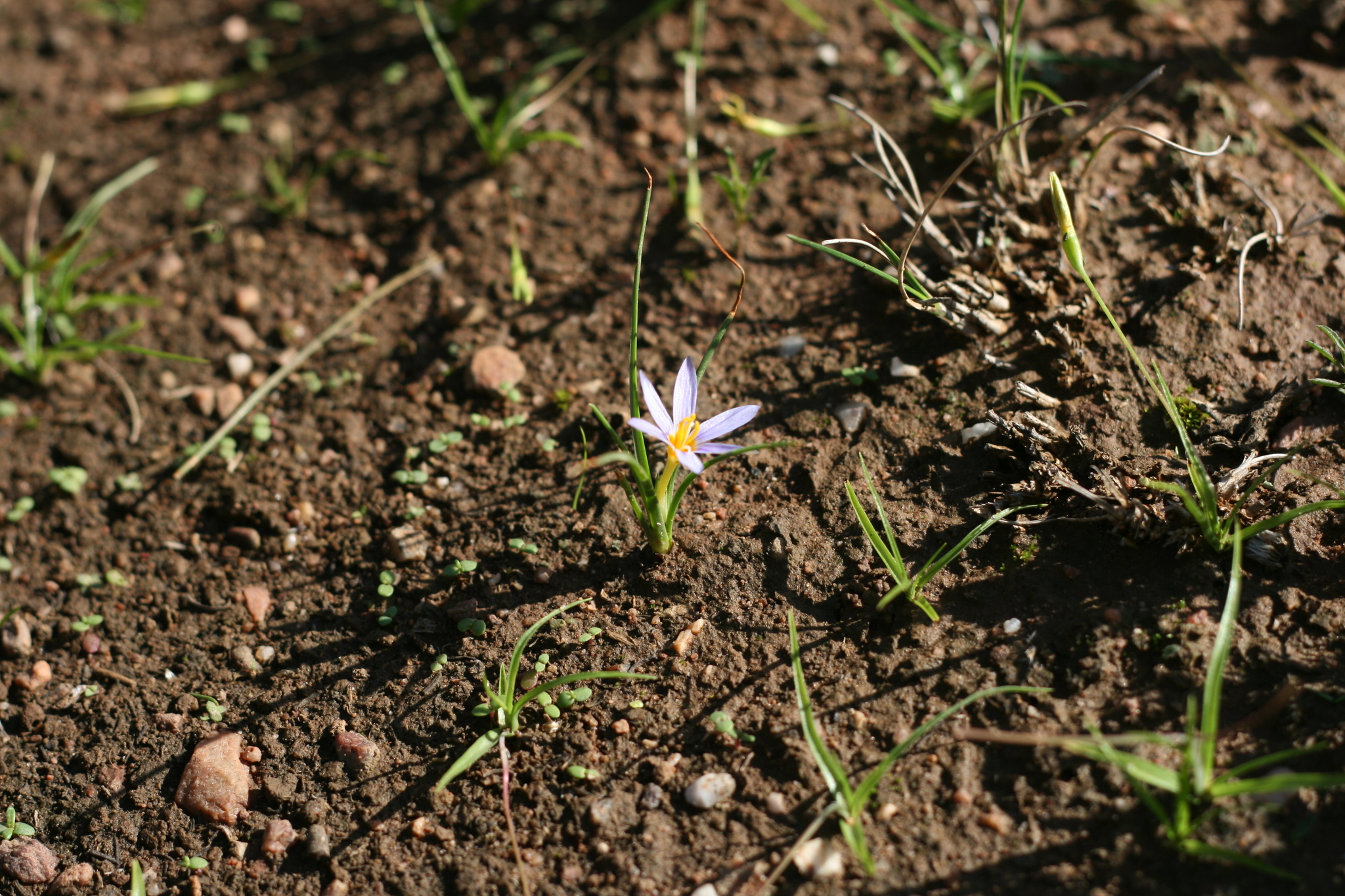
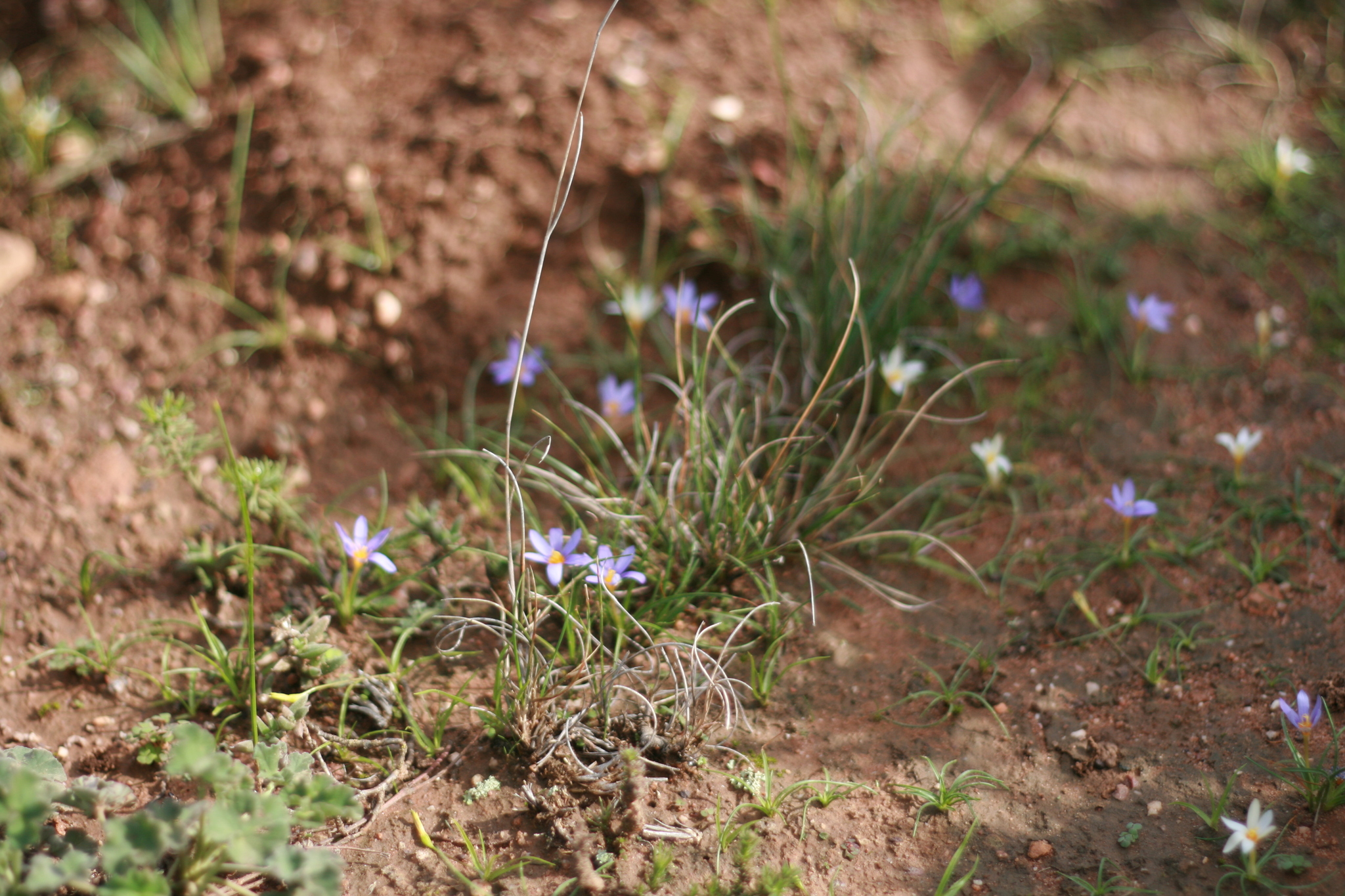
Plants 30-120 mm high. Corm turbinate with small ridge on pointed base, 4-10 mm diam. Leaves 5 to 9, linear-canaliculate with pale adaxial groove, 30-100 x 0.5-1.0 mm, smooth or ciliolate on margins. Flowers hypocrateriform, pale to deep violet, paler at base ± and marked with yellow or orange in throat; perianth tube narrowly trumpet-shaped, widening in distal 3-5 mm, 25-50 mm long; tepals narrowly elliptic, 5-10 x ± 2 mm, ± acute or obtuse. Stamens erect; filaments 2-5 mm long, white or yellow; anthers 3-5 mm long, yellow. Style 30-55 mm long, dividing ± at middle of anthers, branches 1-2 mm long, spathulate. Capsules clavate, 7-8 mm long. Seeds unknown. From: Goldblatt, P; Manning, JC. 2020. Iridaceae of southern Africa. Strelitzia 42: 1-1159. South African National Biodiversity Institute, Pretoria. [CC BY]
Perennial herb, geophyte, 0.03-0.08 m; corm slightly asymmetric, obovate, tunics smooth, brown; stem very short. Leaves 6-9, conduplicate, 30-100 x 0.5-1.0 mm. Bracts 12-25 mm long, usually membranous with brown stripes. Flower 1, violet with yellow throat, 30-50 mm long; perianth tube 25-45 mm long; tepals oblanceolate, 5-8 x 2 mm long. Style as long as perianth tube; stigma 1 mm long, spathulate. Flowering time Apr.-June. Capsule 7-8 mm long, brown-speckled. From: Bredenkamp, CL; Magwaza, ZL. 2019. Iridaceae. In: CL Bredenkamp (ed.), A Flora of the Eastern Cape Province. Strelitzia 41(3): 1821-1882. South African National Biodiversity Institute, Pretoria. [CC BY]
Cormous geophyte, 3-12 cm, corm turbinate. Leaves 6-9, filiform. Flowers blue to violet with white or yellow centre, tube 25-45 mm. From: Manning, JC; Goldblatt, P. 2012. Iridaceae. In: J Manning & P Goldblatt (eds), Plants of the Greater Cape Floristic Region 1: The Core Cape flora. Strelitzia 29: 119-176. South African National Biodiversity Institute, Pretoria. [CC BY]
Plants 30-120 mm long. Leaves 30-100 x 0.5-1 mm. Flowers (25-)30-50 mm long, limb up to 16 mm across, violet with a yellow throat. Perianth tube c. 25-45 mm long, widened at the top to 1.5 mm in diam.; segments oblanceolate or oblanceolate-elliptical, 5-8 x c. 2 mm. Filaments c. 2 mm; anthers c. 3 mm long. Style as long as the perianth tube or slightly longer; stigmas c. 1 mm long, spathulate. Capsule 7-8 mm long. From: De Vos, MP. 1983. Syringodea, Romulea. Fl. S. Africa 7(2,2): 1-76. Botanical Research Institute, Pretoria. [CC BY]
Retained as distinct from Syringodea bifucata, with which it shares a perianth tube marked with yellow or orange in the throat, on the basis of its much smaller flowers less than 16 mm diam., with tepals 5-10 x ± 2 mm and style branches 1-2 mm long. From: Goldblatt, P; Manning, JC. 2020. Iridaceae of southern Africa. Strelitzia 42: 1-1159. South African National Biodiversity Institute, Pretoria. [CC BY]
Closely related to S. bifucata, differing mainly in the smaller size of all the organs. From: De Vos, MP. 1983. Syringodea, Romulea. Fl. S. Africa 7(2,2): 1-76. Botanical Research Institute, Pretoria. [CC BY]
Rock sheets and stony flats in open grassland. From: Goldblatt, P; Manning, JC. 2020. Iridaceae of southern Africa. Strelitzia 42: 1-1159. South African National Biodiversity Institute, Pretoria. [CC BY]
In stony ground at sea level. Albany Thicket, Eastern Fynbos-Renosterveld. From: Bredenkamp, CL; Magwaza, ZL. 2019. Iridaceae. In: CL Bredenkamp (ed.), A Flora of the Eastern Cape Province. Strelitzia 41(3): 1821-1882. South African National Biodiversity Institute, Pretoria. [CC BY]
Stony flats. From: Manning, JC; Goldblatt, P. 2012. Iridaceae. In: J Manning & P Goldblatt (eds), Plants of the Greater Cape Floristic Region 1: The Core Cape flora. Strelitzia 29: 119-176. South African National Biodiversity Institute, Pretoria. [CC BY]
Restricted to Eastern Cape, South Africa, from Port Elizabeth to Dordrecht. From: Goldblatt, P; Manning, JC. 2020. Iridaceae of southern Africa. Strelitzia 42: 1-1159. South African National Biodiversity Institute, Pretoria. [CC BY]
Port Elizabeth to E Cape. From: Manning, JC; Goldblatt, P. 2012. Iridaceae. In: J Manning & P Goldblatt (eds), Plants of the Greater Cape Floristic Region 1: The Core Cape flora. Strelitzia 29: 119-176. South African National Biodiversity Institute, Pretoria. [CC BY]
From the Eastern Cape Province in the Port Elizabeth and Stutterheim districts (3227-DB; 3225-DC). From: De Vos, MP. 1983. Syringodea, Romulea. Fl. S. Africa 7(2,2): 1-76. Botanical Research Institute, Pretoria. [CC BY]
March to April
0 to 730 m
This map contains point-based occurrences at different locations
Occurrence in the Flora of Southern Africa (FSA) countries and South African provinces. Residence status indicates if a taxon is indigenous, endemic, naturalised or invasive in a specific region. This data is based on specimen records and literature
FSA
SA
BOT
NAM
ESW
LES
WC
EC
NC
FS
GA
KZN
LP
MP
NW
Absent
Indigenous
Endemic
Naturalised
Invasive
Names and Sources
Classification
KINGDOM Plantae
SUBKINGDOM Phanerogamae
PHYLUM Anthophyta
ORDER Asparagales
FAMILY Iridaceae
SUBFAMILY Crocoideae
TRIBE Ixieae
GENUS Syringodea
SPECIES flanaganii
7 results for Syringodea flanaganii Baker
Barcode: NBG0271772-0 Collector(s) & number: McMaster, JC, 196 | 2012-3-5
South Africa, Eastern Cape, Cathcart. Estrell vlei.
Data Resource: BODATSA View record
Barcode: PRE0040827-0 Collector(s) & number: Flanagan, HG, 720 | 1897-4-
South Africa, Eastern Cape, DRAAIBOSCH; GONUBIE HILL
Data Resource: BODATSA View record
Barcode: PRE0040825-0 Collector(s) & number: Long, FR, 989 | 1933-6-27
South Africa, Eastern Cape, PORT ELIZABETH DIST.; KORSTEN COMMONAGE.
Data Resource: BODATSA View record
Barcode: PRE0040826-0 Collector(s) & number: Flanagan, HG, 720 | 1891-4-
South Africa, Eastern Cape, KOMGHA; ONSUMMIT OF SUMMIT OF THE GONUBIE HILL.
Data Resource: BODATSA View record
This map contains point-based occurrences at different locations
2020
SERIES
Iridaceae of southern Africa Goldblatt, P; Manning, JCStrelitzia 42: 1-1159
South African National Biodiversity Institute, Pretoria
2019
SERIES CHAPTER
Iridaceae Bredenkamp, CL; Magwaza, ZLIn: CL Bredenkamp (ed.), A Flora of the Eastern Cape Province. Strelitzia 41(3)1821-1882
South African National Biodiversity Institute, Pretoria
2012
SERIES CHAPTER
Iridaceae Manning, JC; Goldblatt, PIn: J Manning & P Goldblatt (eds), Plants of the Greater Cape Floristic Region 1: The Core Cape flora. Strelitzia 29: 119-176
South African National Biodiversity Institute, Pretoria
1983
FLORA
Syringodea, Romulea De Vos, MPFlora of Southern Africa 7(2),21-76
Botanical Research Institute, Pretoria
1974
PERIODICAL/JOURNAL
Die Suid-Afrikaanse genus Syringodea De Vos, MPJournal of South African Botany 40: 201-254
No results found for Syringodea flanaganii Baker
Status and criteria
VU
Assessor(s)
Plantae Coordinator
JOURNAL ARTICLE
Sherwin HA, Montgomery WI, Lundy MG. 2013. The impact and implications of climate change for bats. Mammal Review. 43:171–182
BOOK
Monadjem, A., Taylor, P.J., Cotterill, F.P.D. and Schoeman M.C. 2010. Bats of Southern and Central Africa: a biogeographic and taxonomic synthesis. University of Witwatersrand Press
REPORT
ACR 2015. African Chiroptera Report 2015i-xix + 7001
JOURNAL ARTICLE
Sherwin HA, Montgomery WI, Lundy MG. 2013. The impact and implications of climate change for bats. Mammal Review. 43:171–182
JOURNAL ARTICLE
Baerwald EF, D’Amours GH, Klug BJ, Barclay RM 2008. Barotrauma is a significant cause of bat fatalities at wind turbines. Current Biology. 18:695–696
JOURNAL ARTICLE
Arnett EB, Huso MM, Schirmacher MR, Hayes JP. 2011. Altering turbine speed reduces bat mortality at wind-energy facilities. Frontiers in Ecology and the Environment. 9:209–214
JOURNAL ARTICLE
Cryan PM, Barclay RM 2009. Causes of bat fatalities at wind turbines: hypotheses and predictions. Journal of Mammalogy. 90:1330–1340
BOOK
Berthinussen, A., Richardson, O.C. and Altringham, J.D. 2010. Bat Conservation: Global Evidence for the Effects of Interventions. Synopses of Conservation Evidence. Pelagic Publishing
JOURNAL ARTICLE
MacEwan KL. 2016. Fruit bats and wind turbine fatalities in South Africa. African Bat Conservation News. 42:3–5
JOURNAL ARTICLE
Kunz TH, Braun de Torrez E, Bauer D, Lobova T, Fleming TH 2011. Ecosystem services provided by bats. Annals of the New York Academy of Sciences. 1223:1–38
JOURNAL ARTICLE
Rydell J, Bach L, Dubourg-Savage M-J, Green M, Rodrigues L, Hedenström A 2010. Bat mortality at wind turbines in northwestern Europe.. Acta Chiropterologica. 12:261–274
JOURNAL ARTICLE
Norberg, U.M. and Rayner, J.M. 1987. Ecological morphology and flight in bats (Mammalia; Chiroptera): wing adaptations, flight performance, foraging strategy and echolocation. Philosophical Transactions of the Royal Society B: Biological Sciences. 316:335–427
| Part(s) of plant used | Use(s) | Reference |
|---|
Coming soon...