
PLANTAE / PHANEROGAMAE / ANTHOPHYTA / ASPARAGALES / IRIDACEAE / CROCOIDEAE / IXIEAE / DIERAMA / ERECTUM

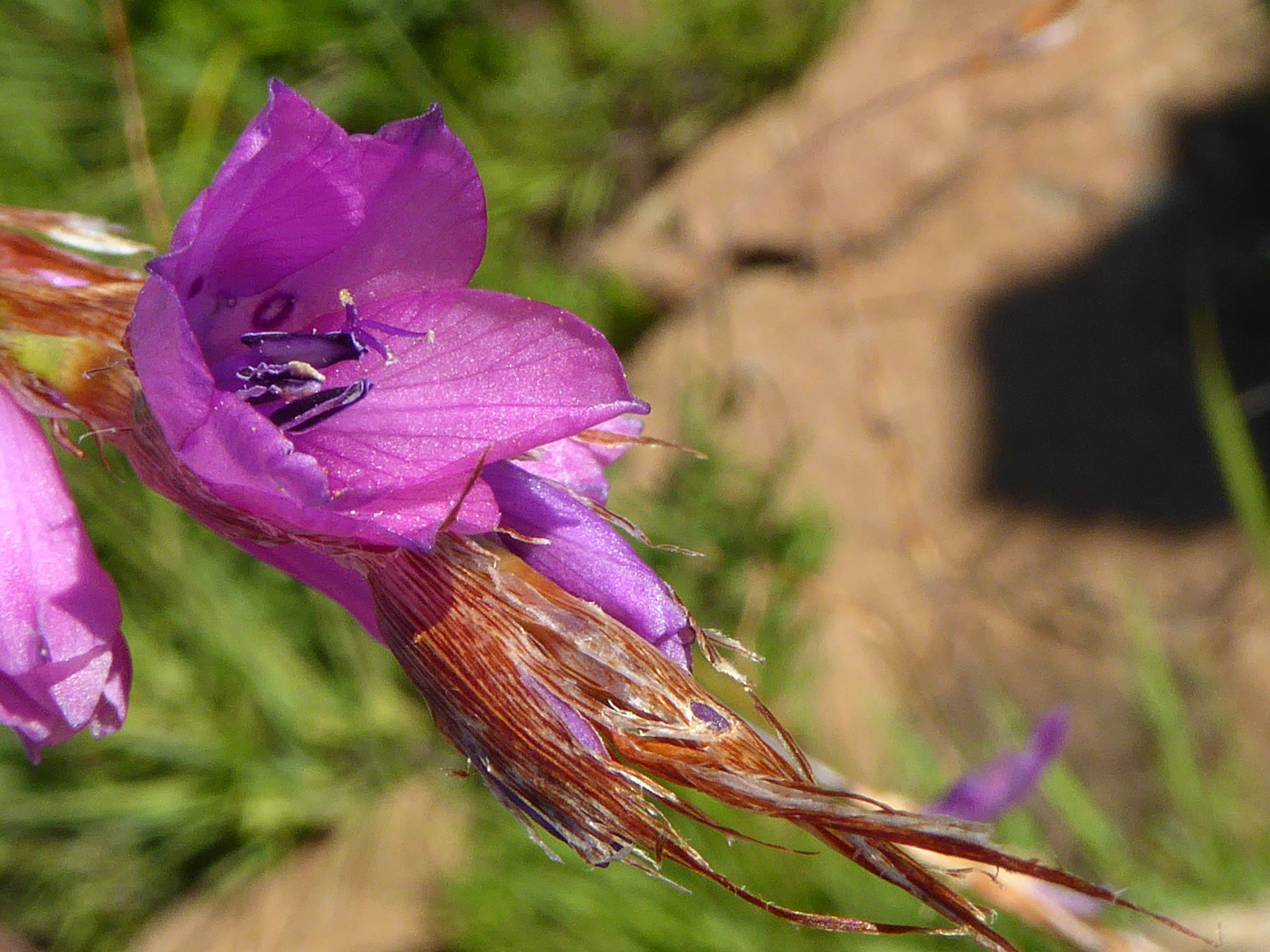
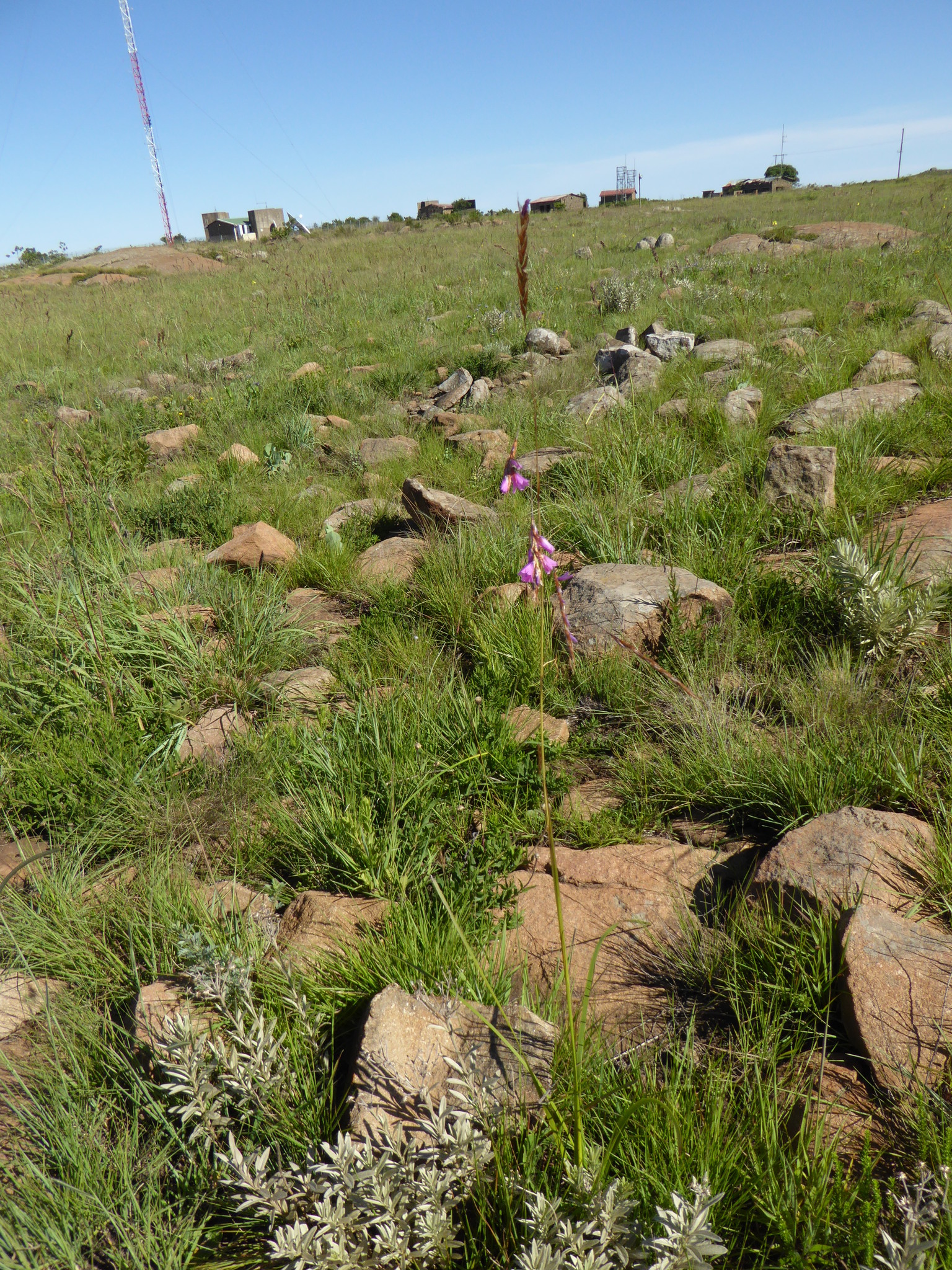
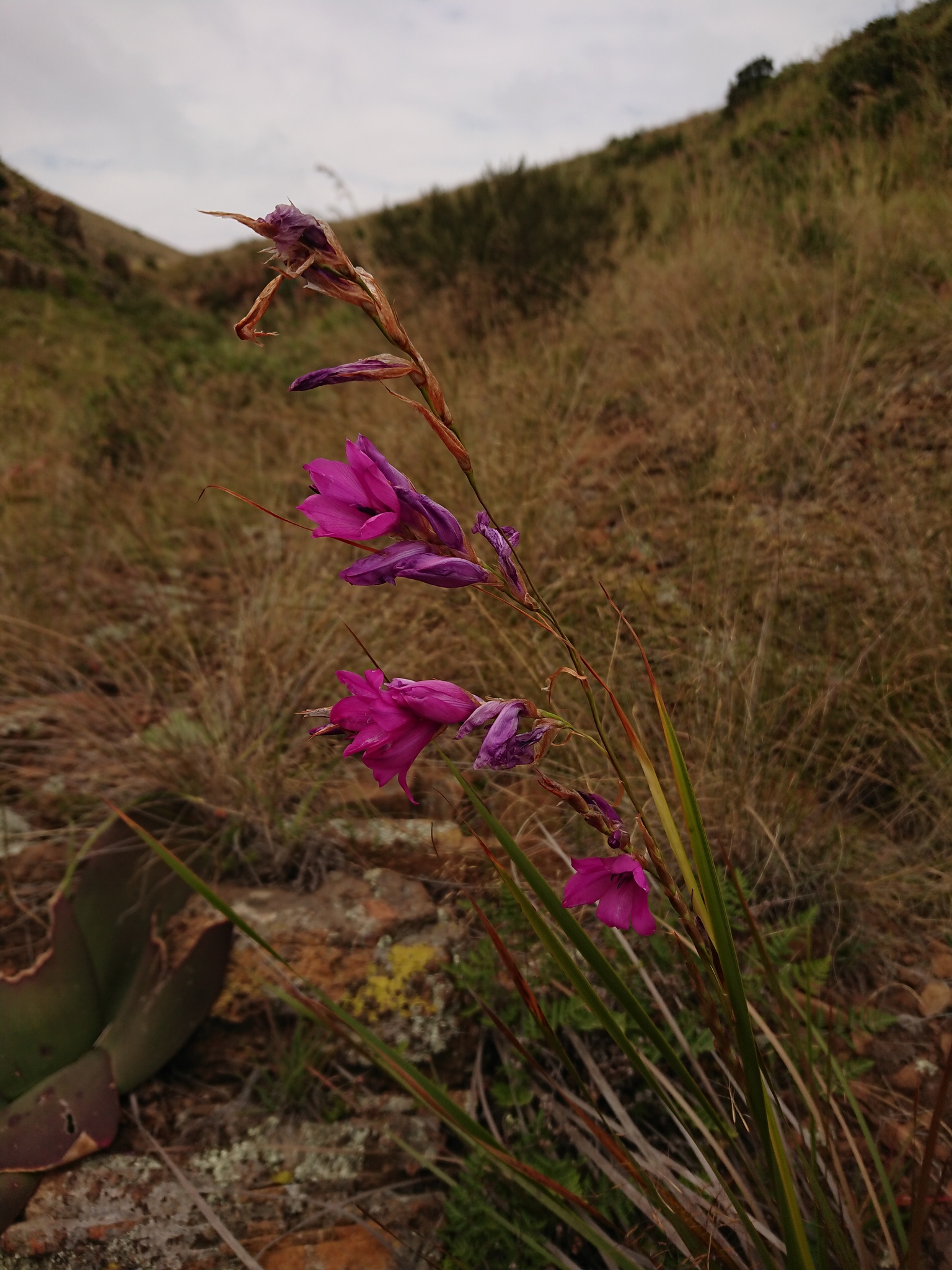
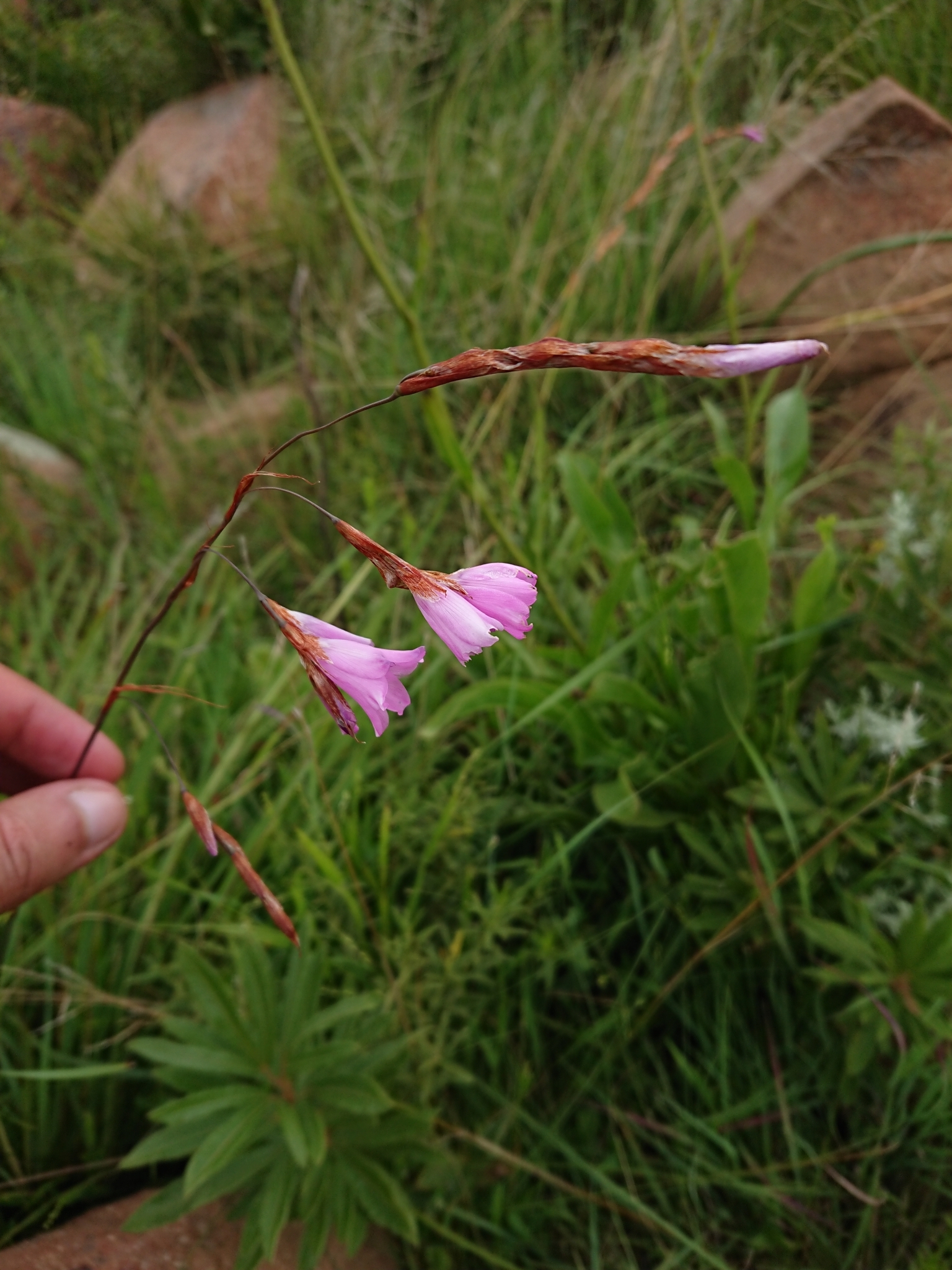
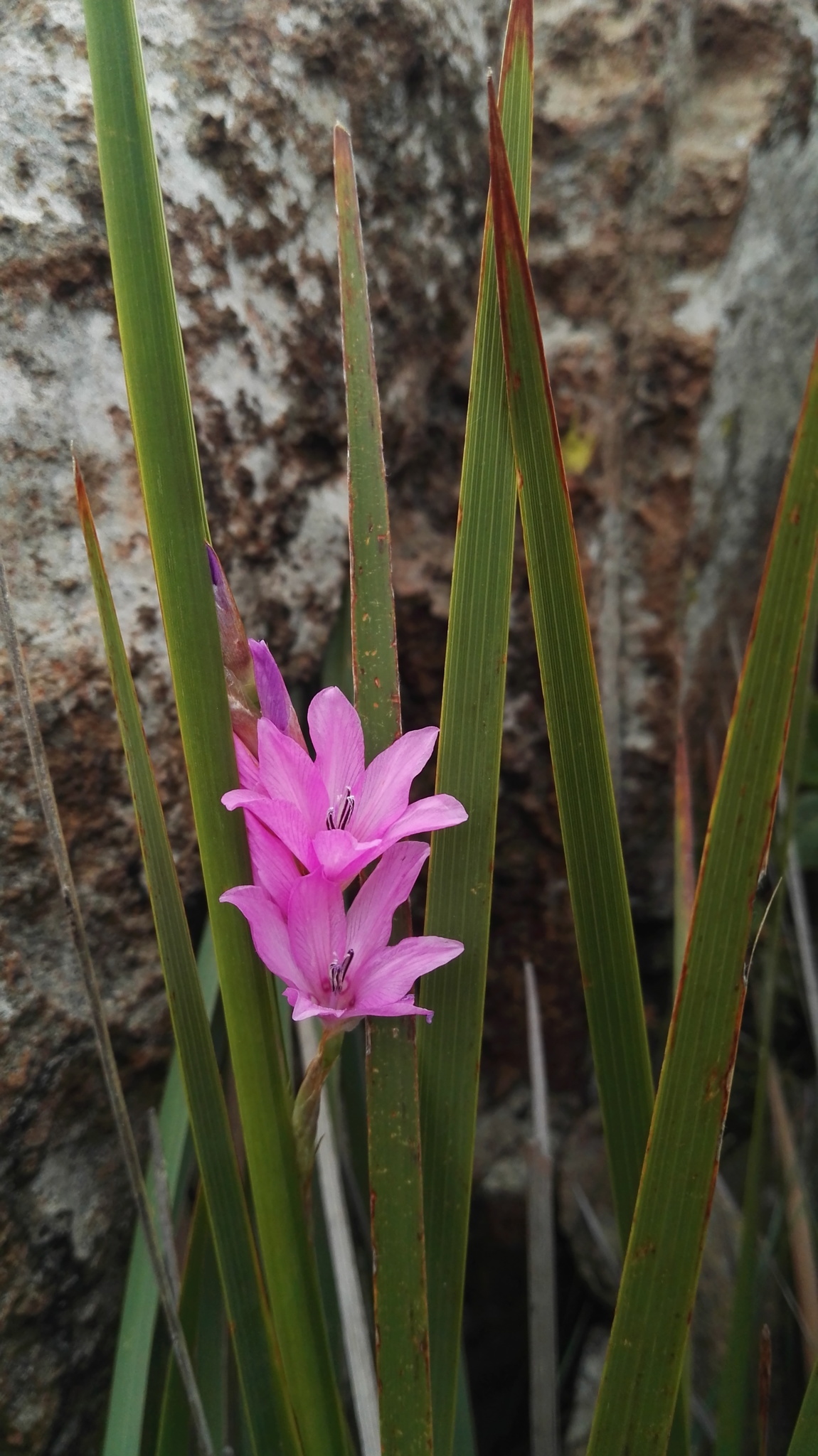
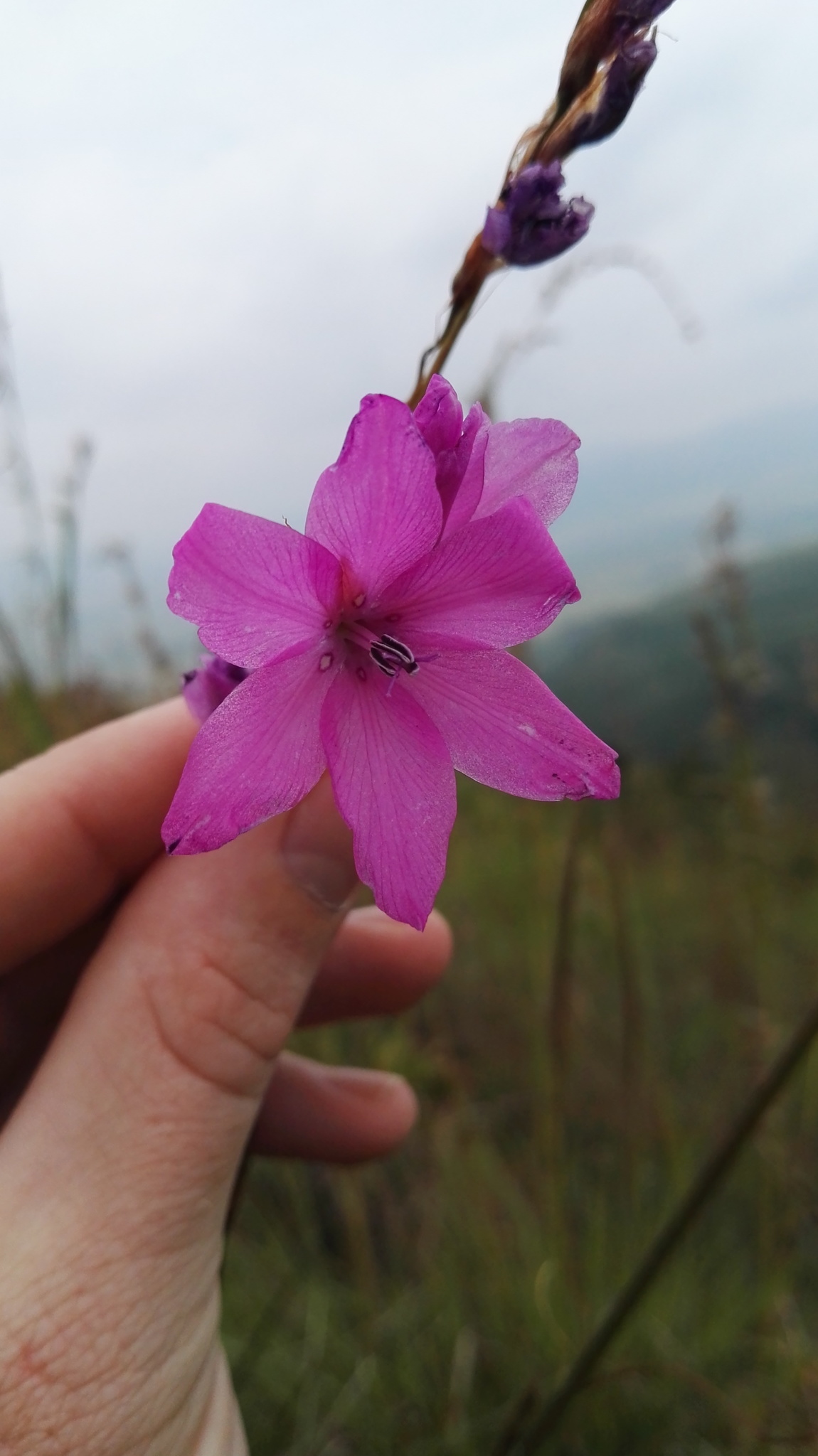
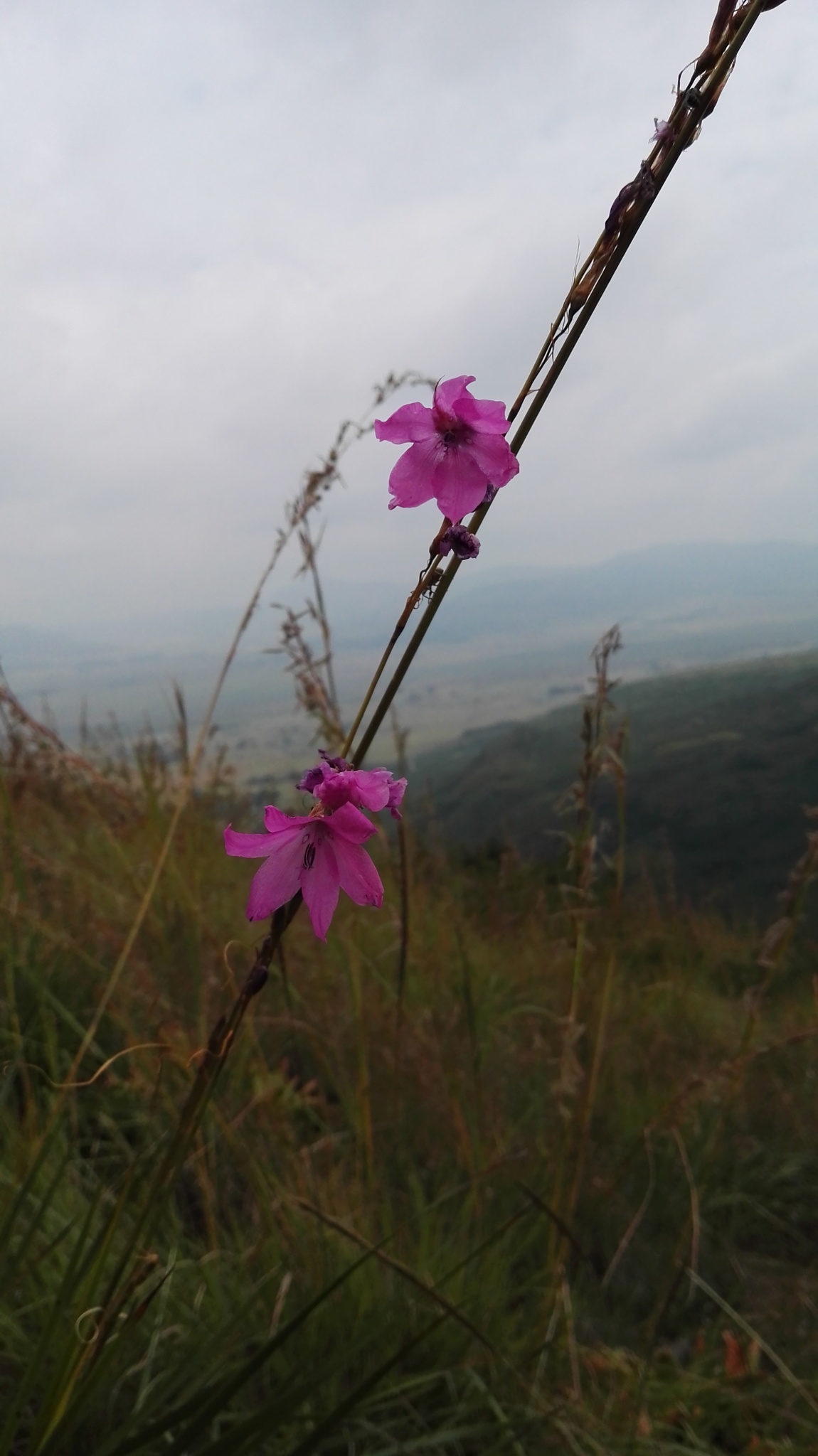
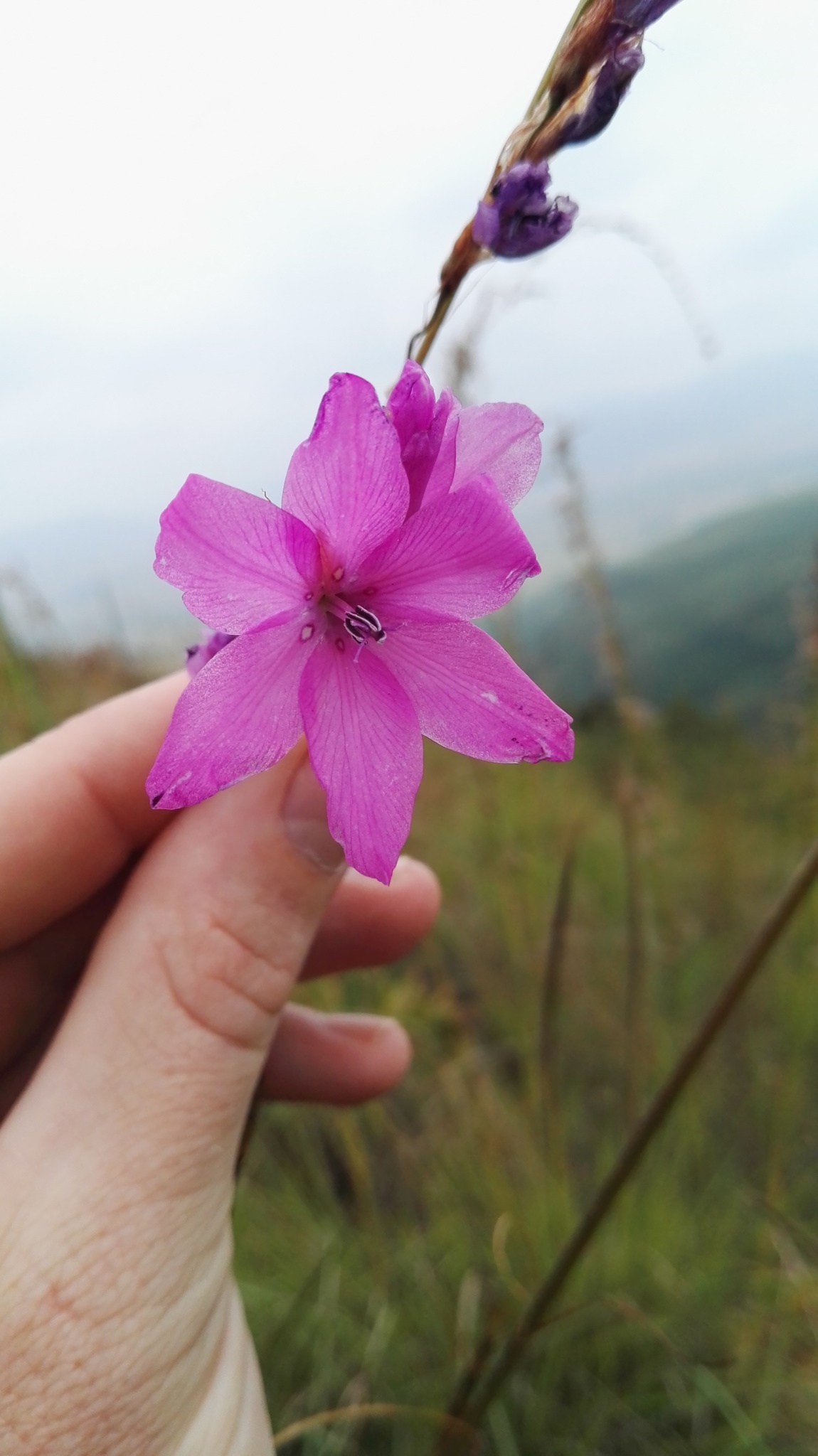
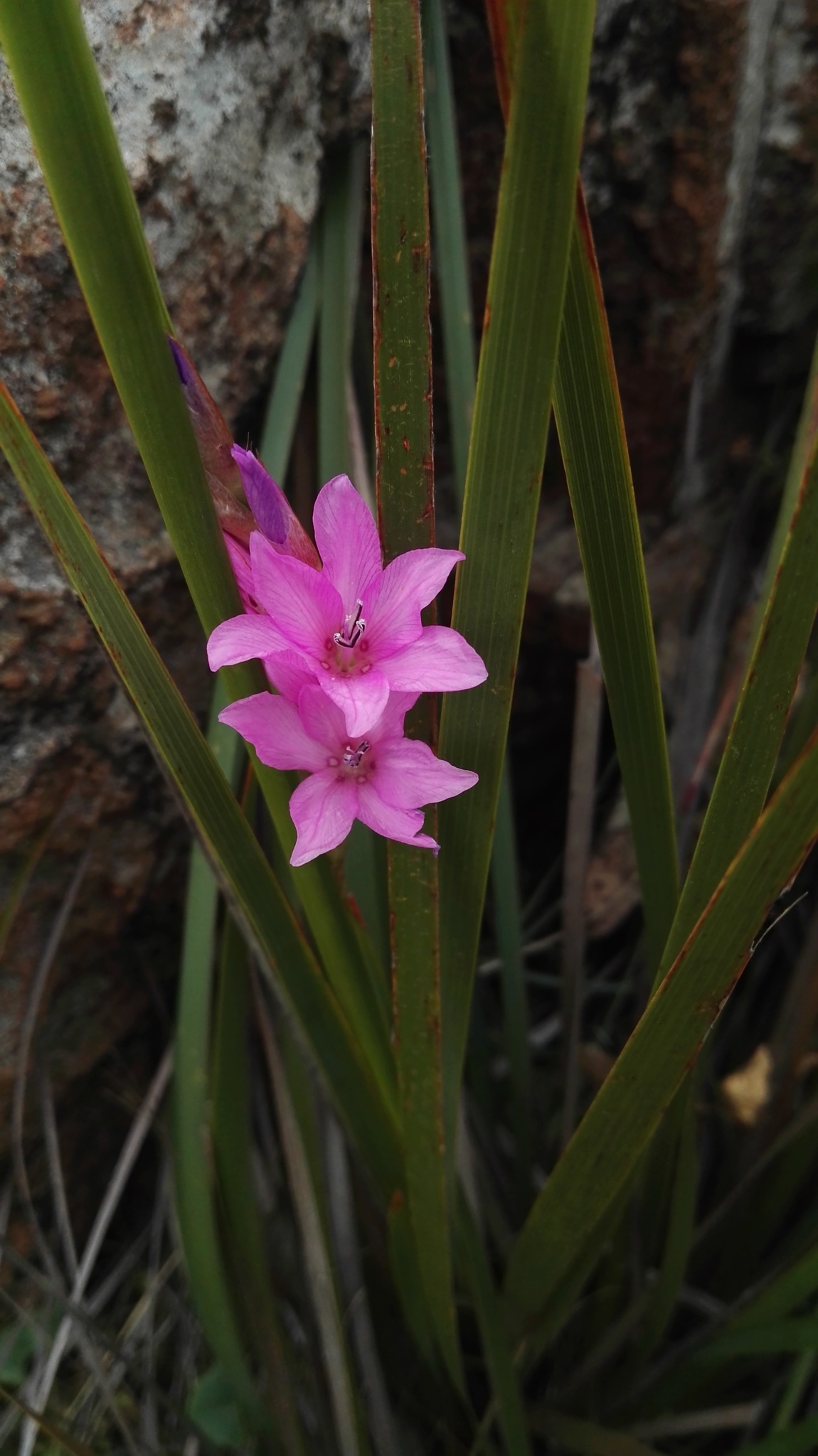
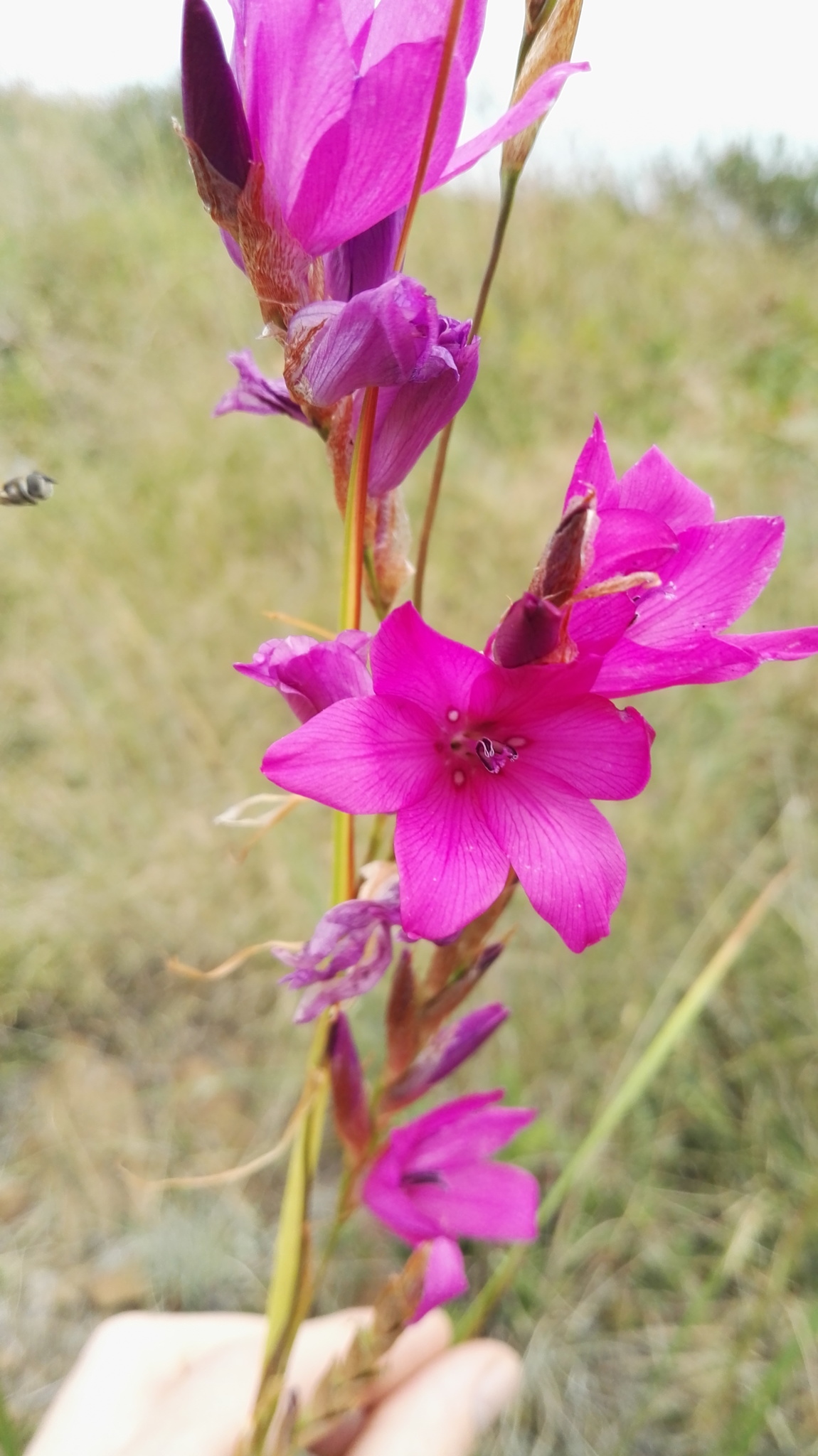
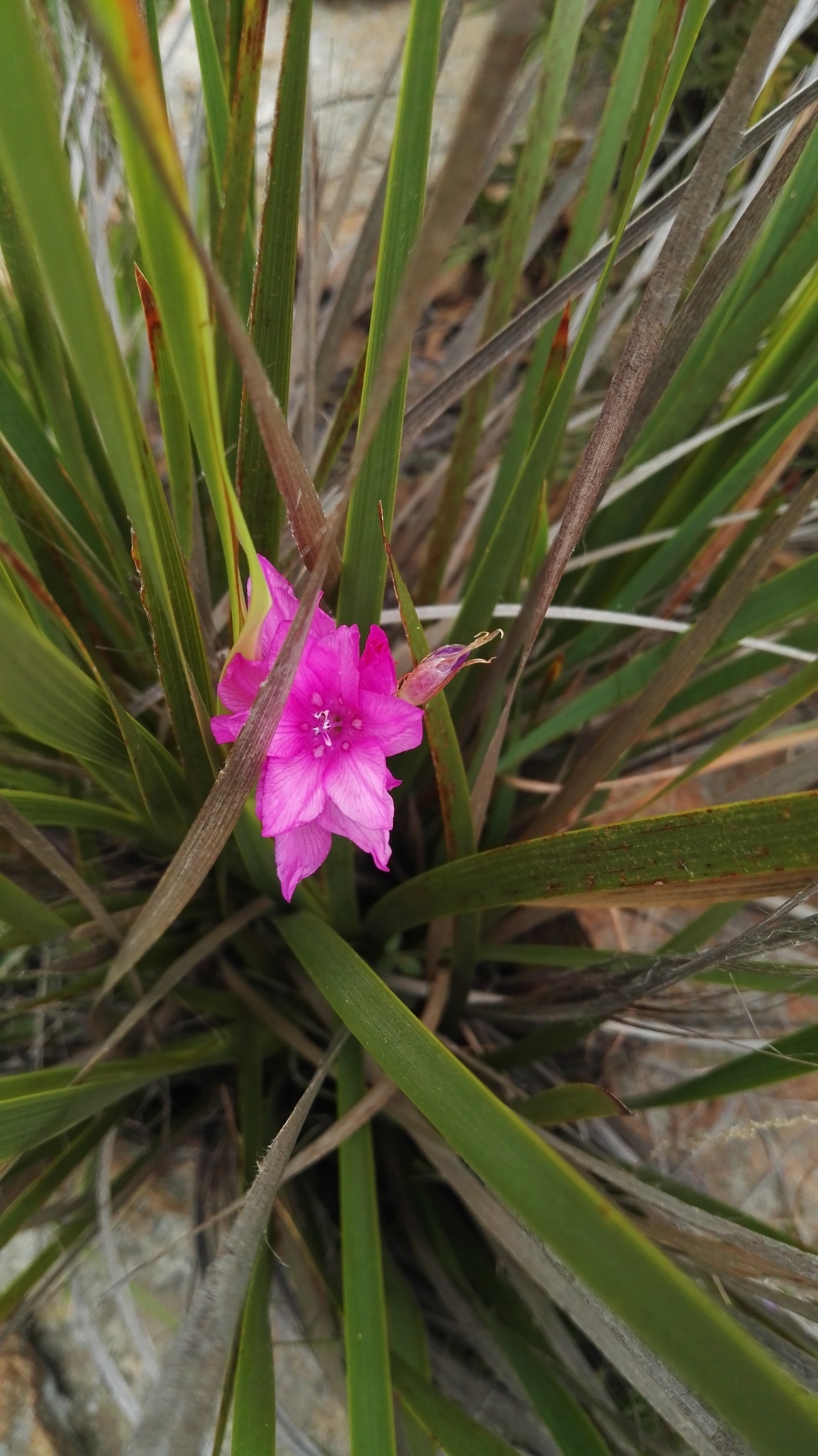
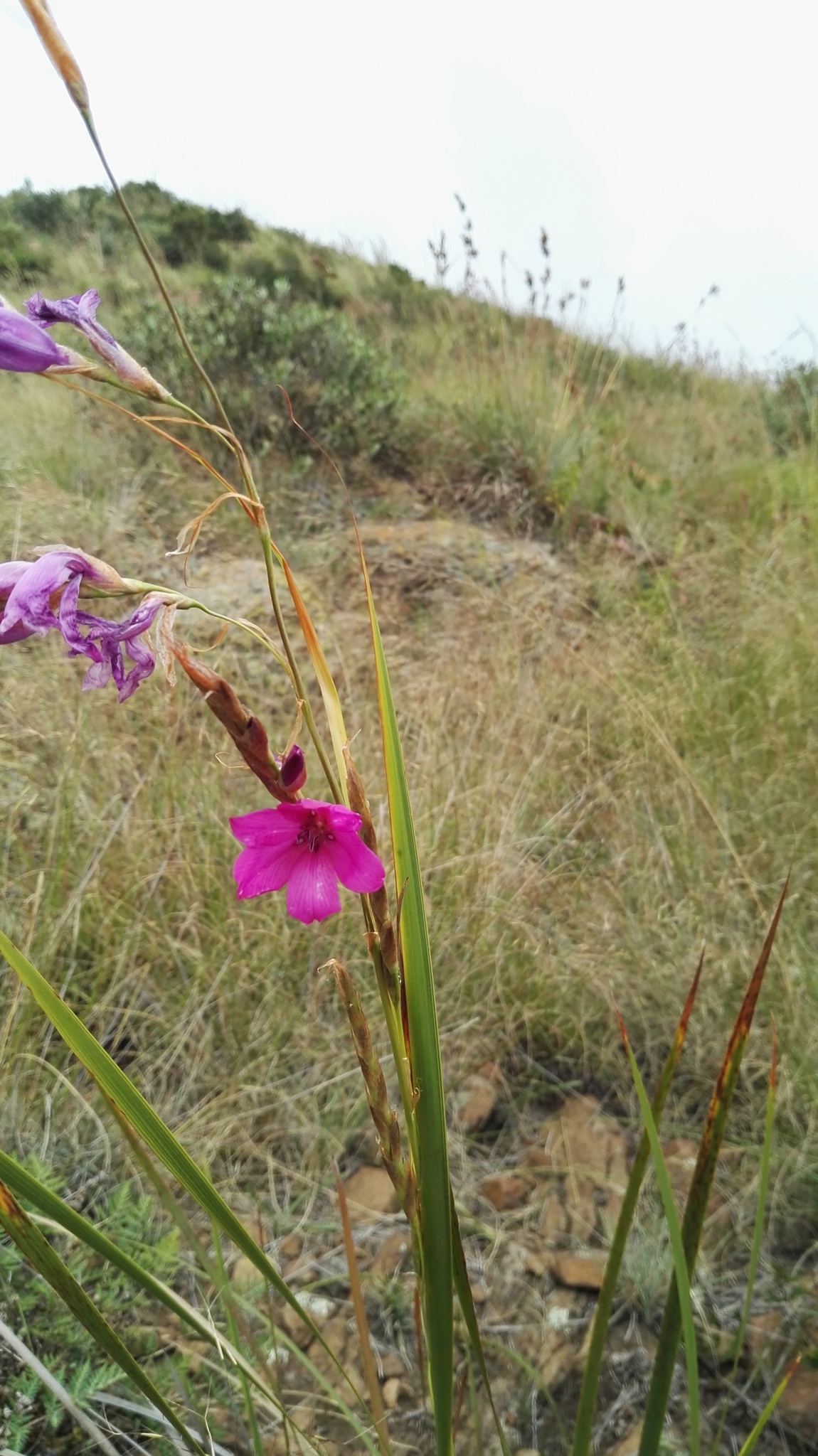
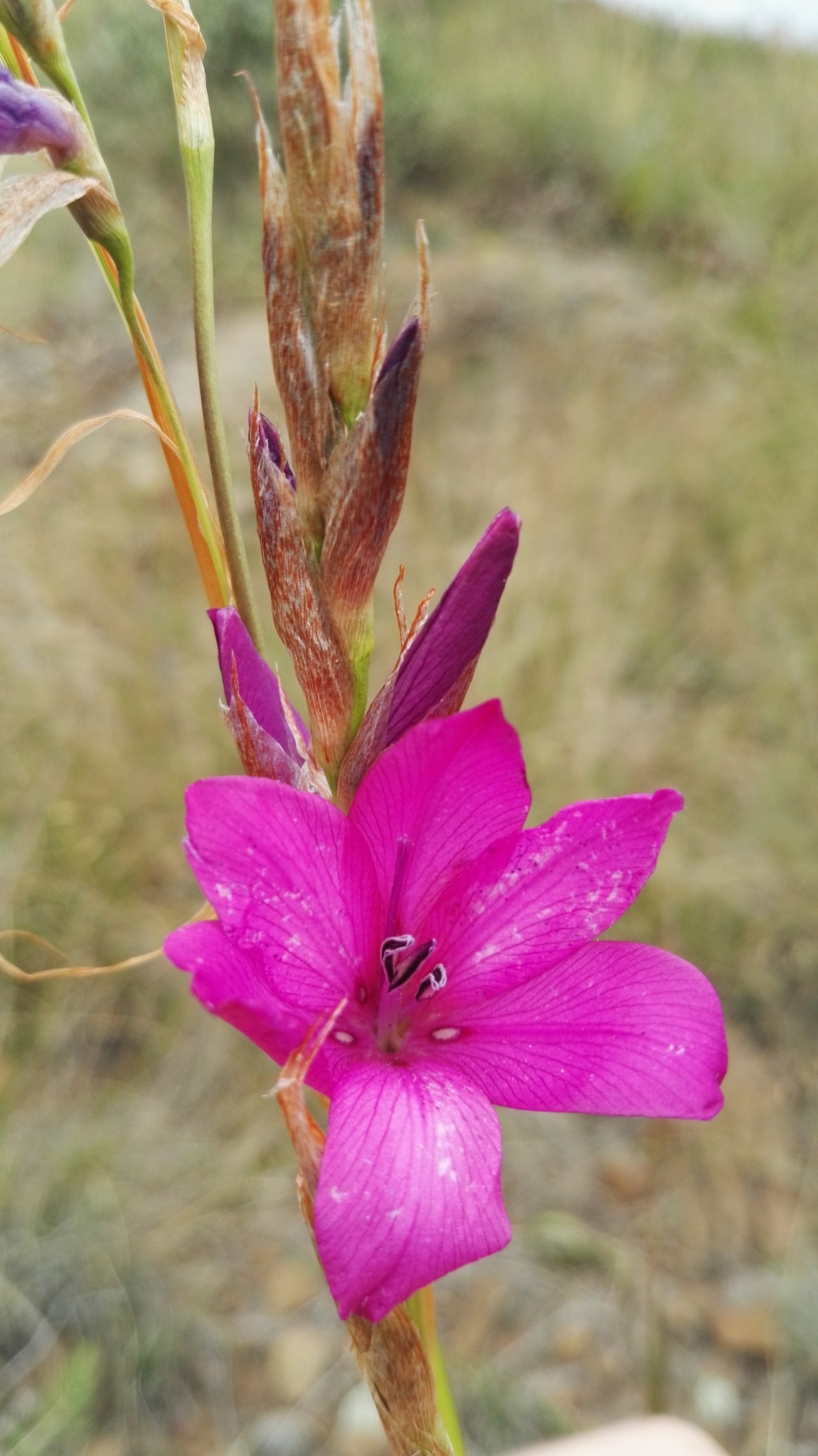
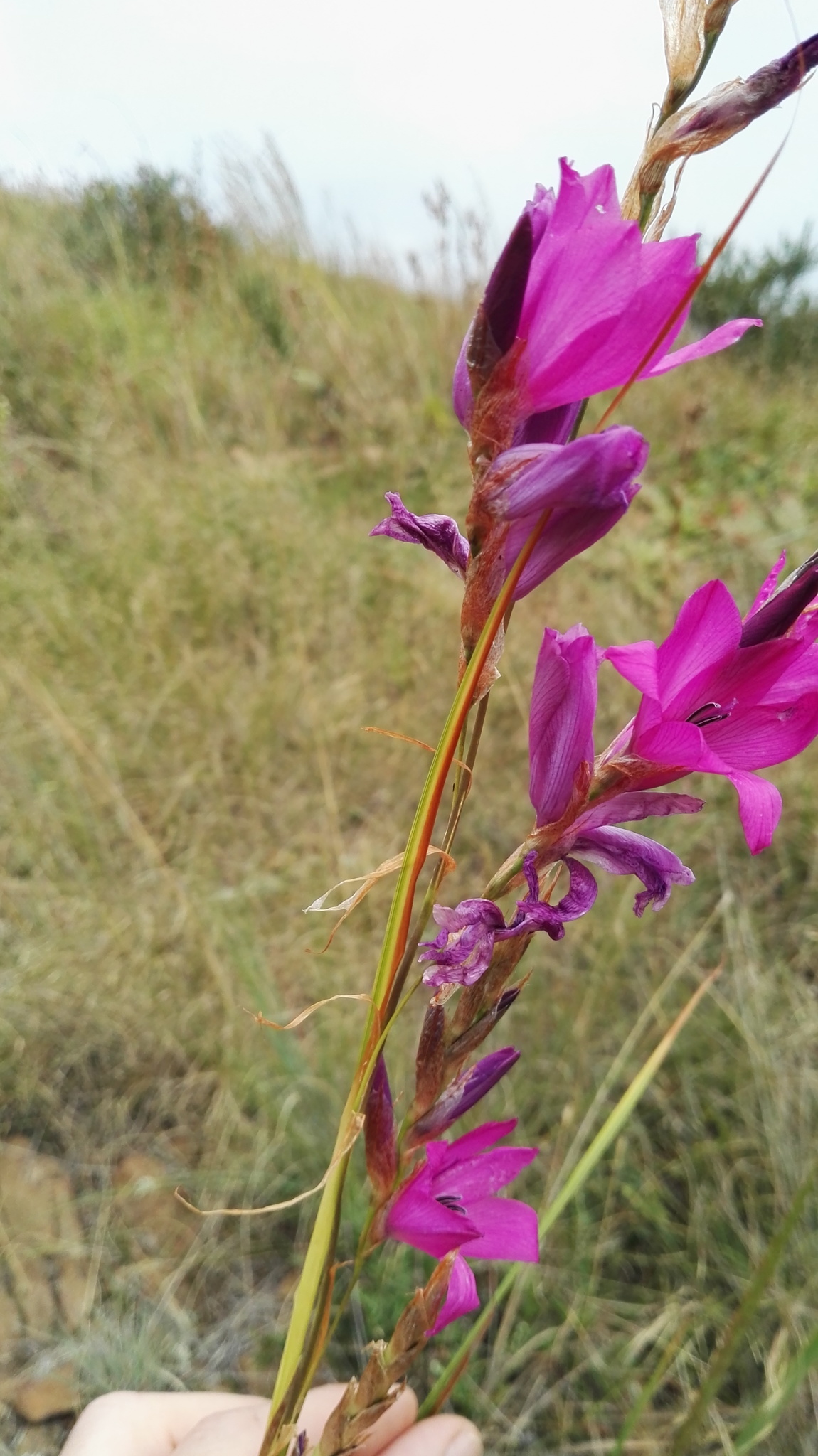
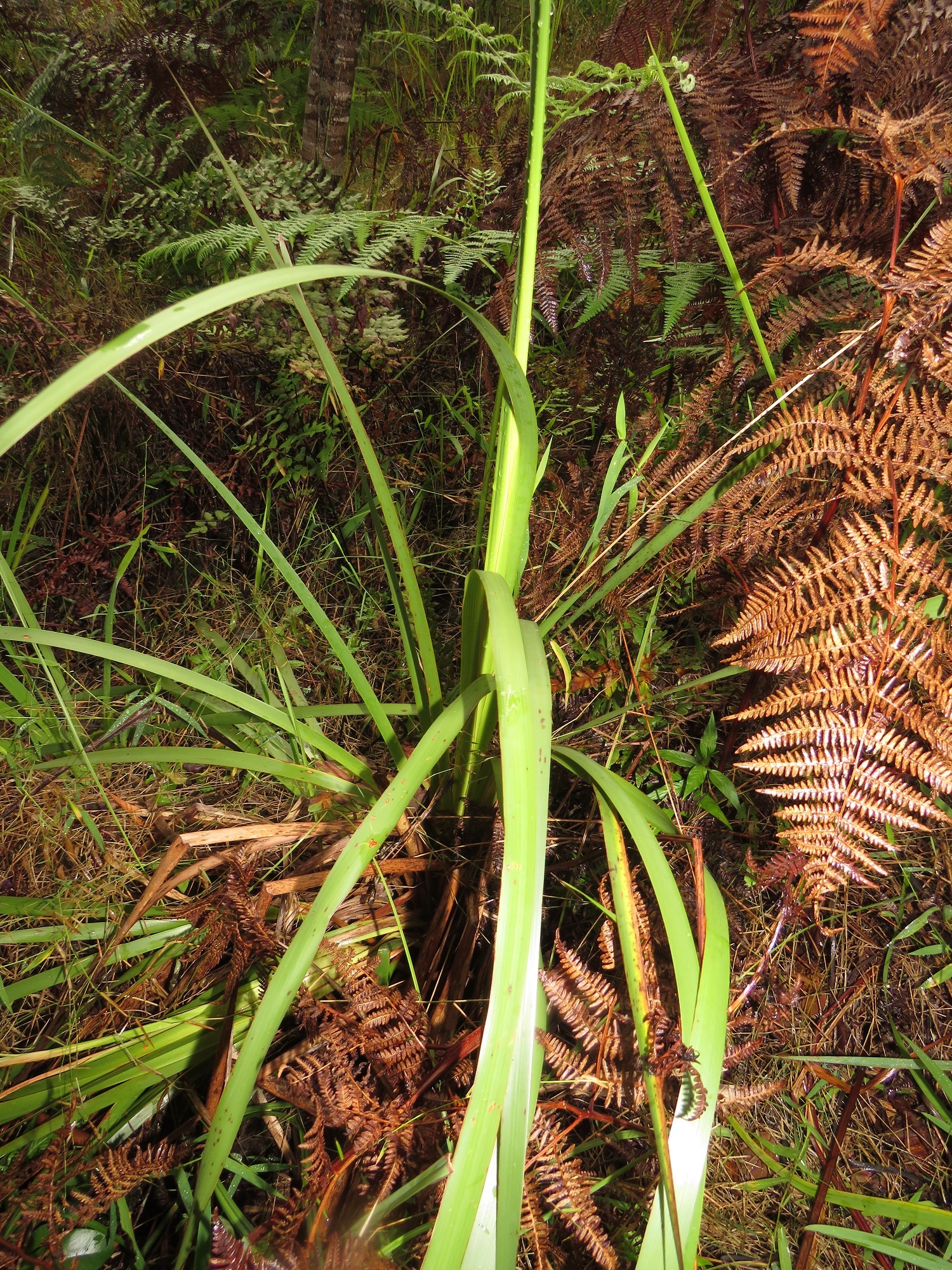
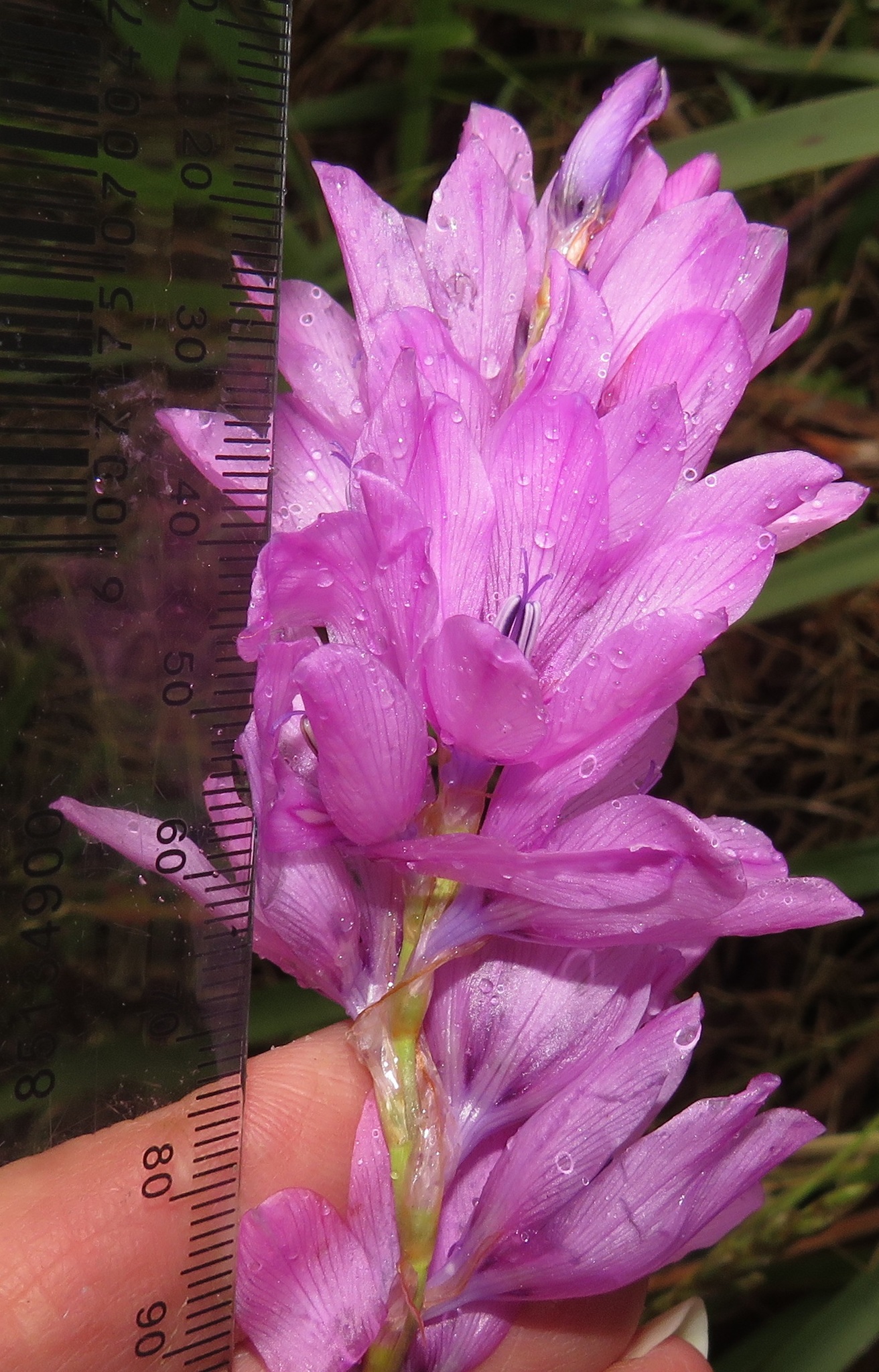
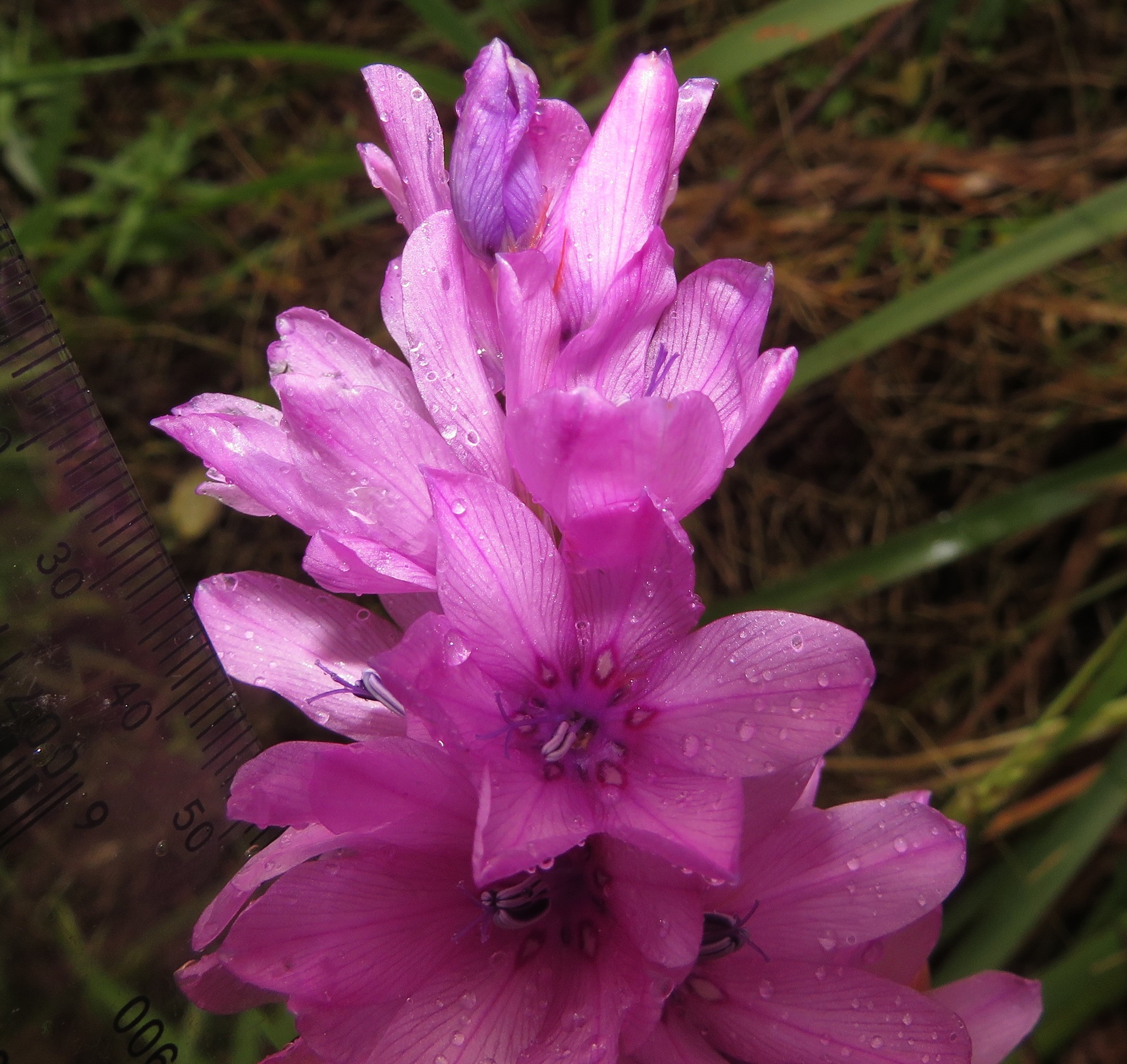
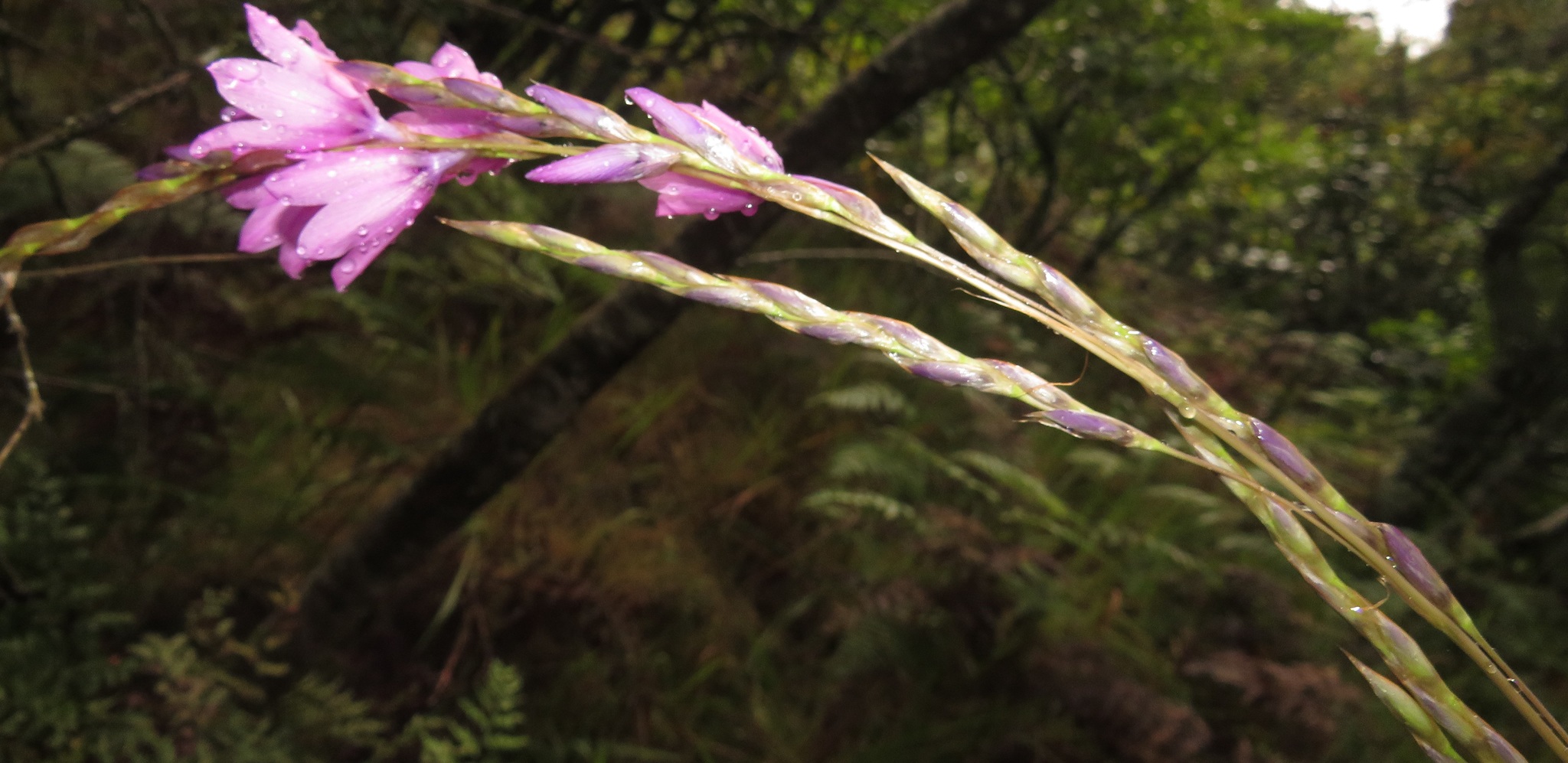
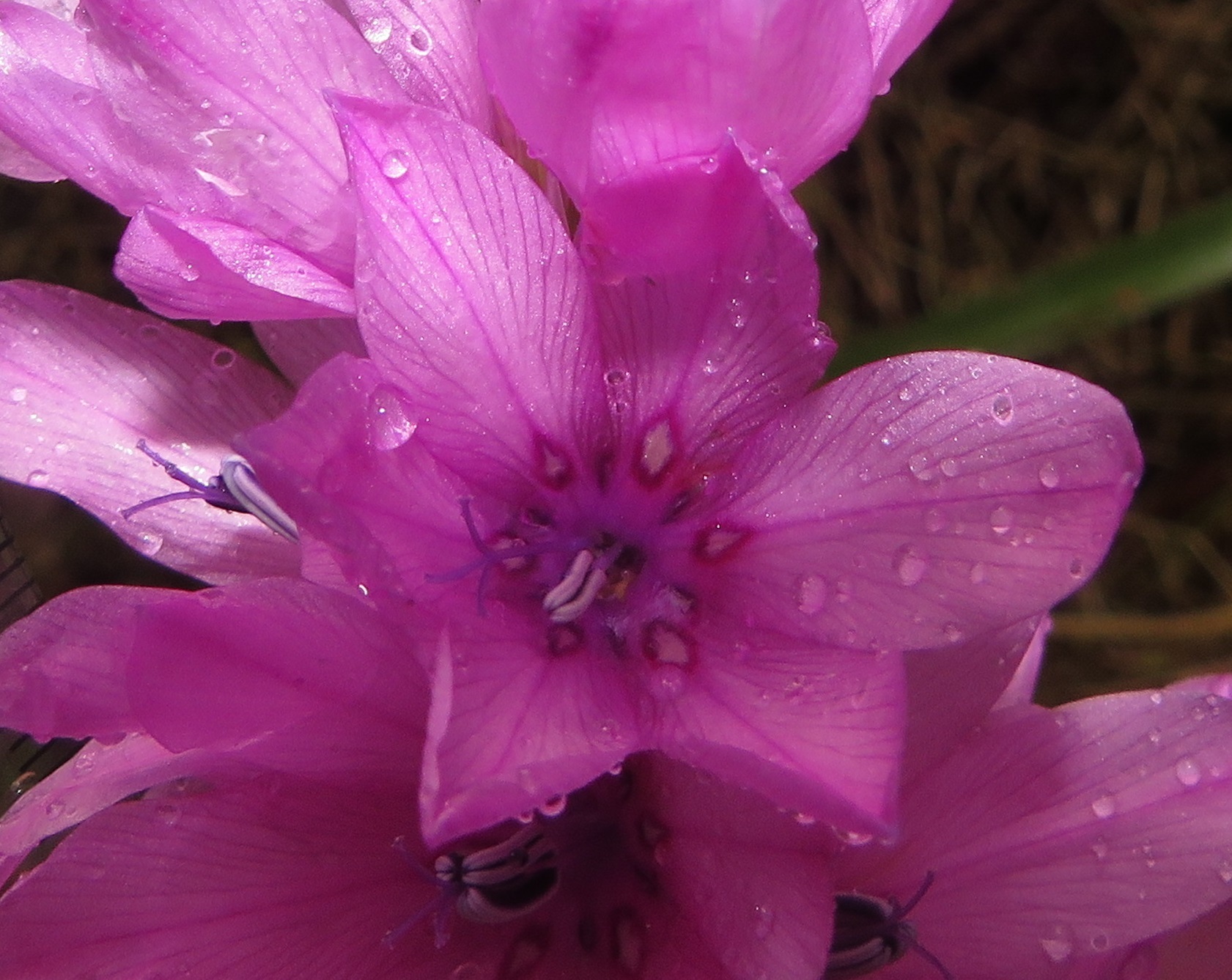
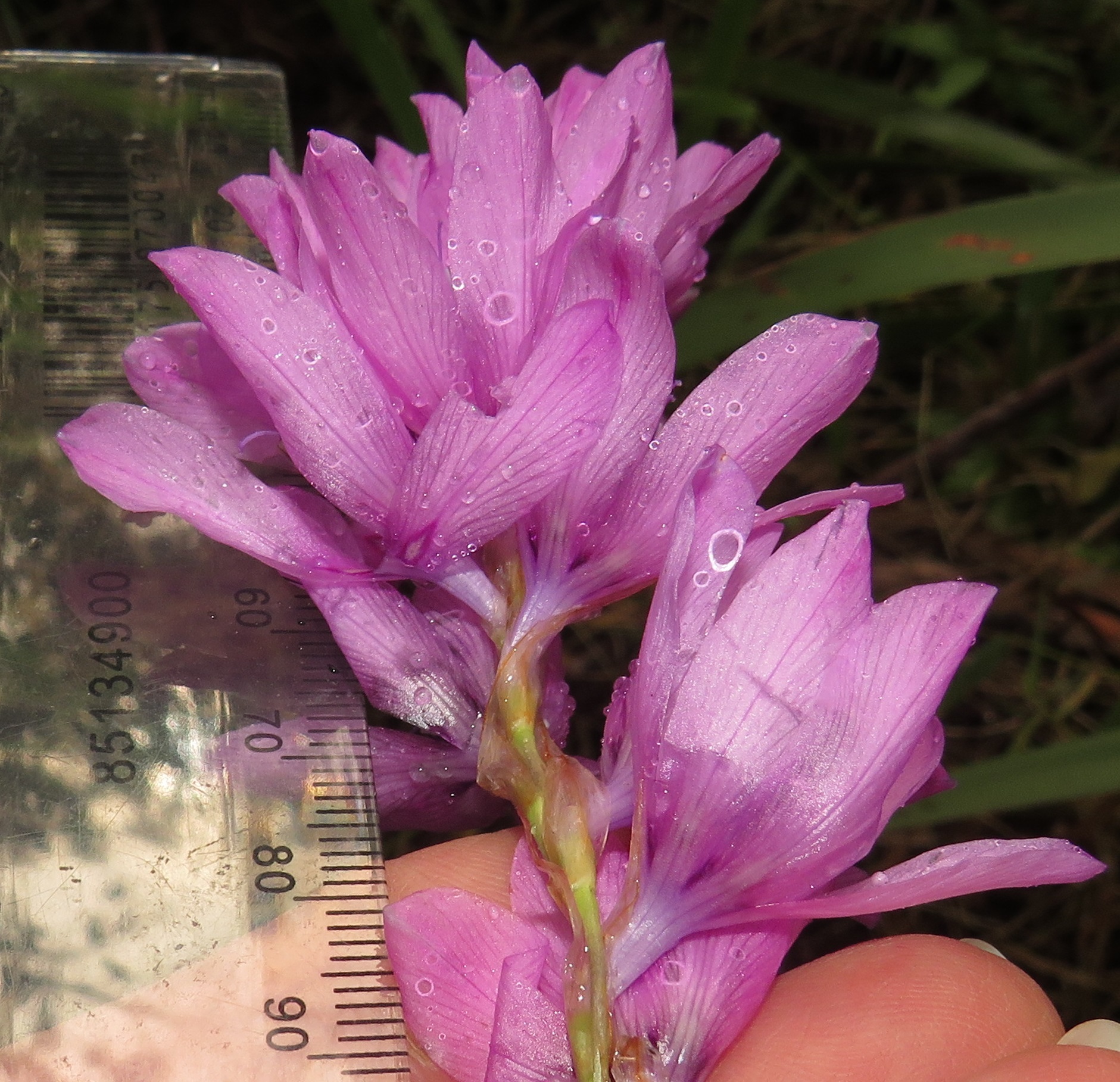
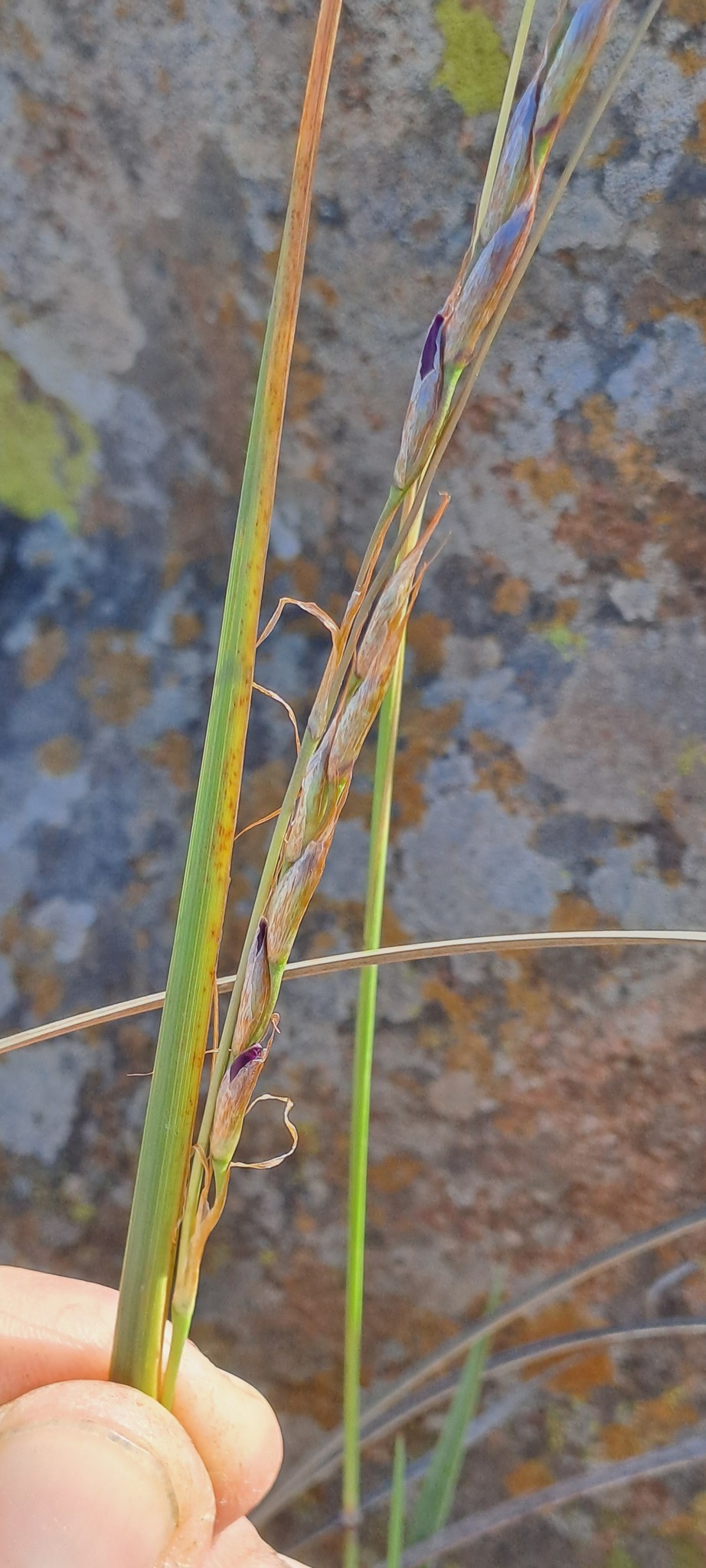
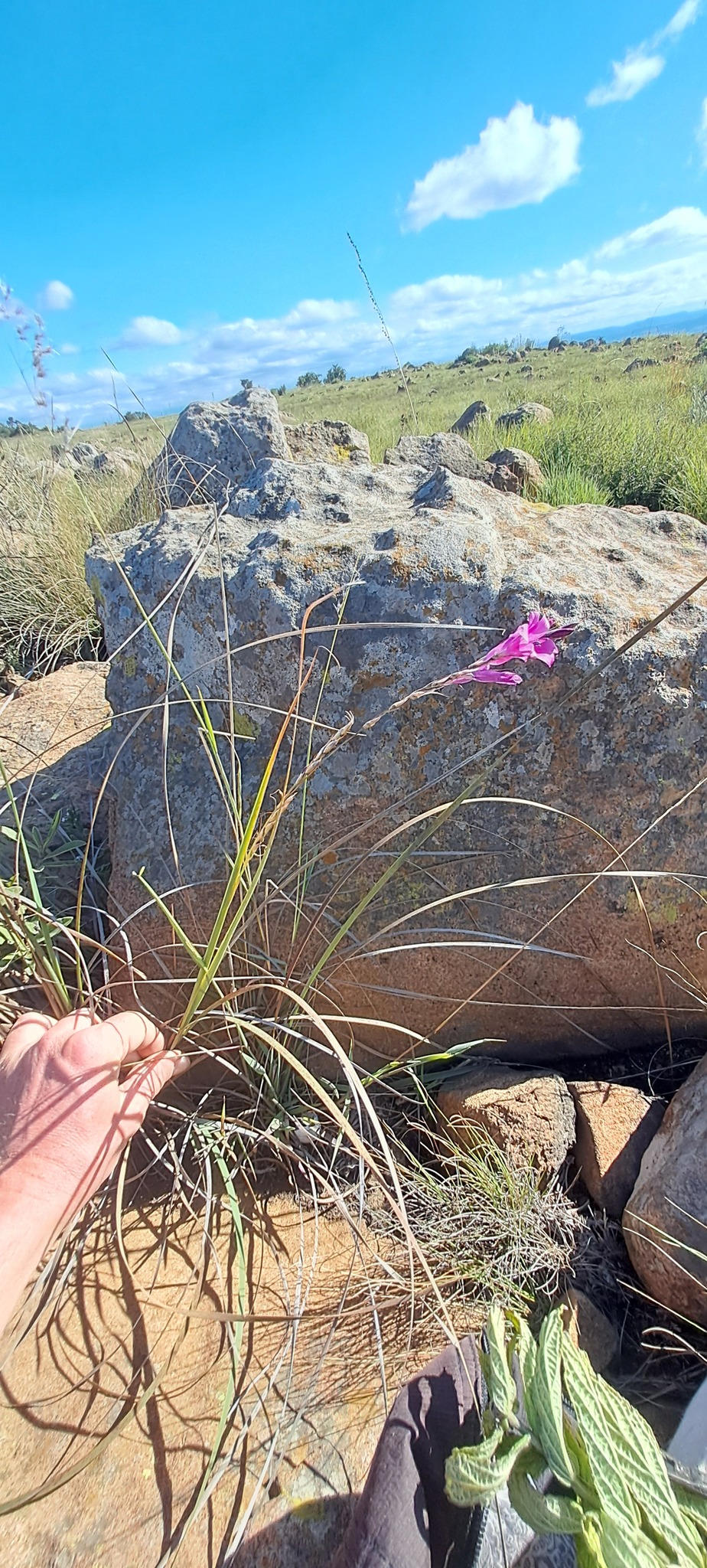
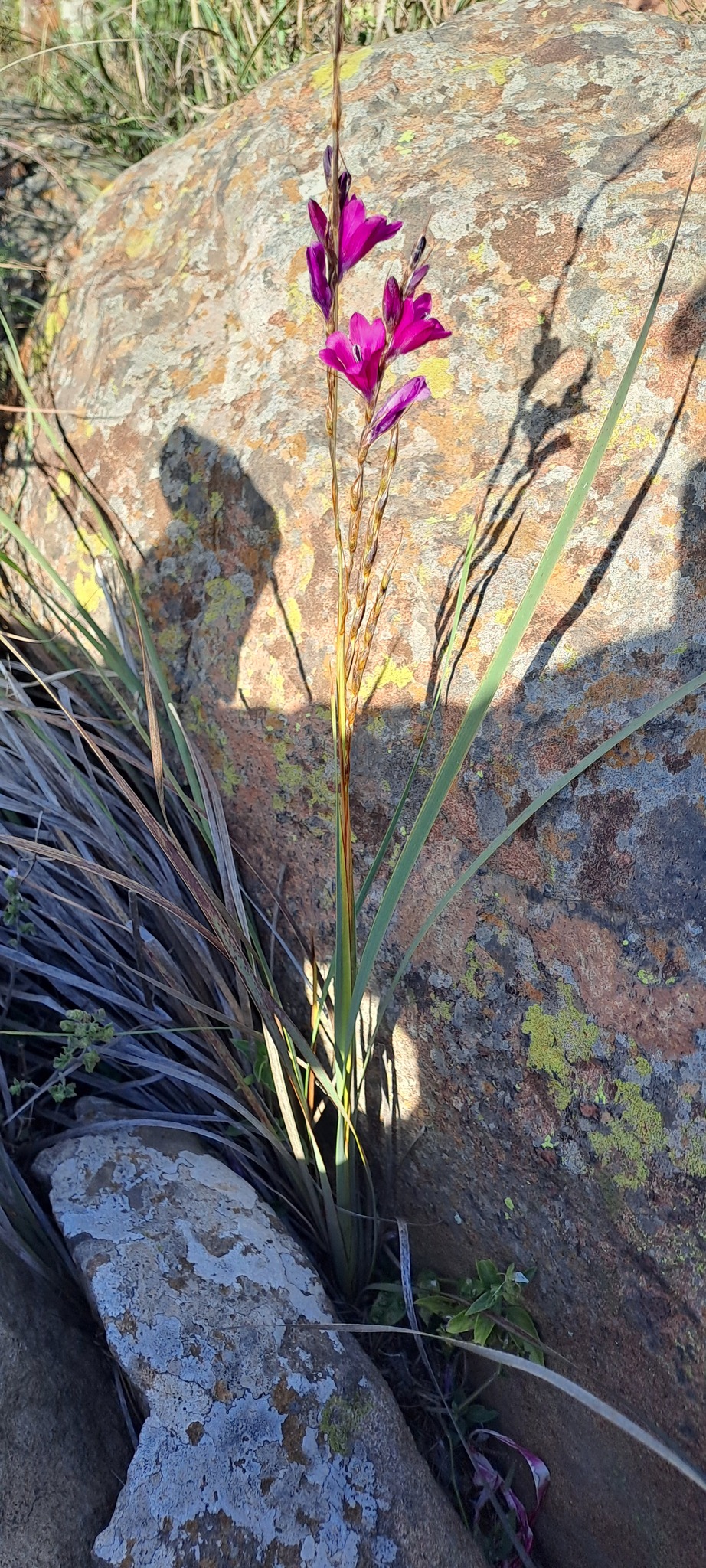
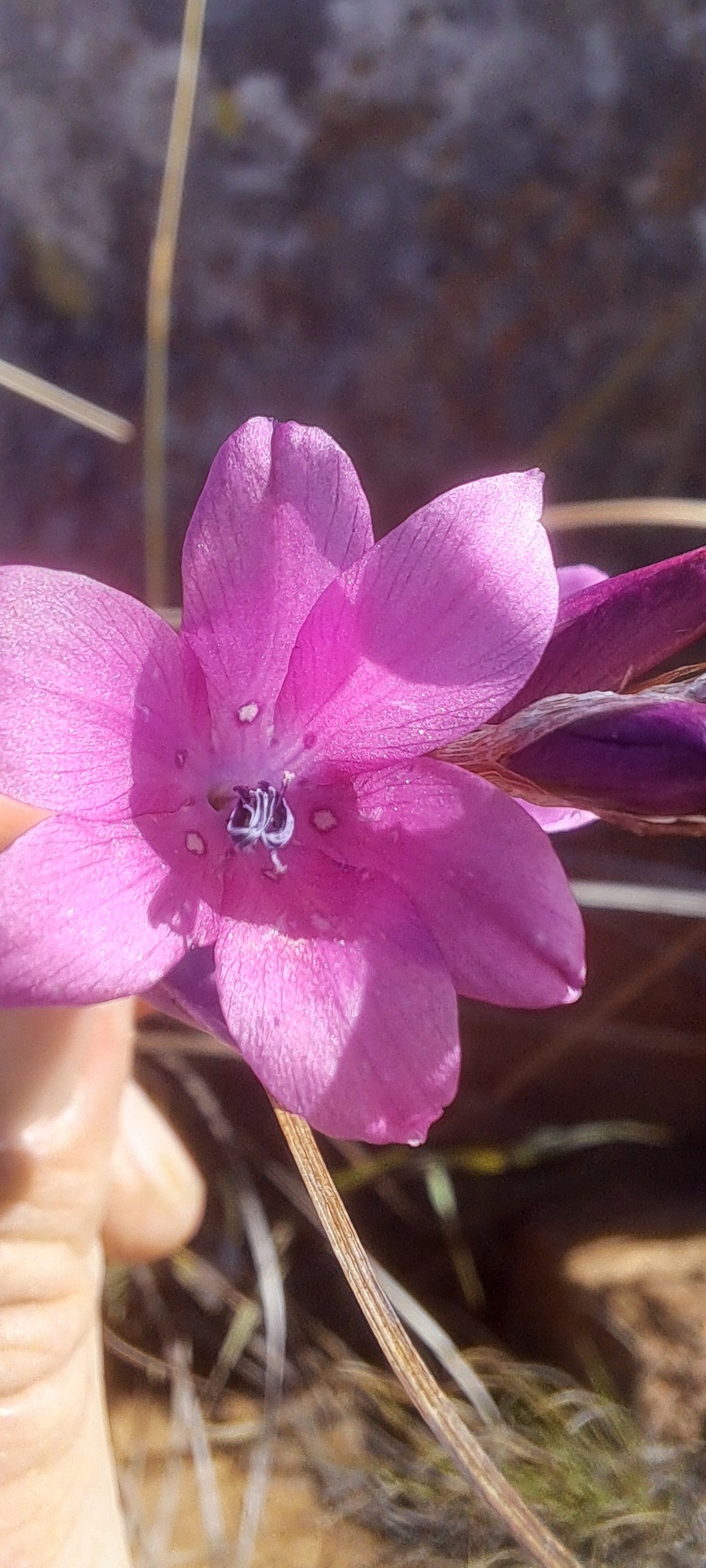
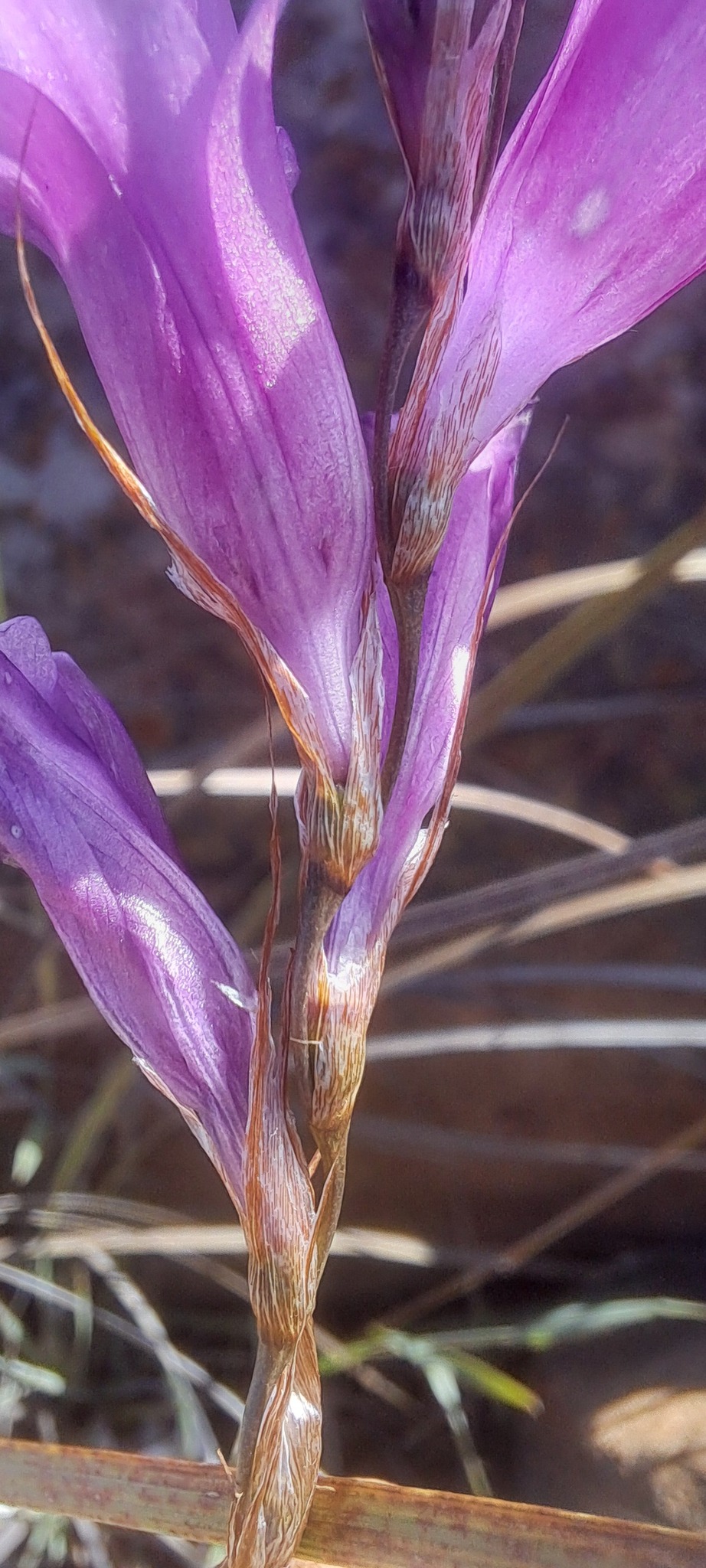
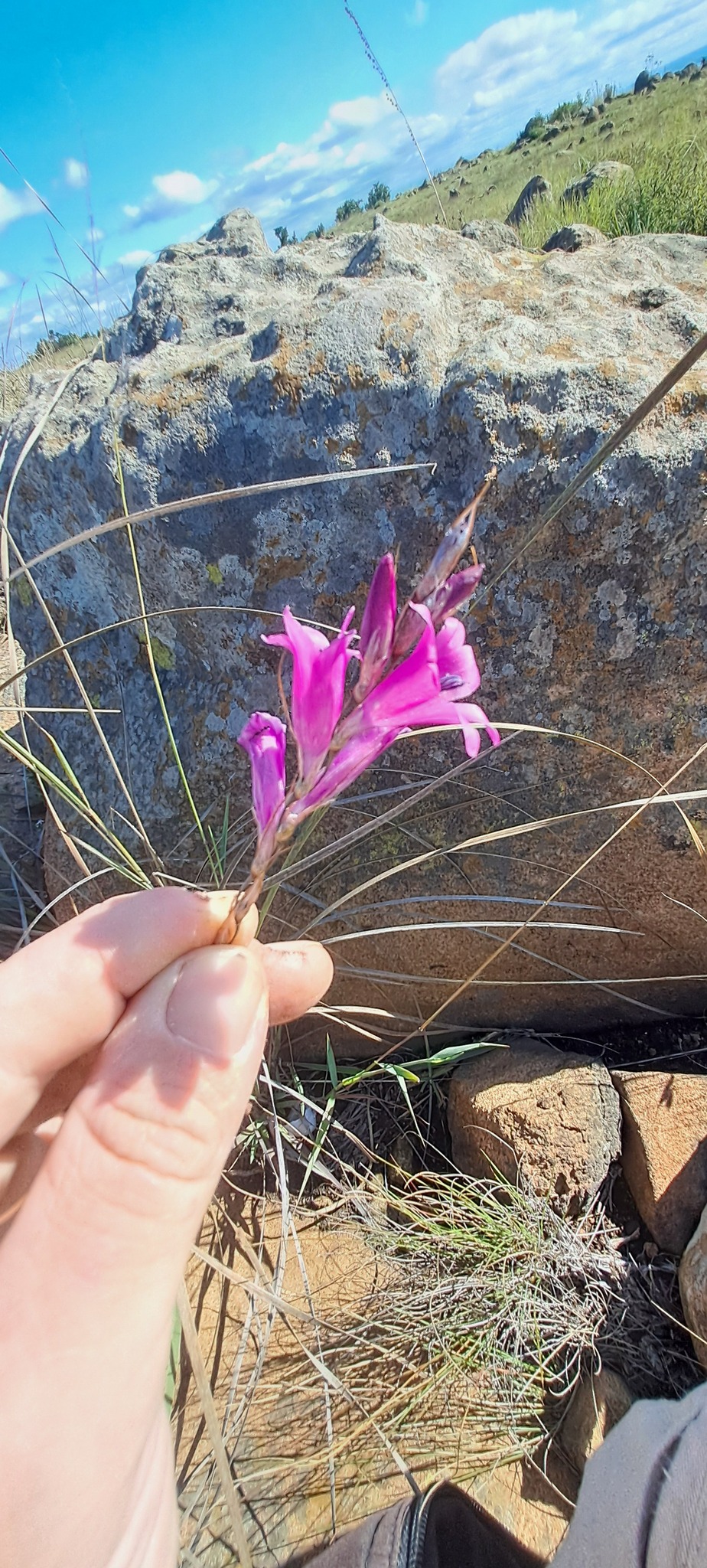
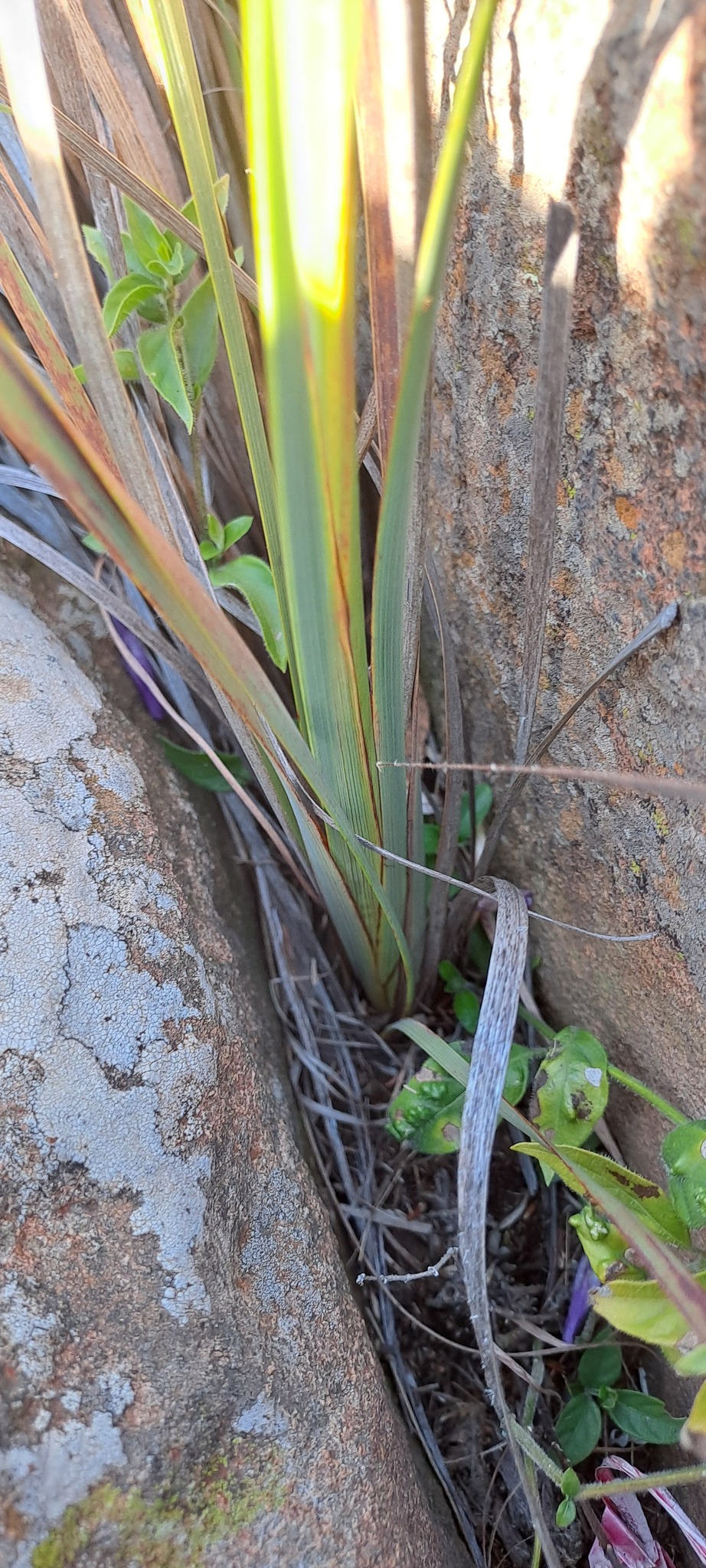
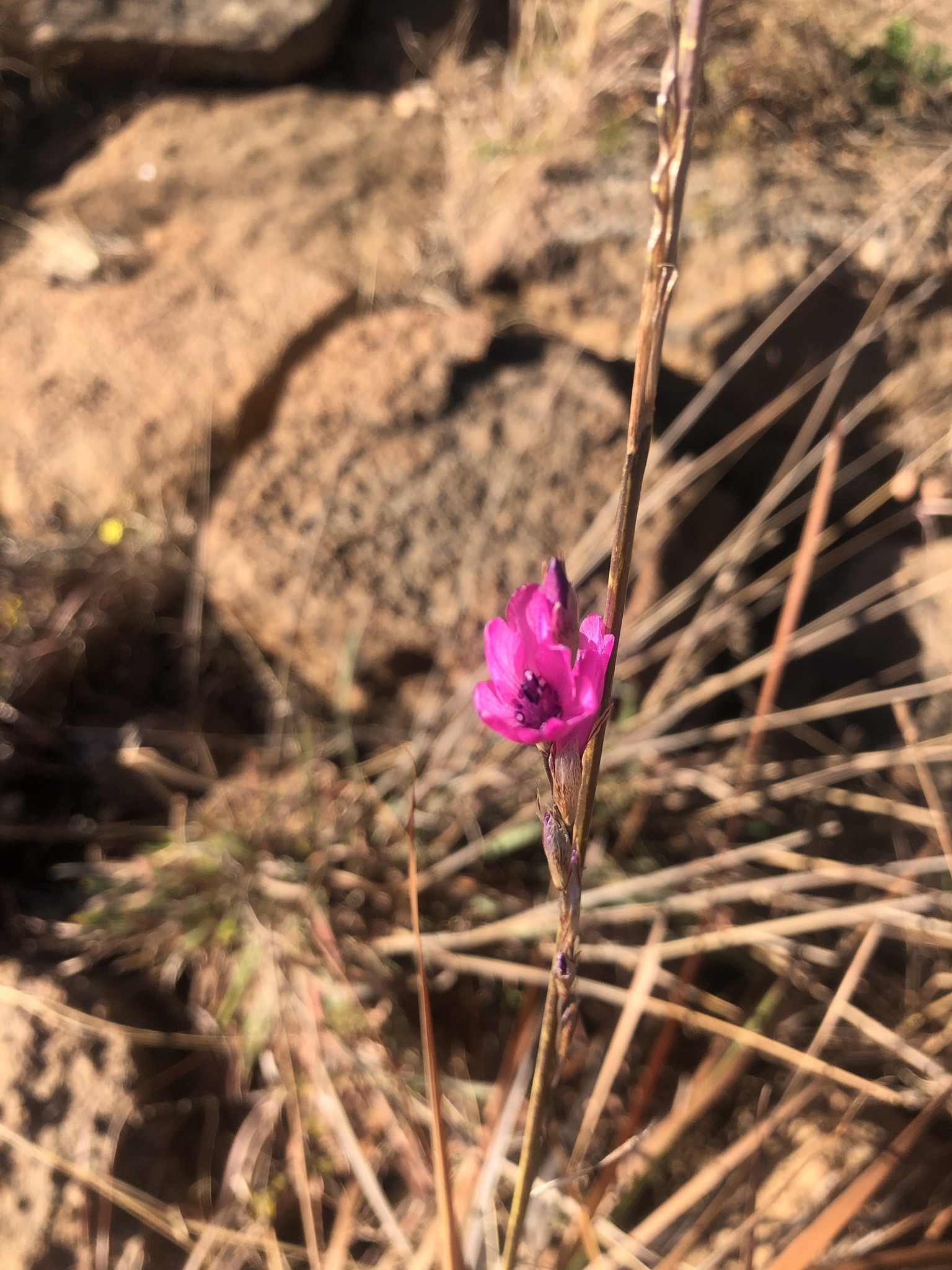
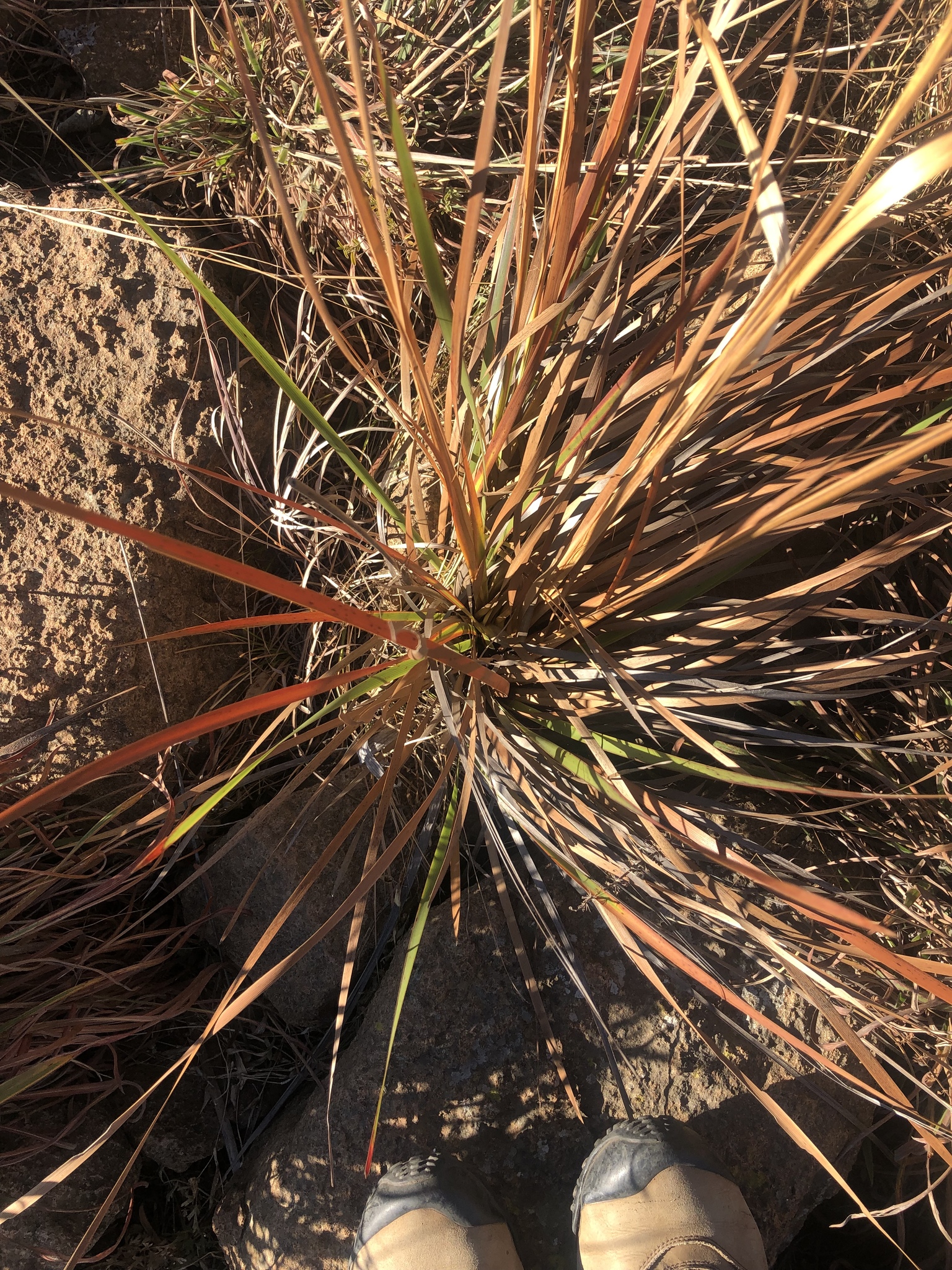
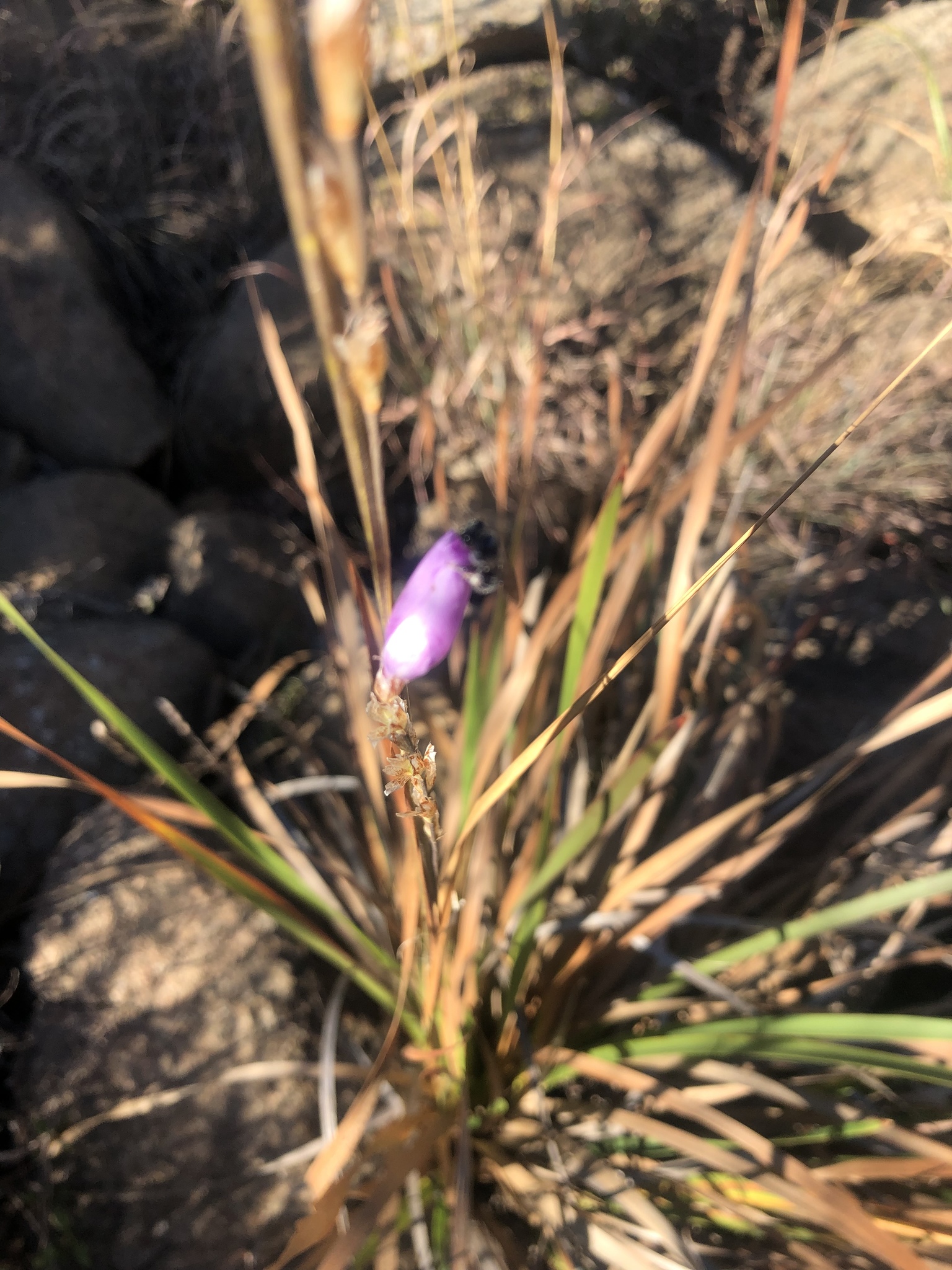
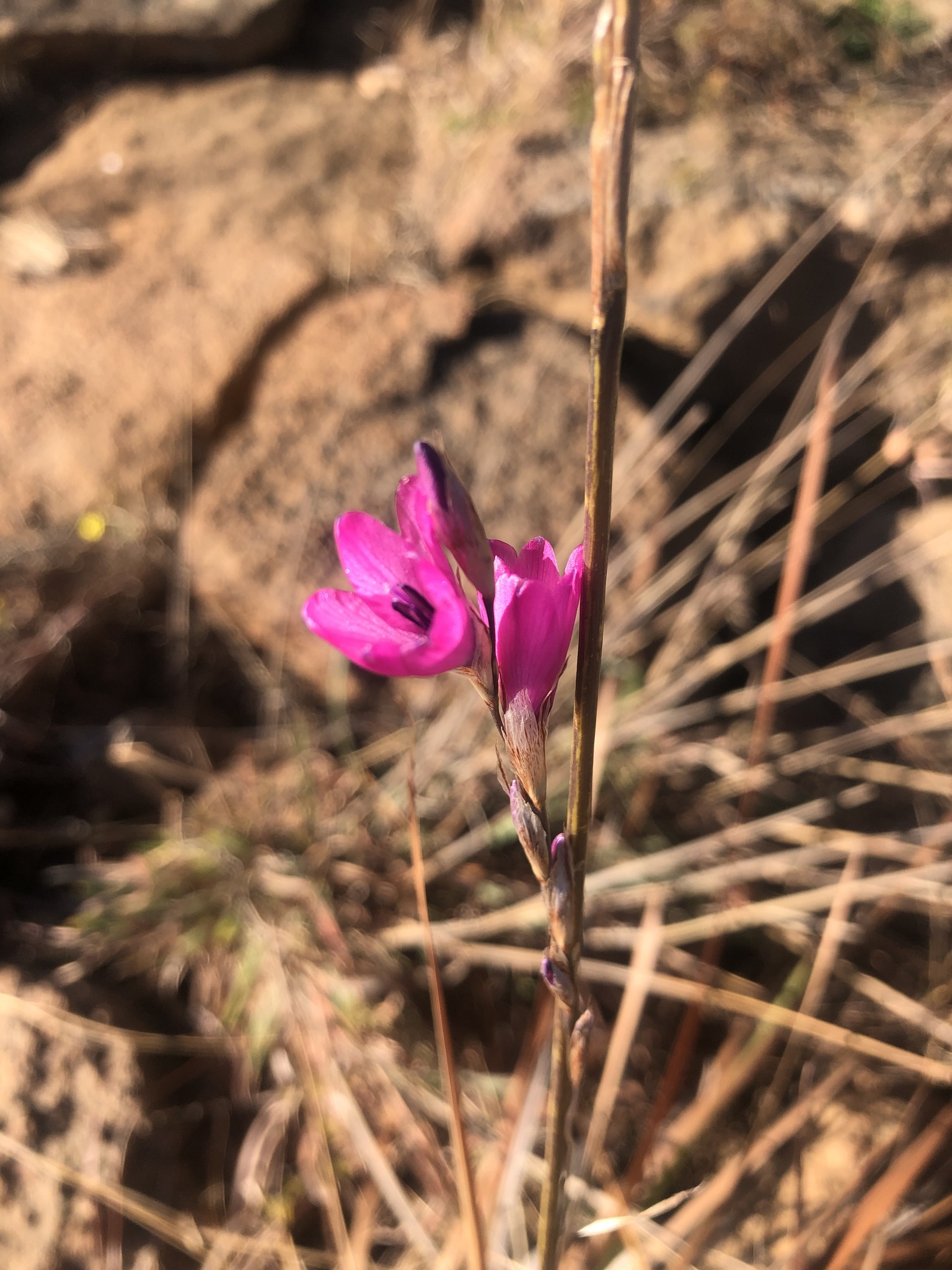
Plants 1.50-1.65 m high, forming clumps. Corm ± 30 mm diam. Stem with lowermost peduncle 45-90 mm long. Foliage leaves several, 800-900 x 6-12 mm; reduced sheathing leaves ± 5. Spikes erect, terminal densely 11- to 13-flowered, laterals ± 10, each 5- to 10-flowered; bracts lanceolate to elliptic, acuminate, 14-20 x 8 mm, 2 or more internodes long, basal 1/3-1/2 green drying brown, often flecked brownish, rest of bract membranous and whitish very sparsely flecked reddish brown or ochre-coloured with midline reddish brown to ochre-coloured, veins many, coalescing below in solid patch. Flowers subrotate, pale magenta-pink with conspicuous red and yellow diamonds at base of tepals; perianth tube (5-)7-8 mm long; tepals 18-19 x 7.0-8.5 mm. Anthers 6-7 mm long. Stigmas held 7-9 mm below top of perianth. From: Goldblatt, P; Manning, JC. 2020. Iridaceae of southern Africa. Strelitzia 42: 1-1159. South African National Biodiversity Institute, Pretoria. [CC BY]
A clump-forming species with stems more than 1.5 m tall, leaves 6-12 mm wide, and erect spikes with partly solid bracts. The flowers are subrotate with a well-marked red and yellow eye at the base of each tepal. Dierama insigne, also with partly solid bracts, has the stems solitary or a few in small tufts, narrower leaves 2-6 mm wide, and pendulous spikes with fewer laterals, mostly 2 to 4. From: Goldblatt, P; Manning, JC. 2020. Iridaceae of southern Africa. Strelitzia 42: 1-1159. South African National Biodiversity Institute, Pretoria. [CC BY]
Forming clumps in montane grassland, sometimes along streams. From: Goldblatt, P; Manning, JC. 2020. Iridaceae of southern Africa. Strelitzia 42: 1-1159. South African National Biodiversity Institute, Pretoria. [CC BY]
Restricted to northern KwaZulu-Natal, known only from Ngome east of Vryheid. From: Goldblatt, P; Manning, JC. 2020. Iridaceae of southern Africa. Strelitzia 42: 1-1159. South African National Biodiversity Institute, Pretoria. [CC BY]
January to April
This map contains point-based occurrences at different locations
Occurrence in the Flora of Southern Africa (FSA) countries and South African provinces. Residence status indicates if a taxon is indigenous, endemic, naturalised or invasive in a specific region. This data is based on specimen records and literature
FSA
SA
BOT
NAM
ESW
LES
WC
EC
NC
FS
GA
KZN
LP
MP
NW
Absent
Indigenous
Endemic
Naturalised
Invasive
Names and Sources
Classification
KINGDOM Plantae
SUBKINGDOM Phanerogamae
PHYLUM Anthophyta
ORDER Asparagales
FAMILY Iridaceae
SUBFAMILY Crocoideae
TRIBE Ixieae
GENUS Dierama
SPECIES erectum
17 results for Dierama erectum Hilliard
Barcode: NBG0277521-0 Collector(s) & number: Johnson, IM, 1264 | 2010-3-9
South Africa, KwaZulu-Natal, KwaZulu-Natal, Lineburg district. 27.302671 S; 30.35777 E.
Data Resource: BODATSA View record
Barcode: PRE0870725-0 Collector(s) & number: Hankey, A, 1118 | 2000-9-30
Eswatini, Sishelweni Forestry Company.
Data Resource: BODATSA View record
Barcode: NH0142790-0 Collector(s) & number: Styles, DGA, 3698 | 2012-4-17
South Africa, KwaZulu-Natal, Tygerskloof (Mondi plantation), at Ngome.
General notes: In large clumps.
Data Resource: BODATSA View record
Barcode: NBG0278782-0 Collector(s) & number: Johnson, IM, 1264 (1) | 2010-3-9
South Africa, KwaZulu-Natal, KwaZulu-Natal. Luneburg district. 27.302671°S 30.35777°E.
General notes: Alt. 1774 m. Rocky mountain slope. Population size: ± 30.
Data Resource: BODATSA View record
Barcode: NH0144276-0 Collector(s) & number: Ngwenya, AM, 3687 | 2011-1-27
South Africa, KwaZulu-Natal, Amajuba District Municipality Area. Utrecht Municipality Area. Luiperdkloof Farm. Natural Heritage Site No. 47. Utrecht.
Data Resource: BODATSA View record
Barcode: NH0151506-0 Collector(s) & number: Naicker, K, 428 | 2019-3-27
South Africa, KwaZulu-Natal, Amajuba District, eMadlangeni Municipality, Utrecht, Gelykswater Stewardship Site, on route to waterfall.
Data Resource: BODATSA View record
Barcode: NH0136109-0 Collector(s) & number: Ngwenya, AM, 4100 | 2012-1-20
South Africa, KwaZulu-Natal, Zululand District Municipality Area. Abaqulusi Municipality Area. Tygerskloof Plantation, adjacent to the Ngome State Forest. 27º 50' 49.3" S 31º 20' 14.0" E.
Data Resource: BODATSA View record
Barcode: PRE0062072-0 Collector(s) & number: Codd, LEW, 9566 | 1956-4-12
South Africa, KwaZulu-Natal, NGOTSHE DIST.; 7 MI. W. OF NGOME.
General notes: Mountain grassland. Groups of plants.
Data Resource: BODATSA View record
Barcode: NH0150752-0 Collector(s) & number: Ngwenya, AM, 4755 | 2019-3-27
South Africa, KwaZulu-Natal, Amajuba District Municipality Area. Emadlangeni Local Municipality Area. ±20m from Pivaan River, Gelykwater.
General notes: Uncommon.
Data Resource: BODATSA View record
Barcode: NH0137658-0 Collector(s) & number: Ngwenya, AM, 4335 | 2014-1-30
South Africa, KwaZulu-Natal, Amajuba District Municipality Area. Emadlangeni Local Municipality Area. National Heritage Site No 47. Luiperdkloof Farm, Utrecht.
Data Resource: BODATSA View record
This map contains point-based occurrences at different locations
2020
SERIES
Iridaceae of southern Africa Goldblatt, P; Manning, JCStrelitzia 42: 1-1159
South African National Biodiversity Institute, Pretoria
1988
PERIODICAL/JOURNAL
Notes on some plants of southern Africa chiefly from Natal: XIV Burtt, BL; Hilliard, OMNotes from the Royal Botanic Garden, Edinburgh 45(1)77-94
No results found for Dierama erectum Hilliard
Status and criteria
EN
Assessor(s)
Plantae Coordinator
JOURNAL ARTICLE
Grubb, P. and d’Huart, J.P. 2010. Rediscovery of the Cape Warthog <i>Phacochoerus aethiopicus</i>: a Review.. Journal of East African Natural History. 99:77-102
BOOK
Cumming, D.H.M. 1975. A Field Study of the Ecology and Behaviour of Warthog.. Museum Memoir. National Museums& Monuments of Rhodesia
THESIS
Nyafu, K. 2009. Warthog as an introduced species in the Eastern Cape.. MSc.. Nelson Mandela Metropolitan University
JOURNAL ARTICLE
Somers, M.J. 1997. The sustainability of harvesting a warthog population: assessment of management options using simulation modelling.. South African Journal of Wildlife Research. 27:37-43
JOURNAL ARTICLE
Ogutu, J.O., Owen‐Smith, N., Piepho, H.P. and Said, M.Y. 2011. Continuing wildlife population declines and range contraction in the Mara region of Kenya during 1977–2009. Journal of Zoology. 285:99-109
BOOK SECTION
Skead, C.J. 2011. Historical incidence of the larger land mammals in the broader Western and Northern Cape provinces. Edited by Boshoff A.F., Kerley G.I.H, Lloyd P.. Centre for African Conservation Ecology, Nelson Mandela Metropolitan University
BOOK
Monadjem A 1998. The mammals of Swaziland. Conservation Trust of Swaziland and Big Games Parks
BOOK SECTION
Skead, C.J. 2007. Historical Incidence of the Larger Land Mammals in the broader Eastern Cape, Second Edition. Edited by Boshoff AF, Kerley GIH, Lloyd PH. Port Elizabeth: Centre for African Conservation Ecology, Nelson Mandela Metropolitan University.
JOURNAL ARTICLE
Schumann M, Schumann B, Dickman A, Watson LH, Marker L. 2006. Assessing the use of swing gates in game fences as a potential non-lethal predator exclusion technique. South African Journal of Wildlife Research. 36:173-181
JOURNAL ARTICLE
Weise FJ, Wessels Q, Munro S, Solberg M. 2014. Using artificial passageways to facilitate the movement of wildlife on Namibian farmland. South African Journal of Wildlife Research. 44:161-166
| Part(s) of plant used | Use(s) | Reference |
|---|
Coming soon...


