
PLANTAE / PHANEROGAMAE / ANTHOPHYTA / LAMIALES / LAMIACEAE / NEPETOIDEAE / MENTHEAE / SALVIA / TRIANGULARIS

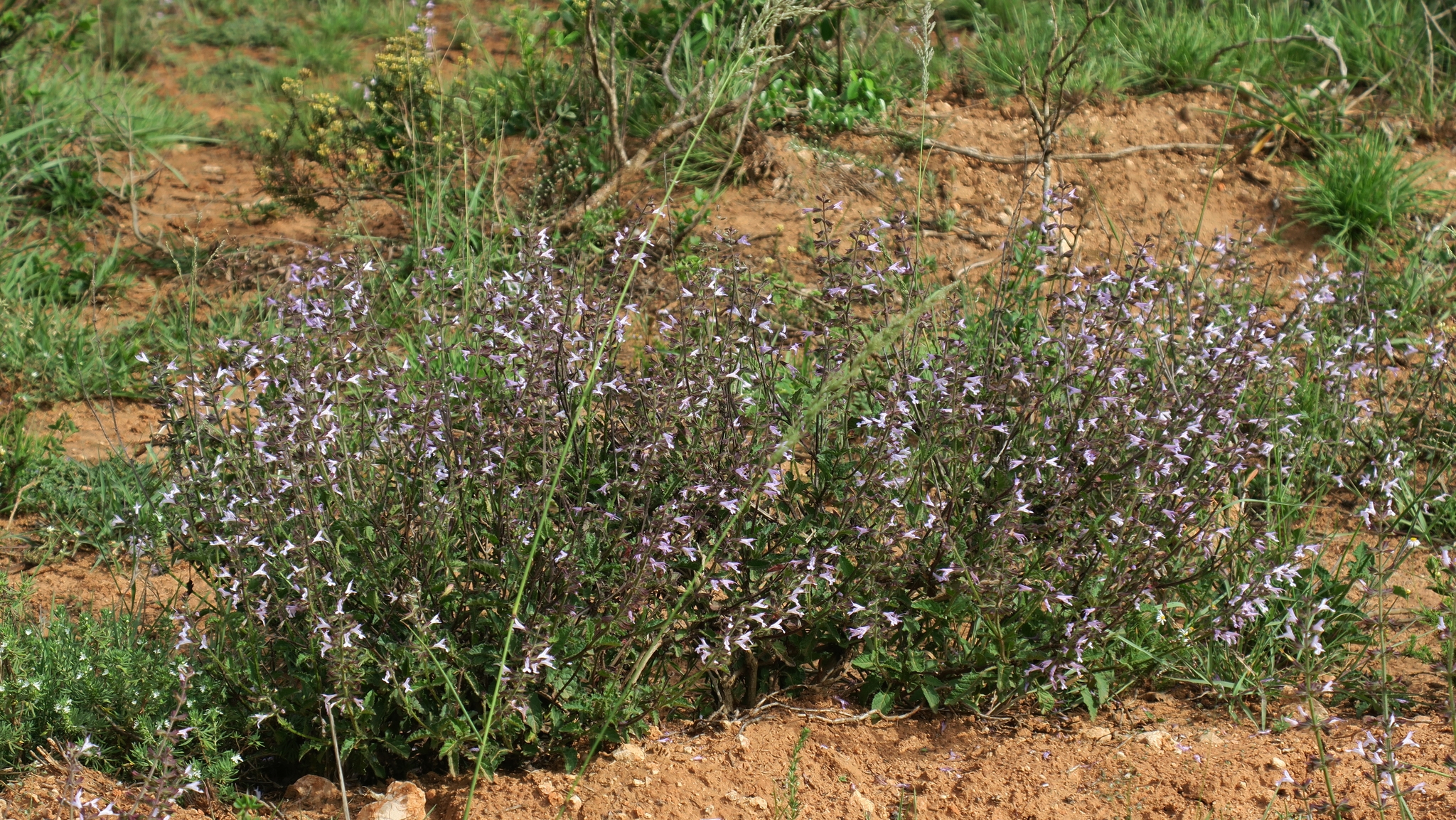
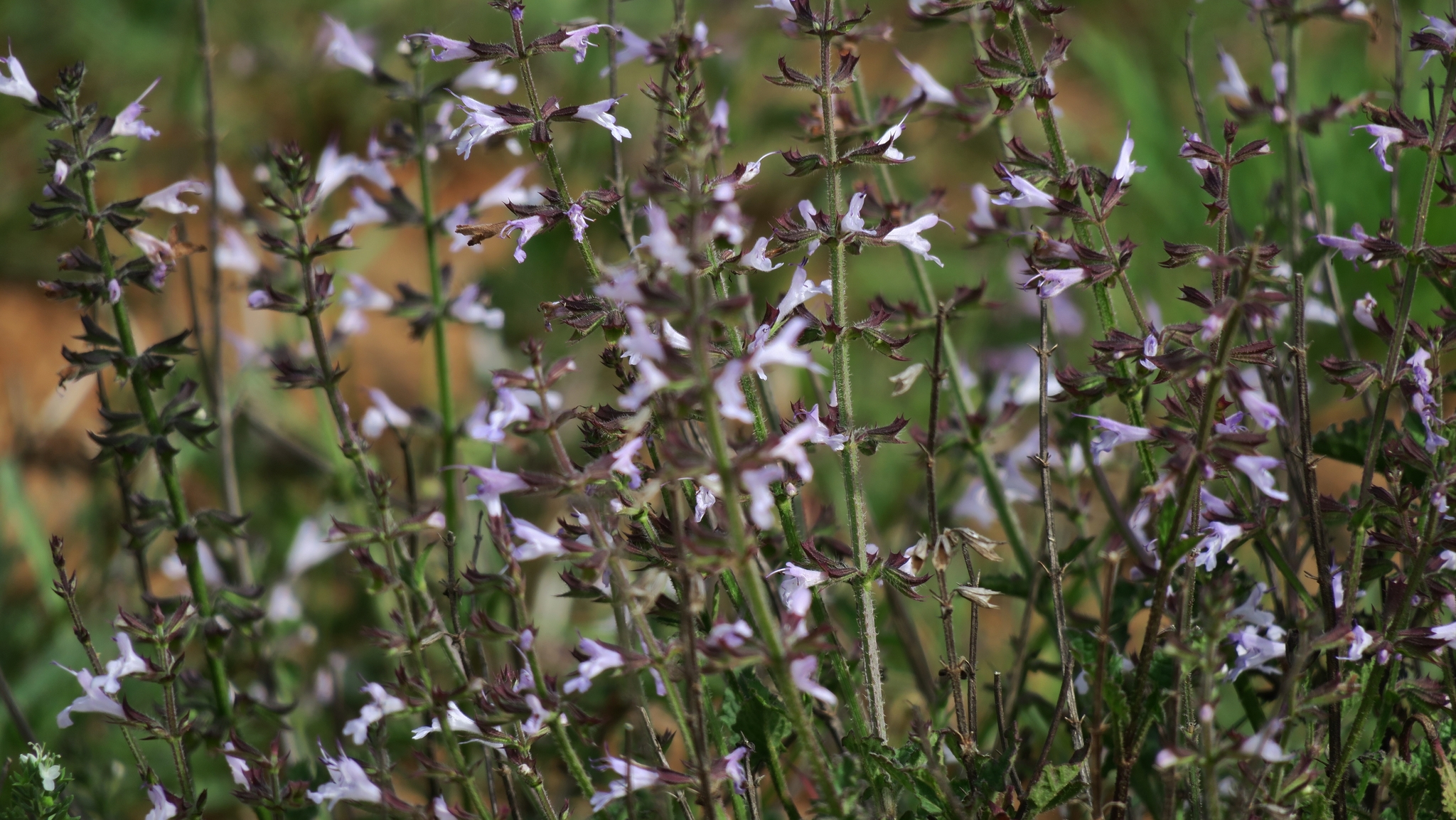
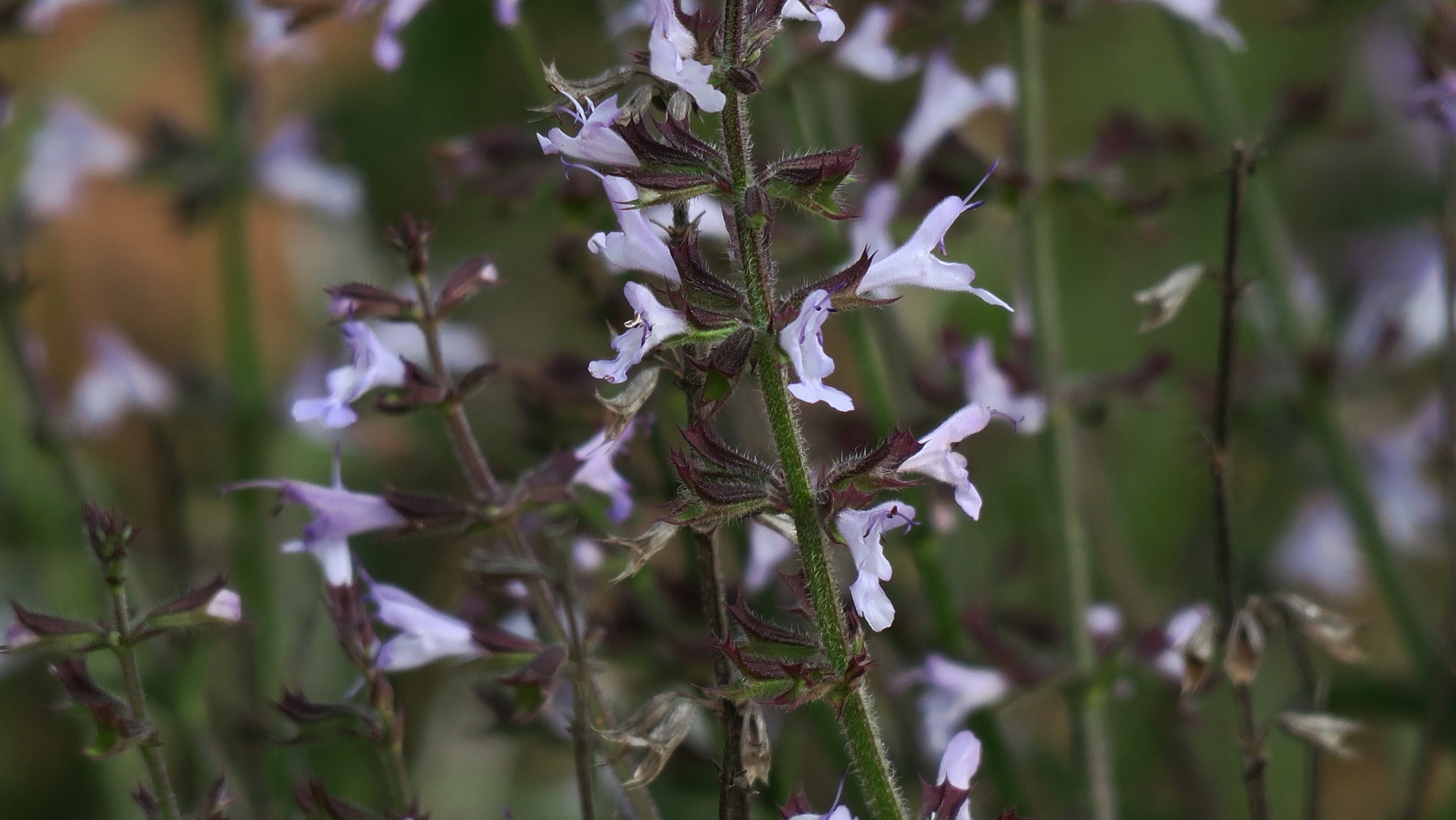
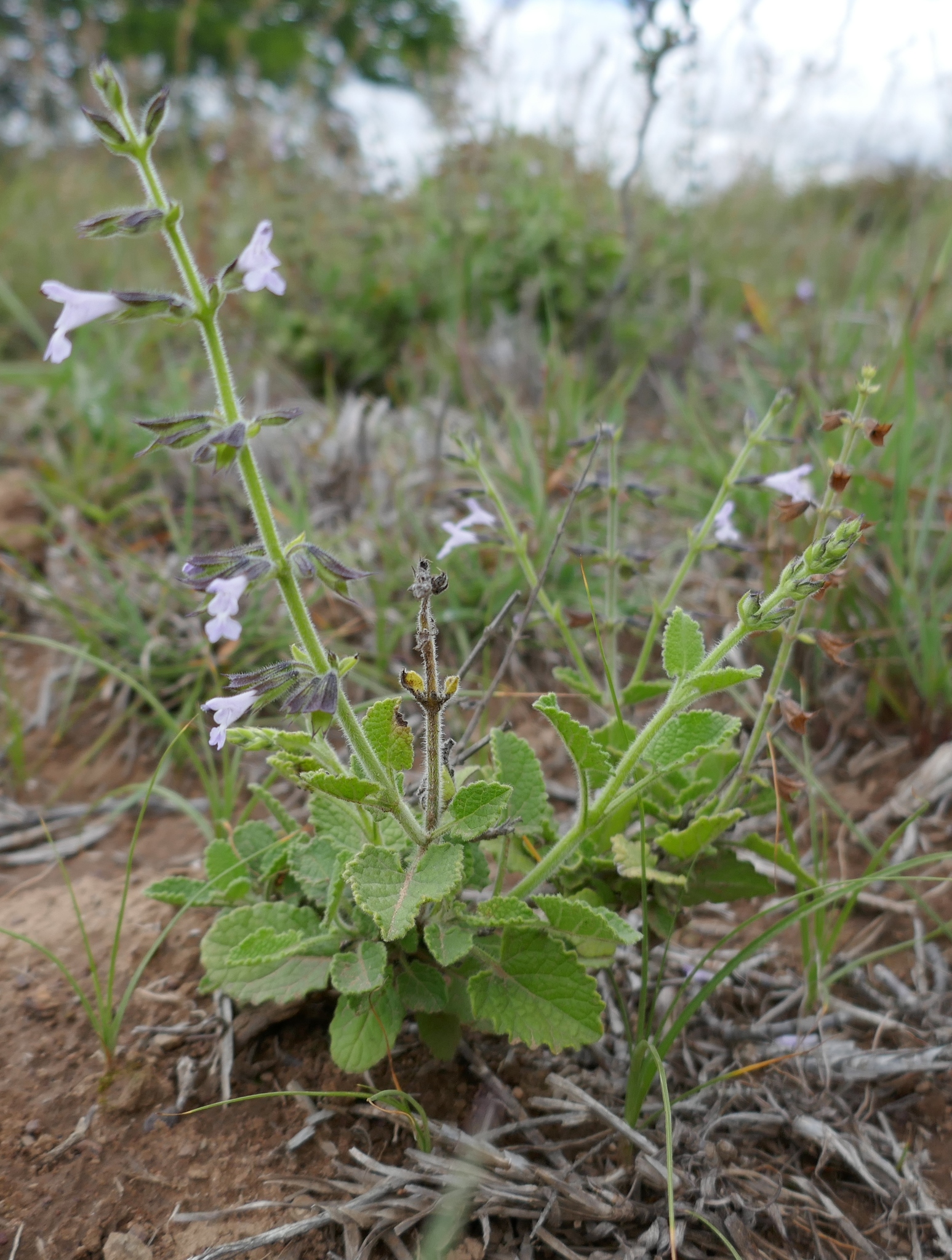
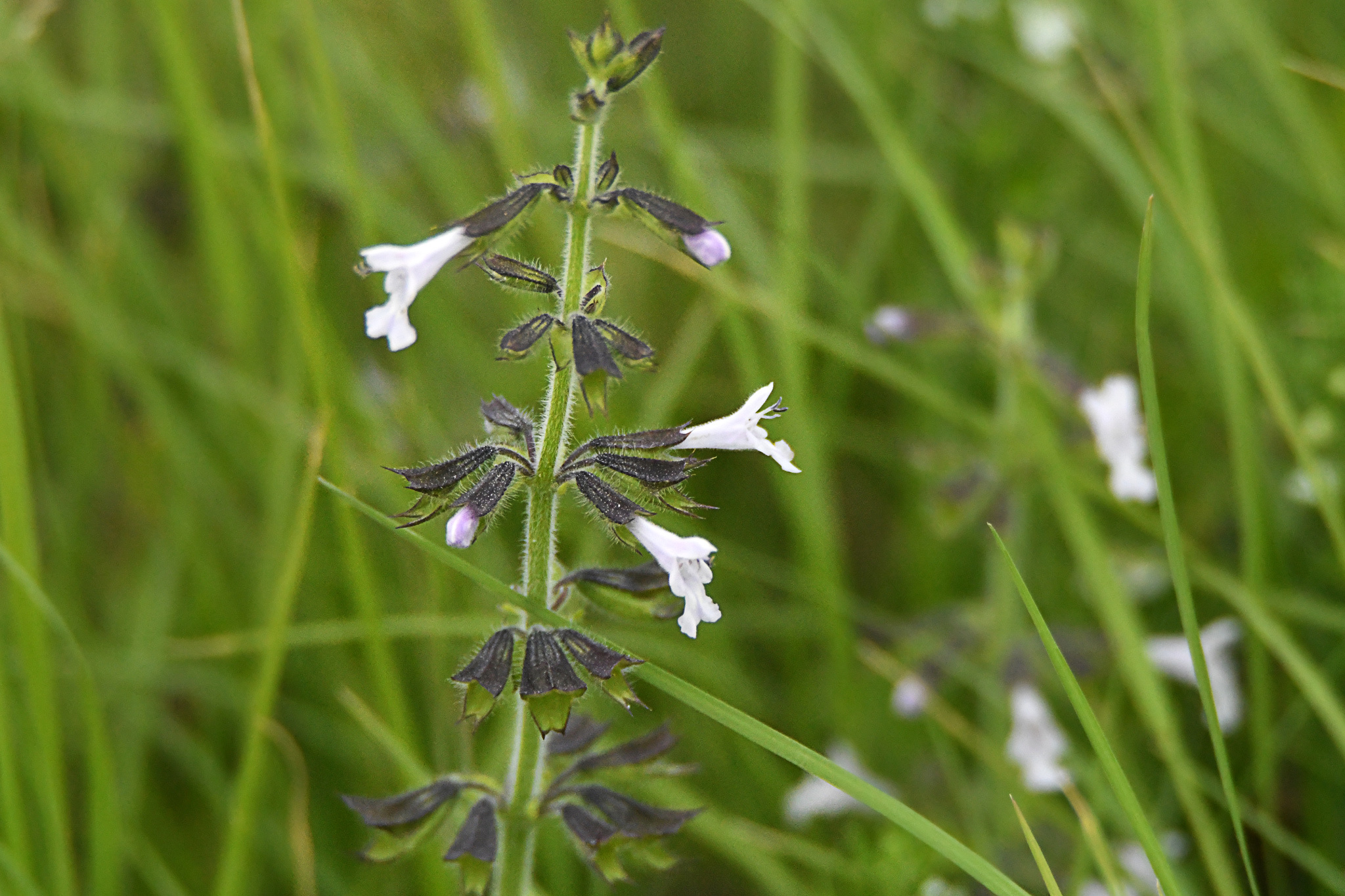
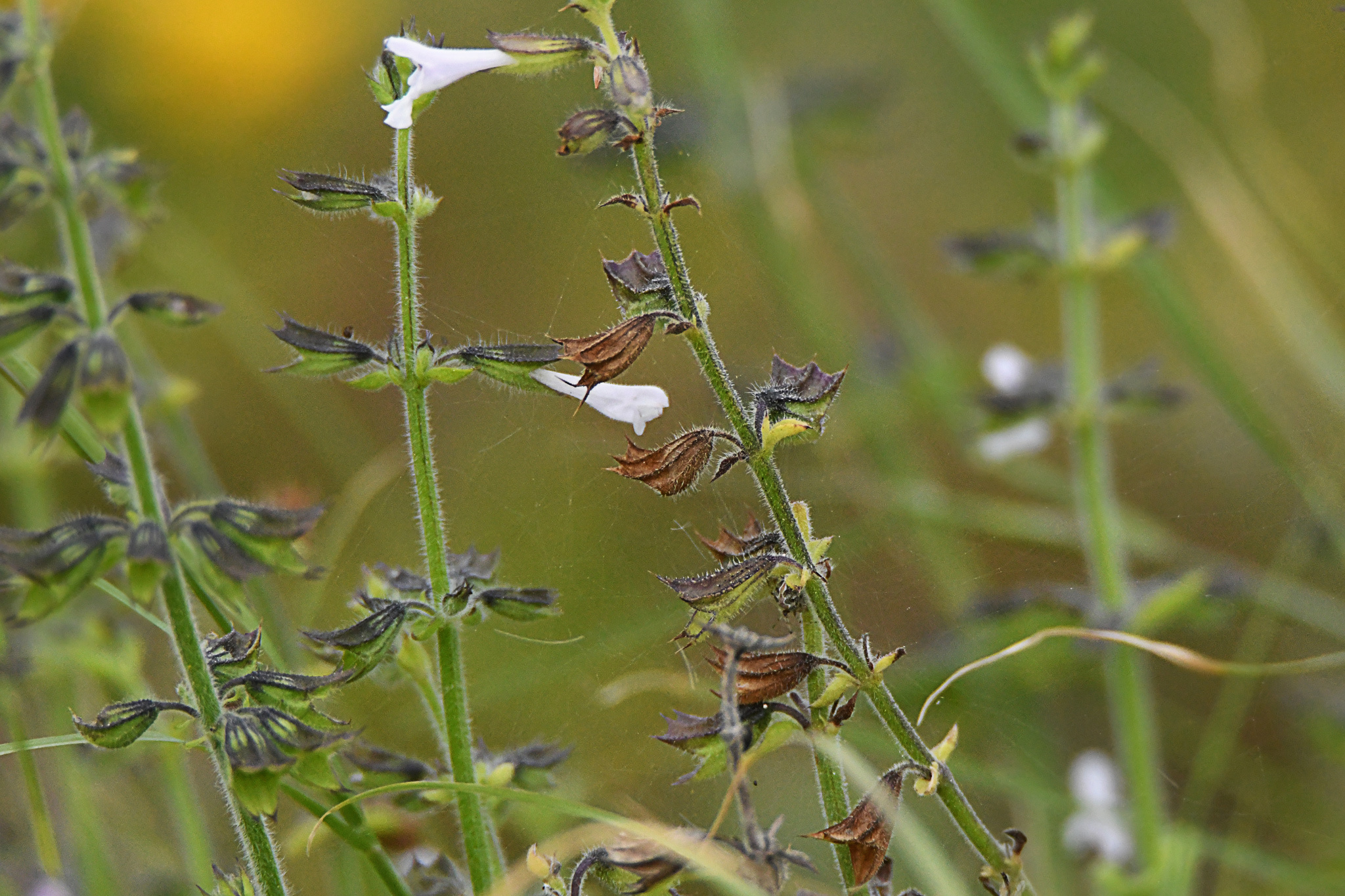
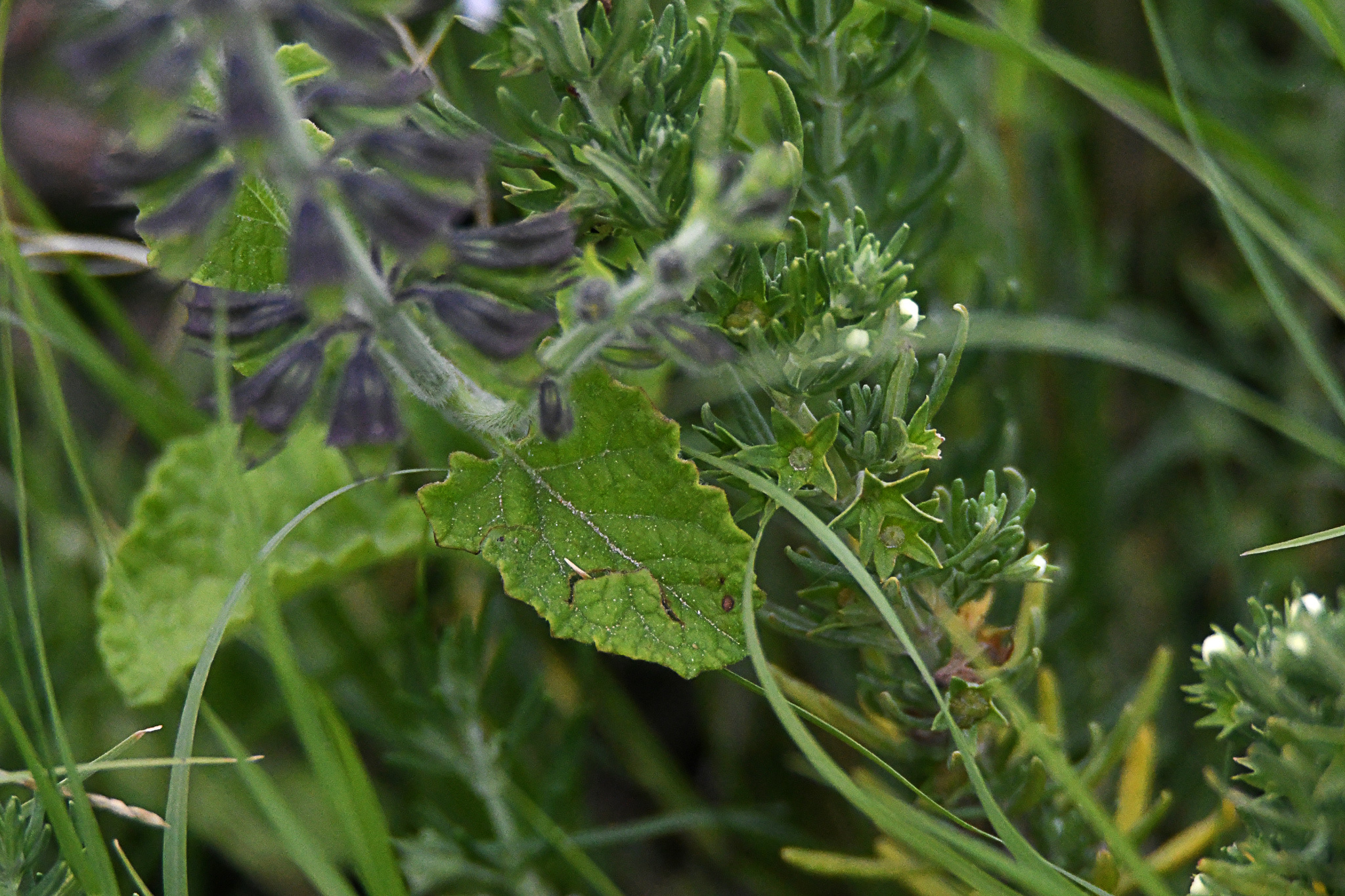
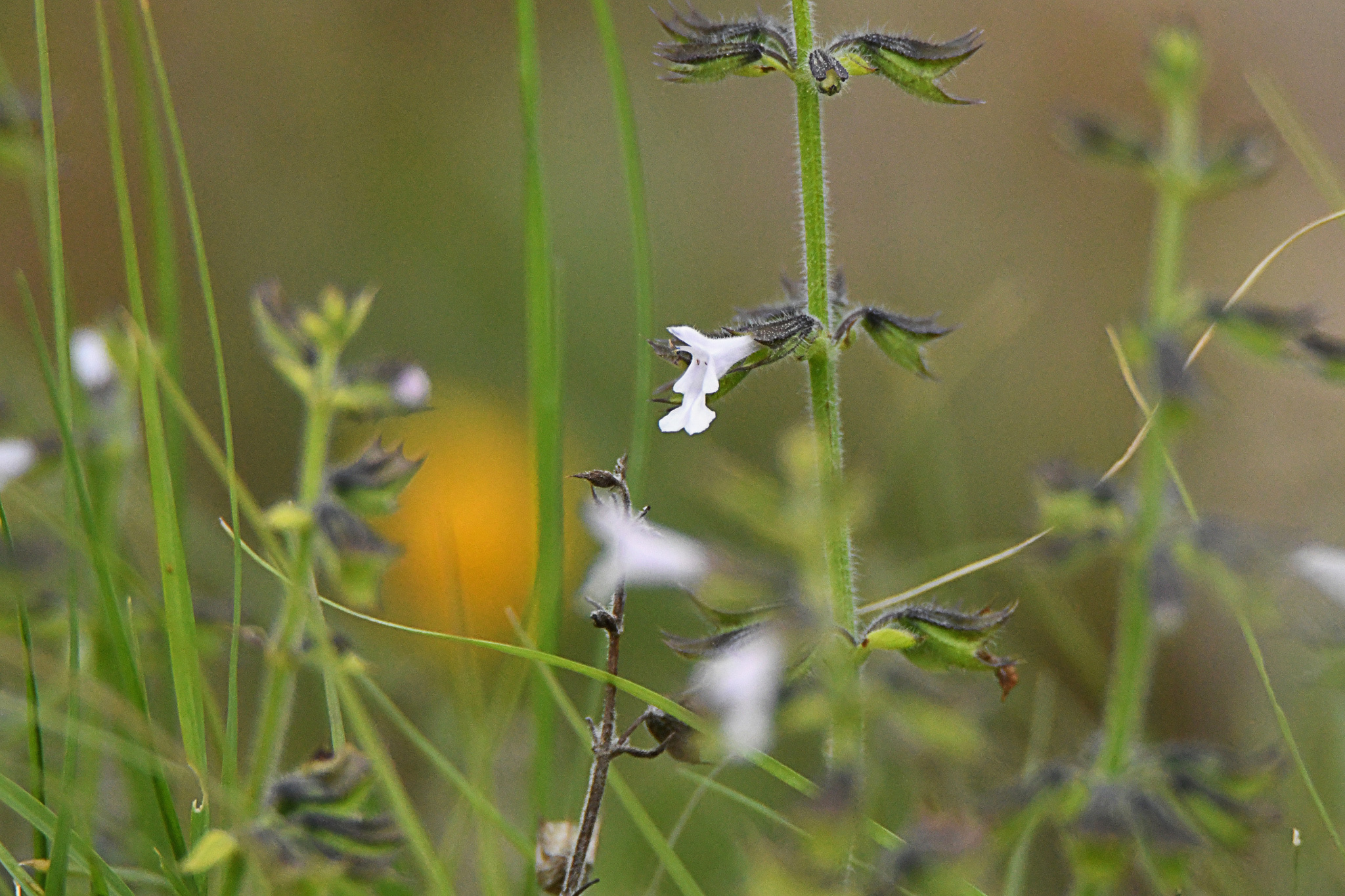
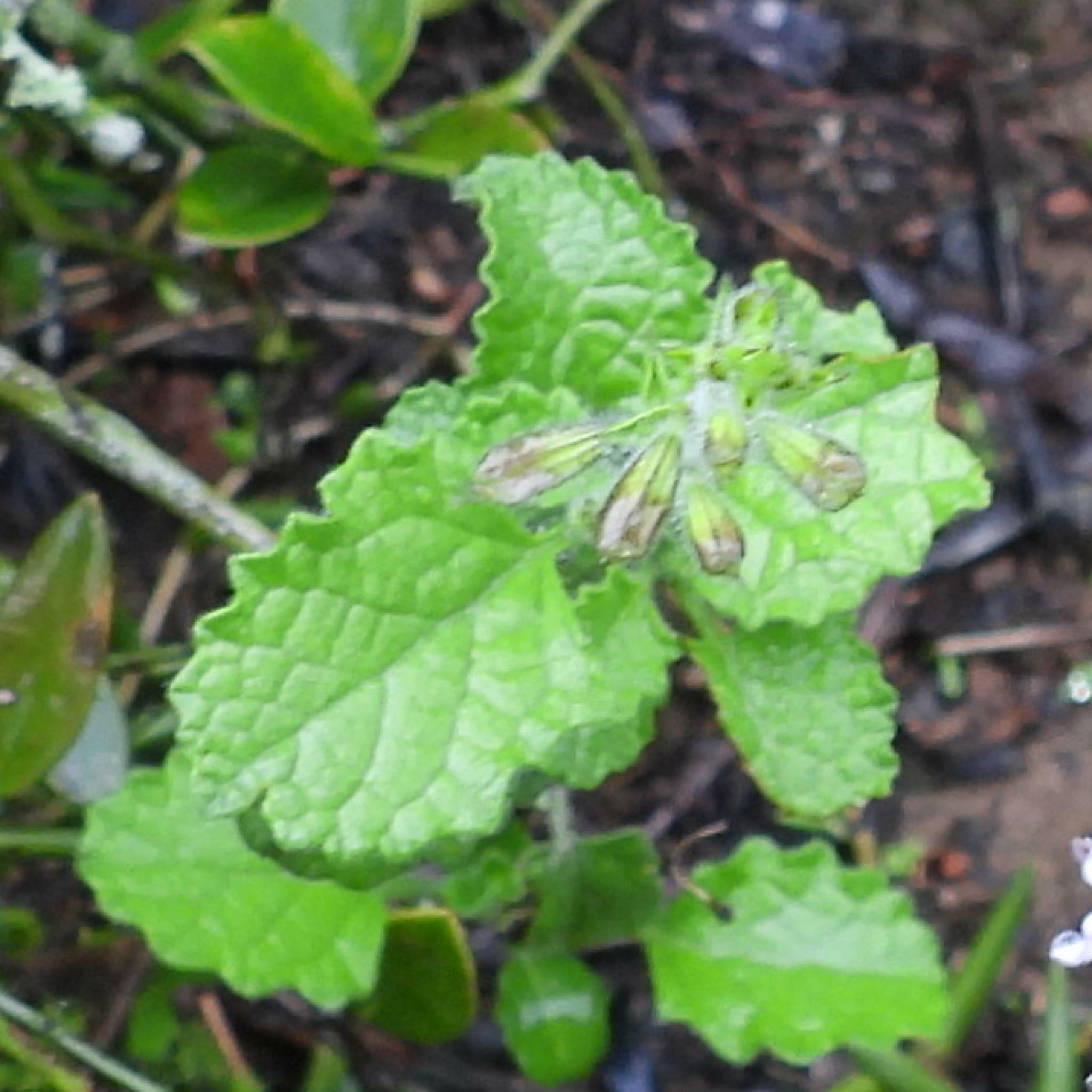
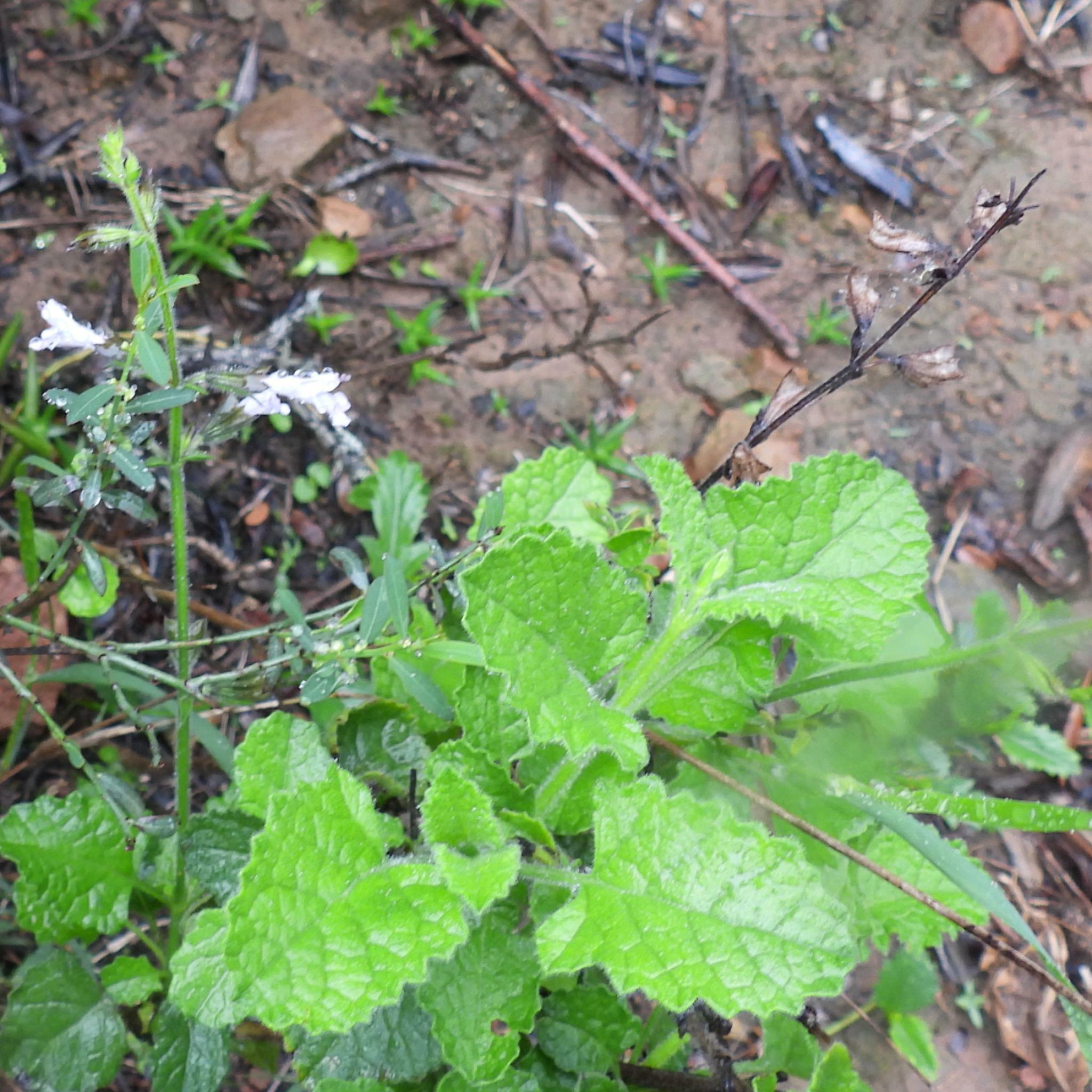
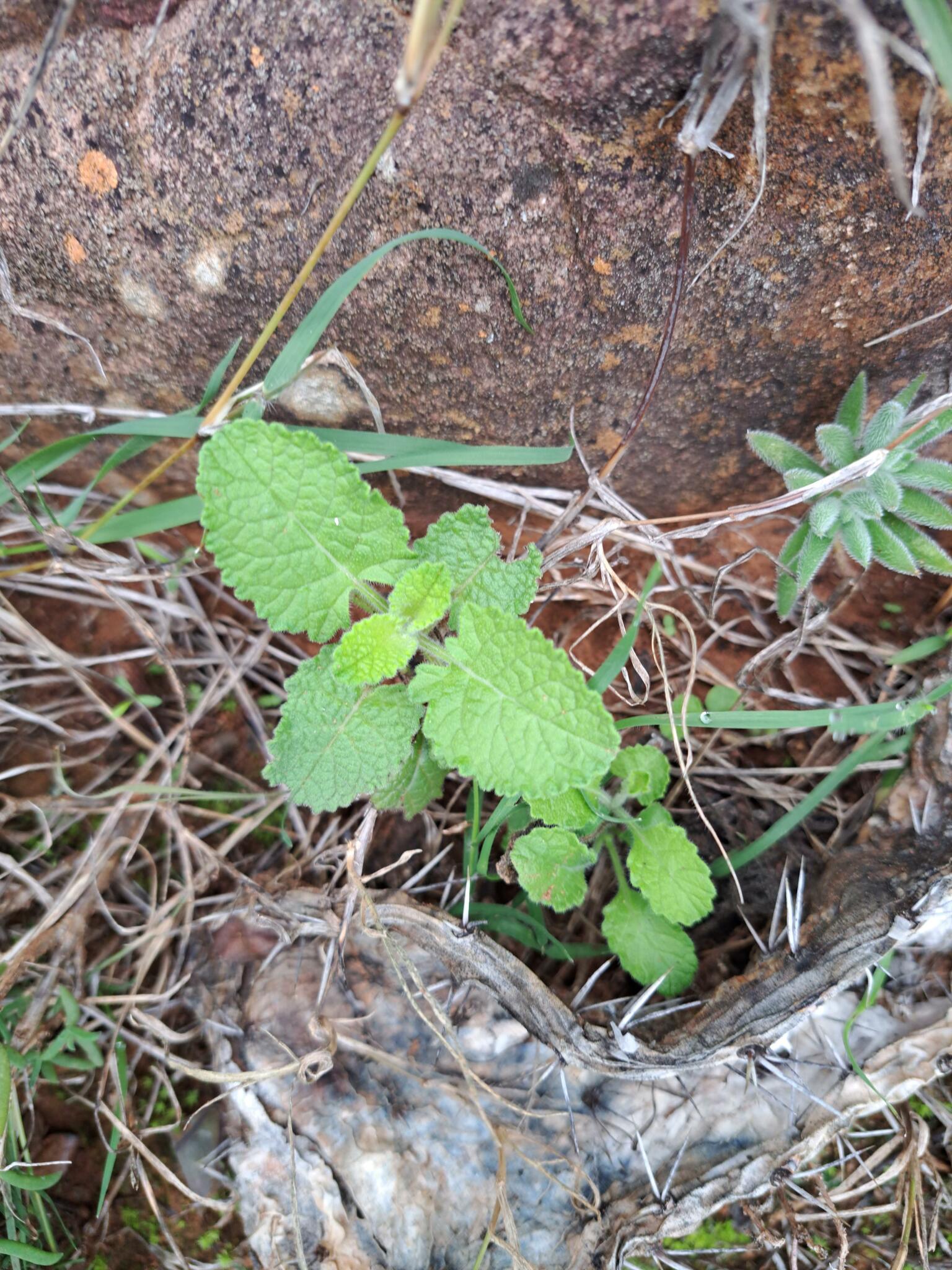
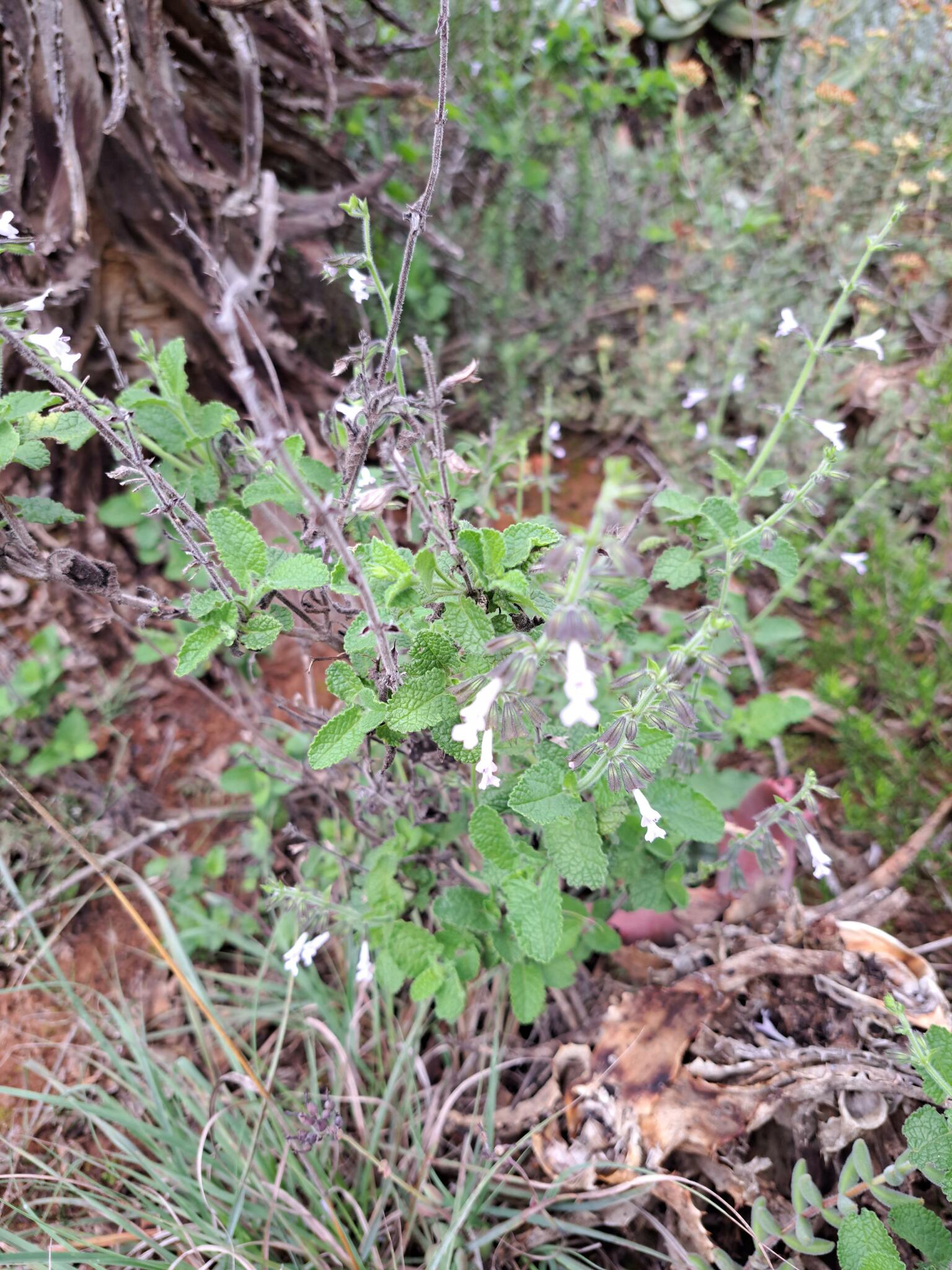
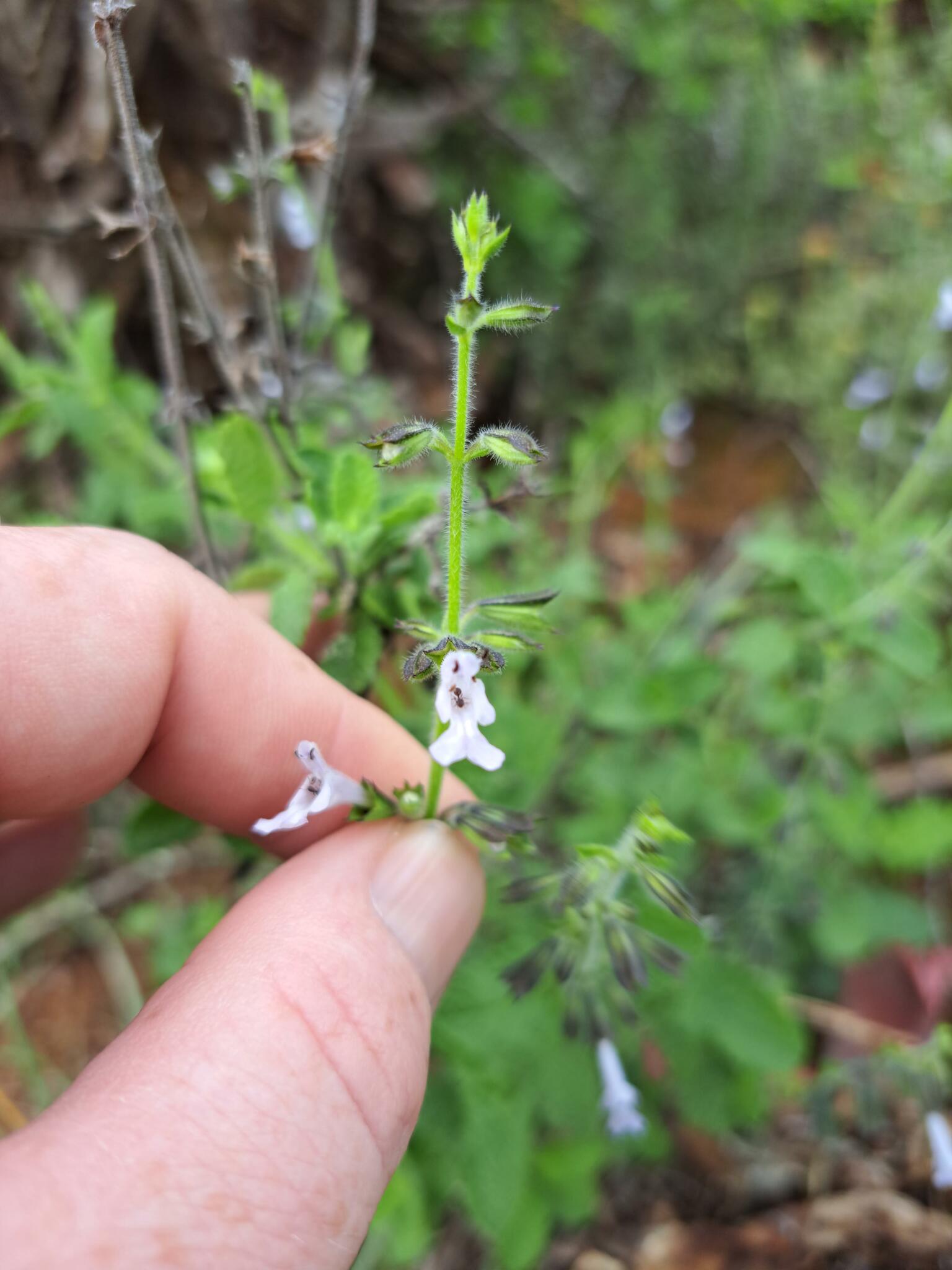
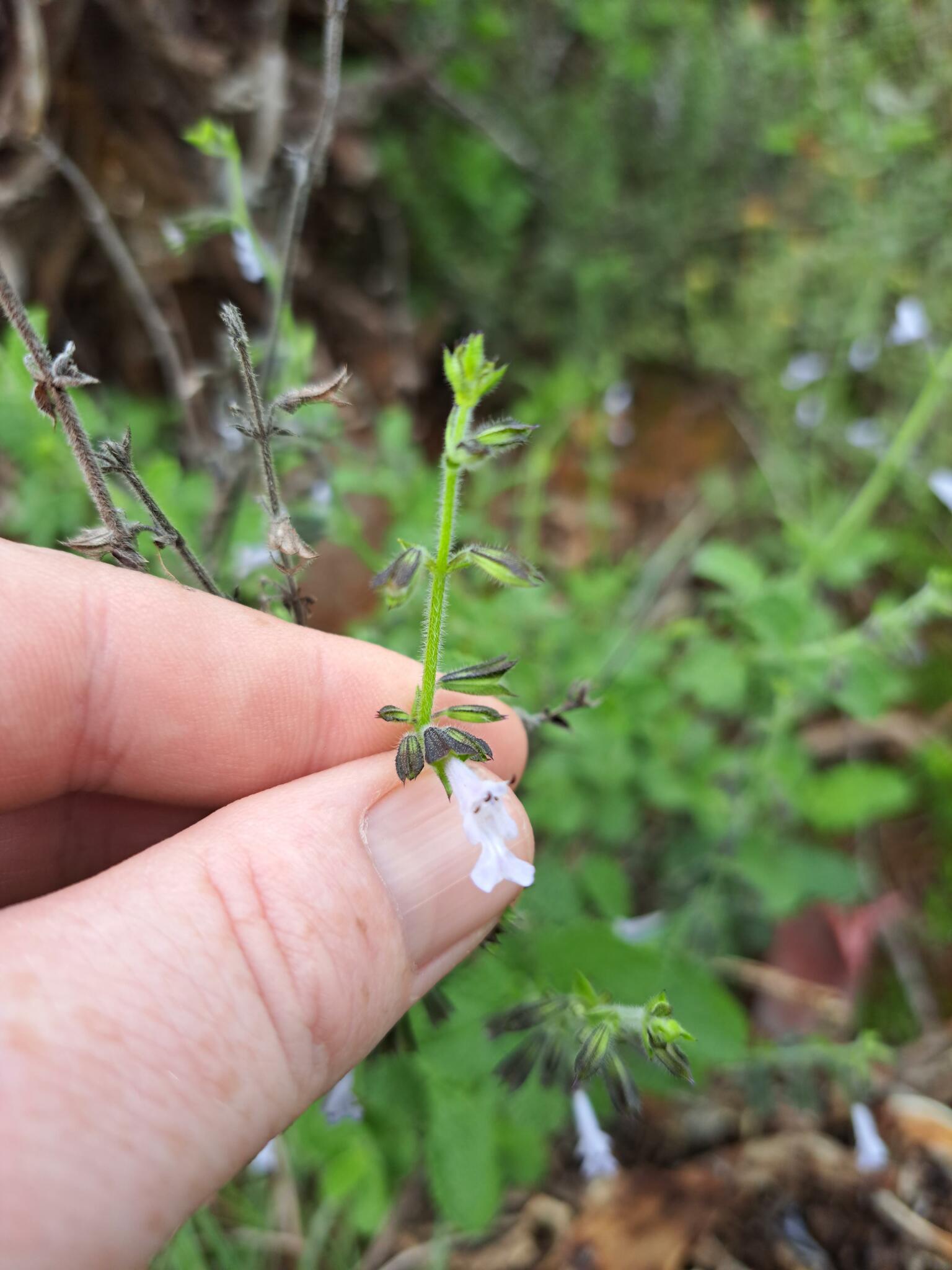
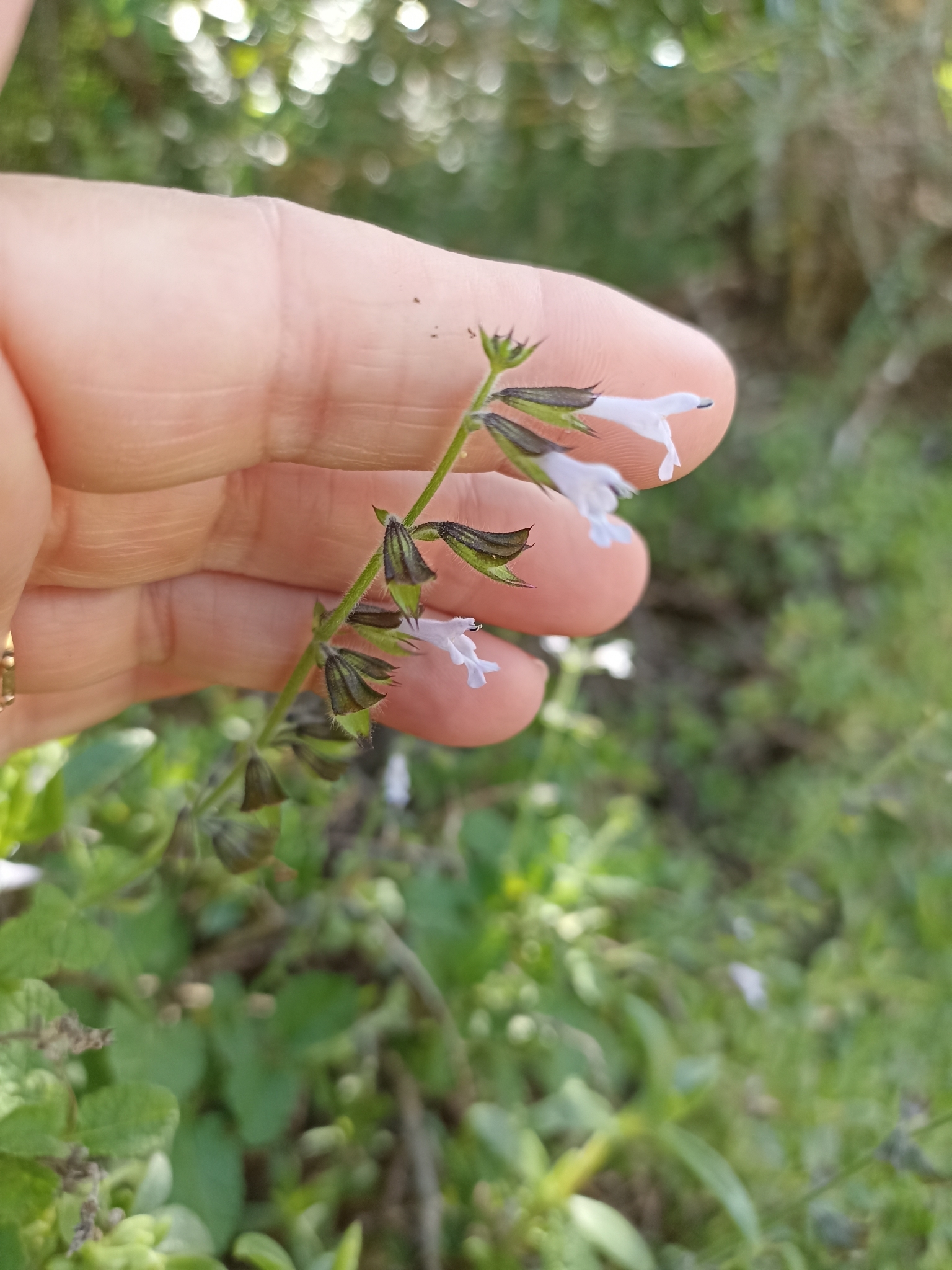
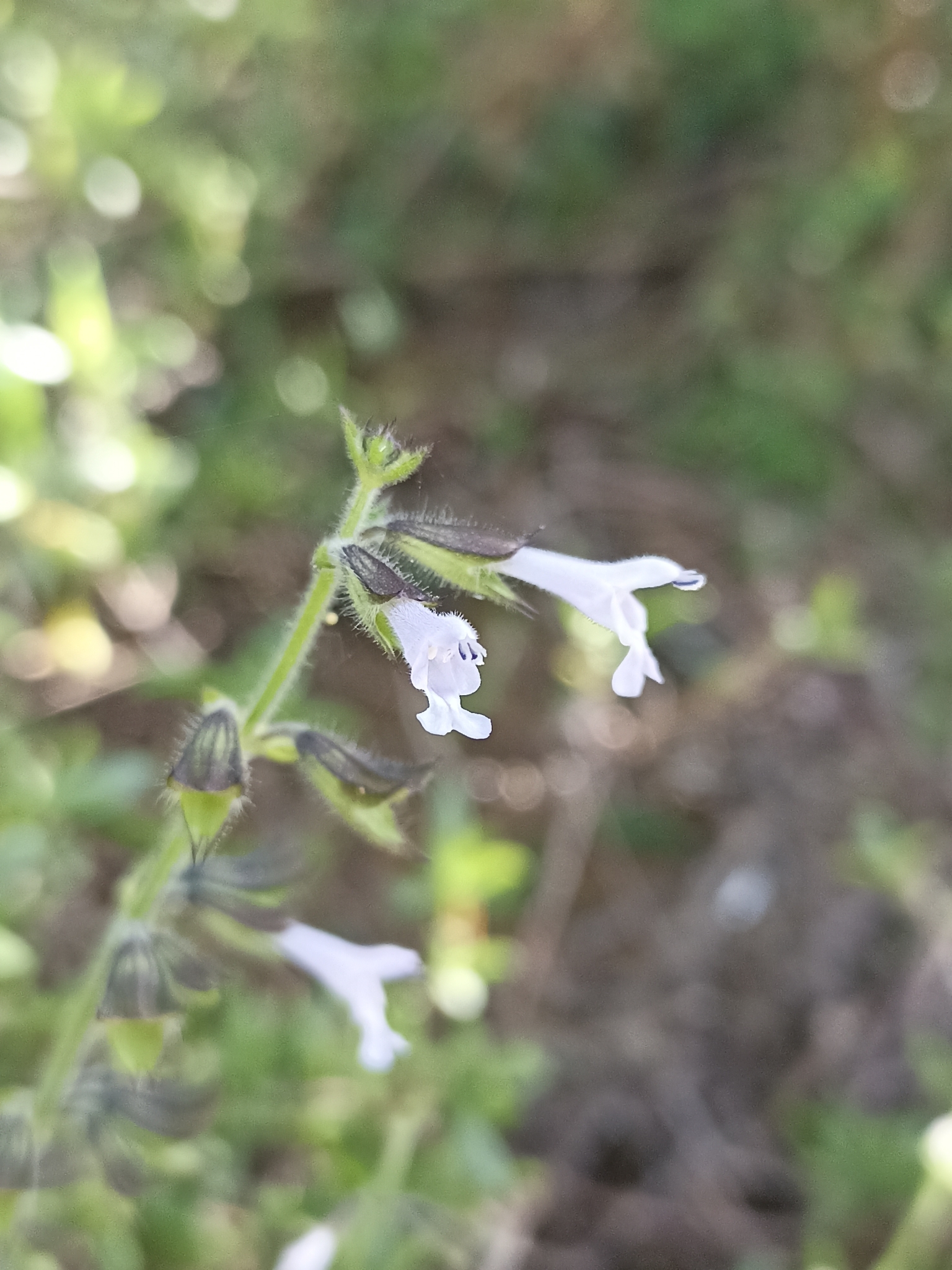
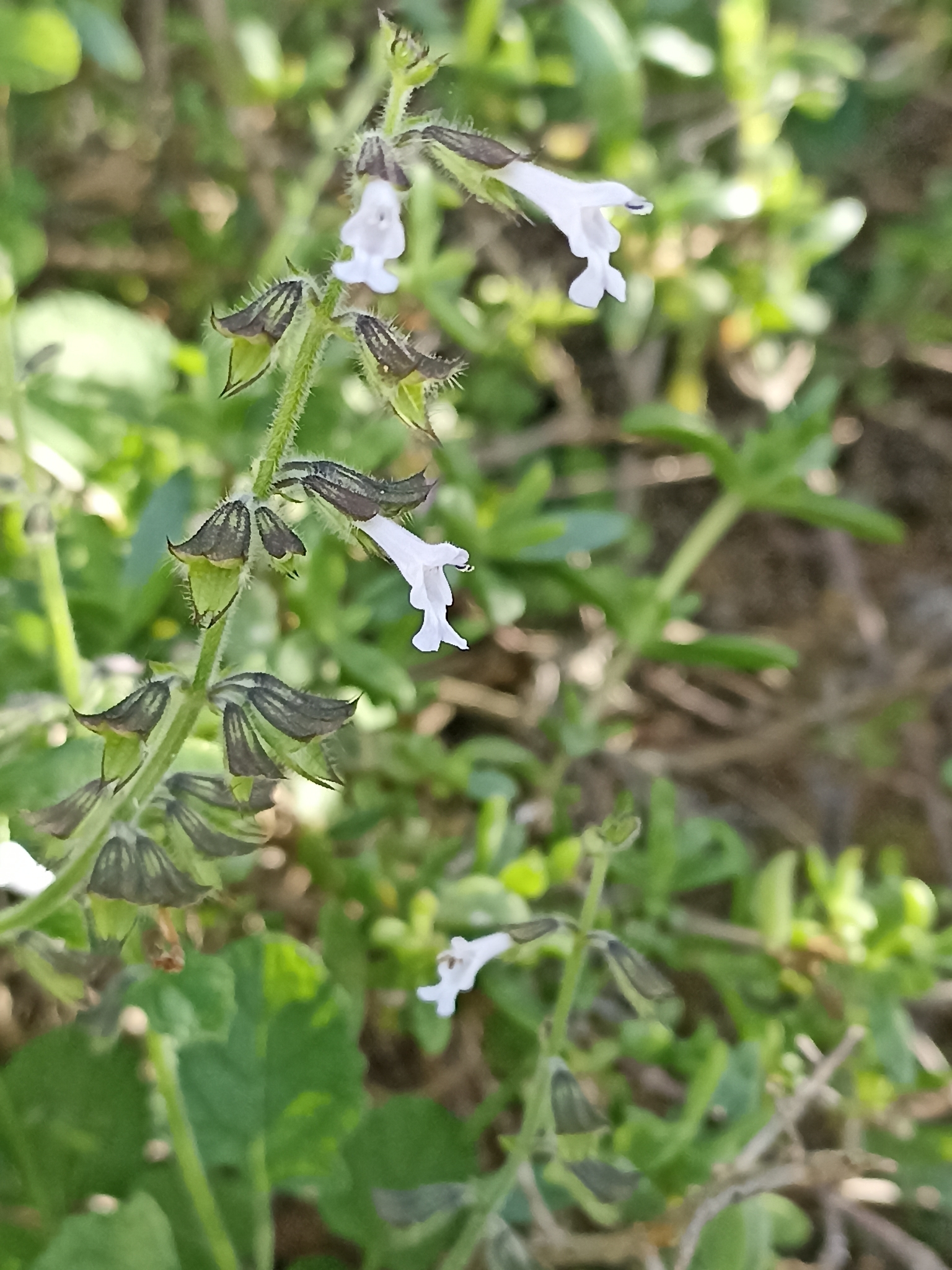
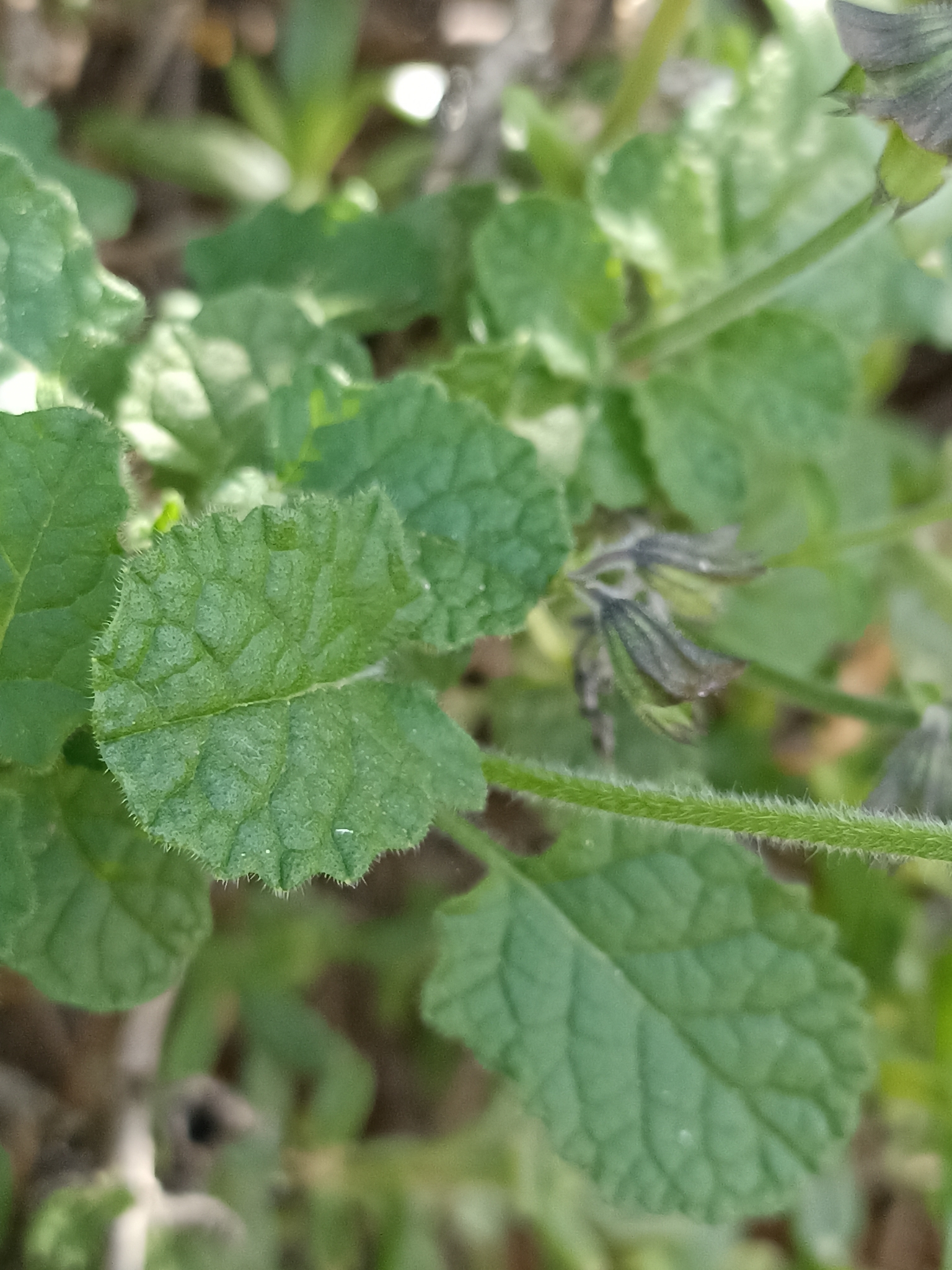
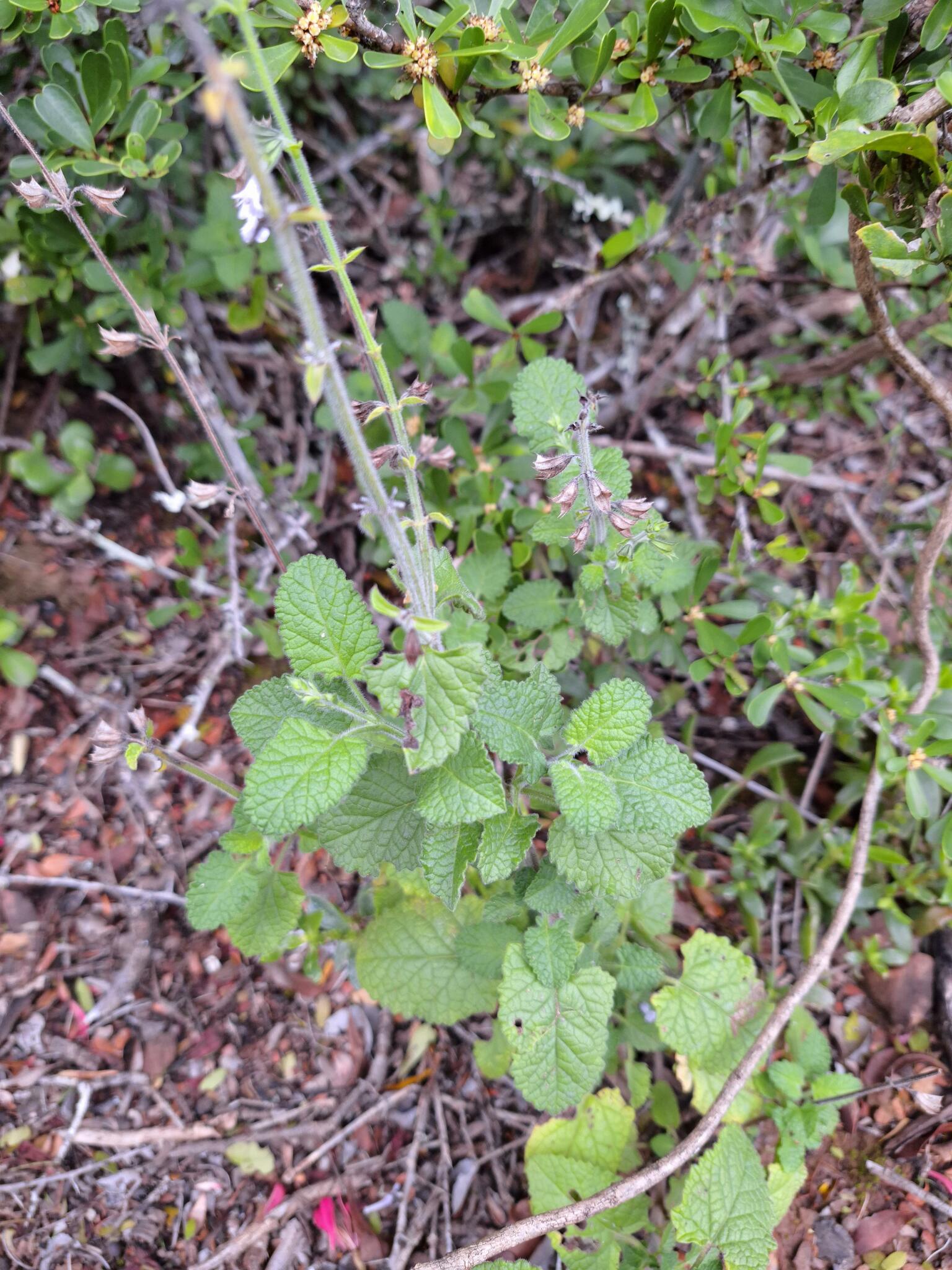
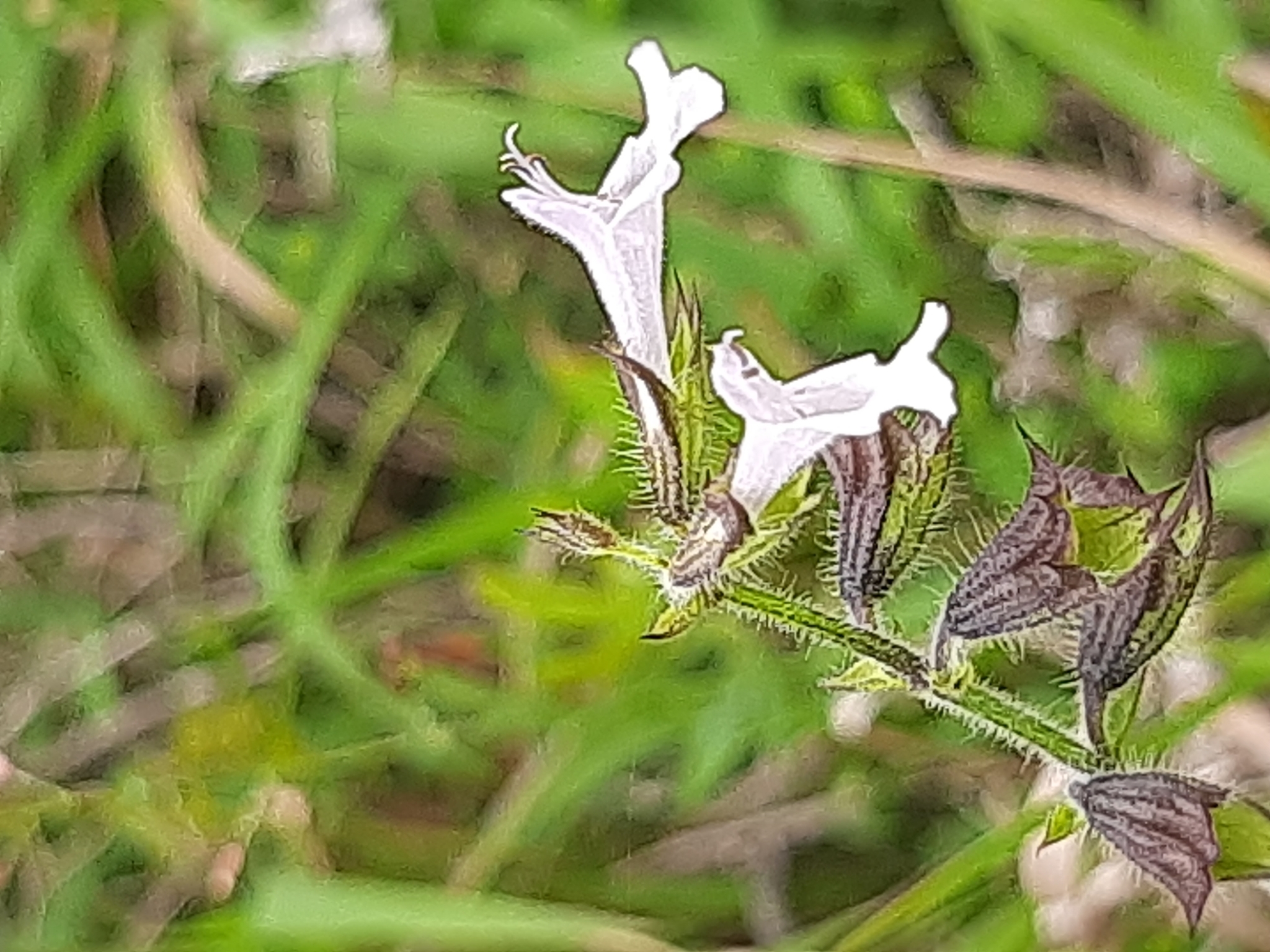
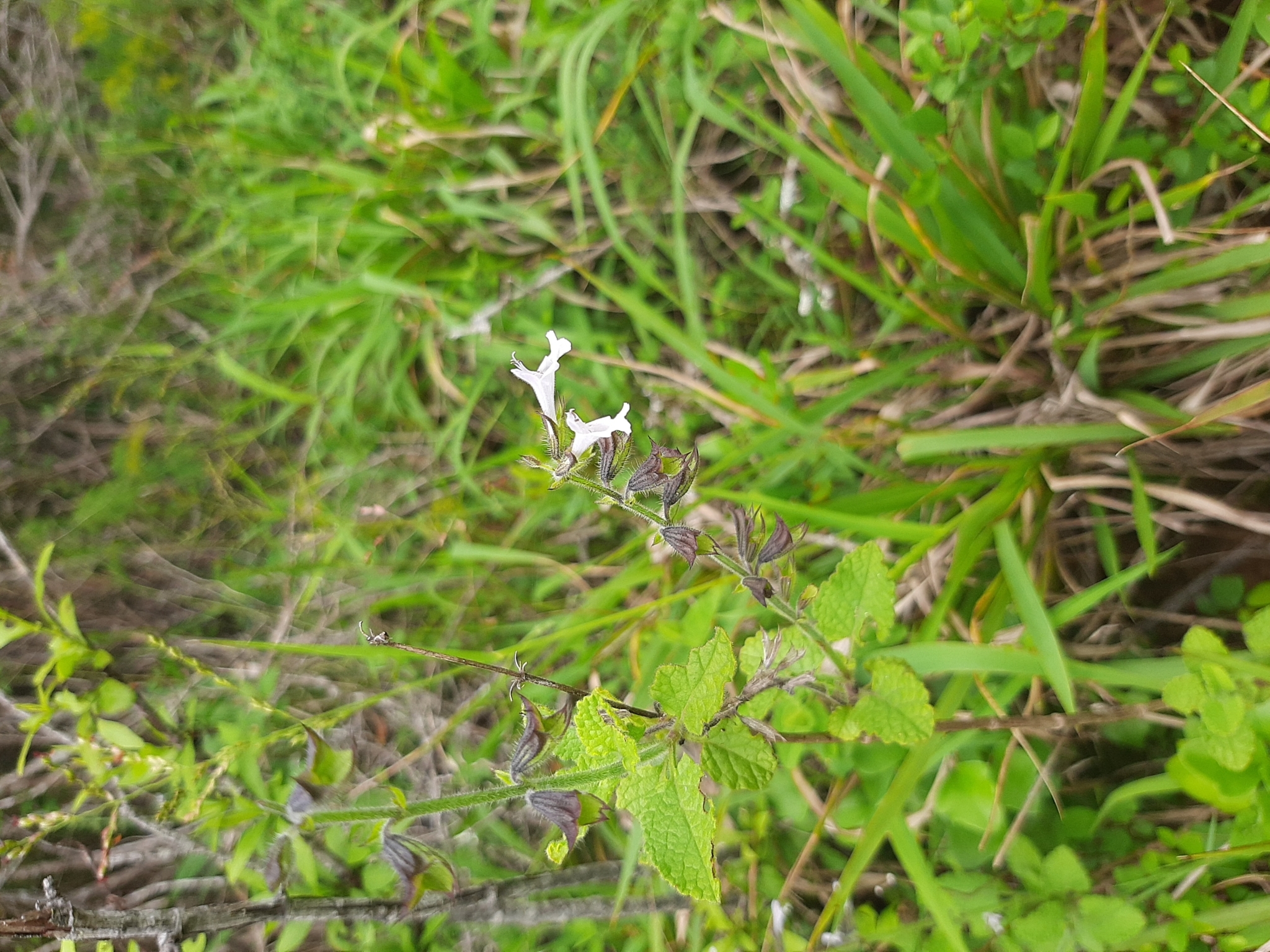
Perennial herb branching from the scarcely woody base; stems sparingly branched, decumbent-ascending, 0.15-0.5 m long, hispid-villous. Leaves petiolate; blade simple, ovate-triangular, 20-40 x 15-30 mm, shortly villous, apex obtuse to rounded, base truncate to subcordate, occasionally shortly auriculate, margin irregularly crenate. Inflorescence of up to 10 verticils, spaced below, denser above; verticils (2-)4-6-flowered. Calyx shortly villous, up to 13 mm long in fruit, campanulate, with a wide sinus between the upper and lower lips; upper lip with 3 subequal acuminate teeth 2-2.5 mm long, the middle tooth often slightly shorter than the outer two. Corolla pale blue, mauve or purple, 12-16 mm long; tube 8-11 mm long; upper lip straight, 2.5-3 mm long; lower lip slightly longer. From: Codd, LEW. 1985. Lamiaceae: 14. Salvia. In: OA Leistner (ed.). Fl. S. Africa 28(4): 79-102. Botanical Research Institute, Department of Agriculture and Water Supply, Pretoria. [http://www.biodiversitylibrary.org/item/209555#page/9/mode/1up] [CC BY]
Perennial herb, 0.15-0.50 m high; stems branching from scarcely woody base; decumbent-ascending; hispid-villous. Leaves petiolate, simple, ovate-triangular, 20-40 x 15-30 mm, base truncate to subcordate, apex obtuse to rounded, margins irregularly crenate; shortly villous. Inflorescence simple; verticillasters up to 10, spaced below, denser above, each 2-6-flowered. Flowers pale blue, mauve or purple. Calyx shortly villous, up to 13 mm long in fruit, campanulate with a wide sinus between the upper and lower lips. Corolla: tube 8-11 mm long; upper lip 2.5-3.0 mm long; lower lip slightly longer. Flowering time Sept.-Apr. From: Bredenkamp, CL; Ngoepe, N. 2019. Lamiaceae. In: CL Bredenkamp (ed.), A Flora of the Eastern Cape Province. Strelitzia 41(2): 1125-1164. South African National Biodiversity Institute, Pretoria. [CC BY]
Like S. aurita but leaves ovate-triangular, 20-40 mm long and calyx bilabiate in fruit. From: Manning, JC; Goldblatt, P. 2012. Lamiaceae. In: J Manning & P Goldblatt (eds), Plants of the Greater Cape Floristic Region 1: The Core Cape flora. Strelitzia 29: 601-604. South African National Biodiversity Institute, Pretoria. [CC BY]
Related to the next species, S. aurita, but has smaller, more densely pubescent leaves, and a somewhat longer fruiting calyx in which there is a relatively wide sinus between the upper and lower lips. From: Codd, LEW. 1985. Lamiaceae: 14. Salvia. In: OA Leistner (ed.). Fl. S. Africa 28(4): 79-102. Botanical Research Institute, Department of Agriculture and Water Supply, Pretoria. [http://www.biodiversitylibrary.org/item/209555#page/9/mode/1up] [CC BY]
In open grassy places between bushes and at forest margins. From: Codd, LEW. 1985. Lamiaceae: 14. Salvia. In: OA Leistner (ed.). Fl. S. Africa 28(4): 79-102. Botanical Research Institute, Department of Agriculture and Water Supply, Pretoria. [http://www.biodiversitylibrary.org/item/209555#page/9/mode/1up] [CC BY]
Open grassy places between bushes and at forest margins, alt. 20-1950 m; Sub-Escarpment Savanna, Drakensberg Grassland, Albany Thicket. From: Bredenkamp, CL; Ngoepe, N. 2019. Lamiaceae. In: CL Bredenkamp (ed.), A Flora of the Eastern Cape Province. Strelitzia 41(2): 1125-1164. South African National Biodiversity Institute, Pretoria. [CC BY]
Wooded grasslands. From: Manning, JC; Goldblatt, P. 2012. Lamiaceae. In: J Manning & P Goldblatt (eds), Plants of the Greater Cape Floristic Region 1: The Core Cape flora. Strelitzia 29: 601-604. South African National Biodiversity Institute, Pretoria. [CC BY]
Found in south-eastern Cape Province from about King William's Town to near Humansdorp and inland to Somerset East and Keiskammahoek. From: Codd, LEW. 1985. Lamiaceae: 14. Salvia. In: OA Leistner (ed.). Fl. S. Africa 28(4): 79-102. Botanical Research Institute, Department of Agriculture and Water Supply, Pretoria. [http://www.biodiversitylibrary.org/item/209555#page/9/mode/1up] [CC BY]
Alice to King William’s Town S, from Hankey to Humansdorp District and Koonap Height in Albany District. From: Bredenkamp, CL; Ngoepe, N. 2019. Lamiaceae. In: CL Bredenkamp (ed.), A Flora of the Eastern Cape Province. Strelitzia 41(2): 1125-1164. South African National Biodiversity Institute, Pretoria. [CC BY]
Humansdorp to E Cape. From: Manning, JC; Goldblatt, P. 2012. Lamiaceae. In: J Manning & P Goldblatt (eds), Plants of the Greater Cape Floristic Region 1: The Core Cape flora. Strelitzia 29: 601-604. South African National Biodiversity Institute, Pretoria. [CC BY]
August
20 to 1950 m
This map contains point-based occurrences at different locations
Occurrence in the Flora of Southern Africa (FSA) countries and South African provinces. Residence status indicates if a taxon is indigenous, endemic, naturalised or invasive in a specific region. This data is based on specimen records and literature
FSA
SA
BOT
NAM
ESW
LES
WC
EC
NC
FS
GA
KZN
LP
MP
NW
Absent
Indigenous
Endemic
Naturalised
Invasive
Names and Sources
No synonyms found.
Classification
KINGDOM Plantae
SUBKINGDOM Phanerogamae
PHYLUM Anthophyta
ORDER Lamiales
FAMILY Lamiaceae
SUBFAMILY Nepetoideae
TRIBE Mentheae
GENUS Salvia
SPECIES triangularis
30 results for Salvia triangularis Thunb.
Barcode: PRE0234631-0 Collector(s) & number: Acocks, JPH, 13734 | 1947-4-30
South Africa, Eastern Cape, HUMANSDORP DIV.; ZOETKLOOF; 12.5 MI. NNE OF HUMANSDORP
Data Resource: BODATSA View record
Barcode: PRE0469697-0 Collector(s) & number: Dahlstrand, KA, 3148 | 1974-10-23
South Africa, Eastern Cape, PORT ELIZABETH; MARKMAN INDUSTRIAL A
Data Resource: BODATSA View record
Barcode: PRE0471719-0 Collector(s) & number: Devenish, NJ, 1570 | 1975-12-28
South Africa, Mpumalanga, WAKKERSTROOM DIST.; OSHOEK
Data Resource: BODATSA View record
Barcode: PRE0484289-0 Collector(s) & number: Hall-Martin, AJ, 5950 | 1976-6-3
South Africa, Eastern Cape, ADDO ELEPHANT NAT. P; REST CAMP
Data Resource: BODATSA View record
Barcode: PRE0547107-0 Collector(s) & number: Giffen, MH, 2262 | 1947-3-12
South Africa, Eastern Cape, ALICE; DAL EENDRACHT FARM S. OF ALICE
Data Resource: BODATSA View record
Barcode: PRE0574831-0 Collector(s) & number: Sim, TR, PRE 39664B | 1888--
South Africa, Eastern Cape, King William's Town.
Data Resource: BODATSA View record
Barcode: PRE0707514-0 Collector(s) & number: Urton, NR, 850 | 1985-11-
South Africa, Eastern Cape, PORT ELIZABETH; BLUE-WATER BAY
Data Resource: BODATSA View record
Barcode: PRE0854870-0 Collector(s) & number: Steenkamp, LP, 390 | 2006-3-3
South Africa, Eastern Cape, Fort Beaufort District. Public road to Allemansfontein farm.
General notes: Road verge in riverine thicket. Slope: gentle. Mauve flowers, small, lipped. Hair stems. Quilted leaves. Flowers on tall stems.
Data Resource: BODATSA View record
Barcode: PRE0115868-0 Collector(s) & number: Marsh, JA, 1369 | 1969-9-26
South Africa, Eastern Cape, HANKEY; 3.7 MI. FROM HANKEY TO PATENSIE
Data Resource: BODATSA View record
Barcode: PRE0115871-0 Collector(s) & number: Long, FR, 817 | 1932-10-30
South Africa, Eastern Cape, PORT ELIZABETH; PERSEVERANCE
Data Resource: BODATSA View record
Barcode: PRE0115872-0 Collector(s) & number: Sim, TR, PRE 31975 | 1888--
South Africa, Eastern Cape, KING WILLIAMS TOWN D
Data Resource: BODATSA View record
Barcode: PRE0115867-0 Collector(s) & number: Story, R, 191 | 1945-11-3
South Africa, Eastern Cape, ALBANY DIV.; 16 MI. FROM SALEM ON SOUTHWELL RD
Data Resource: BODATSA View record
Barcode: PRE0115874-0 Collector(s) & number: Dahlstrand, KA, 814 | 1968-8-12
South Africa, Eastern Cape, UITENHAGE; UITENHAGE WATERWORKS SPRINGS 5 MI. N. OFUITENHAGE
Data Resource: BODATSA View record
Barcode: PRE0115866-0 Collector(s) & number: Schonland, S, 3696 | 1920-4-
South Africa, Eastern Cape, ALBANY; KOONAP HEIGHT
Data Resource: BODATSA View record
Barcode: PRE0115869-0 Collector(s) & number: Thode, A2740 | 1930-10-
South Africa, Eastern Cape, ENON
Data Resource: BODATSA View record
Barcode: PRE0115864-0 Collector(s) & number: Zeyher, CLP, 3532 | 1847--
South Africa, Western Cape, CAPE OF GOOD HOPE
Data Resource: BODATSA View record
Barcode: PRE0115863-0 Collector(s) & number: Sim, TR, PRE 39624 | 1888--
South Africa, Eastern Cape, KING WILLIAMS TOWN D; PERIE
Data Resource: BODATSA View record
Barcode: PRE0115875-0 Collector(s) & number: Dahlstrand, KA, 3057 | 1973-5-29
South Africa, Eastern Cape, Markman Industrial A[rea]; At old rd. Clearing of the bush
Data Resource: BODATSA View record
Barcode: PRE0894128-0 Collector(s) & number: Potgieter, FJ, FP01236 | 2002-7-2
South Africa, Eastern Cape, Uitenhage (Dirt road - Elandsriver to Uitenhage).
General notes: Valley Bushveld. Gentle slope. Aromatic.
Data Resource: BODATSA View record
Barcode: PRE0984158-0 Collector(s) & number: Potgieter, FJ, FP01456 | 2002-8-8
South Africa, Eastern Cape, Baviaanskloof.
General notes: Valley Bushveld. Moderate slope. Aromatic. Voucher: photo, spirit collection.
Data Resource: BODATSA View record
Barcode: PRE0994772-0 Collector(s) & number: Nkuna, LA, 8019 | 2017-10-26
South Africa, Eastern Cape, Nelson Mandela Bay District. Motherwell along the road R335 towards Addo.
General notes: Associated species: Gasteria bicolor var.. bicolor, Lycium cinereum, Carpobrotus edulis, Aloe striata. Seed collected from plants in mid-season, both moist & dry seed. Soil white & well-drained.
Data Resource: BODATSA View record
This map contains point-based occurrences at different locations
2019
SERIES CHAPTER
Lamiaceae Bredenkamp, CL; Ngoepe, NIn: CL Bredenkamp (ed.), A Flora of the Eastern Cape Province. Strelitzia 41(2)1125-1164
South African National Biodiversity Institute, Pretoria
2012
SERIES CHAPTER
Lamiaceae Manning, JC; Goldblatt, PIn: J Manning & P Goldblatt (eds), Plants of the Greater Cape Floristic Region 1: The Core Cape flora. Strelitzia 29: 601-604
South African National Biodiversity Institute, Pretoria
1985
FLORA CHAPTER
Lamiaceae: 14. Salvia Codd, LEWIn: OA Leistner (ed.). Flora of Southern Africa 28(4)79-102
Botanical Research Institute, Department of Agriculture and Water Supply, Pretoria
No results found for Salvia triangularis Thunb.
Status and criteria
LC
Assessment date
2016-01-14
Assessor(s)
Plantae Coordinator
Range
Southern Elephant Seals have a circumpolar distribution in the Southern Hemisphere. Although they reach the Antarctic continent and even very high latitude locations such as Ross Island, they are most common north of the seasonally shifting pack ice, especially in Subantarctic waters where most rookeries and haul-outs are located. The northern-most breeding locality for the species is Gough Island, southern Atlantic, although the population is tiny (pup production c. 18 / year; Bester et al. 2001).<br/><br/>Some pups are also born on the Antarctic continent. Southern Elephant Seals prefer sandy and cobble beaches, but will haul-out on sea ice, snow and rocky terraces and regularly rest (but especially moult) above the beach in tussock grass, other vegetation, and mud wallows. At sea, females and males tend to disperse to different feeding grounds, although there is large individual variation in foraging site fidelity, and some overlap between the sexes and ages.<br/><br/>Within the assessment region, this species breeds on Prince Edward Island and Marion Island. Movement at sea is considerable and, even though breeding colonies are disjunct or fragmented, there is movement of individuals between colonies to ensure gene flow, and in one instance, Marion Island to Gough Island, which likely represents gene flow between provinces (Kerguelen and South Georgia provinces – see Reisinger & Bester 2010).<br/><br/>Wandering and vagrant Southern Elephant Seals reach southern Africa (with 1–3 sightings per year off South African coastlines).
Major system
Major habitats
Population trend
JOURNAL ARTICLE
Longfield, C. 1947. The Odonata of South Angola. Arquivos do Museu Bocage, Lisboa. 16:1–31
BOOK
Pinhey, E. 1961. A survey of the dragonflies of Eastern Africa. British Museum (Natural History)
JOURNAL ARTICLE
Pinhey, E. 1967. Odonata of Ngamiland. Arnoldia. 15:1-17
JOURNAL ARTICLE
Pinhey, E. 1984. A check-list of the Odonata of Zimbabwe and Zambia. Smithersia. 3:1-64
| Part(s) of plant used | Use(s) | Reference |
|---|---|---|
| Plant | Barrenness - Women (Used by: Basotho) | Watt, JM; Breyer-Brandwijk, MG. 1962. The medicinal and poisonous plants of southern and eastern Africa: Being an account of their medicinal and other uses, chemical composition, pharmachological effects and toxicology in man and animal, 2nd ed. Livingstone, Edinburgh. [All rights reserved] |
| Plant | Liver ailments - Cattle (Body part: Liver Used by: Basotho) | Watt, JM; Breyer-Brandwijk, MG. 1962. The medicinal and poisonous plants of southern and eastern Africa: Being an account of their medicinal and other uses, chemical composition, pharmachological effects and toxicology in man and animal, 2nd ed. Livingstone, Edinburgh. [All rights reserved] |
Coming soon...


