
PLANTAE / PHANEROGAMAE / ANTHOPHYTA / LAMIALES / LAMIACEAE / NEPETOIDEAE / OCIMEAE / THORNCROFTIA / GREENII

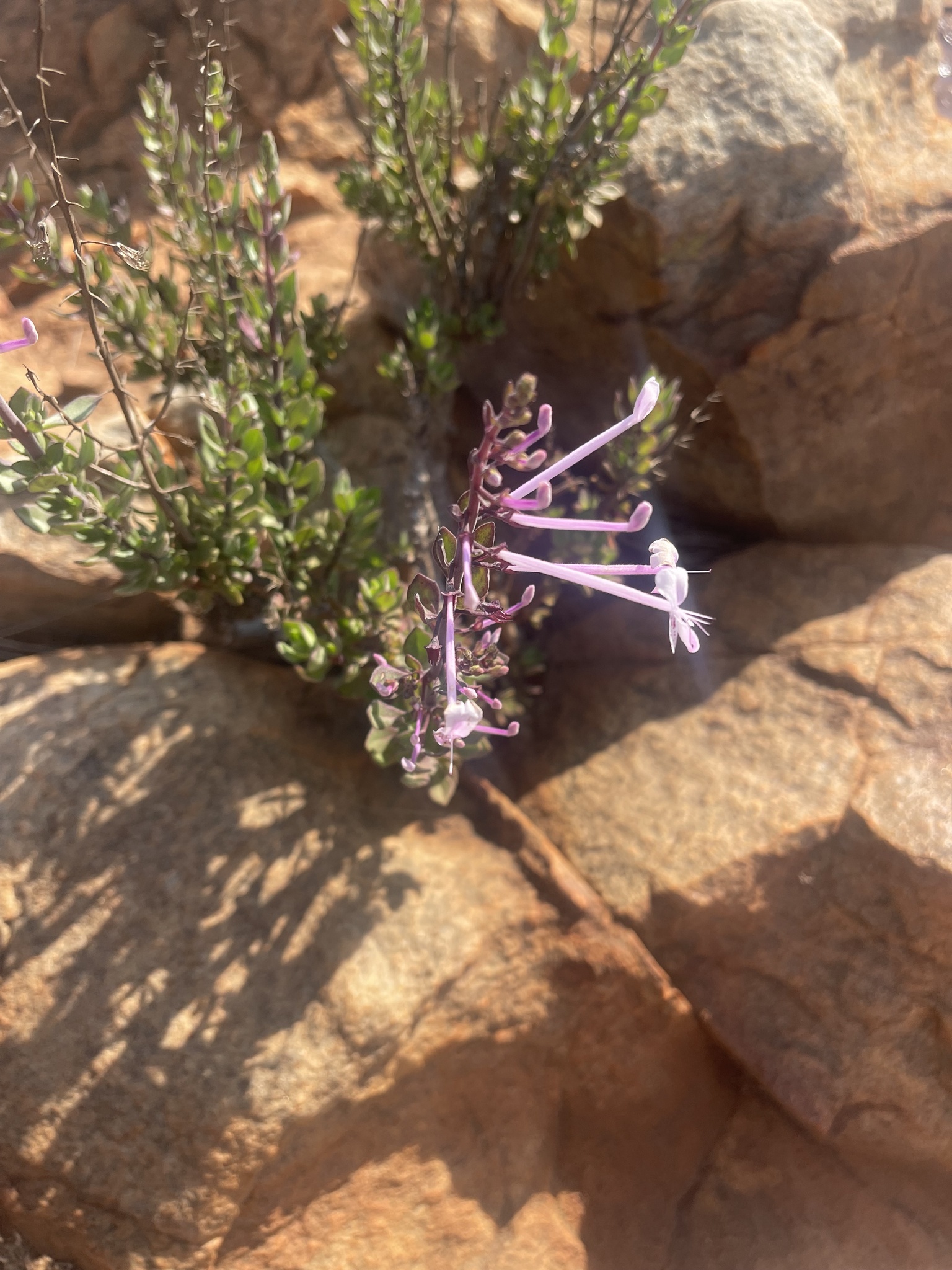
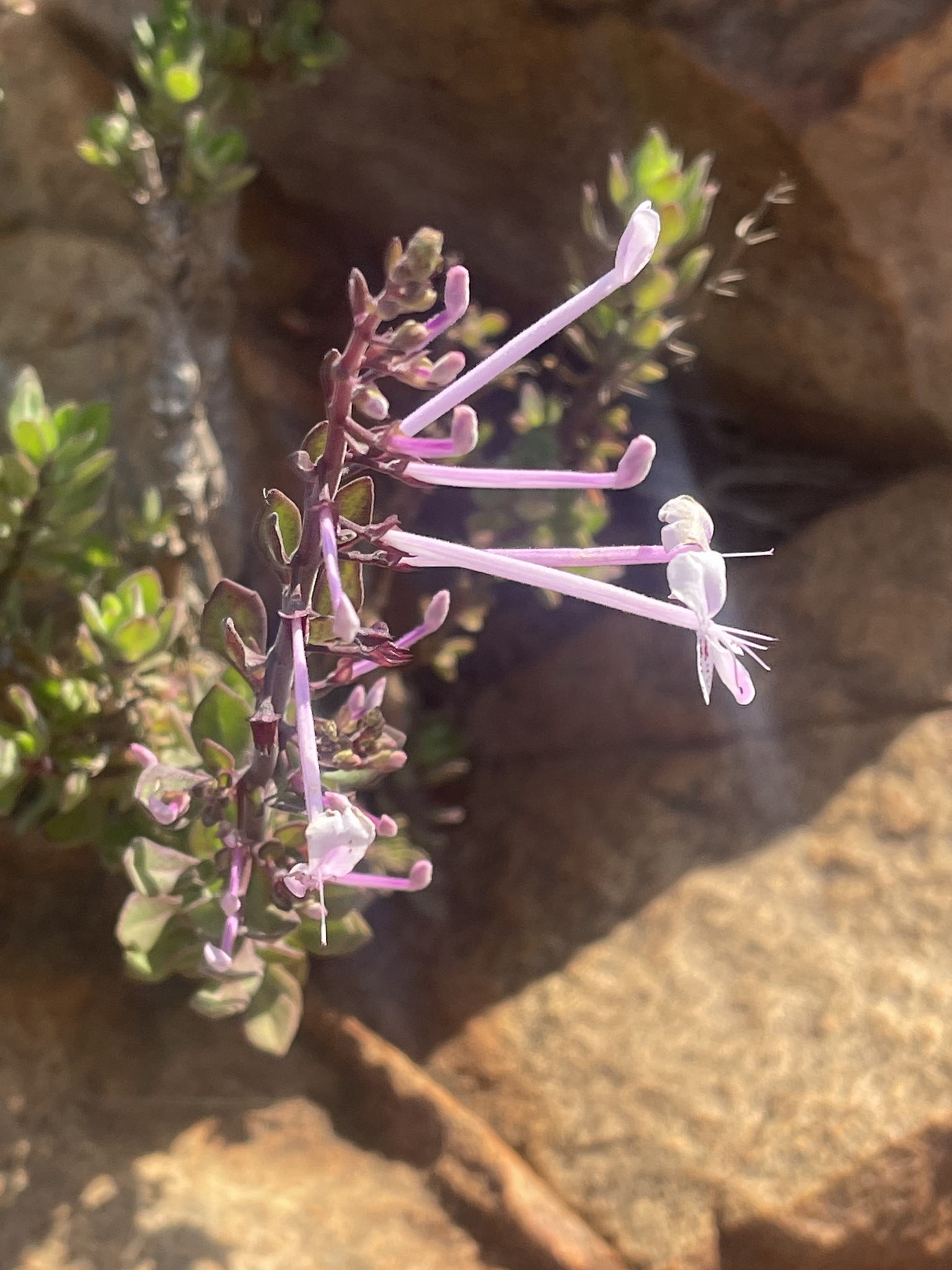
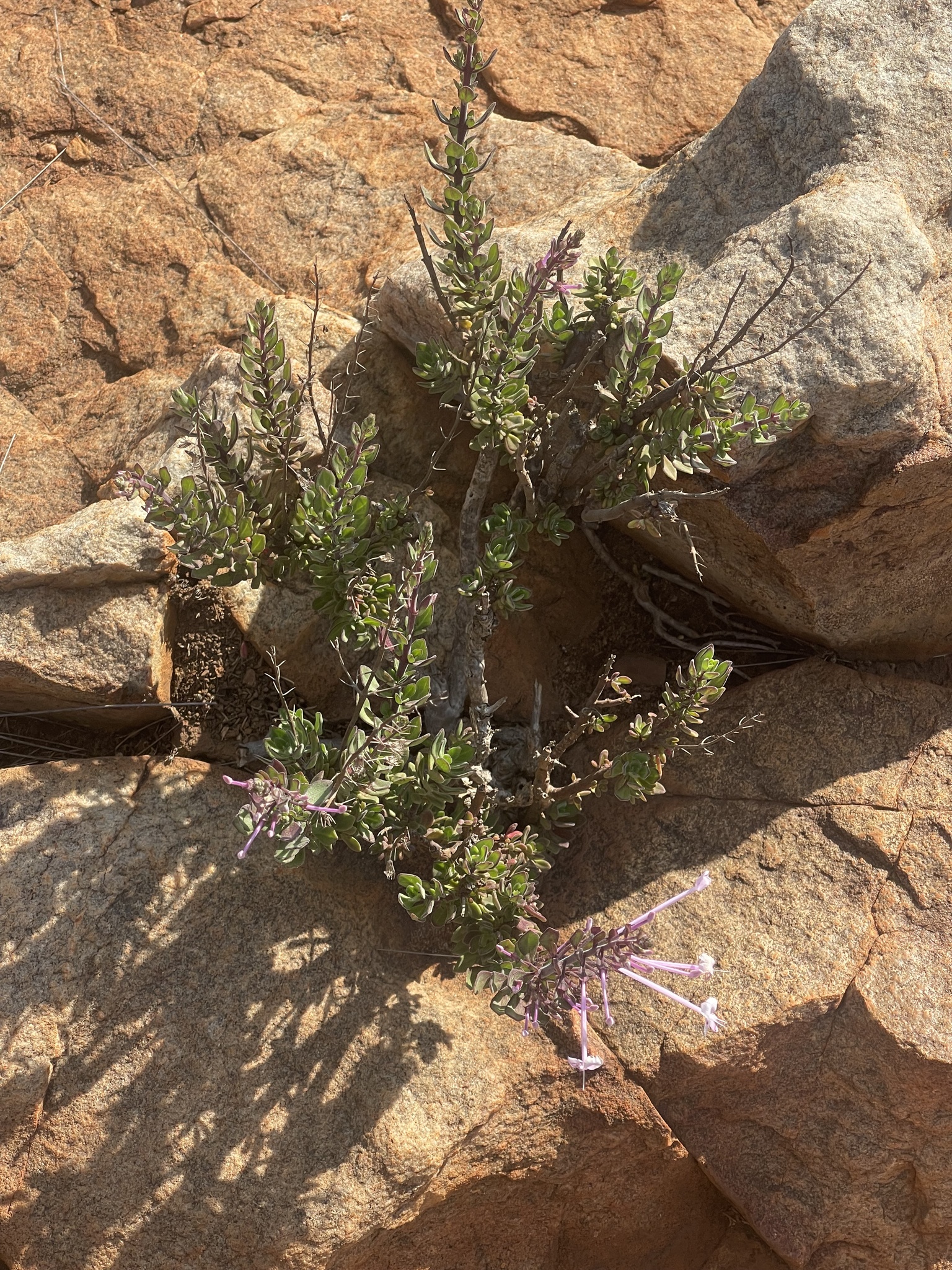
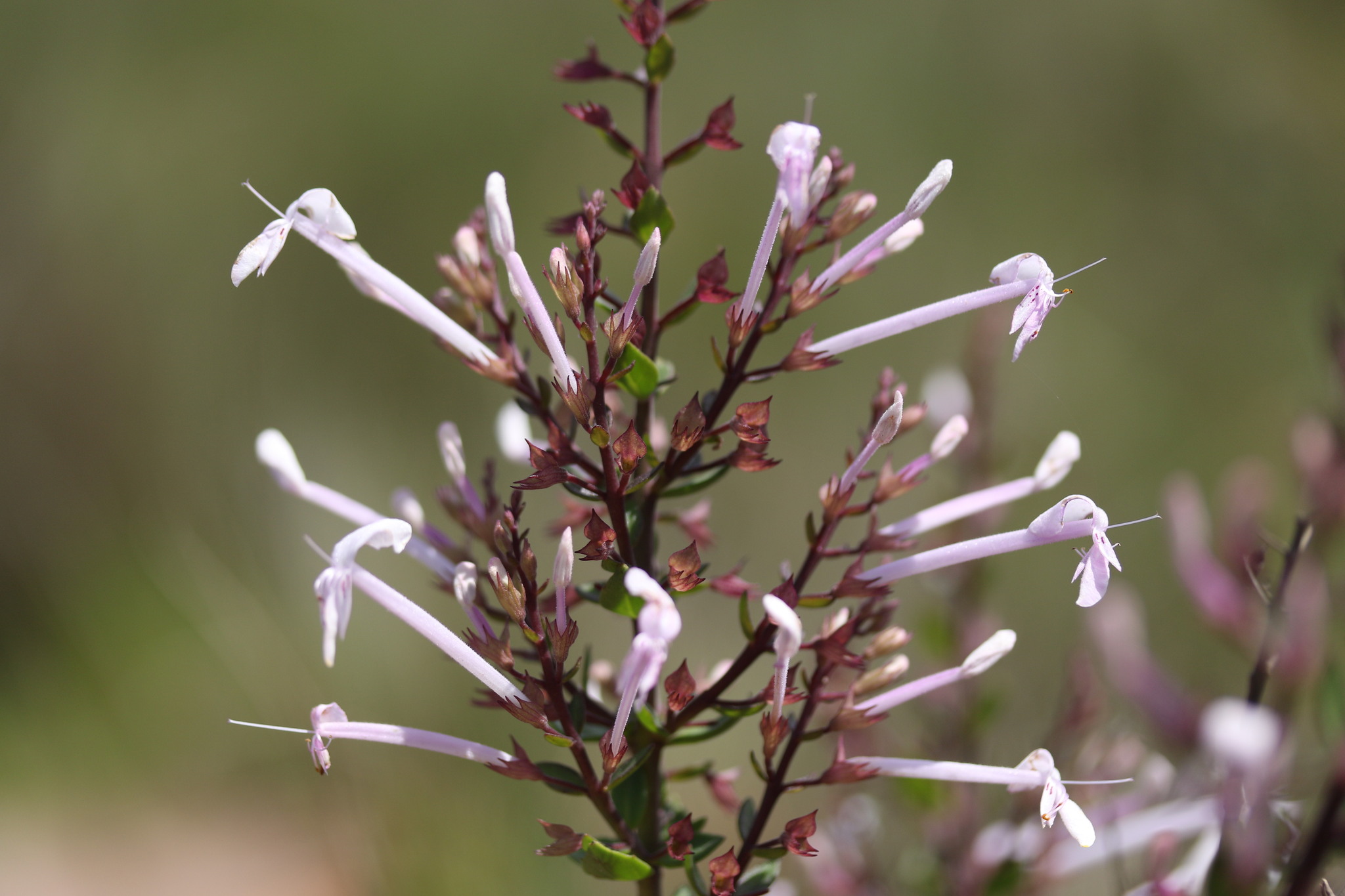
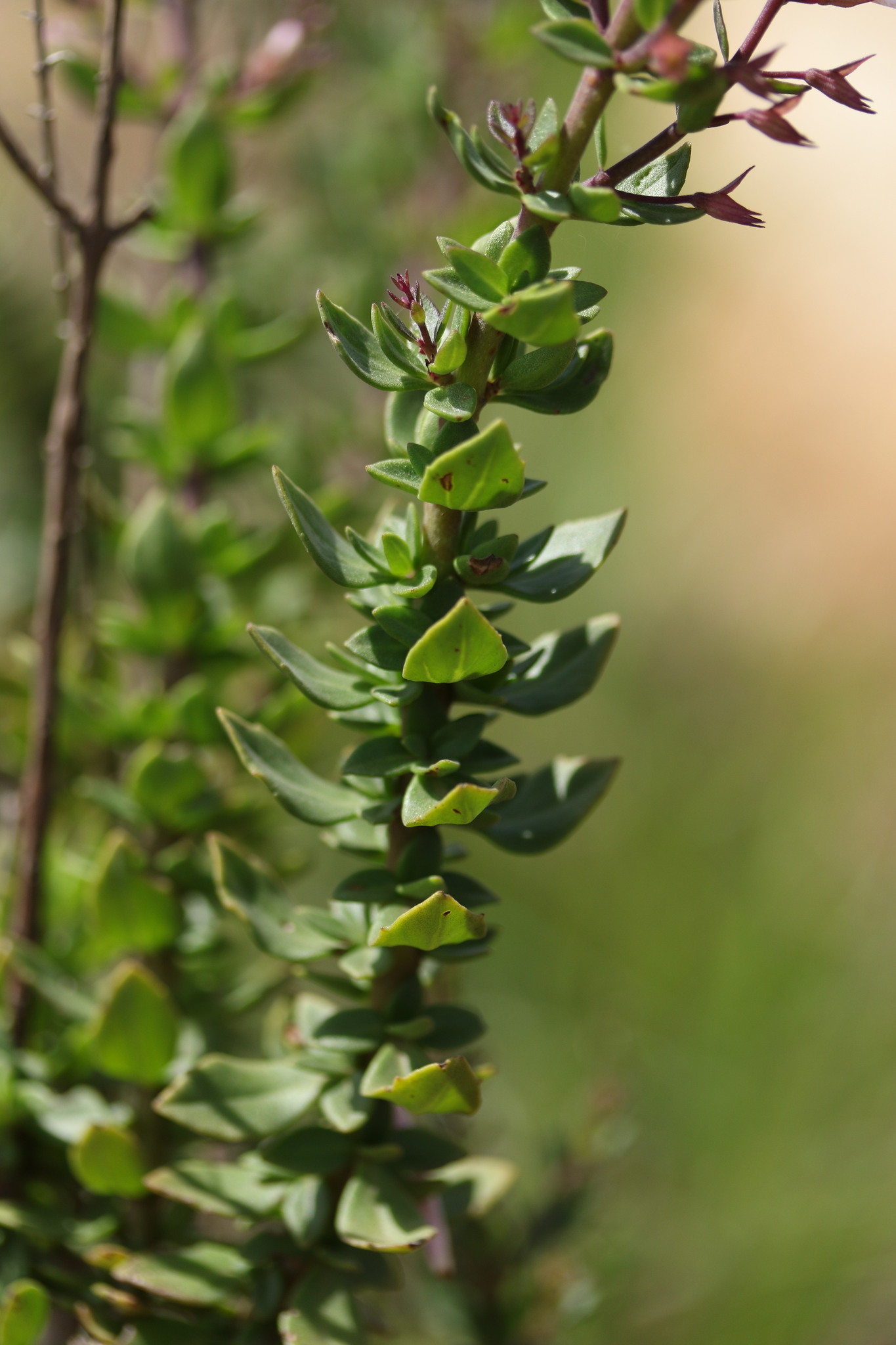
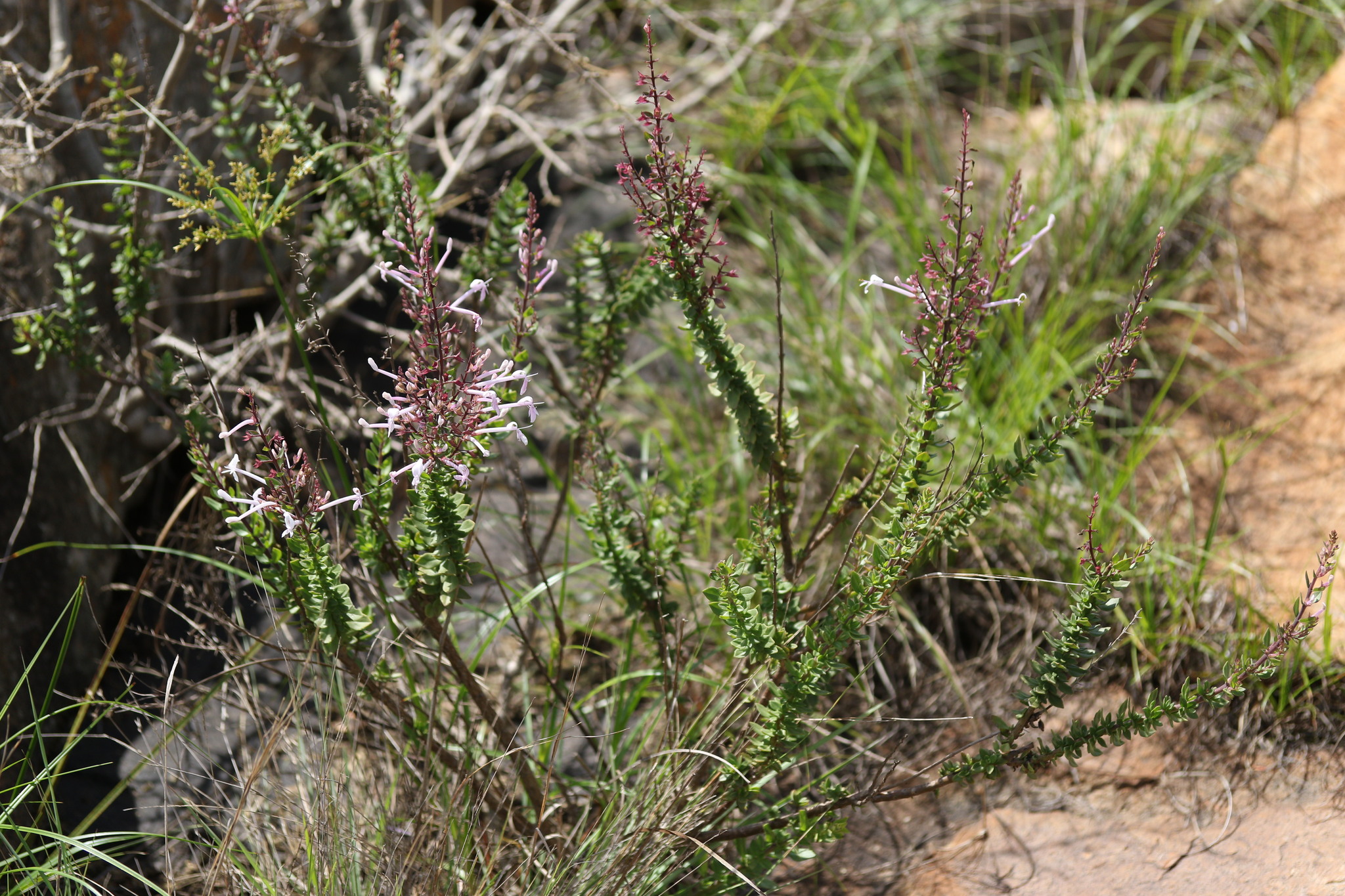
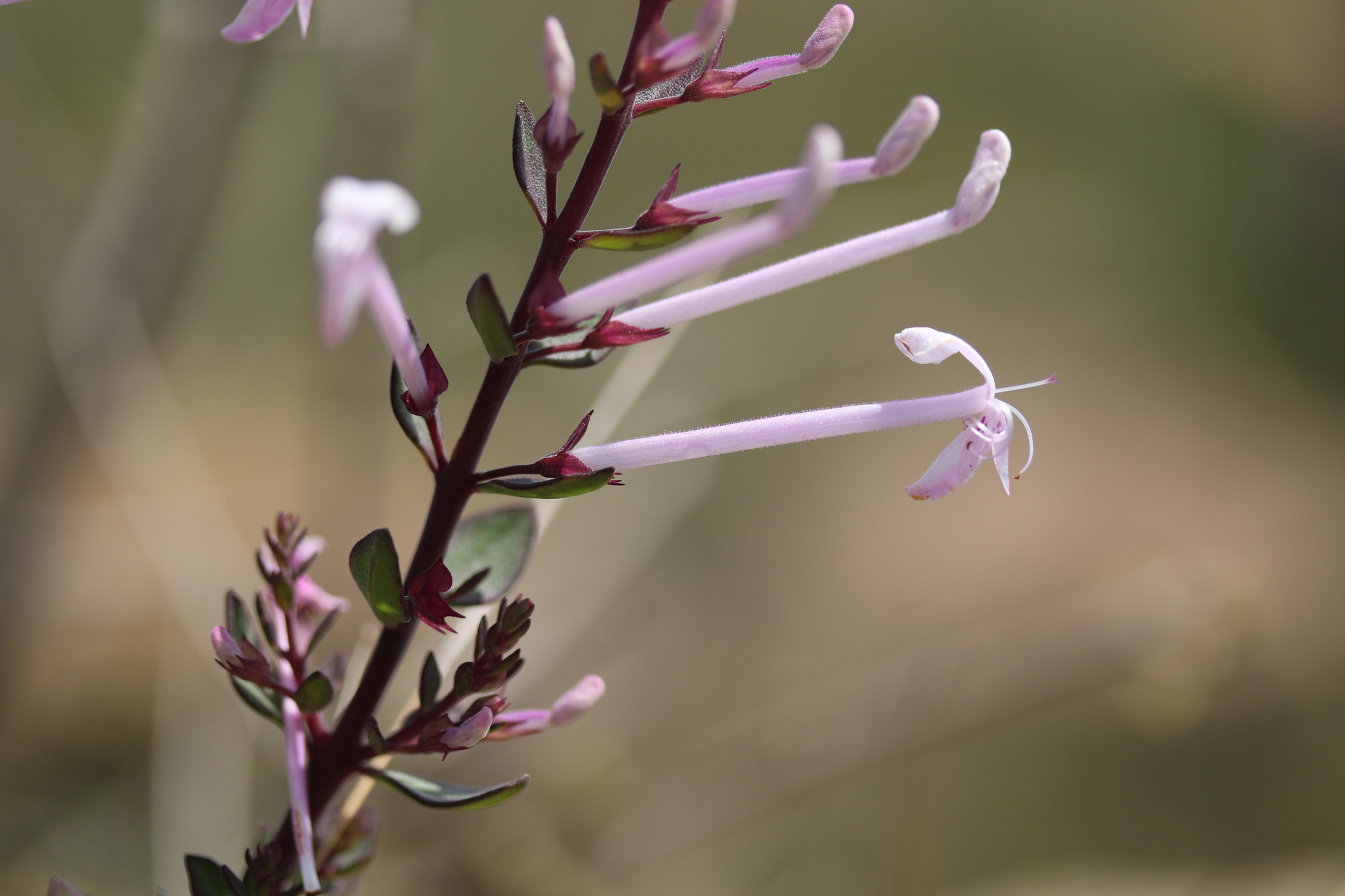
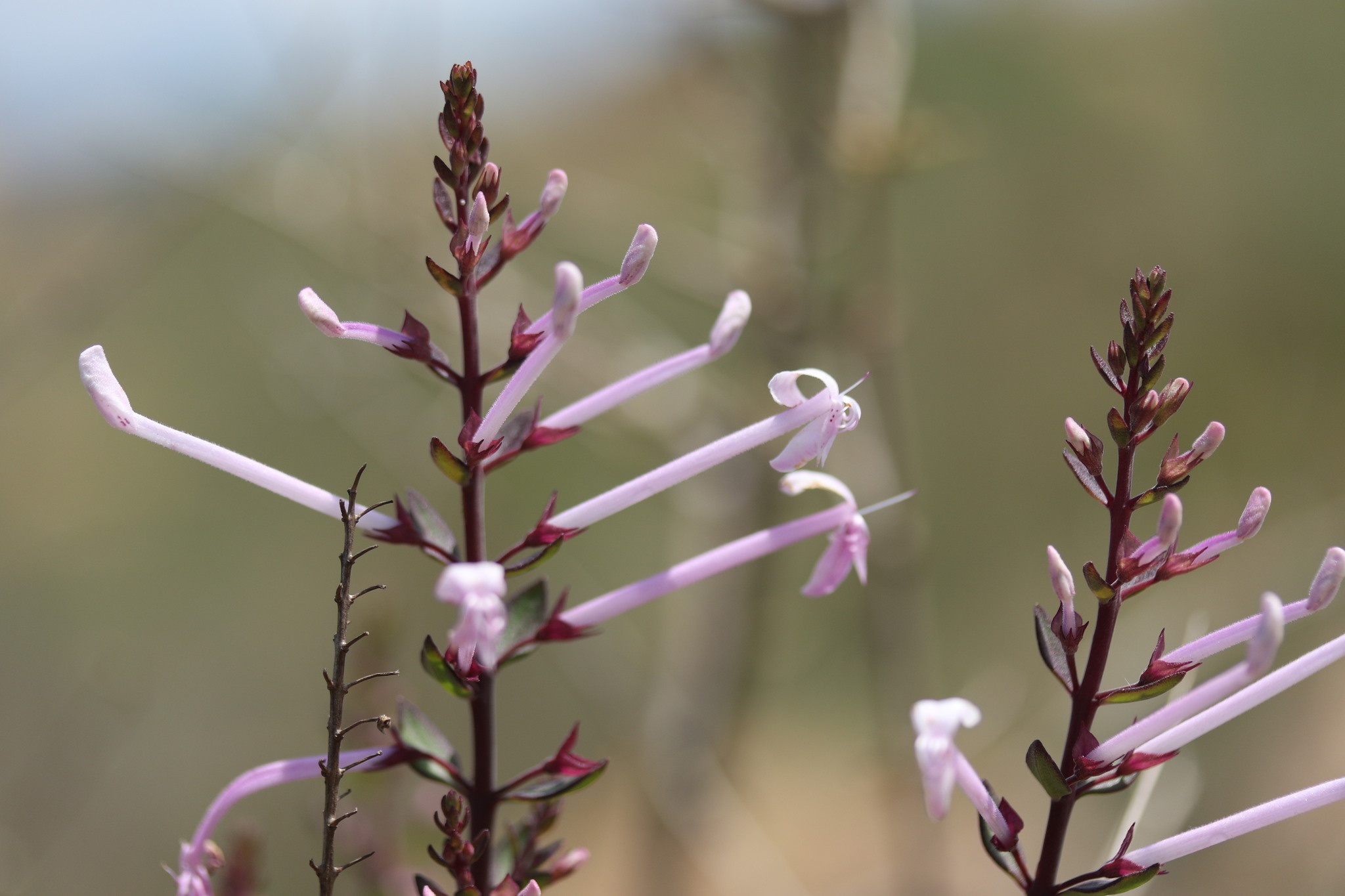
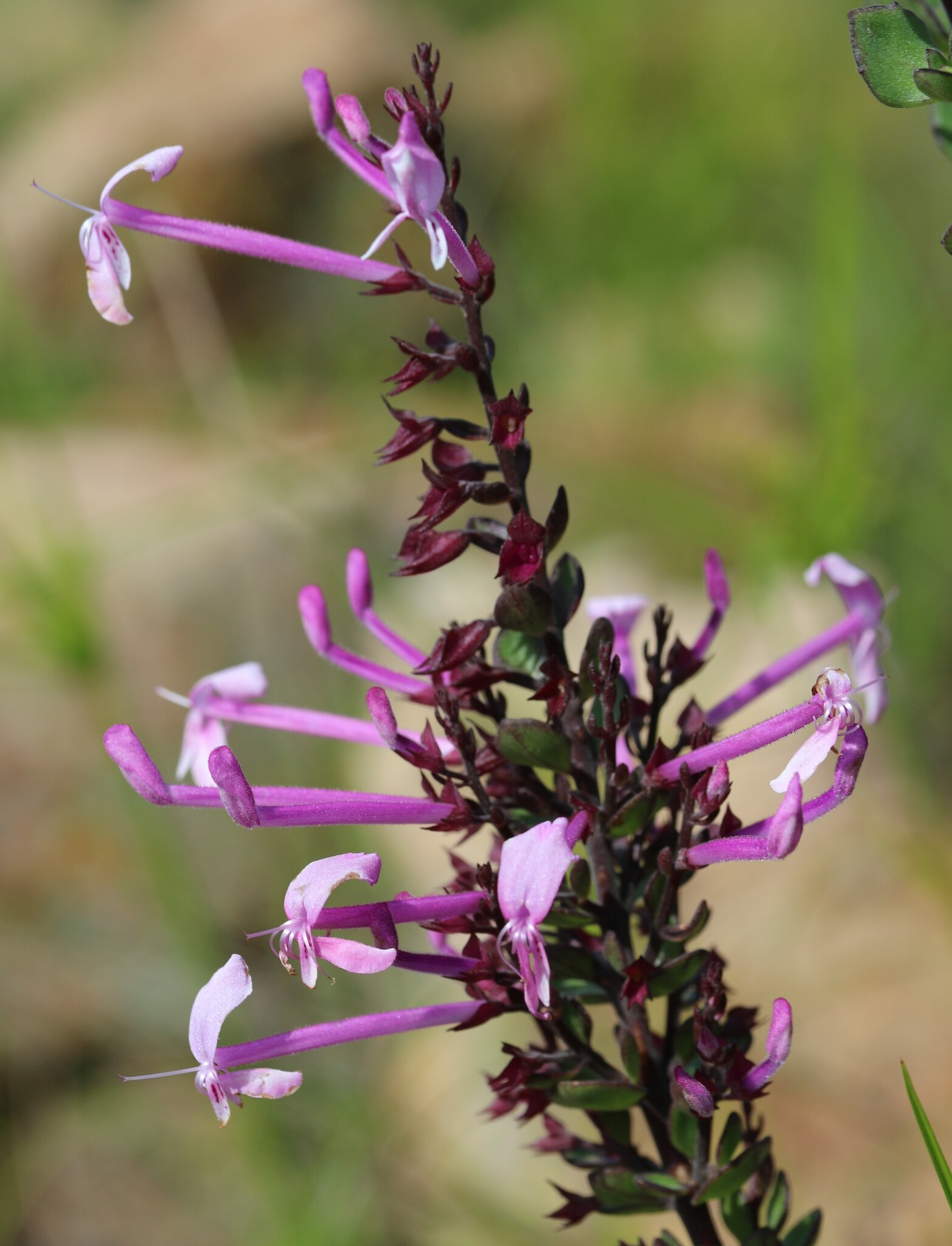
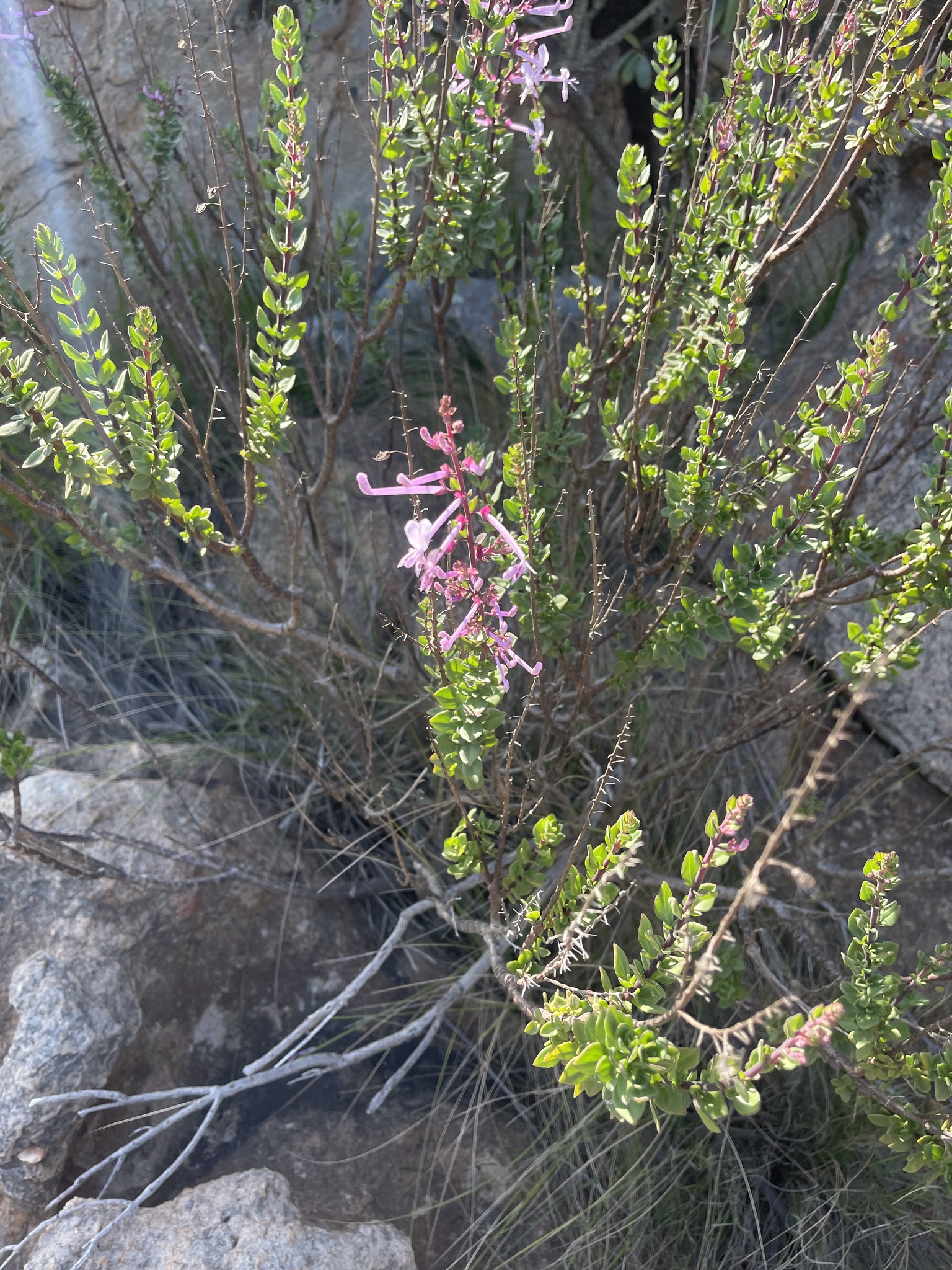
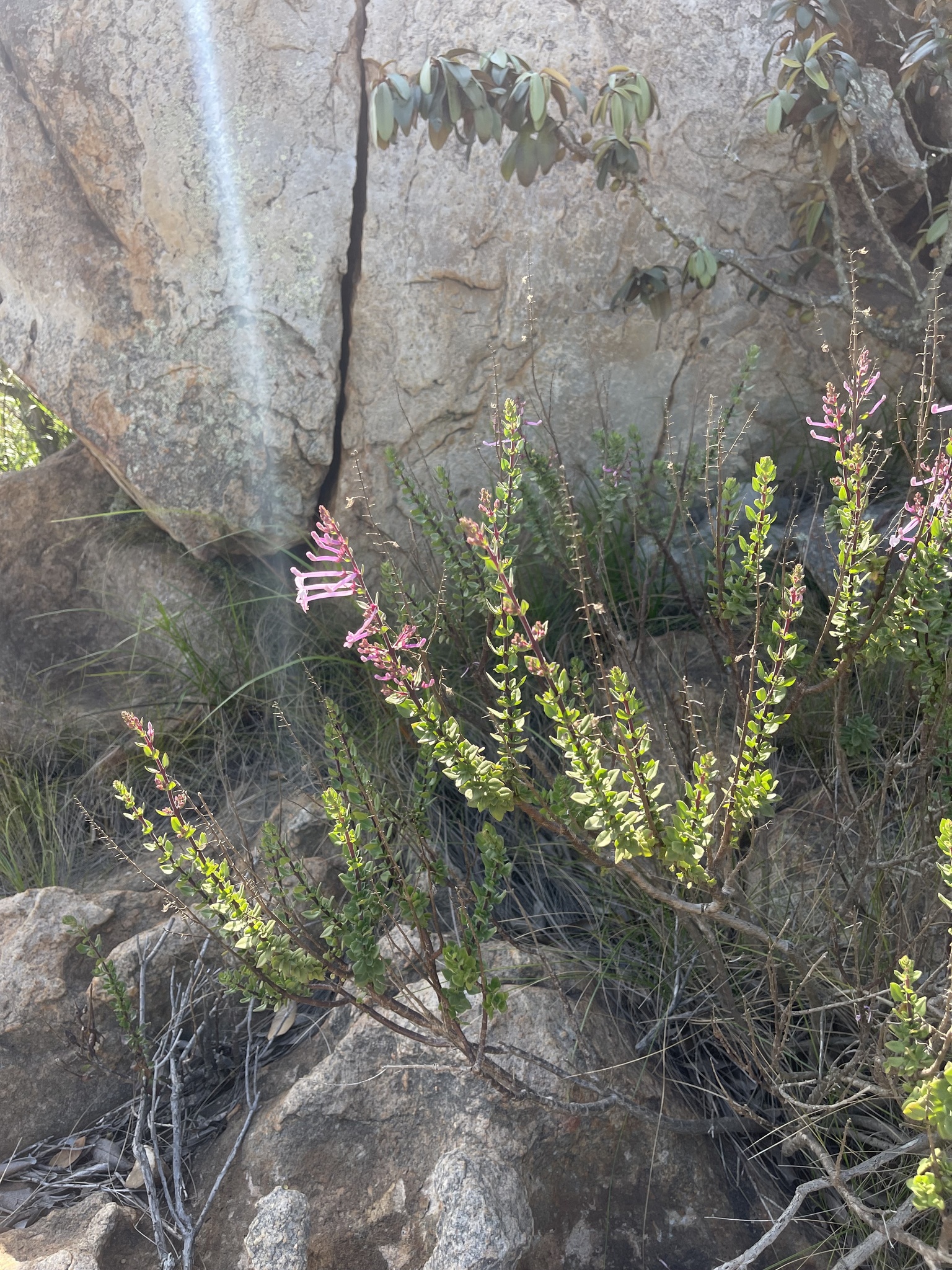
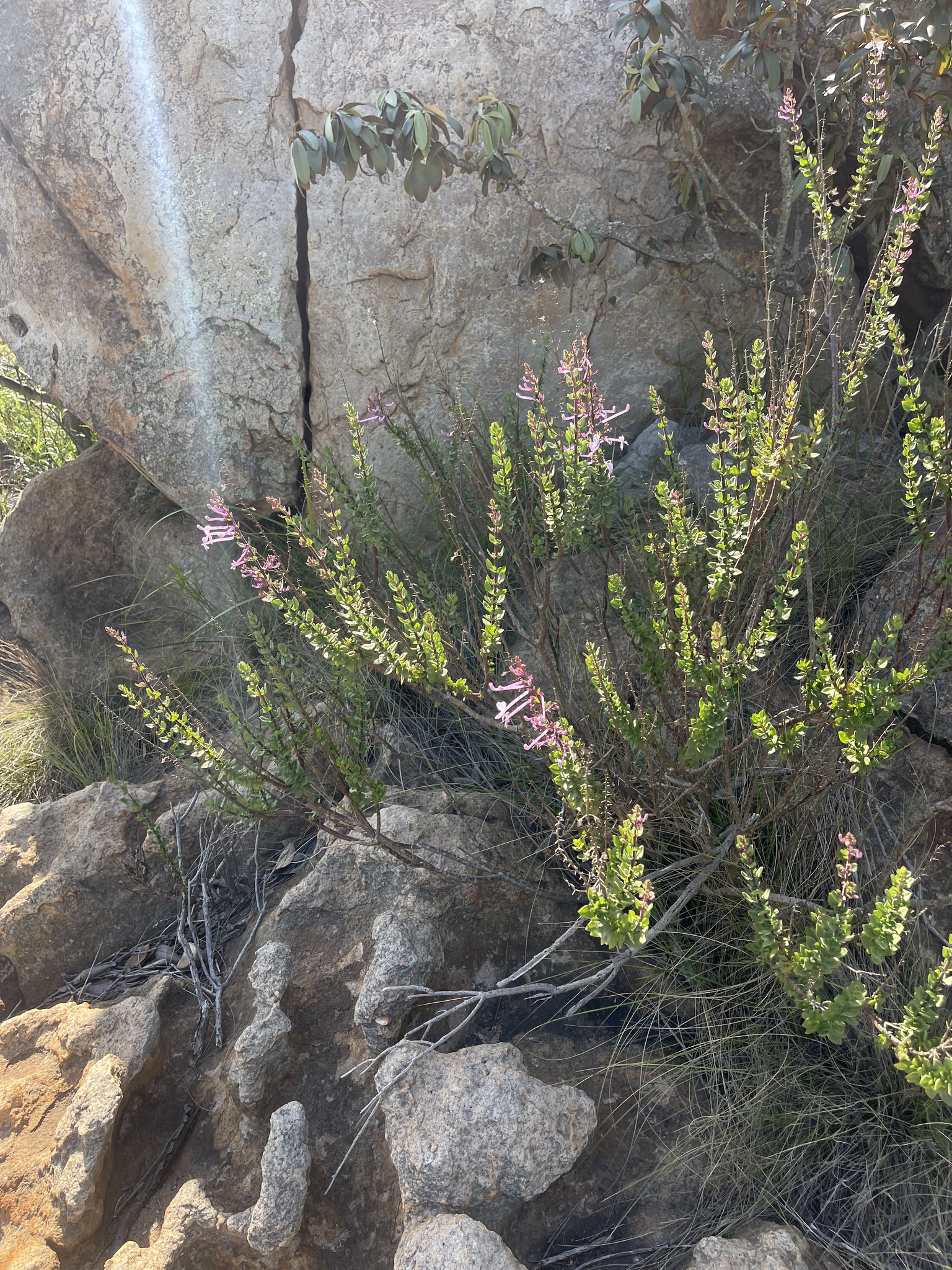
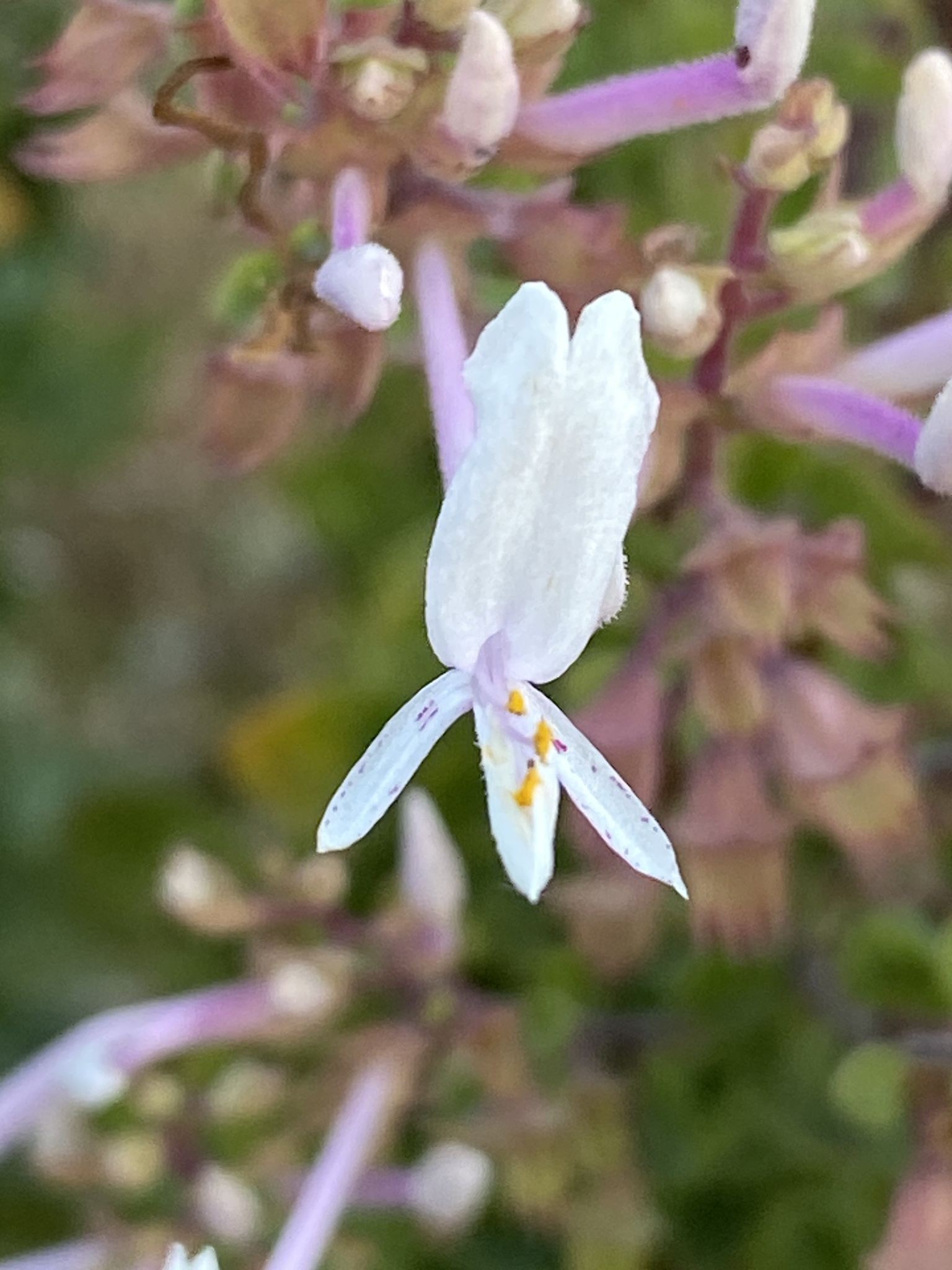
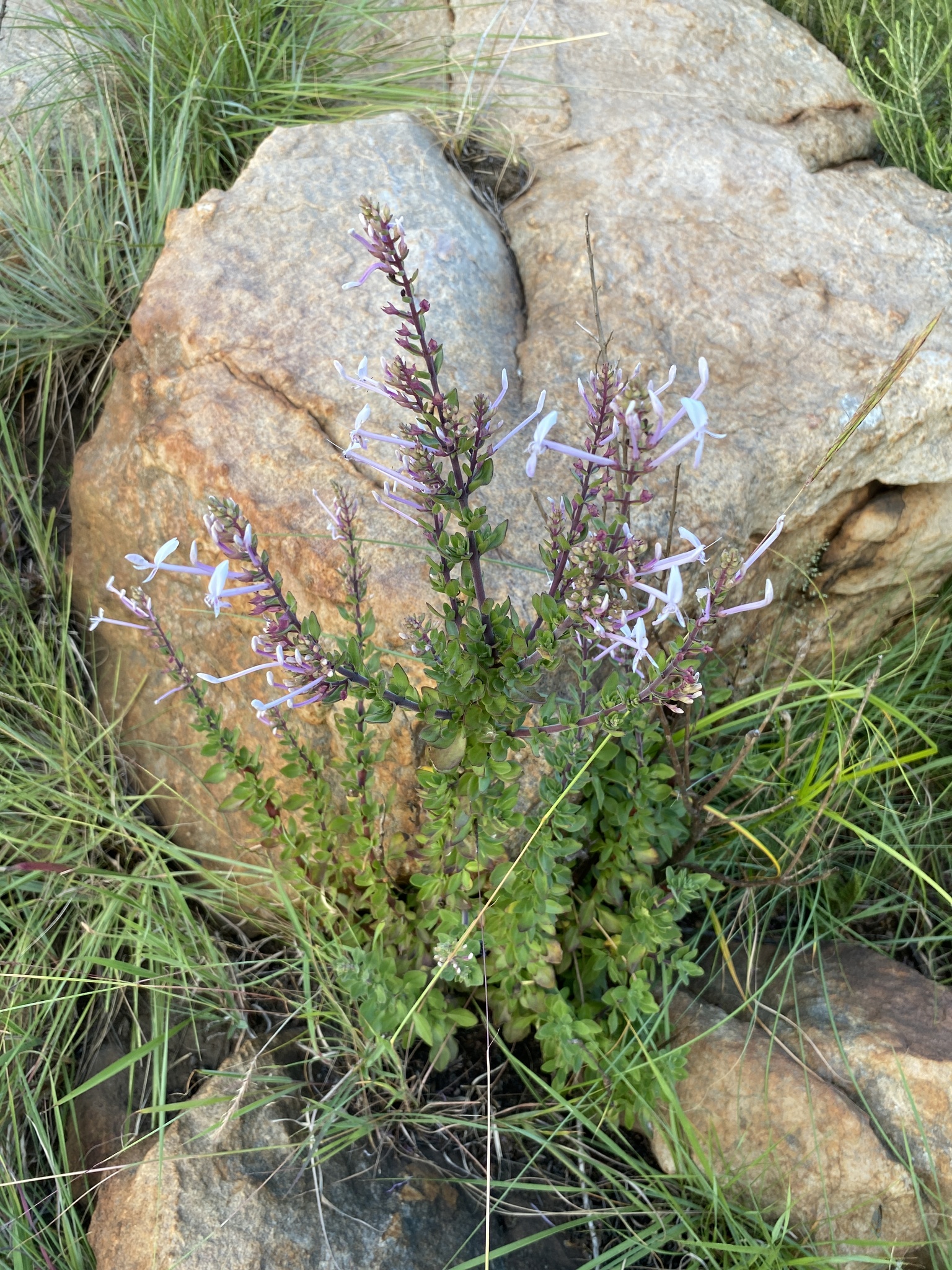
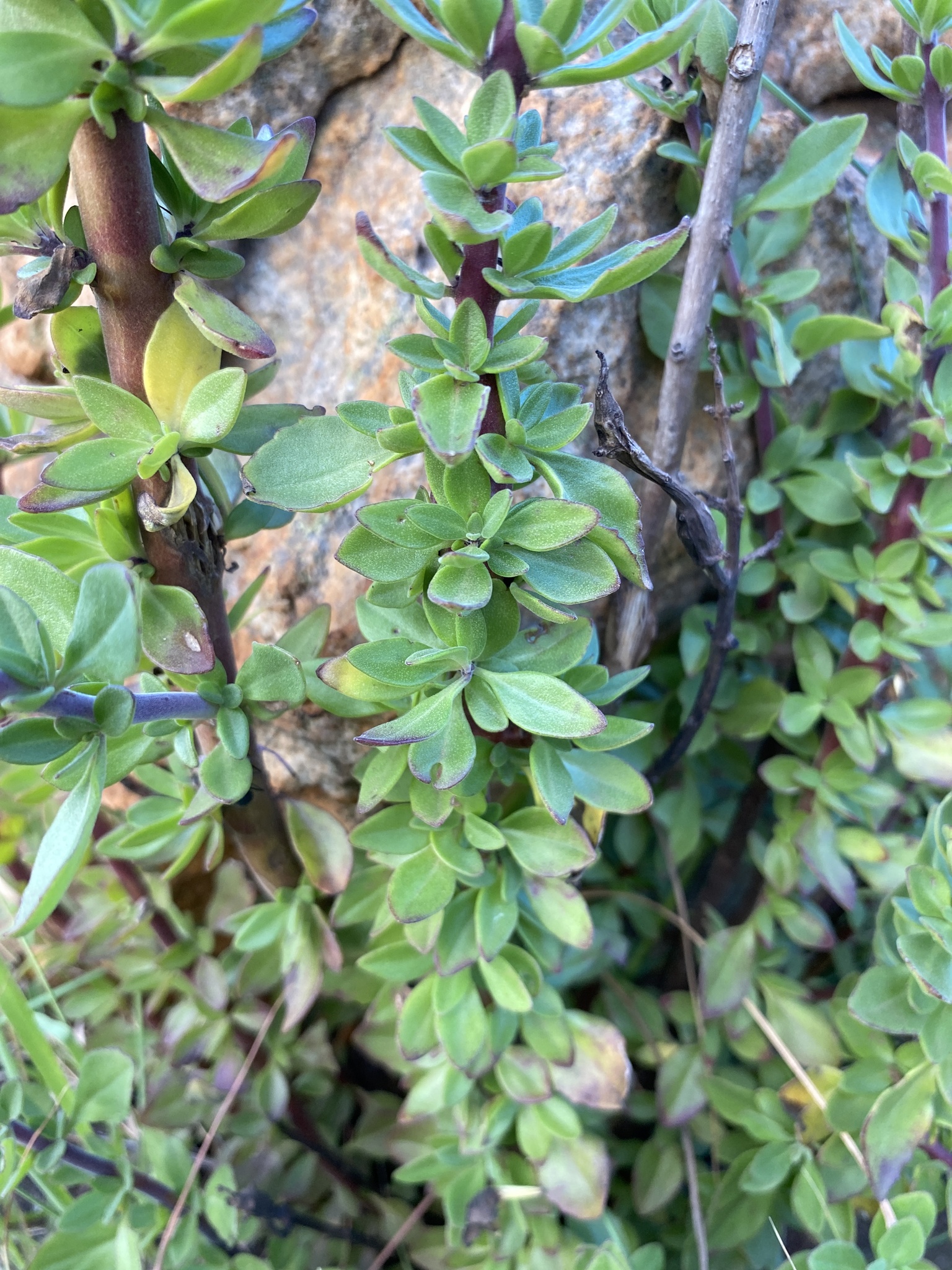
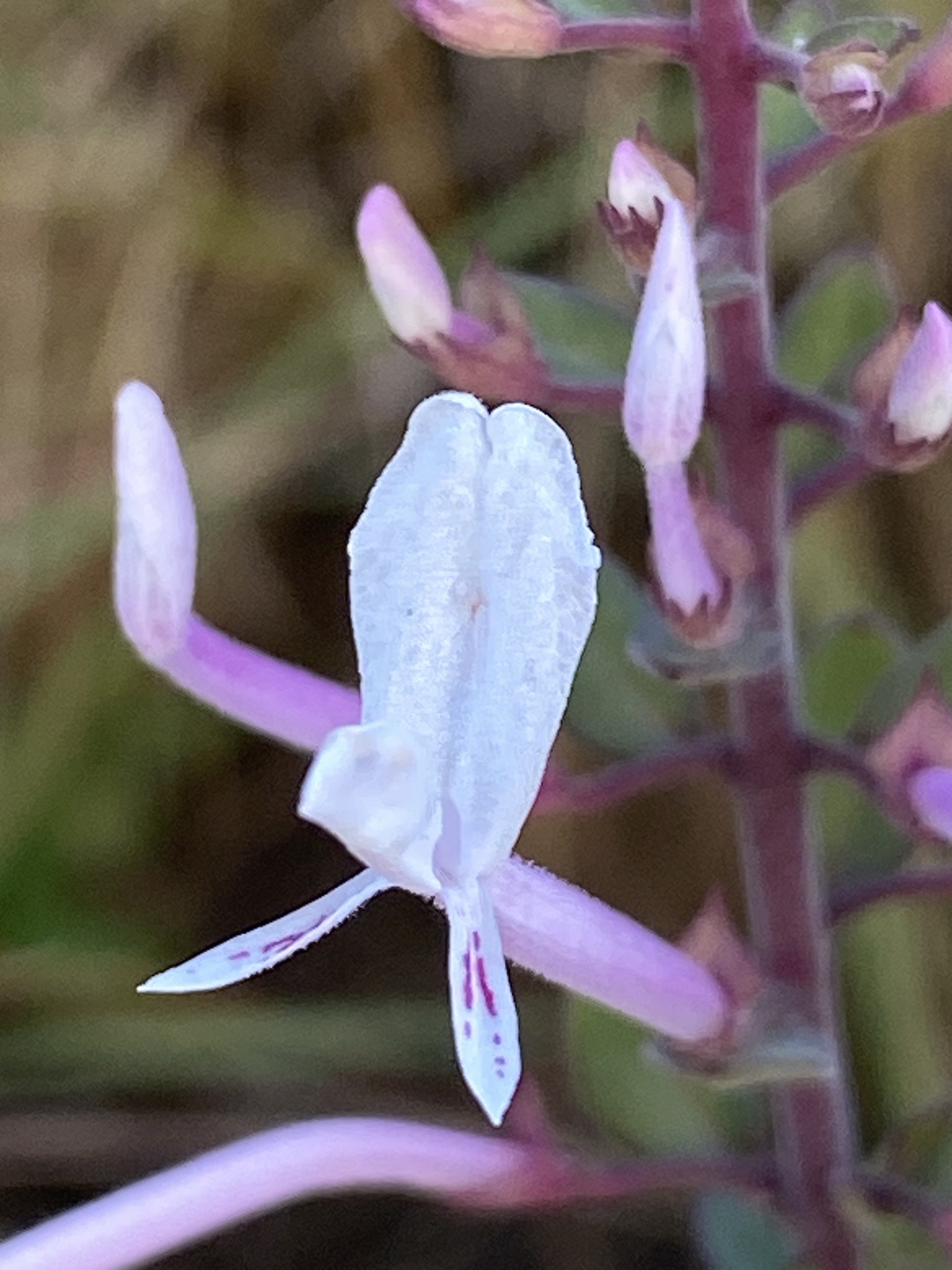
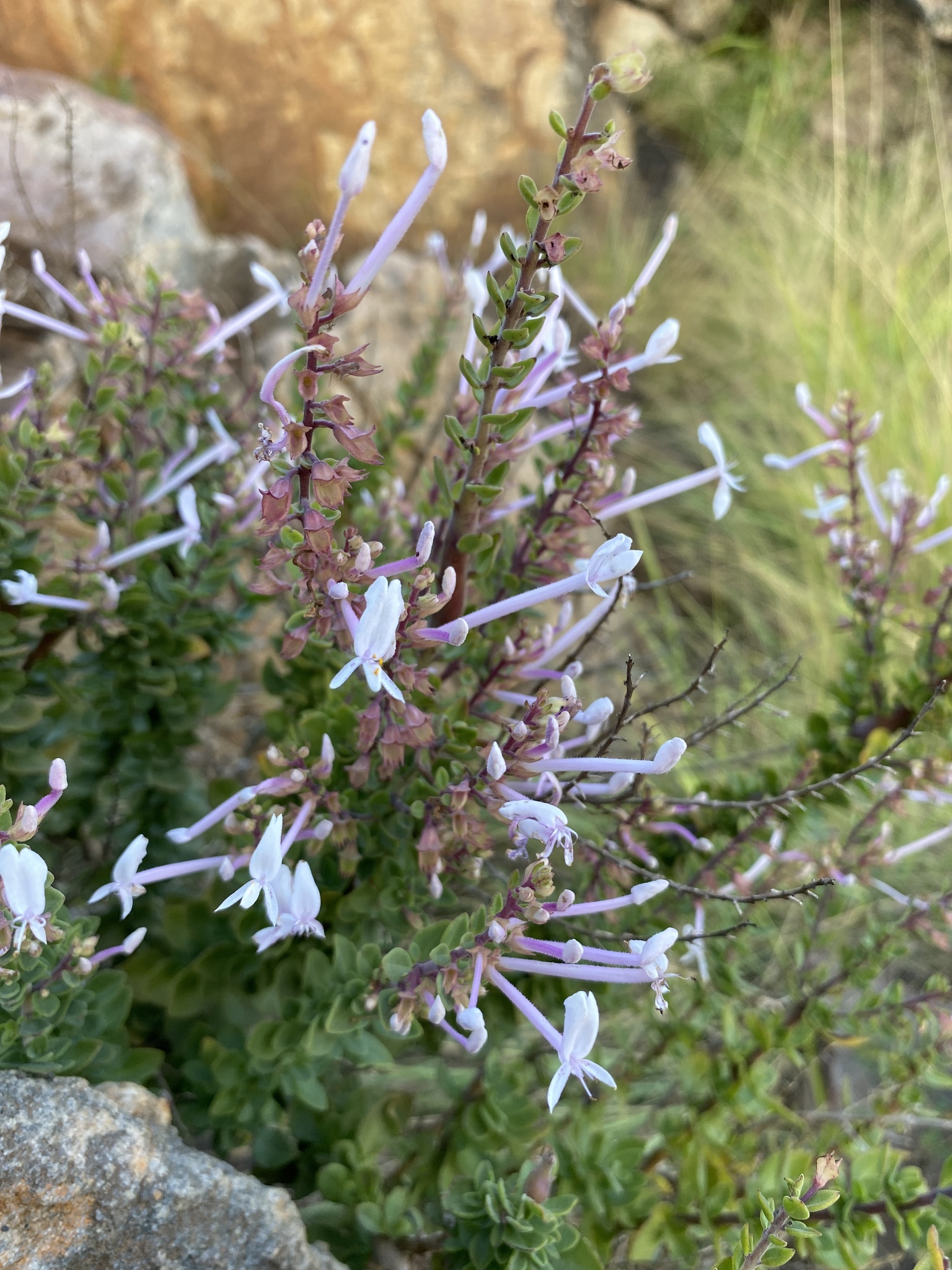
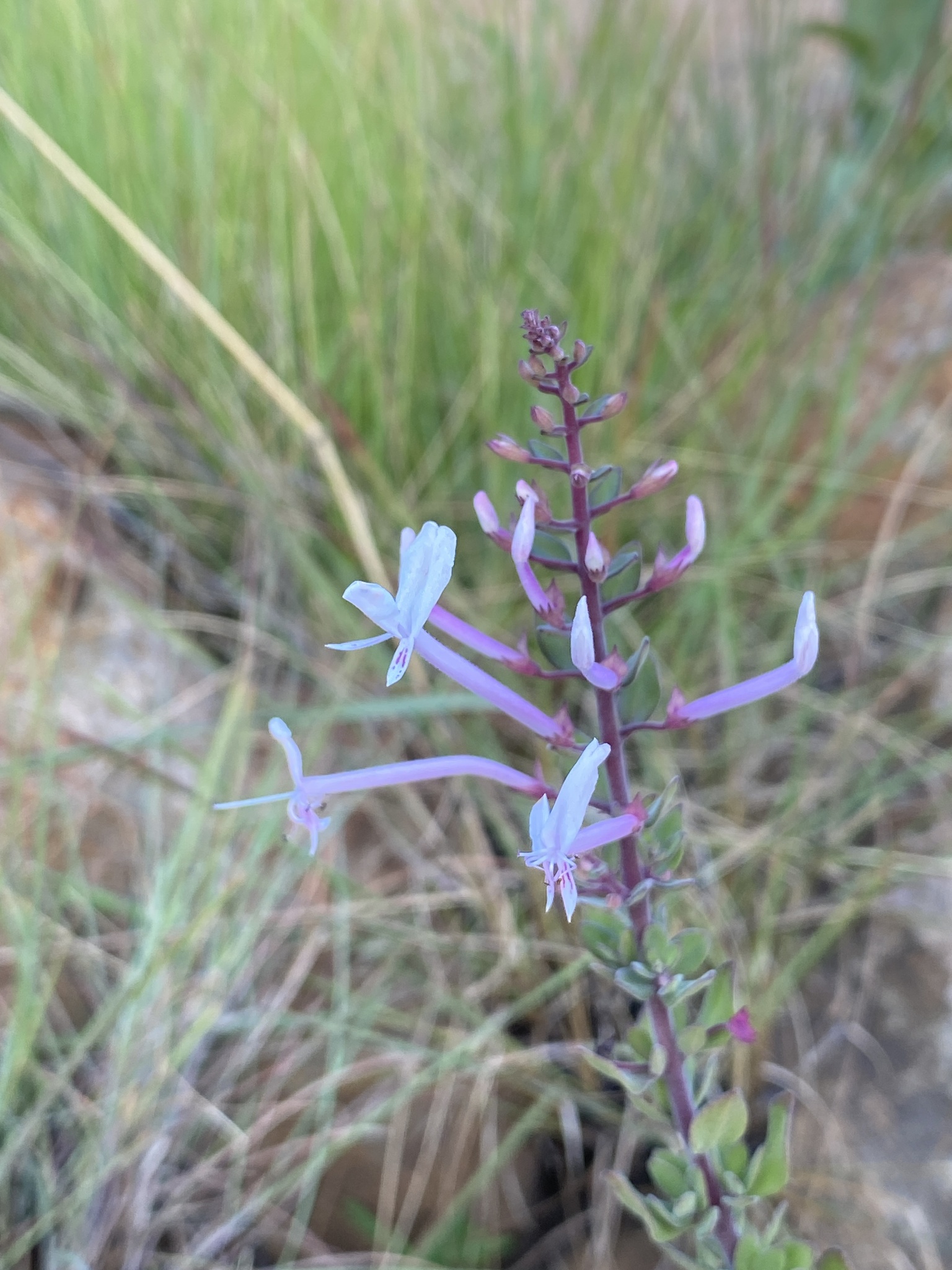
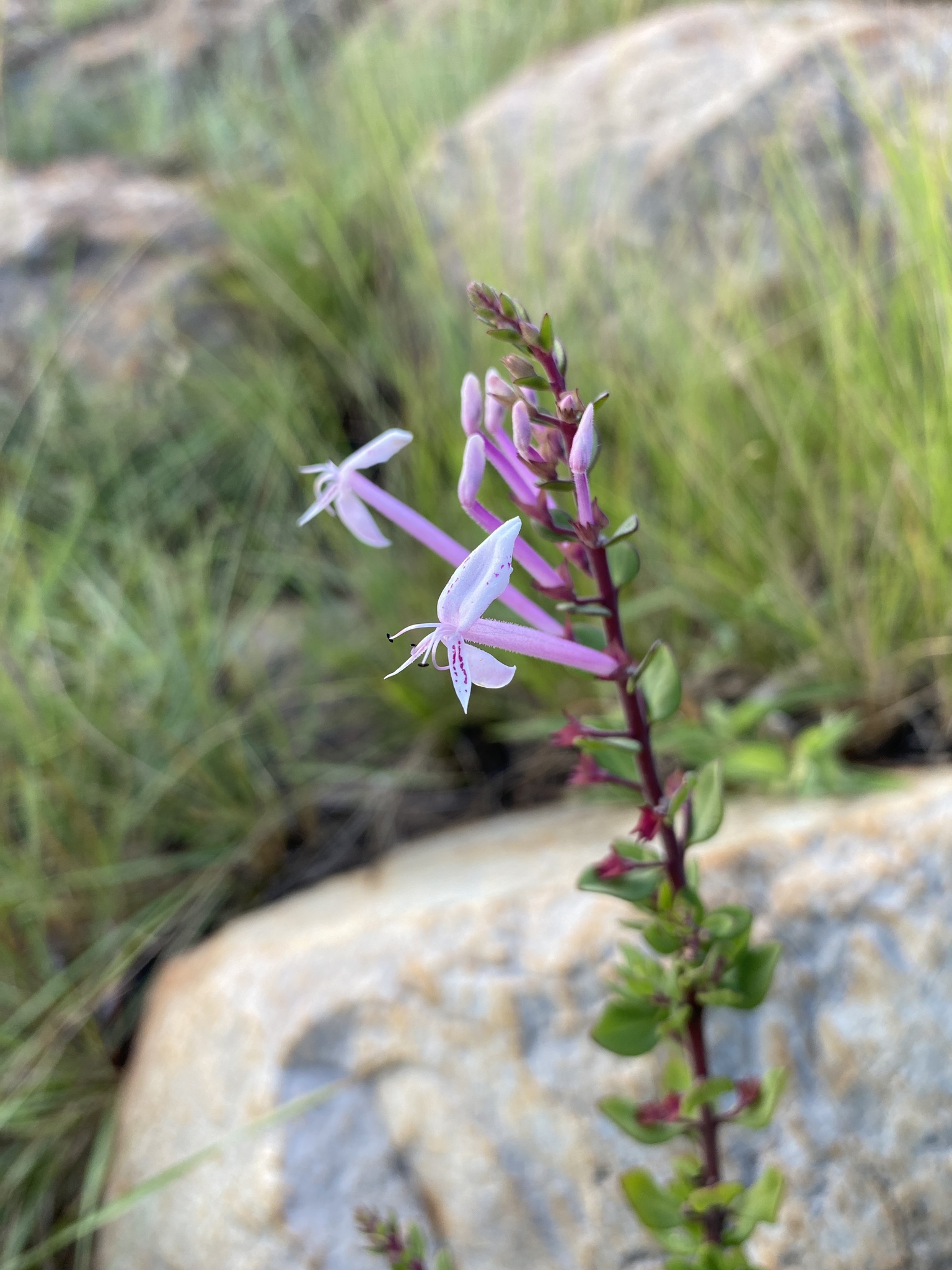
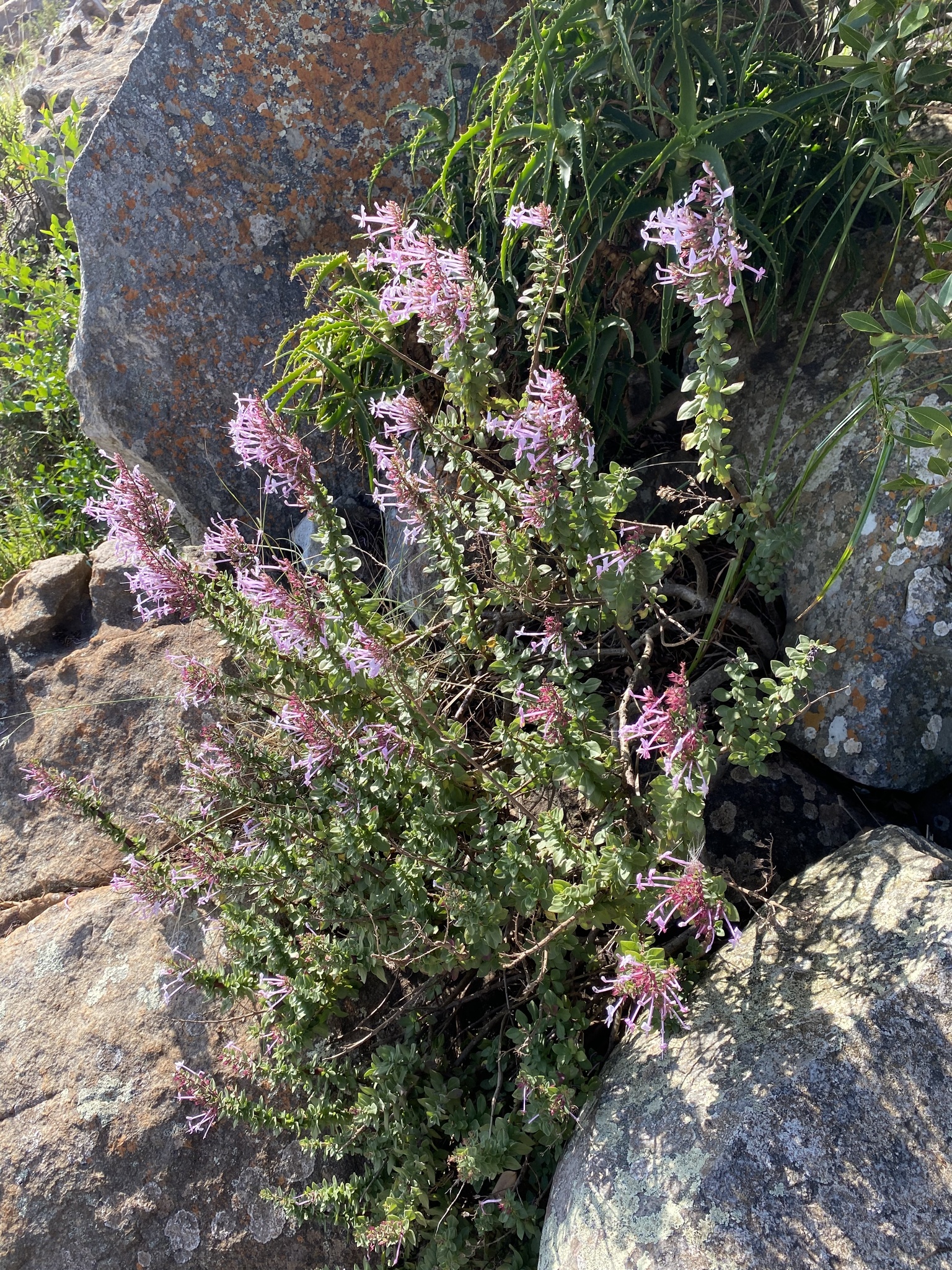
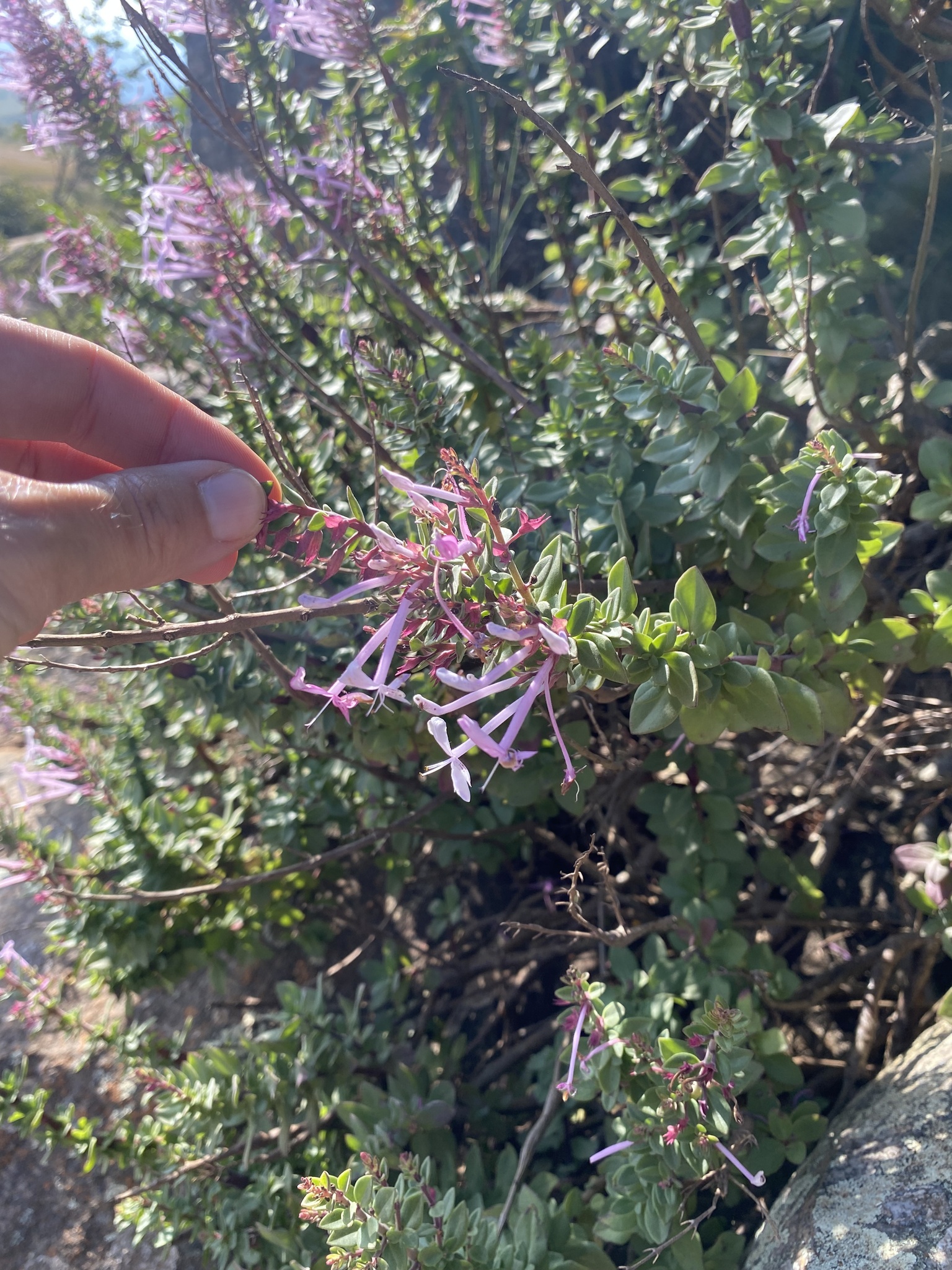
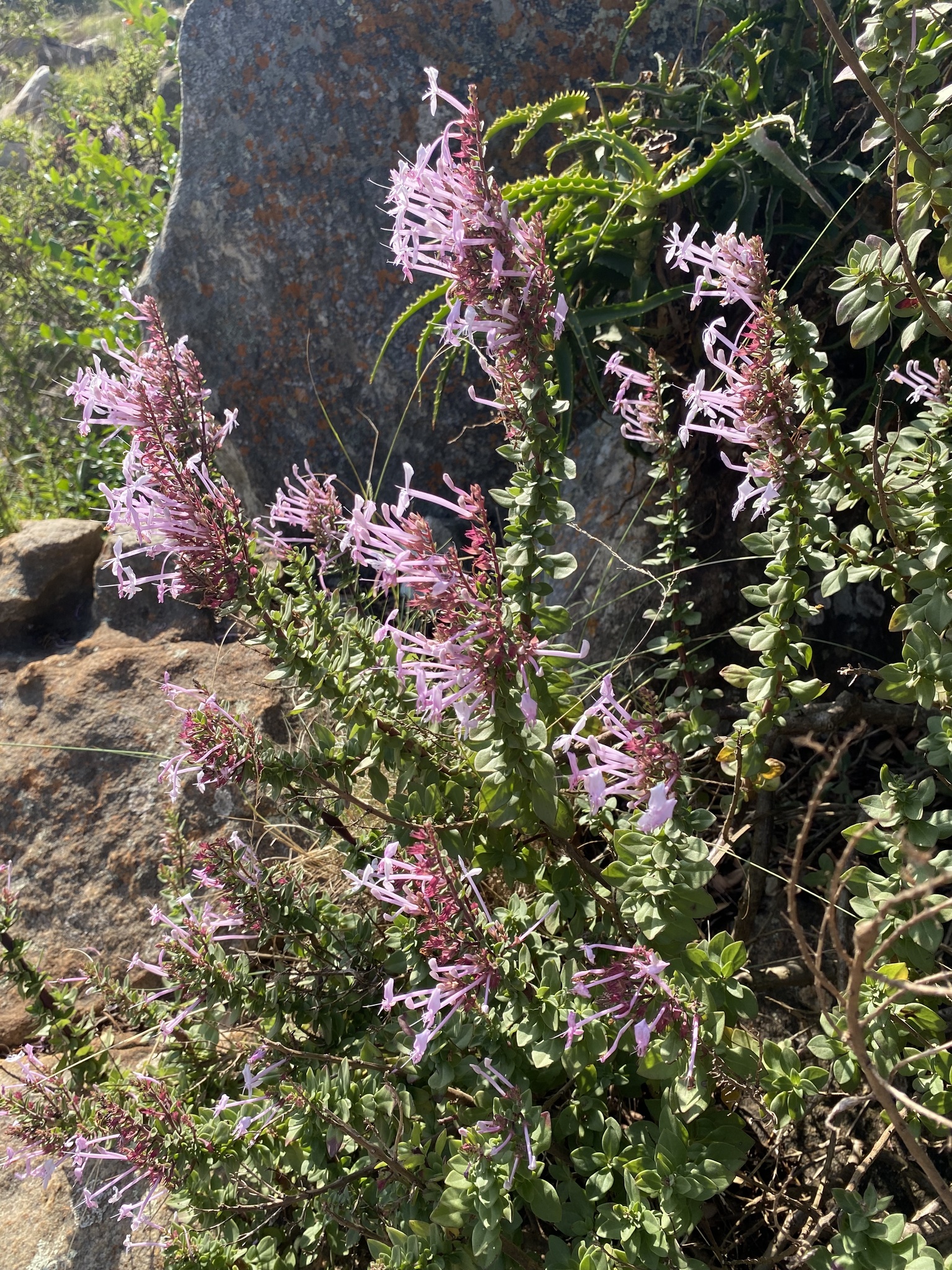
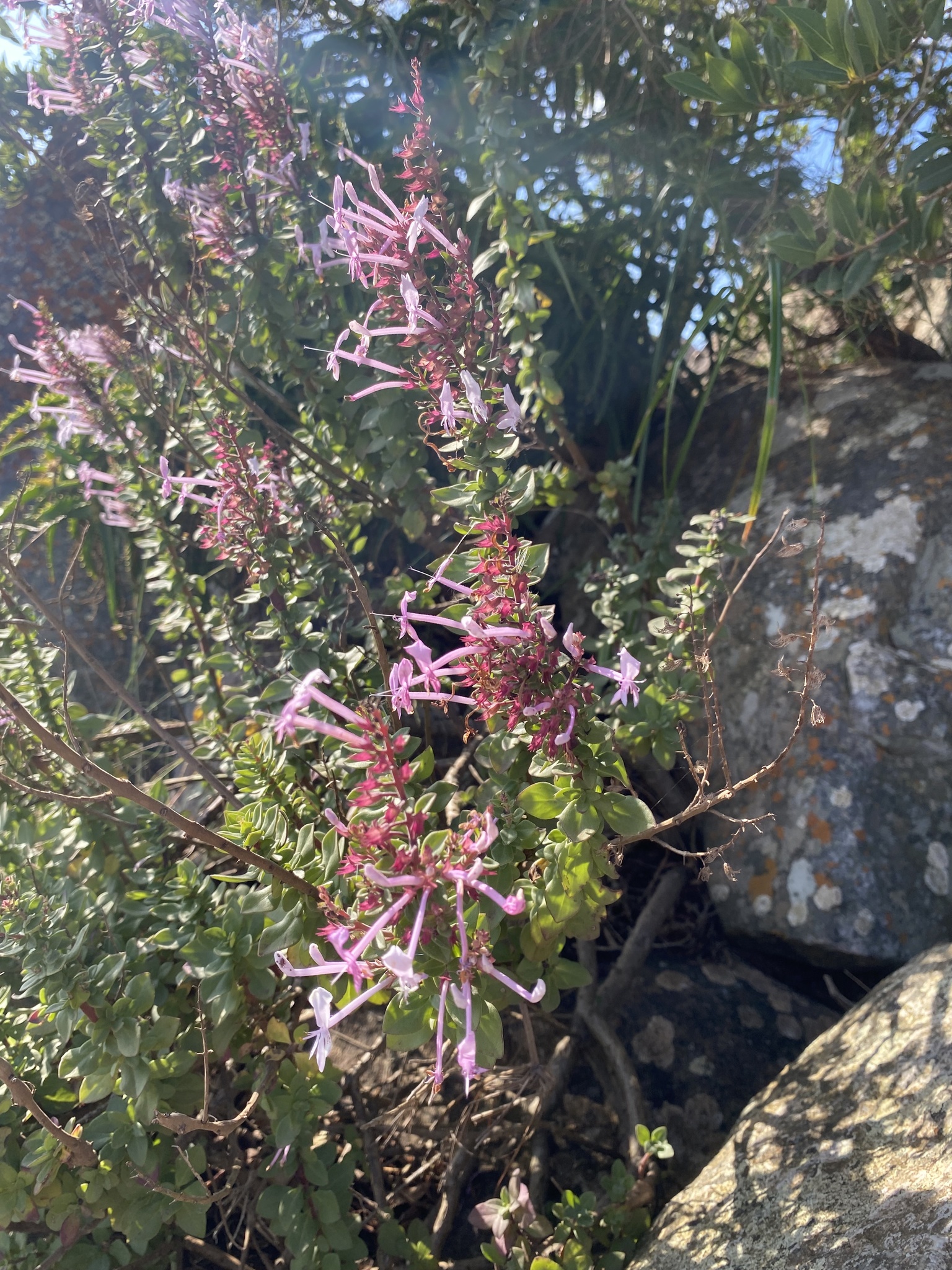
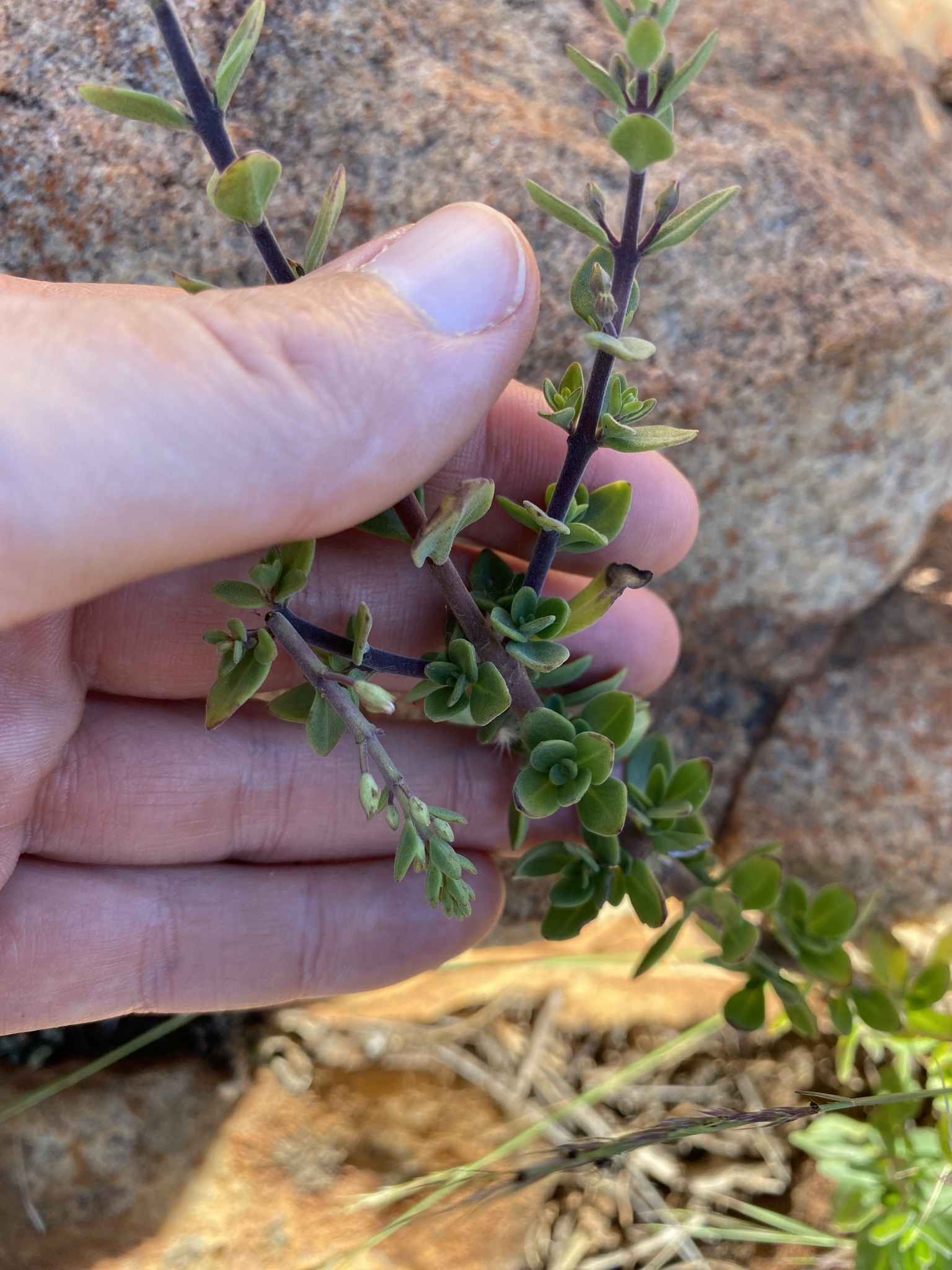
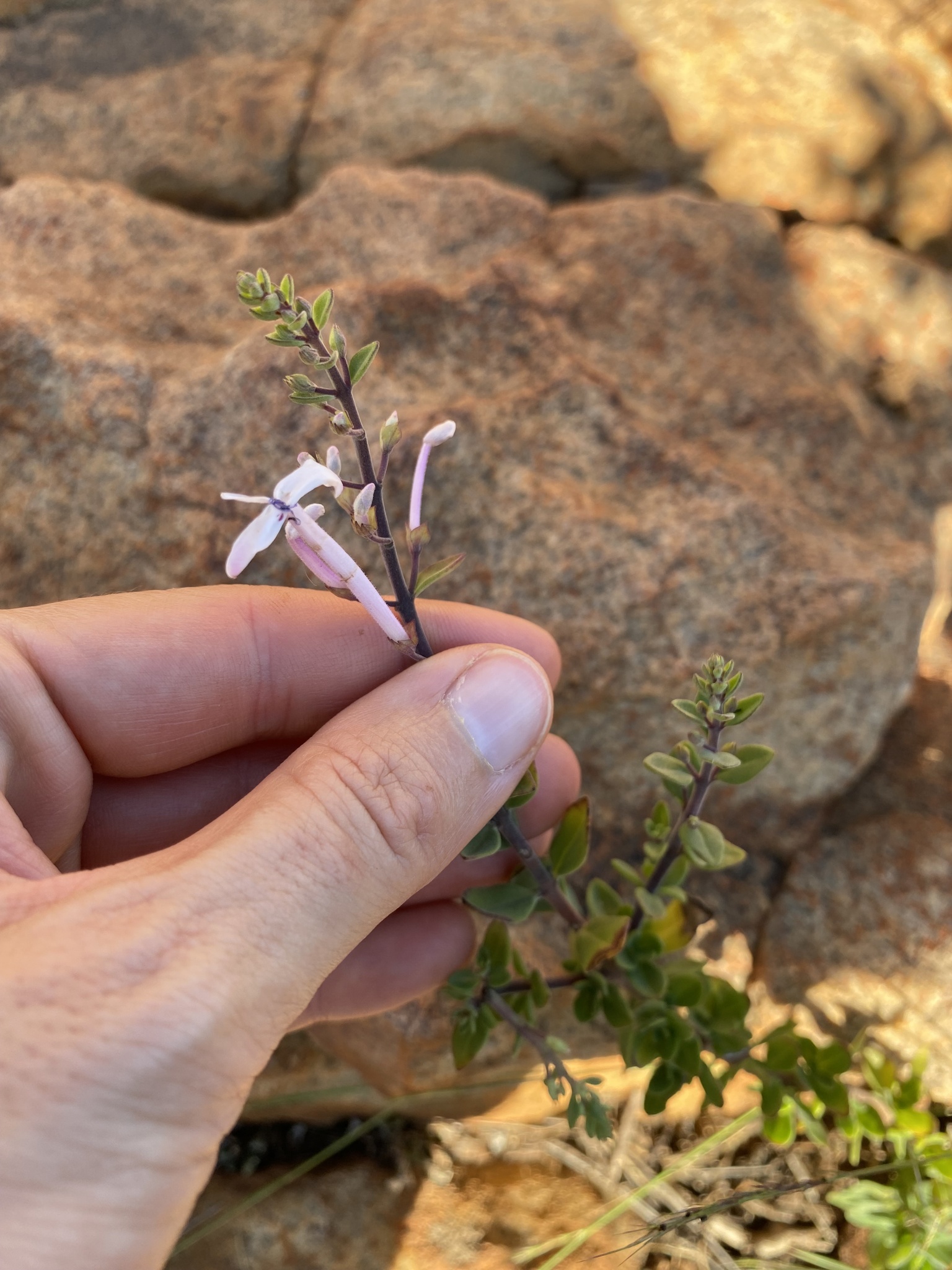
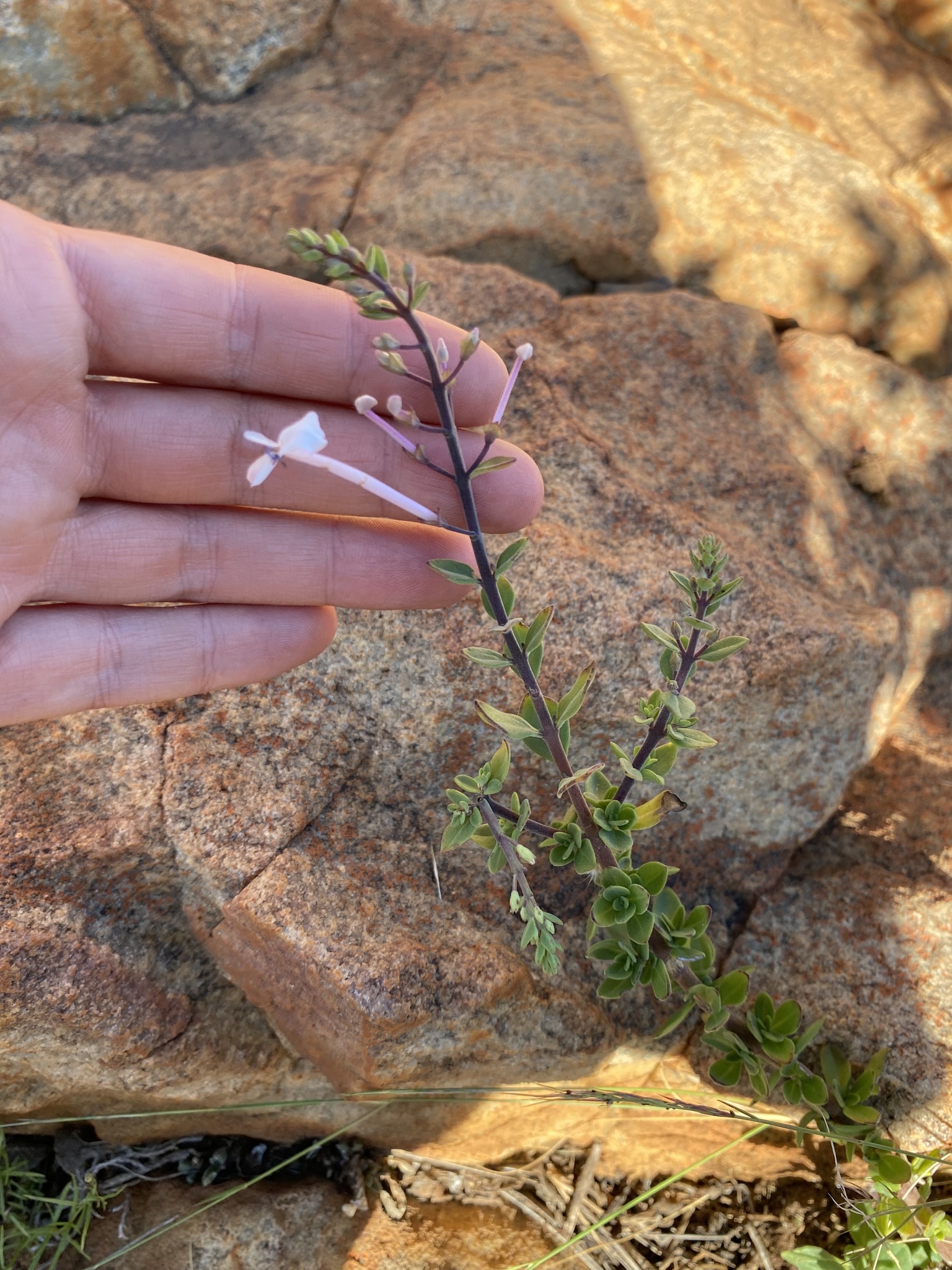
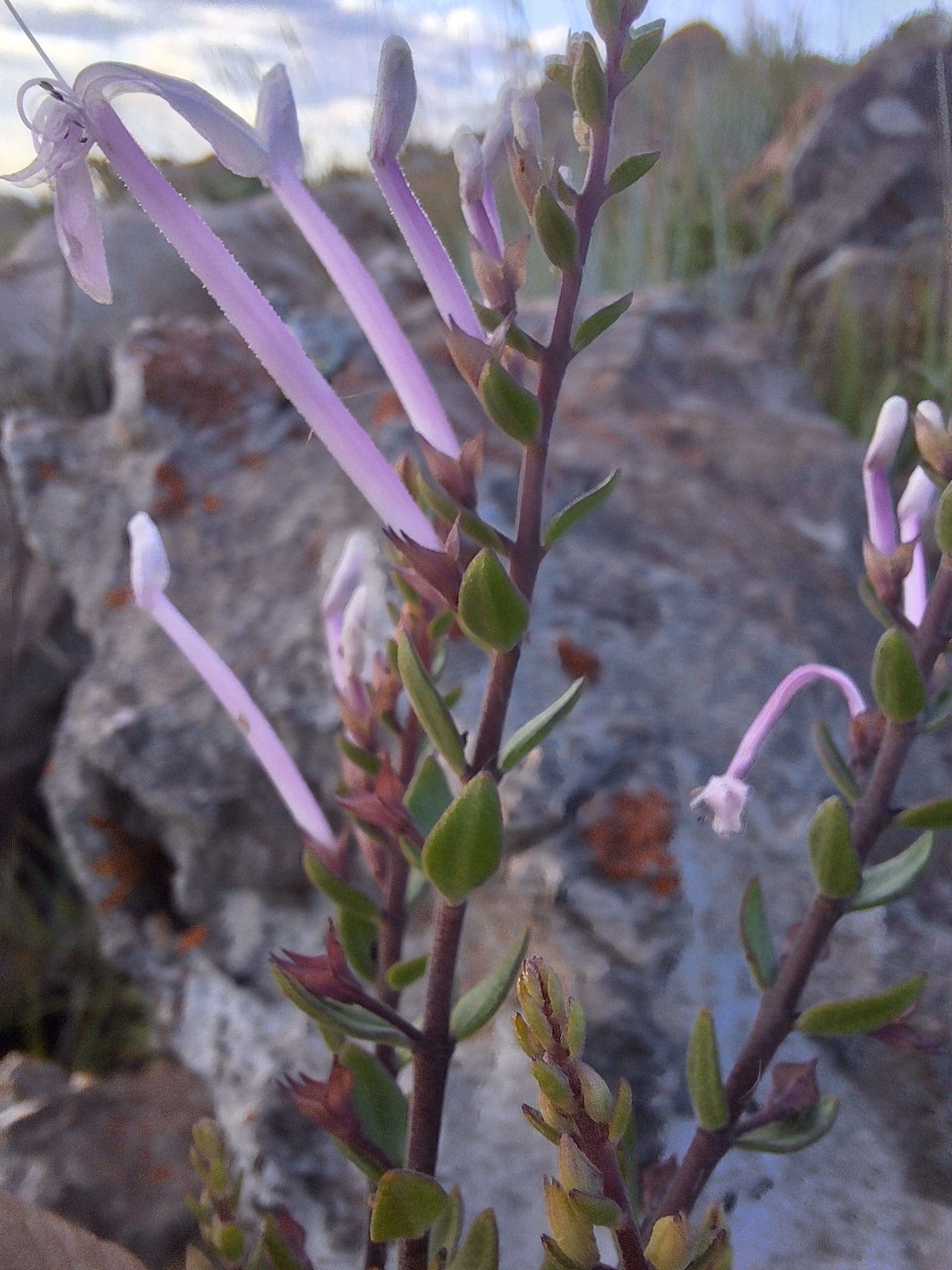
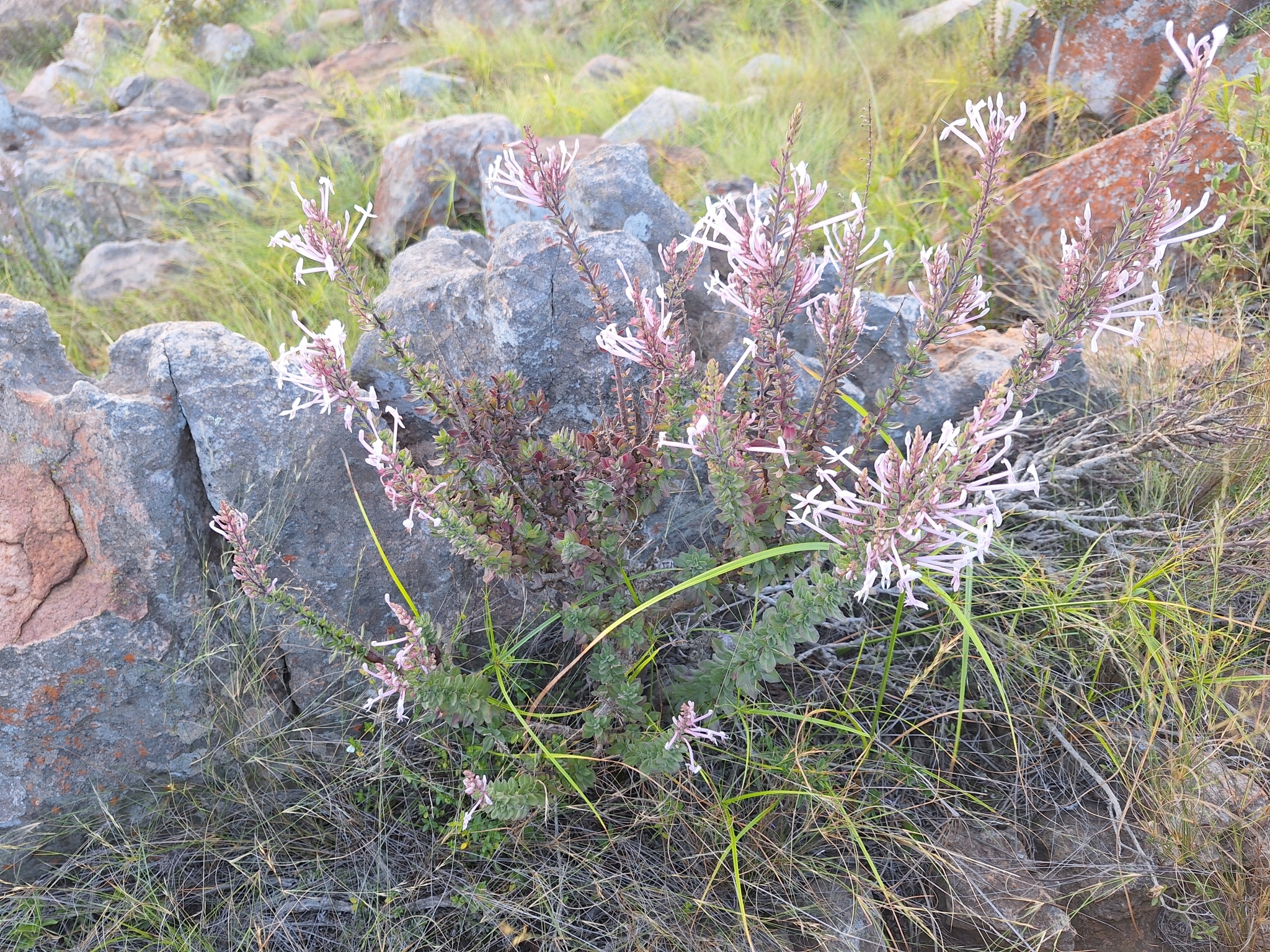
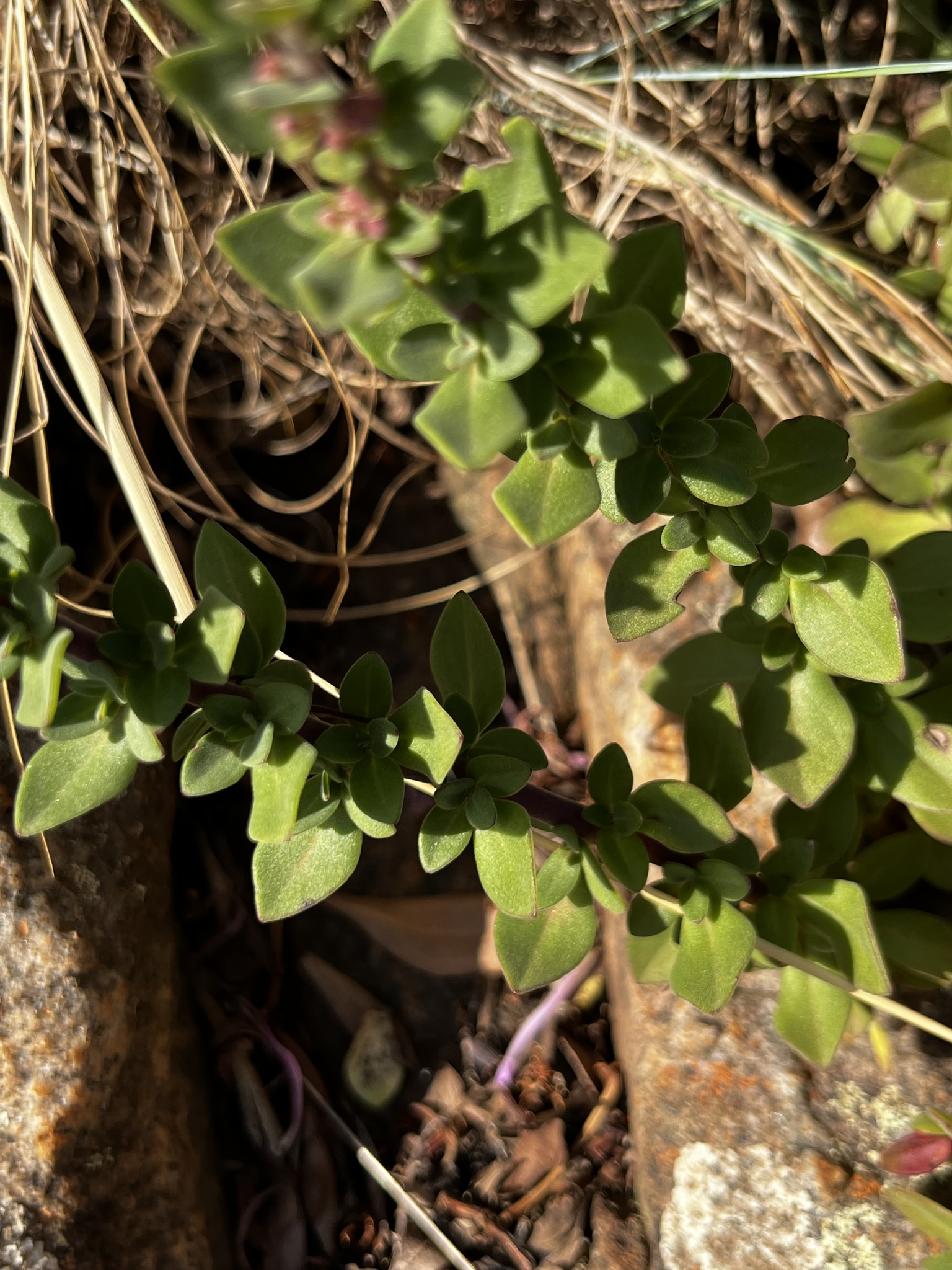
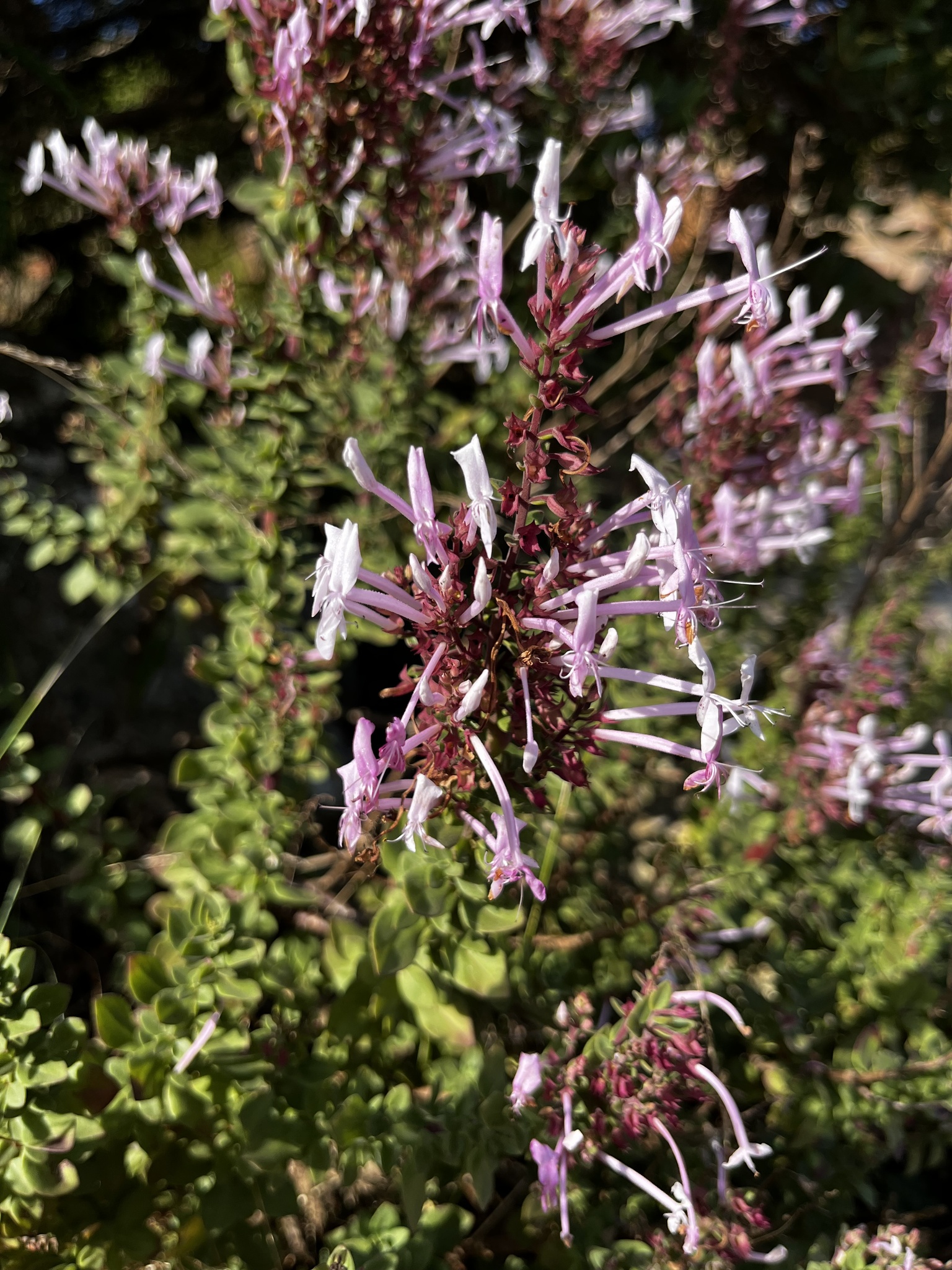
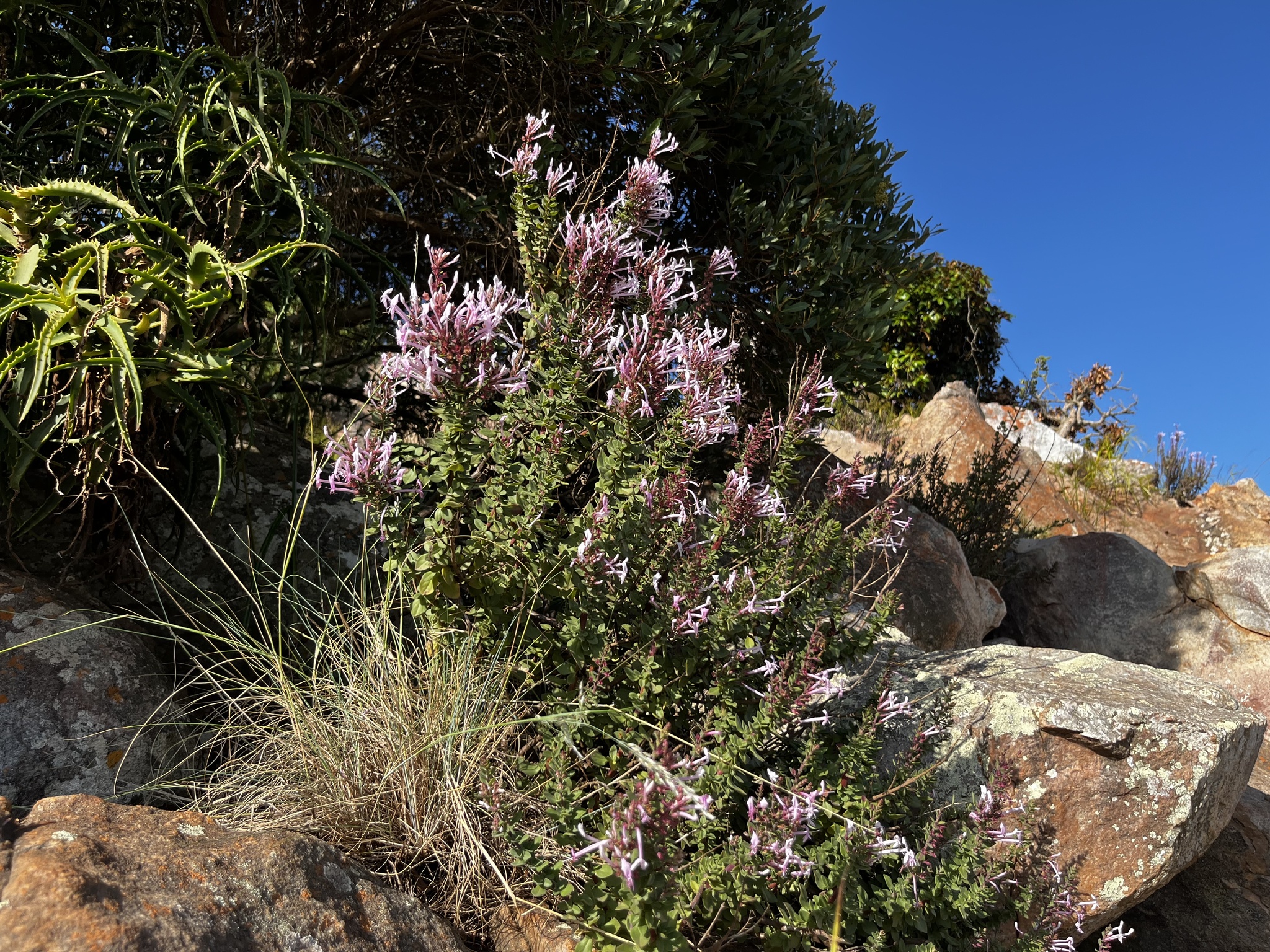
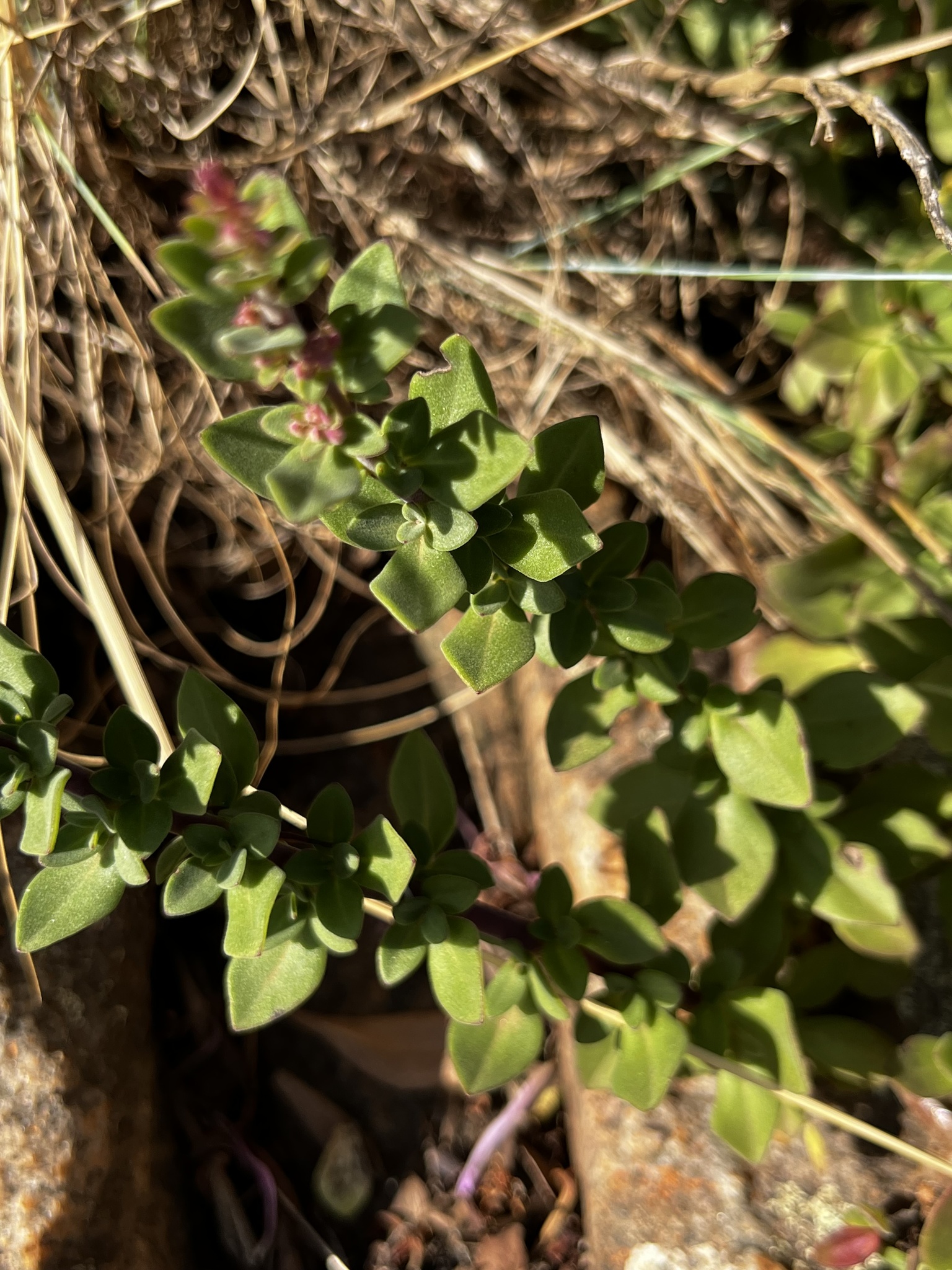
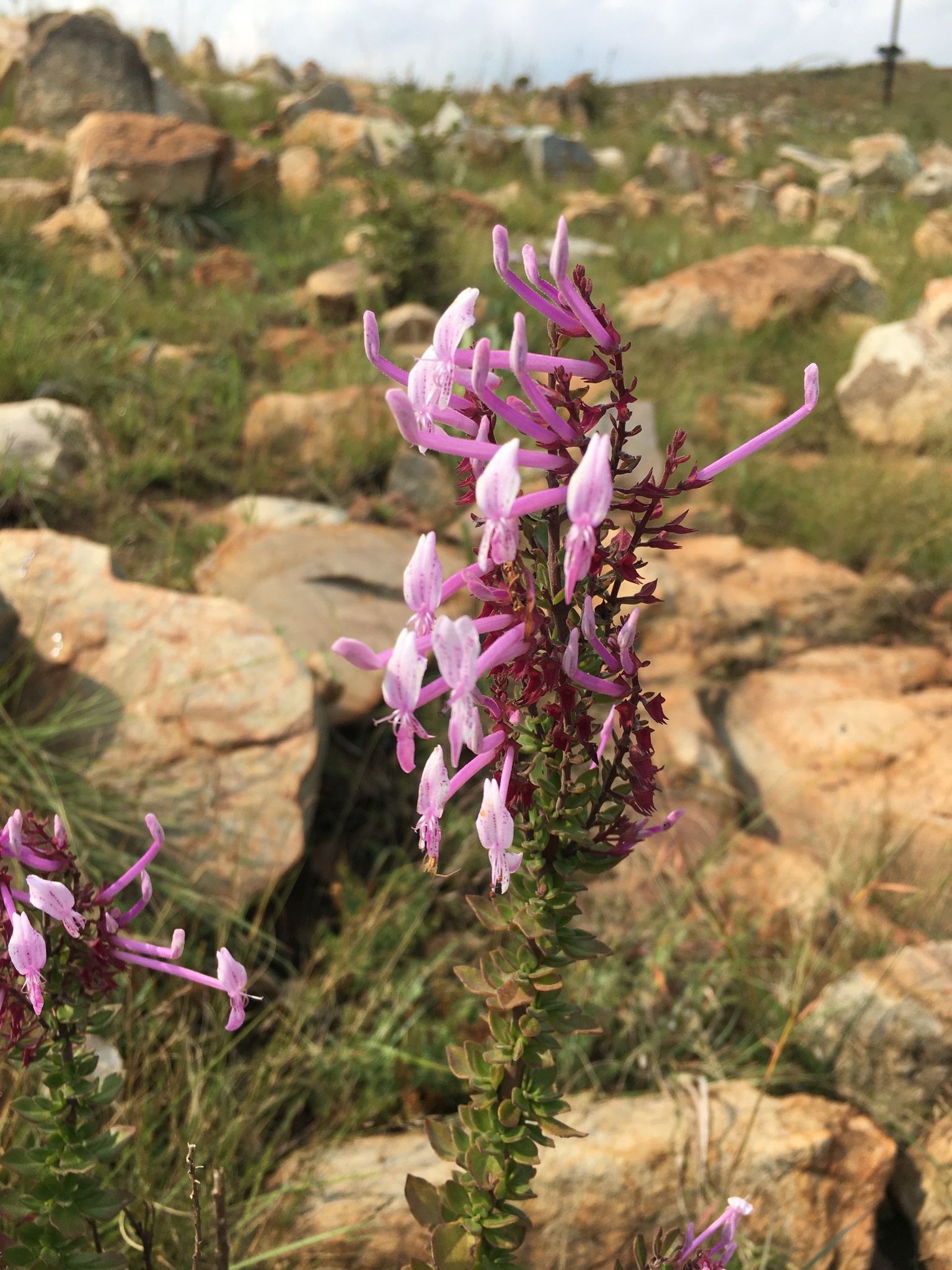
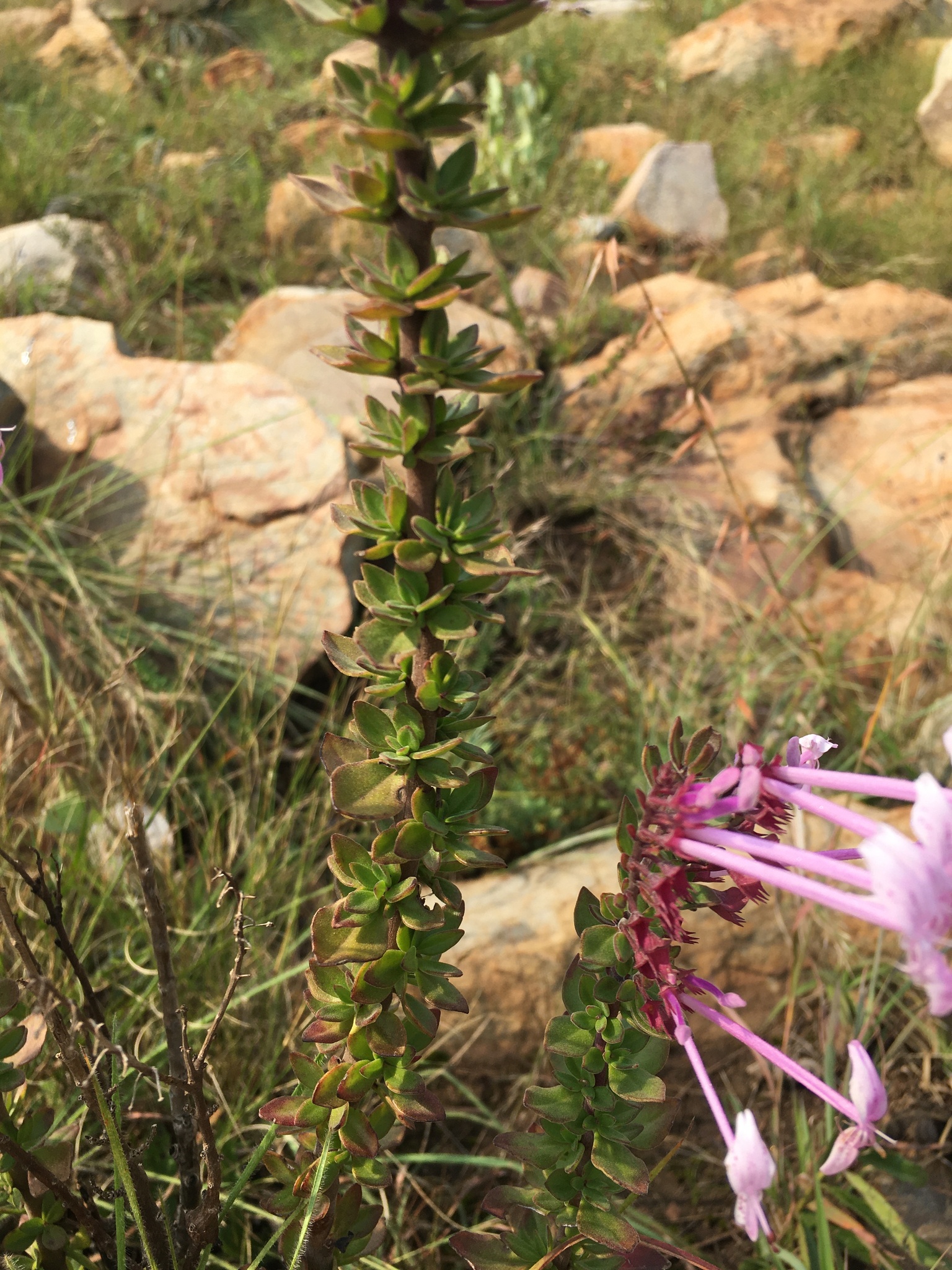
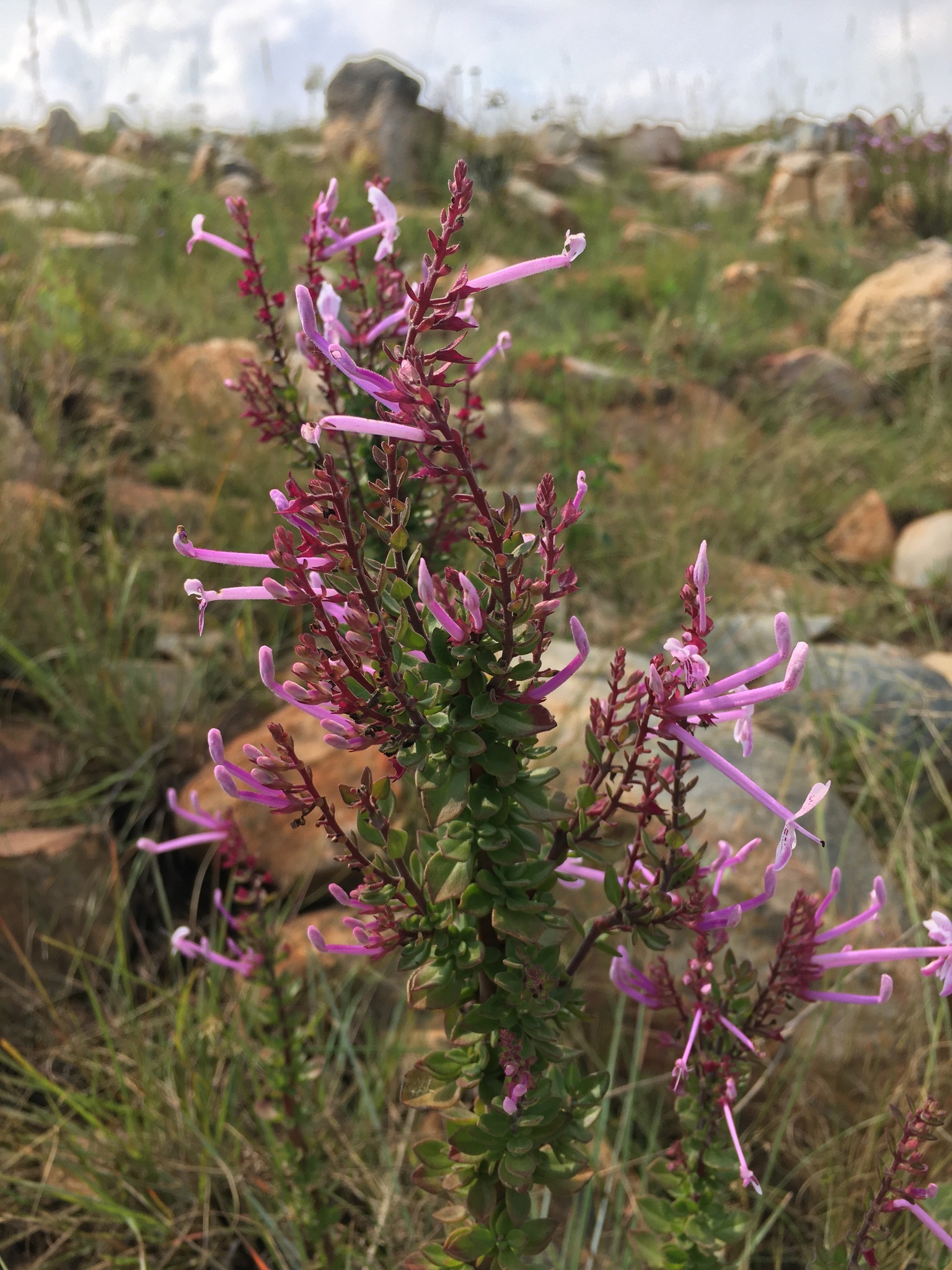
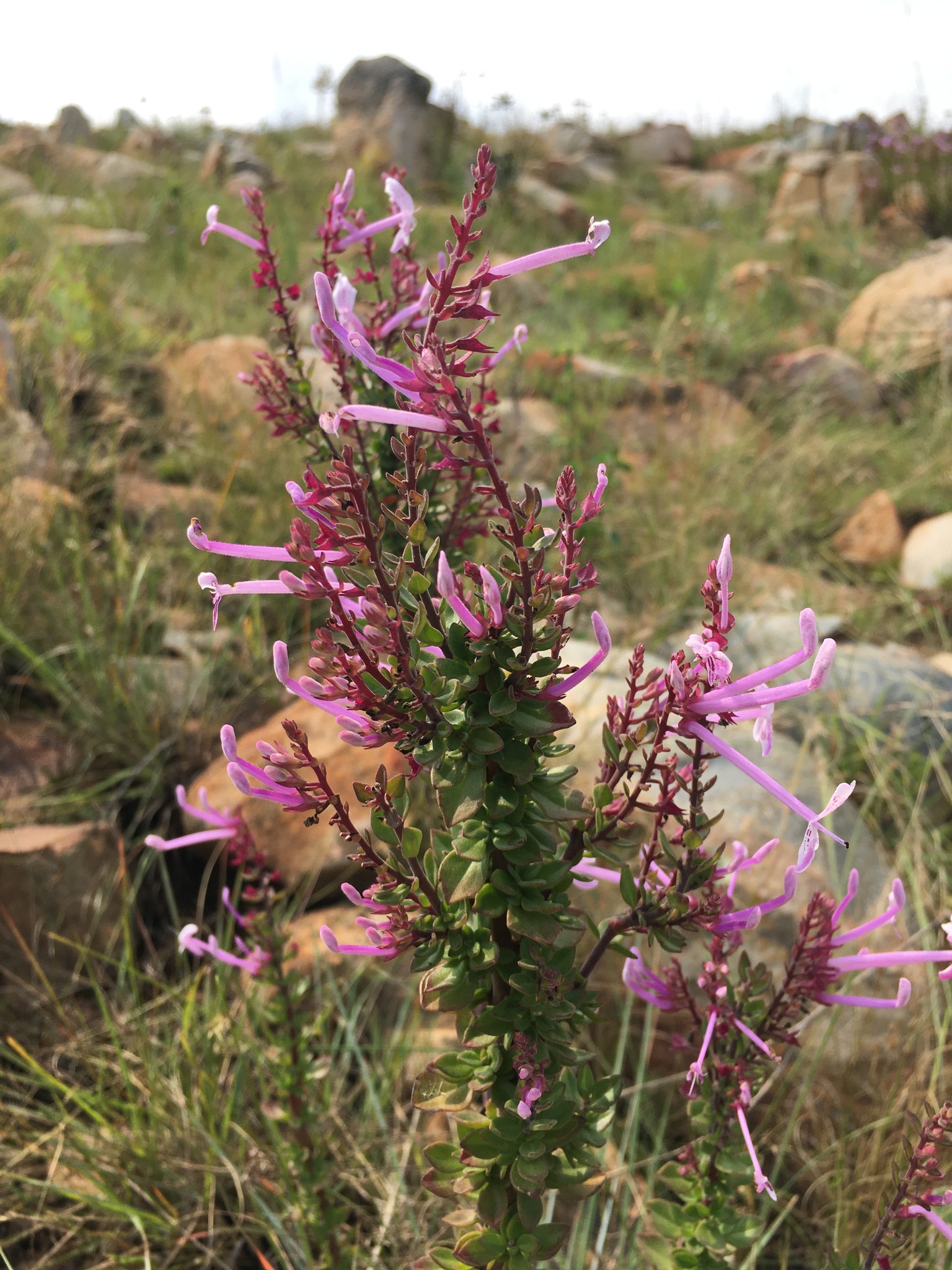
Herb or shrub with brittle, semisucculent stems, 0.3-1.0 m tall. Stems leafy, erect, almost rounded, sparsely branched, arising from a thickened rootstock, ± 12 mm diam. At base, tapering to 3-4 mm diam. above, pubescent with very thin glandular hairs 75 ± 15 µm long spreading, thin, simple, unicellular and multicellular, uniseriate eglandular hairs. Leaves opposite; blade elliptic to obovate, (7-)10-18(-20) x 3-10 mm, cuneate at base, rounded at apex, entire or crenate with 4-10 teeth on margin, pubescent with thin capitate glandular hairs and simple, unicellular and multicellular, uniseriate eglandular hairs on both surfaces; petiole 5.0-6.5 mm long. Inflorescence sparse, main axis (100-)120-200(-260) mm long; bracts leaf-like, 4-6 x 1.5-2.5 mm below, becoming progressively smaller and narrower to ± 2.0-2.5 x 1.0-1.5 mm above. Flowers solitary in axil of each bract; pedicel 4-9 mm long, pubescent with glandular hairs and with simple and multicellular uniseriate eglandular hairs. Calyx 6-7(-8) mm long, commonly covered with very thin glandular hairs, eglandular hairs prominent; the longest teeth 2.0-2.5 mm long, short teeth ovate-lanceolate, 1.0-1.5 mm long, acuminate, decurrent on tube, lower four teeth subequal, lanceolate-triangular. Corolla pink with purple spots on lateral lobes, pubescent with glandular and eglandular hairs; tube narrowly cylindrical, (25-)28-30(-32) mm long; central lobe oblong, 5-7 mm long; lower lobe boat-shaped, 6-7 mm long. Stamens: filaments lilac, exserted from corolla mouth 6.0-7.5 mm; anthers purple. Style lilac, lobes purple. Fruit a nutlet. From: Balkwill, K; Changwe, K; Reddy, RA; Pike, B. 2009. Thorncroftia greenii K.Changwe & K.Balkwill. Fl. Pl. Africa 61: 112-117, t.2256 [CC BY]
There are four species of Thorncroftia: T. longiflora, T. media, T. succulenta and T. thorncroftii, known from Mpumalanga and Limpopo Provinces in South Africa and from Swaziland. Thorncroftia greenii always has entire leaves, whereas the leaves in the other species are usually crenate or obscurely so. T. greenii and T. longiflora have smaller leaves (maximum length 20 mm) as opposed to a minimum of 25 mm in all other species. While T. greenii is morphologically similar to T. longiflora, it shows differences in trichomes and corolla length. T. longiflora has coarse eglandular trichomes and almost inconspicuous capitate glandular hairs, whereas T. greenii has very thin (fine) eglandular hairs with conspicuous fine capitate glandular hairs. The corolla is shorter (28-32 mm) in T. greenii than in T. longiflora (35-48 mm). The species are allopatric, making identification easier. T. thorncroftii is easily distinguished from the other species in the genus by its small flowers (shorter than 180 mm) and prostrate, herbaceous habit. From: Balkwill, K; Changwe, K; Reddy, RA; Pike, B. 2009. Thorncroftia greenii K.Changwe & K.Balkwill. Fl. Pl. Africa 61: 112-117, t.2256 [CC BY]
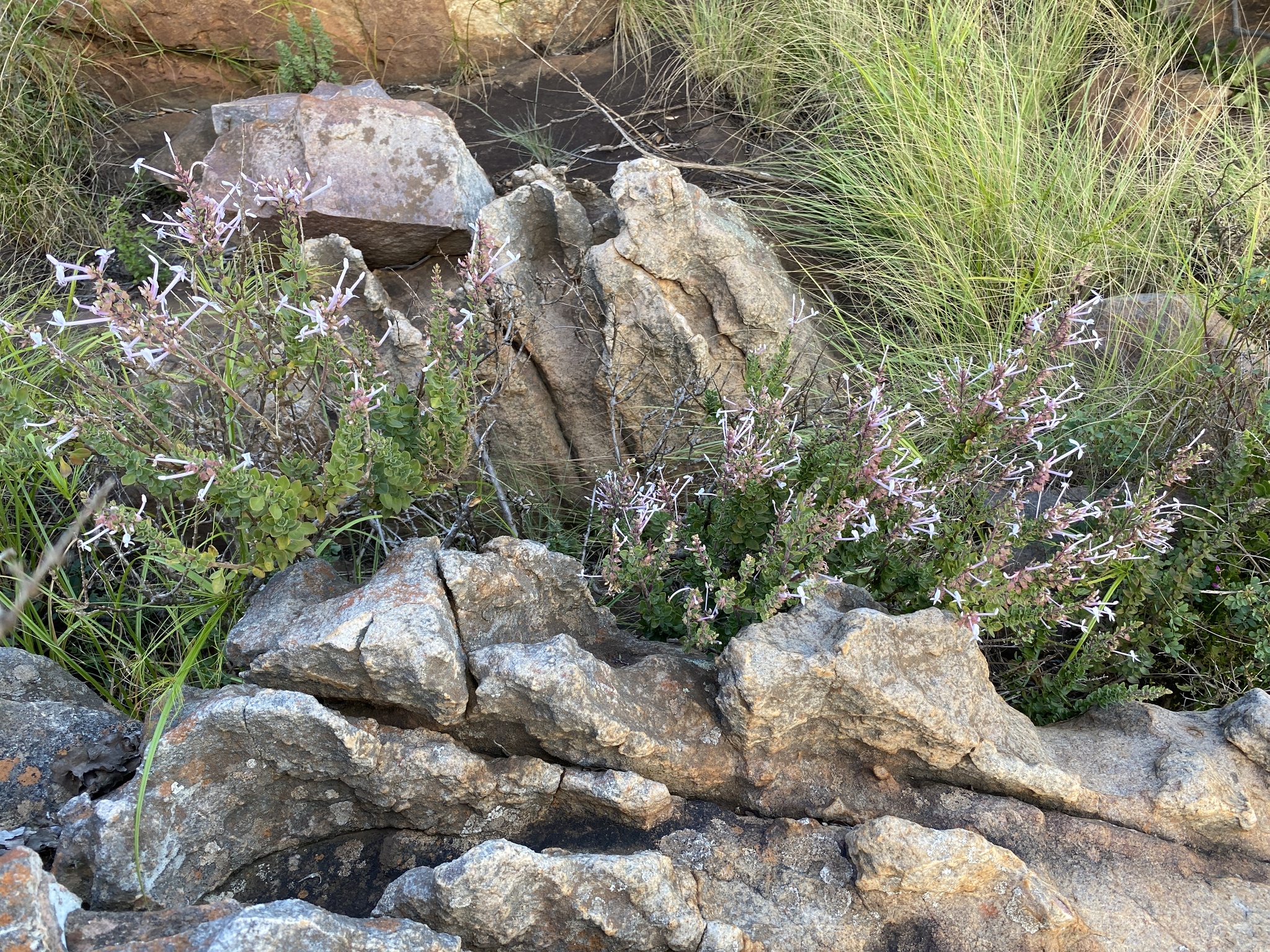
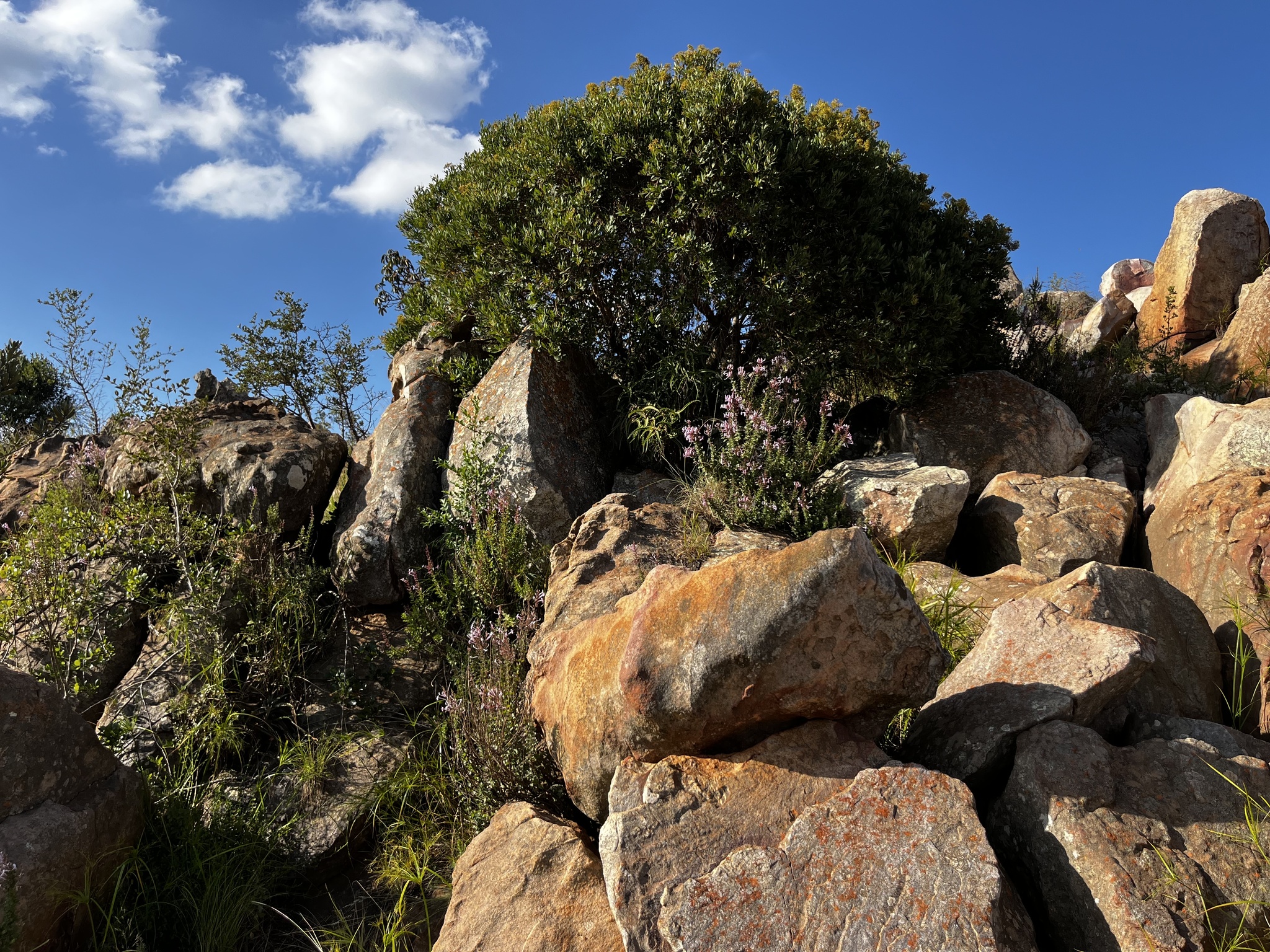
Thorncroftia greenii grows in the fissures and cracks of quartzite rock outcrops at altitudes between 1000 and 1160 m. From: Balkwill, K; Changwe, K; Reddy, RA; Pike, B. 2009. Thorncroftia greenii K.Changwe & K.Balkwill. Fl. Pl. Africa 61: 112-117, t.2256 [CC BY]
Bivane (formerly Paris) Dam, KwaZulu-Natal. From: Balkwill, K; Changwe, K; Reddy, RA; Pike, B. 2009. Thorncroftia greenii K.Changwe & K.Balkwill. Fl. Pl. Africa 61: 112-117, t.2256 [CC BY]
March to April
1000 to 1160 m
This map contains point-based occurrences at different locations
Occurrence in the Flora of Southern Africa (FSA) countries and South African provinces. Residence status indicates if a taxon is indigenous, endemic, naturalised or invasive in a specific region. This data is based on specimen records and literature
FSA
SA
BOT
NAM
ESW
LES
WC
EC
NC
FS
GA
KZN
LP
MP
NW
Absent
Indigenous
Endemic
Naturalised
Invasive

Names and Sources
Published in: Fl. Pl. Africa 61: 112 (2009)
Type: South Africa, KwaZulu-Natal, Ngotshe District, about 30 km west of Louwsburg on the road to Bivane Dam (formerly Paris Dam), Balkwill, Changwe & Green 12202 (J, holo.; K, PRE, iso.)
No synonyms found.
Classification
KINGDOM Plantae
SUBKINGDOM Phanerogamae
PHYLUM Anthophyta
ORDER Lamiales
FAMILY Lamiaceae
SUBFAMILY Nepetoideae
TRIBE Ocimeae
GENUS Thorncroftia
SPECIES greenii
10 results for Thorncroftia greenii Changwe & K.Balkwill
This map contains point-based occurrences at different locations
2009
PERIODICAL/JOURNAL
Thorncroftia greenii K.Changwe & K.Balkwill Balkwill, K; Changwe, K; Reddy, RA; Pike, BFlowering Plants of Africa 61: 112-117, t.2256
No results found for Thorncroftia greenii Changwe & K.Balkwill
| Part(s) of plant used | Use(s) | Reference |
|---|
Coming soon...


